贸易保护主义

Search documents
澳前贸易与投资部长:中澳自贸协定成果充分证明自由贸易有效性
Zhong Guo Xin Wen Wang· 2025-06-27 21:06
"世界再一次站在了十字路口。"罗布表示,当前民粹主义、孤立主义、民族主义与保护主义抬头,并以 保护经济安全的名义出现。这些思潮也许能短期内带来情绪上的满足感,提供某种"报复"的幻觉,但筑 起贸易壁垒、推行出口管制,最终将破坏全球投资,切断无数供应链,抑制经济增长与创新,并加剧公 众的不安与焦虑。 罗布表示,应将包括中澳自贸协定在内的现有自由贸易协定提升到更高水平,坚定表明对开放世界的支 持。如,将《全面与进步跨太平洋伙伴关系协定》(CPTPP)与《区域全面经济伙伴关系协定》(RCEP)整 合起来,推动构建亚太自由贸易区。 (文章来源:中国新闻网) 中新社悉尼6月28日电 (记者薄雯雯)澳大利亚前贸易与投资部长安德鲁·罗布(Andrew Robb)27日在悉尼表 示,中澳自由贸易协定取得的成果令人瞩目,充分证明了自由贸易有效性。面对当前贸易保护主义抬 头,应坚定表明对开放世界的支持。 罗布当晚出席以"同合作·共致远"暨中澳自贸协定签署十周年纪念为主题的澳大利亚中华经贸文化交流 促进会(华贸会)第五届第三次年会,并发表主旨演讲。 2015年6月,罗布代表澳大利亚政府与中方正式签署自由贸易协定。罗布在演讲中向所有为 ...
鲍威尔国会表态,美联储观望关税冲击,特朗普心急如焚
Sou Hu Cai Jing· 2025-06-27 03:10
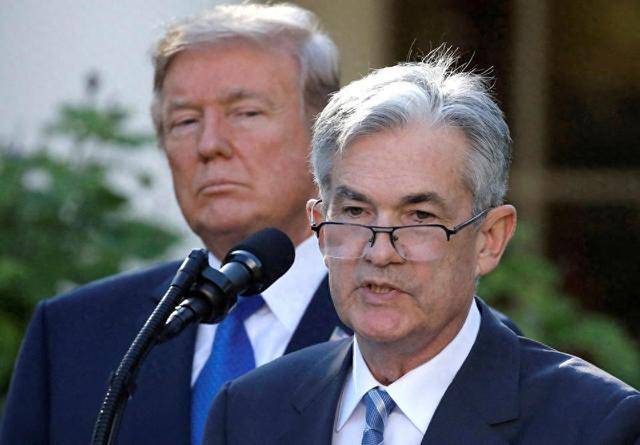
Core Viewpoint - The Federal Reserve, led by Chairman Jerome Powell, emphasizes its independence from political pressures, particularly in response to President Trump's calls for rapid interest rate cuts, opting instead for a patient approach to assess the economic impact of tariff policies [1][3][4]. Group 1: Economic Environment - Trump's high tariff policies aim to reshape U.S. manufacturing and reduce trade deficits but have led to increased costs for consumers and businesses, contributing to inflationary pressures [3][6]. - The current U.S. economy appears stable, with inflation rising but not yet spiraling out of control, as the Federal Reserve maintains a high benchmark interest rate of 4.25% to 4.50% since December [3][6]. - Powell's focus on preventing temporary price spikes from becoming sustained inflation reflects the Fed's role as a guardian of monetary policy [3][4]. Group 2: Political Dynamics - Trump's public pressure on Powell for interest rate cuts is seen as a political maneuver to boost his support among voters, risking economic overheating and potential crises [4][9]. - The Fed's independence is crucial for avoiding short-term political pressures that could destabilize the economy, with Powell's stance serving as a model for global economic management [7][9]. Group 3: Global Implications - The interconnectedness of the global economy means that U.S. policy decisions, such as interest rate changes, can have far-reaching effects, potentially destabilizing financial markets if not handled cautiously [6][10]. - Powell's cautious approach is viewed as stabilizing for global markets amid rising geopolitical risks and trade tensions, helping to maintain the dollar's status as a global reserve currency [6][10]. Group 4: Future Outlook - Upcoming economic data, including employment, manufacturing, consumer confidence, and inflation indicators, will significantly influence the Fed's decision-making process [9][10]. - The ability of Powell and the Fed to maintain policy independence and rationality will be critical for both U.S. and global economic stability moving forward [9][10].

夏季达沃斯美企高管发声:以长期主义心态投资中国
Zhong Guo Xin Wen Wang· 2025-06-26 08:59
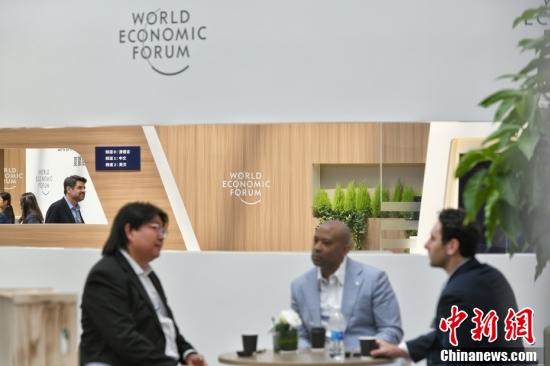
Group 1 - Despite a complex global trade environment, American companies are increasing their confidence and investment in the Chinese market, adopting a "long-termism" strategy to navigate challenges [1][3] - The appeal of China for American enterprises is attributed to its large market size and rapidly improving technological innovation capabilities, with significant advancements occurring in a much shorter timeframe compared to other countries [3][4] - Many American companies are establishing R&D facilities in China, which accelerates product iteration and promotes local innovation, making China an indispensable source of innovation for these companies [4][6] Group 2 - The current global economic uncertainty has made it crucial for multinational companies to find stable and inclusive development environments, with China being viewed as a significant certainty amidst this uncertainty [5][6] - The Chinese government is actively promoting high-level openness and mutual benefits, which instills confidence in foreign enterprises looking to integrate deeply into the Chinese market [6][7] - The collaboration between Chinese and American companies is expanding, with opportunities arising from Chinese enterprises' globalization, which is becoming a key growth driver for American firms [7]
倒计时!凤凰网2025中国企业出海高峰论坛3天后在深圳举办
凤凰网财经· 2025-06-25 13:06
Core Viewpoint - The article highlights the challenges faced by Chinese companies in expanding overseas amidst rising global trade protectionism and complex geopolitical dynamics, emphasizing the need for a diversified partnership network and a collaborative ecosystem for sustainable international expansion [1][3]. Group 1: Trade Negotiations and Agreements - The deadline for reaching trade agreements with major partners set by U.S. President Donald Trump is approaching, with significant tariffs looming if no agreement is reached by July 9 [1]. - Currently, only the UK has reached a preliminary agreement with the U.S., while issues regarding steel tariffs remain unresolved [1]. - The trade truce between China and the U.S. has been extended to mid-August, allowing more time for negotiations [1]. Group 2: Forum Overview - The "2025 China Enterprises Going Global Summit" will be held on June 28-29 in Shenzhen, focusing on creating a high-end platform for Chinese companies to address challenges in international expansion [1][2]. - The forum will feature prominent leaders and experts from politics, business, and academia, including former UN Secretary-General Ban Ki-moon and various former Chinese government officials [2]. - The event aims to facilitate dialogue and resource connections among global stakeholders, addressing compliance, legal, and operational challenges faced by Chinese enterprises [2][4]. Group 3: International Collaboration - The forum will gather representatives from various countries and economic institutions, including the Asian Infrastructure Investment Bank and the Saudi Business Association, to build a cross-border ecological network [4]. - This initiative aims to connect Chinese companies with international resources, breaking down information silos and fostering efficient partnerships [4]. - The event is supported by multiple organizations, including the Global Services Trade Alliance and several academic institutions, highlighting its strategic importance [4].

贸易战转折点在何时?彭森:物极必反,最后还是要回到正确的道路上
Sou Hu Cai Jing· 2025-06-25 02:27
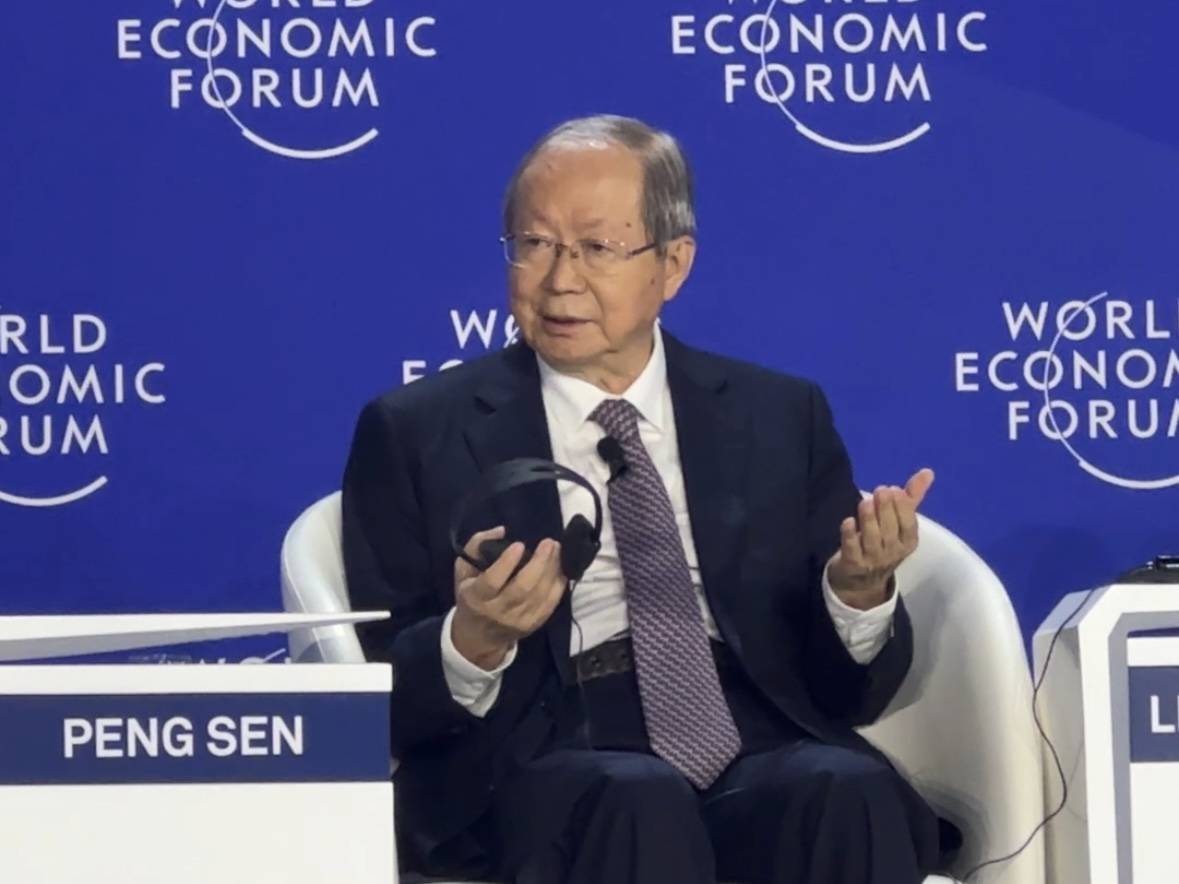
Core Viewpoint - The 16th Davos Forum highlighted the profound changes in the global economic, political, and security landscape, emphasizing the rise of trade protectionism and geopolitical conflicts impacting global supply chains and economic fragmentation [2]. Group 1: Economic Challenges and Responses - The disruption of supply chains is a global issue, necessitating China's contribution to stabilizing the entire industrial and supply chain [2]. - China should transform the pressures from trade wars into opportunities for industrial restructuring and upgrading [2]. - The need for traditional industries in China to undergo further transformation and upgrading over the next decade was emphasized [2]. Group 2: Strategic Emerging Industries - Seven major strategic emerging industries must achieve qualitative improvements to gradually dominate global markets, including new-generation information technology, biotechnology, new materials, and new energy vehicles [3]. - Future industries should receive targeted support and guidance, particularly in AI technology and life sciences [4]. Group 3: Global Economic Recovery - Many companies face difficulties in global expansion, which could significantly impact global economic recovery and growth [4]. - The turning point for the global economy may arise from significant setbacks, leading countries to return to correct economic paths [4]. - According to the theory of comparative advantage, countries should leverage their strengths to produce high-quality, cost-effective products, forming a beneficial global supply chain [4].
WTO就加拿大对中国电动汽车等产品收附加税设立争端解决小组
第一财经· 2025-06-24 13:42
Core Viewpoint - The article discusses the establishment of a dispute resolution panel by the WTO regarding Canada's imposition of additional tariffs on Chinese electric vehicles, steel, and aluminum products, which China claims violate GATT regulations [1][2][4]. Group 1: Dispute Background - On October 1, 2024, Canada officially implemented a 100% additional tariff on electric vehicles imported from China, followed by a 25% additional tariff on steel and aluminum products from China starting October 22, 2024 [3][5]. - China initiated a lawsuit at the WTO against Canada's unilateral and protectionist measures, asserting that these actions are inconsistent with WTO rules [3][6]. Group 2: Tariff Details - The dispute, numbered DS627, involves Canada's 100% additional tariff on all Chinese-made electric vehicles and a 25% tariff on steel and aluminum products [4][5]. - In 2023, the trade value affected by these measures was approximately $1.7 billion for electric vehicles, $950 million for steel products, and $720 million for aluminum products [10][11]. Group 3: Responses and Negotiations - China expressed willingness to engage in constructive dialogue with Canada despite the request for the establishment of an expert group [7][8]. - Canada maintains that its measures comply with GATT regulations and also expresses a desire for constructive dialogue with China [8]. Group 4: Countermeasures and Further Actions - In response to Canada's tariffs, China announced anti-discrimination measures, including a 100% tariff on certain Canadian imports such as canola oil and specific seafood products, effective March 20, 2025 [14][15]. - Canada argues that China's countermeasures exceed the commitments made under GATT and seeks expedited processing of the dispute due to the perishable nature of the goods involved [16][17]. Group 5: Future Implications - China's ambassador to Canada highlighted the potential for cooperation in the electric vehicle sector, emphasizing the benefits for both countries and the need for a fair trade environment [11]. - The article concludes with the assertion that the resolution of these disputes hinges on Canada's actions regarding the discriminatory tariffs imposed on Chinese products [19].
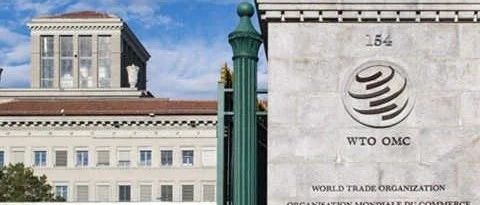
WTO就加拿大对中国电动汽车等产品收附加税设立争端解决小组
Di Yi Cai Jing· 2025-06-24 09:29
Core Viewpoint - China is taking necessary measures to firmly protect the legitimate rights and interests of its enterprises in response to Canada's imposition of additional tariffs on Chinese electric vehicles, steel, and aluminum products, which China claims violate WTO rules [1][4]. Group 1: Dispute Resolution and Tariff Measures - The WTO's Dispute Settlement Body (DSB) has agreed to establish a dispute resolution panel regarding China's complaint about Canada's additional tariffs on electric vehicles and steel/aluminum products [1][2]. - Canada will impose a 100% additional tariff on all imported electric vehicles from China starting October 1, 2024, and a 25% additional tariff on steel and aluminum products from China starting October 22, 2024 [1][2]. - The trade value affected by the 100% tariff on electric vehicles is approximately $1.7 billion, while the tariffs on steel and aluminum products involve $950 million and $720 million, respectively [4]. Group 2: China's Response and Negotiation Stance - China has formally requested consultations and further negotiations regarding the additional tariffs, asserting that these measures are inconsistent with multiple provisions of the GATT [2][3]. - Despite the establishment of a dispute resolution panel, China remains open to constructive dialogue with Canada to amicably resolve the dispute [4][7]. - China's ambassador to Canada emphasized the potential for cooperation in the electric vehicle sector, which could benefit consumers and help Canada achieve its climate goals [4][5]. Group 3: Countermeasures and Additional Disputes - In response to Canada's tariffs, China has initiated an anti-discrimination investigation and announced countermeasures, including additional tariffs on certain Canadian agricultural and seafood products [6][7]. - The countermeasures include a 100% tariff on canola oil, oilseed meal, and peas, as well as a 25% tariff on specific seafood and pork products, effective March 20, 2025 [6].
美国学者:美国在全球的角色不再独一无二
Zhong Guo Xin Wen Wang· 2025-06-24 08:10
Group 1 - The current geopolitical tensions are exacerbated by the policies of the Trump administration, indicating that the U.S. is no longer the sole dominant power globally [1] - The rise of trade protectionism and geopolitical conflicts has led to discussions on achieving stable development and the potential establishment of a new international order at the 2025 Summer Davos Forum [1] - The world is entering a period of unavoidable turmoil, with increasing geopolitical tensions, and the U.S. is facing challenges from rising powers like China and the EU [1] Group 2 - The U.S. has withdrawn from multiple international organizations and global agreements, such as the Paris Agreement and the World Health Organization, which may weaken global multilateral cooperation [1] - Despite the U.S. absence, there is optimism for international cooperation as long as other countries strengthen collaboration based on mutual trust [1] - Countries are encouraged to maximize international cooperation in areas that align with their interests to avoid a crisis similar to that of the 1930s [1]
刚刚!商务部回应
券商中国· 2025-06-24 06:51
6月24日消息,商务部新闻发言人就欧盟限制中国企业和产品参与其医疗器械公共采购答记者问。 有记者提问:6月20日,欧盟委员会宣称根据《国际采购工具》,限制中国企业和产品参与欧盟医疗器械公共 采购。请问商务部对此有何评论? 责编:罗晓霞 校对: 彭其华 百万用户都在看 刚刚!全线爆发,美国突传大消息! 重大变数!半导体,突发! 中央明确公职人员违规吃喝认定标准 突然!三大央媒,集体发声!这个板块,全线反攻! 商务部新闻发言人答复称,中方注意到有关情况。今年1月,商务部发布的对欧投资壁垒调查结论显示,欧盟 持续在公共采购、投资等领域对中国企业设置壁垒。 此次,欧方不顾中方多次通过双边对话释放的善意和诚 意,一意孤行,利用单边工具,构筑新的保护主义壁垒,不仅损害中国企业利益,而且严重破坏公平竞争。中 方对此强烈不满、坚决反对, 敦促欧方立即纠正错误做法,并将采取措施坚定维护中国企业的合法权益。 违法和不良信息举报电话:0755-83514034 邮箱:bwb@stcn.com 商务部新闻发言人指出,今年是中欧建交50周年,中方愿从中欧经贸关系大局出发,落实好双方领导人重要共 识, 与欧方继续通过对话磋商,妥善处理经 ...
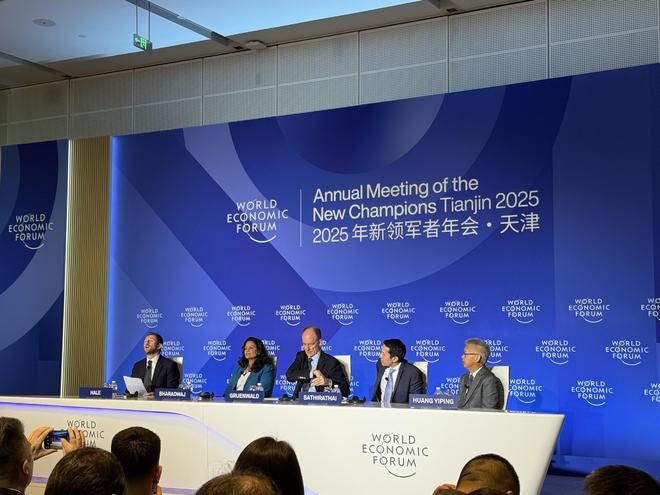
直击夏季达沃斯|黄益平:以中国经济韧性应对全球不确定性
Zhong Guo Jing Ying Bao· 2025-06-24 06:12
Core Insights - The 2025 Summer Davos Forum (New Champions Annual Meeting) is being held in Tianjin, highlighting global economic uncertainties and the impact of geopolitical conflicts on market confidence and inflation [2] Economic Performance - China's economy is currently performing steadily, with GDP growth expected to remain above 5% in Q2, indicating a generally positive economic outlook for the first half of the year [2] - Strong performance in exports and industrial production in recent quarters reflects the resilience of the economy, supported by government policies aimed at boosting consumption [2] Fiscal Policy Discussion - There is a need to differentiate between short-term and long-term fiscal policy objectives, with long-term fiscal health being crucial to avoid sustainability issues [3] - In response to external uncertainties that may slow economic growth, it is recommended to adopt an expansionary fiscal policy to create space for further economic stabilization [2][3]