关税政策

Search documents
期货市场交易指引:2025年11月06日-20251106
Chang Jiang Qi Huo· 2025-11-06 02:09
Report Industry Investment Ratings - **Macro Finance**: Index futures are bullish in the medium to long - term and suggest buying on dips; Treasury bonds are expected to trade in a range [1] - **Black Building Materials**: Coking coal and rebar suggest range trading; Glass suggests selling call options [1] - **Non - ferrous Metals**: Copper suggests exiting long positions at high levels or range short - term trading; Aluminum suggests buying on dips; Nickel suggests waiting and seeing or shorting on rallies; Tin, gold, and silver suggest range trading [1] - **Energy Chemicals**: PVC, caustic soda, styrene, rubber, urea, methanol, and polyolefins are expected to trade in a range; Soda ash's 01 contract suggests a bearish approach [1] - **Cotton Textile Industry Chain**: Cotton and cotton yarn are expected to trade in a range; PTA is expected to trade at a low level; Apples and jujubes are expected to trade weakly [1] - **Agricultural Livestock**: Pigs and eggs are expected to face resistance in rebounds; Corn is expected to trade weakly; Soybean meal is expected to rebound from a low level; Oils are expected to trade weakly [1] Core Views - After the end of Sino - US trade negotiations, the third - quarter reports, and the Fourth Plenary Session, the market enters a vacuum period of performance, events, and policies, lacking catalysts for direction, so it will enter a period of consolidation [5] - The main trading line of the Treasury bond market is not over, but the market is observing the scale and scope of the central bank's Treasury bond trading operations, and the motivation for the market to drive yields down continuously is not strong [5] - The coal market shows a pattern of tight supply and demand and rising prices, with a positive sentiment. The supply of coking coal and rebar may be affected by the resumption of production in coal mines, and the prices are expected to be stable and strong in the short term [8] - The glass market has a poor supply - demand pattern, with high inventory and weak demand. It is recommended to sell out - of - the - money call options on the 01 contract [10] - The copper market is affected by macro and fundamental factors. In the short term, it is expected to remain high - level volatile, and long positions should be exited at high levels [11] - The aluminum market may face a correction after the previous over - rise, and it is recommended to take profits on long positions at high levels [12] - The nickel market has an uncertain supply due to new policies, and it is recommended to wait and see or short on rallies moderately [17] - The tin market has an expected improvement in supply and weak downstream consumption. It is recommended to trade in a range [18] - The precious metal market, including gold and silver, is supported by interest - rate cut expectations and safe - haven demand, but is in a short - term adjustment period. It is recommended to trade in a range [19] - The PVC, caustic soda, and styrene markets are expected to be weak and volatile, mainly due to factors such as high supply, weak demand, and uncertain exports [22][25][26] - The rubber market has insufficient cost support and a bearish sentiment due to inventory accumulation. The price is expected to continue to decline [28] - The urea market has a short - term rising price center due to factors such as reduced supply and increased demand, and it is recommended to trade in a range [30] - The methanol market has a limited rebound space due to factors such as tight local supply, weak downstream demand, and high inventory [32] - The polyolefin market has a certain cost support, but the upward pressure is large due to insufficient supply - demand improvement. It is recommended to pay attention to support levels [33] - The soda ash market has a supply surplus, and it is recommended to maintain a bearish approach for the 01 contract [37] - The cotton and cotton yarn market is expected to trade in a range due to factors such as increased global production and consumption and a decline in inventory [37] - The PTA market is expected to trade at a low level due to factors such as weak oil prices and supply - demand inventory accumulation [39] - The apple and jujube markets are expected to decline due to factors such as reduced quality and weak consumption [39][40] - The pig market has a high supply in the short - term and is expected to have a high supply in the first half of next year. It is recommended to adjust positions according to different contracts [43] - The egg market has a large premium of the futures price over the spot price, and it is recommended to short on rallies lightly [44] - The corn market is expected to build a bottom through consolidation, and it is recommended to pay attention to arbitrage opportunities [47] - The soybean meal market is expected to rebound from a low level, and it is recommended to adjust positions according to price performance [49] - The oil market is expected to be volatile at a low level, with differences in performance among varieties. It is recommended to pay attention to support levels and arbitrage opportunities [54] Summary by Categories Macro Finance - **Index Futures**: A - shares opened low and closed high. After the end of major events, the market enters a vacuum period and is expected to trade in a range. It is bullish in the medium to long - term and suggests buying on dips [5] - **Treasury Bonds**: The 30 - year, 10 - year, and 2 - year Treasury bond futures contracts declined. The market is observing the scale and scope of the central bank's Treasury bond trading operations, and it is recommended to maintain a balanced allocation [5] Black Building Materials - **Coking Coal**: The coal market has tight supply and demand and rising prices. The supply may be affected by the resumption of production in coal mines, and the price is expected to be stable and strong in the short term [8] - **Rebar**: The futures price of rebar declined. The static valuation is neutral to low, and the demand has recovered while the inventory has continued to decline. It is recommended to buy on dips for the RB2601 contract [8] - **Glass**: The glass market has a poor supply - demand pattern, with high inventory and weak demand. It is recommended to sell out - of - the - money call options on the 01 contract and wait until after the new year to consider the 05 contract [10] Non - ferrous Metals - **Copper**: The copper price reached a record high and then declined. It is affected by macro and fundamental factors. In the short term, it is expected to remain high - level volatile, and long positions should be exited at high levels or trade in a short - term range [11] - **Aluminum**: The price of Guinea's bauxite is stable, and the production capacity of alumina and electrolytic aluminum has changed. The demand is weakening, and the inventory is being depleted. It is recommended to take profits on long positions at high levels for different products [12] - **Nickel**: Indonesia has adjusted the RKAB policy, which may affect the supply of nickel ore. The supply of refined nickel is in surplus, and the price of nickel iron is limited. It is recommended to wait and see or short on rallies moderately [17] - **Tin**: The domestic refined tin production has decreased, and the supply of tin ore is expected to improve. The downstream consumption is weak. It is recommended to trade in a range and pay attention to supply and demand [18] - **Silver and Gold**: After the Sino - US negotiations and the Fed's interest - rate cut, the precious metal market is supported by interest - rate cut expectations and safe - haven demand, but is in a short - term adjustment period. It is recommended to trade in a range and pay attention to US ADP employment data [19] Energy Chemicals - **PVC**: The PVC market has high supply, weak demand, and uncertain exports. It is expected to be weak and volatile, and it is recommended to pay attention to the 4700 level [22] - **Caustic Soda**: The caustic soda market is affected by alumina production and inventory. It is expected to be weak and volatile, and it is recommended to pay attention to the 2400 level [25] - **Styrene**: The styrene market is affected by factors such as oil prices and pure benzene supply. It is expected to be weak and volatile, and it is recommended to pay attention to the 6500 level [26] - **Rubber**: The rubber market has insufficient cost support and a bearish sentiment due to inventory accumulation. The price is expected to continue to decline [28] - **Urea**: The urea market has a short - term rising price center due to factors such as reduced supply and increased demand. It is recommended to trade in a range of 1600 - 1700 for the 01 contract [30] - **Methanol**: The methanol market has a limited rebound space due to factors such as tight local supply, weak downstream demand, and high inventory. It is recommended to trade in a range of 2230 - 2330 for the 01 contract [32] - **Polyolefin**: The polyolefin market has a certain cost support, but the upward pressure is large due to insufficient supply - demand improvement. It is recommended to pay attention to the 6900 and 6600 support levels for PE and PP respectively [33] - **Soda Ash**: The soda ash market has a supply surplus, and it is recommended to maintain a bearish approach for the 01 contract [37] Cotton Textile Industry Chain - **Cotton and Cotton Yarn**: The global cotton supply and demand have changed, with increased production and consumption and a decline in inventory. The price of seed cotton is high, and it is expected to trade in a range [37] - **PTA**: The PTA market is affected by oil prices and supply - demand inventory accumulation. It is expected to trade in a range of 4400 - 4700 [39] - **Apple and Jujube**: The apple and jujube markets are affected by factors such as reduced quality and weak consumption. The prices are expected to decline [39][40] Agricultural Livestock - **Pigs**: The pig market has a high supply in the short - term and is expected to have a high supply in the first half of next year. It is recommended to adjust positions according to different contracts and pay attention to secondary fattening and group enterprise sales [43] - **Eggs**: The egg market has a large premium of the futures price over the spot price, and it is recommended to short on rallies lightly and pay attention to factors such as chicken culling and weather [44] - **Corn**: The corn market is affected by new grain listing and supply - demand factors. It is expected to build a bottom through consolidation, and it is recommended to pay attention to the 2050 - 2170 range and 3 - 5 positive arbitrage [47] - **Soybean Meal**: The soybean meal market is affected by factors such as the reduction of US soybean import tariffs and the expected adjustment of the US soybean supply - demand report. It is recommended to adjust positions according to price performance [49] - **Oils**: The oil market is affected by factors such as the supply and demand of palm oil, soybean oil, and rapeseed oil. It is expected to be volatile at a low level, and it is recommended to pay attention to support levels and arbitrage opportunities [54]
10月美国ADP就业数据超预期
Dong Zheng Qi Huo· 2025-11-06 00:50
1. Report Industry Investment Ratings - Gold: Short - term price in a callback trend [16] - US Dollar: Short - term oscillation [20] - Chinese Stock Index Futures: Long - position balanced allocation for each index [23] - US Stock Index Futures: Short - term high - level shock adjustment, with a bullish view considering profit support [27] - Treasury Bond Futures: Recently, the bond market is slightly bullish with limited upside, and long - positions should consider rhythm and odds [29] - Sugar: Chinese sugar market to oscillate, strict control on syrup and powder imports and reduced Q4 imports [34] - Steel: Adopt an oscillating approach to steel prices [41] - Live Pigs: Short - sell 03 contract after a sharp rebound, and keep an eye on long - positions in far - month contracts [44] - Red Dates: Wait and see, focus on price negotiation and acquisition progress in production areas [47] - Oils: If no major negative news, consider long - positions; wait for market sentiment to stabilize if negative [48] - Corn Starch: Band - trading [51] - Corn: 01 contract to oscillate weakly in the short - term and rebound in the long - term; be cautious about far - month contracts [53] - Thermal Coal: Price to remain strong in the short - term, watch policy changes after breaking through $800 [55] - Iron Ore: Downside space limited, consider negotiation and coking coal valuation [56] - Coking Coal/Coke: Short - term oscillation, watch for risks from declining hot metal production [57] - Copper: Oscillation, consider buying on dips [60] - Polysilicon: If the contract price corrects to par or discount to spot, consider long - positions; beware of options risks this weekend [63] - Industrial Silicon: Buying on dips may be more cost - effective [65] - Lead: Short - term strength, be cautious about chasing long; positive spread arbitrage available; be cautious in external trading [69] - Zinc: Speculative long - positions take profit on rallies; observe positive spread arbitrage opportunities; wait and see for external trading [74] - Lithium Carbonate: Short - term wide - range oscillation; consider short - selling on rallies in the medium - term [79] - Nickel: Wait and see for speculative single - side trading; bet on valuation recovery after risk release [81] - Crude Oil: Price to oscillate [85] - Asphalt: Short - term weak oscillation [87] - Methanol: Holders of short - positions add short after the rebound ends; conservative investors take profit [89] - Pulp: Limited upside space [90] - Urea: Oscillation due to sentiment support [92] - Caustic Soda: Short - term weak oscillation [94] - Soda Ash: Downside space depends on coal price and new capacity; bearish in the medium - term [95] - Float Glass: Wait and see due to intense market game [97] - Container Freight Rates: Short - sell after the rally [99] 2. Core Views of the Report - The US ADP employment data in October exceeded expectations, indicating a short - term recovery in the labor market, but the economic downward pressure persists, and the US dollar maintains an oscillating trend [2][19] - In the context of a global stock market correction, the A - share market showed unexpected resilience, and the stock index is expected to oscillate at a high level [3][22] - The prices of steel, copper, and other commodities are affected by factors such as macro - expectations, fundamentals, and supply - demand relationships, showing different trends [5][6] 3. Summaries by Relevant Catalogs 3.1 Financial News and Reviews 3.1.1 Macro Strategy (Gold) - The US ADP employment in October increased by 42,000, and the ISM non - manufacturing PMI was 52.4, both better than expected [14][15] - Gold prices rebounded slightly, and the market is waiting for the end of the US government shutdown. Gold is expected to consolidate and approach the 60 - day moving average [15] 3.1.2 Macro Strategy (Foreign Exchange Futures - US Dollar Index) - Trump blamed the government shutdown for the Democratic victory in local elections [17] - The US Supreme Court questioned the legality of Trump's tariff policy [18] - The ADP employment data exceeded expectations, but the economic downward pressure continues, and the US dollar maintains an oscillating trend [19] 3.1.3 Macro Strategy (Stock Index Futures) - China will firmly promote high - level opening - up [21] - The A - share market showed resilience, and the stock index is expected to oscillate at a high level [22] 3.1.4 Macro Strategy (US Stock Index Futures) - The US ADP employment in October increased by 42,000, and the ISM services PMI reached a new high [25][26] - The US economic data remained resilient, and the stock market's risk appetite recovered [26] 3.1.5 Macro Strategy (Treasury Bond Futures) - The central bank conducted 65.5 billion yuan of 7 - day reverse repurchase operations, with a net withdrawal of 492.2 billion yuan [28] - The bond market's upward space is limited, and it is expected to oscillate. Long - positions should consider rhythm and odds [29] 3.2 Commodity News and Reviews 3.2.1 Agricultural Products (Sugar) - India's 2025/26 sugar production season has started, and Brazil's sugar production estimate has been raised [30][31] - The expected high - yield of the two major producers has increased concerns about global supply surplus, which is negative for the market [34] 3.2.2 Black Metals (Rebar/Hot - Rolled Coil) - The retail sales of passenger cars in October increased year - on - year and month - on - month [35] - Steel prices continued to be weak, and the supply pressure is expected to ease in November - December [40] 3.2.3 Agricultural Products (Live Pigs) - The project of Wens Co., Ltd.'s subsidiary passed the environmental assessment, and Dabeinong signed a regulatory agreement [42][43] - The short - term spot market is bullish, but the medium - term supply is expected to be loose [43] 3.2.4 Agricultural Products (Red Dates) - The acquisition of red dates in Xinjiang is progressing, and the futures price declined [45][46] - The supply is increasing, and the demand is weak. It is recommended to wait and see [47] 3.2.5 Agricultural Products (Soybean Oil/Rapeseed Oil/Palm Oil) - Malaysia's palm oil production in October increased by 12.31% month - on - month [48] - The market expects inventory accumulation in October. Pay attention to actual data and November's high - frequency supply - demand data [48] 3.2.6 Agricultural Products (Corn Starch) - The开机率 of corn starch enterprises increased, and the inventory slightly rose [49][51] - The inventory pressure is expected to be acceptable in January, and enterprises may maintain profitability [51] 3.2.7 Agricultural Products (Corn) - The spot price of corn is generally stable, with some regional differences [51] - Substitute supply is expected to increase, and the 01 contract may oscillate weakly in the short - term and rebound in the long - term [52][53] 3.2.8 Black Metals (Thermal Coal) - The international thermal coal price was strong on November 5, and the domestic price has risen recently [54][55] - The price is expected to remain strong in the short - term, and watch policy changes after breaking through $800 [55] 3.2.9 Black Metals (Iron Ore) - The demand for concrete weakened slightly, and iron ore prices oscillated weakly [56] - The downside space is limited, considering negotiation and coking coal valuation [56] 3.2.10 Black Metals (Coking Coal/Coke) - The price of coking coal in Linfen Anze was strong [57] - The short - term market is tight, but the hot metal production has peaked, and it may oscillate [57] 3.2.11 Non - ferrous Metals (Copper) - Chile's Codelco's copper production in the first nine months increased by 2.1% year - on - year [58] - The short - term macro - expectations are volatile, and copper prices are expected to oscillate [60] 3.2.12 Non - ferrous Metals (Polysilicon) - The number of photovoltaic component project bids decreased last week, and the price of polysilicon was under pressure [61][62] - November is a critical point of policy and fundamental game. Consider long - positions on dips if the contract price corrects [63] 3.2.13 Non - ferrous Metals (Industrial Silicon) - The production of industrial silicon in Sichuan and Yunnan decreased, and the inventory is expected to be difficult to reduce in November [64] - Buying on dips may be more cost - effective [65] 3.2.14 Non - ferrous Metals (Lead) - The LME lead inventory decreased, and the domestic lead price trended upward [69] - The short - term supply is slowly recovering, and pay attention to delivery risks; consider short - selling at high levels in the long - term [69] 3.2.15 Non - ferrous Metals (Zinc) - The LME zinc showed a premium, and the domestic zinc production is expected to decline in November - December [73] - Zinc prices may oscillate at a high level in the short - term, and need demand improvement for further rise [73] 3.2.16 Non - ferrous Metals (Lithium Carbonate) - Hainan Mining's lithium concentrate has been shipped, and EVE Energy signed a cooperation agreement [75][76] - The short - term price may oscillate widely, and consider short - selling on rallies in the medium - term [79] 3.2.17 Non - ferrous Metals (Nickel) - Minmetals' acquisition of a nickel business entered the second - stage review [80] - The short - term price may be under pressure, and bet on valuation recovery after risk release [81] 3.2.18 Energy Chemicals (Crude Oil) - Kazakhstan's oil field production decreased due to maintenance, and the EIA crude oil inventory increased [82][84] - Oil prices are expected to oscillate [85] 3.2.19 Energy Chemicals (Asphalt) - The capacity utilization rate of domestic heavy - traffic asphalt decreased [86] - The asphalt price may oscillate weakly in the short - term [87] 3.2.20 Energy Chemicals (Methanol) - The Chinese methanol port inventory increased slightly [88] - The rebound does not indicate a fundamental reversal. Holders of short - positions add short after the rebound ends [89] 3.2.21 Energy Chemicals (Pulp) - The import pulp price was stable, and the futures price rose [90] - The upward space of the pulp price is limited [90] 3.2.22 Energy Chemicals (Urea) - The urea enterprise inventory increased, and the price oscillated upward due to export quota rumors [91] - The urea price may oscillate due to sentiment support [92] 3.2.23 Energy Chemicals (Caustic Soda) - The caustic soda price in Shandong decreased locally, and the inventory decreased [93][94] - The caustic soda price may oscillate weakly in the short - term [94] 3.2.24 Energy Chemicals (Soda Ash) - The soda ash price in Shahe oscillated, and the demand may be affected in the short - term [95] - The soda ash price may decline in the medium - term, and the short - term downside space depends on coal price and new capacity [95] 3.2.25 Energy Chemicals (Float Glass) - The float glass price in Shahe increased slightly, and the market game is intense [96][97] - It is recommended to wait and see due to intense market game [97] 3.2.26 Shipping Index (Container Freight Rates) - Shipping companies adjusted European - route freight rates [98] - The container freight rate may rise in the short - term, and consider short - selling after the rally [99]


帮主郑重:美股收涨!关税博弈+AI回血,中长线该这么布局
Sou Hu Cai Jing· 2025-11-06 00:49
Core Insights - The U.S. stock market experienced a significant rise, with the Dow Jones increasing by over 200 points, influenced by the Supreme Court's questioning of Trump's tariffs and a rebound in AI stocks [1][3]. Tariff Developments - The U.S. Supreme Court held a crucial hearing regarding the legality of tariffs imposed by Trump, with both conservative and liberal justices expressing skepticism about the government's authority to invoke emergency measures for imposing tariffs on multiple countries [3]. - Previous lower court rulings have deemed these tariffs illegal, and while the Supreme Court has not yet reached a conclusion, the market reacted positively, particularly benefiting companies like Ford and General Motors, which saw stock price increases of nearly 3% [3]. - Caterpillar's stock rose by 4%, indicating market speculation that tariffs may be relaxed in the future, although a resolution is not expected until at least Q1 of next year [3]. AI Sector Performance - AI stocks showed a dramatic turnaround, with AMD initially declining but ultimately closing up by 2.5%, while Micron Technology surged nearly 9% [4]. - Not all AI stocks benefited; Super Micro Computer fell by 11.3%, and Arista Networks dropped by 8.6%, primarily due to high valuations and disappointing earnings [4]. - The AI market is shifting from a broad rally to a more selective approach, with fund managers divided between focusing on leading companies in computing power and those in application development [4]. Market Environment - The current market is characterized as a "divided market + sideways market," with strong economic data indicating a robust labor market, as shown by ADP employment and ISM services data exceeding expectations [4][5]. - Despite the solid economic fundamentals, high valuations and diverging expectations regarding the Federal Reserve's interest rate policies have created uncertainty in market direction [5]. Investment Strategy - For long-term investors, two key areas to focus on are tariff-affected sectors, particularly companies with high export ratios or established overseas production capabilities, and the AI sector, emphasizing firms with core technologies and earnings potential [5]. - It is advised to avoid high-valuation stocks that lack earnings support and to consider defensive sectors like consumer goods and utilities for risk balance [5]. - The future market direction will be influenced by the implementation of tariff policies, the earnings performance of AI companies, and the Federal Reserve's monetary policy [5].


深夜,美股集体反攻!发生了什么?
凤凰网财经· 2025-11-05 22:41
美股三大指数11月05日收盘全线上涨。截至收盘,道琼斯工业平均指数上涨0.48%;标准普尔500种股票指数上涨0.37%;纳斯达克综合 指数上涨0.65%。 大型科技股多数上涨,谷歌涨超2%,创收盘历史新高。特斯拉涨超4%,英特尔涨逾3%,Meta涨超1%,苹果、奈飞、亚马逊小幅上涨; 超微电脑跌超11%,英伟达尾盘跳水,收跌近2%。微软跌超1%。 美股存储概念股大涨,美光科技涨近9%,西部数据涨超5%,希捷科技涨超10%,闪迪涨超11%。 热门中概股涨跌不一,纳斯达克中国金龙指数涨0.15%。富途控股涨超4%,唯品会、好未来涨超2%,蔚来、霸王茶姬涨超1%,京东、金 山云等小幅上涨;再鼎医药跌超4%,小鹏汽车跌近4%,新东方跌逾3%,贝壳、BOSS直聘跌超2%,百度跌逾1%,腾讯音乐、哔哩哔哩 小幅下跌。 消息面上,美国总统特朗普最新发声,他在与共和党参议员的早餐会上发表讲话。 02 决定特朗普关税命运时刻来了 决定特朗普政府今年所宣布大多数关税命运的时刻来了。据央视新闻,当地时间11月5日周三,美国最高法院就美国总统特朗普大规模征收 关税的合法性展开辩论。 特朗普称,"我们必须尽快重新开放政府,立即行动。 ...
拖住中国,吃掉欧盟!经贸大战背后,特朗普正在悄悄包围欧洲
Sou Hu Cai Jing· 2025-11-05 13:58
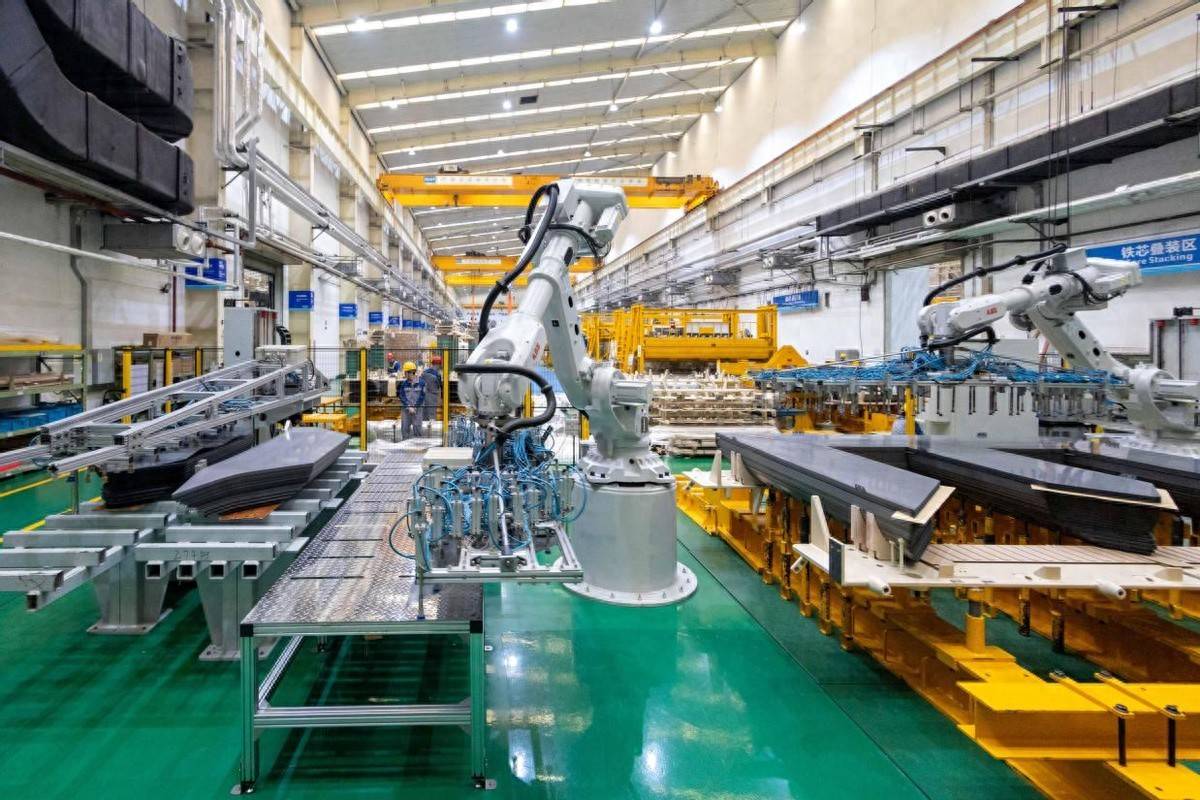
Core Viewpoint - The article discusses Trump's ongoing tariff policies aimed at China and the EU, highlighting the strategic objectives behind these measures and their implications for global trade dynamics [2][5][16]. Group 1: Tariff Policies and Objectives - Trump's tariffs on China are designed to create uncertainty and slow down China's industrial upgrades, with tariffs on high-tech products set to rise from 25% to 47% by January 2025 [2][3]. - The tariffs cover critical sectors such as semiconductors, electric vehicles, and industrial robots, while China has responded with a historic 84% tariff on all imports from the U.S. [3][5]. - The U.S. has also pressured companies like Apple and Tesla to relocate production from China to Southeast Asia or North America to maintain tariff benefits [3][5]. Group 2: Impact on the EU - Trump's approach to the EU involves targeted economic pressure, compelling the EU to eliminate tariffs on U.S. industrial goods while the U.S. maintains punitive tariffs on key EU products [7][10]. - A framework agreement was established where the EU agreed to purchase $750 billion in U.S. energy products and $40 billion in AI chips by 2028, indicating a significant economic concession [9][10]. - The U.S. has strategically divided the EU by offering concessions to Eastern European countries, thereby weakening the EU's collective response to U.S. policies [10][15]. Group 3: Broader Strategic Implications - The U.S. is not only applying economic pressure but also planning military withdrawals from Europe, which could further destabilize the region and increase reliance on U.S. security guarantees [12][13]. - Trump's actions have led to a growing awareness within the EU of the need for defense autonomy, as highlighted by the EU Commission President's remarks on strategic anxiety [15][16]. - The article concludes that while Trump's policies may disrupt global trade in the short term, they are unlikely to reverse the trend towards a multipolar world [16].
最高院判决对特朗普关税有何影响?瑞银推演了可能的结果
美股IPO· 2025-11-05 13:15
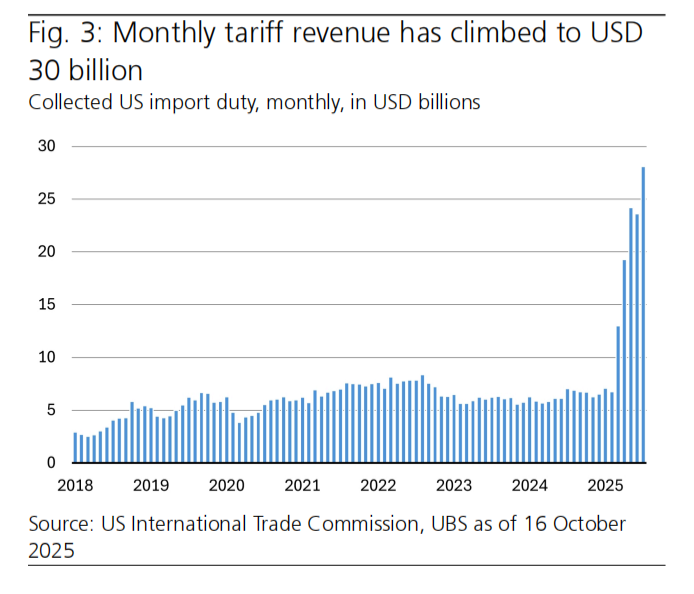
Core Viewpoint - UBS believes that if the U.S. Supreme Court rules Trump's tariffs illegal, it will force the government to refund approximately $140 billion in tariffs to importers, significantly impacting the short-term fiscal situation and potentially leading to a lower overall tax rate trade environment that could ultimately benefit the U.S. economy and stock market [1][4][13] Group 1: Supreme Court Ruling and Its Implications - The U.S. Supreme Court is set to quickly review the legality of most tariffs imposed by the Trump administration, with oral arguments scheduled for November 5 [4] - UBS estimates that if the tariffs are deemed illegal, the government may need to refund between $130 billion to $140 billion in tariff revenue, which would worsen the already challenging federal budget deficit situation, equating to 7.9% of the projected 2025 deficit [4][9] - The ruling could lead to market volatility in the short term, but if trade partners exercise restraint and avoid retaliation, the overall impact may be limited [4][17] Group 2: Financial Impact of Refunds - The estimated refund of $130 billion to $140 billion represents only 0.5% of the projected U.S. GDP for 2025, indicating a minimal stimulative effect on the economy [8] - However, this amount is significant for federal finances, as it constitutes 7.9% of the projected $1.8 trillion federal budget deficit for 2025, leading to substantial short-term fiscal pressure [9][10] - The loss of the International Emergency Economic Powers Act (IEEPA) as a flexible tariff tool may weaken future federal tax revenues, potentially steepening the yield curve due to concerns over fiscal sustainability [10] Group 3: Corporate and Market Reactions - For U.S. companies that directly paid tariffs, receiving refunds would provide unexpected financial relief, particularly benefiting small companies with fewer than 500 employees [12] - While large publicly traded companies may also benefit from refunds, the direct costs of tariffs have not significantly impacted the earnings forecasts for the S&P 500 index, suggesting that the positive effects of refunds may be minimal at the index level [12] - A potential decrease in the overall effective tariff rate could enhance household purchasing power, support economic growth, and improve corporate earnings, while reduced inflationary pressures may provide the Federal Reserve with more room to lower interest rates, a favorable outcome for stock investors [13] Group 4: Rebuilding Tariff Barriers - UBS anticipates that the government will not allow the collapse of tariff barriers if the IEEPA tariffs are invalidated, instead utilizing other legal tools to rebuild them [14] - Possible options include the 1974 Trade Act's Sections 201 and 301, which are more traditional tools but require lengthy investigations, and the 1962 Trade Expansion Act's Section 232, which allows tariffs based on national security [15][16] - The government may initially use Section 122 to quickly restore some tariffs, but will eventually need to rely on more complex and legally sound tools like Sections 232 and 301 for broader tariff implementation [16] Group 5: Future Trade Relations - Limited retaliation from trade partners may lead to a better-than-expected overall economic impact, as countries may refrain from escalating tensions due to concerns over deeper economic damage [17] - During the 150-day window of Section 122, significant changes to the tariff landscape may not occur, but after this period, the government will lose the flexibility granted by the IEEPA, making trade policy more targeted [18] - Countries with long-standing trade surpluses with the U.S. are likely to become initial targets for investigations under Section 301, and if IEEPA tariffs are ruled illegal, the overall effective tariff rate in the U.S. may decrease, although disparities in tariff rates among countries could increase [19]

特朗普上任一年:美股跑输全球大盘,中欧加全面反超!
Hua Er Jie Jian Wen· 2025-11-05 13:07
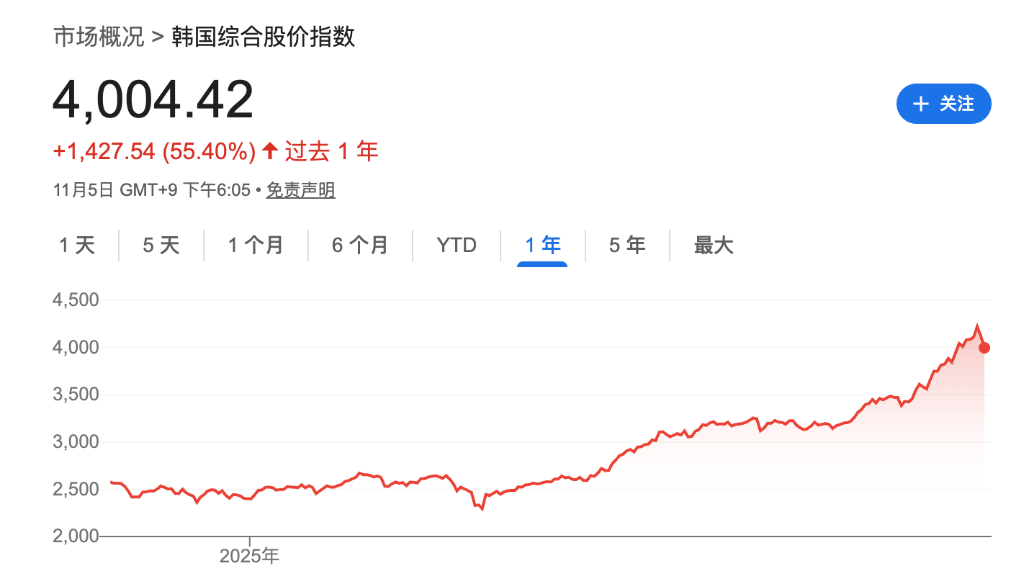
在特朗普第二任期的第一年,投资者纷纷涌入全球股市。起初是为了对冲其混乱关税政策可能引发的美股波动,随后则转向寻找估值更具吸引力 的标普500替代品。这一走势印证了高盛Peter Oppenheimer与美银Michael Hartnett等策略师在2024年的前瞻性判断——他们当时便建议投资者将目 光投向美国以外。 Hartnett目前指出,尽管随着美国企业盈利走强及债券收益率走低,全球股市的领先增速可能放缓,但他仍看好国际市场的未来表现。 亚洲股市受益AI供应链地位 亚洲股市表现尤为突出,这得益于该地区在AI供应链中的核心地位。台积电、三星电子和东京电子等芯片制造、代工和设备龙头企业推动了整体 涨势。 韩国Kospi指数过去一年飙升55%,领跑亚洲主要市场,凸显其作为区域内最具吸引力AI投资标的地位。 一年前,投资者们普遍认为,如果特朗普赢得总统大选,其关税威胁与减税政策将导致国际股市表现不及美国。然而,全球市场如今正上演一场 历史性的逆转。 自特朗普去年11月赢得大选以来,以美元计价的中国、欧洲及加拿大基准股指表现均优于标普500指数。MSCI全球(除美国)股票指数今年相对 华尔街基准指数的领先幅度,创下 ...
华利集团(300979) - 300979华利集团投资者关系管理信息20251105
2025-11-05 12:44
Group 1: Financial Performance - The company's gross margin improved in Q3 2025 compared to Q2 2025, but overall gross margin has declined compared to the same period last year due to new factories ramping up production and capacity adjustments [2] - Interest expenses increased significantly this year due to a rise in short-term borrowings compared to last year [4] - Cash dividends in 2021 accounted for approximately 89% of net profit, while in 2022 and 2023, the ratios were 43% and 44% respectively. The projected dividend payout for 2024 is about 70% of net profit [11] Group 2: Operational Insights - The company has established factories for Adidas in Vietnam, Indonesia, and China, with no significant discrepancies between formal and forecasted orders [5] - The production capacity utilization is flexible and adjusted based on order conditions, maintaining a high utilization rate [6] - The first factory in Indonesia has achieved profitability during the reporting period, indicating positive operational progress [7][8] Group 3: Market Dynamics - The average selling price increased year-on-year in Q3 2025, despite a decline in sales volume, driven by changes in customer and product mix [3] - The company employs a diversified brand strategy, optimizing customer and product structures to influence average selling prices [3] - The company competes effectively against established manufacturers by leveraging its comprehensive shoe-making technology and strong market reputation [9] Group 4: Future Outlook - The company plans to continue expanding production capacity in the coming years, with three out of four new factories projected to achieve profitability by the end of 2025 [10] - Future production capacity will be adjusted based on customer orders, with a focus on new factory construction and equipment upgrades [10]
最高院判决对特朗普关税有何影响?瑞银推演了可能的结果
Hua Er Jie Jian Wen· 2025-11-05 11:50
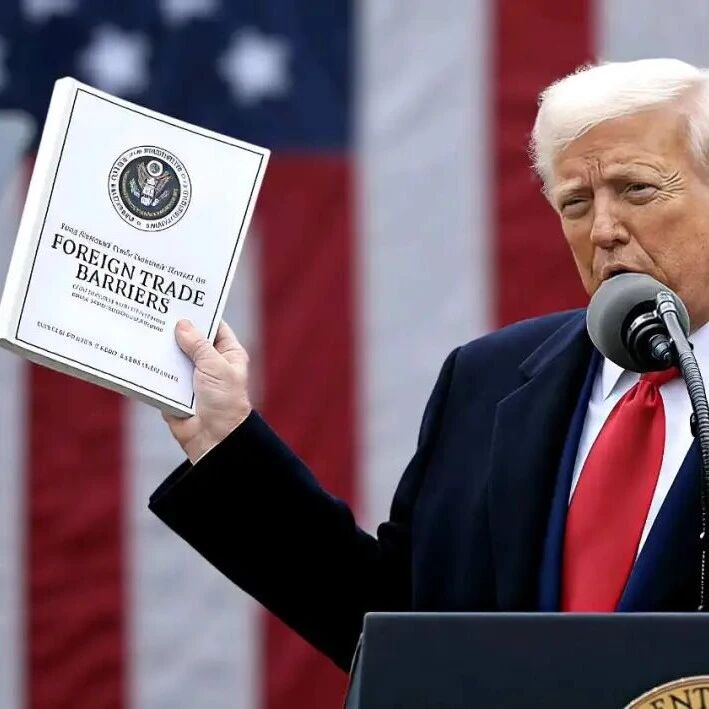
Core Viewpoint - A key ruling by the U.S. Supreme Court may dismantle the core of the Trump administration's tariff policy, potentially requiring the government to refund a substantial amount of tariffs to importers and reshape U.S. trade barriers [1][2]. Group 1: Legal Context - The Supreme Court case "Trump v. V.O.S. Selections, Inc." centers on whether the "norms of imports" in the International Emergency Economic Powers Act (IEEPA) implicitly grants the president the authority to impose tariffs, despite the absence of explicit mention of "tariffs" in the statute [2]. - Opponents argue that the power to levy tariffs belongs to Congress, requiring clearer authorization for large-scale tariff actions by the government [2]. Group 2: Financial Implications - If the IEEPA tariffs are ruled illegal, the government may be forced to refund approximately $130 billion to $140 billion in tariff revenue, which would significantly impact the federal budget deficit, equating to 7.9% of the projected $1.8 trillion deficit for 2025 [4]. - The refund amount represents only 0.5% of the estimated U.S. GDP for 2025, indicating a minimal macroeconomic boost, but a substantial short-term impact on federal finances [4]. Group 3: Market Reactions - For U.S. companies directly paying tariffs, receiving refunds would provide unexpected financial relief, particularly benefiting small companies with fewer than 500 employees, which are estimated to receive about one-third of the refunds [8]. - The overall effective tariff rate may decrease, enhancing household purchasing power and supporting economic growth and corporate profits, although the positive effects on the S&P 500 index may be negligible [8][9]. Group 4: Future Trade Policy - The government is expected to utilize other legal tools to rebuild tariff barriers if the IEEPA tariffs are invalidated, including the Trade Act of 1974 and the Trade Expansion Act of 1962, although these processes may be more time-consuming and less flexible [10]. - The potential for targeted tariffs may increase, particularly against countries with significant trade surpluses with the U.S., leading to greater disparities in tariff rates among different countries [11].
21专访|布兰查德谈美国经济:AI繁荣与关税阴影下的十字路口
Sou Hu Cai Jing· 2025-11-05 10:53
Group 1: Economic Overview - The U.S. economy is experiencing a complex scenario characterized by strong consumer spending, rising AI investments, and a softening labor market [2][6] - Current economic growth is primarily driven by productivity gains from AI investments, suggesting a potentially higher long-term growth rate for the U.S. [2][6] - The direct effects of AI investment include stimulating demand and boosting consumer confidence, while indirect effects are seen in rising productivity [2][6] Group 2: Tariff and Trade Impact - Tariff costs are currently borne by importers and have not significantly impacted consumer prices, limiting their overall economic effect [3][11] - The uncertainty caused by tariffs has led some businesses to delay investments, which could gradually increase inflation if import prices rise [3][11] - Overall, the impact of tariffs on the U.S. economy is considered limited at this stage, with the primary concern being the uncertainty they create [12][13] Group 3: Monetary Policy and Inflation - Current inflation is around 3%, which is above the Federal Reserve's target of 2%, potentially constraining the space for interest rate cuts [3][10] - The Federal Reserve is expected to focus more on inflation rather than employment, especially if inflation remains above 3% [3][10] - The Fed's approach is described as "data-driven," which is deemed appropriate given the current economic complexities [3][9] Group 4: AI and Employment - While productivity growth is notable, there are concerns that AI may lead to the displacement of certain skilled jobs, resulting in structural unemployment [3][19] - Individuals are advised to develop transferable skills to avoid over-specialization, and there is a call for government and societal initiatives to promote retraining programs [3][19] - The interaction between AI investments and employment is complex, with significant productivity improvements expected, but the exact impact on job markets remains uncertain [15][19] Group 5: Debt and Political Environment - The U.S. debt issue is technically manageable, but political will to address it is lacking, which could raise investor concerns in the medium to long term [4][24] - The outcome of the 2026 midterm elections could lead to either the continuation of current policies or increased uncertainty, impacting U.S.-China-EU economic relations [4][28] - There is a belief that the Federal Reserve's independence is strong, despite some attempts to influence it, and it is expected to make sound decisions [21][22]