
量化宽松(QE)

Search documents
'Higher for Longer' Fed Stance Faces Bearish SPX Signal
Schaeffers Investment Research· 2025-11-10 14:37
Core Viewpoint - The Federal Reserve is committed to maintaining higher interest rates for an extended period to achieve its dual mandate of stable consumer prices and maximum employment, with inflation expected to take time to decrease towards the target of 2% [1][3][4]. Monetary Policy Changes - The Federal Reserve transitioned from a Quantitative Easing (QE) cycle to a Quantitative Tightening (QT) cycle, raising the Federal Funds Effective Rate from near zero to a peak of 5.25% to 5.5% over two and a half years [2]. - The Fed's hawkish stance emphasized that rates would remain "higher for longer," reflecting its commitment to controlling inflation and supporting employment [3]. Inflation and Economic Indicators - Inflation, as measured by the Consumer Price Index (CPI), decreased from a peak of 8% in 2022 towards the Fed's 2% target, indicating progress in disinflation across goods and services [4]. - The market responded positively to the Fed's dovish pivot, with the S&P 500 Index rallying nearly 10% following the announcement of a 50-basis point rate cut [5]. Market Reactions and Trends - The market celebrated the balance achieved in the Fed's dual mandate, leading to lower rates on the shorter end of the yield curve as participants anticipated further rate cuts [6]. - AI-related stocks significantly boosted the S&P 500 and Nasdaq Composite, with gains of over 40% and 60% from their lows, respectively, despite a temporary drop in market sentiment due to tariff announcements [7][9]. Labor Market and Economic Risks - Early signs of stress in the labor market emerged, contrasting with the Fed's objectives, as the balance of risk shifted within its dual mandate [8][9]. - Despite ongoing risks from trade disputes and labor market conditions, the market maintained a "buy the dip" mentality, leading to multiple all-time highs in equity indices [9]. Technical Market Analysis - The S&P 500 has shown orderly upward movement within a defined channel, although recent volatility raised concerns about potential downside risks [10][11]. - The trend remains intact, but there are indications of underlying stress that could affect market sentiment and risk appetite [11].


达利欧:美联储结束QT=在泡沫中刺激经济,美国“大债务周期”已进入最危险阶段!
华尔街见闻· 2025-11-07 10:24
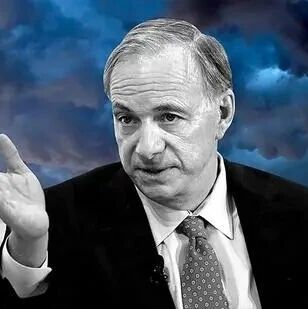
Core Viewpoint - Ray Dalio, founder of Bridgewater Associates, warns that the Federal Reserve's decision to end quantitative tightening (QT) may be adding fuel to an already inflated market, creating a larger bubble rather than stimulating a depressed economy [1][8]. Group 1: Current Economic Environment - The current environment of the Federal Reserve's quantitative easing (QE) is characterized by high asset valuations and a relatively strong economy, contrasting with historical instances where QE was deployed during economic downturns [8]. - The S&P 500 earnings yield is at 4.4%, while the nominal yield on 10-year U.S. Treasuries is approximately 4%, leading to a real yield of about 1.8% [8]. - The average real GDP growth rate over the past year is around 2%, with an unemployment rate of only 4.3% [8]. Group 2: Debt Cycle and Risks - Dalio emphasizes that the U.S. is in a dangerous phase of the "big debt cycle," where the supply of U.S. Treasuries exceeds demand, prompting the Fed to print money to purchase bonds [2]. - The current fiscal policy is highly stimulative, with significant government debt and deficits being financed through large-scale bond issuance, effectively monetizing government debt [10][11]. Group 3: Market Dynamics and Asset Performance - In a liquidity-rich environment, long-duration assets (such as technology and AI stocks) and inflation-hedging assets (like gold) are expected to benefit, but this "liquidity bubble" will eventually face risks from accumulated challenges and tightening policies [3][15]. - The implementation of QE typically creates liquidity and lowers real interest rates, which can inflate asset prices and widen the wealth gap between asset holders and non-holders [5]. Group 4: Future Outlook - Dalio warns of a potential "liquidity melt-up" similar to the pre-burst of the 1999 internet bubble or the QE periods of 2010-2011, driven by the current policy mix of fiscal deficit expansion, monetary easing, deregulation, and AI growth [13][14]. - While such policies may create short-term asset booms, they also lead to faster bubble inflation, more challenging inflation control, and deeper risk accumulation, with significant costs when policies are reversed [15].
技术性购债还是变相QE?达利欧警示“危险且通胀性”政策组合
Xin Hua Cai Jing· 2025-11-07 09:44
Core Viewpoint - Ray Dalio warns that a combination of the Federal Reserve stopping quantitative tightening while expanding its balance sheet, alongside interest rate cuts and high fiscal deficits, could create a "more dangerous and inflation-prone" policy environment [1][2]. Group 1: Federal Reserve Actions - The Federal Reserve will officially stop its quantitative tightening program on December 1, ceasing the reduction of its nearly $7 trillion balance sheet [1]. - Fed Chairman Jerome Powell indicated that the Fed may begin to increase asset holdings to ensure reserves grow in line with the banking system and economic scale [1]. - Dallas Fed President Lorie Logan noted that if recent repo rate increases are not temporary, the Fed may need to start purchasing assets to maintain adequate reserve supply [1]. Group 2: Market Implications - There is a divergence in the market regarding whether these actions constitute quantitative easing (QE), as the Fed typically does not classify technical purchases aimed at managing short-term rates as QE [1]. - Analysts suggest that the market effects of these actions may be difficult to distinguish from traditional QE [1]. - Evercore analyst Marco Casiraghi estimates that the Fed may need to purchase up to $50 billion in assets monthly by Q1 2026, primarily focusing on short-term Treasury bills, which could indirectly lower long-term yields [1]. Group 3: Economic Environment and Risks - Dalio emphasizes that the current environment differs fundamentally from historical stimulus cycles, highlighting active private credit, strong capital market financing, high stock market levels, low credit spreads and unemployment rates, and persistent high inflation [2]. - He describes the situation as a "bold and dangerous gamble" on economic growth, particularly in AI, supported by extremely loose fiscal, monetary, and regulatory policies [2]. - Dalio warns that if inflation risks reignite, companies with physical assets (like mining and infrastructure) may outperform pure long-duration tech stocks [2]. Group 4: Historical Context - Dalio compares the current market conditions to the liquidity-driven market rallies of late 1999 and 2010-2011, suggesting that such conditions may lead to forced policy tightening due to excessive risk accumulation [2]. - He advises that the classic time to sell assets is just before inflation spirals out of control and policies shift towards tightening [2].
国泰君安期货商品研究晨报:贵金属及基本金属-20251107
Guo Tai Jun An Qi Huo· 2025-11-07 02:48
Report Industry Investment Rating No relevant content provided. Core Viewpoints of the Report - Gold: The government shutdown continues to affect liquidity [2]. - Silver: Oscillate and rebound [2]. - Copper: Inventory increases, and prices oscillate [2]. - Zinc: Range-bound oscillation [2]. - Lead: Overseas inventory continues to decrease, supporting prices [2]. - Tin: Pay attention to macro - impacts [2]. - Aluminum: Oscillate with a bullish bias [2]. - Alumina: Run weakly [2]. - Cast aluminum alloy: Follow electrolytic aluminum [2]. - Nickel: Smelting - end inventory accumulation suppresses, while mine - end uncertainties support [2]. - Stainless steel: Steel prices oscillate in a narrow range at low levels [2]. Summary by Related Catalogs Gold - **Price and Trading Volume**: The closing price of Shanghai Gold 2512 yesterday was 917.80, with a daily increase of 0.61%, and the night - session closing price was 915.24, with a night - session increase of 0.06%. The trading volume of Shanghai Gold 25122510 decreased by 99,677 compared to the previous day [4]. - **Inventory**: The inventory of Shanghai Gold was 87,816 kilograms, with no change from the previous day [4]. - **Macro and Industry News**: The Fed's December interest - rate cut is uncertain. This year's voting members are hesitant due to the government shutdown, and next year's voting members are more worried about inflation [4]. - **Trend Intensity**: Gold trend intensity is 0 [6]. Silver - **Price and Trading Volume**: The closing price of Shanghai Silver 2512 yesterday was 11,427, with a daily increase of 1.34%, and the night - session closing price was 11,359.00, with a night - session increase of 0.11%. The trading volume of Shanghai Silver 2512 increased by 3,201 compared to the previous day [4]. - **Inventory**: The inventory of Shanghai Silver decreased by 16,230 kilograms compared to the previous day [4]. - **Trend Intensity**: Silver trend intensity is - 1 [6]. Copper - **Price and Trading Volume**: The closing price of the Shanghai Copper main contract was 86,320, with a daily increase of 0.76%, and the night - session closing price was 85,690, with a night - session decrease of 0.73%. The trading volume of the Shanghai Copper index decreased by 72,044 compared to the previous day [8]. - **Inventory**: The inventory of Shanghai Copper increased by 1,332, and the inventory of London Copper increased by 500 [8]. - **Macro and Industry News**: The US October Challenger corporate lay - offs reached a 20 - year high. The Fed's December interest - rate cut direction is unclear. Chile's state - owned mining company ENAMI obtained environmental approval for a new $1.7 - billion copper smelter [8][10]. - **Trend Intensity**: Copper trend intensity is 0 [10]. Zinc - **Price and Trading Volume**: The closing price of the Shanghai Zinc main contract was 22,675, with a 0.11% increase. The trading volume of the Shanghai Zinc main contract decreased by 809 [11]. - **Inventory**: The inventory of Shanghai Zinc decreased by 401 tons, and the inventory of LME Zinc increased by 100 tons [11]. - **News**: The Fed's December interest - rate cut direction is unclear [11]. - **Trend Intensity**: Zinc trend intensity is 0 [11]. Lead - **Price and Trading Volume**: The closing price of the Shanghai Lead main contract was 17,430, with a 0.26% decrease. The trading volume of the Shanghai Lead main contract decreased by 2,244 [15]. - **Inventory**: The inventory of Shanghai Lead increased by 199 tons, and the inventory of LME Lead decreased by 3,100 tons [15]. - **News**: The US October Challenger corporate lay - offs reached a 20 - year high, and the Fed's December interest - rate cut direction is unclear [15]. - **Trend Intensity**: Lead trend intensity is 0 [15]. Tin - **Price and Trading Volume**: Similar to gold and silver price and trading - volume data are provided, such as the closing price and trading - volume changes of Shanghai Gold and Shanghai Silver [17]. - **Macro and Industry News**: The Fed's December interest - rate cut is uncertain, and the US October Challenger corporate lay - offs increased significantly [17][18]. - **Trend Intensity**: Tin trend intensity is 1 [19]. Aluminum, Alumina, and Cast Aluminum Alloy - **Price and Trading Volume**: The closing price of the Shanghai Aluminum main contract was 21,630, with a decrease of 235 compared to T - 1. The trading volume of the Shanghai Aluminum main contract decreased by 14,424 [21]. - **Inventory**: The domestic aluminum ingot social inventory was 607,000 tons, a decrease of 7,000 tons [21]. - **News**: The AI revolution accelerates the lay - off wave, and Dalio warns about the US economic situation [22]. - **Trend Intensity**: Aluminum trend intensity is 1, alumina trend intensity is - 1, and cast aluminum alloy trend intensity is 1 [22]. Nickel and Stainless Steel - **Price and Trading Volume**: The closing price of the Shanghai Nickel main contract was 119,750, a decrease of 280 compared to T - 1. The closing price of the stainless - steel main contract was 12,590, an increase of 55 [23]. - **News**: The Indonesian forestry working group took over a nickel - mining area, China suspended a non - official subsidy for imported copper and nickel from Russia, and Indonesia imposed sanctions on mining companies [23][24]. - **Trend Intensity**: Nickel trend intensity is 0, and stainless - steel trend intensity is 0 [25].
铝:震荡偏强,氧化铝:偏弱运行,铸造铝合金:跟随电解铝
Guo Tai Jun An Qi Huo· 2025-11-07 02:24
Report Industry Investment Rating - Aluminum: Oscillating with a bullish bias [1] - Alumina: Weakening [1] - Cast aluminum alloy: Following the trend of electrolytic aluminum [1] Core Viewpoints - The report updates the fundamental data of aluminum, alumina, and cast aluminum alloy, including prices, trading volumes, open interests, spreads, and inventory levels [1] - The trend intensities of aluminum, alumina, and aluminum alloy are 1, -1, and 1 respectively, indicating a bullish view on aluminum and aluminum alloy and a bearish view on alumina [2] Summary by Relevant Catalogs Futures Market - The closing price of the main contract of SHFE aluminum is 21,630, up 235 from the previous trading day [1] - The closing price of the main contract of SHFE alumina is 2,787, up 15 from the previous trading day [1] - The closing price of the main contract of aluminum alloy is 21,095, up 265 from the previous trading day [1] Spot Market - The average domestic alumina price is 2,879, down 2 from the previous trading day [1] - The CIF price of alumina at Lianyungang is 341 US dollars per ton, down 1 from the previous trading day [1] - The FOB price of Australian alumina is 317 US dollars per ton, down 1 from the previous trading day [1] Inventory - The domestic social inventory of aluminum ingots is 607,000 tons, down 7,000 tons from the previous trading day [1] - The warehouse receipts of aluminum ingots on the SHFE are 64,000 tons, down 200 tons from the previous trading day [1] - The LME aluminum inventory is 548,400 tons, down 2,100 tons from the previous trading day [1] Other Information - The US corporate lay - offs in October reached 153,074, a year - on - year increase of 175.3%, the highest level in 20 years [2] - Dalio believes that the Fed's potential return to QE in a market with a large bubble may lead to a repeat of the liquidity frenzy before the 1999 bubble burst [2]
达利欧发出警告:美联储结束QT=在泡沫中刺激经济,美国“大债务周期”已进入最危险阶段!
美股IPO· 2025-11-07 00:50
Core Viewpoint - The current environment of quantitative easing (QE) is significantly different from previous instances, as it is being implemented during a time of high asset valuations and economic strength, potentially leading to a larger bubble rather than addressing a recession [3][8][12]. Group 1: Economic Context - Ray Dalio warns that the U.S. is in a dangerous phase of the "big debt cycle," where the supply of U.S. Treasury bonds exceeds demand, prompting the Federal Reserve to "print money" to purchase bonds [4][10]. - The current economic indicators show a relatively strong economy with a real GDP growth rate averaging 2% over the past year and an unemployment rate of 4.3% [8][9]. Group 2: Market Dynamics - Dalio emphasizes that QE creates liquidity and lowers real interest rates, which can inflate asset prices and widen the wealth gap between asset holders and non-holders [6][12]. - The transmission mechanism of QE is driven by relative attractiveness rather than absolute returns, influencing investor choices based on expected total returns [5][6]. Group 3: Risks and Implications - The implementation of QE in a high-valuation environment poses significant policy risks, as it may lead to a "liquidity melt-up" similar to the pre-burst of the 1999 internet bubble [11][12]. - Dalio predicts that the current policy mix of fiscal deficit expansion, renewed monetary easing, and regulatory relaxation will create a "super loose" environment that could exacerbate inflation and deepen risk accumulation [12][13].
达利欧:美联储结束QT=在泡沫中刺激经济 美国“大债务周期”已进入最危险阶段!
智通财经网· 2025-11-06 23:32
Core Viewpoint - Ray Dalio, founder of Bridgewater Associates, warns that the Federal Reserve's decision to end quantitative tightening (QT) may be adding fuel to an already inflated bubble, rather than stimulating a depressed economy [1] Group 1: Current Economic Environment - The current environment of the Federal Reserve's easing policy coincides with high asset valuations and a relatively strong economy, which Dalio describes as "stimulus into a bubble" [1] - Dalio believes the U.S. "big debt cycle" has entered a dangerous phase, characterized by the Federal Reserve printing money to buy bonds when the supply of U.S. debt exceeds demand [2] - The current economic indicators show a strong economy with an average real growth rate of 2% over the past year and an unemployment rate of only 4.3% [6] Group 2: Quantitative Easing (QE) Mechanism - Dalio explains that the transmission mechanism of QE is driven by relative attractiveness rather than absolute attractiveness, influencing investor choices based on expected total returns [3] - The implementation of QE typically creates liquidity and lowers real interest rates, which can inflate asset prices and widen the wealth gap between asset holders and non-holders [3] Group 3: Historical Context of QE - Historically, QE has been deployed during economic downturns, characterized by falling asset valuations and high unemployment, contrasting sharply with the current high asset valuations and low unemployment [6][7] - Current asset valuations are high, with the S&P 500 earnings yield at 4.4% compared to a 10-year Treasury yield of 4%, indicating a low equity risk premium of about 0.3% [6] Group 4: Risks of Current Policies - Dalio warns that the current combination of fiscal expansion, monetary easing, and regulatory relaxation is creating a "super-easy" environment that may lead to a liquidity melt-up similar to the 1999 internet bubble [9] - The potential for inflation to become unmanageable increases as the Federal Reserve's balance sheet expands and interest rates are lowered while fiscal deficits remain large [8][9]
达利欧:美联储结束QT=在泡沫中刺激经济,美国“大债务周期”已进入最危险阶段!
Hua Er Jie Jian Wen· 2025-11-06 13:03
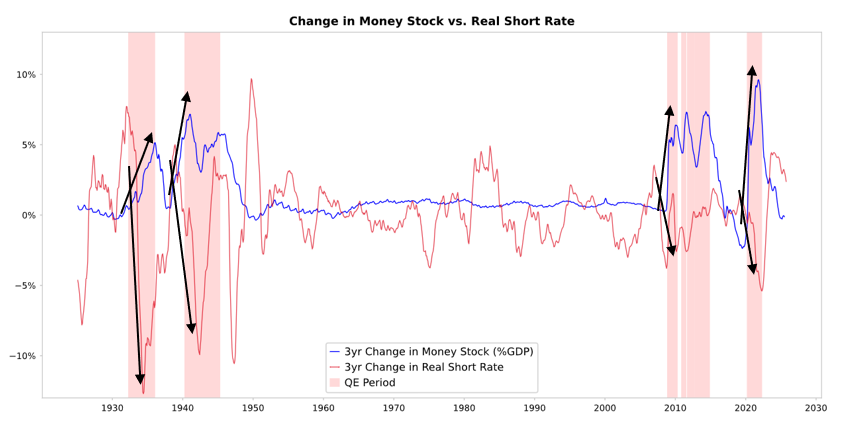
Core Viewpoint - Ray Dalio, founder of Bridgewater Associates, warns that the Federal Reserve's decision to end quantitative tightening (QT) may be adding fuel to an already inflated bubble, rather than stimulating a depressed economy [1] Group 1: Current Economic Environment - The Fed's current easing policy is being implemented at a time of high asset valuations and relatively strong economic conditions, which Dalio describes as "stimulus into a bubble" [1] - The U.S. is in a dangerous phase of the "big debt cycle," characterized by a situation where the supply of U.S. Treasury bonds exceeds demand, leading the Fed to print money to purchase bonds [1][6] - Current asset valuations are high, with the S&P 500 earnings yield at 4.4% and the 10-year Treasury yield at approximately 4%, indicating a low equity risk premium of about 0.3% [4] Group 2: Quantitative Easing (QE) Mechanism - Dalio explains that all financial flows and market volatility are driven by relative attractiveness rather than absolute attractiveness, with investors choosing assets based on expected total returns [2] - The implementation of QE typically creates liquidity and lowers real interest rates, which can inflate asset prices and widen the wealth gap between asset holders and non-holders [2] Group 3: Historical Context of QE - Historically, QE has been deployed during economic downturns, characterized by falling asset valuations, economic contraction, and low inflation, contrasting sharply with the current high asset valuations and strong economic growth [4][5] - Current inflation is slightly above target at around 3%, with credit and liquidity conditions being robust, leading to a low credit spread [5] Group 4: Risks and Future Outlook - Dalio warns that the current policy environment appears more dangerous and inflationary, with potential for a "liquidity melt-up" similar to the pre-burst of the 1999 internet bubble [7] - The combination of fiscal deficit expansion, renewed monetary easing, and regulatory relaxation is creating a "super-easy" environment that may lead to faster bubble inflation and deeper risk accumulation [7] - Long-duration assets, particularly in technology and AI, along with inflation-hedging assets like gold, are expected to benefit from the current liquidity environment, but risks may escalate if inflation concerns resurface [7]
海外市场点评:市场下跌赖流动性吗?
Minsheng Securities· 2025-11-05 13:43
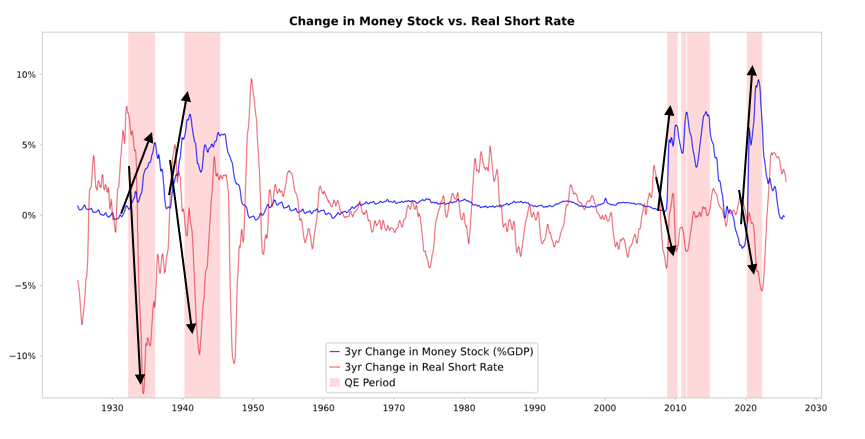
Group 1: Market Dynamics - The recent decline in US stocks is attributed to a combination of factors, including tightening liquidity and changing market sentiment, rather than solely liquidity issues[1] - The risk premium for US stocks has dropped to historical lows, indicating limited upside potential for the market[1] - The market correction is viewed as a profit-taking response following a series of positive developments, rather than a direct result of liquidity constraints[1] Group 2: Liquidity Conditions - The US Treasury's General Account (TGA) balance surged from $300 billion in July to $1 trillion in early November, reflecting increased debt issuance and reduced fiscal spending during the government shutdown[1] - The Federal Reserve's balance sheet has decreased from a peak of $9 trillion to $6.6 trillion, with bank reserves falling to $2.85 trillion, the lowest since 2021[2] - The overnight reverse repurchase agreement (ON-RRP) tool's balance is nearly exhausted, indicating a significant reduction in liquidity buffers[2] Group 3: Future Outlook - The likelihood of the government ending its shutdown around mid-November is considered high, which could lead to a release of funds back into the market[5] - If the government shutdown persists, further market adjustments may be necessary due to ongoing liquidity pressures[5] - Long-term solutions to liquidity issues may require a new round of quantitative easing (QE) alongside the increase in the debt ceiling[5]
温铁军:美元如何收割全世界?中国经济三次阵痛背后的收割逻辑
Sou Hu Cai Jing· 2025-11-05 11:09
Core Insights - The article argues that the true driver of the global economy is the US dollar, not institutions like the UN or IMF, and highlights a pattern of financial exploitation by the US over the past three decades [1] - It emphasizes that the US engages in financial manipulation rather than genuine economic development, leading to repeated crises in countries like China [1][14] Group 1: Historical Context - After the 2008 financial crisis, the US implemented significant quantitative easing (QE), injecting over 60% of new dollar liquidity into global markets, which caused commodity prices, including oil, to surge dramatically [3][5] - China, as the largest importer of raw materials and energy, was particularly affected by these price increases, leading to inflationary pressures [5][6] Group 2: Economic Impact - The influx of dollars led to "input-type inflation" in China, where local manufacturers faced rising costs while trying to compete in a global market dominated by US monetary policy [6][12] - The US's strategy of withdrawing liquidity through interest rate hikes and QE cessation resulted in a sharp decline in oil prices, adversely impacting exporting countries and leading to production overcapacity in China [8][14] Group 3: Dollar's Global Role - The dollar's status as the global reserve currency allows the US to dictate terms in international trade, particularly in commodities like oil, which must be purchased in dollars [10][12] - The US's financial maneuvers not only affect its own economy but also have significant repercussions for other nations, particularly those reliant on exports and foreign investment [12][16] Group 4: Strategic Implications - The article outlines a three-step process of financial exploitation by the US: first, through liquidity and commodity price manipulation; second, by compelling foreign entities to invest in US debt; and third, by leveraging this debt to gain influence over foreign infrastructure and policies [16] - The US's military presence and financial dominance serve as a strategic tool to maintain its economic hegemony, effectively isolating nations that challenge its authority [16][18] Group 5: Future Considerations - The article concludes that China must reassess its economic strategies and not solely focus on GDP growth, as financial warfare poses a significant threat to its industrial base [18][20] - It advocates for a shift towards reclaiming economic sovereignty and reducing dependency on the US dollar to prevent future crises [20]
