AI热潮

Search documents
看好高市早苗刺激政策,日本券商“齐刷刷”上调日经指数目标位
Hua Er Jie Jian Wen· 2025-10-09 02:11
Group 1 - Major Japanese brokerages are collectively optimistic about the Nikkei 225 index due to expectations of a large-scale economic stimulus plan under new leader Kishi Sayaka [1][2] - The Nikkei 225 index saw a significant increase of 4.8% this week, while the TSE index rose by 3.1% [1] - The Japanese yen fell below 150 against the US dollar and reached a historical low against the euro [1] Group 2 - Analysts believe that Kishi Sayaka's leadership will boost economic growth and corporate earnings, driving their stock market predictions [1][2] - Nomura Securities raised its year-end target for the Nikkei index from 44,500 to 49,000 points, and the TSE index from 3,200 to 3,300 points [2] - Daiwa Securities increased its Nikkei index target from 44,000 to 49,000 points, with a potential to reach 50,000 points within the year [2] - SMBC Nikko Securities adjusted its Nikkei index target from 45,000 to 47,000 points, highlighting potential benefits for energy technology, cybersecurity, and defense sectors [2] - Swiss wealth management firm Julius Baer raised its Nikkei index target from 46,000 to 50,000 points, citing the attractiveness of the Japanese stock market driven by AI trends and structural reforms [2]
10月9日隔夜要闻:纳指大涨1.12% 油价走高 现货金价破4000美元 特朗普称达成加沙停火...
Xin Lang Cai Jing· 2025-10-08 23:15
Company - AMD's stock price continues to rise after partnering with OpenAI, with a week-to-date increase of 43% [3] - Security service company Verisure saw a significant first-day listing surge, marking the largest IPO in Europe since 2022 [3] - Investment banks are collectively optimistic about Dell, with target prices being raised consecutively, leading to a single-day stock increase of 9% [3] - Citigroup downgraded the rating of Robinson Global Logistics while raising its target stock price [3] - Alibaba's Tongyi Qianwen technology head is forming an internal AI robotics team [3] Industry - The U.S. federal government remains in a shutdown, with nearly half of the IRS employees forced to take leave [3] - The Congressional Budget Office reports that the U.S. budget deficit for fiscal year 2025 is projected to remain at $1.8 trillion [3] - The IMF and central banks from the U.S. and U.K. are discussing the AI boom in U.S. stocks, weighing the risks of a potential slowdown or a healthy bubble [3] - The issuance of U.S. Treasury securities has surged, raising speculation about a reduction in the issuance of interest-bearing debt [3]



每日投资策略-20251008
Zhao Yin Guo Ji· 2025-10-08 02:11
Global Market Overview - The report highlights that major global stock markets experienced mixed performance, with the Hang Seng Index remaining stable at 26,958, while the US markets showed slight declines, particularly the Nasdaq which fell by 0.67% [1][3] - Emerging markets have shown strong recovery this year, with the MSCI Emerging Markets Index up 28%, marking the largest increase since 2009, significantly outperforming the MSCI Developed Markets Index [3] - The report notes a shift in investor sentiment, with funds moving from bond markets to alternative assets like gold, silver, and Bitcoin due to concerns over currency devaluation and high government debt levels [3] Hong Kong Stock Performance - The Hang Seng Financial Index closed at 45,150, reflecting a year-to-date increase of 28.50%, while the Hang Seng Industrial Index rose by 39.85% [2] - The report indicates that the Hang Seng Property Index increased by 21.45%, whereas the Hang Seng Utilities Index saw a slight decline of 0.33% [2] Japanese Market Insights - Japan's stock market surged following the unexpected election of a pro-stimulus leader, with the 10-year government bond yield reaching its highest level since 2008, indicating a potential shift towards more expansive monetary and fiscal policies [3] - The report suggests that this political change may enhance macroeconomic stimulus prospects in Japan [3] US Market Dynamics - The US stock market experienced a pullback, particularly in consumer discretionary and industrial sectors, while utilities and financials showed gains [3] - Notable movements included Oracle's significant decline due to disappointing cloud business margins, while AMD's stock rose following a partnership with OpenAI [3] Commodity Market Trends - Gold prices reached a historic high, closing above $4,000, driven by a weaker dollar and high government debt levels [3] - The report also mentions a surge in cobalt prices due to export control measures from the Democratic Republic of Congo, raising concerns about long-term supply constraints [3]
重大!高盛公开唱空:股市将回调!是否可信,又是套路吗?
Sou Hu Cai Jing· 2025-10-05 21:40
Group 1 - Goldman Sachs warns that the stock market may experience a significant correction in the next one to two years, citing the AI boom as a potential risk similar to the internet bubble [1][3] - CEO David Solomon compares the current AI-driven market to the 1990s internet bubble, suggesting that a withdrawal of investments could lead to a market downturn [3][12] - The S&P 500's cyclically adjusted price-to-earnings ratio has surged to 38 times, indicating a historical high and raising concerns about market concentration risk [3][12] Group 2 - Goldman Sachs has a history of making inaccurate predictions regarding bank stocks, such as its 2023 report on China Merchants Bank, which underestimated the actual non-performing loan ratio [5][9] - The current market environment is complicated by high global government debt and rising interest rates, which could impact stock market stability [5][12] - There is a divergence in market reactions to Goldman Sachs' warnings, with some investors reducing their positions while others see potential buying opportunities [8][12] Group 3 - Retail investors are particularly vulnerable to panic selling in response to institutional warnings, as evidenced by the significant volume of high-risk options trading [8][12] - Goldman Sachs' contradictory stance—warning of an AI bubble while acknowledging the long-term potential of technology—raises questions about its motives [8][12] - Other financial institutions, like Morgan Stanley and Bank of America, are also issuing warnings about market risks, contributing to a confusing landscape for investors [12][13]


美国居民股票持有比例创新高!专家敲响警钟:经济将更易受股市冲击
智通财经网· 2025-09-29 06:57
Core Insights - The amount of money Americans are investing in the stock market has reached an all-time high, with stocks accounting for 45% of household financial assets, driven by a historic stock market rise and increased participation in stock investments [1][2] - The concentration of wealth in the stock market raises concerns about the potential impact of market downturns on personal finances, especially amid a weakening labor market and persistent inflation [1][2] - The "Big Seven" tech companies have contributed approximately 41% of the S&P 500's gains this year, leading to increased exposure for investors to the fortunes of a few major firms [2] Market Dynamics - The S&P 500 index has risen 33% since its low on April 8, with a year-to-date increase of 13%, largely driven by the AI boom and significant gains in tech stocks like Nvidia [1] - Historical data indicates that when stock ownership levels reach record highs, the risks of declines and below-average returns also increase, suggesting that future returns may not replicate the past decade's performance [2][3] Economic Disparities - Concerns about a "K-shaped economy" are growing, where the wealthiest Americans are becoming richer while the poorest continue to struggle, primarily due to reliance on the labor market for income [2][3] - The top 10% of earners contributed over 49% of consumer spending in Q2, the highest proportion recorded since 1989, highlighting the economic divide [3] Psychological Impact - The strong performance of the stock market has inflated the net worth of the wealthy, which in turn supports economic growth through increased consumption [3][4] - A significant stock market exposure can amplify economic impacts, where market downturns could negatively affect consumer spending and the psychological outlook of affluent individuals [4]





当数据中心投资超过了办公楼
Hua Er Jie Jian Wen· 2025-09-27 12:10
Core Insights - The spending on data center construction is experiencing unprecedented growth, soon surpassing the growth rate of office building construction costs [1] - As of July this year, annualized spending on data center construction in the U.S. has surged to $41 billion, nearly matching the construction costs of all private office buildings [2] - Since July 2014, the increase in data center construction spending has reached 2200%, with major tech companies announcing significant new investment plans [3] Group 1 - The release of ChatGPT at the end of 2022 has significantly accelerated this trend, prompting official statistical agencies to categorize data centers as a separate statistical category [2] - Notable investors, such as David Einhorn, have warned that this cycle could lead to substantial capital destruction [3] - Tech giants including Nvidia, OpenAI, Oracle, SoftBank, and Meta have announced new construction plans totaling hundreds of billions of dollars, which will further elevate spending figures [3] Group 2 - Nvidia and OpenAI are planning a $100 billion super data center project with a power capacity of 10 gigawatts [3] - OpenAI, Oracle, and SoftBank have also announced their $500 billion "Stargate" project, while Meta is advancing its "Titan Cluster" data center initiative [3]
高盛宏观交易员谈美股:上周可能是反弹的顶部,本周将出现微弱的逆转迹象
Hua Er Jie Jian Wen· 2025-09-26 08:34
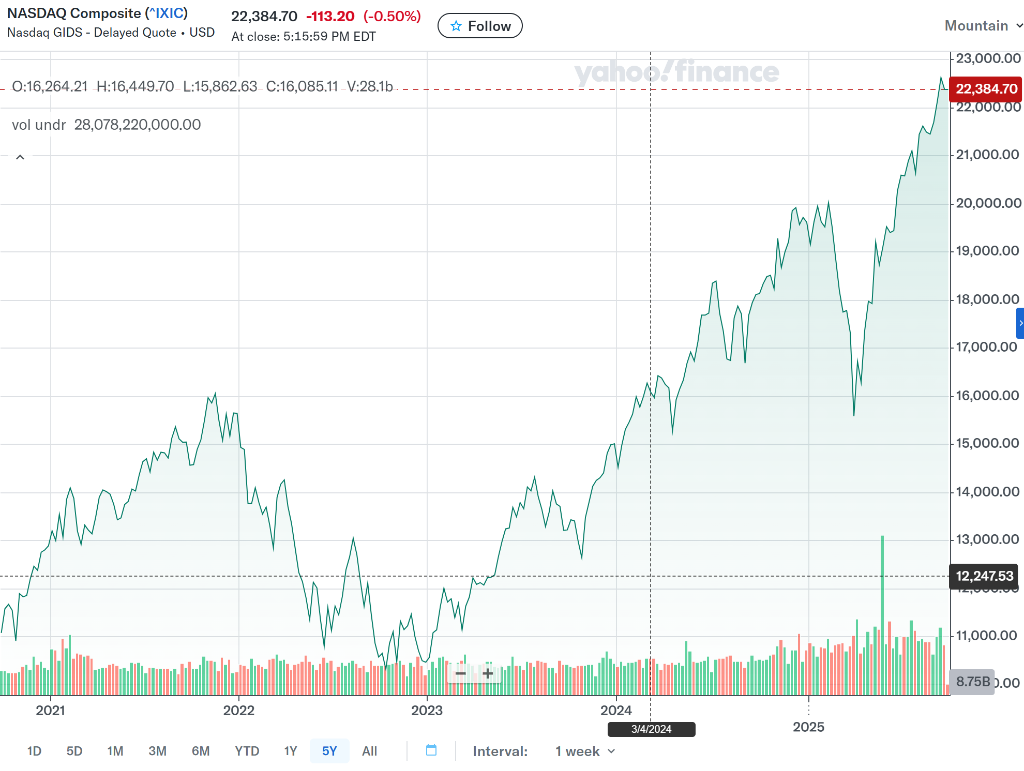
Core Viewpoint - The recent rebound in the US stock market may have reached its peak, with signs of a potential market correction emerging this week [1][7]. Group 1: Market Performance - The Nasdaq index has experienced a continuous rise, with 11 out of the last 13 trading days showing gains, indicating a strong performance in the tech sector [2][4]. - Non-profitable tech stocks surged by 8%, while popular short-sell stocks rose by 6.7%, showcasing a significant rally in speculative investments [2][4]. Group 2: Investor Sentiment and Positioning - Despite the apparent market exuberance, fundamental investors have shown negative alpha for the first time in six weeks, indicating a disconnect between market indices and actual investment performance [4][9]. - There is a notable contradiction where investors hold bullish positions while simultaneously expressing concerns about the market's sustainability [5][9]. Group 3: Valuation Concerns - The current price-to-earnings (PE) ratio for the top five companies stands at 28, which is lower than historical peaks of 40 in 2021 and 50 in 2000, suggesting that while valuations are high, they are not at extreme levels [4][7]. - Signs of "bubble-like" conditions are emerging in the primary market, with some companies being valued at over 100 times their annual recurring revenue [4][5]. Group 4: Market Cycle Analysis - The market is at a crossroads, questioning whether it is at the end of a long expansion cycle or at the beginning of a new one characterized by low interest rates and high corporate activity [7][9]. - The transition from market euphoria to a more cautious stance may be underway, with last week potentially marking the peak of the current rebound [7][9].
英伟达能救英特尔吗?
Hua Er Jie Jian Wen· 2025-09-19 00:27
Core Viewpoint - Intel's recent $5 billion investment from Nvidia and the chip development agreement are seen as tactical victories, but the company requires structural transformation, specifically a split into separate design and manufacturing entities to compete effectively in the semiconductor industry [1][3]. Group 1: Current Challenges - Intel's foundry business is struggling to attract external customers, with recent quarterly revenue of $4.4 billion primarily coming from internal sources and an operating loss of approximately $3.2 billion, highlighting its competitive disadvantages against TSMC and Samsung [2]. - Nvidia's CEO has been evaluating Intel's foundry services but avoided confirming any new partnerships, indicating limited potential for Intel's foundry business to gain traction [2]. Group 2: Proposed Structural Changes - The article suggests that splitting Intel into independent chip design and manufacturing companies would enhance collaboration with firms like Nvidia, allowing for more efficient partnerships without conflicting interests [3]. - A split would likely encourage other chip design companies, such as Qualcomm and AMD, to utilize Intel's manufacturing services, as they would not face competition from Intel's own design operations [3]. Group 3: Future Prospects - Despite the challenges of splitting Intel's operations, including financial losses and complex financing, it is deemed necessary for Intel to regain its competitive edge in semiconductor manufacturing [4]. - Nvidia's investment could potentially attract further investments from other clients into Intel's foundry business, providing the necessary capital for building advanced chip factories and improving the financial health of the split foundry operations [4].

互联网巨头纷纷试水点心债 BAT合计发债404亿元
Feng Huang Wang· 2025-09-18 11:53
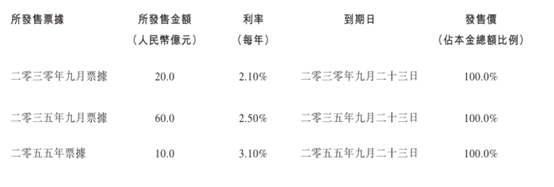
Core Insights - The dim sum bond market is transitioning from rapid expansion to stable growth, with a total issuance of 771.4 billion yuan this year, representing a year-on-year decline of 10.79% [1][2] - The diversity of issuers in the dim sum bond market is increasing, with notable entries from emerging industries, shifting the traditional focus from financial and municipal investment entities [1][3] - Major tech companies like Tencent and Baidu have recently issued dim sum bonds, attracting market attention and indicating a trend among internet giants to utilize this financing avenue [1][4] Issuance Trends - In 2024, the total issuance of dim sum bonds is projected to reach 1.27 trillion yuan, marking a new high despite a decrease in issuance scale compared to last year [2] - The issuance of dim sum bonds has accelerated since August, likely due to the expansion of the southbound bond connect, with nearly 200 billion yuan issued in this period [2][3] - The current outstanding dim sum bonds amount to approximately 1.69 trillion yuan, with nearly half issued by financial institutions [2] Market Dynamics - The net increase in issuances from real estate and financial sectors has been negative, while other industries, including technology and utilities, have shown significant growth in issuance [3] - The ongoing AI boom is driving capital expenditure among global tech giants, including domestic internet companies, which may further enhance the attractiveness of dim sum bonds for financing [3][4] - The expansion of the southbound bond connect is expected to continue to boost the appeal of the dim sum bond market for companies looking to finance overseas operations [4]



前8月税收收入增速转正,国内拟探索中小学春秋假 | 财经日日评
吴晓波频道· 2025-09-18 01:02
Group 1 - The total assets of central enterprises have exceeded 90 trillion yuan, with a profit increase from 1.9 trillion yuan to 2.6 trillion yuan during the "14th Five-Year Plan" period, reflecting an annual growth rate of 7.3% and 8.3% respectively [2] - Central enterprises have invested 8.6 trillion yuan in strategic emerging industries, with significant growth in fields such as integrated circuits, biotechnology, and new energy vehicles [2] - R&D expenditure of central enterprises has exceeded 1 trillion yuan for three consecutive years, indicating a strong commitment to innovation and quality improvement [2] Group 2 - National tax revenue has turned positive with a slight increase of 0.3% year-on-year, indicating a recovery in economic activities [4] - The significant increase in stamp duty, particularly on securities transactions, reflects improved investor confidence in the capital market [4] - Structural pressures remain in the domestic fiscal operation, particularly due to sluggish real estate-related income and challenges in balancing local government finances [5] Group 3 - The domestic market for household appliance chips has seen a 65% localization rate for analog chips, with overall domestic chip usage in household appliances reaching 70%-80% [8] - The Ministry of Commerce has initiated an anti-dumping investigation against U.S. imports of analog chips, highlighting the competitive pressures faced by domestic firms [8] - The gap between domestic and international players in the mid-to-low-end analog chip sector is narrowing, although usage rates in automotive and industrial control sectors remain low [9] Group 4 - Hong Kong is exploring shortening the stock settlement cycle to T+1, which could enhance market liquidity and attract short-term capital [10] - The Hong Kong Monetary Authority is promoting tokenized deposits and asset transactions, positioning the region as a leader in digital currency exploration [11] - A recent survey indicates a growing bullish sentiment among global fund managers, with 28% expressing optimism about stock markets, the highest level since February [12] Group 5 - The stock price of Yaojie Ankang experienced extreme volatility, with a single-day fluctuation of 123.98%, driven by its recent inclusion in major innovation drug indices [14] - The trading dynamics of Yaojie Ankang highlight the impact of liquidity and market speculation on stock prices, particularly in low-volume scenarios [15] - The overall market showed a rebound with significant trading volume, particularly in the robotics and chip sectors, while some sectors like precious metals faced declines [16]