关税政策

Search documents
加拿大总理向特朗普致歉
Sou Hu Cai Jing· 2025-11-02 14:27
Core Viewpoint - Canadian Prime Minister Carney apologized to U.S. President Trump regarding an anti-tariff advertisement that aired in the U.S., which led to tensions in trade negotiations between Canada and the U.S. [1] Group 1: Advertisement Controversy - The controversial advertisement, approximately 1 minute long, featured images of American families and workers, accompanied by a narration of former President Reagan criticizing high tariffs' negative impact on the U.S. economy [1] - The advertisement was produced in Ontario and aired on multiple U.S. television stations [1] Group 2: Trade Negotiations - Following the advertisement's airing, Trump criticized it on October 23 and announced the suspension of trade negotiations with Canada [1] - Carney expressed Canada's readiness to resume and advance trade talks with the U.S. but noted that Canada cannot control U.S. trade policy [1] Group 3: Tariff Threats - On October 25, Trump threatened to impose an additional 10% tariff on Canadian imports if the advertisement was not removed promptly [1] - The advertisement was ultimately taken down by Ontario on October 27 [1] Group 4: Current Tariff Rates - The U.S. currently imposes a 35% tariff on all Canadian goods not covered by existing trade agreements, a 50% tariff on steel and aluminum, and a 25% tariff on automobiles [1]
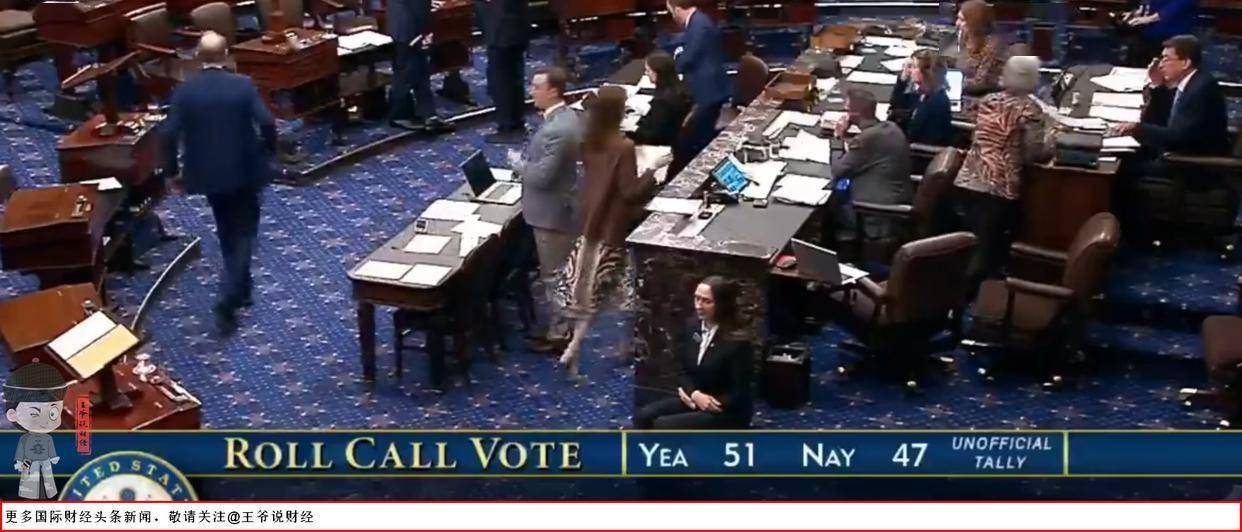
51:47!美参议院通过表决,终止特朗普关税政策,中国躺赢?
Sou Hu Cai Jing· 2025-11-02 07:04
Group 1 - The U.S. Senate passed a resolution to terminate Trump's global tariff policy with a vote of 61 in favor and 47 against, reflecting a partisan divide where Democrats largely supported the measure and Republicans opposed it [1][3] - The proposal is unlikely to pass in the House of Representatives, which is controlled by Republicans, and even if it does, overriding a presidential veto would require a two-thirds majority in both chambers, which is improbable in the current political climate [1][3] - The Democratic push for the proposal is influenced by recent inflation data, with the core PCE price index remaining at 3.2%, significantly above the Federal Reserve's target of 2%, and highlighting an 18.7% increase in import prices since the tariffs were implemented [3][5] Group 2 - Research indicates that while Trump's steel tariffs ostensibly protected 140,000 steel jobs, they resulted in a loss of 500,000 jobs in downstream manufacturing, with the cost of producing vehicles increasing by $1,200 due to tariffs [5][7] - The Tax Foundation estimates that eliminating all tariffs could provide middle-class families with an additional $1,347 annually, which could be used for various expenses, thereby framing the Democratic proposal as a means to alleviate financial burdens on voters [5][7] - In the 2024 election cycle, donations from U.S. manufacturing groups to Senate trade committee members surged to $180 million, with pro-tariff lawmakers receiving 3.2 times more funding than their opponents, indicating significant financial interests behind the tariff policies [7][11] Group 3 - The IMF reports a shift in global trade dynamics, with Asia-Pacific's trade share rising to 38.7% since the RCEP agreement, while the U.S. share in the TPP has decreased from 35% in 2016 to 28% [11][12] - The shift in production chains is evident, with companies like Toyota relocating parts production to China and Vietnam, reflecting a broader trend of supply chain migration towards Asia [12][18] - The global payment landscape is changing, with the share of the renminbi in global payments rising to 6.2% and the dollar dropping to 46.8%, indicating a growing trend of countries opting for alternatives to the dollar for trade settlements [14][24] Group 4 - The U.S. manufacturing PMI fell to 48.7 in October 2025, indicating a contraction for three consecutive months, while rising import costs due to tariffs are making it difficult for U.S. agricultural machinery to compete in South America [17][22] - China's exports to ASEAN grew by 11.8% in the first three quarters of 2025, compared to a mere 2.3% growth in exports to the U.S., showcasing China's increasing competitiveness in global markets [18][20] - The World Trade Organization noted that the U.S. share of global trade restrictions has decreased from 53% in 2018 to 28% in 2025, signaling a significant shift in global trade practices away from reliance on tariffs [27][29]

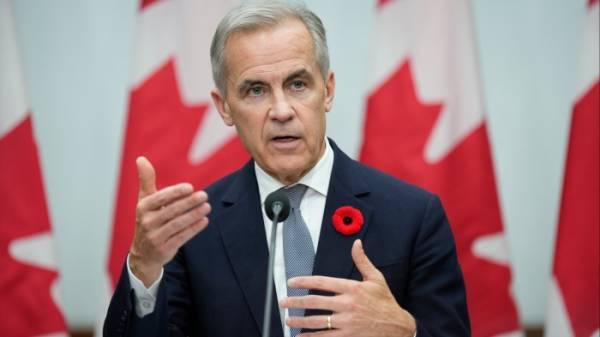
反关税广告惹怒特朗普,加拿大总理卡尼:我跟他道歉了
Sou Hu Cai Jing· 2025-11-02 06:09
Group 1 - Canadian Prime Minister Carney apologized to President Trump regarding an anti-tariff advertisement aired by Ontario, which angered Trump and led to the suspension of trade negotiations [1][2][5] - The advertisement, which featured a narration from former President Reagan criticizing high tariffs, was intended to highlight the negative impact of trade barriers on American workers and consumers [2][5] - Following the advertisement's airing, Trump threatened to impose an additional 10% tariff on Canadian imports if the ad was not removed, which Ontario complied with by taking down the ad on October 27 [2][6] Group 2 - The current U.S. tariffs on Canadian goods include a 35% tariff on all products not covered by trade agreements, a 50% tariff on steel and aluminum, and a 25% tariff on automobiles, contributing to strained relations between the two countries [5][6] - The Canadian economy has been significantly impacted by Trump's tariff policies, with approximately 75% of Canadian exports going to the U.S., making Ontario, a hub for steel and automotive industries, particularly vulnerable [5][6] - Canadian labor leaders expressed strong dissatisfaction with Trump's threats, viewing the new tariffs as a tactic to undermine Canada's economy and calling for a united response from Canadian political leaders [6]
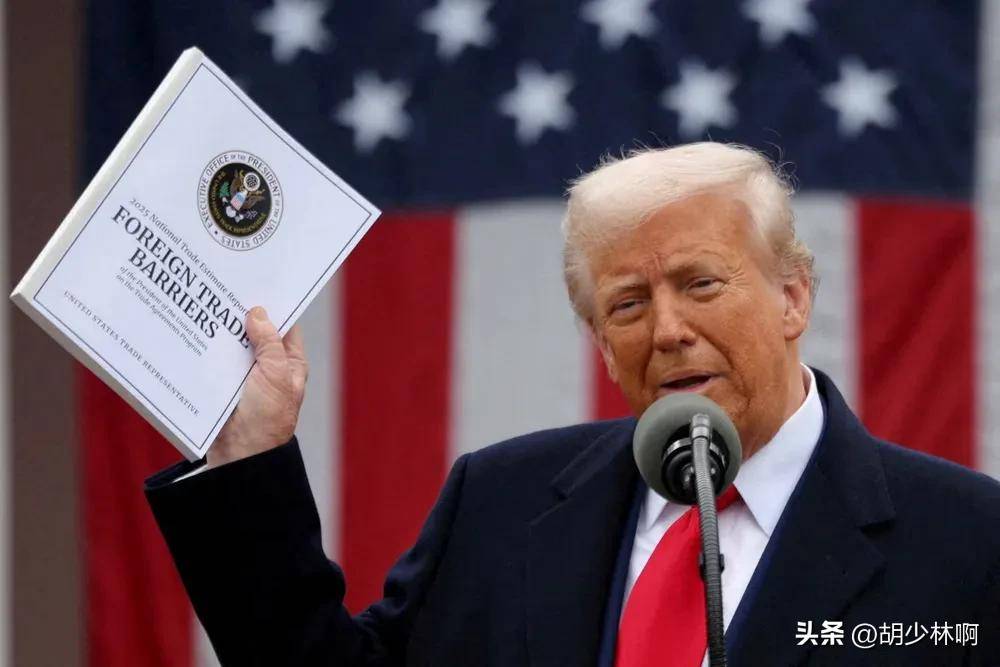
特朗普关税政策再遭否决!美国政府停摆持续,正加剧美国乱象!
Sou Hu Cai Jing· 2025-11-02 06:06
Core Points - The U.S. Senate has voted to terminate Trump's comprehensive tariff policy, but the actual impact remains limited due to the need for House approval and potential presidential veto [3][5] - The ongoing government shutdown has lasted for 31 days, with significant economic repercussions, including a projected loss of at least $18 billion [7][10] - The aviation industry is facing severe challenges due to the shutdown, with warnings of potential disruptions during the Thanksgiving travel peak [8][10] Tariff Policy - The Senate passed a resolution to end Trump's tariff policy, but the House, controlled by Republicans, is likely to block it [3][5] - The Supreme Court will ultimately decide on the legality of the tariffs, with a hearing scheduled for November 5 [3][5] Government Shutdown - The shutdown has already caused significant economic damage, with estimates of permanent losses ranging from $7 billion to $14 billion depending on its duration [7] - The USDA will stop funding the Supplemental Nutrition Assistance Program (SNAP) starting November 1, affecting over 41 million low-income families [7] Aviation Industry - The shutdown poses a risk to air travel, with potential staffing shortages among air traffic controllers and security personnel [8] - Airlines are urging Congress to pass a clean continuing resolution to mitigate the impact of the shutdown on air travel [8] Economic Impact - The shutdown is expected to lower GDP growth by 1 to 2 percentage points in Q4, translating to a loss of $28 billion to $39 billion in output [7][10] - Delays in releasing key economic data could hinder the Federal Reserve's decision-making regarding interest rates [10][12]
美国9月海运集装箱吞吐量暴跌 是关税还是需求放缓?
Di Yi Cai Jing· 2025-11-01 11:48
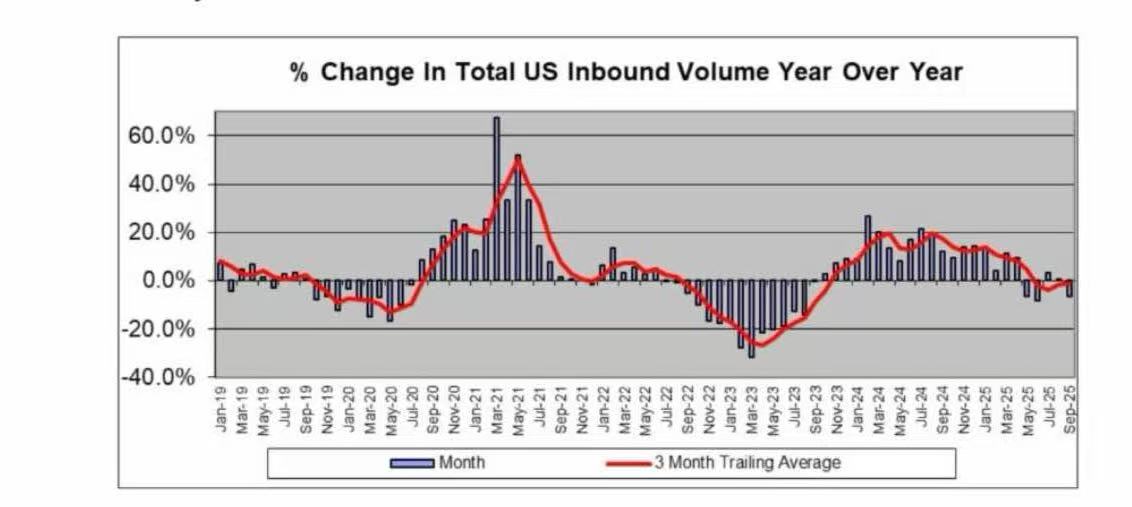
Core Insights - The article highlights a significant decline in U.S. container imports in September, attributed to the impact of tariffs and weakened domestic demand, with a year-on-year decrease of 8.4% to 230.8 million TEUs, marking the largest monthly drop in recent years [1][2][6] Group 1: Container Import Trends - U.S. container imports at the top 10 ports fell by 6.6% year-on-year in September, contrasting with previous months' trends [1][3] - The National Retail Federation (NRF) anticipates a 5.6% decline in import volumes at major U.S. ports in 2025 due to new tariffs [3][4] - The decline in imports is expected to continue, with predictions of significant decreases in container throughput lasting until 2026 [1][8] Group 2: Factors Influencing Decline - The drop in imports is attributed to seasonal demand weakness and cautious sentiment related to tariffs [2] - Inflation has also contributed to a decrease in domestic demand, indicating a decline in U.S. consumer purchasing power [2][11] - The uncertainty caused by fluctuating tariff policies has led to cautious behavior among shippers and importers, particularly affecting small and medium-sized retailers [5][11] Group 3: Future Projections - The McCown report warns of a sustained and significant decline in U.S. container throughput if current tariff policies remain unchanged [8] - Despite a projected 15.2% increase in total inbound freight in 2024, the NRF expects a 15.7% decrease in container volumes in the last four months of 2025 compared to the same period in 2024 [8] - Global supply chain adjustments are occurring faster than anticipated, with manufacturers in countries facing high U.S. tariffs seeking more attractive markets [10][11] Group 4: Economic Context - The Drury East-West contract rate index has seen a 3% year-on-year decline, reflecting reduced market demand [5] - U.S. inflation remains high, and the manufacturing PMI has contracted for five consecutive months, indicating a challenging economic environment for container imports [11][12] - The Federal Reserve Chairman Powell noted that additional tariffs could lead to a temporary increase in inflation, impacting consumer prices [12]
51:47!美国参议院投票结果公布,副总统:或将引发重大灾难
Sou Hu Cai Jing· 2025-11-01 02:43
国际局势风云变幻,俄乌冲突、巴以矛盾不断升级,白宫四处煽风点火,妄图搅乱国际秩序。然而,美国本土此时也正经历着 一系列重大事件,局势同样波谲云诡,特朗普政府面临诸多棘手难题,或许倍感无奈。 第一件大事聚焦于美国的关税政策。31日,美国参议院以51票赞成、47票反对的结果,通过了一项决议,决定终止特朗普在全 球范围内实施的全面关税政策。不仅如此,此前参议院还通过了两项决议,旨在取消对加拿大、巴西征收的关税。不过,这三 项关税决议虽在参议院顺利通过,但还需众议院投票表决。而众议院共和党人已多次明确表示反对,最终能否通过,目前仍充 满变数。 美国参议院共有100个席位,其中共和党占据53席,民主党有45席,另外2个席位为无党派人士。在此次表决中,出现51票赞 成、47票反对的结果,这意味着至少有5名共和党参议员"倒戈"。由此可见,对于特朗普在全球发起的关税政策,共和党内部 并非铁板一块,存在明显的不满与分歧。 值得注意的是,特朗普的关税政策目前虽部分仍在实施,但白宫仍在与其他国家进行贸易谈判。如今参议院的投票结果出炉, 很可能对特朗普政府与别国的贸易谈判产生冲击。毕竟,在特朗普的贸易政策可能被否决的情况下,各国在谈 ...
浙江鼎力(603338):业绩符合预期 出海能力持续提升
Xin Lang Cai Jing· 2025-11-01 00:38
Group 1: Financial Performance - In Q3 2025, the company reported revenue of 2.34 billion yuan, a year-on-year increase of 2.8%, and a net profit attributable to shareholders of 540 million yuan, a year-on-year decrease of 14.7% [1] - The gross profit margin for Q3 2025 was 36.1%, down approximately 1.5 percentage points year-on-year, but showed significant improvement compared to Q2 2025 [1] - Sales expenses in Q3 2025 were 74 million yuan, up 28% year-on-year, while R&D expenses were 82 million yuan, up 33% year-on-year, indicating increased costs primarily due to personnel growth in the North American market [1] Group 2: Market Expansion and Strategy - In 2024, the company's overseas market revenue reached 5.52 billion yuan, a year-on-year increase of 43.8%, largely due to the acquisition of CMEC and active expansion into non-European and American markets [2] - The overseas revenue accounted for 70.8% of total revenue in 2024, an increase of 10 percentage points compared to 2023, reflecting the success of the company's internationalization strategy [2] - The company is recognized as a leader in aerial machinery and has made significant progress in the European and American markets, with a strong outlook for continued breakthroughs in emerging markets [2] Group 3: External Environment and Resilience - The company has demonstrated strong product, management, and manufacturing capabilities, maintaining a high gross profit margin despite uncertainties in the macroeconomic environment and potential pressures from tariffs on exports to the U.S. [3] - Following the consolidation of CMEC, the company has enhanced its capacity to increase production in the U.S. market, suggesting potential profit elasticity in the context of easing tariff pressures [3] Group 4: Investment Outlook - Based on the latest performance report, the company has adjusted its revenue forecasts for 2025-2027, with projected revenues of 8.62 billion, 9.69 billion, and 10.70 billion yuan, respectively [4] - The net profit forecasts for the same period have been adjusted to 2.09 billion, 2.28 billion, and 2.54 billion yuan, respectively, with corresponding EPS adjustments [4] - The closing stock price on October 31, 2025, was 53.14 yuan, with a projected PE ratio of 12.9, 11.8, and 10.6 for 2025-2027, maintaining a "buy" rating [4]

特朗普称卡尼为反关税广告道歉,但美加谈判不会重启,加股盘中转跌
Hua Er Jie Jian Wen· 2025-10-31 20:23
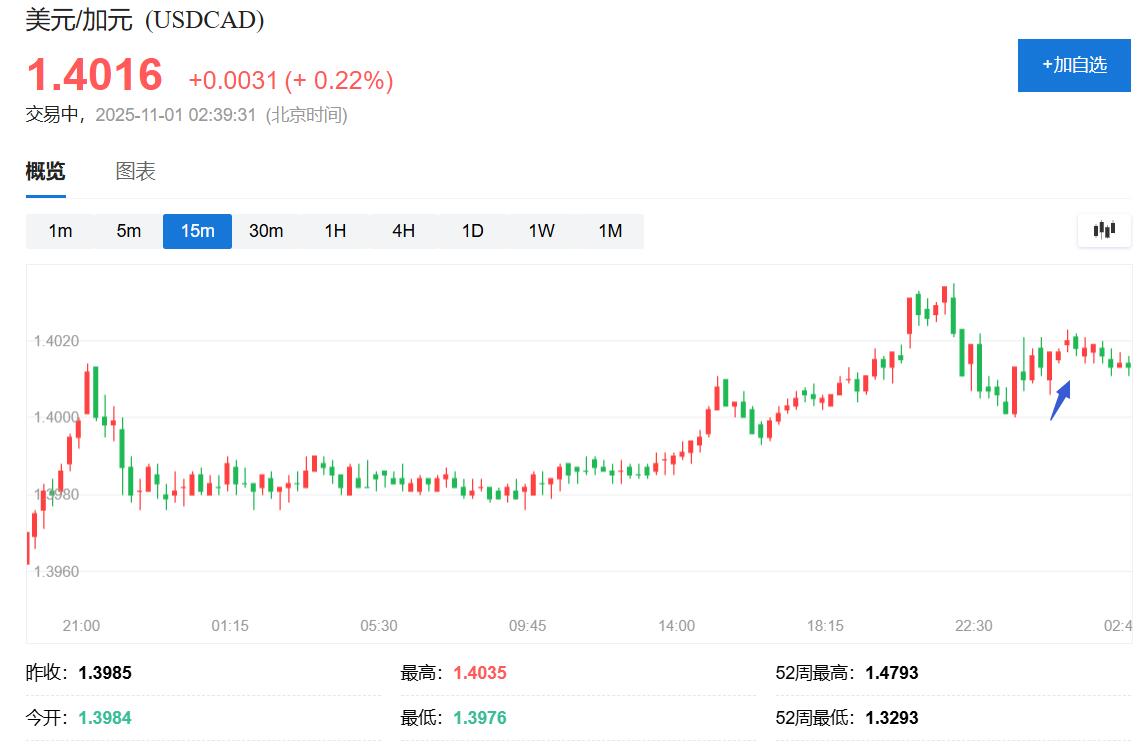
Core Viewpoint - The trade negotiations between the U.S. and Canada remain stalled, primarily due to tensions arising from a controversial advertisement funded by the Ontario government that utilized former President Reagan's voice to criticize tariffs, which has provoked a strong reaction from President Trump [1][8][9]. Group 1: Trade Negotiations Status - President Trump has explicitly stated that he does not plan to resume trade negotiations with Canada, despite a friendly relationship with Prime Minister Ford [1][9]. - Following Trump's announcement to halt negotiations, the Canadian benchmark stock index S&P/TSX and the Canadian dollar experienced declines [1][4]. - Prime Minister Ford indicated that the Ontario government would pause the controversial advertisement, but Trump expressed dissatisfaction with the delay in its removal [9][10]. Group 2: Economic Impact - The trade war is impacting Canada's economy, with a reported GDP contraction of 0.3% in August and a minimal growth of 0.1% in September, leading to an estimated annualized GDP growth rate of only 0.4% for the third quarter [7][12]. - Canada currently faces a 35% basic tariff from the U.S., although most exports enjoy zero tariffs due to the USMCA agreement [12]. Group 3: Advertisement Controversy - The Ontario government funded a $75 million advertisement that used Reagan's voice to argue against tariffs, which Trump deemed a "fraudulent" use of Reagan's words [8][9]. - The ad was designed to provoke discussion about the economic impact of tariffs on American workers and businesses, but it has intensified the uncertainty in U.S.-Canada trade relations [8][10]. Group 4: Future Negotiation Prospects - Prime Minister Ford and Prime Minister Trudeau have expressed readiness to resume negotiations when the U.S. is prepared, with discussions on steel, aluminum, and energy making progress prior to the halt [11][12]. - U.S. Energy Secretary Chris Wright acknowledged the existing friction but emphasized the goal of returning to the negotiation table to enhance cooperation in key sectors [11].
美参议院通过终止特朗普关税决议有什么可高兴的
Sou Hu Cai Jing· 2025-10-31 14:52
当地时间10月30日,央视记者获悉,美国参议院以51票赞同、47票反对的结果通过决议,终止美国总统 特朗普在全球范围内实施的全面关税政策。 据悉,美国参议院宣布,已批准终止总统为实施全球关税而宣布的国家紧急状态的联合决议。本周早些 时候,参议院已通过两项决议,旨在取消对加拿大和巴西征收的关税。 而从美国国会的行为来看,对特朗普的关税政策,似乎都采取了能忍则忍的手段,并没有做出强烈反 应,以至于特朗普政府能够肆无忌惮,能够大割其他国家的韭菜,最终让美国与其他国家的关系十分紧 张。也因为美国的行为,让其他国家拿起了反击的武器,从而让美国面临严重的国际反对浪潮,国家形 象严重受损。在这样的情况下,美国参议院做出终止特朗普关税的决议,只能算是对这种错误政策的一 种纠错,自然,也就没有什么好高兴的。如果不是特朗普的错误行为,就不存在纠错的问题。既然是纠 错,凭什么要为其感到高兴呢?也就更不要说什么点赞的话了。 第三,特朗普会买参议院的账吗。特朗普的我行我素,美国参议院已经领教很多次了,不然,也不会出 台关税政策。反过来,这次美国参议院通过终止特朗普关税的决议,特朗普会不会执行呢?如何执行 呢?会不会不把参议院的决议放在 ...
51票赞同、47票反对!美国参议院终止特朗普关税!中、美贸易要变天?
Sou Hu Cai Jing· 2025-10-31 11:40
Core Points - The article discusses the potential halt of the ongoing "tariff storm" that has been affecting wages, investments, and the cost of imported goods in the U.S. [1] - It highlights the implications of Trump's "reciprocal tariffs" policy, which imposes tariffs ranging from 10% to 50% on countries perceived to have trade imbalances with the U.S. [3] Group 1: Economic Impact - The tariffs cover a wide range of products, including automobiles, computers, clothing, and agricultural products, with specific examples like a 4% tariff on laptops [5] - The U.S. GDP shrank by 0.2% in the first quarter, marking the first decline in three years, indicating the economic strain caused by the tariffs [5] - American households are reportedly spending an additional $3,800 annually due to these tariffs, with clothing prices rising by 17% and new car prices increasing by $2,000 to $15,000 [6] Group 2: Business Sentiment - U.S. small businesses are expressing frustration over the uncertainty caused by tariffs, which complicates budgeting and order signing, leading to squeezed profit margins due to rising import costs [7] - The legality of Trump's tariff policy has been challenged, with the U.S. International Trade Court ruling that the president lacks the authority to impose such tariffs unilaterally [8] Group 3: Industry Opportunities - Chinese export companies, particularly in the Pearl River Delta, stand to benefit from potential tariff cancellations, as they can lower costs for low-end products and enhance competitiveness for high-end products [10] - U.S. consumers may see a decrease in prices for imported goods such as home appliances, clothing, and electronics, effectively reducing household expenses [11] Group 4: Legislative Challenges - The recent Senate vote, which passed with a narrow margin of 51:47, indicates significant division, with the outcome relying on a few Republican senators switching sides [6] - The next steps involve a House vote, which may face delays due to previous Republican opposition to similar bills, and a potential presidential veto that would require a two-thirds majority in Congress to override [13][14] - The article suggests that while there may be short-term tariff reductions for certain countries like Canada and Brazil, a comprehensive repeal of tariffs remains uncertain [14]