
风险管理

Search documents
国泰君安: 国泰海通证券股份有限公司章程
Zheng Quan Zhi Xing· 2025-04-03 12:19
Core Points - Guotai Haitong Securities Co., Ltd. was established on August 18, 1999, through the merger of Guotai Securities Co., Ltd. and Junan Securities Co., Ltd. [2][3] - The company was approved by the China Securities Regulatory Commission (CSRC) and is registered in Shanghai with a registered capital of RMB 17,629,708,696 [6][12]. - The company issued 1,525,000,000 A shares on June 26, 2015, and 1,040,000,000 H shares on April 11, 2017 [3][12]. - As of March 14, 2025, the total number of shares is 17,629,708,696, with A shares accounting for 80.11% and H shares for 19.89% [12]. Company Structure and Governance - The company operates under a dual leadership system where the Party Committee plays a significant role in decision-making alongside the Board of Directors [7][11]. - The company emphasizes compliance, integrity, and innovation as part of its operational philosophy [13]. - The company has established a comprehensive internal control mechanism to manage and mitigate risks related to integrity and compliance [14]. Share Issuance and Management - The company issues shares in accordance with principles of openness, fairness, and justice, ensuring equal rights for all shareholders [10]. - The shares have a nominal value of RMB 1 each, and the company can issue different types of shares as authorized by the State Council [10][12]. - The company has provisions for increasing capital through public offerings, private placements, and other methods as approved by shareholders [28][29]. Shareholder Rights and Responsibilities - Shareholders have rights to dividends, voting, and participation in company decisions based on their shareholdings [22][53]. - The company has mechanisms in place for shareholders to propose agenda items for meetings and to participate in decision-making processes [28][30]. - Shareholders are required to comply with laws and regulations, and any violations may result in restrictions on their rights [25][62].

亚普股份: 亚普股份关于融实国际财资管理有限公司2024年度风险持续评估报告
Zheng Quan Zhi Xing· 2025-04-03 09:17
Company Overview - Rongshi International Financial Management Co., Ltd. was established on November 20, 2018, in Hong Kong and is a wholly-owned subsidiary of Rongshi International, controlled by the National Development Investment Corporation [1] - The registered capital of Rongshi Financial is 50 million USD, and its business scope includes financial and tax consulting, internal transfer settlement, deposit acceptance, and loan services [1] Internal Control - Rongshi Financial has established a sound corporate governance system, with the board of directors responsible for internal control implementation and daily operations [1] - The company emphasizes risk prevention and control, improving internal control processes, and clarifying responsibilities [2] Internal Control Activities - The company manages funds through a structured plan to ensure safety, liquidity, and profitability [2] - Internal accounts are used for fund settlement, ensuring the safety of transactions and protecting the rights of depositors [2] - Regular reconciliations with clients are conducted to maintain the safety of funds [2] - Rongshi Financial maintains sufficient liquidity and follows strict management protocols for loan assessments and post-loan monitoring [2] Financial Performance - As of December 31, 2024, Rongshi Financial's unaudited financial data shows total assets of 871,760.45 million CNY, net assets of 46,842.23 million CNY, and a net profit of 1,253.10 million CNY [3] Risk Management - Since its inception, Rongshi Financial has adhered to prudent management principles and has not identified significant deficiencies in its risk control systems related to finance, credit, investment, or information management [3] Company Deposits and Loans - As of December 31, 2024, the company and its subsidiaries had a deposit balance of 200,000 USD with Rongshi Financial, while the loan balance was 0 USD [4] Ongoing Risk Assessment - The company will review Rongshi Financial's financial reports biannually to assess its operational qualifications and risk status, issuing risk assessment reports in conjunction with its semi-annual and annual reports [4] Risk Assessment Opinion - Based on the analysis, the company believes that Rongshi Financial possesses valid registration documents and effectively manages financial risks, with no significant deficiencies identified in its risk management practices [4]

投资前,搞明白这3个问题非常重要!
雪球· 2025-04-03 07:52
Core Viewpoint - The article emphasizes the importance of having a clear investment plan and understanding three fundamental questions: maximum loss tolerance, expected annual return, and investment duration. These questions serve as the foundation for successful investing and help avoid blind chasing of market trends [1][18]. Group 1: Maximum Loss Tolerance - Understanding maximum loss tolerance is crucial for risk management, which is the cornerstone of investing. Investors often focus on potential gains without considering how much loss they can endure [2][8]. - Risk tolerance directly influences investment strategy and asset allocation. Different individuals have varying levels of comfort with market fluctuations based on their financial situations and psychological resilience [8][9]. - Establishing a clear maximum loss threshold provides a safety net for investors, allowing them to make informed asset choices and weight allocations without succumbing to panic during market downturns [8][9]. Group 2: Expected Annual Return - Setting realistic return expectations is essential and should be based on the investor's risk tolerance. Many investors aim for unrealistic returns without understanding the associated risks [9][12]. - Historical data suggests that a balanced asset allocation can yield reasonable returns with manageable volatility. For instance, a balanced portfolio of stocks and bonds has shown an annualized return of approximately 7.8% over five years with a volatility of 7.3% [12][13]. - Unrealistic return expectations can lead to disappointment and frequent portfolio adjustments, ultimately resulting in suboptimal outcomes. Aligning return goals with risk tolerance is vital for effective investment planning [13][19]. Group 3: Investment Duration - The investment horizon significantly impacts risk and return dynamics. Longer investment periods generally allow for better risk smoothing and the benefits of compounding [14][17]. - Short-term investments are often subject to high volatility, while long-term holdings tend to stabilize returns. For example, the probability of positive returns on the CSI 300 index increases from 60% over one year to nearly 100% over ten years [17]. - Understanding the investment timeline helps avoid liquidity issues and ensures that investors are not forced to liquidate positions prematurely, which can hinder potential gains [17][18]. Group 4: Application to Gold Investment - The article applies the three fundamental questions to the current inquiry about investing in gold. It suggests that if an investor can tolerate a maximum loss of 10%, gold may not be suitable for a significant allocation due to its historical volatility [21]. - Expected annual returns from gold are projected at 5%-6%, making it challenging to achieve an 8%-10% return solely from gold investments. Instead, gold should be part of a diversified portfolio [21][22]. - A proposed investment strategy for a hypothetical investor with a medium risk tolerance includes a 45% allocation to stocks, 50% to bonds, and 5% to commodities, including gold, to balance risk and return [21][32].


营收净利双降零售承压,平安银行困境中如何谋变?
Xin Lang Cai Jing· 2025-04-01 16:18
Core Viewpoint - Ping An Bank's 2024 financial results reveal a significant decline in both revenue and net profit, indicating the bank is facing substantial challenges due to industry cycles and competitive pressures, as well as the costs associated with restructuring its asset portfolio and business model [1][2]. Financial Performance - The bank reported total operating income of 146.695 billion yuan, a year-on-year decrease of 10.93%, and a net profit attributable to shareholders of 44.508 billion yuan, down 4.19% from the previous year [1]. - The net interest margin fell to 1.87%, a decrease of 51 basis points from the previous year, marking the largest annual decline since 2010 [2]. - Interest income decreased by 20.8%, with corporate loan average yield dropping by 44 basis points and personal loan average yield declining by 102 basis points [4]. Revenue Breakdown - Interest income accounted for 93.427 billion yuan, representing 63.7% of total income, down from 71.6% the previous year [4]. - Non-interest income grew by 14.0%, but net fees and commissions fell by 18.1%, particularly in credit card and wealth management services [5][6]. Retail Business Challenges - The retail business, once a strong growth area, saw its revenue contribution drop below 50%, falling from 58.2% in 2023 to 48.6% in 2024 [8]. - Credit card circulation decreased by 12.9%, and total credit card spending fell by 16.6%, reflecting increased competition and changing consumer financial needs [8][9]. - Consumer loan balances also declined, with a notable increase in the non-performing loan ratio for personal loans [9][12]. Asset Quality Concerns - Total assets reached 5.769 trillion yuan, a 3.3% increase year-on-year, but the quality of assets remains under pressure, with rising non-performing loan ratios [12][14]. - The bank reported significant asset impairment losses, totaling 49.428 billion yuan, primarily affecting retail operations [6][14]. Strategic Adjustments - In response to these challenges, Ping An Bank is undergoing strategic adjustments, including a restructuring of its credit product offerings and a focus on improving internal management [20]. - Recent personnel changes in the retail division signal a commitment to reform and a desire to enhance operational efficiency [20].

中国卫通: 中国卫通关于航天科技财务有限责任公司的风险评估报告
Zheng Quan Zhi Xing· 2025-04-01 10:23
中国卫通集团股份有限公司 关于航天科技财务有限责任公司的 风险评估报告 按照《上海证券交易所上市公司自律监管指引第 5 号— —交易与关联交易》的要求,中国卫通集团股份有限公司(以 下简称"卫通公司")通过查验航天科技财务有限责任公司 (以下简称"财务公司")《金融许可证》、《营业执照》 等证件资料,审阅财务公司的财务报表及相关数据指标,对 财务公司的经营资质、业务和风险状况进行了评估,风险评 估情况报告如下: 一、财务公司基本情况 航天科技财务有限责任公司于 2001 年成立,是经中国 银行业监督管理委员会批准,为适应社会主义市场经济的要 求,支持我国航天事业持续稳定发展,由中国航天科技集团 有限公司(以下简称"集团公司")以及集团公司其他十六家 成员单位共十七方共同出资设立的一家非银行金融机构,注 册资本金人民币 65 亿元。 财务公司作为集团公司目前唯一一家现代金融企业,在 构建航天科技工业新体系进程中,立足于自身在金融和资本 市场的专业优势,紧紧围绕"建设一流财务公司"的愿景, 以充分发挥"金融平台"职能为己任,以"创建一流"为第 一目标,以"服务航天"为第一要求,以"科学发展"为第一 要务,以"风险 ...

与中信集团协同深化 中信金融资产创六年来最好业绩
Zhong Guo Jing Ying Bao· 2025-04-01 08:25
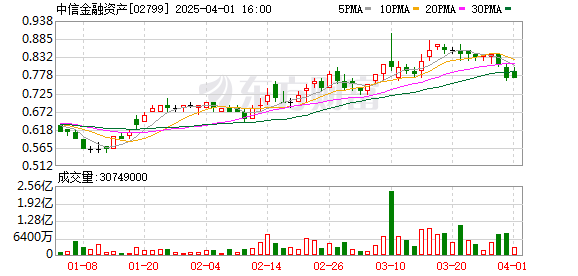
主业转型加速 具体来看,截至2024年12月31日,中信金融资产资产总额9843.29亿元,较上年年末增加162.25亿元,其 中不良资产经营分部资产占比86.7%;不良资产经营分部收入达到906.71亿元,较上年增长35.4%。 日前,中信金融资产(02799.HK)召开2024年度业绩发布会。在加入中信集团3年后,中信金融资产 2024年实现营业收入1127.66亿元,较上年同期增长60%,实现归母净利润96.18亿元,达到上年同期的 5.4倍,多项盈利指标为6年来最好水平。 回顾三年前的此时,中信集团刚拿下中信金融资产第一大股东席位,中信集团副总经理、中信股份副总 经理、中信信托董事长刘正均临危受命,赴任中信金融资产董事长一职,新一届管理层陆续到位。中信 金融资产亟待从此前的重创中恢复过来,重整旗鼓迈向一个"新纪元"。 "回想过去,中信金融资产这三年来的变化不是一蹴而就的,而是管理团队于无路处开辟新路、于不可 能中实现新可能的坎坷过程。"刘正均在会上谈到,中信集团刚入主时,这家AMC(资产管理公司)正 处于经营业绩大幅下滑、主业转型亟待破局、不良资产亟待出清、队伍亟待强本固基的困境中。通过三 年的共同努 ...
深读|“学费不能白交!”兴业银行董事长业绩表态关键词
Nan Fang Du Shi Bao· 2025-04-01 03:29
Core Viewpoint - The recent financial risks have provided clearer insights into risk management, prompting the bank to reassess its risk management philosophy and mechanisms, emphasizing the importance of learning from past experiences [1][2][3] Financial Performance - In the 2023 financial report, the bank reported a revenue of 212.23 billion yuan, a year-on-year increase of 0.66%, and a net profit of 77.21 billion yuan, up 0.12% [3][4] - The net interest margin and net interest spread decreased by 0.10 and 0.11 percentage points to 1.56% and 1.82%, respectively [3] - The non-performing loan (NPL) ratio remained stable at 1.07%, while the provision coverage ratio decreased by 7.43 percentage points to 237.78% [4] Risk Management - The bank's risk management strategy includes strengthening compliance and internal control, optimizing the risk management system, and enhancing proactive risk prevention measures [3][9] - The bank has established agile teams to address risks in key areas such as real estate and local government financing, aiming to improve decision-making efficiency and asset quality [9][19] - The bank's loan impairment losses increased significantly, with a total of 61.18 billion yuan in 2023, reflecting a proactive approach to identifying potential risks [6][19] Loan Quality - The overall NPL ratio has decreased from 1.25% in 2020 to 1.07% in 2024, although the balance of special mention loans increased to 98.11 billion yuan, indicating some pressure in key sectors [8][10] - The bank's credit card NPL ratio has shown a downward trend, decreasing from 4.01% in 2022 to 3.64% in 2024 [9][10] Strategic Focus for 2025 - The bank aims to maintain a "steady progress" approach, focusing on expanding low-cost deposits and enhancing its fee-based income [15][16] - Digital transformation is a priority, with plans to leverage technology to improve operational efficiency and customer experience [18][19] - The bank is committed to long-termism and aims to navigate through economic cycles by enhancing its risk management and operational frameworks [20]


风险事件对50ETF期权隐含波动率冲击解析
Qi Huo Ri Bao Wang· 2025-03-31 01:06
近年来,随着全球与国内宏观环境持续变化,中国股票市场在面对重大风险事件时表现出越来越高的敏感性,常常在短时间内出现剧 烈波动。作为市场预期和风险情绪的重要晴雨表,期权隐含波动率指标对这些突发或结构性事件的反应尤为显著。尤其是50ETF期 权,作为我国首个场内标准化ETF期权品种,凭借其良好的流动性与代表性,已成为观察市场风险定价行为的重要工具。本文聚焦于 近五年内五次具有代表性的宏观风险事件,包括2020年年初新冠疫情在国内暴发、2020年3月全球疫情升级引发的金融市场震荡、2022 年俄乌冲突叠加中概股危机与本土疫情反复、2023年房地产债务风险暴露与经济复苏放缓,以及2024年年初在市场连续下跌后出现的 流动性担忧与政策强干预。这些事件分别体现出突发性冲击、外部传染等多种路径,其对隐含波动率的影响也表现出显著差异。尽管 国内外已有大量关于波动率建模与期权定价的研究,但在风险事件驱动下的波动率响应机制方面,尤其是在中国本土市场语境下,仍 缺乏系统的实证分析。本文基于这五个典型区间,试图识别和总结隐含波动率的冲击模式、演化路径与共性特征,为投资者识别风险 窗口、构建波动率策略提供实践参考,也为监管机构在极端行 ...

网上炒黄金可靠吗?国际现货黄金交易策略有哪些?
Sou Hu Cai Jing· 2025-03-29 09:02
Core Viewpoint - Effective international spot gold trading strategies are crucial for investors to achieve returns in the financial market [1] Trading Strategies Summary - **Risk Management**: Investors should set reasonable stop-loss and take-profit points to control risk exposure. Diversification is also an effective method to reduce risk by investing in different asset types [3] - **Trend Trading**: Gold price movements exhibit certain trends, which are difficult to change once established. Investors should respect the trend unless a clear market change occurs [3] - **Limit Price Platforms**: Choosing limit price platforms for trading can help control risks by allowing investors to set stop-loss and take-profit levels effectively [3] - **Technical Analysis**: Analyzing charts and technical indicators, such as moving averages and RSI, can help predict price movements and inform buy/sell decisions [4] - **Light Position Trading**: Investors should operate with light positions and follow market trends to increase the chances of success while avoiding excessive risk [4] - **Timing the Market**: Due to high volatility in the gold market, investors must choose appropriate entry points based on market trends and their risk tolerance [5] - **Understanding Price Influences**: Gold prices are affected by various factors, including the US dollar exchange rate, global political situations, and economic data, which investors need to monitor closely [5] - **Range Trading Strategy**: This strategy is suitable for stable market conditions, where investors buy near support levels and sell near resistance levels to profit from price fluctuations [6] - **Maintaining Composure**: Trading psychology significantly impacts outcomes. Investors should remain calm and rational, adhering to their strategies without succumbing to market emotions [7] - **Continuous Learning**: Patience and discipline are essential qualities for successful trading. Investors should cultivate these traits and consistently improve their trading skills and experience [9]

秦泓波谈新华保险投资策略:围绕金融“五篇大文章”的总体要求,从四方面进行发力
Bei Jing Shang Bao· 2025-03-28 15:29
Core Viewpoint - The company aims to implement its investment strategy through four key areas, aligning with national policies and industry trends to enhance investment in strategic emerging industries and advanced manufacturing [1][2]. Group 1: Investment Strategy - The company plans to increase investment in key sectors, focusing on strategic emerging industries, advanced manufacturing, and new infrastructure, while establishing a new investment team and management model [1]. - Emphasis is placed on aligning investment efforts with national economic policies, focusing on innovation, industrial upgrading, and green development [1][2]. Group 2: Diversification and Investment Methods - The company highlights the importance of diversifying equity investment types and enriching investment methods, utilizing various financial instruments such as equity, bonds, and financial products to support the real economy [2]. - This approach aims to achieve dual objectives of serving national strategies and realizing good investment returns [2]. Group 3: Risk Management - The company stresses the need for balanced investment in terms of safety, liquidity, and profitability, enhancing investment risk management capabilities [2]. - Future efforts will include maintaining asset-liability balance, ensuring solvency and financial stability, and conducting stress tests and scenario analyses on the investment portfolio [2].
