
智能驾驶

Search documents
苏州天准科技股份有限公司向不特定对象发行可转换公司债券并在科创板上市募集说明书摘要
Shang Hai Zheng Quan Bao· 2025-12-09 19:15
Core Viewpoint - The company is issuing convertible bonds to unspecified investors, with specific risks and conditions outlined for potential investors, including credit ratings and shareholder participation commitments. Group 1: Convertible Bonds Issuance - The company is issuing convertible bonds that require investors to meet specific suitability criteria for the Sci-Tech Innovation Board [3] - The bonds have a redemption clause, with a redemption price of 112% of the face value, including the last interest payment, if not converted into shares [3] - The company has engaged a credit rating agency, with the bonds rated AA- and a stable outlook [4] Group 2: Risks Associated with Bonds - The bonds are not secured, which may pose repayment risks for investors [5] - Investors who do not meet the suitability criteria may face losses if the redemption price is lower than their acquisition cost [3] Group 3: Shareholder Participation - Major shareholders, including Qingyi Investment and Ningbo Zhunzhi, may participate in the bond subscription and have committed to adhere to relevant regulations [6][7] - Shareholders with over 5% ownership, including Xu Yihua and Xu Wei, have also expressed potential interest in subscribing to the bonds under similar commitments [8][9] Group 4: Financial Performance and Risks - The company has experienced fluctuations in net profit, with figures of 15,210.36 million, 21,517.24 million, 12,469.06 million, and -1,516.90 million over recent periods, indicating potential volatility in earnings [13] - The company's gross profit margin has declined from 40.09% to 35.47%, raising concerns about future profitability [14] - Accounts receivable have increased significantly, with balances of 49,124.86 million, 51,281.85 million, 62,359.73 million, and 46,219.54 million, indicating cash flow risks [15][16] Group 5: Profit Distribution Policy - The company aims for a stable profit distribution policy, prioritizing cash dividends when conditions allow, with a minimum cash distribution of 10% of distributable profits [18][19] - The company has specific conditions for cash dividends, including positive distributable profits and sufficient cash flow [20][21] - The company plans to maintain its current profit distribution policy post-bond issuance, subject to regulatory changes [33]

2025年光学元件零组件行业词条报告
Tou Bao Yan Jiu Yuan· 2025-12-09 12:14
Investment Rating - The report rates the optical components industry with a positive outlook, indicating a robust growth trajectory and significant investment opportunities. Core Insights - The optical components industry is projected to grow from $8.5 billion in 2019 to $15 billion in 2024, with a compound annual growth rate (CAGR) of 12.03%. It is expected to further increase from $17.2 billion in 2025 to $26.366 billion by 2029, with a CAGR of 11.27% [4][42][49]. Industry Definition - Optical components are core devices used to alter light paths, control spectra, or complete optoelectronic energy conversion. They include lenses, prisms, gratings, mirrors, filters, optical fibers, lasers, LEDs, photodiodes, and micro-nano diffraction elements. These components are essential for applications in barcode scanning, motion optics, photography, autonomous driving LiDAR, high-end cameras, AR/VR, and more [5][4]. Industry Characteristics - The industry is characterized by high-precision manufacturing, multidisciplinary integration, and a coexistence of customization and small-batch production. The manufacturing process requires extreme precision, often within nanometers, and involves advanced techniques such as ultra-precision diamond turning and ion beam polishing [9][10][11][12]. Development History - The optical components industry has evolved from manual grinding of spherical lenses in the early 1900s to a highly automated and precise manufacturing process today. The industry has transitioned through phases of industrialization, precision, and now to intelligent manufacturing, with significant contributions from countries like Germany, Japan, and China [14][15][16]. Industry Chain Analysis - The optical components industry chain consists of upstream raw material and equipment suppliers, midstream optical component manufacturers, and downstream end-users and system integrators. The industry exhibits a collaborative culture that binds materials, design, manufacturing, and application [17][18]. Market Dynamics - The market is experiencing a healthy differentiation in profits, with upstream materials accounting for over 30% of BOM costs. Leading companies like Schott maintain high gross margins, while some midstream manufacturers face negative margins due to intense competition [19][24][25]. Future Trends - The industry is expected to see a shift towards high-value segments driven by AI and high-speed optical communication. Companies that can integrate technology and respond quickly to market demands will likely gain a competitive edge [61][62][63].


德赛西威:2025年上半年公司智能座舱业务继续保持增长
Zheng Quan Ri Bao Wang· 2025-12-09 09:44
Core Viewpoint - The company Desay SV aims to develop intelligent cockpit solutions that meet future smart travel scenarios, focusing on enhancing human-machine interaction [1] Group 1: Business Growth and Strategy - The intelligent cockpit business is expected to continue its growth into the first half of 2025, driven by a diversified product portfolio, market extension strategies, new product development, and strong new customer orders [1] - The rapid advancement of AI and smart driving technologies will lead to richer application scenarios for intelligent cockpits, resulting in continuous upgrades and increased penetration of higher-level intelligent cockpit products [1] Group 2: Market Opportunities and Challenges - The market space for intelligent cockpits is expected to expand continuously due to the integration and ongoing upgrades of smart driving and intelligent cockpit technologies, which will enhance vehicle efficiency, optimize costs, and improve user experience [1] - The cross-domain integration poses higher challenges for the industry, necessitating high-level R&D and engineering capabilities in both smart driving and intelligent cockpit fields [1] Group 3: Competitive Position - The company has established a leading position in both the intelligent cockpit and smart driving sectors, and the cross-domain integration is anticipated to further enhance its competitive edge in the industry [1]
瑞达期货碳酸锂产业日报-20251209
Rui Da Qi Huo· 2025-12-09 09:29
| 项目类别 | 数据指标 最新 环比 | | 数据指标 | 最新 | 环比 | | --- | --- | --- | --- | --- | --- | | | 主力合约收盘价(日,元/吨) | 92,800.00 | -2040.00↓ 前20名净持仓(日,手) | -182,801.00 | -14994.00↓ | | 期货市场 | 主力合约持仓量(日,手) | 575,421.00 | -17708.00↓ 近远月合约价差(日,元/吨) | 1,340.00 | +1880.00↑ | | | 广期所仓单(日,手/吨) | 12,920.00 | -200.00↓ | | | | 现货市场 | 电池级碳酸锂平均价(日,元/吨) | 92,750.00 | 0.00 工业级碳酸锂平均价(日,万元/吨) | 90,350.00 | 0.00 | | | Li₂CO₃主力合约基差(日,元/吨) | -50.00 | +2040.00↑ | | | | 上游情况 | 锂辉石精矿(6%CIF中国)平均价(日,美元/吨) | 1,200.00 | 0.00 磷锂铝石平均价(日,元/吨) | 9,925.00 ...
【联合发布】新能源商用车周报(2025年12月第1周)
乘联分会· 2025-12-09 08:46
Policy and Regulations - The National Energy Administration has launched a pilot program for "Artificial Intelligence + Energy" to promote the integration of AI technology with the energy industry, aiming to address industry pain points and cultivate new growth areas [8][13]. - The National Development and Reform Commission has released a list of eligible projects for Real Estate Investment Trusts (REITs) in the infrastructure sector, including clean energy projects and energy storage facilities [15]. - Shanghai has strengthened safety management for public electric vehicle charging facilities, requiring compliance with national safety standards and encouraging the use of high-quality equipment [16][17]. Market Insights - In the first ten months of 2025, Shenzhen sold 22,358 new energy light trucks, leading the market with a penetration rate of 78.8%, although growth has slowed due to market saturation [19][20]. - The sales of pure electric light trucks in Shenzhen accounted for 97.1%, with box-type trucks making up 75.7% of sales, and 62.1% of the trucks having a battery capacity of 96-110 kWh [23][24]. - The top three companies in the Shenzhen new energy light truck market hold a combined market share of 54.5%, with the leading company, Farizon Auto, capturing 21.3% of the market [25]. Company Monitoring - Farizon Auto plans to launch its first Robovan, the "Shentong T6," in January 2026, featuring an autonomous driving system designed for logistics applications [39][41]. - ZF Friedrichshafen and Cal Power have entered into a comprehensive strategic partnership in the field of commercial vehicle intelligent driving, focusing on L4 autonomous driving solutions [44][45]. - Guoxuan High-Tech has advanced the design of a 2 GWh production line for solid-state batteries, indicating progress in battery technology for electric vehicles [39].


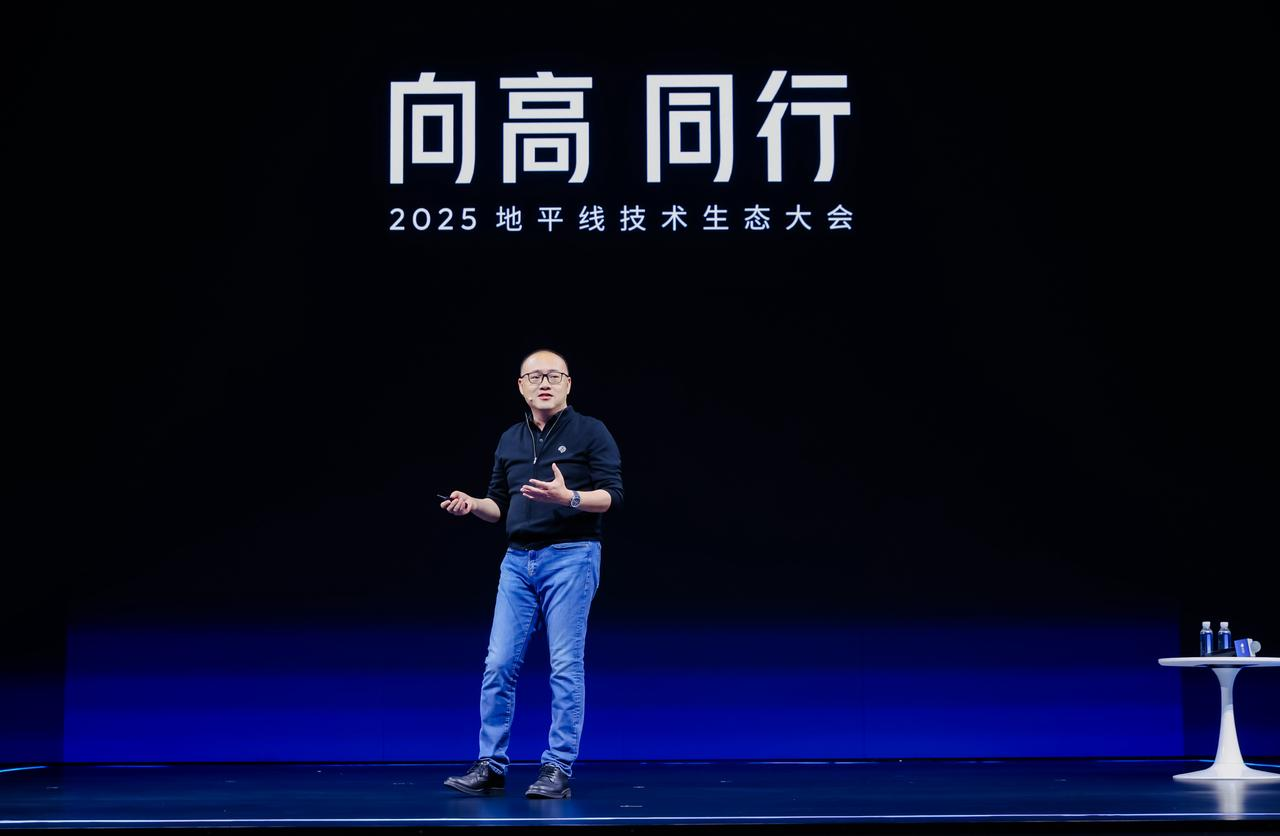
2025首届地平线技术生态大会召开 10万级国民车将享城区智驾
Zheng Quan Shi Bao Wang· 2025-12-09 07:23
Core Insights - The first Horizon Technology Ecosystem Conference was held on December 8, 2025, focusing on the development of smart vehicles and robots, aiming to promote the integration of smart technology into everyday life [1] Group 1: Technological Advancements - Horizon's founder and CEO, Yu Kai, emphasized the need for a solid technological foundation for the widespread adoption of smart technology, highlighting three core pillars: BPU (intelligent computing architecture), compilers, and algorithms [2] - The newly released fourth-generation BPU architecture "Riemann" achieves a tenfold increase in key computing power and enhances energy efficiency for large language models by five times, marking over a 1000-fold performance improvement in BPU over the past decade [4] - The fourth-generation compiler, OpenExplorer 4.0, reduces compilation time from hours to minutes and improves model performance by 20%, indicating a shift towards machine learning-driven self-evolution in the industry [4] Group 2: Business Model Innovation - Horizon introduced a new collaboration model "HSD Together," which allows partners to focus on their strengths while Horizon provides comprehensive algorithm services, reducing R&D costs, computing power consumption, and time to market by 90% [5] - The HSD driver assistance system has already been applied in models like the Xingtu ET5 and Deep Blue L06, achieving over 12,000 activations within two weeks of launch, making advanced driving assistance accessible in the 150,000 RMB market [5] Group 3: Market Expansion - Horizon aims to democratize advanced urban driving assistance for vehicles priced at 100,000 RMB, with a new solution based on a single Journey 6M chip set to go into mass production [6] - The Journey series chips have achieved significant market penetration, with over 10 million units of the Journey 6B/L models and over 1 million units of the Journey 6E/M models shipped in the first year [6] Group 4: Robotics and Open Source Models - Horizon has expanded its technology ecosystem beyond the automotive sector, becoming China's largest consumer robotics computing platform, collaborating with over 100 partners and connecting more than 100,000 developers [7] - Two open-source models, HoloMotion and HoloBrain, were launched, focusing on motion intelligence and spatial awareness for robots, respectively, while Horizon collaborates with over 500 educational institutions to cultivate talent in the smart industry [8] - Horizon's mission is to empower smart vehicles and robots to enhance safety and quality of life, with a goal of achieving "HSD million-unit production" in the next 3 to 5 years [8]
金龙客车完成全产品矩阵升级—— 全链路创新构建技术“护城河”
Jing Ji Ri Bao· 2025-12-08 22:12
创新为要 在金龙客车厦门制造基地的焊装车间,数台工业机器人挥舞机械臂,在空中划出精准的弧线。伴随着激 光传感器的细微闪光,一块块钢板被精准焊接成车身骨架,整个过程在现代化生产线上高效完成。这条 国内客车行业首条柔性化智能焊装线,实现了6种车型的混线生产,生产效率提升35%,产品一次交验 合格率达99.2%。 "智能制造不是选择题,而是必答题。"公司工程研究院副院长宋光吉站在总装车间的数据大屏前介绍。 屏幕上实时跳动着生产进度、质量数据和设备状态,每条产线都配备了5G+视觉检测系统,能自动识别 装配问题并实时报警。这套智能系统使公司在2024年实现了关键工序100%数字化管控。 智能生产线驶出的不仅是传统客车,更是面向未来的智慧产品。在金龙智慧园区,记者试乘了正在运营 的L4级别量产自动驾驶巴士,无方向盘、无油门、无刹车踏板,极具科技感和现代感。公司智能车营 销中心部长柯永瑞告诉记者,"这款巴士前后安装有激光雷达、毫米波雷达等传感器,不会像人一样'开 小差',能持续监测路面情况、周围物体,实现路牌识别、自主避障、变道绕行"。通过激光雷达、毫米 波雷达和视觉感知系统的融合,车辆能在100毫秒内完成对周围环境的感知 ...

智驾国产芯片格局变化
2025-12-08 15:36
Summary of Conference Call Records Industry Overview - The records focus on the autonomous driving chip landscape in the Chinese automotive industry, highlighting various companies' strategies and developments in self-driving technology and chip utilization. Key Points by Company NIO - NIO's self-driving solution utilizes fully self-developed technology, primarily promoting a world model, but currently lags in effectiveness. The main task for next year is to improve the connectivity rate of the parking-to-parking function and handle complex cases. The Lido and Firefly series are expected to continue using NVIDIA solutions [1][3]. Xpeng Motors - Xpeng's mid-to-high-end models will feature the self-developed Turing chip with a computing power exceeding 1,000 TOPS. The focus is on the iteration of VLA and world models, deeply integrating the BL module. The Turing chip will also be used in the Robotic business line to optimize Robot Taxi efficiency and safety [1][5]. Li Auto - Li Auto's self-developed M100 Schumacher chip is expected to enter mass production in Q2 2026, debuting in high-end models. The AD Max system will feature a mix of M100 and Horizon solutions, while the AD Pro system will continue with Horizon but may upgrade to the G6H version. The algorithm will firmly follow the VOL route [1][5]. Xiaomi - Xiaomi plans to use NVIDIA's 42 series chips in high-end models, while the self-developed Xuanjie O2 chip will be temporarily shelved due to regulatory challenges. The algorithm will be upgraded to address key issues, adopting a structure similar to Tesla's, focusing on world models and language models to solve parking and urban commuting challenges [1][6]. BYD - BYD will upgrade its high-end solutions to NVIDIA's Orin solution, debuting in the Yangwang U8 model. The terminal solution, Tianyi Cloud B1, will have two versions, one continuing with the Orin 3OX low-cost solution and another possibly using Horizon's G6P. BYD plans to significantly adopt the Orin solution and phase out Horizon [1][7]. Chery - Chery's 2026 autonomous driving plan includes multiple tiers. The Falcon 500 series will primarily use Horizon and Qualcomm platforms, while the Falcon 700 series will adopt a dual Orin X platform. The Falcon 900 series will utilize the Sora Ultra platform [1][4][9]. Geely - Geely's autonomous driving layout spans low, mid, and high-end models. Low-end models will mix Black Sesame 1,000 and Horizon Orin chips, while mid-range models will use single and dual Orin X chips. High-end models will feature Soar and dual Soar chips, debuting in flagship models like Zeekr 001 [1][10]. Great Wall Motors - Great Wall's autonomous driving solutions are categorized into low, mid, and high computing power platforms. The low computing power platform will use TI TDA 4VH and Horizon GLM chips, while the mid computing power platform will collaborate with Momenta. The high computing power platform will include dual Orin X and Soar, with Soar expected to replace dual Orin X in 2026 [1][11]. Market Trends - By 2026, companies like BYD, Chery, Geely, and Great Wall, along with joint ventures like Toyota and Volkswagen, are expected to become significant third-party chip purchasers. Volkswagen plans to accelerate its smart vehicle process, heavily adopting Horizon's G6P and G6M solutions [1][12]. Cost Trends - The cost of mid-range platforms, such as BYD's Tianlian B1, is projected to decrease by about 10% in 2026, dropping to around 7,000 yuan. Low-end solutions like Horizon GO6M will see annual hardware cost reductions of 5%-7%. High-end solutions like Orin and Sol are expected to have limited cost reductions, primarily relying on software supplier price drops and increased shipment volumes [1][14][16]. Chip Development - The records indicate a growing trend towards self-developed chips in high-end vehicles to enhance profit margins and optimize resource allocation. In contrast, low-end vehicles will continue to utilize third-party solutions for cost efficiency and quality assurance [1][26]. Conclusion - The autonomous driving sector in China is rapidly evolving, with various companies adopting different strategies for chip development and algorithm integration. The competition is intensifying, particularly in the high-end market, where self-developed solutions are becoming more prevalent.




地平线加速高阶智驾普惠落地 HSD量产激活量快速攀升
Zheng Quan Ri Bao Wang· 2025-12-08 13:16
Core Insights - Horizon has made significant advancements in high-level assisted driving, with the launch of the HSD system and the successful market introduction of vehicles like the ET5 and L06, achieving over 12,000 activations within two weeks [1][3] Group 1: Product Development and Market Performance - The HSD system utilizes a one-stage end-to-end architecture, enhancing driving safety and experience by avoiding common issues like abrupt braking [2] - The Journey 6 series has shown impressive commercial performance, with over 10 million units of the Journey 6B/L sold and over 1 million units of the Journey 6E/M shipped in its first year [2] - The introduction of the Journey 6M for urban assisted driving aims to make advanced driving features accessible in vehicles priced around 100,000 yuan, promoting wider adoption [3] Group 2: Technological Advancements - Horizon has launched its fourth-generation BPU architecture, "Riemann," which improves model efficiency and performance significantly, with a tenfold increase in key operator performance [4] - The "Tiangong Kewu 4.0" compiler enhances AI computation efficiency by approximately 20%, marking a shift towards AI-based compilation processes [4] - Horizon's focus on "physical AI" aims to create intelligent systems that operate in real-world environments, positioning its driving model as a foundational technology for future applications [5] Group 3: Strategic Vision - Horizon plans to achieve a production target of 10 million units for urban assisted driving within the next 3 to 5 years through collaborative efforts with ecosystem partners [6]
速腾聚创(02498):ADAS业务持续推进,机器人业务快速突破
Yong Xing Zheng Quan· 2025-12-08 10:47
Investment Rating - The report maintains a "Buy" rating for the company, indicating a positive outlook on its future performance [4]. Core Insights - The company's ADAS (Advanced Driver Assistance Systems) laser radar products continue to grow, with sales reaching 185,600 units in Q3 2025, a year-on-year increase of 34%. Specifically, laser radar products for ADAS applications saw a 14.3% increase, with 150,000 units sold [1]. - The Robotaxi business is advancing, with significant partnerships established, including a collaboration with Didi Autonomous Driving for L4 Robotaxi equipped with RoboSense laser radar. The company has also signed mass production agreements with several leading Robotaxi and Robotruck firms [2]. - The company is expected to turn a profit in Q4 2025, with a record monthly delivery of over 120,000 laser radar units in October 2025, marking a key point for improving operational efficiency [3]. Summary by Sections Financial Performance - For the first three quarters of 2025, the company reported a revenue of 1.19 billion yuan, a year-on-year growth of 1.24%, but incurred a net loss of 252 million yuan [1]. - The adjusted net profit forecast for 2025-2027 is projected at -176 million yuan, 207 million yuan, and 573 million yuan respectively, with corresponding P/E ratios of -138.82, 29.86 [4][11]. Revenue Growth Projections - Revenue is expected to grow significantly from 1.649 billion yuan in 2024 to 5.417 billion yuan in 2027, with annual growth rates of 47%, 37%, 59%, and 51% respectively [6][13]. Product Development and Market Expansion - The company has successfully secured production orders from 31 automotive manufacturers and suppliers, with a total of 134 models, and has achieved SOP (Start of Production) for 47 models from 15 manufacturers [1]. - The sales of laser radar products for robotics and other applications surged by 393.1% year-on-year, with 35,500 units sold in Q3 2025 [2].