
数字化

Search documents
国网福建电力:2025迎峰度夏,我们准备好了!
Zhong Guo Neng Yuan Wang· 2025-06-25 15:08
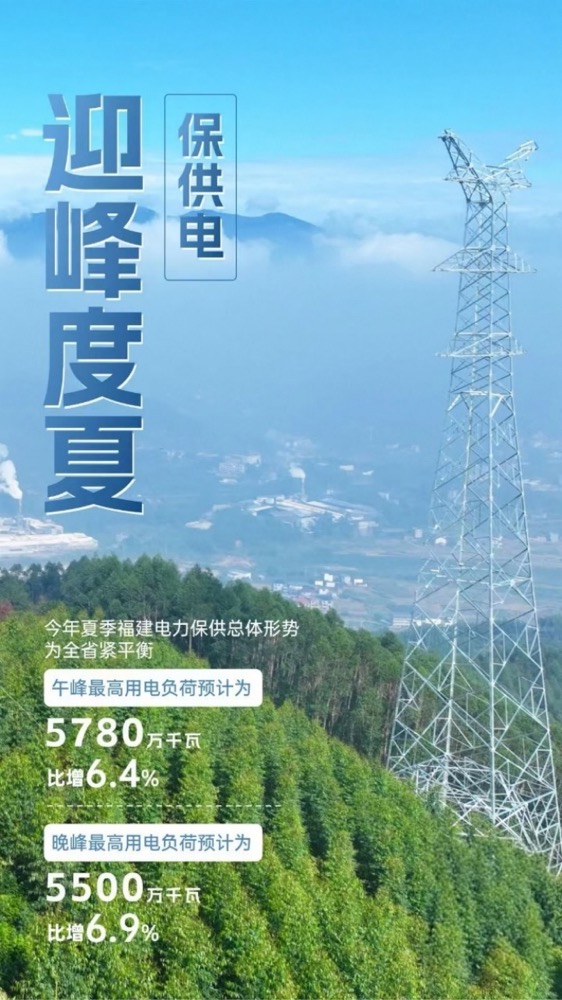
Core Viewpoint - Fujian's power grid is prepared for stable electricity supply during the summer of 2025, with a focus on ensuring reliable power supply amid increasing demand and peak load challenges [2][4]. Group 1: Power Supply Preparedness - Fujian's power supply situation is expected to be tight this summer, with peak load forecasts of 57.8 million kilowatts and 55 million kilowatts, representing increases of 6.4% and 6.9% respectively [2]. - State Grid Fujian Electric Power Company is implementing measures to optimize load resource management and enhance interconnections with neighboring provinces to ensure stable power supply [2][19]. Group 2: Infrastructure Development - A total of 20 infrastructure projects have been arranged for the summer peak supply, with a focus on timely and high-quality completion [4]. - The Fuzhou Minhou Tieling 110 kV substation was put into operation ahead of schedule, providing stronger support for reliable power supply during high-temperature periods [3][5]. Group 3: Material Supply and Management - The material supply chain is crucial for project progress, with a digital management system established to track construction and material needs in real-time [7]. - An intelligent early warning system is in place to ensure timely delivery of essential materials, moving away from a reactive approach to a proactive one [7]. Group 4: Operation and Maintenance Innovations - The company is shifting from passive repairs to proactive maintenance, utilizing digital and intelligent technologies for grid operation and maintenance [10]. - The introduction of drones and robots for inspections is enhancing risk identification and operational efficiency [10]. Group 5: Emergency Response and Disaster Management - A differentiated strategy for grid construction is being implemented to address the unique geographical challenges of Fujian, enhancing resilience against extreme weather [11][13]. - An integrated monitoring network has been established, utilizing various technologies for real-time disaster monitoring and early warning [13][15]. Group 6: Inter-Provincial Power Support - The interconnection project between Fujian and Guangdong has been operational, allowing for a power transfer capacity of 2 million kilowatts to support peak demand in Guangdong [16]. - This interconnection not only aids in peak load management but also enhances emergency support capabilities during natural disasters [19].

江小涓:经济面临下行压力时,要注重市场与政府同向发力
和讯· 2025-06-25 10:17
Core Viewpoint - The article emphasizes the importance of maintaining the momentum of economic recovery in China, highlighting the government's comprehensive macroeconomic policies aimed at boosting consumption, investment, and exports [2][3]. Group 1: Economic Recovery - In the first half of 2025, China's economy shows signs of recovery, with strong performance in retail sales and exports [2]. - The Central Political Bureau's meeting on April 25 outlined a balanced and comprehensive macroeconomic policy framework, focusing on both consumption and investment [2][3]. - The emphasis on "quality improvement" and "reasonable growth" reflects a shift towards high-quality development while ensuring economic growth [3]. Group 2: Reform and Opening Up - Significant reforms in state-owned enterprises are underway, with a focus on reallocating state capital to critical industries and public services [4]. - The establishment of a sound bankruptcy mechanism is crucial for optimizing market resource allocation and addressing issues of market entry and exit [5]. - The article highlights the need for fair competition for private enterprises, addressing issues such as overdue payments and unequal treatment in major state projects [5][6]. Group 3: International Competition - China's rapid industrial upgrading has led to direct competition with developed countries, moving from a vertical division of labor to a horizontal one [7]. - The article discusses the potential for negotiation in US-China trade relations, noting a decline in the share of trade with the US in China's overall trade [8]. - Despite recent challenges, globalization remains a strong trend, with global trade as a percentage of GDP reaching a historical high of 61.24% [9]. Group 4: Challenges and Opportunities - Multinational companies face dual pressures of cooperation and competition in China, with some exiting the market due to increased local competition [10]. - The article expresses confidence in China's long-term economic growth, driven by innovation, a large economy, and the burgeoning digital economy [10]. - The need for coordinated policies to support economic growth and maintain confidence is emphasized, particularly in the face of downward pressure on the economy [10].

爱普生中国新任总裁上任 合作创新成为中国市场主旋律
Huan Qiu Wang· 2025-06-25 08:32
Core Viewpoint - The new president of Epson China, Ishikawa, aims to accelerate the company's localization and green innovation efforts in the Chinese market, leveraging his extensive experience in core business areas such as printers and projectors [4][5]. Group 1: Technology Core - Epson's technology philosophy is encapsulated in three words: "省 (Efficiency), 小 (Compactness), 精 (Precision)," which have been integral since its inception [5]. - The company has developed significant technologies such as micro piezo inkjet for industrial digital printing and 3LCD projection technology for artistic collaborations [5]. - Epson's Heat-free technology allows for inkjet printing without heating, significantly reducing energy consumption and aligning with China's dual carbon goals [5]. Group 2: Digitalization and Youth Engagement - Epson is accelerating localization in China by collaborating with local companies to implement its proprietary print heads in commercial and industrial printing [6]. - The company is integrating AI solutions in educational settings to alleviate teachers' workloads, allowing them to focus more on student guidance [6]. - Epson has developed smart projection solutions tailored to Chinese consumer habits, including built-in Tencent Video and a WeChat mini-program for enhanced user interaction [6]. Group 3: Green Innovation and Collaboration - Epson has launched the "Love Carrot Shared Green Printing Service," allowing consumers to print without owning a printer, promoting sustainability and convenience [7]. - The company emphasizes collaboration with local partners to drive digital transformation in various industries, including textiles and advertising [7]. - Ishikawa highlights the importance of co-creation with Chinese partners to leverage local innovation capabilities [7]. Group 4: Future Vision - Epson's long-term goal is to achieve "negative carbon" emissions by 2050, reflecting its commitment to environmental responsibility [9]. - The company aims to deepen collaboration with leading Chinese innovative enterprises to empower various industries [9]. - Epson's overseas revenue share has increased from 75% to 85%, indicating that the Chinese market is becoming a key growth engine [9].

全球撒币!资管巨头纷纷押注AI基建
2 1 Shi Ji Jing Ji Bao Dao· 2025-06-25 03:20
Core Insights - Global infrastructure investment, particularly in digital infrastructure, is gaining attention due to its long-term nature, resilience, and high returns [1] - Major overseas investment institutions and tech companies are allocating significant funds towards AI-related infrastructure to secure a competitive edge and stable long-term returns [2] Investment Trends - Large tech and financial institutions are investing heavily in AI infrastructure, with investments reaching billions of dollars [2][3] - Microsoft announced a $400 million investment in AI infrastructure and cloud computing in Switzerland [4] - Amazon plans to invest over $13 billion in expanding AI and cloud infrastructure in Australia [4] - Meta is also planning to build an AI data center, while SoftBank, OpenAI, and Oracle announced a $500 billion investment in AI infrastructure in the U.S. [5] Financial Institutions' Involvement - Financial institutions are actively participating in AI infrastructure investments, with JPMorgan providing over $7 billion in loans for an AI data center in Texas [6] - The investment cycle for AI infrastructure is typically long, ranging from 25 to 50 years, attracting interest from alternative asset investment firms [6] Market Dynamics - The focus of infrastructure investment is shifting towards three key areas: Decarbonization, Digitalization, and Deglobalization [8] - AI is driving demand for computing power, which in turn accelerates the construction of data centers and increases electricity demand [8] Regulatory and Market Developments - China's goal is to have 80% of new data centers powered by green electricity by 2025 [9] - The global capacity of large data centers is expected to double by the end of 2024, driven by AI [9]
波士顿咨询吴淳:中国正加速从大规模生产制造中心向全球创新策源地转型
Zhong Guo Xin Wen Wang· 2025-06-24 12:27
波士顿咨询吴淳:中国正加速从大规模生产制造中心向全球创新策源地转型 中新社天津6月24日电 (记者 刘文文)世界经济论坛2025年新领军者年会(第十六届夏季达沃斯论坛)期 间,波士顿咨询公司中国区执行合伙人吴淳接受中新社记者专访时指出,中国正加速从大规模生产制造 中心向全球创新策源地转型。 当前,中国在智能装备、新能源等战略性新兴产业领域发展迅猛,吸引了越来越多跨国企业深度布局: 特斯拉布局上海研发创新中心,巴斯夫一体化创新基地进驻广东湛江,西门子持续扩大在华研发布 局……这些巨头正以实际行动推动中国从传统的"世界工厂"向"创新实验室"转型。 "科技创新已然成为推动中国经济高质量发展的核心引擎。"在吴淳看来,中国从大规模生产制造中心向 全球创新策源地的演进转型绝非偶然,而是多重要素协同发力的必然结果。 从需求侧来看,中国拥有超大的市场规模,产业升级需求与消费者对新兴技术的快速接纳能力,为创新 提供了独特的试验场与迭代动力。以智能装备领域为例,复杂多样的工业应用场景,对技术不断提出更 高要求,倒逼企业加速技术优化;在新能源领域,国家政策的大力扶持与巨大的市场体量紧密结合,大 幅缩短了技术成熟周期,实现了成本的快 ...
中远海科(002401) - 2025年6月24日投资者关系活动记录表
2025-06-24 12:14
Group 1: Company Overview and R&D Investment - The company invested CNY 101 million in R&D in 2024, with a compound annual growth rate (CAGR) of 23.03% over the past five years [2][13] - The company has applied for and received 102 invention patents, with a CAGR of 50.28% over the past five years [2][13] - Continuous R&D investment and patent output have strengthened the company's technological barriers and provided robust momentum for long-term development [2][3] Group 2: AI and Digital Platforms - The company has developed the Hi-Dolphin model, which accumulates 1.2TB of annual data and enhances decision-making in shipping through deep reasoning engines [2][3] - The Hi-Dolphin model supports various applications, including API and Widget integrations, and offers private deployment for clients [3][4] - The Ship Vision platform has over 200,000 individual users and 1,800 corporate users, showing a positive growth trend [4][5] Group 3: Revenue Structure and Market Strategy - Approximately 44% of the company's revenue comes from internal group sources, while external revenue constitutes the majority [5] - The company is focused on expanding its digital shipping and supply chain products in external markets, targeting shipping owners, regulatory bodies, and financial institutions [5][6] - Future growth will leverage technological advantages and enhance marketing efforts to provide valuable digital empowerment products and data services [6][9] Group 4: Business Model and Profitability - The company is transitioning from project-based to product-based and platform-based business models to enhance sustainability [7][8] - Strategies to improve overall gross margin include optimizing operational efficiency and enhancing product delivery [8][9] - The company aims to deepen industry penetration and explore high-value sectors such as banking and high-end manufacturing [6][9] Group 5: Future Outlook and Market Trends - The company anticipates continued growth in digital shipping and supply chain businesses, with a stable overall revenue scale expected for 2025 [9][10] - The shipping industry, which accounts for approximately 95% of China's import and export freight volume, is increasingly recognizing the importance of digitalization and technology [9][10] - The company plans to enhance its digital data capabilities and explore overseas market opportunities, particularly in shipping safety and carbon reduction [10][12][16]

高瓴收购星巴克的表层逻辑
虎嗅APP· 2025-06-24 10:50
Core Viewpoint - Hillhouse Capital has joined the bidding war for Starbucks' China operations, indicating strong interest from multiple investment firms in acquiring the business [1][2]. Group 1: Bidding Process - The reverse management roadshow organized by Starbucks attracted several investment firms, including Hillhouse Capital, Carlyle Group, and Meituan, signaling a competitive bidding environment [1][2]. - Starbucks' CEO mentioned receiving numerous expressions of interest for the sale of its China business, with an estimated valuation between $5 billion to $6 billion (approximately 36 billion to 43 billion RMB) [1][2]. - The bidding process is reportedly in its second or third round, with more firms entering the fray, suggesting dissatisfaction with initial negotiation terms [3]. Group 2: Competitive Landscape - Known bidders include Carlyle Group, Xincheng Capital, China Resources, KKR, Fangyuan Capital, PAG, and Meituan, each bringing unique strengths to the table [5]. - KKR, Fangyuan Capital, PAG, and Carlyle Group are established private equity firms with extensive M&A experience, while Xincheng Capital and China Resources have significant industry presence [5]. Group 3: Hillhouse Capital's Position - Hillhouse Capital manages over 600 billion RMB, providing it with strong bargaining power in the acquisition process [6]. - The firm has raised $18 billion (over 116 billion RMB) in 2021, with a significant portion earmarked for M&A activities [6]. - Hillhouse has a history of successful investments in the food and beverage sector, including notable brands like Heytea and Misen, which enhances its credibility in this acquisition [6][7]. Group 4: Starbucks' Current Strategy - Starbucks has recently implemented a price reduction strategy, marking its first significant price cut in 25 years in China, reflecting a response to competitive pressures [10][11]. - The company reported a revenue of approximately $740 million (about 5.31 billion RMB) for Q2 of fiscal year 2025, with a year-on-year growth of 5% [12]. - Starbucks is also focusing on enhancing its brand appeal through collaborations and marketing initiatives, indicating a proactive approach to maintaining market share [11][12].


AI应用悄然渗入餐饮业:解码百胜中国首个餐厅营运智能体
Hua Er Jie Jian Wen· 2025-06-24 10:33
Core Insights - Yum China is advancing in the field of artificial intelligence with the launch of its first AI-driven operational assistant, "Q-Rui," aimed at enhancing restaurant operations [1][2] - The AI system will assist in over 20 operational tasks, including scheduling, inventory management, and automated reordering, providing comprehensive support to restaurant managers [1][2] - The company has been investing in AI since 2019, focusing on end-to-end digital infrastructure, with a significant emphasis on generative AI to enhance operational capabilities [2][3] Group 1 - The Q-Rui AI assistant has passed initial laboratory validation and is set to be implemented in select stores, with plans for rapid iteration based on frontline feedback [2] - The AI application extends beyond routine tasks to include front-end operations and back-end supply chain management, enhancing inventory management precision [4] - Yum China emphasizes that AI is not intended to replace employees but to free them from tedious tasks, with a focus on empowering frontline staff [5] Group 2 - The company is in a phase of quality improvement and efficiency enhancement, with profit margins for KFC and Pizza Hut increasing by 0.5 and 1.9 percentage points year-on-year, reaching 19.8% and 14.4% respectively in Q1 2025 [7] - Yum China's Chief Technology Officer highlights the importance of digitalization and AI in the restaurant industry, noting that many of the company's digital initiatives have become industry standards [6] - The company plans to establish a 100 million yuan "frontline employee innovation fund" to promote innovation from the ground up, leveraging the experiences of frontline operational staff [5]
长三角5月“成绩单”:上海社零累计负增长一年后首转正,安徽工业领跑
2 1 Shi Ji Jing Ji Bao Dao· 2025-06-24 10:06
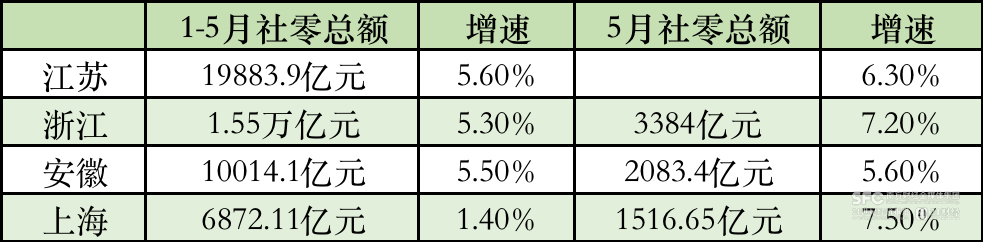
Economic Performance in the Yangtze River Delta - The fixed asset investment in Shanghai, Zhejiang, and Anhui showed positive year-on-year growth from January to May, although Jiangsu's investment decreased by 1.4% due to a decline in real estate development investment [1][8] - In terms of industrial performance, Anhui led the Yangtze River Delta with the highest growth rate in industrial added value in May, driven by the high-end and digital transformation of manufacturing [1][10] - The retail sales of consumer goods in Jiangsu, Zhejiang, and Anhui all grew by over 5% from January to May, while Shanghai's retail sales only increased by 1.4%, primarily due to a decline in restaurant income [1][2][3] Fixed Asset Investment - Shanghai's fixed asset investment grew by 6.2%, while Zhejiang and Anhui saw increases of 1.9% and 0.2%, respectively [6][7] - Jiangsu's fixed asset investment decline was mainly attributed to a 15.3% drop in real estate development investment, despite an 8.7% increase in infrastructure investment [8][7] Industrial Growth - The industrial added value for large-scale industries in Anhui, Jiangsu, and Zhejiang grew by 8.4%, 7.7%, and 7.6%, respectively, with Shanghai's industrial output increasing by 4.8% [9][10] - High-tech manufacturing significantly contributed to Anhui's industrial growth, with a 29.3% increase in May, accounting for 17.6% of the province's industrial added value [10] Consumer Market Dynamics - The consumer market in Jiangsu benefited from the "old-for-new" policy, with significant growth in retail sales of home appliances and other categories [5] - Shanghai's retail sales saw a turnaround in cumulative growth for the first time in a year, indicating a potential recovery in consumer spending [4][3]
首个文物保护领域科学数据中心建成!数据量达到3.8TB
Nan Fang Du Shi Bao· 2025-06-24 04:12
Core Insights - The National Cultural Heritage Administration is advancing the "Data Element ×" initiative to enhance the protection and utilization of cultural heritage through digitalization and technological innovation [1][2]. Group 1: Policy and Planning - The National Cultural Heritage Administration has issued several key documents, including the "14th Five-Year Plan for Cultural Heritage Protection and Technological Innovation" and the "Three-Year Action Plan for Data Elements (2024-2026)," to guide the development of a national cultural resource big data system [2]. - The administration aims to activate the potential of state-owned cultural resource data through the "National Cultural Resource Data Management Measures" [2]. Group 2: Data Infrastructure - The construction of the National Cultural Resource Big Database (China Cultural Cloud) is underway, with a total data volume exceeding 180TB from various national surveys and projects [2]. - The first scientific data center in the field of cultural heritage protection has been established, with a data volume of 3.8TB from 155 datasets [2]. Group 3: Data Quality and Standards - Significant progress has been made in standardizing data quality, including the development of a digital standard system for cultural heritage [3]. - Four industry standards have been released for the digital collection and processing of movable cultural relics and rock cave temples [3]. Group 4: Digital Resource Services - The National Cultural Heritage Administration has innovated digital resource service models to support risk prevention, protection, restoration, value recognition, resource management, and dissemination of cultural heritage [4]. - The Dunhuang Academy has developed a cultural heritage safety management platform using IoT, GIS+BIM, AI, and big data technologies [4]. Group 5: Value Utilization and Public Engagement - A high-quality knowledge base for important cultural relic types has been established, and efforts are being made to enhance public cultural digital resources [5]. - As of now, 7,046 museums across the country have launched over 130,000 online exhibitions and conducted more than 47,000 online educational activities, with museum website visits exceeding 2 billion [5].