贸易保护主义

Search documents
RCEP迈入第四年,如何共建高水平自由贸易区?
Zhong Guo Xin Wen Wang· 2025-05-26 06:22
Core Insights - The RCEP is seen as a hopeful framework to counteract the challenges posed by unilateralism and trade protectionism, with experts emphasizing the need for its expansion and enhancement [1][2][3] Group 1: RCEP's Current Status and Challenges - RCEP has become a new engine for regional economic growth, with the share of intermediate goods trade in total trade increasing from 65% in 2021 to 68.3% in 2024 [1] - Despite its successes, RCEP faces challenges such as low rule utilization and an incomplete implementation mechanism, with applications for membership from Hong Kong, Sri Lanka, and Chile still pending [1][2] Group 2: Recommendations for RCEP's Future - Experts suggest that RCEP should quickly establish expansion standards and procedures, improve governance structures, and create an independent RCEP secretariat [2] - There is a call for RCEP to upgrade from being the largest free trade area to a high-level free trade area, focusing on service trade, digital economy, and green finance [3] - The integration of RCEP with CPTPP is recommended to enhance trade rules, reduce non-tariff barriers, and simplify origin certification processes [3] Group 3: Regional Cooperation and Integration - The cooperation between ASEAN and China is highlighted as the cornerstone of RCEP, with recent negotiations on the China-ASEAN Free Trade Area 3.0 incorporating digital economy and green transition [4] - Future efforts should not only solidify regional cooperation but also promote cross-regional collaboration, exemplified by upcoming summits that aim to leverage complementary advantages [4]
“一扇开放的大门”——中国—中东欧国家企业携手促发展
Xin Hua Wang· 2025-05-26 05:55
第四届中国—中东欧国家博览会暨国际消费品博览会25日闭幕。本届博览会上,近1500家中外企业汇聚 在浙江宁波这个海上丝绸之路的重要港口,借助这一中国持续推动高水平开放的重要平台,碰撞思想、 探寻机遇、深化合作。 斯洛伐克和斯洛文尼亚是本届博览会主宾国。近年来,受德国经济下行、欧洲汽车市场需求疲软等因素 影响,高度依赖欧盟产业链的斯洛文尼亚汽车、玻璃、家具、金属等行业遭遇不小冲击。持续扩大开放 的中国市场,让斯洛文尼亚看到了新的发展机遇。 曾数次来华的斯洛文尼亚首都卢布尔雅那副市长德扬·茨尔内克接受新华社记者专访时说,中国—中东 欧国家博览会就像"一扇开放的大门",斯洛文尼亚期待拓展新的对外合作渠道,希望在汽车等产业与中 国开展合作。 除传统消费品外,一些中东欧企业还带来不少高技术产品。9家斯洛伐克低空经济企业来到宁波参展, 产品涵盖航空仪表、模拟机、飞行汽车等,并在宁波市政府组织的主题推介会上与中方企业和工业园区 现场对接、探寻合作机会。 参展商们表示,在当前单边主义、贸易保护主义上升背景下,中国向世界展示开放姿态并为世界经济注 入确定性。中国与中东欧国家加强经贸联系、深化合作大有可为。 中东欧消费品展厅里, ...
智库要论丨马海涛:以更加积极的财政政策应对外部不确定性
Sou Hu Cai Jing· 2025-05-26 01:02
Group 1: Economic Environment and Challenges - The current international situation is evolving significantly, with increasing competition in technology and industry, leading to heightened external uncertainties [2] - Trade protectionism is on the rise, increasing export pressures on China, particularly in industries heavily reliant on exports to the U.S. such as machinery and electronics [3] - The International Monetary Fund (IMF) has downgraded its global economic growth forecast for 2025 from 3.3% to 2.8% due to ongoing trade policy uncertainties [3] Group 2: Supply Chain and Manufacturing Risks - There are two major risks for China's manufacturing sector: decoupling and technology blockade, as developed countries attempt to reduce reliance on Chinese supply chains [4] - Developed countries are implementing strategies to attract low-end manufacturing away from China, while simultaneously restricting high-end manufacturing technology from leaving [4] Group 3: Financial Market Volatility - Global financial markets are experiencing increased volatility due to economic and political uncertainties, which may exacerbate capital flow fluctuations in China [5] - Financial sanctions and restrictions on capital markets are making it more difficult for Chinese companies to secure financing [5] Group 4: Fiscal Policy Response - A more proactive fiscal policy is deemed essential for enhancing the certainty of high-quality economic development in response to external shocks [6] - The Chinese government has a relatively low debt-to-GDP ratio of 67.5%, providing significant room for fiscal policy expansion compared to G20 and G7 countries [8] Group 5: Implementation of Fiscal Policies - The focus of fiscal policy should be on enhancing social welfare, promoting consumption, and increasing investment efficiency to stimulate domestic demand [9] - Coordination between fiscal and monetary policies is crucial for effective macroeconomic management, ensuring that government investments lead to increased social investments [11]

中美互降关税才过几天,美国又卷土重来,100%关税选项被摆上桌面
Sou Hu Cai Jing· 2025-05-25 04:25
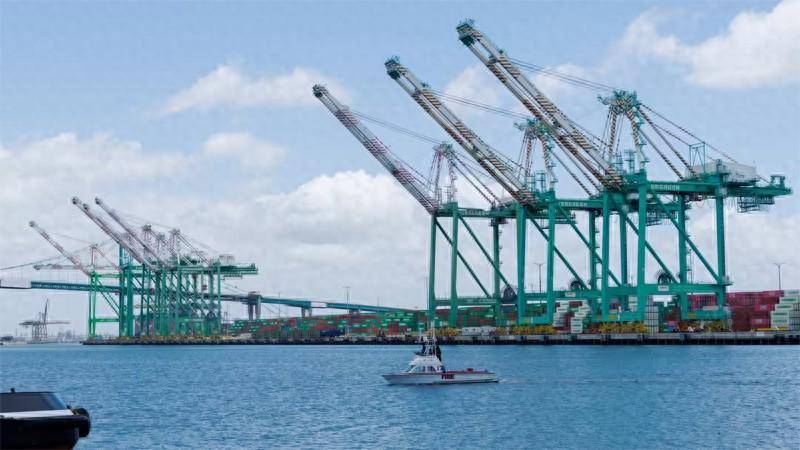
Group 1 - The US government is considering imposing a 100% tariff on Chinese bridge cranes, which could increase port costs by $300 million [1] - The proposed tariffs target bridge cranes and cargo handling equipment, aiming to reduce reliance on Chinese exports [1][3] - The US has been experiencing industrial hollowing since the 1980s, leading to a lack of domestic production capacity for alternative products [3][5] Group 2 - 80% of port cranes in the US are manufactured in China, indicating a significant dependency on Chinese manufacturing [3] - Major US ports, including those in South Carolina and Long Beach, have already signed contracts for Chinese cranes, which would incur additional costs exceeding $130 million due to tariffs [3] - South Korean companies are attempting to fill the gap by promising to transfer crane technology to the US, but their production capacity is only 5% of China's, and they still rely on Chinese supply chains for key components [3][6] Group 3 - The US tariffs are unlikely to disrupt China's dominance in the global port equipment market, where it holds a 70% market share [6] - China's crane manufacturing benefits from technological innovation and cost efficiency, with prices being 60% lower than comparable US products [6] - The US's attempts to decouple from China could lead to a 30% increase in global shipping costs, impacting inflation in Western consumer goods [6][8] Group 4 - China is actively working on digital trade rules with RCEP members and enhancing regional supply chain integration through the Belt and Road Initiative [8] - The US's unilateral tariff actions are increasingly isolating it on the global stage, highlighting the struggles of a superpower facing industrial decline [8]
把发展意愿共识化为有效行动
Jing Ji Ri Bao· 2025-05-24 22:23
Core Viewpoint - The rise of unilateralism and trade protectionism poses challenges to global economic cooperation, while also presenting opportunities for China-Latin America (LAC) economic and trade collaboration [1] Group 1: Strengthening Mechanisms and Long-term Cooperation - Emphasizing the importance of multilateral trade mechanisms and enhancing the synergy between China's free trade zone construction and LAC's integration efforts [1] - Strengthening the role of the China-LAC Forum to address challenges posed by trade protectionism [1] - Promoting the upgrading of existing free trade agreements and increasing trade liberalization levels to support service trade and bilateral investments [1] Group 2: Expanding Market Boundaries and Trade Goods - Exploring the potential of bilateral trade by increasing the range of tradable goods, particularly focusing on agricultural products from LAC [2] - Encouraging LAC countries to utilize trade fairs to enhance their presence in China and stabilize trade [2] - Promoting the import of Chinese intermediate goods to strengthen LAC's supply chain resilience [2] Group 3: Optimizing Vertical Division of Labor - Encouraging cross-border industrial chain cooperation and bilateral investments to mitigate the impact of international market fluctuations [3] - Promoting local supply chain integration in LAC to create jobs and facilitate faster integration of investment enterprises into local economies [3] - Advocating for corporate social responsibility and adherence to local laws and cultural differences [3] Group 4: Enhancing Infrastructure Connectivity - Promoting comprehensive collaboration in infrastructure to create better conditions for economic cooperation [4] - Utilizing the Belt and Road Initiative to guide investments into infrastructure projects [4] - Addressing key bottlenecks in transportation and logistics to enhance trade efficiency [4] Group 5: Promoting Technological Applications and Innovative Cooperation - Leveraging advancements in technology, such as artificial intelligence, to create better platforms for LAC to benefit from technological dividends [5] - Encouraging various forms of technological innovation cooperation to increase the technological content of China-LAC economic relations [5] - Fostering cross-border e-commerce and cultural exchanges to enrich bilateral cooperation [5]
特朗普要对欧洲征收50%关税,欧洲敢“奉陪到底”吗?
Sou Hu Cai Jing· 2025-05-24 21:33
Core Viewpoint - President Trump's recent threat to impose a 50% tariff on EU goods has raised concerns about escalating trade tensions, particularly affecting major companies like Apple, which faces a potential 25% tariff [1][6][20] Group 1: Market Reactions - Trump's tariff announcement led to immediate declines in stock prices, including a drop in Apple's shares and a negative impact on U.S. stock index futures [6][10] - The euro also weakened in response to the tariff threat, indicating market apprehension about the potential for a trade war [6][10] Group 2: EU's Response - The EU initially adopted a cautious stance, aiming for dialogue to resolve trade differences, but acknowledged the seriousness of Trump's threats [10][14] - EU Trade Commissioner Valdis Dombrovskis emphasized the need for mutual respect in trade relations, countering Trump's aggressive rhetoric [14][20] - The EU is preparing a range of countermeasures, indicating a readiness to defend its interests if necessary [18][22] Group 3: Strategic Implications - The ongoing trade tensions highlight the complex interdependencies in global trade, with both the U.S. and EU being significant economic players [20][24] - The EU is actively working on diversifying its trade partnerships to reduce reliance on the U.S. market and mitigate risks associated with unilateral U.S. trade policies [22][24] - The EU's proactive approach includes initiatives like digital taxes and carbon border adjustment mechanisms to enhance its influence in future trade rule-making [24][25]
要么签协议,要么继续征税?中方只剩84天限期,美国信用新低
Sou Hu Cai Jing· 2025-05-24 01:06
据环球网消息,5月19日,美国贸易代表办公室就拟对中国岸桥起重机加征100%关税等事项举行公开听 证会,引发广泛关注。 美国此次拟对华起重机等产品加征高额关税,遭美国业内强烈反对。美国港务 局协会代表全国81个公共港口,其主席兼CEO加里・戴维斯指出,美国自上世纪80年代起就无STS岸桥 起重机生产厂家,全球除中国外仅日本三井E&S、欧洲科尼和利勃海尔能生产此类大型港口起重机,但 这几家产能不足,美国若加税,短期内难寻合适替代,各大港口正常运行将受严重影响,甚至可能陷 入"瘫痪"。 中国公共外交协会举办的吹风会上,外交部亚洲司副司长梁建军表示,面对美国滥施关税,中方坚决反 制,迫使美方调整,中美经贸高层接触有实质性进展,双方建立磋商机制,措施对等,中方对美不抱幻 想,有耐心、定力、资源和手段,不会在原则和核心利益上退让,中国有体制、市场、产业等优势,不 惧美国打压。 特朗普政府从钢铁、铝到汽车、电子产品,再到起重机,大搞保护主义,核心是"美国优 先",但在全球化时代,各国经济紧密相连,靠关税墙重振产业、划分贸易格局不现实。 休斯顿港首席执行官查理・詹金斯称,该港2024年7月已与中国签订8台STS起重机采购合 ...
中国“打样”后,印度觉得自己也行了!结局却出乎莫迪意料
Sou Hu Cai Jing· 2025-05-23 11:22
Group 1 - India's sudden shift in attitude towards the US, proposing to increase tariffs, raises questions about the underlying reasons, especially following the recent positive outcomes of US-China trade talks [1] - The US and China have agreed to significantly reduce tariffs, with the US planning to lower additional tariffs on Chinese goods from 145% to 30% within three months, indicating a potential easing of trade tensions [3] - India's trade relationship with the US is significant, with a total trade volume of approximately $129 billion last year, and a trade surplus of $45.7 billion for India [3] Group 2 - India had previously lowered tariffs on 8,500 industrial products, including American goods, but has now decided to raise tariffs on certain US products in response to US tariff threats [5] - The Indian stock market reacted negatively to the potential for a trade conflict with the US, dropping by 3.2% following threats from President Trump regarding increased tariffs on Indian exports [6] - The disparity in trade capacity and negotiation leverage between India and China is highlighted, indicating that India's attempts to mimic China's strategies may not yield similar results [8]
等不到中方点头,特朗普恼羞成怒?美国拟对中国加征税100%?
Sou Hu Cai Jing· 2025-05-23 11:22
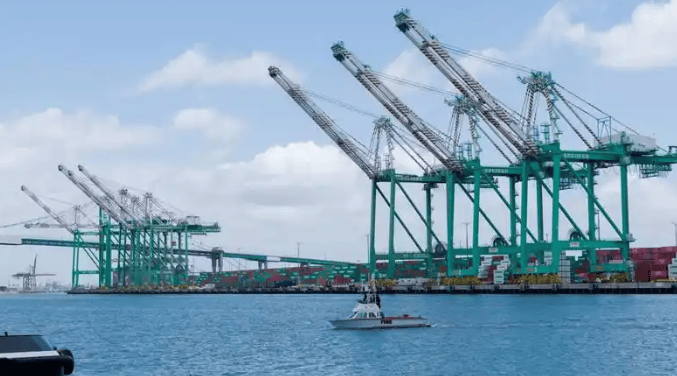
Core Viewpoint - The proposed 100% import tariff on Chinese-manufactured cranes could lead to a loss of nearly $6.7 billion for the U.S. and hinder infrastructure investment upgrades [1] Group 1: Impact on U.S. Ports - The American Association of Port Authorities warns that imposing tariffs will increase operational costs for ports, ultimately raising transportation costs and consumer prices [5] - U.S. ports have already ordered 55 cranes and expect to add 151 more in the next 6 to 10 years, which would be significantly affected by the proposed tariffs [1][3] - Houston Port's CEO stated that the proposed tariffs could lead to a total of 270% in tariffs on their eight ordered cranes, amounting to approximately $302.4 million, which would severely impact investment and job opportunities [3] Group 2: Alternatives and Industry Response - The American Association of Port Authorities urges the U.S. Trade Representative's Office to consider alternative solutions, emphasizing that tariffs will not create a domestic crane manufacturing industry [5] - The limited number of manufacturers capable of producing large port cranes, primarily China, Japan, and Europe, cannot meet the demand if tariffs are imposed [3] - The proposed tariffs are seen as a political maneuver to reduce reliance on Chinese goods and boost the U.S. shipbuilding industry, which may not effectively address the underlying issues in U.S. maritime capabilities [7]
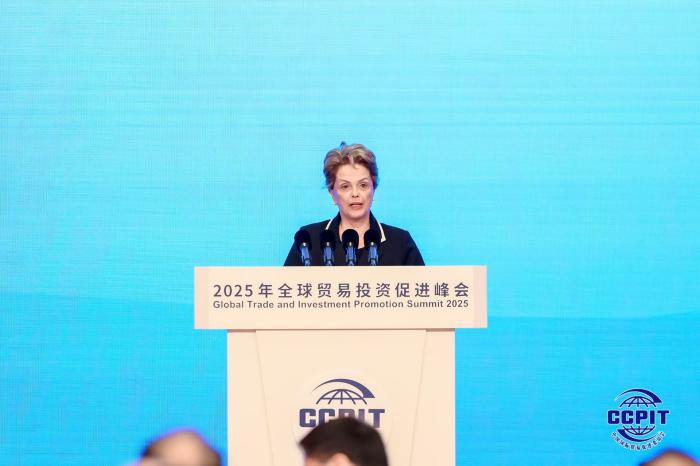
巴西前总统罗塞芙:中国共享创新成果,为发展中国家带来希望 | 世界观
Zhong Guo Xin Wen Wang· 2025-05-23 11:08
Core Viewpoint - The global economy is under significant pressure due to the United States' large-scale trade protectionism policies, which exacerbate global economic vulnerabilities and limit the development and technological access of various countries [1][3]. Group 1: Impact of U.S. Trade Policies - The U.S. has been using tariffs as a tool to exert pressure on other countries, leading to great uncertainty in the global economy [3]. - The "beggar-thy-neighbor" policy initiated by the U.S. is disrupting normal international trade order [3]. - The consequences of the trade war are evident, with significant fluctuations in financial markets, sharp declines in stock indices, and a notable drop in the U.S. dollar index, indicating deeper systemic changes [3]. Group 2: Technological Cooperation and Innovation - China is actively promoting global technological progress and deepening cooperation with developing countries, which is praised by the president of the New Development Bank [5]. - There is a call to strengthen international cooperation and oppose the establishment of technological barriers that hinder developing countries from accessing new technologies [5][6]. - The initiatives such as the BRICS cooperation mechanism and the Belt and Road Initiative play a crucial role in expanding access to capital, technology, and infrastructure for many developing countries [5][6].