
自动驾驶

Search documents
全球Robotaxi商业化拐点将现,看好国内L4公司出海再扬帆
Soochow Securities· 2026-01-10 07:04
Investment Rating - The report maintains a positive outlook on the commercialization of Robotaxi, particularly for domestic L4 companies expanding internationally [2]. Core Insights - The global shared mobility market is undergoing a critical transition from human-driven to automated services, with significant regional disparities [2]. - North America is characterized by a duopoly of Uber and Lyft, with regulatory barriers hindering the entry of Chinese Robotaxi companies [2][11]. - Europe faces fragmented regulations and a technological gap, creating opportunities for a hybrid model combining American platforms with Chinese technology [2][11]. - The Middle East presents a unique opportunity with high customer spending, strong policy support, and low energy costs, making it an ideal market for Chinese companies [2][11]. - Southeast Asia has a large but low-margin ride-hailing market, where Robotaxi may struggle to achieve cost-effectiveness in the short term [2][11]. Summary by Sections Global Robotaxi Market Overview - The report highlights the dual nature of regulatory policies in overseas markets, which generally support Robotaxi development while imposing strict safety and operational requirements [7]. North American Shared Mobility Market - The North American ride-hailing market is dominated by Uber and Lyft, with a significant regulatory barrier for non-local Robotaxi companies [11][39]. - The market has evolved into a dual monopoly, with Uber holding a 76% market share and Lyft 24% as of March 2024 [45]. - The report notes that Waymo has established a dominant position in the Robotaxi market, with a fleet of approximately 2,500 vehicles and a weekly order volume exceeding 250,000 [58][60]. European Shared Mobility Market - The European market is characterized by high competition and stringent regulatory requirements, making entry challenging for foreign companies [11]. Middle Eastern Shared Mobility Market - The Middle East is seen as a blue ocean for Robotaxi, with significant government support and a unique market structure that favors shared mobility [11]. Southeast Asian Shared Mobility Market - The report indicates that the Southeast Asian market is dominated by local players, and Robotaxi may not be economically viable in the short term due to low customer spending [11]. Investment Opportunities - The report suggests focusing on the L4 RoboX industry chain, recommending investments in software and hardware companies, as well as downstream application and upstream supply chain players [2].




Alphabet的新时代来了?
美股研究社· 2026-01-10 06:16
Core Viewpoint - Alphabet Inc. has surpassed Apple in market capitalization for the first time since 2019, although analysts view this as more anecdotal than a bullish market driver, with the company's stock price rising by a low single-digit percentage [1]. Group 1: Key Drivers - The current performance of Alphabet is driven by three main narratives: consumer AI chatbot powered by Gemini [2], AI chips driven by Ironwood TPU [3], and autonomous driving through Waymo [4]. Group 2: Gemini vs. ChatGPT - Gemini has shown a 30% growth in monthly active users (MAU) from August to November 2025, reaching 346 million, while ChatGPT only grew by 6% during the same period, with 810 million MAU [8][9]. - In December, traffic data indicated a 5.6% decline for ChatGPT, while Gemini's traffic increased by 28.4%, with average visit durations of 6 minutes 31 seconds for ChatGPT and 7 minutes 16 seconds for Gemini [8]. - Analysts estimate that if Gemini maintains its growth rate, it could potentially surpass ChatGPT in about 12 months [11]. Group 3: TPU and Market Dynamics - Alphabet's TPU is designed for inference tasks, reducing reliance on Nvidia GPUs, with significant cost advantages: a Google TPU cluster costs $99 million compared to $852 million for an equivalent Nvidia setup [15]. - However, analysts express skepticism about the TPU narrative due to energy efficiency concerns, as Nvidia's GPUs outperform Google's TPUs in this regard [18]. Group 4: Valuation and Market Sentiment - Alphabet's P/E ratios are competitive within the cloud services sector, with a Non-GAAP P/E of 30.58 for FY1, second only to Amazon [20]. - Analysts believe the optimistic sentiment is driven by Gemini's growing appeal against ChatGPT, positioning Alphabet as a key challenger in the consumer AI space [22]. - There are potential headline risks related to regulatory scrutiny, particularly concerning the acquisition of Wiz, which could impact market sentiment [23][26]. Group 5: Future Outlook - Analysts are closely monitoring Gemini's user growth and the outcome of the Wiz acquisition decision by the European Commission, as these factors will influence Alphabet's valuation and market position [26]. - Alphabet is currently testing historical highs in market capitalization, indicating strong investor interest [27].


小马智行与北汽新能源深化战略合作伙伴关系,加速自动驾驶出租车的研发与商业化进程
Xin Lang Cai Jing· 2026-01-10 06:14
Group 1 - The core viewpoint of the article is that Pony.ai and BAIC New Energy are deepening their strategic partnership to accelerate the development and commercialization of autonomous taxi services [1] Group 2 - The collaboration aims to enhance the research and development efforts in the field of autonomous driving technology [1] - This partnership is expected to contribute significantly to the growth of the autonomous vehicle market in China [1]
北汽新能源L3车型开启规模化上路通行试点运营 将逐步面向个人用户开放
Zheng Quan Shi Bao Wang· 2026-01-10 05:58
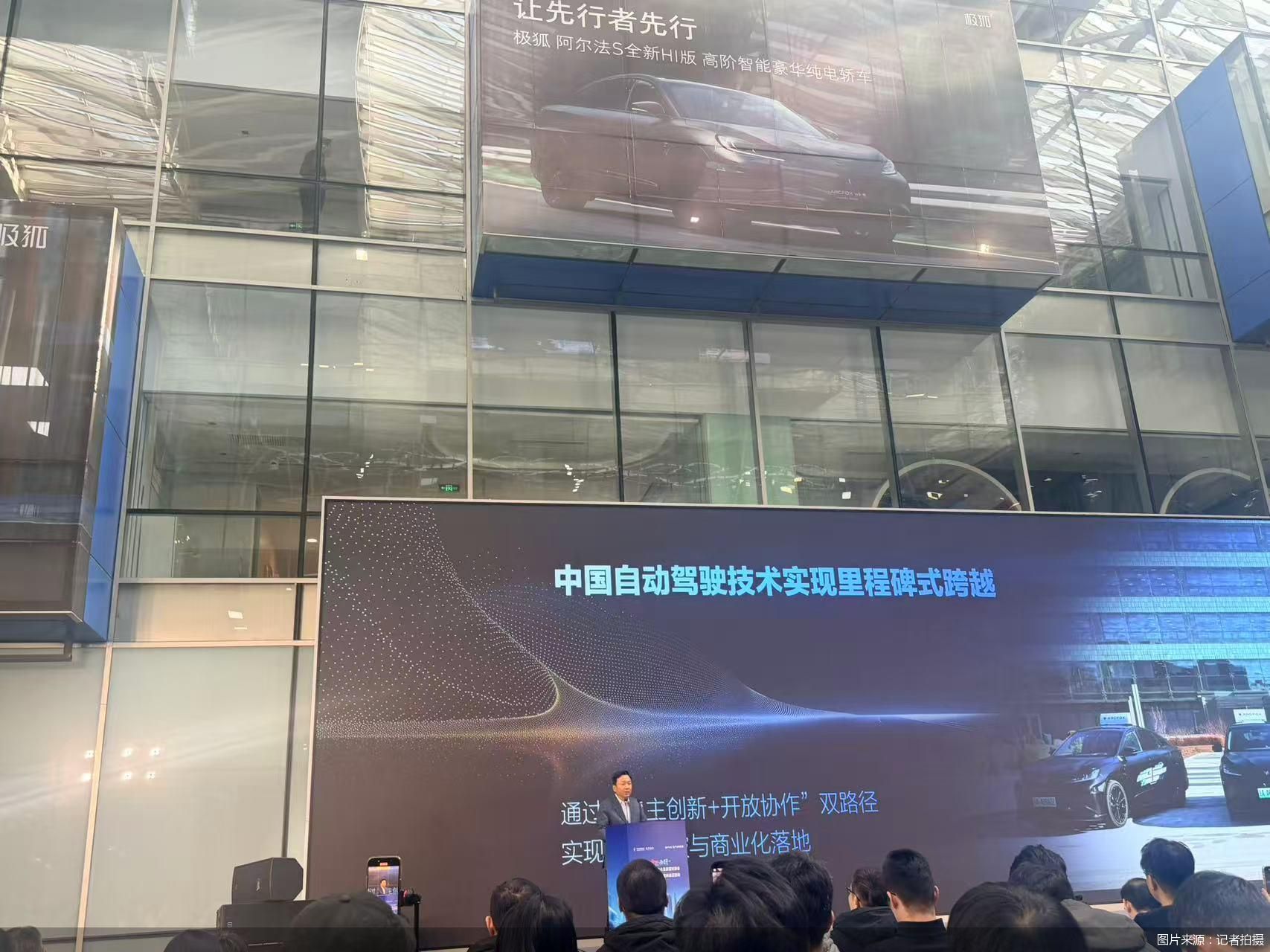
Core Viewpoint - The launch of the large-scale trial operation of the BAIC Arcfox Alpha S (L3 version) marks a significant step towards the commercialization of autonomous driving in China, indicating accelerated development in the industry [1] Group 1: Company Overview - BAIC New Energy is one of the earliest automotive companies in China to invest in autonomous driving technology, covering levels L2 to L4 [1] - The company has developed a high-end intelligent connected technology system called "Yuanjing Intelligent," which includes a comprehensive safety assurance system [1] Group 2: Technology and Safety - The "one core and three rings" safety assurance system consists of robust firewalls for testing verification, process assurance, and operational monitoring [1] - BAIC has established a "fully redundant safety architecture" to provide comprehensive safety support for its vehicles [1] Group 3: Future Plans - The trial operation will initially adopt a "B-end first, gradually open" strategy, with plans to open to individual users starting in the second quarter of 2026 as related policies mature [1] - BAIC New Energy plans to introduce more high-end models equipped with L3 autonomous driving technology in the future [1]

北汽新能源L3车型开启规模化上路通行试点运营,将逐步面向个人用户开放
Bei Jing Shang Bao· 2026-01-10 05:12
Core Viewpoint - The launch of the large-scale trial operation of the BAIC Arcfox Alpha S (L3 version) marks a significant step towards the commercialization of autonomous driving in China, indicating accelerated development in the industry [1] Group 1: Company Overview - BAIC New Energy is one of the earliest automotive companies in China to invest in autonomous driving technology, covering levels L2 to L4 [1] - The company introduced the high-end intelligent connected technology system "Yuanjing Intelligent" last year, establishing a comprehensive safety assurance system [1] Group 2: Technology and Safety Measures - The "one core and three rings" safety assurance system includes robust firewalls for testing verification, process assurance, and operational monitoring [1] - A "fully redundant safety architecture" has been constructed to provide comprehensive safety support for vehicles [1] Group 3: Future Plans - The trial operation will initially adopt a "B-end first, gradually open" strategy, with plans to open to individual users starting in the second quarter of 2026 as supporting policies mature [1] - BAIC New Energy plans to launch more high-end models equipped with L3 autonomous driving technology in the future [1]
极狐阿尔法S(L3版)启动规模化上路通行试点运营 首批车辆将驶入首都高速指定区域
Ge Long Hui· 2026-01-10 05:09
Core Viewpoint - The launch of the BAIC Arcfox Alpha S (L3 version) marks a significant step towards the commercialization of autonomous driving in China, with pilot operations beginning on designated highways [1] Group 1: Company Overview - BAIC New Energy is one of the earliest companies in China to invest in autonomous driving technology and is the first in the industry to cover levels L2 to L4 [1] - The company has developed a high-end intelligent connected technology system called "Yuanjing Intelligent," which includes a comprehensive safety assurance system [1] Group 2: Technology and Safety Measures - The "one core and three rings" safety assurance system includes robust firewalls for testing verification, process assurance, and operational monitoring [1] - The company has established a "fully redundant safety architecture" to ensure comprehensive safety for vehicles [1] Group 3: Pilot Operation Strategy - The pilot operation will adopt a "B-end first, gradually open" strategy, with plans to open to individual users starting in the second quarter of 2026, pending the maturation of related policies [1] - BAIC New Energy plans to introduce more high-end models equipped with L3 autonomous driving technology in the future [1]

东吴证券:全球Robotaxi商业化拐点将现 看好国内L4公司出海再扬帆
Xin Lang Cai Jing· 2026-01-10 04:59
Core Viewpoint - The global shared mobility market is undergoing a critical transition from human-driven to automated systems, exhibiting significant regional differentiation [1] North America - The North American ride-hailing market is dominated by Uber and Lyft, which have solidified their pricing power [1] - In the Robotaxi sector, Waymo holds a monopoly, while Tesla is aggressively entering the market [1] - Chinese Robotaxi companies face challenges due to a 2025 U.S. Department of Commerce ban on hardware and software, complicating their commercialization paths [1] Europe - The regulatory environment in Europe is fragmented and stringent, causing local automakers to lag in L4 algorithm development [1] - This situation creates a unique "hybrid model" opportunity, where "U.S./local platforms + Chinese technology" could break through [1] - The collaboration of Uber and Lyft with Baidu Apollo indicates that technology output without branding may be a superior solution for penetrating the European market [1] Middle East - The Middle East presents a unique "three highs and one low" characteristic: high customer spending, high policy support, high infrastructure investment, and low energy costs [1] - Gulf countries are eager to reduce their dependence on oil and view autonomous driving as a national strategy [1] - Chinese companies like WeRide and Pony.ai are benefiting from dual advantages of road rights and licenses, making this region an ideal training ground and commercialization area for overseas expansion [1] Southeast Asia - The ride-hailing market in Southeast Asia is large but has low customer spending, with low labor costs leading to potential cost disadvantages for Robotaxi [1] - In the short term, large-scale deployment of Robotaxi is not cost-effective, and two-wheeled vehicles remain the mainstream option [1] - Singapore, with its high labor costs, may achieve Robotaxi commercialization [1]

富维股份:公司正开展自动驾驶用高清摄像头方面的视觉业务
Zheng Quan Ri Bao Wang· 2026-01-09 13:50
证券日报网讯 1月9日,富维股份(600742)在互动平台回答投资者提问时表示,在无人驾驶领域,公 司还没有业务,正开展自动驾驶用高清摄像头方面的视觉业务。 ...

光智科技4次定增均告失败:有息负债增加结构恶化 5折再推股权激励|光学成像并购潮
Xin Lang Zheng Quan· 2026-01-09 11:05
Core Viewpoint - The optical imaging industry is experiencing a wave of capital operations driven by the broad market prospects in emerging technology fields such as automotive lenses, AR/VR optics, and machine vision. However, Guangzhi Technology has faced multiple failed financing attempts, leading to an increasing debt burden and deteriorating financial structure [2][8]. Group 1: Company Financial Performance - Guangzhi Technology's main business includes the research, production, and sales of infrared optical devices and high-performance aluminum alloy materials, with products such as infrared materials and devices [3]. - The company has attempted multiple financing rounds to expand capacity and alleviate financial pressure, but all four attempts have failed, resulting in a growing debt burden [5]. - As of the end of Q3 2025, Guangzhi Technology's debt ratio was 78.25%, down from 98% at the end of 2023, but interest-bearing debt reached 1.627 billion, indicating an increase [5][6]. Group 2: Financing Attempts - The company announced a financing plan in October 2024 to raise funds for acquiring 100% equity of Xiandian Technology, but this plan also failed [3][5]. - Previous financing attempts included raising 439 million in February 2020, 731 million in November 2021, and 551 million in May 2023, all aimed at supplementing working capital and supporting project development, but none were successful [5][6]. Group 3: Equity Incentive Plan - In November 2025, Guangzhi Technology launched an equity incentive plan with a strike price of 21.02 yuan per share, approximately 50% lower than the market price at the time of announcement [6]. - The plan's performance conditions include achieving revenue of at least 2.2 billion or net profit of 100 million by 2026, and 3 billion or 200 million by 2027, with either condition being sufficient for incentive eligibility [6]. Group 4: Profitability Concerns - Despite a significant revenue increase of 51.11% year-on-year to 1.443 billion in the first three quarters of 2025, Guangzhi Technology reported a net loss of 90 million, indicating ongoing profitability challenges [6]. - The company's gross margin has fluctuated between 18% and 28%, significantly lower than comparable companies, and the gross margin for the first three quarters of 2025 was 26%, continuing to decline [6].

芯片被美国审查通过后,黑芝麻智能获武岳峰5亿战投
Guan Cha Zhe Wang· 2026-01-09 09:41
Core Insights - Black Sesame Technology has reached a strategic investment intention with Wu Yuefeng Science and Technology and its partners, aiming to receive a total of 500 million RMB for long-term strategic investment to support its development in edge AI and embodied intelligence [1] - The company’s high-performance all-scenario intelligent driving chip, Huashan A2000, has passed relevant reviews by the U.S. Department of Commerce and the Department of Defense, allowing for global sales and application, marking its entry into the scale application phase [1] - Black Sesame Technology reported a revenue of 253 million RMB in the first half of this year, a year-on-year increase of 40.4%, but recorded a net loss of 762 million RMB, indicating a shift from profit to loss [1] Investment and Strategic Moves - The investment will be specifically allocated to the strategic layout of the edge AI and embodied intelligence industry chain, integrating quality targets with core technologies and products through investments and acquisitions [1] - Recently, Black Sesame Technology announced the completion of a strategic controlling acquisition of Yizhi Electronics, indirectly holding 60% of its shares, which is seen as a key move to expand edge intelligent solutions and explore new growth paths [2] - In November last year, the company launched the SesameX multidimensional embodied intelligent computing platform, marking its entry into the humanoid robot sector [2]

