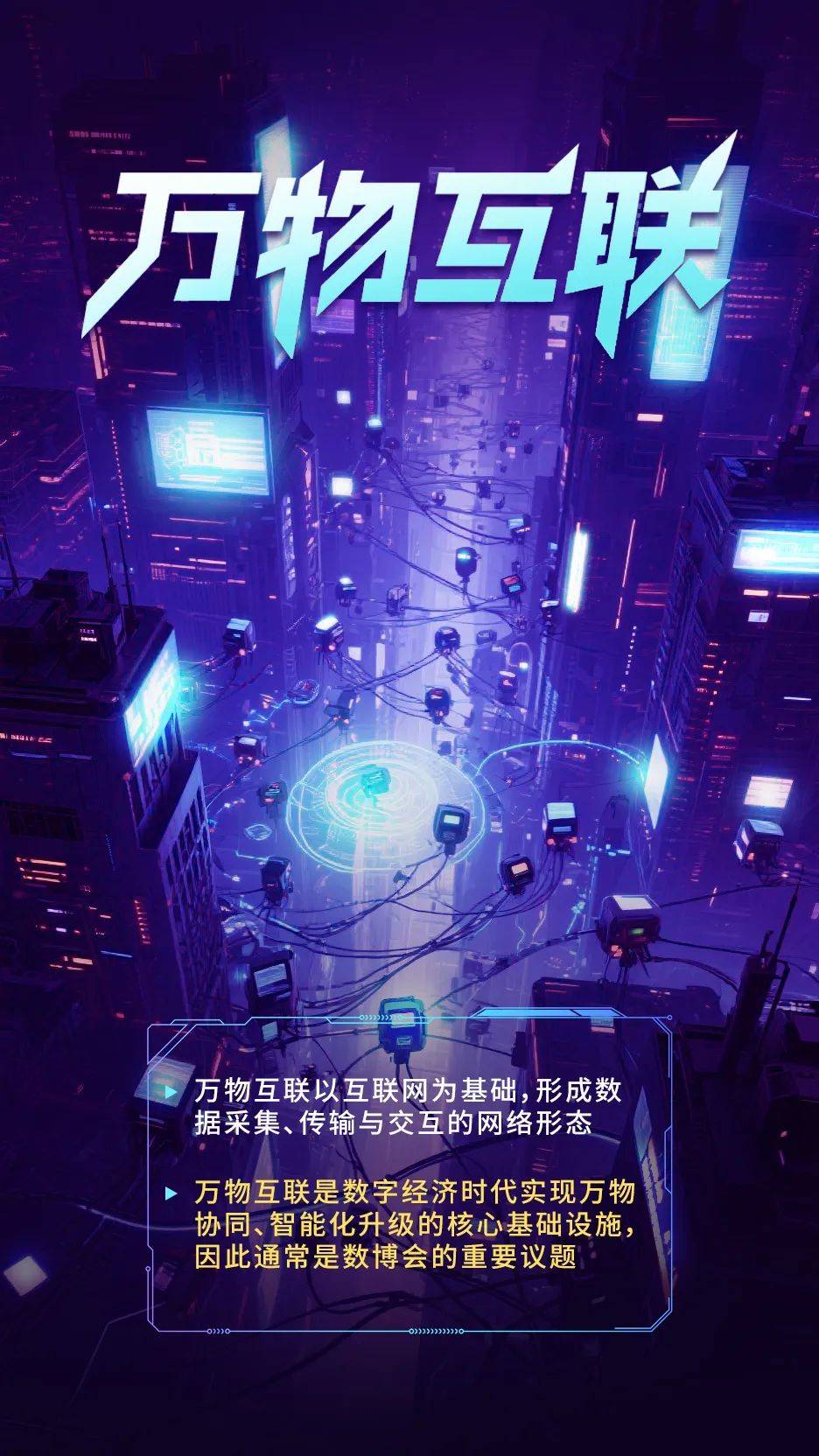
万物互联

Search documents
AI看数博|盘点那些数博热词之“万物互联”
Sou Hu Cai Jing· 2025-08-23 16:30
Group 1 - The concept of "Internet of Everything" refers to the connection of various physical devices and data through technologies like the Internet, IoT, and 5G, enabling real-time information exchange and collaborative work [7][9] - Key functions of the Internet of Everything include making devices understand needs, enhancing efficiency in scenarios, and providing more personalized services [9][11] - Examples of applications include smart home systems, industrial smart production, precision agriculture, and intelligent healthcare, showcasing the transformative impact on daily life and work [13][14] Group 2 - The development of the Internet of Everything has been a focal point at the Data Expo, evolving from initial discussions on data security to its integration into various sectors, driving digital transformation and smart upgrades [10][11] - Companies like Huawei, Alibaba, and Xiaomi are leading in the Internet of Everything space, with Huawei's HarmonyOS enabling seamless device collaboration, Alibaba optimizing production processes through IoT, and Xiaomi connecting over 943 million smart devices [16]

未来五年增长确定性最高的中国科技公司,小米提前预定了
Feng Huang Wang· 2025-08-22 08:24
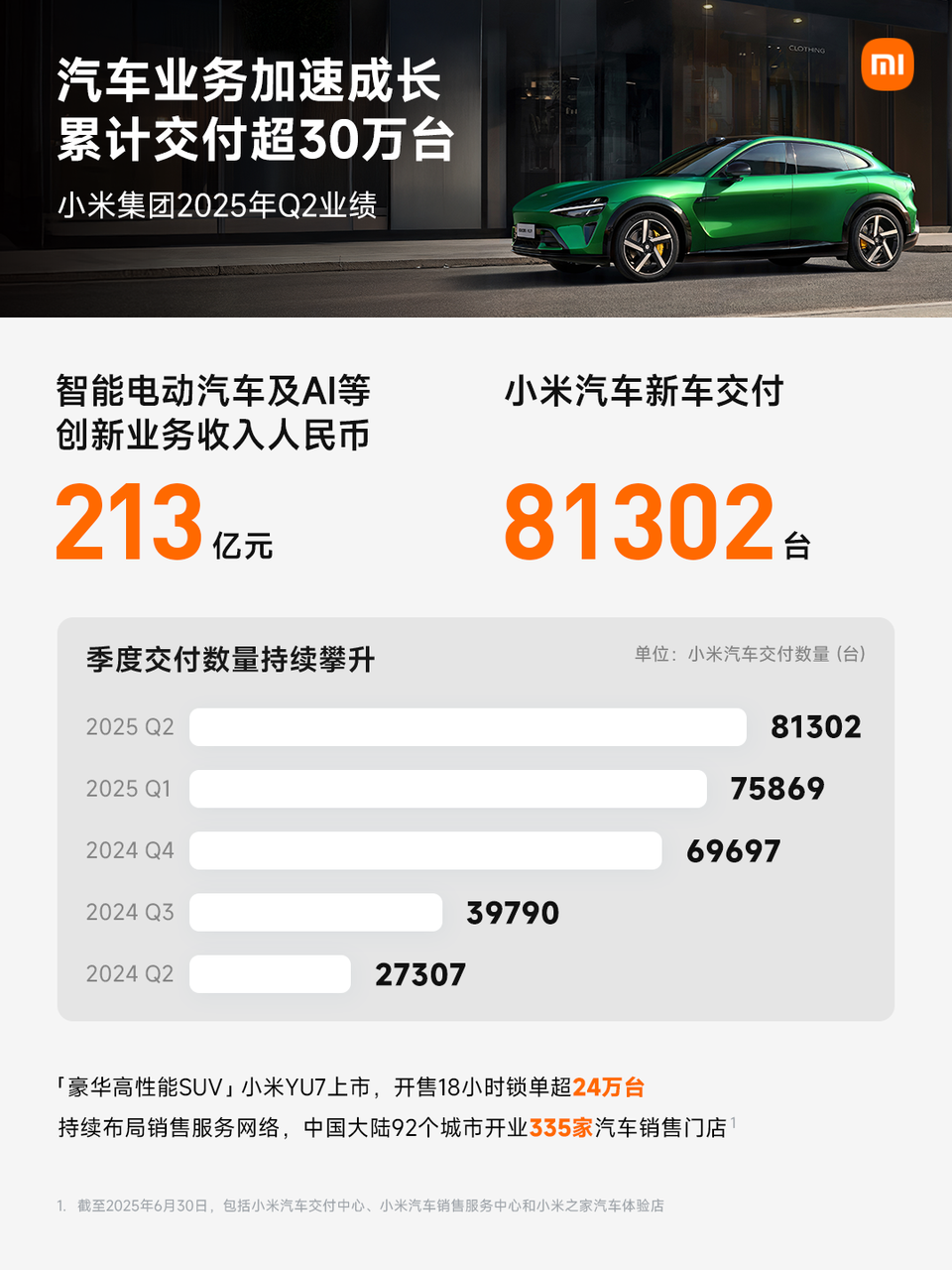
Core Insights - Xiaomi has achieved a remarkable Q2 2025 financial performance with total revenue of 116 billion yuan and a year-on-year growth of 30.5%, marking a historical high amidst a challenging industry environment [1][2][17] - The company's growth is attributed to its "human-vehicle-home ecosystem" strategy, which is not only supporting current financial performance but also establishing growth certainty for the next 3 to 5 years [1][11][17] Financial Performance - Xiaomi's Q2 2025 revenue of 116 billion yuan includes contributions from multiple business lines, with smart electric vehicles and innovative businesses contributing 21.3 billion yuan [2] - The automotive segment generated 20.6 billion yuan in revenue with a record delivery of 81,302 vehicles in a single quarter, indicating a strong position in the domestic new energy vehicle market [2][4] Automotive Business - Despite the YU7 model not yet being delivered, Xiaomi's automotive division delivered a total of 157,000 vehicles in the first half of the year, achieving an average tax-inclusive price of 280,000 yuan [4] - Xiaomi's strategy emphasizes product strength over price competition, with plans to enter the European electric vehicle market by 2027 [4][11] Smartphone and AIoT Performance - In Q2 2025, Xiaomi's global smartphone shipments reached 43 million units, maintaining a market share of 14.7% and ranking among the top three globally for 20 consecutive quarters [5] - The high-end smartphone strategy is showing results, with a 27.6% market share in the high-end segment in China, and significant growth in the 4,000-6,000 yuan price range [5] - The AIoT segment, particularly large home appliances, saw a 66.2% year-on-year revenue growth, with air conditioning units achieving both volume and price growth [5] Ecosystem Strategy - Xiaomi's "human-vehicle-home ecosystem" is a unified strategy that integrates smartphones, vehicles, and home appliances, creating a seamless user experience [9][11] - The company has established itself as a leader in this ecosystem, with other industry players beginning to adopt similar strategies, indicating a broader industry trend [11][12] Competitive Advantages - Xiaomi's competitive edge lies in its technological integration, scale, R&D investment, and strong brand loyalty, which collectively create a robust barrier to entry for competitors [15][16] - The company has invested 102 billion yuan in R&D over the past five years, with a current R&D expenditure of 7.8 billion yuan in Q2 2025, representing 6.7% of its revenue [16] Future Outlook - The automotive business is expected to continue its growth trajectory, potentially becoming a significant profit driver as new models are launched and supply chains are optimized [17] - Xiaomi aims to transition from hardware sales to a model focused on subscription services and data monetization, enhancing its profit margins [17]
半导体行业研究框架培训
2025-08-21 15:05
Semiconductor Industry Research Summary Industry Overview - The semiconductor industry is driven by Moore's Law, which states that the number of components on integrated circuits doubles approximately every 18 to 24 months, leading to reduced costs and expanded application scenarios, including IoT and brain-machine interfaces [1][6] - The global semiconductor market is expected to exceed $1 trillion by 2030, with integrated circuits being the main driver, accounting for 80% of the market, and digital chips making up 80% of integrated circuits [1][15] Key Points on Semiconductor Chips - Semiconductor chips are categorized into five functional types: information acquisition, transmission, processing, storage, and output [1][7] - Integrated circuits represent 80% of the semiconductor industry's value, with digital chips resembling the human brain, responsible for logic and information storage [1][8] - Digital chips include various types such as CPU, MCU, FPGA, GPU, DRAM/Flash, and ASIC/SoC, while analog chips manage signal chains and power distribution [1][10][12] Market Dynamics - The semiconductor market is primarily driven by consumer electronics, which account for 60%-70% of downstream applications, with mobile phones representing about 30% [1][16] - AI development is rapidly changing the market landscape, with NVIDIA's data center revenue nearing 25% of the semiconductor market, and AI-related semiconductors approaching 30% [1][16] Manufacturing and Design Processes - Semiconductor manufacturing involves design, fabrication, and testing, with critical processes including photolithography, etching, deposition, and ion implantation [1][4][17] - The semiconductor industry operates in a triangular structure, with product layers at the bottom, manufacturing layers vertically, and equipment and materials on the sides [1][20] Financial Aspects and Valuation - Chip design companies generate revenue based on sales volume multiplied by unit price, while wafer manufacturers rely on capacity, utilization rates, and pricing [1][22][23] - Valuation methods differ across semiconductor sectors, with design companies typically evaluated on PE ratios based on growth expectations, while wafer and testing companies are often assessed using PB ratios [1][26] Innovation and Growth Opportunities - Innovation cycles are crucial in the semiconductor industry, as they drive value growth across various applications, particularly in AI [1][28] - Identifying high-quality semiconductor companies involves analyzing end-user growth rates and changes in chip value, particularly in emerging sectors like electric vehicles and photovoltaics [1][29] Investment Considerations - Key investment points in the semiconductor industry include innovation, new directions, and understanding the flow from downstream to terminal products and from manufacturing to testing [1][30] - The semiconductor industry is characterized by cycles, including long-term innovation cycles, capacity expansion cycles, and short-term inventory cycles, which are influenced by product launches and market demand [1][32][33] Domestic and International Trends - The trend towards domestic production in the semiconductor industry is progressing, with many segments achieving initial domestic production and beginning to internationalize [1][34]

从硬件商到生活OS:小米的估值跃迁才刚刚开始
3 6 Ke· 2025-08-21 09:31
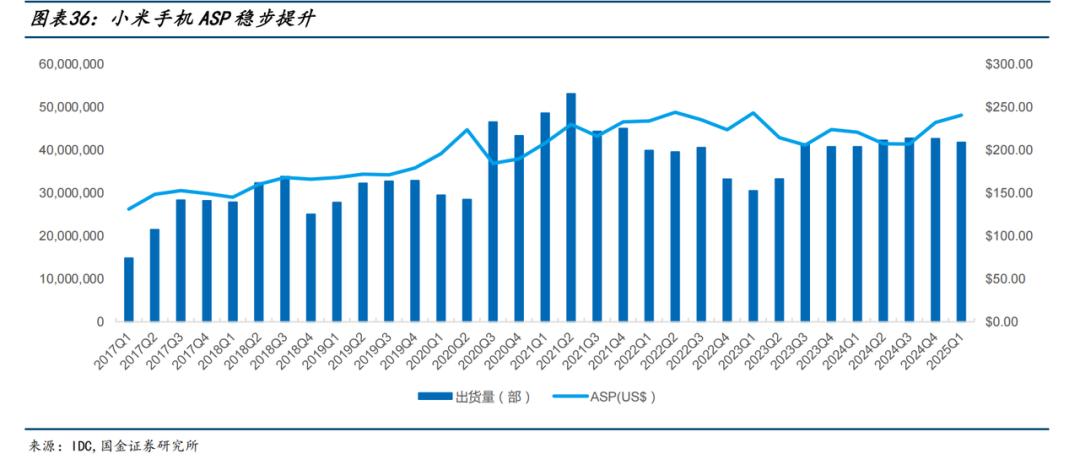
Core Viewpoint - Xiaomi has reported its strongest quarterly performance to date, with significant revenue growth and a successful high-end strategy in the smartphone market, while also expanding its IoT and electric vehicle segments [1][2][3]. Financial Performance - Revenue for Q2 reached 116 billion yuan, a year-on-year increase of 30.5%, marking a historical high for five consecutive quarters [1]. - Gross margin improved to 22.5%, up 1.8 percentage points year-on-year [1]. - Adjusted net profit reached 10.8 billion yuan, a year-on-year increase of over 75%, also a historical high for three consecutive quarters [1]. Smartphone Business - Smartphone revenue was 45.5 billion yuan with a shipment volume of 42.4 million units, achieving year-on-year growth for eight consecutive quarters [3]. - Xiaomi's global smartphone market share reached 14.7%, ranking third, while it ranked first in mainland China [3]. - The high-end strategy has led to an increase in average selling price (ASP), with market shares in the 4000-5000 yuan and 5000-6000 yuan segments rising to 24.7% and 15.4%, respectively [6][7]. IoT and Consumer Products - IoT and consumer products revenue was 38.7 billion yuan, a year-on-year increase of 44.7%, driven by growth in major appliances and wearable products [8]. - Smart home appliances saw a revenue increase of 66.2%, indicating a successful strategy against price competition [8]. Electric Vehicle Business - In Q2, Xiaomi delivered 81,302 vehicles, a year-on-year increase of 197.7% [10]. - The new Xiaomi YU7 model achieved over 240,000 orders within 18 hours of launch [10]. - Revenue from smart electric vehicles reached 21.3 billion yuan, accounting for 18.3% of total revenue [10]. Ecosystem and User Engagement - Xiaomi's ecosystem includes over 730 million monthly active users globally, with a significant increase in users owning multiple connected devices [20][21]. - The average annual spending per user is 12,000 yuan, four times that of typical brand users [21]. - The company has a strong focus on user feedback and co-creation, leading to successful product launches [15]. Research and Development - Xiaomi has 22,300 R&D personnel and plans to invest 300 billion yuan in R&D over the next five years, with a focus on chip development [19]. Market Position and Valuation - Xiaomi's unique business structure and ecosystem provide a competitive edge, with a projected market value of 1.62 trillion yuan for 2025 [26]. - The company is positioned not just as a device manufacturer but as a platform for interconnected digital life, enhancing its long-term value potential [27].

应对万物互联趋势加剧和数据需求激增 “曲线球”系统可绕障传输超高频信号
Ke Ji Ri Bao· 2025-08-20 00:34
Core Viewpoint - Princeton University's research team has developed an innovative "curved wave" system capable of transmitting ultra-high frequency signals rapidly and stably, addressing the challenges posed by the increasing demand for data and the Internet of Things [1][2]. Group 1: Technology and Innovation - The new system utilizes a neural network to dynamically shape the transmission path of wireless signals, allowing them to bypass obstacles and maintain stable, high-speed communication [1]. - The technology focuses on the sub-terahertz frequency band, which has the potential to transmit ten times the data volume of current wireless systems, making it crucial for high-bandwidth applications such as virtual reality and fully autonomous vehicles [1]. - Traditional methods rely on external reflectors to navigate around obstacles, which are often unreliable or difficult to deploy in real-world scenarios [2]. Group 2: Methodology - The research team employs a special radio wave technology known as "Airy beams," which can propagate along curved trajectories rather than in straight lines, enabling effective transmission in non-line-of-sight conditions [2]. - A neural network is introduced to select and optimize the best curved path in real-time, similar to how professional basketball players make shooting decisions based on experience rather than complex calculations [2]. - A high-fidelity simulator was developed to allow the neural network to learn efficiently in a virtual environment, adapting to various obstacle layouts and dynamic changes [2]. Group 3: Future Implications - This work addresses a long-standing challenge in high-frequency wireless communication within dynamic environments, paving the way for future transmitters to intelligently navigate complex settings [2]. - The advancements in this technology are expected to support ultra-fast and highly reliable wireless connections for applications that are currently difficult to realize, such as immersive virtual reality and fully autonomous transportation [2].
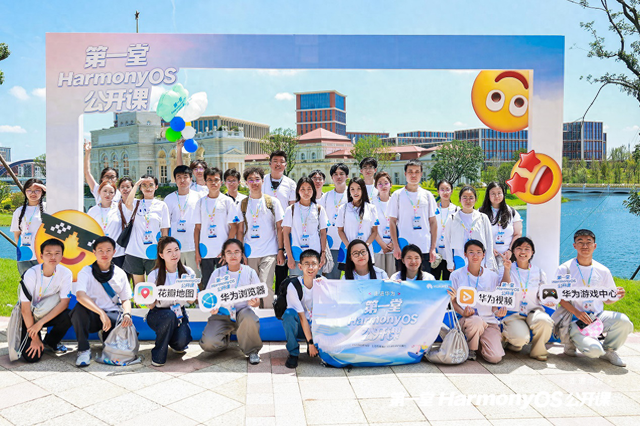
2025第一堂HarmonyOS公开课:以青春之力共筑鸿蒙未来
Guan Cha Zhe Wang· 2025-08-16 12:36
Core Insights - The HarmonyOS public class held by Huawei emphasizes the importance of youth in driving innovation and growth within the Harmony ecosystem [1][7] - Over 200 young students participated in the immersive experience, showcasing the vibrant innovation pulse of the Harmony ecosystem [1][7] Group 1: HarmonyOS Ecosystem Development - Huawei experts highlighted the robust development and vast potential of the Harmony ecosystem, with over 9,000 applications contributing to more than 70 innovative experiences [3][5] - HarmonyOS serves as a solid digital foundation across various industries, fostering extensive co-innovation in the operating system and application ecosystem [3][5] Group 2: AI and Creative Transformation - The integration of AI and full-scene capabilities in HarmonyOS is reshaping video creation experiences, as demonstrated by Tim, a well-known tech influencer [3][5] - Features like "碰一碰" (Tap to Connect) and "手眼同行" (Hand-Eye Coordination) enable seamless and efficient creative processes across devices [3][5] Group 3: Talent Development and Opportunities - Huawei's "Harmony Star Plan" aims to cultivate young talent, investing 100 million yuan in cash and resources to support campus developers and creative individuals [7] - The initiative is designed to ignite innovation and enthusiasm among youth, contributing to the rapid development of the Harmony ecosystem [7] Group 4: Interactive Experience and Partnerships - The public class featured an interactive experience area showcasing the innovative vitality of the Harmony ecosystem, with participation from ten ecological partners [5][6] - Partners like Bilibili, Didi, and China National Aviation provided unique offerings and benefits based on HarmonyOS features, enhancing user engagement [6]


北纬科技(002148.SZ):目前暂未布局eSIM相关业务
Ge Long Hui· 2025-08-12 07:13
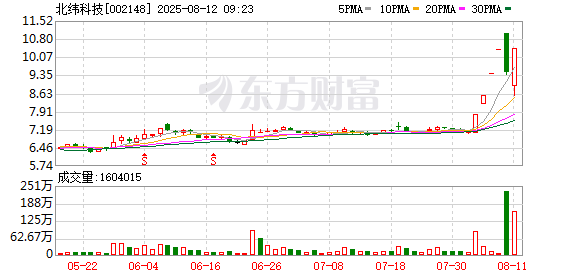
Core Viewpoint - The company is exploring the potential of eSIM technology to enhance device design, management efficiency, and security, which may accelerate the Internet of Things (IoT) development [1] Company Summary - The company has not yet established a business related to eSIM technology but is committed to monitoring developments in this area [1] - The company plans to explore related services in IoT connectivity management [1]

智能座舱产业进阶:诚迈科技引领国产化与AI浪潮,重塑驾舱体验
Zhong Guo Chan Ye Jing Ji Xin Xi Wang· 2025-08-12 04:27
Group 1 - The overall market for smart cockpit is showing a trend of concentration among leading players and the rise of local companies, with various technologies such as cockpit domain control, HUD, AR-HUD, central control screens, and voice functions driving competition and growth [1] - The Hongzhi intelligent automotive operating system, launched by Chengmai Technology's subsidiary Zhida Chengyuan, represents a significant solution in the wave of innovation, providing a domestic path for the "software-defined vehicle" era [1] - The core of the Hongzhi system is a deep customization and innovative integration of OpenHarmony 5.0, showcasing excellent adaptability to mainstream domestic chip platforms, thus offering a fully controllable, high-performance, and secure domestic solution [1][2] Group 2 - The system utilizes distributed soft bus technology to break down barriers between devices, enabling seamless collaboration with the Harmony ecosystem, enhancing user experience through smart interconnectivity [2] - Zhida Chengyuan's new generation cockpit AI interaction solution, based on Qualcomm chips, integrates advanced local models for precise understanding of complex semantics, improving user interaction in various high-frequency scenarios [2] - As the demand for intelligent features in vehicles increases, the smart cockpit operating system is expected to evolve continuously, with projections indicating that sales of new energy smart electric vehicles in China will reach 23 million by 2030 [3] Group 3 - Chengmai Technology and Zhida Chengyuan aim to continue focusing on industry needs and technological innovation to create smarter and safer cockpit experiences, injecting innovative vitality into the automotive industry [3]

北纬科技:目前暂未布局eSIM相关业务
Mei Ri Jing Ji Xin Wen· 2025-08-12 01:22
北纬科技(002148.SZ)8月12日在投资者互动平台表示,eSIM卡通过优化设备设计、提升管理效率和 安全性,有望加速万物互联进程。公司目前暂未布局eSIM相关业务,将持续关注并在物联网连接管理 服务方面开展相关探索。 (文章来源:每日经济新闻) 每经AI快讯,有投资者在投资者互动平台提问:贵公司是否和三大移动通信运营商开展eSIM业务合 作? ...
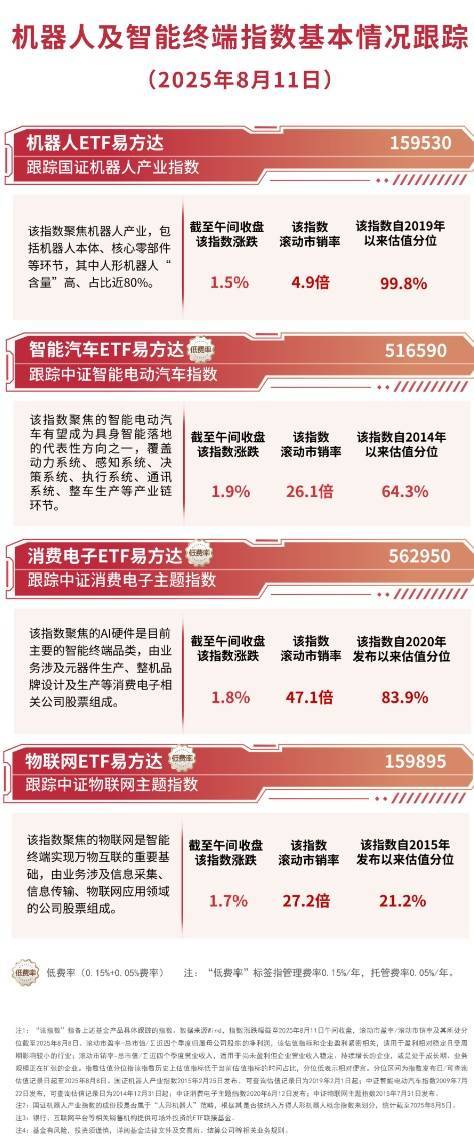
机器人概念股走强,机器人ETF易方达(159530)半日获净申购6700万份
Sou Hu Cai Jing· 2025-08-11 05:24
Group 1: Market Performance - The CSI Intelligent Electric Vehicle Index increased by 1.9% [1] - The CSI Consumer Electronics Theme Index rose by 1.8% [1] - The CSI Internet of Things Theme Index saw a rise of 1.7% [1] - The National Robot Industry Index grew by 1.5% [1] - The robot ETF E Fund (159530) recorded a net subscription of 67 million units in half a day [1] Group 2: ETF Focus Areas - The Robot ETF tracks the National Robot Industry Index, focusing on the robot industry, including core components and humanoid robots, which account for nearly 80% [3] - The Intelligent Electric Vehicle ETF tracks the CSI Intelligent Electric Vehicle Index, which covers various systems in the electric vehicle industry chain [3] - The Consumer Electronics ETF tracks the CSI Consumer Electronics Theme Index, focusing on AI hardware and related companies [3] - The Internet of Things ETF tracks the CSI Internet of Things Theme Index, emphasizing companies involved in information collection and transmission [3]