价值投资

Search documents
中国“捡钱”时代即将来临:如果手中只有10万,试试死啃这两条线
Sou Hu Cai Jing· 2026-02-04 12:20
中国经济这些年变化大,从2010年代移动互联网起步,到后来新能源汽车和人工智能接力,机会层出不穷。 记得2010年左右,智能手机刚普及,阿里巴巴和腾讯股价还低位徘徊,那时候买入的人后来赚翻。接着2015年国家推新能源政策,比亚迪从低谷爬起,股价 几年内翻倍。 2020年后,疫情加速数字化,华为和腾讯加大芯片算法投入,资金蜂拥而入。2024年股市震荡,低估股增多,散户转向长期策略。这些转变显示机会在增 多,可得小心路径选择。 第二种思路是跟踪产业发展趋势与市场动态。密切关注新能源产业转型、人工智能技术落地应用等行业结构性变化,在产业上行周期前期合理布局。 操作中可结合技术分析辅助判断入场节点,同时严格做好风险管理,提前设置止损线,若市场趋势发生反转及时止损离场。 例如 2020 年疫情期间,远程办公、线上协作需求大幅提升,带动相关软件服务行业发展,契合产业趋势的布局能收获相应红利。 执行这一思路时,需持续跟踪宏观政策导向、经济运行数据等核心指标,杜绝情绪化交易。这种思路需要承受一定的市场波动,适合具备一定投资经验、风 险承受能力较强的投资者。 当下市场竞争日趋激烈,各类投资风险也需要客观防范。部分投资者盲目追逐 ...


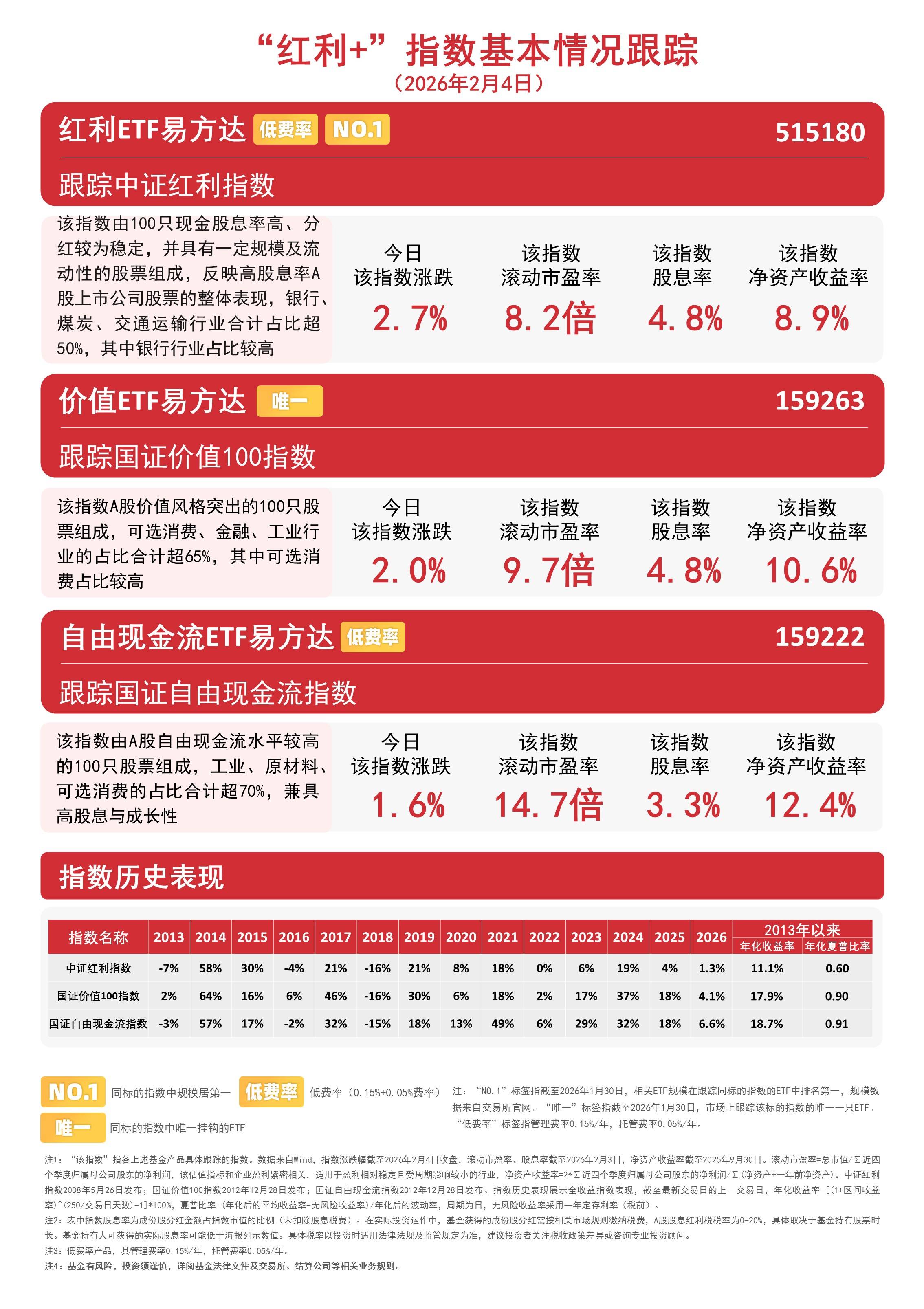
“红利+”指数高开高走,关注价值ETF易方达(159263)、自由现金流ETF易方达(159222)等产品投资价值
Sou Hu Cai Jing· 2026-02-04 10:36
Group 1 - The "Dividend +" index opened high and closed with significant gains, with the CSI Dividend Index rising by 2.7%, the National Value 100 Index increasing by 2.0%, and the National Free Cash Flow Index up by 1.6% [1] - The related ETFs, E Fund Value ETF (159263) and E Fund Free Cash Flow ETF (159222), saw substantial net subscriptions of 25 million and 28 million units respectively throughout the day [1] - The National Value 100 Index employs a three-dimensional screening system focusing on "high dividends + high free cash flow + low price-to-earnings ratio" to select value stocks, demonstrating stable historical performance [1] Group 2 - The National Free Cash Flow Index consists of 100 stocks with high free cash flow levels in the A-share market, with over 70% of its composition from industrial, materials, and consumer discretionary sectors, combining high dividends and growth potential [4] - The historical performance of the CSI Dividend Index, National Value 100 Index, and National Free Cash Flow Index shows varying annual returns, with the National Value 100 Index achieving a 64% increase in 2014 and the National Free Cash Flow Index reaching a 57% increase in the same year [6] - The E Fund Free Cash Flow ETF has a low fee rate of 0.15% plus an additional 0.05%, making it the only ETF linked to the National Free Cash Flow Index among its peers [6]
帮主郑重早间观察:美股科技股“退潮”,市场风格真要变天?
Sou Hu Cai Jing· 2026-02-04 07:41
各位朋友早上好,我是帮主。隔夜美股传来一个值得高度关注的信号:三大指数集体收跌,尤其是以科 技股为主的纳斯达克指数,跌幅达到1.43%,几乎把今年以来的涨幅全给吐了回去。更具体来看,微 软、Meta、英伟达这些AI龙头股普遍下跌,软件板块更是重灾区。但另一边,传统领域的沃尔玛市值 却突破了1万亿美元,百事可乐因业绩好而大涨。这一跌一涨之间,市场的风向是不是真的变了?我们 常说"美股打喷嚏,全球市场都可能感冒",那么这次,它到底得的是什么"病"?又会不会传染呢? 那么,这种大洋彼岸的"风格切换"信号,对我们A股投资者意味着什么?我们又该如何应对呢?帮主给 大家几个清晰的行动思路: 第一,正视并重视这个"风向标"信号。 作为全球资本市场的核心,美股尤其是科技股的表现,对全球 成长股的投资情绪有直接的映射作用。它提醒我们,对于任何资产,当市场的共识高度一致、估值充分 反映甚至透支了未来很久的乐观预期时,波动和回调的风险就会显著增大。这适用于美股科技股,也同 样值得我们审视A股内部某些交易拥挤的高景气赛道。 第二,检查自己的持仓组合,评估其"风格韧性"。 不妨问自己一个问题:如果你的持仓主要集中在某 一类风格(比如全 ...

对话纪源资本符绩勋&吴陈尧&李浩军:走过20多年初心未改,对未来充满期待
IPO早知道· 2026-02-04 02:33
Core Viewpoint - The article emphasizes the strategic long-term investment approach of Jiyuan Capital in AI and embodied intelligence, highlighting significant growth in investment amounts and the anticipation of multiple IPOs in the coming year [4][5][8]. Investment Trends - In 2025, Jiyuan Capital's investment amount reached nearly 3 billion RMB, a 2.5 times increase compared to 2024 [8][10]. - The firm has invested in over 50 AI-related companies and 8 companies in the embodied intelligence sector over the past decade [8][10]. - Jiyuan Capital has successfully recouped over 2 billion RMB in cash through IPOs in 2025, with more than 20 companies in its portfolio preparing for or undergoing IPO processes [8][10]. Team Development - The team size at Jiyuan Capital has grown from 73 to 82 members to better address the expanding AI and embodied intelligence market [5][9]. - The promotion of two partners, Wu Chenyiao and Li Haojun, reflects the stability and experience of the core management team, which has over 20 years of industry experience [9][10]. Market Observations - The current AI and embodied intelligence landscape is characterized by rapid changes, requiring entrepreneurs to possess strategic thinking capabilities to navigate the evolving market [17][20]. - Jiyuan Capital is focused on projects that address specific, defined needs within vertical applications, emphasizing the importance of strong founding teams [16][24]. Global Perspective - Jiyuan Capital aims to leverage its global resources to assist portfolio companies in expanding into international markets, particularly in Southeast Asia [31][32]. - The firm recognizes China's advantages in application scenarios, talent, and supply chain, which are crucial for the development of embodied intelligence [25][26]. Long-term Vision - The firm views the current investment landscape as a long-term journey, akin to a marathon, where patience and a focus on value investment are essential [9][10]. - Jiyuan Capital believes that the AI era presents unprecedented opportunities for creating large-scale companies, potentially reaching trillion-dollar valuations [21][22].

Dow Inc. (DOW): A Bull Case Theory
Yahoo Finance· 2026-02-04 02:32
We came across a bullish thesis on Dow Inc. on r/valueinvesting by ValueContrarian101. In this article, we will summarize the bulls’ thesis on DOW. Dow Inc.'s share was trading at $27.16 as of January 28th. DOW’s trailing and forward P/E were 32.65 and 13.61 respectively according to Yahoo Finance. ASP Isotopes (ISP) Loses 5% as Exec Unloads Stake Syda Productions/Shutterstock.com DOW Inc., a leading global chemical company with production facilities and customers worldwide, is trading at multiyear lows ...

近九成投顾看涨全年 市场风格显现均衡迹象
Shang Hai Zheng Quan Bao· 2026-02-03 18:19
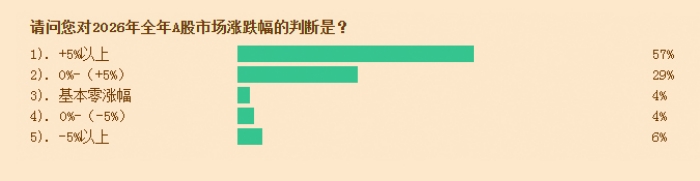
Core Viewpoint - Investment advisors are optimistic about the A-share market in 2026, with nearly 90% expecting an upward trend, and a consensus forming around economic recovery and increased capital inflow [6][7][13]. Group 1: Market Outlook - 88% of investment advisors are bullish on the A-share market for 2026, with 58% expecting an index increase of over 5% [6][14]. - Advisors predict a structural market characterized by fluctuations, with 46% expecting repeated index oscillations and significant gains in certain sectors [14][16]. - The consensus on macroeconomic recovery is strengthening, with 80% of advisors holding optimistic or neutral views on the economy [10][33]. Group 2: Asset Allocation - 67% of advisors recommend increasing allocations to equities, with 68% favoring stocks in the first quarter of 2026 [21][19]. - Advisors are shifting from a focus on growth stocks to a more balanced approach, with 42% expecting growth and dividend styles to converge [16][19]. - High dividend stocks are gaining attention, with 37% of advisors considering them reasonably valued, reflecting a shift in market sentiment [18][19]. Group 3: Investment Strategies - The predominant strategy remains flexible thematic investment, with 47% of advisors advocating for this approach, while 29% are focusing on value investing [22][33]. - Advisors suggest maintaining a higher equity position, with 80% recommending a minimum of 50% equity allocation for clients [22][33]. - The preference for direct stock investments is increasing, with 47% of advisors suggesting this method [21][19]. Group 4: Client Performance and Sentiment - 82% of advisors reported that their clients achieved profits in 2025, a significant increase of 23 percentage points from 2024 [29][27]. - High-net-worth clients are showing increased confidence, with 19% planning to increase their investments, indicating a rising risk appetite [31][27]. - The sentiment towards gold investments is also positive, with 57% of advisors expecting gold prices to continue rising [25][26].
天弘基金张寓:左侧布局传统内需 紧抓新经济弹性机遇
Zheng Quan Ri Bao Wang· 2026-02-03 12:07
在投资中,张寓坚守价值投资核心,专注于大制造赛道投研,擅长左侧布局与自下而上的个股挖掘。具 体投资框架上,他坚持聚焦3个至5个行业深耕细作,希望通过长期深度研究与持续跟踪构筑超额认知, 以此把握左侧布局机会,而非追逐短期行业轮动的博弈性机会。 在行业选择上,张寓锚定价值成长与产业趋势两大主线,并将价值成长作为核心抓手。在其看来,产业 趋势可划分为三个阶段:"未来时"产业短期具备高爆发性,但伴随高波动特征,行情依赖事件催化与市 场风险偏好,仅对这类产业做少量配置;"进行时"产业处于产业成长期,业绩兑现是核心逻辑,为重点 配置方向;"过去时"产业步入产业成熟期,需依托周期波动与逆向投资思路布局,同样仅做少量配置。 在个股选择上,张寓偏好具备α(超额收益)溢价的标的,重点看好三类企业:一是行业商业模式成 熟、竞争格局清晰的龙头公司;二是行业商业模式与产业链逐渐成型,具有强竞争力,能快速抢占市场 份额的优质企业;三是产业趋势处于早期阶段,具备先发优势的潜力标的。他坚信:"构建组合的根基 在于可持续性,唯有具备核心竞争优势的企业,才能在中长期维度为投资者提供稳定回报。" 岁末年初,市场开启新春布局窗口。2025年表现出 ...
富国基金毛一凡:红利不是风格,而是底层的价值判断
Sou Hu Cai Jing· 2026-02-03 11:45
导读:索罗斯曾经说过,他有一个重要的择时信号是"背疼"。当市场到达顶部时,他就会背疼,直到做出离场的决策。有些人对于顶部风险, 有一种与生俱来的"嗅觉"。 富国基金的毛一凡,性格中对于泡沫顶部,也天然有一种"畏惧感"。她在卖方研究的周期顶部转去做了买方投研,她亲身经历了上一轮的消费 品泡沫大顶,她的第一份研究是美国科网股的泡沫破裂。毛一凡开玩笑说,自己性格天生比较"怂",看到泡沫顶部就要坚决跑。 她审慎的性格,也和偏左侧价值的投资框架形成了自洽。毛一凡具有很强的周期思维,注重投资的价值保护,构成了她投资的底层系统。在她 偏红利的投资风格中,毛一凡也形成了自己的独特性。她把广义的红利按照低波红利、质量红利、周期红利做了大类的划分。 低波红利更注重商业模式的稳定,具有持续分红的特点。周期红利是行业有周期特征的领域,分红的稳定性虽然不强,但是在上行周期的弹性 较大。质量红利是高质量高成长股进入成熟期后,随着资本开支减少后,开始对现金流分红。虽然都是红利,但是三者在商业模式、现金流、 估值的权重不同。而不同阶段的宏观周期和市场环境,适配的红利类型也不一样。 通过这样的分类,毛一凡形成了两个重要的特点:1)她的红利选股 ...

富国基金毛一凡:红利不是风格,而是底层的价值判断
点拾投资· 2026-02-03 11:02
Core Viewpoint - The article emphasizes the importance of understanding different types of dividend stocks and their performance in various market conditions, highlighting the investment philosophy of Mao Yifan, who categorizes dividend stocks into three main types: low-volatility dividends, cyclical dividends, and quality dividends [2][3][25]. Group 1: Investment Philosophy - Mao Yifan's investment style is characterized by a cautious approach, influenced by her experiences with market bubbles and a strong cycle awareness [2][28]. - The investment framework includes a focus on stable business models, good cash flow, and low valuations, which are essential for sustainable dividends [9][10][11]. - The classification of dividend stocks into three categories allows for a broader selection and adaptability to different market environments [3][12][19]. Group 2: Dividend Stock Categories - Low-volatility dividends focus on stable business models with consistent dividend payouts, often resembling bond-like assets [11][12]. - Cyclical dividends are linked to industries with cyclical characteristics, where dividend stability may be weaker but offers significant upside during economic upturns [11][12]. - Quality dividends represent companies transitioning from high growth to maturity, capable of returning cash flow to shareholders as capital expenditures decrease [11][12]. Group 3: Market Adaptability - Mao Yifan's investment strategy adapts to changing market conditions, shifting from low-volatility dividends to quality and cyclical dividends as risk appetite increases [3][23]. - The increasing number of dividend-paying companies in the A-share market reflects a broader trend of companies prioritizing shareholder returns over capital expenditures [25]. - The investment approach emphasizes the need for dynamic assessment of company values and market conditions, rather than static reliance on dividend yields [14][19]. Group 4: Case Studies and Examples - A specific case highlighted is the investment in Hong Kong-listed banks when the A-H share price gap reached an extreme, demonstrating a strategic arbitrage opportunity [17]. - The article discusses the importance of understanding the underlying factors that drive dividend stocks, rather than simply categorizing them based on industry labels [19][25].

投资者如何面对铺天盖地的资讯信息?
雪球· 2026-02-03 09:52
Group 1 - The core issue for investors is not how to consume all information but how to filter effective information, maintaining rationality and focus amidst the information flood [6][7] - The anxiety and inefficiency stem from the obsession with "fear of missing out," leading to indiscriminate information intake, which ultimately results in confusion and poor investment decisions [7][8] - The value of information lies in its quality rather than quantity; blindly pursuing "full coverage" can drown investors in noise and impair independent judgment [8] Group 2 - The key to rationally dealing with information overload is shifting from "passive reception" to "active selection," allowing information to serve one's investment logic rather than being led by it [9] - Long-termism requires distinguishing between "immediate noise" and "long-term value," as most daily updates are fragmented and often misleading, while classic literature provides enduring insights [11] - Deep reading is essential for understanding underlying logic and long-term patterns, as it fosters a more profound cognitive framework compared to superficial browsing [11][12] Group 3 - Choosing to focus on long-lasting information rather than chasing immediate trends embodies a practice of long-termism, influencing future investment opportunities [13][14] - The ability to ignore unnecessary information is more valuable than merely acquiring it, as conscious selection and deep engagement transform investors from information slaves to cognitive masters [14]