健康消费

Search documents
加强商务金融协同 促消费“组合拳”再加码
Sou Hu Cai Jing· 2025-12-17 10:40
Core Viewpoint - The recent Central Economic Work Conference emphasizes the need for financial institutions to enhance support for expanding domestic demand, leading to the issuance of a notification aimed at boosting consumption through 11 policy measures [1][3]. Group 1: Policy Measures - The notification outlines 11 policy measures focusing on key areas such as commodity consumption, service consumption, new consumption types, consumption scenarios, and consumer assistance [1][3]. - It encourages local business departments to collaborate with financial management departments to establish effective coordination mechanisms to address challenges in implementing financial support for consumption [3][7]. Group 2: Financial Support - The notification highlights the importance of enhancing financial services for durable goods and digital products, aiming to unlock the potential for upgrading commodity consumption [5]. - It proposes innovative financial products and services tailored to various service consumption sectors, including home services, hospitality, entertainment, education, tourism, and elder care [5][6]. Group 3: Consumption Scenarios and Assistance - The notification calls for the development of diverse consumption scenarios and assistance measures, including specialized loan products for rural e-commerce and county-level commercial improvements [6]. - It emphasizes the integration of financing, settlement, and insurance services to support the construction of international consumption centers and convenient living circles [6]. Group 4: Cooperation and Information Sharing - The notification encourages a collaborative approach among government, financial institutions, and enterprises to conduct diverse consumption promotion activities and share information effectively [7]. - It suggests establishing a regular "government-finance-enterprise" platform to facilitate information sharing and risk-sharing, addressing the issue of short-term credit withdrawal after promotional activities [7][8].

什么才是真正的“椰子水”?标准来了!
Sou Hu Cai Jing· 2025-12-16 21:38
Group 1 - The coconut water market in China is experiencing rapid growth, projected to reach $1.1 billion by 2024, with a compound annual growth rate of 61% over the past five years, significantly outpacing the overall soft drink industry [2] - Current per capita consumption of coconut water in China is only 0.1 liters, which is much lower than in the US (1.1 liters) and Thailand (0.2 liters), indicating substantial growth potential in the market [2] - The market is facing issues such as water dilution, added sugars, and flavoring agents, which undermine product integrity and consumer trust [2] Group 2 - A new group standard for coconut water was released on December 12, aiming to establish clear and scientific guidelines for the industry, helping consumers make informed choices and promoting sustainable development [3] - The standard defines "coconut water" as a product made solely from coconut fruit through physical processing or reconstitution from concentrated juice, distinguishing it from flavored beverages that contain added sugars and artificial ingredients [3] - The standard mandates that labels on pre-packaged products must comply with existing food labeling regulations, and products claiming to meet the standard can assert they are "100% coconut water" [3] Group 3 - Advanced stable isotope fingerprinting technology is being developed to verify the authenticity of coconut water, providing a reliable method for market regulation and helping to standardize the industry [5] - This technology aims to create a unique identification for coconut water based on the isotopic composition of carbon, hydrogen, and oxygen, which can serve as a "geographical ID" and "biological process recorder" [5] - The goal is to establish a standardized method for testing and verification, ultimately enhancing market order and supporting honest businesses in the coconut water sector [5]

一致魔芋:点“土”成“金”
Zheng Quan Ri Bao· 2025-12-16 16:47
Core Insights - The article highlights the transformation of Yichang Yizhi Konjac Biotechnology Co., Ltd. from a local raw material processor to a leading player in the global health market, leveraging konjac as a high-value product across various sectors [1][4]. Group 1: Company Transformation - Yizhi Konjac was established by Chairman Wu Ping, who identified the health food trend and the potential of konjac, a local specialty, to drive business growth [2]. - The company faced significant challenges initially, including technological limitations and market recognition, which necessitated a focus on innovation and product upgrades [3]. - By developing sulfur-free konjac powder with a purity of over 90%, the company successfully entered high-end markets and established itself as a key supplier to major brands [3][4]. Group 2: Supply Chain and Production Innovations - To address supply chain issues, the company created a cooperative model with local farmers, improving production standards and increasing farmers' income from 800 yuan to 2000 yuan per acre [5][6]. - The introduction of hybrid konjac varieties significantly enhanced crop resilience and yield, leading to a doubling of average output per acre [6]. - The company has invested in smart production lines, increasing annual production capacity from 7,000 tons to 12,900 tons post-IPO [10]. Group 3: Market Expansion and Consumer Education - The company has shifted from merely manufacturing products to providing comprehensive solutions, enhancing its market presence and consumer understanding of konjac's health benefits [7]. - With the growing recognition of health trends, the company aims to integrate konjac into various food applications, aligning with national health strategies that promote dietary fiber intake [9]. Group 4: Financial Growth and Capital Utilization - Following its listing on the Beijing Stock Exchange in February 2023, the company raised 154 million yuan, which has been reinvested into production enhancements [10]. - The company's revenue is projected to reach 617 million yuan in 2024, marking a 28.76% increase, with the konjac food segment growing by 63.22% [10]. Group 5: Future Prospects and Research Initiatives - The company is actively exploring new applications for konjac in health and wellness, including functional meal replacements, supported by scientific research collaborations [12]. - Ongoing investments in R&D and production capacity are expected to position the company as a leader in the expanding konjac market, which is projected to reach a scale of billions [12].
从两大报告解析:2026即时零售平台融合的8大趋势
3 6 Ke· 2025-12-16 03:11
Core Insights - Instant retail has emerged as a new growth driver in China's retail sector, with a projected market size of 7.81 trillion yuan in 2024, growing by 20.15% year-on-year, and expected to reach 9.71 trillion yuan in 2025, surpassing the growth rates of both online retail and total social retail sales [6][10][12] Group 1: Market Dynamics - Instant retail is transitioning from a focus on rapid scale to a deeper ecosystem engagement, supported by favorable policies such as the "15-minute convenience living circle" initiative [5][6] - The industry is expected to surpass a trillion yuan by 2025 and reach 2 trillion yuan by 2030, driven by both market demand and policy support [6][10] Group 2: Platform Evolution - Major platforms are elevating instant retail to a core strategic position, with Meituan upgrading its "Flash Purchase" to an independent brand and Alibaba rebranding "Ele.me" to "Taobao Flash Purchase" [10][11] - JD.com has integrated its "JD Hourly Delivery" and "JD Home" into "JD Seconds Delivery," indicating a competitive shift among major players [10][11] Group 3: Consumer Trends - The primary consumer demographic is shifting towards younger age groups, with 55% of consumers aged 31-45 by 2024, and over two-thirds of Meituan Flash Purchase users being born in the 1990s [12][13] - Instant retail is evolving from merely fulfilling urgent needs to creating diverse consumption scenarios, including home, travel, and remote care [15][17] Group 4: Value Proposition - Instant retail is transforming into a key enabler of the digital economy, enhancing operational efficiency for large supermarkets and supporting the digital transformation of small businesses [14][30] - The sector is creating millions of jobs, with the number of delivery personnel growing from 3.96 million in 2017 to 11.21 million in 2022, reflecting a compound annual growth rate of 23.1% [14] Group 5: Quality and Health Focus - Instant retail platforms are enhancing brand collaborations to improve service and product quality, with Meituan collaborating with over 5,600 retailers and Taobao Flash Purchase increasing its brand partnerships significantly [20][21] - Health-conscious products are gaining traction, with 80% of consumers willing to pay a premium for health-oriented items, indicating a shift in consumer preferences [21] Group 6: Ecosystem Integration - Instant retail is increasingly integrating with various external ecosystems, such as travel and content, to enhance consumer experiences and create additional value [23][30] - The "Flash Purchase Theater" model by Taobao Flash Purchase exemplifies this integration, allowing consumers to purchase products featured in content directly [24][28] Group 7: Sustainability and Technology - The industry is addressing sustainability through green packaging and energy-efficient delivery methods, aligning with carbon neutrality goals [30] - Technological advancements, including AI and big data, are driving operational efficiencies and enabling traditional retailers to integrate online and offline channels [31][32]


三部门联合发文 更大力度提振消费
Sou Hu Cai Jing· 2025-12-15 13:01
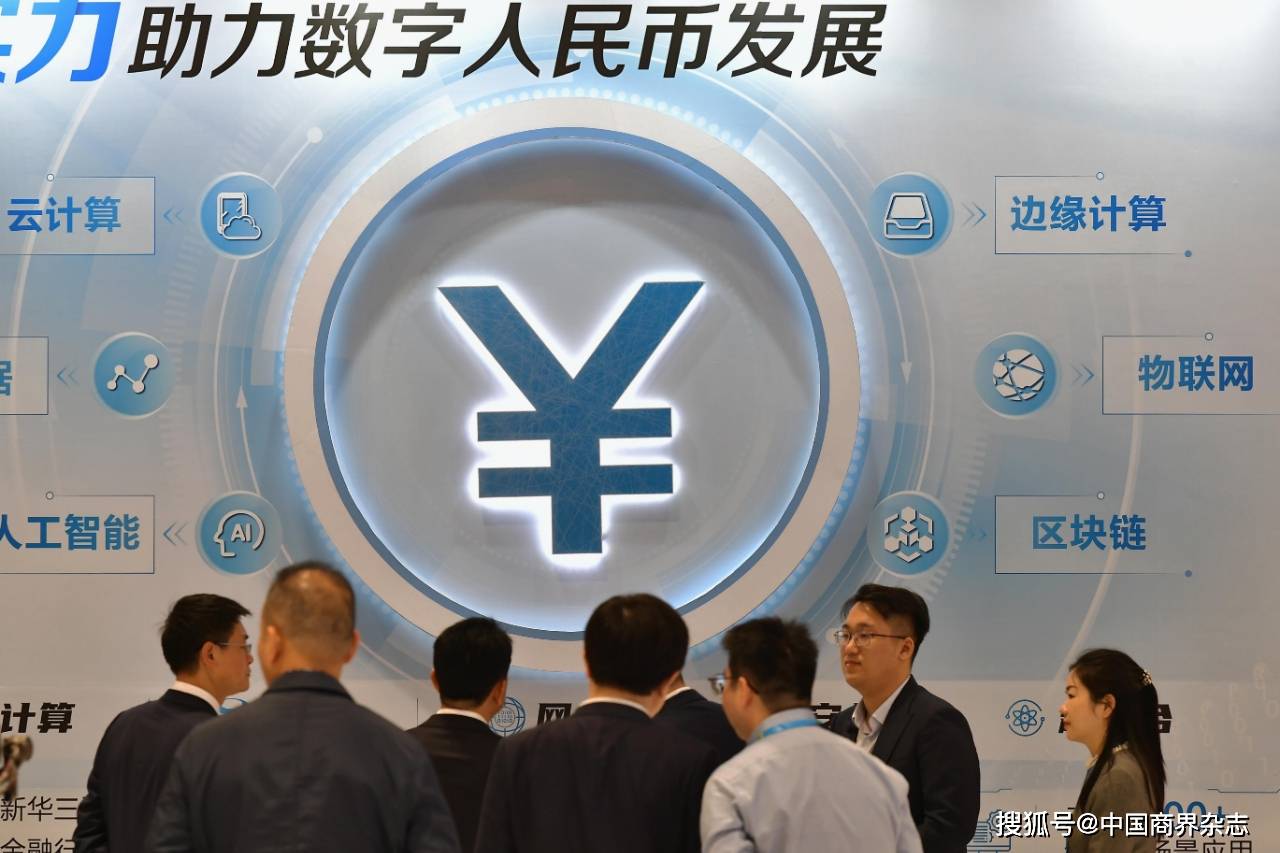
Core Viewpoint - The joint notification from the Ministry of Commerce, the People's Bank of China, and the Financial Regulatory Bureau aims to strengthen collaboration between commerce and finance to boost and expand consumption in China [1][2]. Group 1: Policy Measures - The notification outlines 11 policy measures across three main areas, encouraging the synergy of government, finance, and enterprises to promote consumption through diverse activities and information sharing [1][2]. - Local commerce departments are encouraged to utilize existing funding channels to conduct consumption promotion activities, enhancing the effectiveness of financial support [2]. - The notification emphasizes the importance of financial institutions in supporting key consumption areas, including health, culture, and new consumption fields like digital and green consumption [2][3]. Group 2: New Consumption Development - The notification promotes the development of new consumption models, focusing on risk control and commercial sustainability, and encourages financial support for emerging sectors such as green and digital consumption [2][3]. - It highlights the role of digital RMB smart contracts and improved inbound payment convenience to empower cities with active consumption ecosystems [3]. Group 3: Upgrading Consumption - The notification calls for enhanced financial services for durable goods and digital products, aiming to meet consumer demand for upgrades [4]. - Financial institutions are encouraged to collaborate with platforms and key merchants to improve payment services, including installment plans and digital RMB [4]. - Policies supporting trade integration and cross-border supply chain financing are emphasized to facilitate the entry of quality foreign products into the domestic market [4]. Group 4: Economic Context - The notification is part of broader macroeconomic policies aimed at stabilizing the economy and promoting domestic demand, with recent indicators showing positive trends in consumer prices and production [5]. - The Ministry of Commerce plans to work with financial authorities to ensure the effective implementation of these measures, contributing to a strong start for the 14th Five-Year Plan [5].
中国经济多维数据“增长”表现亮眼 数字消费、绿色消费、健康消费成为新热点
Yang Shi Wang· 2025-12-15 06:31
Group 1 - The core viewpoint of the articles highlights stable growth in industrial production, with significant increases in equipment manufacturing and high-tech manufacturing sectors [1] - From January to November, the industrial added value of large-scale enterprises increased by 6.0% year-on-year, with mining, manufacturing, and electricity, heat, gas, and water production and supply sectors growing by 6.3%, 4.6%, and 4.3% respectively in November [1] - Equipment manufacturing and high-tech manufacturing saw added value growth of 7.7% and 8.4% respectively, surpassing the overall industrial growth by 2.9 and 3.6 percentage points [1] Group 2 - In November, the national service industry production index grew by 4.2% year-on-year, indicating stable growth in the service sector [1] - From January to November, the service industry production index increased by 5.6%, with large-scale service enterprises' revenue growing by 7.6% year-on-year [1] - The business activity index for the service industry was recorded at 49.5% in November, while the business activity expectation index stood at 55.9% [1] Group 3 - The total retail sales of consumer goods increased by 4% year-on-year from January to November, reflecting a faster growth rate compared to the same period last year [2] - The retail sales of services grew by 5.4% year-on-year, with a continuous recovery over three months, outpacing the growth of goods retail sales [2] - Online retail sales of physical goods rose by 5.7% year-on-year, accounting for 25.9% of total retail sales, indicating a shift towards digital, green, and health-oriented consumption trends [2]
多维数据“增长”表现亮眼 数字消费、绿色消费、健康消费成为新热点
Yang Shi Wang· 2025-12-15 05:47
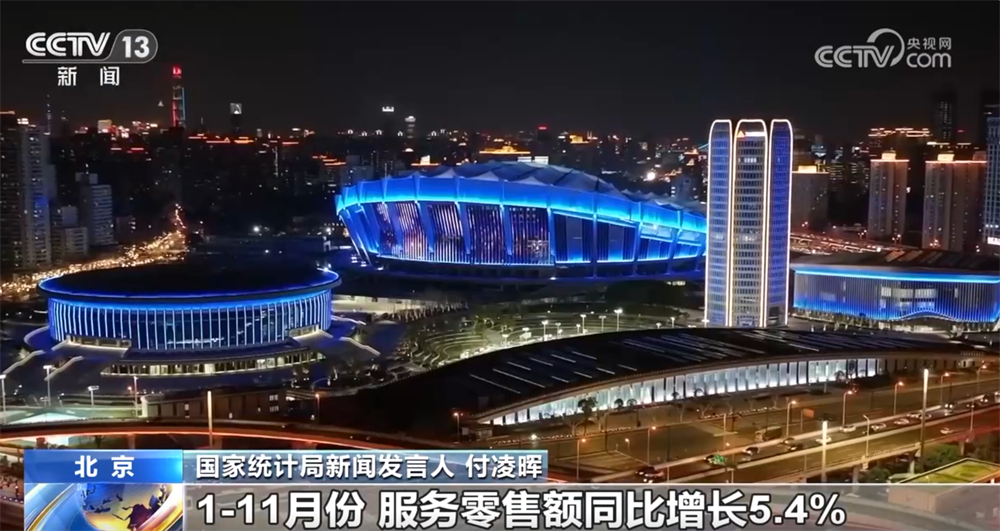
发布会上,国家统计局新闻发言人介绍,今年11月份,服务业平稳增长,现代服务业发展向好。 付凌晖介绍,11月份,全国服务业生产指数同比增长4.2%。1—11月份,全国服务业生产指数同比增长5.6%。1—10月份,规模以上服务 业企业营业收入同比增长7.6%。11月份,服务业商务活动指数为49.5%,服务业业务活动预期指数为55.9%。 付凌晖介绍,1—11月份,社会消费品零售总额同比增长4%,增速不仅快于上年同期,也快于上年全年。1—11月份,服务零售额同比增 长5.4%,增速比上月加快0.1个百分点,连续3个月回升,而且快于商品零售额增速,文体休闲服务类零售额保持两位数增长。1—11月份,实 物商品网上零售额同比增长5.7%,增速快于社会消费品零售总额1.7个百分点,占社会消费零售总额的比重达到25.9%。数字消费、绿色消费、 健康消费日益成为消费新热点,对消费的引领和支撑作用日益显现。 央视网消息:12月15日,国务院新闻办公室举行新闻发布会,国家统计局相关负责人介绍,今年11月份,工业生产稳定增长,装备制造业 和高技术制造业增长较快。 国家统计局:前11个月社会消费品零售总额同比增长4% 国家统计局新闻发 ...
统计局:即时零售、直播电商等消费新模式快速成长 线上消费、新兴消费发展向好
Jing Ji Guan Cha Wang· 2025-12-15 03:13
Core Viewpoint - The new consumption patterns in China are steadily growing, with emerging models like instant retail and live-streaming e-commerce showing rapid development, indicating a significant shift in consumer behavior [1] Group 1: Online Retail Growth - From January to November, the online retail sales of physical goods increased by 5.7% year-on-year, outpacing the total retail sales of consumer goods by 1.7 percentage points [1] - Online retail now accounts for 25.9% of the total retail sales of consumer goods, highlighting its growing importance in the market [1] Group 2: Emerging Consumption Trends - Digital consumption, green consumption, and health-oriented consumption are becoming new hotspots, playing an increasingly significant role in supporting and leading overall consumption trends [1] - The retail volume of new energy vehicles in the passenger car market has maintained rapid growth during the same period [1]
国家统计局:1—11月份全国乘用车新能源车市场零售量保持了较快增长
Zheng Quan Shi Bao Wang· 2025-12-15 03:05
人民财讯12月15日电,国家统计局新闻发言人、总经济师、国民经济综合统计司司长付凌晖在国新办新 闻发布会上表示,新型消费稳步成长,引领作用日益显现。即时零售、直播电商等消费新模式快速成 长,线上消费、新兴消费发展向好。1—11月份,实物商品网上零售额同比增长5.7%,增速快于社会消 费品零售总额1.7个百分点,占社会消费零售总额的比重达到25.9%。数字消费、绿色消费、健康消费日 益成为消费新热点,对消费的引领和支撑作用日益显现。1—11月份,全国乘用车新能源车市场零售量 保持了较快增长。 ...
商务金融协同 11条措施更大力度提振消费
Bei Jing Shang Bao· 2025-12-14 15:13
Core Viewpoint - The Ministry of Commerce, the People's Bank of China, and the Financial Regulatory Administration have jointly issued a notification to enhance collaboration between commerce and finance, aiming to boost and expand consumption through targeted financial support [1]. Group 1: Policy Measures - The notification outlines 11 policy measures across three main areas, focusing on product consumption, service consumption, and new consumption models, while emphasizing the importance of policy synergy and implementation [3]. - It encourages local commerce departments to leverage existing funding channels to promote consumption activities, enhancing collaboration with financial support to better stimulate consumption potential [3]. - The notification suggests using digital RMB smart contracts to improve the effectiveness of consumption promotion policies and exploring various financing methods to support key consumption projects [3]. Group 2: Financial Support for Consumption - The notification emphasizes upgrading product consumption by enhancing financial services for durable goods and digital products, and promoting collaboration between financial institutions and key merchants [4]. - It advocates for reasonable determination of loan issuance ratios, terms, and interest rates based on customer repayment capabilities and credit status, while accelerating the development of personal consumption loans [5]. - The notification also highlights the need to expand service consumption by innovating financial products and services tailored to sectors like home services, hospitality, and tourism [5]. Group 3: New Consumption Development - The notification promotes the development of new consumption models, including green consumption, digital consumption, and AI-driven consumption, while providing diverse financial services [6]. - It encourages financial institutions to collaborate with social e-commerce and live-streaming platforms to develop internet-adapted business models [6]. - Suggestions include exploring fiscal incentives for new consumption models and improving tax regulations for platform-driven and technology-based consumption [7].