
盲盒经济

Search documents
小盲盒拆出大生意:Labubu为什么能让爱马仕沦为背景板?
Di Yi Cai Jing· 2025-06-03 12:35
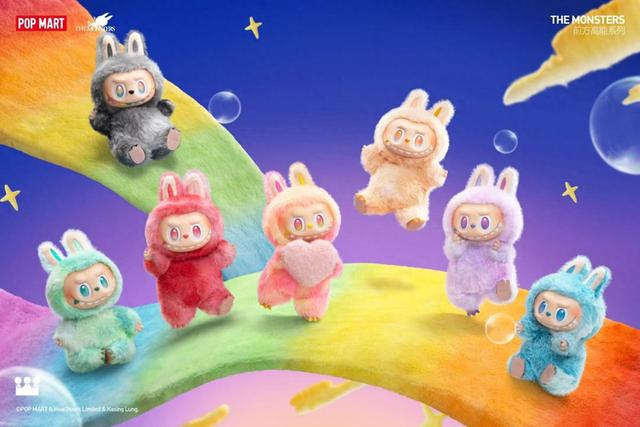
Core Insights - Labubu has become a cultural phenomenon, attracting global celebrities and fashion influencers, and is now a staple in luxury fashion circles [1][3] - The blind box sales model has significantly contributed to Labubu's success, appealing to the psychological traits of consumers, particularly Generation Z [4][5] - The market for blind boxes is projected to reach $14.5142 billion in 2024, with a compound annual growth rate (CAGR) of 5.90% from 2024 to 2031 [4] Financial Performance - Labubu's popularity has driven Pop Mart's stock price to surge by 909% over the past year, with a market capitalization exceeding HKD 300 billion, surpassing brands like GUCCI [3][21] - Projected revenue for 2024 is HKD 5.07 billion, representing a year-on-year growth of 375.2%, with Southeast Asia, particularly Thailand, expected to see a revenue increase of 619.1% [3][21] Consumer Behavior - The uncertainty and surprise elements of blind boxes stimulate dopamine release, creating a rewarding experience that encourages repeat purchases [5][6] - Social media amplifies consumer perceptions of winning rare items, leading to an overestimation of the likelihood of obtaining such items [7][8] Marketing and Brand Strategy - Labubu's design and cultural resonance have allowed it to transcend traditional toy markets, appealing to adult consumers seeking emotional comfort and self-expression [10][11] - The "ugly cute" design aesthetic aligns with contemporary trends, allowing Labubu to resonate with younger consumers who embrace non-traditional beauty standards [13][14] Community and Engagement - Labubu has fostered a strong fan community, where shared experiences and user-generated content enhance brand loyalty and social connections [12][20] - The brand's collaborations with luxury goods and cultural institutions have elevated its status and broadened its consumer base [18][20] Business Model and Valuation - Pop Mart's valuation logic is supported by a multi-IP strategy, diversifying revenue streams and mitigating risks associated with reliance on a single IP [21][24] - The company's focus on emotional, social, and cultural value creation positions it favorably in the market, with high gross margins and strong channel control [24][25]


盲盒经济,市场前景怎样?
Hu Xiu· 2025-05-28 02:48
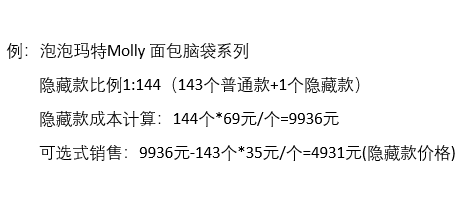
今年盲盒赛道的热度很高:布鲁可上市,卡游提交上市申请、泡泡玛特的一季度业绩很好,股价再创新 高。我们小圈子也讨论了很多,简单地整理一下,汇总成文: 一、如何理解盲盒? 一些机构研报是把三家公司分别定义的:布鲁可是拼搭角色类玩具的国内龙头企业,全球第三;卡游是 国内唯一的卡牌龙头;泡泡玛特是全球最大的潮玩运营商。如果抛开推票的需求,其实大可不必如此, 太多的概念反而会掩盖本质。我们的观点很简单:布鲁可、卡游、泡泡玛特都可以归类为盲盒运营商, 只是内容物有所差别。因此研究它们,首先要说清楚盲盒这件事情。 关于盲盒,比较主流的定义:起源于日本20世纪80年代的福袋,消费者不能提前得知玩具盒子里的具体 产品款式,具有随机属性,只有打开才会知道自己抽到什么。因为有一些赌运气的成分,可以刺激用户 重复购买。这种解释更偏向于用户的维度,从企业经营的角度,盲盒更偏向于概率的一种商业化应用 在实验中,由于我们固定了产品和配货比例这两个关键变量,因此销售结果的变化,必然与盲盒模式 (变量3)息息相关。即套上盲盒,售价69元,品牌整体收入要远高于常规的可选式销售,这是一个值 得深思的问题。通过分析,我们认为背后是产品价值结构的重构 ...
华尔街到陆家嘴精选丨年轻人的茅台”泡泡玛特太火了!20年期美债拍卖遇冷 需要担心吗?
Di Yi Cai Jing· 2025-05-22 01:17
Group 1: U.S. Treasury Market and Economic Indicators - The recent auction of 20-year U.S. Treasury bonds showed weak demand, with a winning yield of 5.047%, up 24 basis points from the previous month, and a bid-to-cover ratio of 2.46 [2] - Morgan Stanley's rate strategists predict a significant decline in G10 bond yields next year, suggesting a neutral to overweight stance on most G10 bond markets, including U.S. Treasuries [2] - The 10-year Treasury yield is currently at 4.6%, with both the 20-year and 30-year yields exceeding 5%, indicating ongoing pressure on U.S. debt amid fiscal concerns [3] Group 2: Japanese Yen and Economic Outlook - The Japanese yen is under pressure, with long-term bond yields reaching historical highs, raising concerns about liquidity risks and fiscal policy adjustments [4] - The yen has appreciated by 8.5% since 2025, while the U.S. dollar index has decreased by 8.12% during the same period [4] - Japan's economy is entering a new cycle characterized by rising prices and labor shortages, which may lead to GDP growth beyond the 550 trillion yen mark [4] Group 3: Bubble Mart and Labubu IP - Morgan Stanley initiated coverage on Bubble Mart with an "overweight" rating and a target price of 250 HKD, highlighting Labubu's emergence as a "super IP" [6] - Labubu's sales from the THE MONSTERS series are projected to grow from 3 billion RMB in 2024 to 14 billion RMB by 2027, with overseas sales expected to increase by 152% in 2025 [6] - The company anticipates a compound annual growth rate of 44% in sales and 56% in profits from 2024 to 2027, driven by strong IP and operational strategies [6][7] Group 4: Lowe's Financial Performance - Lowe's reported quarterly same-store sales that exceeded expectations, with a decline of 1.7% compared to a forecasted decline of 2.04% [9] - The company expects total sales for 2025 to range between 83.5 billion and 84.5 billion USD, aligning closely with market expectations [9] - Despite economic challenges, consumer spending on home improvement remains resilient, with a notable preference for smaller projects over larger ones due to high interest rates [9] Group 5: Baidu's Financial Results - Baidu's Q1 revenue reached 32.5 billion RMB, a 3% year-over-year increase, with net profit at 7.7 billion RMB [10] - The "Baidu Core" segment generated 25.5 billion RMB, reflecting a 7% growth, while non-advertising revenue surged by 40% due to AI business expansion [10] - Baidu's autonomous driving service, "Luobo Kuaipao," expanded internationally, achieving a 75% increase in order volume year-over-year [10]


每日复盘:2025年5月20日市场全天冲高回落,微盘股指数创历史新高-20250520
Guoyuan Securities· 2025-05-20 13:43
Market Performance - On May 20, 2025, the market experienced a high and then a pullback, with the micro-cap stock index reaching an all-time high[2] - The Shanghai Composite Index rose by 0.38%, the Shenzhen Component Index increased by 0.77%, and the ChiNext Index also rose by 0.77%[2] - The total market turnover was 11,695.33 billion yuan, an increase of 832.28 billion yuan from the previous trading day[2] Sector and Style Analysis - All 30 sectors in the CITIC first-level industry index generally rose, with Media (1.93%), Retail (1.75%), and Comprehensive (1.74%) leading the gains[22] - The sectors that lagged included Defense (-0.55%), Coal (-0.24%), and Real Estate (-0.17%)[22] - Fund-heavy stocks outperformed the CSI All Share Index[22] Capital Flow - On May 20, 2025, the net outflow of main funds was 32.29 billion yuan, with large orders seeing a net outflow of 75.21 billion yuan and small orders continuing to see a net inflow of 94.47 billion yuan[27] - The major ETFs saw a decrease in turnover compared to the previous trading day, with the Huaxia Shanghai 50 ETF at 10.20 billion yuan, down by 2.69 billion yuan[32] Global Market Trends - On May 20, 2025, major Asia-Pacific indices had mixed results, with the Hang Seng Index up 1.50% and the Nikkei 225 Index up 0.08%[36] - European indices showed varied performance, with the DAX Index up 0.70% and the CAC40 Index down 0.04%[5] - In the US, major indices also saw gains, with the Dow Jones Industrial Average up 0.32%[5]




数据复盘丨48股获主力资金净流入超亿元 龙虎榜机构抢筹14股
Zheng Quan Shi Bao Wang· 2025-05-20 09:52
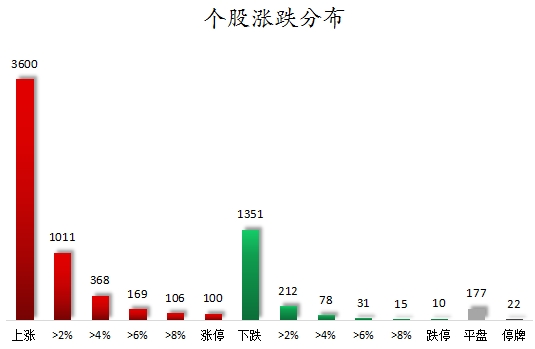
5月20日,上证指数早盘高位窄幅震荡,临近午盘拉升上扬,午后冲高回落;深证成指、创业板指早盘探底回升,午后冲高 回落;科创50指数早盘探底回升,随后窄幅震荡,午后冲高回落。截至收盘,上证指数报3380.48点,涨0.38%,成交额 4502.9亿元;深证成指报10249.17点,涨0.77%,成交额7194.12亿元;创业板指报2048.46点,涨0.77%,成交额3242.35亿 元;科创50指数报997.68点,涨0.24%,成交额175.15亿元。沪深两市合计成交11697.02亿元,成交额较上一交易日增加 832.28亿元。 美容护理、传媒等行业走强 *ST绿康连收5个涨停板 盘面上来看,行业板块、概念涨多跌少。其中,美容护理、传媒、珠宝首饰、家电、医药生物、轻工制造、纺织服饰、商贸 零售等行业涨幅靠前;盲盒经济、宠物经济、谷子经济、培育钻石、重组蛋白、人造肉、小红书、并购重组、纳米银等概念 走势活跃。国防军工、煤炭、房地产等行业跌幅居前;PEEK材料、钛白粉、海洋经济、统一大市场、可控核聚变等概念走 势较弱。涨停个股主要集中在医药生物、汽车、轻工制造、纺织服饰、电子、电力设备等行业。 个股涨跌情况, ...



机票盲盒值不值得开
Jing Ji Ri Bao· 2025-05-02 23:40
Group 1 - The core concept of the article revolves around the emerging trend of "flight blind boxes" in the travel industry, which combines low prices with the excitement of surprise, appealing particularly to young consumers [1][2] - The upgraded flight blind box products allow consumers to select travel periods and filter destination ranges, addressing previous pain points such as timing and unwanted destinations [1] - The psychological factors driving the popularity of flight blind boxes include the price anchoring effect and the thrill of the unknown, which resonate with young people's desire for low-cost experiences and spontaneous travel [1] Group 2 - Some consumers express dissatisfaction with flight blind boxes due to issues like not getting desired flights, the discomfort of red-eye flights, and hidden costs beyond the ticket price, highlighting the problem of information asymmetry [2] - Airlines possess comprehensive data on less popular routes and remaining seats, while consumers lack knowledge about destinations, flight times, and hidden costs, leading to a situation where consumers pay for their information gaps [2] - The evolution of consumer strategies in response to the information asymmetry indicates a shift towards transparency, where consumers leverage social media to share information and challenge pricing rules, while airlines optimize their offerings based on user feedback [2]
小学生氪金养出百亿帝国?2元卡牌“印钞机”里的秘密
凤凰网财经· 2025-04-29 12:39
来源 |凤凰 网财经《 IPO观察哨 》 当《哪吒 2》的票房热潮席卷全国,与之联名的卡牌竟在二手市场被炒出天价——一张导演签名的哪吒卡牌 被炒到 9.5万, 堪称 "电子黄金" 。 卡牌的 幕后制作者正是 浙江卡游动漫有限公司(下称 "卡游") ,这家靠 2元一包的卡牌年入百亿的公司,正以惊人的速度改写中国玩具行业的规 则, 却因 狂奔在 资本市场埋下暗雷。 2024年 , 卡游营收破百亿大关,达到 100.57亿元,同比暴涨278%。它的赚钱能力甚至超越了"让年轻人疯魔"的泡泡玛特。4月14日,卡游公司 二次冲刺港交所。除令人眼红的暴利生意,萦绕在它身上的是长期困于 "收割小学生""未成年沉溺其中""小学生集卡成瘾"等负面舆论。 01 卡游到底有多暴利? 在创投圈,卡游被称 "小孩收割机",其推出的核心IP"奥特曼系列卡牌"牢牢锁定了小学生群体。 2024年,卡游营收达到100.57亿元,净利润高达44.66亿元,毛利率67.3%。要知道在全球大杀四方的泡泡玛特 当年的 营收 是 130.4亿元,净 利润 为 31.25亿元,这样的财务数据已经令外界惊叹。 而聚焦卡游的核心业务集换式卡牌的毛利率更是高达 ...
泡泡玛特卖“阴间丑娃”,把迪士尼打懵了
Xin Lang Cai Jing· 2025-04-29 01:28
Core Viewpoint - The recent launch of the Labubu 3.0 series by Pop Mart has sparked an unprecedented buying frenzy, with consumers facing long queues and significant price markups in the secondary market, despite mixed reviews on the product's aesthetics [1][5][9]. Group 1: Market Dynamics - The Labubu 3.0 series has seen a surge in demand, with pre-orders for the product already sold out, leading to resale prices significantly higher than the original retail price, such as a set priced at 599 yuan being resold for 1000 to 2000 yuan [5][28]. - The secondary market for Labubu collectibles is thriving, with hidden variants fetching prices as high as 1220 yuan each, indicating a strong speculative interest among consumers [5][28]. - The previous Labubu and Vans collaboration saw prices soar to as high as 30,000 yuan, showcasing the potential for collectibles to transform into luxury items [7][28]. Group 2: Consumer Sentiment - Despite the high demand, the Labubu 3.0 series has received negative feedback regarding its design, with many consumers expressing disappointment upon receiving the product, leading to a wave of criticism on social media [9][11][28]. - The contrast between the product's marketing and the actual consumer experience has led to a phenomenon where consumers question their purchasing decisions, reflecting a disconnect between expectation and reality [11][21][28]. Group 3: Brand Positioning and Strategy - Labubu has emerged as Pop Mart's strongest IP, generating 30.4 billion yuan in revenue last year, a staggering increase of over 700% year-on-year, surpassing the company's previous flagship IP, Molly [28]. - The appeal of Labubu lies in its unique design that resonates with the Z generation's desire for individuality and self-expression, despite its unconventional and "ugly" aesthetic [30][32]. - Pop Mart's strategy of leveraging scarcity and hype through limited releases has effectively created a "hunger marketing" environment, driving consumer demand and secondary market speculation [32][38]. Group 4: Cultural and Competitive Landscape - Unlike Disney, which builds its IPs on deep narratives and emotional connections, Pop Mart's approach has focused more on visual appeal and immediate consumer engagement, which may limit long-term brand loyalty [43][51]. - The lack of a comprehensive narrative or cultural depth in Pop Mart's IPs, including Labubu, has resulted in a superficial consumer experience, contrasting with Disney's immersive storytelling [44][49]. - While Pop Mart has achieved remarkable short-term success, the company faces challenges in establishing a sustainable brand identity and emotional connection with consumers, which are crucial for long-term growth [51].

A股收评:沪指跌0.2%,地产、消费股齐跌,游戏股活跃
Ge Long Hui· 2025-04-28 07:41
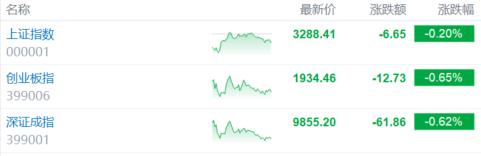
Market Overview - The A-share market experienced a decline on April 28, with the Shanghai Composite Index falling by 0.2% to 3288 points, the Shenzhen Component Index down by 0.62%, and the ChiNext Index decreasing by 0.65% [1][2] - Total trading volume for the day was 1.08 trillion yuan, a decrease of 603 billion yuan compared to the previous trading day, with over 4100 stocks declining across the market [1] Sector Performance - Strong sectors included PEEK materials and gaming, while the real estate, tourism, and food and beverage sectors faced significant declines [2][4] - Notable gainers included state-owned banks and communication services, while automotive parts and consumer electronics saw losses [3] Real Estate Sector - Real estate stocks were among the biggest losers, with companies like TeFa Service dropping over 11% and others like Wo Ai Wo Jia and Shi Lian Hang hitting the daily limit down [4][5] - Despite the current downturn, there are expectations for a new round of policy releases aimed at stabilizing the real estate market, which could lead to a recovery [4] Food and Beverage Sector - The food and beverage sector saw significant declines, with companies like Pinwo Food dropping over 13% and Bei Yin Mei hitting the daily limit down due to financial irregularities [5][6] - Other notable declines included New Dairy and Three Squirrels, both experiencing drops of over 8% [6] Nuclear Power Sector - The nuclear power sector opened strong but later declined, with companies like Tianwo Technology and Huayin Power hitting the daily limit up following the approval of new nuclear projects totaling over 200 billion yuan [7][8] Gaming Sector - The gaming sector showed strength, with companies like Sheng Tian Network and Perfect World rising significantly after the approval of 118 new domestic games [8][9] Banking Sector - The banking sector was active, with Chongqing Bank rising over 4% following comments from the People's Bank of China regarding potential monetary easing measures [10] Market Outlook - Analysts suggest that the market may enter a consolidation phase as companies report earnings and investors adjust their portfolios [11] - Future policies focusing on high-quality development are anticipated to impact market sentiment and sector performance [11]
DeepSeek走红三个月,第一批想靠它赚钱的怎么样了丨南财号联播
2 1 Shi Ji Jing Ji Bao Dao· 2025-04-23 09:27
Group 1: Gold Market - Gold prices have adjusted significantly, with spot gold dropping over $200 to below $3300 per ounce, leading to a 4.55% decline in Shanghai gold futures [1] - A-share gold stocks have seen substantial declines, with companies like Mingpai Jewelry and Chifeng Gold hitting the daily limit down, while others like Laishen Tongling and Sichuan Gold fell over 9% [1] - Domestic gold jewelry prices have also decreased, with the price of 24K gold jewelry dropping from 1082 RMB per gram to 1055 RMB, a reduction of 27 RMB per gram [1] Group 2: Financial Sector in Shenzhen - As of the end of Q1 2025, Shenzhen's total deposits reached 13.97 trillion RMB, with both deposits and loans increasing by over 300 billion RMB in the first quarter [1] - Household deposits and non-financial enterprise deposits have shown significant year-on-year growth, while household loans increased by 430.55 billion RMB, outpacing the overall loan growth rate by 1.2 percentage points [1] Group 3: Payment Industry - The payment industry is undergoing significant consolidation, with five payment licenses being revoked this year, including Shandong Feiyin Payment Technology Co., marking the fifth cancellation [1] - The total number of revoked third-party payment licenses has reached 101, reducing the number of licensed payment institutions to 170 [1] Group 4: AI and Content Creation - The rise of AI tools like DeepSeek has created a competitive landscape for content creators, where quality is more important than quantity for monetization [2] - The market is witnessing a shift where many individuals attempting to profit from AI-generated content may find themselves at a disadvantage, with the real beneficiaries being those who provide educational content rather than original creators [2] Group 5: Robotics Industry - The recent humanoid robot half marathon showcased advancements in robotics, with the Tian Gong team winning the event, indicating a shift towards industrialization of humanoid robots [3] - The Tian Gong 2.0 robot is set for small-scale production and application, with a collaborative network involving several key A-share listed companies in technology development and component supply [3] Group 6: Card Game Industry - The card game company, leveraging popular IPs like Ultraman and Nezha, is making a second attempt to go public in Hong Kong, with significant revenue growth reported [4] - The company achieved revenues of 41.31 billion RMB, 26.62 billion RMB, and 100.57 billion RMB from 2022 to 2024, with adjusted net profits showing a similar upward trend [4] - The card game market is experiencing a boom driven by blind box economics, but concerns about youth addiction to spending remain prevalent [4]
