精细化运营

Search documents
年末部分银行推出零息、贴息等汽车金融优惠
Zheng Quan Ri Bao Zhi Sheng· 2025-11-24 16:43
Core Viewpoint - Banks are intensifying their automotive consumer finance support as the year-end car buying season approaches, implementing measures such as zero interest rates and subsidies to stimulate the automotive market [1][2] Group 1: Bank Initiatives - Postal Savings Bank of China offers up to 4,500 yuan in financial subsidies for the new BJ40 model, with annual loan rates ranging from 0% to 6% [1] - Ping An Bank has launched a year-end car purchase campaign with a minimum interest rate of 0%, offering loans from 10,000 yuan to a maximum of 1 million yuan [1] - Zhongyuan Bank has introduced a "Car Purchase Guide" for its car loan products, with online approval and loan amounts up to 3 million yuan at an interest rate starting from 4.37% [1] Group 2: Market Dynamics - The increase in automotive consumer finance incentives by banks is driven by the year-end buying season and government measures to boost consumption [2] - Banks are focusing on activating car purchase demand through low rates, subsidies, and flexible guarantees amid slowing retail credit growth [2] - The automotive finance sector is transitioning from extensive expansion to a more refined operation centered on scenario-based, digital, and personalized services [2] Group 3: Future Trends - Future competition in automotive finance will shift from interest rate comparisons to capabilities in scenario embedding, technological responsiveness, and ecological collaboration [3] - Key trends include deepening engagement in the new energy sector, enhancing technological empowerment and risk control, and promoting product differentiation for various consumer segments [3] - The focus will also be on establishing partnerships with quality car manufacturers and dealers, creating a comprehensive financial service ecosystem for car owners, and leveraging digital platforms to align with government consumption incentives [3]


回天新材:公司产品定价综合考量生产成本等因素
Zheng Quan Ri Bao Wang· 2025-11-24 10:03
Core Viewpoint - The company emphasizes that product pricing will be dynamically adjusted based on production costs, market demand, and competitive landscape [1] Group 1: Pricing Strategy - The company considers multiple factors such as production costs, market demand, and competition when determining product prices [1] - Product prices will be adjusted as necessary to reflect changing conditions in the market [1] Group 2: Profitability Factors - Annual profit margins are influenced by production costs, sales structure, capacity utilization, and expense management [1] - The company aims to maintain operational efficiency through upgrades in production processes, lean supply chain management, and precise expense control [1]

瑞幸咖啡(LKNCY.OO) 瑞幸咖啡2025Q3业绩点评:聚焦份额增长,短期利润率承压
GUOTAI HAITONG SECURITIES· 2025-11-24 07:38
Investment Rating - The report maintains a rating of "Buy" for the company [6][9]. Core Insights - The company is focusing on growth and market share, steadily expanding its store count to lay a solid foundation for long-term development [2][9]. - The company reported a significant increase in revenue and gross merchandise volume (GMV) for Q3 2025, with revenue reaching 15.3 billion RMB, a year-on-year increase of 50.2% [9]. - The company is experiencing short-term pressure on profit margins due to a significant increase in delivery costs, which has impacted operating profit margins [9]. Financial Summary - Total revenue projections for the company are as follows: - 2023: 24,903 million RMB - 2024: 34,475 million RMB (growth of 38.44%) - 2025E: 50,340 million RMB (growth of 46.02%) - 2026E: 59,811 million RMB (growth of 18.82%) - 2027E: 66,341 million RMB (growth of 10.92%) [4] - Net profit projections are as follows: - 2023: 2,848 million RMB - 2024: 2,932 million RMB (growth of 2.94%) - 2025E: 3,853 million RMB (growth of 31.44%) - 2026E: 4,713 million RMB (growth of 22.30%) - 2027E: 5,320 million RMB (growth of 12.90%) [4] - The company’s operating profit margin (OPM) for Q3 2025 was reported at 17.5%, a decrease of 6.0 percentage points year-on-year [9]. Store Expansion and Sales Performance - As of Q3 2025, the company operates 29,214 stores, an increase of 36.88% year-on-year, with a net addition of 3,008 stores in Q3 [9]. - Same-store sales for self-operated stores increased by 14.4% in Q3 2025, driven by a surge in demand from delivery services [9]. Cost Structure and Profitability - The company is facing challenges with rising delivery costs, which have negatively impacted profit margins. The delivery cost ratio increased to 18.90%, a year-on-year increase of 9.79% [9]. - The company plans to optimize its cost structure through refined operations and digital capabilities to maintain healthy profit margins despite rising costs [9].
季度同比扭亏为盈,斗鱼多元内容精细化运营战略现成效
3 6 Ke· 2025-11-24 03:32
Core Viewpoint - Douyu's Q3 2025 financial report shows steady growth with significant improvements in profitability, driven by strategic upgrades and enhanced operational efficiency in the gaming industry [1][5]. Financial Performance - Q3 revenue reached 899 million yuan, with a gross profit of 116 million yuan, representing a year-on-year increase of 90.9% and a gross margin of 12.9% [1]. - Net profit was 11.33 million yuan, up 232.8% year-on-year, while adjusted net profit turned positive at 23.14 million yuan [1]. Business Strategy - Douyu's strategy focuses on enhancing the value chain and exploring commercialization opportunities, leading to improved profitability across various metrics [1][4]. - The company has deepened its involvement in the gaming industry, transitioning from a live streaming platform to a "full-chain partner" in gaming growth [4]. Revenue Streams - Innovative business, advertising, and other revenues totaled 377 million yuan, marking a 21.2% year-on-year growth, primarily driven by the increase in voice social service revenue [2]. - The average monthly active users for voice social services reached 368,600, with 71,700 monthly paying users [2]. Content and User Engagement - Douyu has expanded its content offerings, broadcasting over 60 official esports events and launching more than 30 self-produced events in Q3 [6][13]. - The platform has optimized resource allocation for different game types, enhancing user engagement and operational efficiency [3][15]. Industry Positioning - In a competitive landscape, Douyu has repositioned itself to achieve differentiated competition, leveraging its content advantages to enhance user experience [5][20]. - The company is actively collaborating with game developers to create promotional events and enhance user interaction, thereby strengthening its market position [4][15].



中金:维持名创优品“跑赢行业”评级 下调目标价至50.18港元
Zhi Tong Cai Jing· 2025-11-24 01:29
海外直营市场稳步提效 3Q25业绩符合该行预期 公司3Q25收入同增28%至58亿元,经调整净利润同增12%至7.7亿元,业绩符合该行预期。 名创国内业务持续好转,TOPTOY高增 中金发布研报称,看好名创优品(09896)国内外业务的精细化运营和持续提效,管理层预计4Q25收入同 增25-30%,其中中美同店均同增低双位数。因毛利率波动及费用投放,经调整净利润预测25年基本维 持29亿元,下调26年预测4%至36亿元,当前港/美股对应15倍25年non-IFRS P/E,维持港/美股跑赢行业 评级。考虑行业估值调整,下调港/美股目标价12%/11%至50.18港元/26.08美元,对应20倍25年non-IFRS P/E,分别有28%/33%的上行空间。 名创优品海外收入同增28%至23亿元,重点市场美国收入同增超65%。公司优化海外货盘,提升本地化 运营能力,季内同店同增低单位数,直营市场中美国加拿大均同增低双位数,海外净开117家店。管理 层计划将中美市场成功经验进一步推广至东南亚市场,推进长期可持续的盈利增长。 中金主要观点如下: 3Q25名创优品国内收入同增19%至29亿元,公司以IP为核心,聚焦" ...
从“躺赚”到“硬撑”,二手餐饮设备回收遇冷
Qi Lu Wan Bao· 2025-11-21 12:05
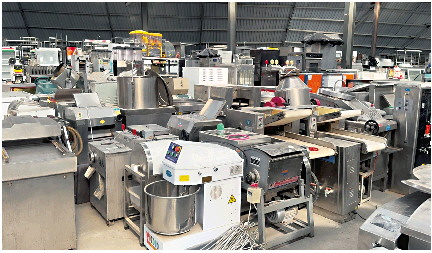
Core Insights - The second-hand catering equipment market is experiencing a slowdown in turnover and profitability due to a decline in the restaurant industry, leading to an increase in inventory and a decrease in sales [2][3][4] Market Dynamics - The influx of second-hand equipment has surged as many restaurants close down, but the demand has not kept pace, resulting in a significant backlog of unsold items [2][3] - The average turnover period for second-hand equipment has extended from one to two weeks to one to two months or longer, with transaction prices and turnover rates dropping by over 20% [3][4] - The competitive landscape has intensified, with many new entrants in the market, but the number of active participants is now decreasing as more businesses exit [3][5] Pricing Trends - The resale prices for second-hand equipment have decreased significantly, with some items dropping from over 10,000 yuan to around 7,000-8,000 yuan [6] - Despite the overall decline in prices, certain high-demand items like quality coffee machines and imported steamers have seen price increases of 10%-20% due to their desirability [6][7] Operational Adjustments - Many operators are shifting from a high-volume, low-margin model to a more selective approach, focusing on acquiring equipment from well-known brands and newer items [5][7] - The traditional model of "collecting, refurbishing, and selling" is evolving into a service-oriented approach, with businesses offering guarantees and delivery services to enhance customer experience and improve turnover rates [8] Future Outlook - The second-hand catering equipment industry is transitioning from a "bargain hunting" phase to a more professional competitive stage, where service quality and market insight will be key differentiators [8]
乐乎公寓集团签署行业自律机制,荣获“好房子”优秀案例
Jin Tou Wang· 2025-11-21 00:01
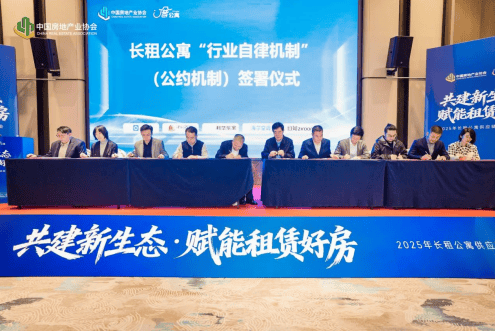
2025年11月18日,在福州四季悦城酒店举行的"共建新生态·赋能租赁好房"2025年长租公寓供应链创新大会上,乐乎公寓集团作为中国房地产业协会长租房 分会副会长单位,积极参与签署了长租公寓行业自律机制,并见证旗下乐乎公寓酒店·对外经贸大学店荣获首批"好房子"长租公寓优秀案例证书。 本次大会汇聚了行业协会领导、国企代表、供应链企业及金融机构,共同探讨长租公寓高质量发展路径。乐乎公寓集团在会上的双重收获,体现了行业对其 持续推动高品质租住产品的高度认可。 01 行业荣誉:乐乎公寓酒店·对外经贸大学店获评"好房子"项目 乐乎公寓酒店·对外经贸大学店此次荣获2025长租公寓"好房子"项目称号,体现了行业对其产品品质的高度认可。该项目位于北京对外经贸大学东门,毗邻 10号线芍药居地铁站,交通便利,周边商业配套完善。 公约机制由中国房地产业协会长租房分会发起,联合头部企业共同制定,内容涵盖经营规范、财务管理、房源质量和信息披露等方面。例如,公约要求企业 公开租金标准、禁止收取中介费、保障资金安全,并鼓励使用环保材料。 乐乎公寓集团代表在签约仪式上表示,这一机制将有助于构建租客与企业共赢的生态,并为行业REITs发行和资 ...
最低0息起 银行密集推购车金融方案
Bei Jing Shang Bao· 2025-11-20 23:40
Core Viewpoint - The automotive consumer finance business of banks is entering a "sprint period" as the year-end car purchasing season approaches, with various banks launching attractive loan schemes to stimulate demand and enhance customer experience [1][2]. Group 1: Marketing Strategies - Multiple banks, including Postal Savings Bank and Ping An Bank, are intensifying marketing efforts for auto loans, offering incentives such as 0% interest rates and financial subsidies [2][3]. - Postal Savings Bank has introduced a special offer for the newly launched BJ40 model, providing up to 4,500 yuan in financial subsidies, with annual interest rates ranging from 0% to 6% [2]. - Ping An Bank's auto loan program features a minimum interest rate of 0% and allows loans from 10,000 yuan up to 1 million yuan, with personalized service for loan approval [2]. Group 2: Market Trends - The automotive consumer finance sector is becoming a focal point for banks amid slowing retail credit growth and increasing scarcity of quality assets [3]. - As of September, Ping An Bank's auto consumer finance loan balance reached 300.3 billion yuan, a 2.2% increase from the previous year, with new energy vehicle loans growing by 23.1% [3]. - Shanghai Bank reported an auto consumer loan balance of 50.33 billion yuan, up 16.95% year-on-year, with new energy vehicle loans increasing by 63.08% [3]. Group 3: Policy Adjustments - Some banks, like Guangfa Bank, are relaxing early repayment rules for auto loans to enhance customer experience and service levels [4][5]. - Guangfa Bank has removed the previous restriction that prevented borrowers from applying for early repayment before the sixth payment, allowing applications from the first payment onward [5]. - The adjustment aims to balance risk and customer satisfaction, with expectations for further relaxation of early repayment rules in the future [5]. Group 4: Regulatory Environment - The automotive finance sector is transitioning from a "high interest, high return" model to a focus on service excellence due to regulatory pressures [6][7]. - Regulatory bodies have mandated the cessation of high-interest, high-return practices, promoting a healthier automotive finance market [6]. - Banks are encouraged to innovate and provide personalized services while ensuring consumer rights are protected [7][8].
“日排千桌”的烤匠进军上海,凭什么被上海商业视为“客流密码”?
Sou Hu Cai Jing· 2025-11-17 18:13
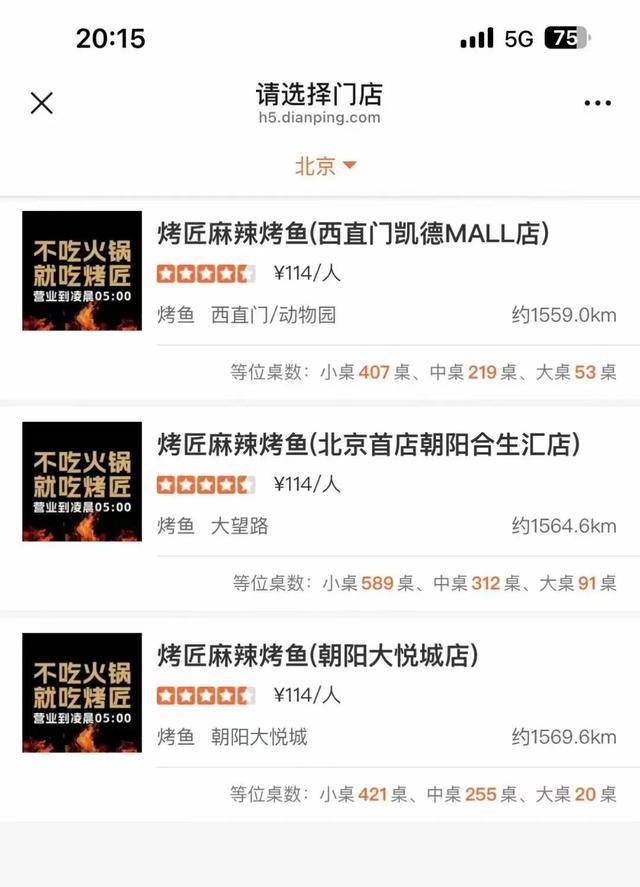
Core Viewpoint - The company KAOJIANG is accelerating its national expansion after establishing a strong foothold in Beijing, with plans to enter the competitive markets of Shanghai and Xi'an, showcasing confidence in its replicable business model [1][13]. Group 1: Performance in Beijing - KAOJIANG has achieved impressive results in Beijing, maintaining a monthly revenue per square meter of approximately 12,000 yuan, with peak turnover rates exceeding 10 times [1][4]. - The brand's operational efficiency is supported by a detailed operational system, allowing it to handle high customer traffic effectively [4][6]. Group 2: Product Differentiation - KAOJIANG focuses on a differentiated product strategy, emphasizing traditional spicy grilled fish while innovating with new dining experiences and creative desserts [6][8]. - The brand has successfully adapted its offerings to meet the evolving preferences of young consumers, enhancing the dining experience to include social and celebratory elements [8][20]. Group 3: Expansion Strategy - KAOJIANG's expansion strategy involves a dual-city approach, targeting both Shanghai and Xi'an simultaneously, reflecting confidence in its business model's adaptability [13][15]. - The brand's selection of locations is based on matching its brand identity with target customer demographics, with significant interest from young consumers in potential store locations [15][20]. Group 4: Young Consumer Engagement - KAOJIANG's primary customer base consists of trend-conscious young individuals aged 18-29, which aligns well with the vibrant shopping environment of Shanghai [16][20]. - The brand has generated significant buzz among young consumers, evidenced by a voting campaign for its store location that attracted over 40,000 participants [16][20]. Group 5: Economic Impact - KAOJIANG's presence in shopping centers is expected to drive foot traffic, potentially increasing overall customer visits by over 15% [22][25]. - The brand's late-night offerings align with the growing night economy, contributing to extended operational hours and increased sales during evening hours [22][25].
艾为电子:经销占比超八成 毛利差异符合行业规律
Ju Chao Zi Xun· 2025-11-14 16:09
Core Viewpoint - Aiwai Electronics (688798.SH) has provided detailed disclosures regarding its sales model, distributor cooperation, and inventory management in response to an inquiry about its convertible bond issuance, highlighting concerns over gross margin differences and distributor stability [1][3]. Sales Model - The company primarily relies on a distribution channel, with distributor revenue accounting for over 80% of total revenue from 2022 to September 2025, while direct sales represent less than 20% [1]. - The distribution model allows for broader coverage of end customers and product variety, whereas direct sales focus on leading domestic and international consumer electronics clients [1]. Gross Margin - Gross margins for direct sales are slightly higher than those for the distribution model due to the higher performance, reliability, and customization demands from top-tier consumer electronics companies [3]. - The gross margin structure is similar to that of peers in the analog chip industry, such as Shengbang and SIRUI [3]. Distributor Stability - The company reported that major distributors have remained relatively stable, with core distributors contributing over 49% of total distributor revenue during the reporting period [3]. - The distributors are well-known professional distributors in the industry and are not related to the company [3]. - The company plans to maintain distributor stability through channel management, credit control, and collaborative efforts to develop end customers [3]. Inventory Management - Changes in distributor inventory levels are closely tied to industry cycles, with a general trend of destocking observed in 2023 [3]. - As demand is expected to recover in 2024 and 2025, there is an anticipated reasonable replenishment of distributor inventory [3]. - The company believes that inventory fluctuations align with the trend of business scale expansion and does not see any abnormal accumulation risks [3]. Operational Strategy - Aiwai Electronics emphasizes the need for refined operations in the use of funds from the convertible bonds, channel management, and inventory control to enhance its anti-cyclical capabilities [4]. - The inquiry response has clarified market concerns regarding gross margin differences in sales models and distributor stability, but ongoing observation of industry conditions and order fulfillment is necessary for assessing operational performance [4].