
鹰派降息

Search documents
【美联储决议前夕,美国市场“超级平静”】数据显示,恐慌指数VIX和追踪债券市场预期波动率的MOVE指数均降至低位,尾部风险对冲大量平仓。但分析师警告这种平静较为脆弱:美联储内部出现政策分歧,可能出现分裂投票;鹰派降息或就业恶化都可能迅速引发新一轮波动。
Sou Hu Cai Jing· 2025-12-06 11:46
Core Viewpoint - The U.S. market is experiencing an unusual calm ahead of the Federal Reserve's decision, with low levels of the VIX and MOVE indices indicating reduced volatility expectations [1] Group 1 - The VIX, a measure of market volatility, has dropped to low levels, suggesting a lack of fear among investors [1] - The MOVE index, which tracks bond market volatility, has also decreased, indicating a similar trend in the fixed income market [1] - Analysts warn that this calmness is fragile due to internal policy disagreements within the Federal Reserve, which could lead to a split vote [1] Group 2 - Potential hawkish rate cuts or deteriorating employment conditions could quickly trigger a new wave of market volatility [1]
美银改口称美联储12月将降息,但仍预计明年仅降息两次
Sou Hu Cai Jing· 2025-12-02 06:08
Core Viewpoint - Bank of America predicts a 25 basis point rate cut by the Federal Reserve in December, aligning with market expectations of an 88% probability for such a move, influenced by a weak labor market and recent comments from policymakers [2][3][4] Group 1: Economic Indicators - The labor market is showing signs of weakness, with private sector hiring below expectations, prompting the updated prediction for a rate cut [2] - The CME FedWatch tool indicates an 88% probability of a 25 basis point cut at the upcoming meeting, with only 12% of investors expecting rates to remain unchanged [2] Group 2: Future Rate Predictions - Analysts expect the Federal Reserve to implement a "hawkish cut," lowering rates while retaining the option to adjust policies in response to inflation in future meetings [3] - Despite the December cut prediction, analysts foresee only two additional 25 basis point cuts in June and July of the following year [3] Group 3: Leadership Changes - There is speculation that Jerome Powell may be replaced as Fed Chair, with potential successors like Kevin Hassett, who is known for advocating aggressive rate cuts [4] - The anticipated leadership change is expected to influence future rate decisions, with predictions of further cuts by 2026 not based on economic conditions but rather on expected changes in leadership [3]


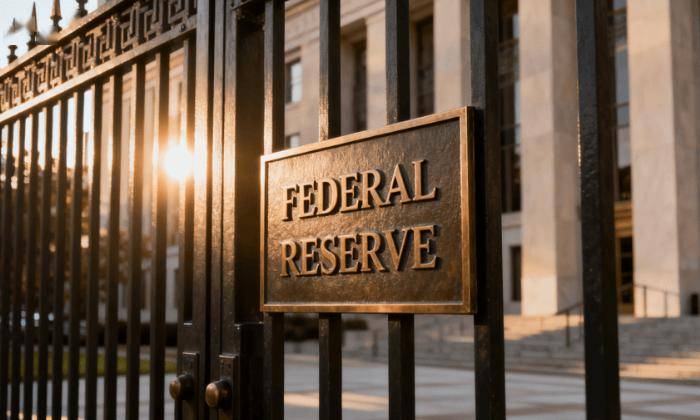
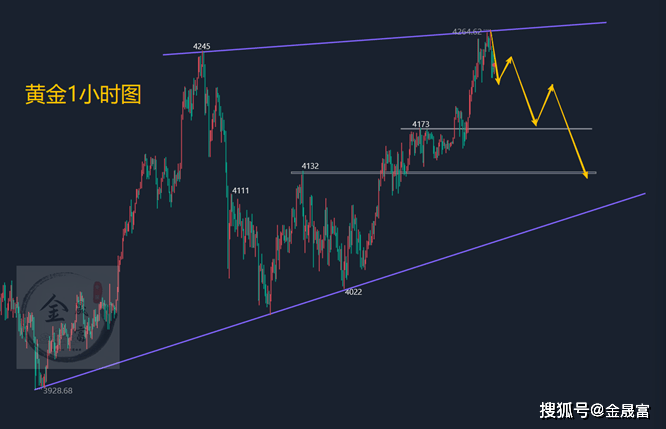
金晟富:12.2黄金高台跳水如期回落!日内黄金分析参考
Sou Hu Cai Jing· 2025-12-02 01:54
Core Insights - The article discusses the recent trends in gold and silver prices, highlighting the impact of Federal Reserve interest rate expectations and economic data on precious metals [1][2][3] Market Trends - As of December 2, gold is trading at $4225.25 per ounce, having reached a six-week high of $4264 on December 1, while silver hit a record high of $58.82 per ounce [1] - The expectation of further interest rate cuts by the Federal Reserve is a key factor supporting precious metal prices, with traders estimating an 87% probability of a rate cut in the upcoming December meeting [1][2] - The weakening U.S. dollar has made gold cheaper for holders of other currencies, thereby increasing demand [1] Economic Indicators - Upcoming economic data, including the November ADP employment report and the September Personal Consumption Expenditures (PCE) price index, are anticipated to reinforce rate cut expectations if they show continued weakness [2] - Federal Reserve Chairman Jerome Powell's upcoming speech is viewed as a critical moment for potential policy guidance, with a dovish signal likely to boost gold prices [2] Technical Analysis - Recent price movements indicate a potential reversal, with gold showing signs of weakness after failing to break above key resistance levels [3][5] - The analysis suggests that if gold prices drop below $4200, it could confirm a market top, while a rebound from this level could lead to further testing of highs [5] Trading Strategies - Suggested trading strategies include short positions on gold around $4225-$4230 with targets set at $4200-$4185, and long positions around $4170-$4175 with targets at $4200-$4210 [6][7] - Emphasis is placed on strict risk management and position sizing to navigate potential market volatility [6][7]
瑞士法郎避险 政策博弈下震荡格局
Jin Tou Wang· 2025-11-28 02:53
Core Viewpoint - The exchange rate of USD/CHF is influenced by the safe-haven characteristics of the Swiss franc and the divergent monetary policies of the two central banks, with the current trading around 0.8051 reflecting a slight increase from the previous close [1][2] Economic Indicators - Switzerland's Q3 GDP decreased by 0.5% quarter-on-quarter, and industrial output fell by 2.1% year-on-year, indicating economic weakness [1] - The trade surplus in October was 3.2 billion CHF, with a narrowing decline in exports, partially offsetting the pressure from the appreciation of the Swiss franc [1] - The CPI in October showed a year-on-year increase of only 0.1%, raising concerns about deflation risks [1] Central Bank Policies - The Swiss National Bank (SNB) has maintained a zero interest rate since June, but discussions about reintroducing negative rates are increasing due to economic and deflationary pressures, with expectations for a potential easing signal in December [2] - The Federal Reserve's core PCE in October was 3.4% year-on-year, reinforcing a cautious policy stance, with a reduced probability of a rate cut in December down to 65% [2] Market Dynamics - The USD/CHF exchange rate is experiencing a "weak oscillation after overselling," currently positioned at the upper end of the critical range between 0.8000 and 0.8050 [3] - The market is caught in a dilemma, with the exchange rate lacking a clear trend due to the interplay of Fed policy uncertainty and the safe-haven demand for the Swiss franc [2] Future Focus Areas - Key attention will be on the Federal Reserve's December meeting and Powell's statements, which could influence the USD/CHF exchange rate towards the 0.8150-0.8180 range if a pause in rate cuts is indicated [4] - The SNB's policy direction in December will be crucial; any signal of rate cuts or negative rates could push the exchange rate closer to the 0.8000 mark [4] - Economic data from the U.S. and Switzerland, including core PCE and Q3 GDP details, will directly impact policy expectations [4] - Geopolitical tensions in the Middle East and fluctuations in international gold prices may strengthen the Swiss franc if risk aversion increases [4]
CA Markets:鲍威尔“至暗抉择”,一场撕裂美联储的拉锯战
Sou Hu Cai Jing· 2025-11-25 07:21
Core Viewpoint - The Federal Reserve faces a critical decision point as it approaches the December meeting, balancing between a weakening labor market and persistent inflation nearing 3% [2] Group 1: Federal Reserve's Dilemma - Fed Chair Powell is caught between two factions: the "preemptive" camp advocating for a rate cut and the "cautious" camp insisting on no further cuts [2] - Market expectations for a rate cut have surged from 40% to 80%, putting Powell in a precarious position where any decision could lead to a split within the FOMC [2] - Powell is weighing two options: a "hawkish cut" of 25 basis points in December with a commitment to future restraint, or a "dovish pause" delaying decisions until January [2][3] Group 2: Economic Indicators - Economic data suggests a "stagflation" scenario, with a three-month average job growth falling below 100,000 without significant layoffs, and core inflation remaining steady at 0.3% month-on-month [3] - Concerns arise from the potential for prolonged economic stagnation if rates are cut too slowly or the risk of reigniting inflation if cut too quickly [4] Group 3: Leadership Pressure - The December vote represents not only a decision on economic direction but also a test of Powell's leadership, as he must navigate the delicate balance of opinions within the Fed [4] - Experts indicate that the outcome of the December 19 meeting will be crucial, with global risk assets already reacting to the uncertainty [4]
“美联储通讯社”:盟友为下月降息“铺平道路”,鲍威尔将抉择“鹰派降息”还是“鸽派暂停”
Hua Er Jie Jian Wen· 2025-11-25 06:35
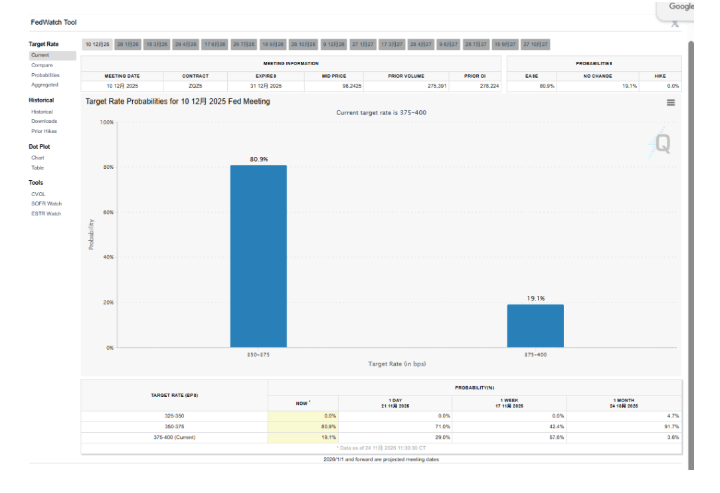
Core Viewpoint - The Federal Reserve Chairman Jerome Powell faces a challenging decision regarding potential interest rate cuts amid conflicting economic signals, with some key allies indicating support for a preemptive easing approach [1][2]. Group 1: Economic Signals and Market Reactions - New York Fed President Williams and San Francisco Fed President Daly have expressed concerns about labor market risks, suggesting support for a rate cut in December [1]. - Following Williams' comments, the market's implied probability of a December rate cut surged from 40% to approximately 70%, indicating a shift towards a dovish stance among investors [2]. - Current market expectations for a rate cut have further increased to around 80% [2]. Group 2: Internal Divisions within the Fed - The internal divisions within the Federal Reserve are reportedly at an unprecedented level during Powell's tenure, driven by mixed economic signals such as stagnant job growth and persistent inflation near 3% [7]. - Hawkish officials express concerns that rapid rate cuts could undermine necessary policy restrictions, especially as inflationary pressures spread from goods to domestic services [7]. - Notably, four voting Fed officials have voiced worries about further rate cuts, emphasizing the need for caution in the current economic climate [7]. Group 3: Strategies for Decision-Making - Powell is weighing two strategies: "hawkish rate cut" which involves cutting rates in December while setting higher thresholds for future cuts, and "dovish pause" which entails maintaining current rates and reassessing in January [5]. - The "hawkish rate cut" strategy aims to meet market expectations while managing internal dissent, similar to Powell's approach in late 2019 [5]. - The "dovish pause" could prolong existing divisions but may provide more comprehensive data for decision-making [5]. Group 4: Leadership Challenges for Powell - The upcoming decision is not only a test of economic data but also a critical evaluation of Powell's leadership and his ability to unify a divided committee [9]. - Historically, the Fed has not seen more than three dissenting votes on rate decisions since 1992, highlighting the importance of consensus [9]. - The fragile support for a December rate cut is evident, as only a slight majority favored cuts in previous meetings [9].
对于市场,美联储12月“鸽派暂停”比“鹰派降息”更好?
Hua Er Jie Jian Wen· 2025-11-25 02:53
Group 1 - The Federal Reserve officials have recently expressed dovish signals, significantly increasing the market's expectations for a rate cut in December, with the probability rising to 80% [1][2] - The S&P 500 index rose nearly 1.6%, marking its largest gain in six weeks, while the Nasdaq increased by 2.7%, achieving its best single-day performance since May [1] - However, Bank of America warns of serious internal divisions within the Federal Reserve regarding the December decision, indicating that the dovish voices do not represent a consensus [1][2] Group 2 - The September employment data has intensified the debate within the Federal Open Market Committee (FOMC), with conflicting indicators leading to differing opinions among members [2] - The unemployment rate is approaching 4.5%, suggesting a loosening labor market, while job growth, income increases, and labor participation rates remain strong [2] - Despite dovish signals from Williams and Waller, other FOMC members, including Barr and Goolsbee, express caution regarding inflation risks and oppose a December rate cut [2] Group 3 - Bank of America suggests that a "dovish pause" may be a more prudent choice for Powell than pushing for a "hawkish cut," allowing for maximum flexibility for future actions [3][4] - The upcoming data releases between the December and January meetings, including three employment reports and two CPI reports, could provide critical insights for the Fed's decision-making [4] - A forced "hawkish cut" could backfire, as the market may not trust the commitment to a future pause, leading to potential opposition from regional Fed presidents [4]
美联储鹰派降息,国内PMI指数再度回落
Guo Mao Qi Huo· 2025-11-03 06:32
1. Report Industry Investment Rating No relevant information provided. 2. Core View of the Report - Domestic commodities mostly rose first and then fell. Industrial products edged up, while agricultural products showed weak performance. Market risk appetite rebounded due to progress in China - US trade negotiations in the first half of the week, but the market was suppressed by the Fed's hawkish rate cut, the rebound of the US dollar index, and the decline of the domestic stock market in the second half of the week. Precious metals led the decline [3]. - The commodity market will maintain a volatile trend with differentiation among varieties. Current macro - factors at home and abroad are mixed. The easing of China - US economic and trade relations boosts market risk appetite, and the increased economic downward pressure in the domestic fourth quarter opens a window for incremental policy. However, the Fed Chair's hawkish stance and uncertainties in future rate - cut paths, as well as unresolved US government shutdown issues and geopolitical uncertainties, may disrupt the market [3]. 3. Summary According to Relevant Catalogs PART ONE: Main Views - **PMI and Its Influencing Factors** - **Review**: Domestic commodities mostly rose first and then fell. Industrial products slightly increased, and agricultural products were weak. The progress of China - US trade negotiations in the first half of the week drove up most commodities, while the Fed's hawkish rate cut, the rebound of the US dollar index, and the decline of the domestic stock market in the second half of the week led to a weakening of most commodities, with precious metals falling sharply [3]. - **Overseas**: China and the US leaders met in Busan, South Korea, and the two sides reached a joint arrangement on economic and trade issues. The achievements mainly included tariff barrier reduction, relaxation of export controls, slowdown of targeted economic and trade games, and consensus on multi - field cooperation. The US cancelled the 10% fentanyl tariff, and suspended the 24% reciprocal tariff for another year. The Fed cut the federal funds rate target range by 25 basis points to 3.75% - 4.00% in October, but the Fed Chair's stance was hawkish. The European Central Bank and the Bank of Japan kept their policies stable [3]. - **Domestic**: The manufacturing PMI in October declined more than seasonally and remained in the contraction range, indicating continued economic pressure in the fourth quarter. The decline may be related to factors such as the pre - release of some demand before the "National Day" holiday, the escalation of China - US tariffs, and slow policy implementation. In the future, the weakening of the PMI index shows a decline in market expectations and confidence, and policy support is needed. The central bank may continue to ease monetary policy, and the fourth quarter will see the advance release of next year's special bond and debt - resolution quotas [3]. - **Commodity Market Outlook**: The commodity market will maintain a volatile trend with differentiation among varieties due to the mixed macro - factors at home and abroad [3]. PART TWO: Overseas Situation Analysis - **Trade Agreements**: The US has reached trade agreements with many major trading partners, including the UK, Vietnam, Indonesia, etc. Tariffs have been reduced to varying degrees, and there are also non - tariff terms such as procurement commitments and cooperation in various fields. For example, the tariff between the US and China has been reduced from 57.6% to 47.6%, and China will adjust counter - measures and suspend export controls for one year [10]. - **Monetary Policies**: The Fed cut the federal funds rate by 25 basis points in October, but the Fed Chair's stance was hawkish, and the possibility of a December rate cut is uncertain. The European Central Bank maintained the benchmark interest rate at 2% for the third consecutive time, and the Bank of Japan kept the benchmark interest rate at 0.5% for the sixth consecutive time [3]. PART THREE: Domestic Situation Analysis - **PMI Analysis**: The manufacturing PMI in October declined, was weaker than the seasonal level, and remained in the contraction range. The decline in real - estate sales growth and marginal weakening of exports may indicate a steeper economic downward slope. Policy support is needed, but considering the annual "GDP growth of 5%", the policy will be "moderately supportive" and more focused on laying the foundation for next year [3]. PART FOUR: High - Frequency Data Tracking - **Industrial Production**: The operating rates of blast furnaces and the polyester industry chain are presented in the high - frequency data. For example, on October 31, the operating rate of PTA was between 75% - 89% [39]. - **Real Estate and Automobile Sales**: The sales growth rate of 30 - city real estate in October turned negative, and data on automobile sales such as factory wholesale and retail are also provided [41]. - **Agricultural Product Prices**: Data on the average wholesale prices of 28 key - monitored vegetables, pork, fruits, and the 200 - index of agricultural product wholesale prices are shown [48].
香港第一金:黄金陷入“鹰派降息”迷局,金价寻求新平衡
Sou Hu Cai Jing· 2025-10-31 09:02
Group 1 - The core viewpoint indicates that the current gold market is in a balance between macroeconomic easing support and short-term policy pressure, with the 4000-4040 range being a key fluctuation zone [4] - The Federal Reserve's recent decision to cut interest rates by 25 basis points to a range of 3.75%-4.00% has ended a three-and-a-half-year balance sheet reduction, which is expected to maintain liquidity support for gold prices [2][3] - The dollar index is currently strong at 99.49, nearing a three-month high, which negatively impacts gold's attractiveness due to the inverse correlation between the dollar and gold [3] Group 2 - The technical analysis shows that the 4000 dollar mark has become a strong support level, while the resistance levels are identified at 4038-4040 and 4200-4218 [3] - The market is currently experiencing increased volatility, with a notable 5.3% drop in gold prices on October 21, leading to a short-term fluctuation pattern that requires caution [3] - The ongoing U.S. government shutdown has led to a lack of economic data, potentially causing market pricing disruptions and liquidity shocks [3] Group 3 - In the medium to long term (1-3 months), the end of the balance sheet reduction and persistent inflation are expected to push gold prices towards 4400 dollars [4] - In the short term (1-2 weeks), the strong dollar and cooling rate cut expectations may lead to fluctuations within the 4000-4200 range, suggesting a strategy focused on buying on dips [4] - The upcoming U.S. non-farm payroll data on November 5 is a critical factor to watch, as it may influence the re-evaluation of rate cut expectations [4]

美联储再降息,失业率将升至4.5%,内部现分歧,降息救市效果存疑
Sou Hu Cai Jing· 2025-10-31 08:22
Core Viewpoint - The Federal Reserve announced a 25 basis point interest rate cut, lowering the target range for the federal funds rate to 3.75% to 4.00%, marking the second rate cut in 2025 following a previous cut on September 17 [1][3] Group 1: Economic Conditions - The decision was made with a vote of 10 in favor and 2 against, highlighting a rare internal division within the Fed [1] - There is a notable divergence among Fed officials, with some advocating for a more aggressive 50 basis point cut while others express concerns over persistent inflation [3] - The U.S. economy faces complex challenges, including a soft labor market with slowing job growth and a slight increase in the unemployment rate, while inflation remains above the Fed's long-term target of 2% [3] Group 2: Data and Decision-Making Challenges - The ongoing government shutdown has resulted in the absence of key economic data, complicating the Fed's decision-making process [5] - The Fed's Chairman Powell acknowledged that the shutdown would "weigh on economic activity," and the lack of data creates additional difficulties for policy decisions [5][16] - The Fed is described as "driving in the fog," necessitating a slower decision-making pace due to the data vacuum [5] Group 3: Interest Rate Cut Implications - The recent rate cut is characterized as a "preemptive rate cut," supported by data indicating lower-than-expected inflation and significant employment weakness [7][8] - The Fed plans to end its balance sheet reduction (quantitative tightening) on December 1, marking the conclusion of three years of asset balance sheet contraction [8] - The decision to cut rates is closely linked to signals of liquidity pressure in the financial system, transitioning from "excessively ample" reserves to "adequate" or even "structurally tight" conditions [12] Group 4: Market Reactions and Global Impact - The rate cut is expected to gradually lower mortgage, auto loan, and credit card rates for American households, with the average 30-year mortgage rate dropping from 6.6% to 6.2% [17] - For businesses, reduced financing costs may stimulate investment, injecting vitality into the economy [17] - On a global scale, the Fed's rate cut will influence capital flows, potentially benefiting emerging markets if the dollar weakens [19] Group 5: Future Uncertainties - The Fed faces three main uncertainties moving forward, primarily the data void caused by the government shutdown, complicating accurate economic assessments [21] - Balancing inflation and employment remains a challenge, with tariffs potentially continuing to exert upward pressure on inflation [21] - Leadership changes within the Fed pose risks, as Powell's term ends in May 2026, with potential successors impacting future rate cut paths [23]
