
脑机接口

Search documents
半导体设备ETF(159516)近20日资金净流入超52亿元,行业需求回暖信号强化
Mei Ri Jing Ji Xin Wen· 2026-01-13 02:55
半导体设备ETF(159516)跟踪的是半导体材料设备指数(931743),该指数聚焦于半导体产业中 的材料与设备领域,从市场中选取涉及半导体材料供应及设备制造的上市公司证券作为指数样本,以反 映半导体产业链上游相关企业的整体表现。该指数具有较高的科技含量和成长性特征,是投资者布局半 导体行业的重要参考工具。 风险提示:提及个股仅用于行业事件分析,不构成任何个股推荐或投资建议。指数等短期涨跌仅供 参考,不代表其未来表现,亦不构成对基金业绩的承诺或保证。观点可能随市场环境变化而调整,不构 成投资建议或承诺。提及基金风险收益特征各不相同,敬请投资者仔细阅读基金法律文件,充分了解产 品要素、风险等级及收益分配原则,选择与自身风险承受能力匹配的产品,谨慎投资。 开源证券指出,电子和半导体行业在当前流动性宽松、政策支持及产业高景气的背景下,仍具备较 强的成长动能。全球半导体周期自2023年一季度启动以来已连续9个季度维持正增长,由GPU和生成式 AI驱动的需求展现出前所未有的结构性深度与资本开支韧性。通信设备(如光通信)受益于AI算力扩 张、数据中心扩容及智能汽车电子化升级,需求呈现类似5G基站建设期的结构性提升。尽管 ...
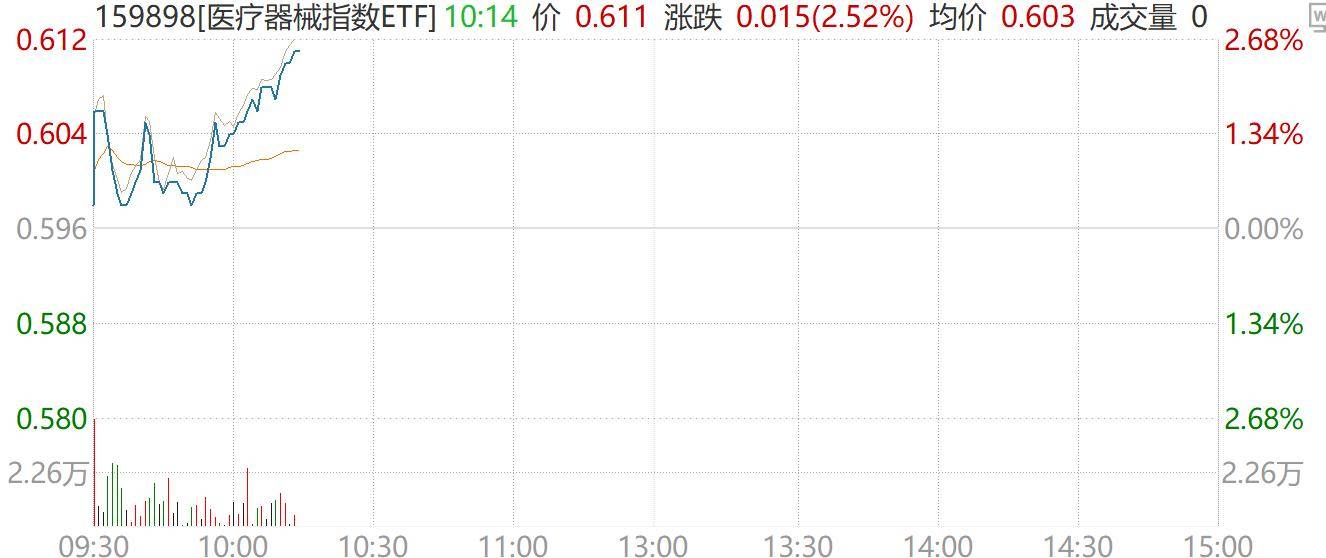
继脑机接口之后,AI制药“粉墨登场”?高贝塔医疗器械指数ETF(159898)连续6日吸金3.66亿元
Sou Hu Cai Jing· 2026-01-13 02:52
Group 1 - Nvidia and Eli Lilly will invest $1 billion over the next five years to establish an AI drug laboratory, focusing on accelerating medical discovery and production through robotics and physical AI [1] - The announcement has led to a significant rise in related pharmaceutical stocks, with Dean Diagnostics hitting the daily limit up for three consecutive trading days, and other companies like BGI Genomics and Berry Genomics seeing increases of over 16% and 8% respectively [1] - The medical device index ETF (159898) has gained 2.52% and has seen a net subscription of 366 million yuan over six consecutive days, indicating high market interest [1] Group 2 - Huafu Securities predicts that 2026 will mark the beginning of a new five-year period for AI healthcare, with expectations of more proactive fiscal signals supporting AI medical applications [2] - The current demand for AI applications in healthcare is expected to sustain the industry's long-term development, with recent events indicating a shift towards commercialization [2] - The National Medical Products Administration is expected to release ten measures by 2025-2026 to support the innovation and development of AI healthcare and high-end medical devices [2] Group 3 - The medical device index ETF (159898) tracks the CSI All-Share Medical Device Index, focusing entirely on the A-share medical device sector, with a pure beta quality [3] - The top ten holdings of the index include leading companies like Mindray Medical and United Imaging Healthcare, with over 80% of the portfolio in the ChiNext and STAR Market [3] Group 4 - The ETF's index includes a significant focus on brain-computer interface concepts, which account for approximately 24% of the index [4] - There is a scarcity of pure brain-computer interface stocks in the A-share market, presenting opportunities for capturing innovation in the industry [4] Group 5 - The medical device sector, which includes brain-computer interfaces, is expected to see substantial demand before and during the initial production phase of these technologies [5]

20cm速递|创业板医药ETF国泰(159377)涨超1.2%,市场关注脑机接口与创新器械前景
Sou Hu Cai Jing· 2026-01-13 02:52
Group 1 - The core viewpoint of the article highlights the long-term investment opportunities in the medical device sector, driven by innovation, international expansion, and mergers and acquisitions [1] - The medical device sector is experiencing a revaluation as its innovative and international capabilities gain recognition, with a focus on improved and breakthrough innovations that are becoming increasingly acknowledged [1] - By 2026, a turning point is expected in the medical device sector, with opportunities for performance and valuation recovery in individual stocks, particularly those related to overseas expansion and performance recovery [1] Group 2 - The article emphasizes the growing recognition of brain-computer interfaces and AI in healthcare, with significant catalysts in these areas, particularly in consumer health management and AI doctors [1] - The ETF mentioned, Guotai (159377), tracks the Chuangyi Medicine Index (399275), which includes companies with outstanding innovation capabilities and high R&D investment, reflecting the overall performance of high-growth pharmaceutical and biotechnology firms [1] - The medical device sector is anticipated to undergo a dual recovery in valuation and performance, with the potential for several stocks to experience significant growth in the context of a technology bull market [1]

AI医疗成牛市反弹“急先锋”,港股通医疗ETF(520510)强势领涨!
Sou Hu Cai Jing· 2026-01-13 02:52
Group 1 - The Hong Kong stock market has shown strong performance post-New Year, with the healthcare and pharmaceutical sectors exhibiting notable elasticity, as evidenced by the Hong Kong Stock Connect Medical ETF (520510) surging over 4% and achieving a year-to-date increase of over 20% [1] - The Hang Seng Medical ETF (159892) also experienced a year-to-date rise that once exceeded 17%, ranking among the top performers in the overall market ETFs [1] - Ark Health saw a significant increase of over 30% during trading, highlighting the robust interest in the healthcare sector [1] Group 2 - Zheshang Securities believes that the integration of AI and healthcare is flourishing, with policy support and market demand driving the industry into a rapid phase of commercialization [1] - In terms of AI healthcare applications, industry policies are clear and progress is swift, with five ministries issuing relevant implementation opinions by 2025, the launch of ChatGPT Health in early 2026, and Ant Group's Aifuku seeing monthly active users double to 30 million, all contributing to heightened market enthusiasm [1] - The Hong Kong Stock Connect Medical ETF (520510) tracks the Hong Kong Stock Connect Medical Theme Index, covering AI healthcare stocks such as Alibaba Health, JD Health, and Ping An Good Doctor, and is expected to benefit from advancements in brain-computer interfaces, innovative drug exports, and the AI healthcare technology revolution [1]


光大期货金融期货日报-20260113
Guang Da Qi Huo· 2026-01-13 02:41
1. Report Industry Investment Rating - No information provided on the report industry investment rating 2. Core Viewpoints - **Stock Index Futures**: The market showed a strong upward trend throughout the day, with all three major indices rising by over 1%. The Shanghai Composite Index achieved 17 consecutive positive days. AI applications, commercial space, and brain-computer interface concepts were active. The A500ETF received significant net subscriptions in December, while the net short positions of the Top5 member units in IF increased recently, possibly for hedging. The stock index is expected to remain in the oscillation range formed since October. The third-quarter cumulative year-on-year revenue growth rate of the CSI 1000 is about 2.6%, which supports its current valuation and reduces the risk of liquidity. The spring rally may not be as strong as in previous years due to the lack of necessary conditions [1]. - **Treasury Bond Futures**: On Monday, the 30-year, 10-year, 5-year, and 2-year treasury bond futures contracts showed different degrees of increase. The central bank conducted 861 billion yuan of 7-day reverse repurchase operations, resulting in a net injection of 36.1 billion yuan. The short-term capital market is reasonably abundant, which is the biggest support for the bond market, but economic stability, rising inflation, and cautious attitude towards interest rate cuts pose certain constraints. The bond market is expected to remain in a range-bound pattern in the short term [3]. 3. Summary by Directory 2.1 Daily Price Changes - **Stock Index Futures**: From January 9 to January 12, 2026, IH rose by 0.17%, IF by 0.64%, IC by 2.47%, and IM by 3.27%. Among the stock indices, the Shanghai Composite 50 rose by 0.30%, the CSI 300 by 0.65%, the CSI 500 by 2.39%, and the CSI 1000 by 2.80% [4]. - **Treasury Bond Futures**: From January 9 to January 12, 2026, TS remained unchanged, TF rose by 0.05%, T by 0.07%, and TL by 0.30% [4]. 2.2 Market News - The market showed a strong upward trend throughout the day, with all three major indices rising by over 1%. The Shanghai Composite Index achieved 17 consecutive positive days. AI applications, commercial space, and brain-computer interface concepts were active, while insurance, oil and gas, and real estate sectors declined. There were 3,872 rising stocks, 196 limit-up stocks, 1,167 falling stocks, 9 limit-down stocks, and 48 stocks breaking the limit, with a limit-breaking rate of 20% [5]. 2.3 Chart Analysis - **Stock Index Futures**: The report provides charts of the trends of IH, IF, IM, and IC main contracts, as well as the basis trends of IH, IF, IC, and IM [7][8][10][11][12]. - **Treasury Bond Futures**: The report provides charts of the trends of treasury bond futures main contracts, treasury bond spot yields, basis, inter - period spreads, cross - variety spreads, and capital interest rates [15][16][17][18][21]. - **Exchange Rates**: The report provides charts of the US dollar - RMB central parity rate, euro - RMB central parity rate, forward US dollar - RMB, forward euro - RMB, US dollar index, euro - US dollar, pound - US dollar, and US dollar - yen [23][24][25][27][28]. 2.4 Member Introduction - Zhu Jintao, a master's degree in economics from Jilin University, is the director of the macro - financial research department at Everbright Futures Research Institute. His futures practice qualification number is F3060829, and his futures trading consultation qualification number is Z0015271 [30]. - Wang Dongying, an index analyst with a master's degree from Columbia University, focuses on stock index futures, macro - fundamental quantification, key industry sector research, index financial report analysis, and market capital tracking. His futures practice qualification number is F03087149, and his futures trading consultation qualification number is Z0019537 [30].
港股医药走强,港股通创新药ETF南方(159297)强势涨近3%,中国创新药产业长期向好发展趋势持续显现
Xin Lang Cai Jing· 2026-01-13 02:32
Core Viewpoint - The Chinese innovative drug sector is experiencing significant growth, highlighted by the recent clinical advancements and strategic partnerships, indicating a positive long-term trend in the industry. Group 1: Market Performance - The Hong Kong Stock Connect Innovative Drug ETF (南方, 159297) rose by 2.98%, with a turnover of 53.79 million yuan and a turnover rate of 3.2% [1] - Key stocks in the index, such as Rongchang Biopharmaceuticals, Sihuan Pharmaceutical, and Boan Biotechnology, saw substantial increases of 9.38%, 7.38%, and 6.71% respectively [1] Group 2: Clinical Developments - The GLP-1 class drug, Masitide, developed in China, achieved a milestone with two pivotal Phase III clinical studies published in the prestigious journal Nature on December 18, 2025, showcasing China's drug development capabilities [1] Group 3: Strategic Partnerships - Rongchang Biopharmaceuticals announced an exclusive licensing agreement with AbbVie for RC148, receiving an upfront payment of $650 million and potential milestone payments up to $4.95 billion, along with tiered royalties on net sales outside Greater China [1] Group 4: Industry Trends - Guosen Securities noted the explosive growth in business development (BD) transactions within the Chinese innovative drug industry, emphasizing that for many domestic innovative drugs, external licensing is just the starting point for global development [2] - The Hong Kong pharmaceutical sector has shown strong performance, particularly in the biotech field, reflecting heightened market interest in innovative drugs [2] Group 5: AI Integration - Eight departments jointly issued implementation opinions on "AI + Manufacturing," focusing on AI in drug development and medical supply chains, with a goal to cultivate 2-3 leading ecological enterprises by 2027 [2] - Century Securities highlighted the significant potential of AI in enhancing pharmaceutical manufacturing, particularly in drug discovery and intelligent diagnostics, which is expected to receive ongoing policy support and capital attention [2] Group 6: Index Composition - The index tracking the Hong Kong Stock Connect Innovative Drug sector includes major companies such as CSPC Pharmaceutical Group, BeiGene, and Innovent Biologics among its top ten weighted stocks [3]
八部门鼓励养老服务机器人产业发展,为老年人提供全方位智能化养老支持
Jin Rong Jie· 2026-01-13 02:32
Core Viewpoint - The Ministry of Civil Affairs and seven other departments have introduced measures to cultivate the elderly care service industry and promote the silver economy, focusing on technological innovation and market-oriented solutions to meet the diverse needs of the elderly population [2][6]. Group 1: Brand Development - Strengthening brand recognition by supporting chain-based elderly care service providers to establish distinctive branding [3]. - Encouraging the registration of trademarks for elderly care service providers to enhance brand protection and recognition [3]. - Promoting well-known brands through various initiatives to create exemplary brands in the elderly care sector [3]. Group 2: Market Supply and Demand - Optimizing the supply of elderly care services and age-friendly products by integrating community resources and encouraging home care services [4]. - Establishing platforms for supply and demand matching to enhance resource utilization in elderly care services [5]. - Encouraging e-commerce platforms and supermarkets to create dedicated sections for elderly products to facilitate consumption [5]. Group 3: Technological Empowerment - Promoting technological advancements in elderly care, including the use of big data, AI, and robotics for health monitoring and personalized services [6][7]. - Supporting the development of innovative technologies such as exoskeleton robots and brain-machine interfaces to assist elderly individuals with declining physical functions [6][7]. Group 4: Development Environment - Creating a fair competitive environment by reforming the classification of elderly care institutions and optimizing support policies [8]. - Establishing a standard certification system for elderly products and services to guide procurement and ensure quality [8]. - Protecting the rights of the elderly by implementing educational programs and regulating the elderly care service market to prevent exploitation [8][9]. Group 5: Support Measures - Improving government services by providing information on elderly demographics and available support policies to service providers [10]. - Streamlining the licensing process for elderly care institutions to facilitate easier access to necessary permits [10]. - Supporting stable operations of elderly care facilities through land supply and financial assistance for construction and operation [10].

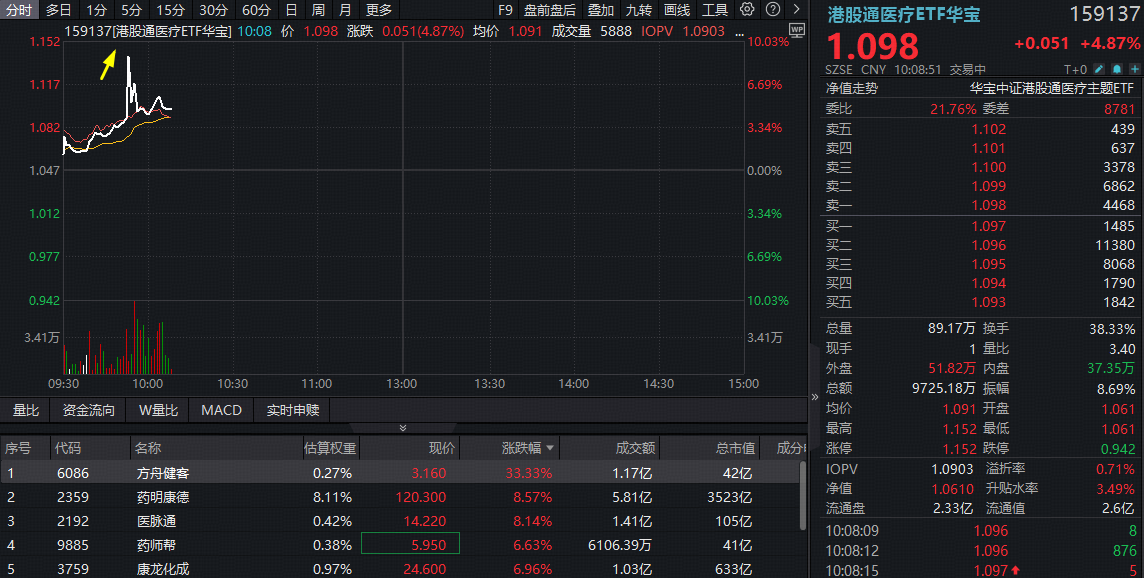
ETF盘中资讯|AI医疗催化密集,港股通医疗ETF华宝(159137)触及涨停!创新药同步拉升,520880溢价摸高3%
Jin Rong Jie· 2026-01-13 02:32
Core Viewpoint - The Hong Kong stock market is experiencing a significant rally in the healthcare sector, particularly in AI healthcare stocks, with notable gains in companies like Ark Health and Yimaitong, driven by recent developments in AI and drug innovation [1][4]. Group 1: Market Performance - The Hong Kong healthcare sector has seen an 8-day consecutive rise, with AI healthcare stocks like Ark Health surging by 33% and Yimaitong increasing by over 10% [1]. - The Hong Kong Stock Connect Medical ETF (Huabao, 159137) reached a peak increase of 4.87% during trading, reflecting strong investor interest [1]. - The innovative drug sector within the Hong Kong Stock Connect also saw gains, with Rongchang Bio leading with over a 9% increase and Sanofi Biopharma rising by more than 7% [1]. Group 2: AI Healthcare Developments - Nvidia and Eli Lilly announced a joint investment of $1 billion to establish a lab in San Francisco focused on using AI to accelerate drug development [4]. - TempusAI reported FY25 revenue of approximately $1.27 billion, marking an 83% year-over-year increase, with a total contract value exceeding $1.1 billion [4]. - Zhejiang Qiang Brain Technology recently submitted an IPO application to the Hong Kong Stock Exchange, potentially becoming the first listed company in China's brain-computer interface sector [4]. Group 3: AI Integration in Healthcare - The penetration rate of AI in consumer healthcare is rapidly increasing, with Ant Group's AI assistant surpassing 30 million monthly active users and OpenAI's ChatGPT Health reaching over 40 million daily users globally [5]. - The healthcare sector is identified as a direct downstream application for medical information technology and AI, with expectations for significant productivity improvements [5]. - The exploration of business models in innovative drugs is highlighted as a core focus, with AI-driven drug development platforms forming strategic partnerships with pharmaceutical companies [5].
中国的特斯拉工厂救马斯克于水火之中,马斯克的星链计划却置中国于水火之中,未来数年,马斯克是中国最大的敌人,不论是星链还是在AI领域。中国多次救马斯克,马斯克却把中国往火坑里推!有些人注定只能共患难,不能同富贵。当你凝视深渊的时候,深渊也在凝视你;当你把马斯克从破产边缘拉回来的时候,...
Sou Hu Cai Jing· 2026-01-13 02:31
Core Viewpoint - The article discusses the complex relationship between Elon Musk and China, highlighting how China supported Tesla during its struggles, while Musk's Starlink project poses significant challenges to China in the fields of technology and AI. Group 1: Tesla's Rescue by China - In 2018, Tesla was on the brink of collapse, with production issues and a failing financial situation, prompting Musk to rely on China for support [1][2] - China provided substantial assistance, including a large industrial site in Shanghai at a low cost and a low-interest loan of 40 billion yuan, which was crucial for Tesla's survival [2][3] - The rapid construction of the Shanghai Gigafactory exemplified "Chinese speed," with the factory built in just 10 months, a process that would take years in the U.S. [3] Group 2: Impact of the Shanghai Factory - The Shanghai factory became highly productive, projected to produce 4 million vehicles by the end of 2025, significantly contributing to Tesla's financial turnaround and market valuation [4] - The Model Y's production in China allowed Tesla to reduce costs by 65%, leading to substantial profits for the company [4] Group 3: Starlink's Threat to China - Musk's profits from the Chinese market are being reinvested into the Starlink project, which is seen as a threat to China's security and technological sovereignty [4][5] - Starlink's satellites are not just for internet access; they have been used in military applications, raising concerns about their implications for national security [5][6] - The planned reduction of Starlink satellites' operational altitude to 480 kilometers is viewed as a strategic move to dominate low Earth orbit, potentially obstructing China's own satellite initiatives [5][6] Group 4: Data and AI Concerns - Tesla's operations in China allow it to collect vast amounts of driving data, which is crucial for AI development, but this data is primarily utilized in the U.S., limiting China's technological advancements [6][7] - Musk's strategy includes establishing manufacturing in the U.S. to reduce reliance on Chinese supply chains while simultaneously benefiting from Chinese market data [7] Group 5: Broader Implications - The article suggests that Musk's actions reflect a duality in his business approach, benefiting from Chinese support while simultaneously undermining China's technological independence [6][7] - The ongoing competition in space, data, and technology between Musk and China is framed as a significant geopolitical issue that is just beginning to unfold [7]


开源证券:AI+的高beta现阶段依然有望获得支撑 本轮行情为科技+周期双主线
智通财经网· 2026-01-13 02:13
Group 1 - The core viewpoint is that the current AI+ high beta still has support, but a more balanced investment approach is recommended, focusing on performance improvements in AI hardware and opportunities in AI application sectors with lower institutional positions [1] - The first year of the 14th Five-Year Plan should emphasize new themes transitioning to main lines, such as commercial aerospace and brain-computer interfaces [1] - The current market trend is characterized by a dual focus on technology and cycles, with price increase clues and anti-involution support making cyclical styles promising [1] Group 2 - The hardware cycle discussion highlights the concept of "stronger becoming stronger" and the potential for valuation digestion if ΔG shows signs of weakness, although no significant turning point for ΔG has been observed yet [1] - The 2000 US tech bubble serves as a reminder that during the bubble formation phase, many tech companies experienced rapid valuation increases disconnected from actual profitability, driven by blind expectations and emotions [2] - The "6+6" model illustrates the process from bubble to disillusionment, emphasizing that true market survivors possess technological leadership, clear profit paths, and sound capital management [2] Group 3 - The end of the mobile internet era in A-shares from 2013 to 2015 reflects a similar disconnect between valuation and profitability, with weak macro cycles leading to concentrated trading in high-demand sectors [3] - The acceleration of leveraged funds contributed to a lack of safety margins in valuations, and the sustainability of industry competition and business models became critical considerations post-bubble [3]