关税

Search documents
金十整理:关税阴影下美联储“三权分立”格局凸显,鸽派、鹰派、中间派官员近期都发表了什么观点?
news flash· 2025-07-30 07:46
3. 美联储理事沃勒:7月降息25个基点合理,劳动力市场疲软风险已充分显现,不应等到劳动力市场恶 化后才下调利率。 中间派 金十整理:关税阴影下美联储"三权分立"格局凸显,鸽派、鹰派、中间派官员近期都发表了什么观点? 鸽派 1. 美联储古尔斯比:未来一年利率有望大幅下降。如果不确定性消除,降息是有可能实现的。 2. 美联储理事鲍曼:现在是考虑调整政策利率的时候了,若通胀持续下降或劳动力市场疲软,可能会降 息。 4. 美联储巴尔:关税将对通胀施加上行压力,可能会带来一定的持续性。货币政策已处于良好位置,准 备等待以观察经济状况的变化。 1. 美联储穆萨勒姆:美联储应该警惕由关税推动的持续通胀,不确定性很高,美联储政策处于良好位 置。 2. 美联储理事库格勒:有许多理由预计关税影响将进一步扩大,在一段时间内维持利率稳定是合适的。 (库格勒本周将缺席美联储会议) 3. 美联储博斯蒂克:未来数月关税对通胀的影响将显著增强,短期内降息可能比较困难,美国经济可能 会经历更长时间的高通胀。(2027年票委) 1. 美联储主席鲍威尔:预期夏季期间将出现更高的通胀水平。无法断言7月降息是否过早,不排除任何 一次会议,决策将取决 ...
美联储决议前瞻:本周不降息,政策拐点大约在秋季
Jin Shi Shu Ju· 2025-07-30 06:11
美联储联邦公开市场委员会(FOMC)将于北京时间周四凌晨2:00公布利率决议,30分钟后美联储主席 鲍威尔将召开会后新闻发布会。尽管不太可能出台重大政策决定,但本周的会议仍充满看点。 几乎可以肯定的是,美联储的表述将与6月会议大同小异——声明内容变动不大,官员们连续第五次会 议暂缓降息。然而,几个耐人寻味的支线剧情将上演。 沃勒和鲍曼在会议前均主张降息,称鉴于关税对通胀的传导尚未显现,且如沃勒两周前在演讲中所描述 的,劳动力市场"处于边缘",此时是美联储宽松的时机。 "通胀接近目标,通胀上行风险有限,我们不应等到劳动力市场恶化才降息,"沃勒在题为《现在就该降 息的理由》的演讲中表示。 这些言论可能会引起特朗普共鸣,不过CNBC对市场专家和经济学家的调查显示,仅14%的人认为沃勒 会获得提名,接替2026年5月任期届满的鲍威尔。排在沃勒之前的热门人选包括财政部长斯科特·贝森特 (Scott Bessent)、前美联储理事凯文·沃什(Kevin Warsh)和国家经济委员会主任凯文·哈塞特(Kevin Hassett)。 特朗普曾呼吁鲍威尔辞职,甚至威胁解雇他(后作罢),并将FOMC拒绝降息归咎于这位央行领导人。 ...
放弃8月1日前与美国敲定贸易协议?印度准备应对高额关税
Jin Tou Wang· 2025-07-30 05:19
当地时间周二7月29日,特朗普威胁印度再不达成协议,就将面临25%的关税,这一言论加剧了外界对 谈判前景的担忧。根据此前美国商务部发布的数据来看,2024年美国从印度进口了870亿美元商品,而 印度从美国进口了价值420亿美元的商品,贸易逆差不断扩大。 周二,据媒体援引两名印度政府消息人士透露,印度方面决定在华盛顿8月1日截止日期前暂缓新的贸易 让步。据了解,印度准备应对美国可能征收的20%-25%关税,同时计划在美国代表团8月中旬访问时, 寻求通过全面双边协议解决贸易分歧。目标是在9月或10月前敲定全面双边协议。 截止7月30日上午11点56分,现货黄金现报3328.62美元/盎司,涨幅0.07%。 目前距离特朗普政府设定的8月1日加征"对等"关税的期限越来越近,这期间,美国与欧盟、日本、英国 等主要伙伴先后达成了贸易协议,并与中国方面关税暂停措施展期90天,但与印度之间的谈判目前尚未 达成。据了解,特朗普政府设定的关税最后期限是在华盛顿时间8月1日凌晨12:01。 ...

弱美元提振全球经济,IMF上调全球经济增长预期至3.1%
Hua Er Jie Jian Wen· 2025-07-30 03:04
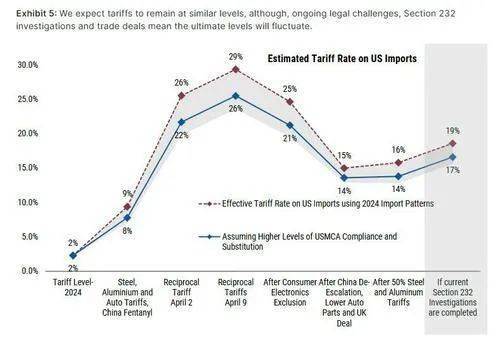
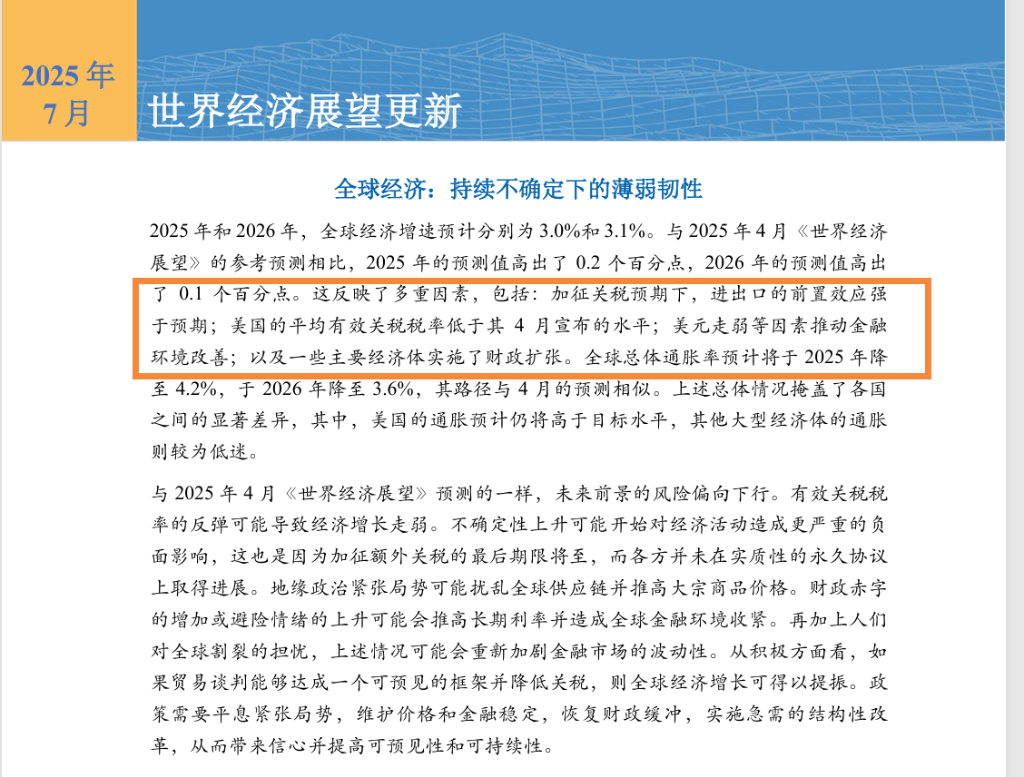
尽管贸易紧张局势和地缘政治风险挥之不去,但弱势美元和"打了折扣"的关税为全球经济提供了意想不到的缓冲。IMF将2026年全球经济增长预 期从3.0%上调至3.1%,2025年预期从2.8%上调至3.0%。美国和中国的经济增长预期也获得上调。 7月29日(周二),国际货币基金组织(IMF)最新《世界经济展望》报告,为笼罩在贸易战阴影下的全球经济带来了些许曙光。 国际货币基金组织(IMF)上调了其对全球经济增长的预测,指出弱势美元和低于预期的美国关税,共同为世界经济提供了缓冲,使其得以展现 出一种"薄弱的韧性"。 IMF预计,2026年全球经济增长率将达到3.1%,高于4月份预测的3.0%;2025年的增长预期也从2.8%上调至3.0%。作为世界最大的两个经济体, 美国和中国的增长前景同样获得了上调。 IMF首席经济学家Pierre-Olivier Gourinchas表示,美元走弱缓解了全球金融环境,因为这降低了许多新兴市场和外国公司以美元计价的债务的偿债 成本。同时,他指出,目前美国对进口商品征收的有效关税率约为17%,低于4月份预测时所依据的24%,"关税压力有所缓解"。 然而,IMF警告称,这种复苏的根基 ...

【期货热点追踪】美国关税大棒周五落地!哪些商品受影响最大?市场如何反应?
news flash· 2025-07-30 02:51
美国关税大棒周五落地!哪些商品受影响最大?市场如何反应? 相关链接 期货热点追踪 ...
方正中期期货有色金属日度策略-20250730
Fang Zheng Zhong Qi Qi Huo· 2025-07-30 02:39
Group 1: Report Industry Investment Rating - No relevant content provided Group 2: Core Views of the Report - The non - US copper market has low inventory, and the domestic copper market is expected to have a situation of weak supply and strong demand, but the short - term price lacks an obvious upward driver. Zinc has an increase in supply and weak demand, and the price is expected to be weak. The aluminum industry chain is recommended to be short - sold, and the fundamentals of tin are weak. Lead shows a range - bound trend, and nickel and stainless steel are in a weak situation [3][4][5][6][7][8] Group 3: Summary by Directory 1. Part One: Logic of Non - ferrous Metals Operation and Investment Suggestions - **Macro Logic**: The non - ferrous metals sector adjusts and falls after taking profits in the domestic anti - involution stage. The market focuses on trade negotiations and domestic policies. The US - EU trade agreement boosts the US dollar, putting pressure on non - ferrous metals [11] - **Investment Suggestions for Each Metal** - **Copper**: It is expected to stop falling and rebound, with support at 78000 - 79000 and pressure at 80000 - 82000. Suggested to buy at low prices [13] - **Zinc**: It is expected to be weakly volatile, with support at 21600 - 21800 and pressure at 22800 - 23100. Suggested to short at high prices [13] - **Aluminum Industry Chain**: It is expected to be weakly volatile. Suggested short - selling for aluminum, alumina, and cast aluminum alloy [13][14] - **Tin**: It is expected to be weakly volatile, with support at 250000 - 255000 and pressure at 270000 - 290000. Suggested short - selling [14] - **Lead**: It is expected to fluctuate in a range, with support at 16600 - 16800 and pressure at 17200 - 17400. Suggested to buy at low prices [14][15] - **Nickel**: It is expected to be bearish, with support at 115000 - 116000 and pressure at 122000 - 123000. Suggested to short at high prices [15] - **Stainless Steel**: It is expected to be weakly volatile, with support at 12300 - 12400 and pressure at 12800 - 13000. Suggested to short at high prices [15] 2. Part Two: Review of Non - ferrous Metals Market - The closing prices and daily changes of copper, zinc, aluminum, alumina, tin, lead, nickel, stainless steel, and cast aluminum alloy are presented [16] 3. Part Three: Position Analysis of Non - ferrous Metals - The latest position analysis of the non - ferrous metals sector includes information on net long and short positions, their changes, and influencing factors for different varieties [18] 4. Part Four: Spot Market of Non - ferrous Metals - The spot prices and daily changes of copper, zinc, aluminum, alumina, nickel, stainless steel, tin, lead, and cast aluminum alloy are provided [19][21] 5. Part Five: Non - ferrous Metals Industry Chain - Charts related to the industry chain of copper, zinc, aluminum, alumina, tin, lead, nickel, and stainless steel are presented, including inventory changes, processing fees, and price trends [22][26][28][33][39][41][46][52] 6. Part Six: Non - ferrous Metals Arbitrage - Charts related to the arbitrage of copper, zinc, aluminum, alumina, tin, lead, nickel, and stainless steel are presented, including ratio changes, basis, and spread trends [54][56][59][62][66][69][70] 7. Part Seven: Non - ferrous Metals Options - Charts related to the options of copper, zinc, and aluminum are presented, including historical volatility, implied volatility, trading volume, and open interest [72][73][75]
美国7月消费者信心指数升至97.2 增幅低于市场预期
Zhong Guo Xin Wen Wang· 2025-07-30 02:35
Core Insights - The US consumer confidence index rose to 97.2 in July, but the increase was below market expectations [1] - The current conditions index, reflecting consumer assessments of the business and labor market, decreased to 131.5, down 1.5 from June [1] - The expectations index, which gauges short-term outlooks on income, business, and labor market conditions, increased to 74.4, up 4.5 from June [1] Group 1: Consumer Confidence Trends - The consumer confidence index has stabilized since May but remains lower than the same period last year [2] - The increase in consumer confidence was primarily driven by individuals aged 35 and above, with all income groups above $15,000 seeing an increase, except for those earning below $15,000 [1] - 18.9% of consumers reported difficulty in finding jobs, marking the lowest assessment of the job market since March 2021 [1] Group 2: Economic Concerns - Tariffs are a major concern for consumers, with many fearing that they will lead to rising prices and inflation [2] - The US Consumer Price Index (CPI) for June showed a year-on-year increase of 2.7% and a month-on-month increase of 0.3%, indicating signs of rising inflation [2]
特朗普豪收1.9万亿美元大单,鲍威尔议息前被猛烈围攻!
Sou Hu Cai Jing· 2025-07-30 02:29
Group 1 - The U.S. government has secured $1.9 trillion in investments and contracts from Japan and the EU, with Japan committing $550 billion and the EU signing a $750 billion energy deal along with $600 billion in investments [1][3] - The tariffs imposed by the Trump administration have led to significant financial strain on American companies, exemplified by General Motors reporting a quarterly loss of $1.1 billion and a net profit drop of over one-third [3][6] - The impact of tariffs is felt most acutely by low-income families, who are experiencing a loss in disposable income three times greater than that of wealthier households [5][6] Group 2 - The trade war has resulted in retaliatory tariffs from the EU and other countries, with the EU imposing a 25% tariff on American bourbon and motorcycles, and Brazil imposing a 50% tariff on U.S. machinery [5][6] - Companies are relocating their operations to avoid U.S. tariffs, with Apple moving production to India and Delta Electronics receiving numerous inquiries for operations in India [5][6] - The International Monetary Fund has warned that global GDP will shrink by 0.5% due to tariffs, with the U.S. expected to bear 60% of the economic burden [6][7] Group 3 - The inflationary pressures resulting from tariffs are leading to increased prices for everyday goods, as seen with Walmart and Amazon raising prices on essential items [5][6] - The agricultural sector is suffering, with coffee farmers facing 50% tariffs and unable to fulfill orders, leading to a significant downturn in production and sales [5][6] - The overall economic growth rate in the U.S. has slowed to around 1%, indicating a significant downturn in economic activity as a result of the trade policies [7][8]
摩根士丹利:关税风险又来了,对普通投资者意味着什么?
Sou Hu Cai Jing· 2025-07-30 02:23
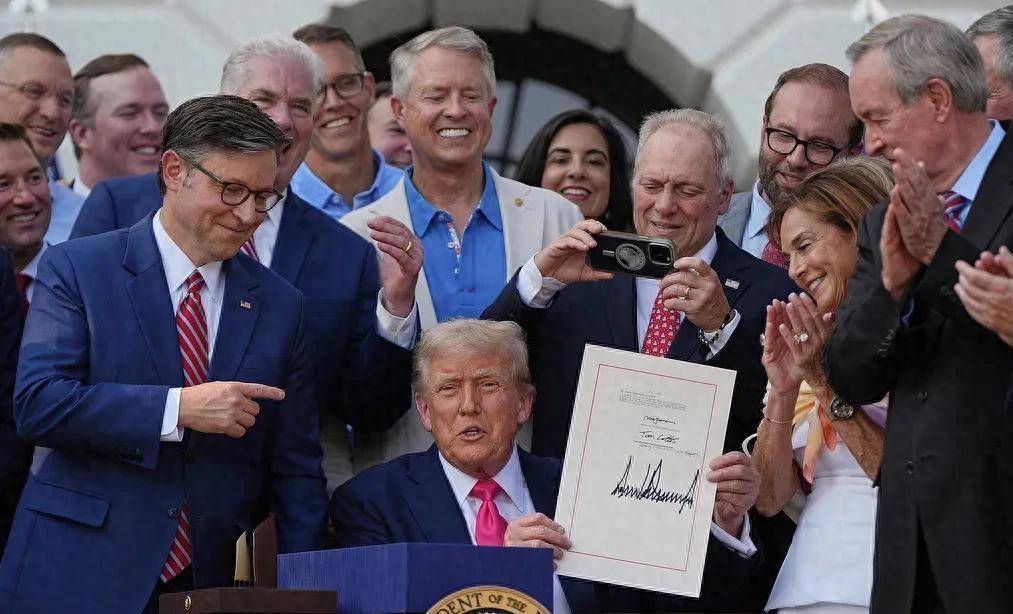
Group 1 - The upcoming tariff deadline on August 1 could lead to increased tariffs on major trading partners, including Europe, Canada, and Mexico, which together account for nearly half of U.S. goods imports [1][2] - The potential impact of a 5% tariff increase on these partners could result in a negative shock to U.S. GDP that is twice as severe as previous measures against smaller economies [2] - The effects of tariffs are not limited to the macroeconomic level; different sectors in the U.S. stock market will experience varying impacts, necessitating continued attention to U.S. trade policy in investment strategies [2][5] Group 2 - The most likely economic scenario is "slowing growth with persistent inflation," with a probability of 40%, driven by the negative impacts of trade and immigration restrictions [4] - A second scenario of optimistic acceleration exists, with a 20% probability, contingent on easing trade and immigration policies or fiscal measures stimulating economic activity [4] - The third scenario, "economic slowdown triggered by trade," also holds a 40% probability, where further tariff increases could lead to a mild recession [4] Group 3 - In the fixed income market, an economic slowdown due to tariffs may lead to rising U.S. Treasury prices as the market anticipates a more dovish Federal Reserve [5] - The U.S. stock market faces a complex situation; while slowing growth may not disrupt the upward trend of the S&P index, different sectors will react differently to trade policies [5] - Industrial and capital goods companies may benefit from domestic investment despite rising costs, while consumer goods and retail sectors face greater pressure due to increased import costs and limited pricing power [5]