AI技术

Search documents
企业出行管理新趋势:五大智能平台助力降本增效
Sou Hu Cai Jing· 2025-12-08 05:49
Core Challenges in Corporate Travel Management - The primary challenge in corporate travel management is the lag in expense control, with approximately 31% of large enterprises losing over 1 million yuan annually due to excess expenses and non-compliant orders [1] - Inefficient processes plague many companies, with employees wasting an average of 1.5 workdays each year due to cumbersome travel procedures [1] - The fragmentation of systems leads to data silos, making it difficult for companies to manage travel data comprehensively and optimize it effectively [1] Overview of Five Smart Travel Platforms - Didi Enterprise Edition offers a comprehensive "AI + Business Travel" solution, integrating car services, flights, and hotels, enhancing resource management [2] - Didi's AI Xiaodi travel assistant, launching in June 2025, utilizes data from 700,000 enterprises to provide intelligent services, improving financial management efficiency by over 60% [2] - Gaode Enterprise Edition employs an aggregation model to help companies reduce transportation costs by up to 40% through multi-platform price comparisons [4] - Meituan Enterprise Edition focuses on small and micro enterprises, simplifying reimbursement processes and enabling automatic collection of receipts to the corporate account [5][6] - JD Travel leverages group purchasing advantages to help companies reduce travel-related costs, showcasing significant savings in consumables for hotels [7] - Tuniu Enterprise Edition specializes in long-distance travel and remote work scenarios, offering modular control features that adapt to project needs [8] Core Value and Future Trends of Smart Travel Platforms - AI technology is transforming corporate travel management, advancing from "assisted booking" to "full-process decision-making" [9] - Data integration capabilities are becoming a key advantage, allowing for ROI analysis of travel expenses against business outputs [9] - The trend towards ecosystem integration is evident, with leading platforms using open APIs to connect with various enterprise systems, enhancing user experience and management perspectives [9] Common Questions Regarding Platform Selection - Major smart travel platforms prioritize data security, employing strict encryption and access management measures [10] - For small enterprises with fewer than 100 employees, Didi Enterprise Edition may offer better cost control, while its comprehensive solution is suitable for those seeking a robust travel management system [10] - Mainstream platforms support integration with existing financial systems, ensuring smooth data flow and operational efficiency [11]


近5个交易日累计“吸金”达3.10亿元,游戏ETF(159869)现涨近1.5%
Mei Ri Jing Ji Xin Wen· 2025-12-08 04:37
12月8日早盘,游戏板块持续保持强势,游戏ETF(159869)现涨近1.5%。持仓股全线飘红,富春 股份、三七互娱、奥飞娱乐、巨人网络、恺英网络、星辉娱乐等涨幅居前。游戏ETF(159869)近5个 交易日累计"吸金"达3.10亿元,备受资金青睐,截至12月5日,产品规模达111.52亿元,助力投资者一键 布局A股游戏龙头。 截至11月,2025年累计发放版号已达1624个,超过了去年全年总量。特别是11月份单月发放了184 个版号,再次刷新单月新高,显示出审批常态化趋势审批节奏的稳定与可预期,极大促进了优质新游戏 的开发和上线。版号常态化发放标志着行业步入更加成熟的发展阶段。随着政策的引领,游戏公司也更 专注于业务创新与可持续发展,游戏产业正呈现精品化趋势。 2025年第三季度,游戏行业迎来全面业绩爆发。世纪华通三季度营业收入首次突破百亿大关,达到 100.16亿元,同比增长60.19%,归母净利润17.01亿元,同比增长163.78%。三七互娱同样表现优异,前 三季度实现营收124.61亿元,归母净利润23.45亿元,同比增长23.57%。其中第三季度净利润增长尤为 强劲,增速达49.24%。曾经的"游 ...
建筑行业周报:金融监管总局宣布调整险资入市政策,低估值建筑央企迎长期资金利好-20251208
Guotou Securities· 2025-12-08 02:06
Investment Rating - The report suggests a positive outlook for the construction sector, particularly for state-owned enterprises with low valuations, benefiting from long-term capital inflows due to recent policy adjustments [1][17]. Core Insights - The Financial Regulatory Bureau has announced adjustments to insurance capital market entry policies, which will favor low-valuation construction state-owned enterprises by increasing long-term capital investment in the stock market [1][17]. - The construction sector and traditional state-owned enterprises are currently undervalued, with the SW construction and decoration sector's TTM price-to-earnings ratio at 9.2 times and traditional construction state-owned enterprises at 5.5 times [2][18]. - The overall performance of the infrastructure state-owned enterprise sector remains under pressure, but key operational indicators have improved, and many companies have increased their dividend payouts [2][18]. - The report highlights the potential for significant long-term capital inflows into the A-share market, with a target of 30% of new insurance premiums being allocated to A-shares starting in 2025 [1][17]. Summary by Sections Industry Dynamics - The report discusses the recent policy changes aimed at increasing long-term capital investment in the stock market, particularly focusing on the construction sector as a beneficiary [1][17]. - It emphasizes the importance of cultivating patient capital and encouraging long-term investment strategies to reduce market volatility [1][17]. Market Performance - The construction industry experienced a slight decline of 0.07%, while the international engineering sector showed a positive performance with a 3.34% increase [20][23]. - The report notes that the construction sector's overall TTM price-to-earnings ratio is currently low compared to other sectors, indicating potential investment opportunities [26][30]. Key Companies to Watch - The report recommends focusing on several key state-owned enterprises, including China State Construction, China Communications Construction, and China Railway Construction, which are expected to benefit from the favorable policy environment and improved operational metrics [10][12][30]. - It also highlights companies in the cleanroom engineering sector, such as Yaxiang Integration and Shenghui Integration, which are poised to benefit from the growing demand for semiconductor and AI-related infrastructure [19][12]. Future Outlook - The report anticipates that the effects of debt reduction policies will gradually manifest by 2026, providing a stable defensive attribute to the state-owned enterprise sector [2][4]. - It also notes that the construction sector's international expansion strategies are yielding positive results, with significant growth in overseas contracts and revenue [11][12].
精细气象服务解锁农作物增产“密码”
Liao Ning Ri Bao· 2025-12-08 01:37
在今年的对比试验中,省气象局深化多部门联动,优化服务模式。联合农业农村部全国农技推广中 心、省农业农村厅、省农科院、中国农业大学、沈阳农业大学等多方力量,从试验方案设计、展示田块 落实,到示范地块产量测定、试验结果论证,全程协同推进。 "原来种地是看天吃饭,现在通过气象预警让我们提前知道了'天意'。今年雨季,合作社每次收到 降雨预报都会避开雨前施药,每亩地能减少20元至30元的无效用药成本,并且提前进行稻田排水处理, 避免水稻受淹。"辽阳灯塔市东古城水稻合作社经理李静直言,精准气象服务让她面对天气变化时不再 盲目。 省气象局连续3年开展农业生产气象服务效益评价对比试验,让种地从"看天吃饭"变成"知天而 作",使农户实现产量和收益双提升。今年,省气象局进一步扩展试验区域和作物种类,在10市完成了 玉米、水稻、大豆、花生、谷子、蓝莓和百合7个作物生产气象服务效益评价对比试验,试验地块普遍 实现增产增收,气象服务贡献率显著提升。 随着秋收结束,对比试验评估结果出炉。数据显示,试验地块相比对照地块,玉米亩产平均提高 39.7公斤,每亩平均增收83元;水稻亩产平均提高37.9公斤,每亩平均增收102元;大豆亩产平均提高 ...
技术赋能 全球布局 锦好医疗深耕听力赛道 打造助听器领军品牌
Zhong Guo Zheng Quan Bao· 2025-12-07 20:36
Core Viewpoint - JinHao Medical is positioned as a leading enterprise in the hearing health sector, focusing on technological innovation and global market expansion to achieve rapid growth and break overseas monopolies [1] Group 1: Technological Advancements - The company emphasizes the importance of core technology and has increased R&D investment, achieving breakthroughs in chip design, algorithm development, and product miniaturization [2] - JinHao Medical is concentrating on AI hearing aid algorithms to enhance user experience, improving speech enhancement in noisy environments and enabling smart fitting and adjustment through apps and remote services [3] - The company has developed several core technologies in self-researched chips, including low-power audio signal conversion and noise enhancement algorithms, and is optimizing the next generation of AI hearing aid chips [4] Group 2: Market Expansion - The hearing aid market in China has shown significant growth, with a CAGR of 18.02% from 2015 to 2019, and JinHao Medical aims to expand its market share through a comprehensive market strategy [5] - The company has established online stores on platforms like JD and Tmall, and is building a retail network combining direct sales and distribution [5] - JinHao Medical is leveraging global certifications to enter international markets, including partnerships with major retailers in the U.S. and establishing subsidiaries in Southeast Asia [5] Group 3: Brand Development - JinHao Medical has made significant strides in developing its own brand, focusing on product differentiation and a full-channel strategy to achieve simultaneous domestic and international market growth [6] - The company is enhancing its brand image by controlling product quality and establishing a differentiated brand identity, targeting both OTC and professional medical-grade products [7] - The company is committed to building a robust talent system to support long-term development, focusing on attracting skilled professionals to enhance R&D and product innovation [7] Group 4: Future Strategy - JinHao Medical plans to extend its business along the hearing aid industry chain through internal growth and external acquisitions, aiming to integrate upstream and downstream resources [8] - The company will focus on acquiring core components and technologies related to hearing aids, as well as retail channels and established brands, to enhance its industry influence and competitiveness [8]
锦好医疗深耕听力赛道 打造助听器领军品牌
Zhong Guo Zheng Quan Bao· 2025-12-07 20:22
Core Insights - JinHao Medical is a leading enterprise in the hearing health sector, achieving rapid growth through continuous technological innovation and a global market strategy, aiming to become the world's top hearing aid brand [1][5] Technological Advancements - The company emphasizes the importance of core technology, investing heavily in R&D to achieve breakthroughs in chip design, algorithms, and product miniaturization, successfully developing low-power digital hearing aid chips and AI-enhanced algorithms [1][3] - JinHao Medical is focusing on AI technology to enhance user experience, improving speech recognition in noisy environments and enabling smart fitting and adjustment through apps and remote services [2][3] Market Expansion Strategy - The hearing aid market in China has shown significant growth, with a CAGR of 18.02% from 2015 to 2019, and JinHao Medical aims to capture a larger market share through a comprehensive global expansion strategy [4] - The company is establishing a retail network both online and offline, leveraging platforms like JD.com and Tmall in China, and entering international markets through partnerships with major retailers like Walmart and CVS [4][5] Brand Development - JinHao Medical is transitioning from an ODM model to building its own brand, focusing on product differentiation and a dual-channel strategy to cater to both OTC and professional healthcare markets [5][6] - The company is committed to maintaining high product quality and a strong brand image, positioning itself as a reliable and cost-effective choice for consumers [6] Future Growth Plans - JinHao Medical plans to extend its business along the hearing aid industry chain through both organic growth and acquisitions, targeting key components and retail channels to enhance its competitive edge [6]
Club Med十年内扩展到100家 加速盘活存量资产
Bei Jing Shang Bao· 2025-12-07 15:28
Core Insights - Fosun Tourism Group has unveiled its new strategy for 2026, emphasizing a continued shift towards a light asset model following its privatization nine months ago [1] - The company aims to accelerate its global expansion, with plans to operate 100 Club Med resorts by 2035 and to push for the independent listing of Atlantis [2][4] - The company is also focusing on divesting heavy asset projects, such as those in Lijiang and Taicang, to optimize its capital structure and reduce debt [4][5] Group 1: Club Med Development - Club Med is a core brand for Fosun Tourism, contributing nearly 90% of the company's revenue, with operational revenue reaching 102.3 billion yuan in the first half of 2025, of which 92.5 billion yuan came from Club Med [2] - By 2035, the company plans to operate 100 Club Med resorts, 20 Club Med Joyview resorts, and 5 HiSphere super cultural tourism malls, targeting different segments of the vacation market [2][3] Group 2: Super Cultural Tourism Malls - The first super cultural tourism mall is set to open in Chongqing in 2026, covering nearly 500,000 square meters and featuring immersive theme districts and indoor theme parks [3] - The company aims to revitalize existing large shopping centers in China by integrating cultural tourism elements, which is seen as a key strategy for future growth [3] Group 3: Atlantis Independent Listing - The independent listing of Sanya Atlantis through a REITs model is in progress, with documentation submitted and awaiting regulatory approval [4] - Successful listing is expected to improve cash flow and significantly reduce the company's overall debt ratio, marking a critical step in optimizing capital structure post-privatization [4] Group 4: AI Integration - Fosun Tourism is leveraging AI technology to enhance customer experience and operational efficiency, covering the entire visitor journey from pre-arrival to post-visit [6][7] - AI systems are being used to automate quality control and operational processes, allowing staff to focus on building personal connections with guests [7] Group 5: Inbound Tourism Opportunities - The inbound tourism market is a key focus for Fosun Tourism, with international visitors making up 20% of total guests at Club Med Lijiang and a 140% year-on-year increase at Sanya Atlantis [8] - The company is addressing challenges faced by international tourists, such as booking difficulties and the need for personalized services, to enhance their experience and increase repeat visits [8][9]
展望2026|专访复星旅文CEO鲍将军: Club Med 十年内扩展到100家,加速盘活存量资产
Sou Hu Cai Jing· 2025-12-07 08:46
Core Insights - Fosun Tourism Group has unveiled its new strategy for 2026, emphasizing a continued shift towards a light-asset model following its privatization, with plans for global expansion and asset optimization [1][7] Group 1: Strategic Goals - By 2035, the company aims to operate 100 Club Med resorts globally, 20 Joyview resorts, and 5 super cultural tourism malls, targeting different segments of the vacation market [3][4] - The Club Med brand accounts for nearly 90% of Fosun Tourism's revenue, with a reported operating revenue of 102.3 billion yuan in the first half of 2025, of which 92.5 billion yuan came from Club Med [3][4] Group 2: Asset Management - The company plans to divest from heavy asset projects such as Lijiang and Taicang, with the latter already selling 250 properties this year, and aims to complete these divestitures by 2026 [8] - The independent listing of Atlantis in Sanya through a REITs model is underway, which is expected to improve cash flow and reduce overall debt for the company [7][8] Group 3: New Product Lines - The super cultural tourism mall project is set to open in Chongqing in 2026, covering nearly 500,000 square meters and featuring immersive theme districts and indoor amusement parks [4][5] - The company is focusing on revitalizing existing commercial assets in China, leveraging their prime locations for cultural tourism transformation [4][5] Group 4: AI Integration - Fosun Tourism is adopting AI technology to enhance customer experience, providing personalized services based on visitor profiles and improving operational efficiency through automated feedback systems [10][11] - The integration of AI aims to standardize non-standardized tourism products, allowing staff to focus on building connections with guests [10][11] Group 5: Focus on Inbound Tourism - The company is prioritizing the inbound tourism market, with Club Med Lijiang receiving 20% of its visitors from international tourists and Atlantis seeing a 140% year-on-year increase in international visitors [12] - To attract international guests, the company is addressing challenges such as booking difficulties and service customization to enhance the overall visitor experience [12][13]

长虹升级为滑雪世界杯冠名赞助商 现场展示AI黑科技
Feng Huang Wang· 2025-12-07 04:54
Group 1 - The core event of the 2025-2026 season Longjiang International Snow Federation Snowboard and Freestyle Skiing Big Air World Cup concluded in Beijing, with Chinese athlete Su Yiming winning the men's snowboard event [1] - Changhong, as the exclusive title sponsor, showcased its full range of AI home appliance products, marking a shift in its sports marketing strategy from being a mere "official partner" to a deep event co-builder [1] - The event highlighted Changhong's latest technological achievements in display technology and environmental control, demonstrating the performance of home appliances in extreme scenarios [1] Group 2 - Changhong's air conditioning technology was demonstrated, showcasing its full DC inverter technology that can operate stably in ultra-low temperatures of minus 35°C and achieve rapid heating in 60 seconds [2] - The "Kecanting Pro" series features a wind volume of 1880m/h, while the dust-free smart wind LD wall-mounted unit emphasizes "carpet heating" and dust prevention [2] - The marketing strategy combined "sports + e-commerce," featuring live streaming from Changhong's pop-up store with the participation of champions, aiming to connect the event with home life scenarios [2] Group 3 - Changhong's strategic moves in the ice and snow sector include providing special new energy power systems in 2022, partnering with the International Snow Federation in 2023, and acquiring exclusive naming rights for this event, indicating its efforts to accelerate the implementation of "Chinese intelligence" and AI technology in the high-end consumer market [2]


AI重塑业务竞争力效果如何?大湾区科技企业这么看
Di Yi Cai Jing Zi Xun· 2025-12-06 11:09
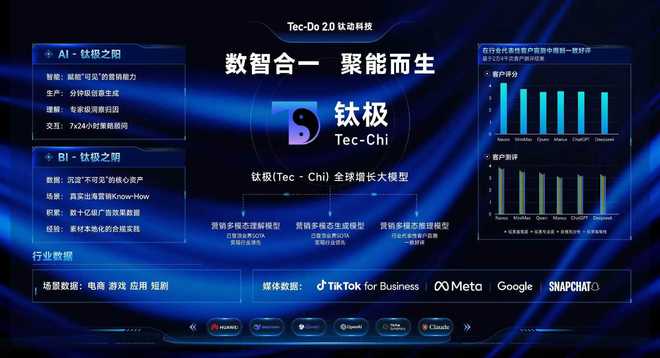
Group 1 - The first Global Intelligent Machinery and Electronic Products Expo was held in Zhuhai and Macau, showcasing the increasing R&D efforts of technology companies in various fields, particularly in security, driven by rapid AI technology development [1] - AI technology is enhancing decision-making capabilities for businesses, with companies like Guangzhou Taidong Technology Co., Ltd. leading the way in developing global growth models and AIGC solutions, planning to invest no less than 2 billion yuan in R&D over the next three years [2][3] - The application of AI in hardware products, especially in the security sector, is reducing reliance on human resources and minimizing operational risks, as demonstrated by Jiechuang Intelligent's AI electromagnetic net capture products [5][7] Group 2 - The integration of AI technology in digital services is enabling companies to generate high-quality content more efficiently, addressing challenges in overseas marketing [3] - The automotive industry is also leveraging AI, with GAC Group showcasing its self-developed ADiGO GSD intelligent driving assistance system, which covers 41 main scenarios and 392 sub-scenarios, indicating a significant advancement in smart connected vehicles [8][10] - AI technology is driving the smartization of outdoor products, with companies like Guangzhou Plank Intelligent Technology Co., Ltd. developing AI-assisted robots that enhance user experience by significantly reducing physical exertion [11][13]