
产业升级

Search documents
着眼于“就业友好”,在高质量发展中筑牢民生根基
2 1 Shi Ji Jing Ji Bao Dao· 2025-11-24 22:54
Group 1 - The core viewpoint emphasizes the importance of employment as a foundation for people's livelihoods, highlighting the integration of high-quality development with employment enhancement in the national five-year plan [1] - The traditional growth model, which relied on high GDP growth to naturally drive employment through investment and consumption, is becoming less effective as the economy shifts towards structural adjustments and industrial upgrades [1][2] - There is a structural mismatch in the labor market, with traditional employment-generating sectors losing momentum while emerging industries face a talent shortage, leading to employment challenges [1][2] Group 2 - Constructing an employment-friendly development model requires a fundamental shift in development logic, focusing on "quality of growth" rather than just "speed of growth," ensuring that economic benefits are equitably distributed among workers [2] - Employment policies must be actively integrated into macroeconomic policies, with the creation of high-quality jobs serving as a key reference for policy decisions and project approvals [2] - The development of the service sector is crucial for job creation, with a focus on transforming traditional manufacturing into service-oriented manufacturing and supporting sectors like culture, tourism, and healthcare [3] Group 3 - Encouraging private investment and supporting the growth of the private economy are essential, as private enterprises are the main drivers of job creation [3] - The employment-friendly development model should support small and medium-sized enterprises and individual businesses, ensuring that workers of varying skill levels can find suitable jobs [3] - Challenges such as policy coordination complexities and technological changes impacting employment must be addressed to achieve a domestic demand-driven economy and facilitate industrial upgrades [3]
物美价廉的产业密码(纵横)
Ren Min Ri Bao· 2025-11-24 22:31
Core Insights - The article discusses how advancements in agricultural technology and industry upgrades have led to affordable and high-quality poultry products, such as roasted chicken and duck, priced around 20 yuan each [1][2]. Group 1: Technological Advancements - Continuous agricultural technology innovations have significantly reduced production costs, exemplified by the breeding of Cherry Valley ducks, which can be raised from hatch to market in 40 to 50 days, with each duck costing less than 10 yuan to produce [1]. - The development of domestically bred white-feathered chickens with independent intellectual property rights has broken the long-standing foreign monopoly on poultry breeding, ensuring a stable supply of quality products [1]. Group 2: Industry Integration and Efficiency - The deep integration of the supply chain, from feed processing to cold chain logistics, has unified production standards and improved efficiency, leading to lower costs and stable product quality [1][2]. - Large retail chains leverage their purchasing power to order directly from manufacturers, eliminating brand premiums and multiple distribution layers, which further stabilizes prices and enhances efficiency through digital systems [2]. Group 3: Economic Impact - The optimization of costs in poultry production translates into tangible benefits for consumers in a market with over 1.4 billion people, demonstrating a significant impact on living standards [2]. - The combination of effective production, sales, and affordability reflects a new landscape for high-quality economic development in China [2].
买家对半砍价,卖家心态已崩!房地产市场真正的“底”在哪?
Sou Hu Cai Jing· 2025-11-24 19:42
Core Viewpoint - The article discusses the significant decline in housing prices in China, which has shifted from a period of continuous growth to a substantial downturn, with average prices in first and second-tier cities expected to drop by approximately 40% by 2025 compared to their peak in 2021, and some third and fourth-tier cities experiencing declines exceeding 50% [1][3]. Impact of Housing Price Decline - The decline in housing prices has unexpectedly affected consumer sentiment, leading to a decrease in consumption despite lower prices, with retail sales growth dropping to 4.5% in the first three quarters of 2025, while household savings reached a historical high of 151.2 trillion yuan [3][5]. - The phenomenon of "reverse wealth effect" is at play, where falling property values, which constitute nearly 70% of household assets, make residents feel poorer, prompting them to cut back on spending and increase savings [3][5]. Generational Impact - Families that purchased homes during the price peak from 2016 to 2021, particularly those born in the 1980s and 1990s, are facing significant wealth losses, with an estimated total loss of 9 trillion yuan if each property is valued at an average decline of 1 million yuan [5][7]. - Older generations, such as those born in the 1960s and 1970s, who bought properties at lower prices, still retain profits despite the downturn, while younger generations have yet to purchase homes and may benefit from lower entry prices [7]. Market Dynamics and Structural Changes - The real estate market is undergoing a fundamental shift from being an "economic engine" to a "livelihood guarantee," with a focus on housing as a necessity rather than an investment, as indicated by the government's "housing is for living, not for speculation" policy [9][11]. - The urbanization rate in China has increased from 36% in 2000 to 68% in 2025, indicating a shift in market dynamics where the primary concern has moved from availability to quality of housing [9][11]. Changes in Land Supply and Demand - Local governments are adopting a "reduce quantity, improve quality" strategy, with a 20% year-on-year decrease in planned residential land supply for 2025, leading to a widening price gap between core and non-core urban areas [11][13]. - The demand structure is also evolving, with traditional "just need" housing demand softening as purchasing decisions are delayed due to unstable income expectations [11][13]. Transition to Innovation-Driven Economy - The decline in housing prices and the contraction of the real estate sector are seen as corrections to a distorted wealth distribution model, shifting resources from real estate to support the development of the manufacturing sector [15][17]. - Investment in high-tech manufacturing has increased by 22.3% year-on-year in the first nine months of 2025, indicating a significant shift in economic focus [15][17]. Long-term Economic Implications - The transition from a reliance on real estate to an innovation-driven economy is expected to enhance China's position in the global value chain and promote sustainable growth, with a focus on supporting technological self-reliance and high-end manufacturing [17][19]. - Although this adjustment may cause short-term pain, it is anticipated to lead to better resource allocation and high-quality economic development in the long run, as the real estate sector returns to its fundamental role in providing housing [19][21].

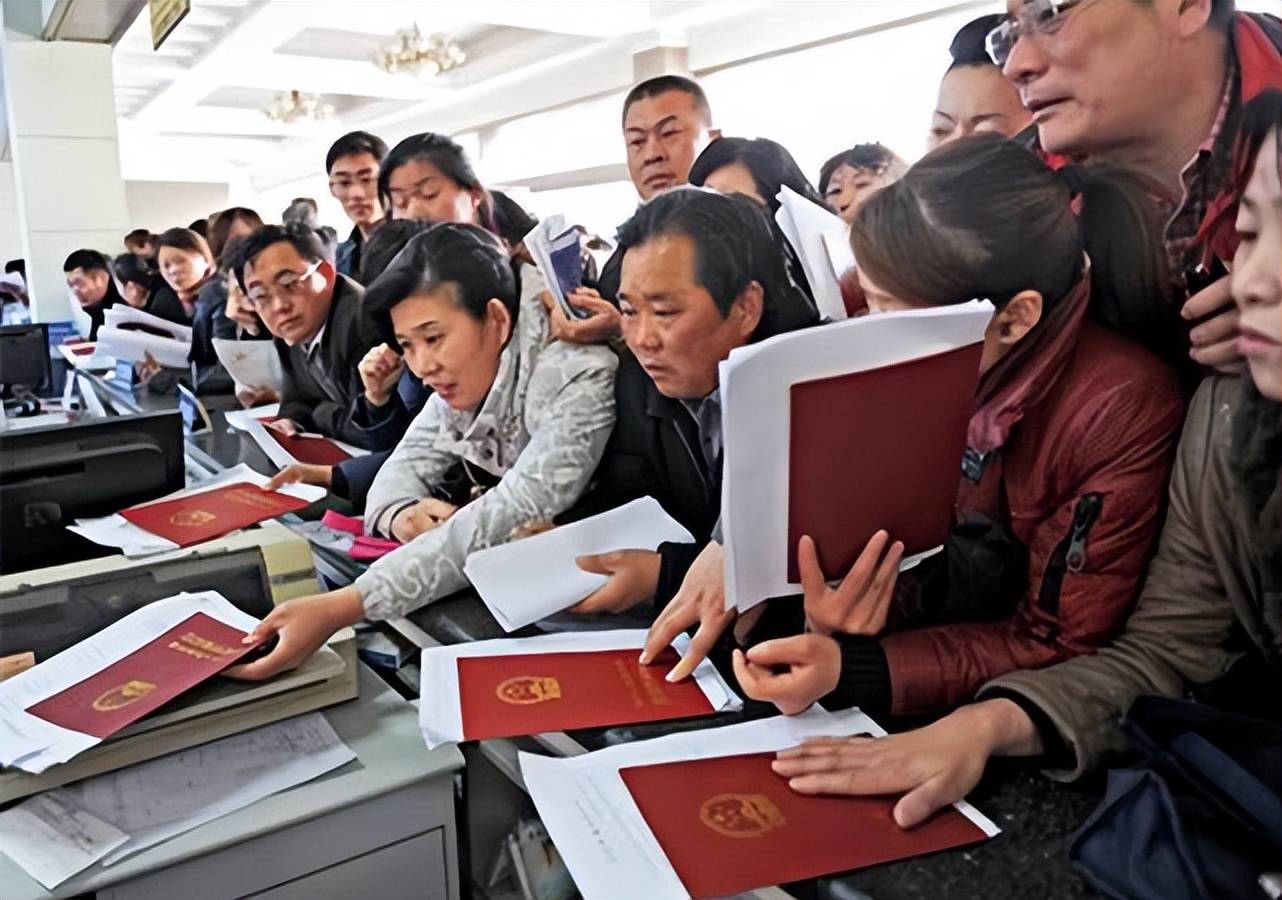
打造人才培养新生态 激活发展新动能
Yang Shi Wang· 2025-11-24 18:12
央视网消息:人才是产业升级和创新发展的关键。"十五五"规划建议提到,加快建设国家战略人才 力量,培养造就更多战略科学家、科技领军人才、卓越工程师、大国工匠、高技能人才等各类人才。各 地也不断推出新举措,打造人才培养新生态,激活发展新动能。 ...
MSCI中国指数调整揭示全球资本配置逻辑
Zheng Quan Ri Bao· 2025-11-24 16:22
Group 1 - MSCI completed its largest index adjustment of the year on November 24, 2023, adding 26 Chinese stocks (17 A-shares and 9 Hong Kong stocks) and removing 20 stocks, reflecting a significant optimization of its index composition [1] - The newly added stocks span key sectors such as semiconductors and high-end manufacturing, as well as strategic resources like gold, lithium, and copper, indicating a dual focus on technological innovation and resource value [1] - The adjustment trend aligns with MSCI's earlier index optimizations in 2023, which favored stocks with high growth potential, strong technological capabilities, and scarce industrial value [1] Group 2 - The adjustments signal three core preferences in global capital allocation: the importance of independent innovation and supply chain security, the strategic reassessment of resource assets, and a pragmatic focus on sustainable profitability and cash flow [2] - Companies with core technologies in critical areas like semiconductors and high-end manufacturing are being assigned higher "certainty premiums" amid increasing global tech competition [2] - The valuation logic for resource companies is shifting from traditional price cycles to "strategic scarcity," particularly for those with sustainable mining capabilities in high-demand metals like lithium and copper [2] Group 3 - Chinese assets are emerging as a core focus for foreign capital due to significant valuation gaps, ongoing policy liberalization, and strong industrial upgrade momentum, highlighting their long-term investment value [3] - The index adjustments are expected to guide social resources towards technology innovation and core resource sectors, while the "survival of the fittest" mechanism will compel companies to enhance their core business and profitability [3] - As China continues to make breakthroughs in technology and resource security, and as capital market openness deepens, the interaction between global capital and high-quality Chinese assets is expected to strengthen [3]
这家券商首席经济学家,获任副总裁
Zhong Guo Ji Jin Bao· 2025-11-24 15:42
11月24日晚间,粤开证券一口气发布多条公告,官宣启动新一轮战略布局。这一系列公告中,包括设立 战略协同部门、任命高级管理人员、设立40亿元产业基金等举措。 首席经济学家罗志恒获任副总裁 粤开证券公告显示,任命公司首席经济学家、研究院院长罗志恒为公司副总裁,总裁崔洪军代行首席信 息官职责,同时公司新设立一级战略协同部门。粤开证券表示,这一系列调整旨在进一步打破业务壁 垒,提升公司整体运营效率。 罗志恒成为又一位"研而优则仕"的券商首席经济学家。资料显示,罗志恒为经济学博士,主要研究方向 为宏观经济、财政理论与政策。近年来,粤开证券研究院率先走出了一条有别于传统卖方研究的、具有 粤开特色的研究之路,研究成果尤其是财政与地方债务研究成果展现出了良好的品牌效应与市场影响 力。 "此次晋升体现了粤开证券对研究业务的高度重视,研究支持业务的战略导向更加明确。"接近粤开证券 的人士透露,近年来粤开研究院在宏观、财税、大湾区和产业研究四大领域已形成鲜明特色,研究业务 正从传统的支持职能向价值创造中心转变。 同时,粤开证券披露联席总裁、首席信息官雷杰因个人原因辞任。据了解,雷杰拟赴平安证券任首席信 息官。 【导读】粤开证券启 ...
这家券商首席经济学家,获任副总裁
中国基金报· 2025-11-24 15:40
中国基金报记者 江右 粤开证券 还公告拟 通过子公司粤开资本设立总规模40亿元的产业升级股权投资合伙企业。该基金将重点布局电子信息、生物医药、新型储 能等战略性新兴产业,培育产业新动能。 【导读】粤开证券启动新一轮战略布局 11月24日晚间, 粤开证券 一口气发布多条公告,官宣 启动新一轮战略布局 。 这一系列公告中,包括 设立战略协同部门、 任命高级管理 人员 、设立40亿元产业基金等举措 。 首席经济学家罗志恒获任副总裁 粤开证券公告显示,任命公司首席经济学家、 研究院院长罗志恒 为 公司副总裁,总裁崔洪军 代行 首席信息官 职责 ,同时 公司 新设立 一级 战略协同部门。 粤开证券表示, 这一系列调整旨在进一步 打破 业务壁垒, 提升公司整体运营效率 。 罗志恒成为又一位"研而优则仕"的券商首席经济学家。资料显示,罗志恒为经济学博士,主要研究方向为宏观经济、财政理论与政策。 近 年来,粤开 证券 研究院率先走出了一条有别于传统卖方研究的、具有粤开特色的研究之路,研究成果尤其是财政与地方债务研究成果展现 出了良好的品牌效应与市场影响力。 " 此次 晋升体现了粤开证券对研究业务的高度重视,研究支持业务的战略 ...

又有两家银行AIC获批开业 为何成为银行系股权投资“新宠”?
Xin Jing Bao· 2025-11-24 13:56
Core Points - Two additional financial asset investment companies (AIC) under joint-stock banks have been approved to commence operations, namely 招银金投 (Zhaoyin Financial Investment) and 信银金投 (Xinyin Financial Investment) [1][2] - The establishment of these AICs is part of a broader trend to enhance market-oriented debt-to-equity swaps and equity investments, particularly aimed at supporting technological innovation [2][3] Summary by Sections Approval and Capitalization - 招银金投 has a registered capital of 15 billion RMB, while the other two AICs have a capital of 10 billion RMB each [2] - All three AICs are located in South China, with 兴银金投 (Xingyin Financial Investment) in Fuzhou, 招银金投 in Shenzhen, and 信银金投 in Guangzhou [2] Focus on Technology and Innovation - The AICs are targeting market-oriented debt-to-equity swap businesses and aim to empower the development of technology innovation [2][3] - AICs are seen as a crucial component in providing "patient capital" to support technology-driven enterprises, addressing the limitations of traditional bank credit [3][5] Expansion and Future Prospects - The AIC initiative has expanded since its inception in 2018, with regulatory bodies now allowing more banks to establish AICs, including six major state-owned commercial banks and three joint-stock banks [4][6] - The expansion of AICs is expected to enhance the flow of funds towards technology innovation and improve the efficiency of financial resource allocation [6] Internal Coordination and Risk Management - The internal coordination between lending and investment within banks is expected to improve efficiency and unify risk preferences, thereby better serving major national technology projects and small to medium-sized tech enterprises [5][6] - The strategy of investing early, in smaller amounts, and focusing on long-term and hard technology is anticipated to diversify income sources and mitigate the pressure from narrowing net interest margins [6]



聚力打造区域特色产业 日照创达产业集团成功发行高成长产业债
Zhong Zheng Wang· 2025-11-24 13:53
日照创达产业集团为市级国有资产运营主体,主要负责山东省日照市万平口景区、东夷小镇等重要 文旅景区及五星级酒店的运营管理,具备独特的区域文旅资源优势。公司依托日照海滨城市旅游产业优 势,推动文旅产业升级,促进产业协同与融合,赋能城市发展。公司通过产业转型,以"景区+酒店"为 核心,向上下游延伸,整合开发海洋文旅业态,形成彼此赋能、协同发展的产业链闭环,全面提升公司 盈利能力和抗风险能力。 中证报中证网讯(记者 林倩)近日,由国泰海通证券股份有限公司担任独家主承销商的日照创达 产业集团有限公司2025年面向专业投资者非公开发行公司债券(第一期)(高成长产业债)在上海证券 交易所成功发行。本期债券发行规模6亿元,票面利率2.54%。 本次高成长产业债成功发行是日照创达产业集团自身发展的关键一步,更是对日照市文旅产业发展 的一次有力赋能。日照创达产业集团表示,将以此次高成长产业债发行为契机,构筑产业升级新格局, 向"新"而行,向"海"图强,不断为日照市文旅产业高质量发展注入澎湃动力。 ...
中国南方五省区10月用电量实现两位数增长
Zhong Guo Xin Wen Wang· 2025-11-24 13:12
Group 1 - In October, the total electricity consumption in five provinces of Southern China (Guangdong, Guangxi, Yunnan, Guizhou, Hainan) reached 160.3 billion kWh, marking a year-on-year increase of 10%, the first double-digit growth since February of this year, indicating steady economic progress in the region [1] - By industry, the first, second, and third sectors, along with urban and rural residential electricity consumption, saw year-on-year increases of 6.6%, 6.5%, 12%, and 21.7% respectively [1] - Over 70% of industries in the region experienced positive growth in electricity consumption, with nearly 40% of industries showing growth rates exceeding 10% [1] Group 2 - The electricity consumption in the high-tech and equipment manufacturing sectors, as well as the digital economy, showed significant performance, with high-tech and equipment manufacturing electricity consumption increasing by 6.7% year-on-year [1] - In October, the electricity consumption for the automotive manufacturing industry and new energy vehicle manufacturing in the Southern provinces grew by 2.8% and 30.2% year-on-year, respectively [2] - In Guangdong, a major automotive manufacturing province, the electricity consumption for these two sectors increased by 12.2% and 33% year-on-year [2]