
双碳

Search documents
报告显示,中外企业绿色供应链建设步入“纵深推进”的关键阶段
Zhong Guo Xin Wen Wang· 2025-11-06 16:50
Core Insights - The public environmental research center (IPE) released the annual report on the green supply chain CITI index and climate action CATI index, indicating that both domestic and foreign enterprises are entering a critical phase of "in-depth advancement" in green supply chain construction [1] - The year 2025 marks the tenth anniversary of the Paris Agreement and the fifth anniversary of China's "dual carbon" goals, with international efforts yielding some results and China playing a leading role in promoting energy transition and green low-carbon supply chain construction [1] Summary by Categories Green Supply Chain Development - The CITI index evaluation shows that managing environmental and climate risks in supply chains has become a common consensus among enterprises, with nearly 80% of companies disclosing progress in environmental compliance and improvement [1] - Despite significant progress, there remains a gap between the "commitment" and "implementation" of supply chain environmental management and climate action, with over 40% of companies that publicly committed to green supply chain construction not disclosing their green procurement progress [1] Corporate Actions and Recommendations - More than 60% of enterprises have not effectively promoted carbon management in their supply chains, and only 5% have advanced climate information disclosure within their supply chains, indicating that actual measurement data is not being fully utilized by leading companies [1] - In light of weakened global climate governance mechanisms, the report advocates for a multi-stakeholder governance mechanism involving government, enterprises, financial institutions, and consumers to address the core challenge of green premiums and inject new momentum into green low-carbon supply chain construction [2] - The report also suggests that enterprises should deepen research on industry decarbonization pathways and technologies, enhance supplier capacity building, and build trust with stakeholders through comprehensive environmental information disclosure [2]
债市“科技板”落地半年 发行规模达1.38万亿元
Zheng Quan Ri Bao· 2025-11-06 16:07
Core Viewpoint - The technology innovation bond market in China has shown significant growth in the past six months, with a total issuance of 1,186 bonds amounting to 1.38 trillion yuan, indicating a strong demand for financing in the tech sector [1][2]. Group 1: Market Growth and Trends - The issuance of technology innovation bonds (科创债) has reached a new high in the primary market, accounting for 77% of the total bonds issued this year, with a market share of 81% in terms of issuance scale [1][2]. - The market is characterized by a simultaneous increase in volume and price, along with an optimization of structure, making it a crucial financial tool for supporting high-quality development in technology innovation and the real economy [1][2]. Group 2: Diversification of Issuers - The issuance of technology innovation bonds has expanded significantly due to policy support, with a diversification of issuers including financial institutions and private enterprises, moving from a state-owned enterprise-dominated structure to a more market-oriented one [2][3]. - Financial institutions and investment firms are increasingly participating in the issuance of these bonds, with examples such as Chongqing Three Gorges Bank issuing 2.5 billion yuan in five-year technology innovation bonds [2][3]. Group 3: Financing Costs and Investment Focus - Since May, the average interest rate for technology innovation bonds has stabilized around 2%, which is significantly lower than that of general credit bonds, providing a substantial interest rate advantage for technology companies and venture capital institutions [3][4]. - The funds raised through these bonds are primarily directed towards cutting-edge fields such as artificial intelligence, semiconductors, biomedicine, and high-end manufacturing, creating a closed-loop system of issuance, investment, and exit [3][4]. Group 4: Support for Hard Technology Enterprises - Technology innovation bonds are becoming the largest source of financing for technology companies, particularly in sectors with long R&D cycles and high capital demands, such as biomedicine and new materials [4][5]. - The issuance of these bonds is increasingly aligned with the long-term financing needs of companies, with a shift towards longer-term bonds (3 to 5 years), which helps mitigate liquidity risks associated with short-term debt [4][5]. Group 5: Market Dynamics and Future Outlook - The issuance pace of technology innovation bonds has accelerated since late October, with a peak issuance of 16.95 billion yuan on a single day, reflecting strong market demand and investor interest [5]. - Analysts predict that technology innovation bonds will continue to expand, driven by ongoing policy support, improved liquidity, and a diverse range of investor participation, positioning them as a significant growth area in the credit bond market [5].
大涨173%!又一生物基材料企业上市
DT新材料· 2025-11-06 16:05
Core Viewpoint - Suzhou Fengbei Biotechnology Co., Ltd. has officially listed on the stock market, marking a milestone in its journey to become a leader in the comprehensive utilization of waste oil resources, being recognized as the "first stock for waste oil resource utilization" [2] Group 1: Business Overview - Fengbei Biotechnology focuses on the comprehensive utilization of natural oil resources, successfully establishing a green industrial chain from "waste oil - biodiesel - bio-based materials" [2] - The company has shown steady revenue growth, with projected revenues for the first three quarters of 2025 expected to be between 2.1 billion and 2.3 billion yuan, representing a year-on-year increase of 51.4% to 65.82% [5][6] Group 2: Financial Performance - Revenue increased from 1.709 billion yuan in 2022 to 1.948 billion yuan in 2024, with a compound annual growth rate of 6.8% [5] - The revenue for the first half of 2025 is projected to be 1.478 billion yuan, a year-on-year increase of 15.3% [5] - The company has implemented two dividend distributions prior to the IPO, reflecting a solid financial foundation and confidence in future growth [7] Group 3: Technological Innovation - Fengbei Biotechnology has invested significantly in R&D, with expenses consistently high, and holds 135 patents, including 33 domestic invention patents [9][10] - The company has developed a unique technology system that reduces energy consumption to less than half of traditional processes, achieving product purity above 99.5% [5] - The company has been recognized as a national-level specialized and innovative small giant enterprise, indicating its strong technological capabilities [10] Group 4: Market Opportunities - The company is well-positioned to benefit from national policies promoting the development of circular economy and biofuels, with significant potential in the waste oil resource market [12][13] - China generates over 12 million tons of waste oil annually, providing ample raw material for the industry [13] - The global biodiesel consumption is projected to grow at a compound annual growth rate of 7.16% from 2023 to 2028, indicating a growing market demand [13] Group 5: Strategic Partnerships - Fengbei has established a diverse customer base, including partnerships with global giants like TRAFIGURA, GLENCORE, and SHELL in the biofuel sector [11] - The company has signed strategic cooperation agreements with several enterprises in the emerging market of marine biofuels, indicating its proactive market expansion strategy [13]

科陆电子:新兴产业快速发展,带动全球电力需求不断增长,将积极把握发展机遇
Zheng Quan Shi Bao Wang· 2025-11-06 14:52
Core Viewpoint - The acceleration of building a new power system dominated by renewable energy in China is driven by the "dual carbon" goals, leading to sustained high investment levels in the electricity sector [1] Industry Summary - China's total investment in the electricity sector has remained at a high level in recent years, reflecting ongoing commitment to energy transition [1] - Continuous deepening of electricity market reforms is expediting the entry of virtual power plants into the market, integrating resources like energy storage for market transactions [1] - The steady promotion of green electricity trading is creating broader market opportunities for energy storage [1] - Rapid development of emerging industries such as large models, data centers, and artificial intelligence is driving global electricity demand, resulting in urgent needs for energy storage and electrical equipment [1] Company Summary - The company will closely monitor market changes and leverage its technological accumulation and market demand to actively seize development opportunities [1]

川润股份:与西门子签署战略合作协议 抢占AI、液冷与能源数字化产业风口
Zhong Zheng Wang· 2025-11-06 12:49
Core Insights - Sichuan Chuanrun Co., Ltd. and Siemens (China) Co., Ltd. signed a strategic cooperation agreement during the 8th China International Import Expo, focusing on AI computing power, data centers, zero-carbon energy solutions, and industrial AI integration to promote high-quality development in the green digital industry [1][2] Group 1: Strategic Cooperation Focus - The collaboration will leverage the explosive growth in global AI computing power demand and the acceleration of zero-carbon energy initiatives under the "dual carbon" goals, aligning with current market development directions [2] - The partnership aims to create high-performance, low Power Usage Effectiveness (PUE) green computing solutions and replicable zero-carbon benchmark projects, enhancing economic solutions for the industry [2][3] Group 2: Three Key Areas of Cooperation - The first focus area is green computing infrastructure, where Chuanrun will utilize its liquid cooling technology (with a PUE as low as 1.05 and reliability of 5000 insertions without leakage) combined with Siemens' smart microgrid and AI algorithms to address high energy consumption in AI data centers [3] - The second area involves the large-scale implementation of zero-carbon parks, integrating Chuanrun's energy power system capabilities with Siemens' energy carbon management platform to create efficient and energy-saving zero-carbon park models [3] - The third area is AI innovation applications, where both companies will establish a joint laboratory for smart microgrids and zero-carbon technologies to develop predictive maintenance and carbon management services, tapping into the digital market potential [3] Group 3: Long-term Value Enhancement - Siemens' Digital Empowerment Center manager expressed enthusiasm for collaborating with Chuanrun, highlighting the impressive potential and speed of the Chinese market in green computing and zero-carbon energy transition [4] - Chuanrun's president noted that the partnership will accelerate the company's strategic upgrade in green energy equipment and digital services, aiming to create a first-mover advantage in emerging sectors like AI computing liquid cooling and green energy [4] - The collaboration is expected to strengthen Chuanrun's position in high-end energy equipment and provide a certain momentum for long-term growth through joint technological innovations and benchmark project implementations [4]

11月6日闽东电力(000993)涨停分析:业绩增长、新能源拓展、国企改革驱动
Sou Hu Cai Jing· 2025-11-06 07:32
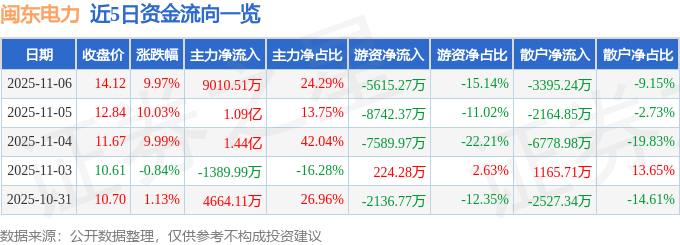
Core Viewpoint - The stock of Mindong Electric Power reached its daily limit on November 6, closing at 14.12 yuan, driven by strong financial performance and strategic expansion in renewable energy [1] Financial Performance - The company's net profit attributable to shareholders for the first three quarters of 2025 increased by 32.38% year-on-year, indicating sustained high growth in performance [1] - Real estate business revenue surged by 363.59% year-on-year, contributing to diversified profit support [1] Business Expansion - Mindong Electric Power has accelerated its expansion in the renewable energy sector, having established six distributed photovoltaic power stations and advancing offshore wind power projects, aligning with the "dual carbon" policy direction [1] Market Sentiment and Capital Flow - On November 6, the net inflow of main funds was 90.1 million yuan, accounting for 24.29% of the total trading volume, while retail investors experienced a net outflow of 33.95 million yuan, representing 9.15% of the total trading volume [1][2] - The stock is categorized as a hot stock in the non-ferrous metals, hydropower, and wind power sectors, with respective increases of 2.15%, 1.67%, and 1.29% in these sectors on the same day [2] Regional and Policy Factors - As a state-owned enterprise in Fujian Province, Mindong Electric Power benefits from cross-strait concepts and expectations of state-owned enterprise reforms, which are catalyzed by regional policies [1]

华润万象生活与开云集团开启长期可持续发展战略合作
Di Yi Cai Jing· 2025-11-06 05:57
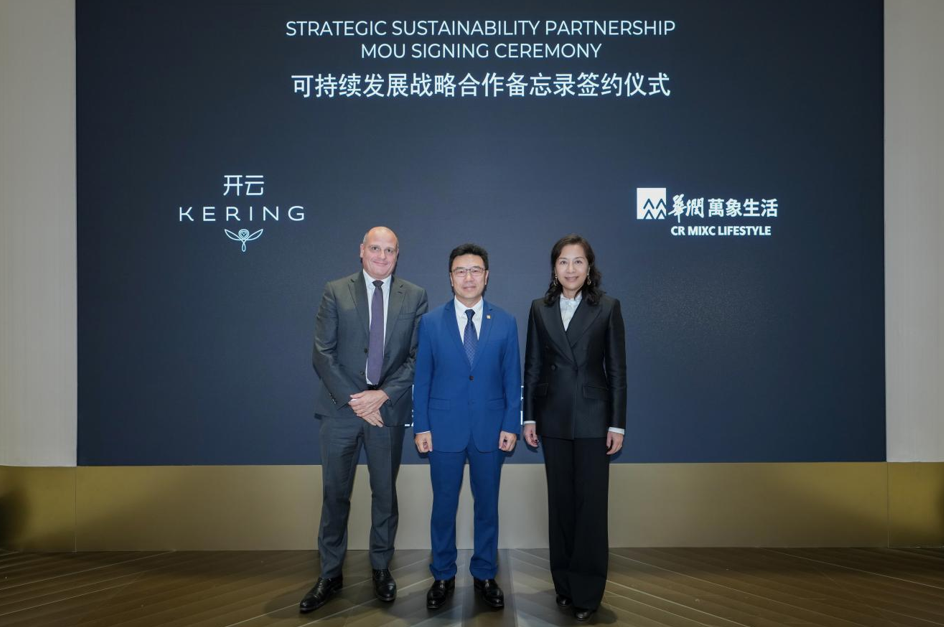
Core Viewpoint - China Resources Vientiane Life and Kering Group have established a strategic partnership focused on sustainable development, initiating a "Sustainable Development Strategic Cooperation Plan" to promote zero-carbon stores and advocate for sustainable lifestyles [1][3]. Group 1: Partnership and Objectives - The partnership aims to integrate China's "dual carbon" strategy with green building standards, creating a template for sustainable retail stores in China [1][3]. - The collaboration includes a clear short, medium, and long-term cooperation path, focusing on energy efficiency, green electricity application, and carbon management [3]. - The partnership is supported by a joint research and development center established by China Resources Land and Tsinghua University, ensuring innovative and professional practices throughout the project lifecycle [3]. Group 2: Commitment to Sustainability - The partnership responds to national "dual carbon" goals and aims to exceed China's green building standards, establishing a benchmark for international brands in the Chinese market [3]. - The collaboration is expected to provide Kering with a replicable and efficient model for sustainable stores, accelerating the zero-carbon transformation of its brands in China [3]. Group 3: Leadership and Recognition - China Resources Vientiane Life has been recognized for its commitment to responsible development and sustainable practices, being listed in the "China ESG Pioneer 100" for three consecutive years and achieving an "A" MSCI ESG rating [5]. - Kering Group has a strong commitment to sustainability, consistently recognized as an industry leader by various non-financial rating agencies and lists, including being named a top sustainable company in the "Global 100" [6].
异动盘点1106 | 光伏股集体走高,芯片股早盘走高;美股存储概念股集体大涨,加密货币概念股走高
贝塔投资智库· 2025-11-06 04:05
Group 1: Solar Industry - The solar stocks collectively rose, with New Special Energy up 5.44%, Xinyi Energy up 6.3%, and Xinyi Solar up 5.04%, following a report on the solar industry by CCTV2 highlighting high-quality development practices [1] - The new energy storage capacity in China exceeded 100 million kilowatts by the end of September, representing a growth of over 30 times compared to the end of the 13th Five-Year Plan, making China the world's largest in this sector [3] Group 2: Insurance Sector - New China Life Insurance reported a 18.6% year-on-year increase in original insurance premium income to 172.705 billion yuan for the first three quarters of 2025, with renewal premium income rising 5.9% to 114.62 billion yuan [1] Group 3: Semiconductor Industry - Semiconductor stocks saw gains, with SMIC up 5.1% and Hua Hong Semiconductor up 3.6%, driven by AI and self-sufficiency trends, with over half of the 146 A-share semiconductor companies expected to achieve record quarterly revenues by 2025 [2] Group 4: Medical Technology - Jin Hai Medical Technology's stock rose over 15% as it announced a collaboration with Medtronic China to launch innovative navigation technology for spinal endoscopy, aimed at enhancing precision and efficiency in spinal surgeries [3] Group 5: Mining and Metals - China Daye Nonferrous Metals surged nearly 20% following news that Glencore plans to close its copper smelter in Canada due to high environmental upgrade costs and stringent regulations [4] Group 6: Digital Advertising - Huimai Technology's stock increased over 6% after AppLovin reported better-than-expected financial results for Q3 2025 and an optimistic outlook for Q4, highlighting the growth potential in programmatic advertising [2] Group 7: AI and Technology - Hong Teng Precision's stock rose over 4.9% as AI server business became a growth engine, with October revenue reaching a record high for the company [4]

金融与科技双向赋能,中泰证券书写“美美与共”的生动实践
Sou Hu Cai Jing· 2025-11-06 02:56
Core Viewpoint - The article emphasizes the role of the securities industry in supporting national strategies and deepening financial supply-side reforms, particularly through technological and digital finance initiatives [1]. Group 1: Technological and Digital Finance - The Central Financial Work Conference highlights the importance of technological finance and digital finance, reflecting the government's commitment to supporting technological innovation through financial services [1]. - Zhongtai Securities focuses on serving the real economy by enhancing its technological capabilities and supporting technological innovation [1][3]. Group 2: Successful IPOs and Industry Leadership - Zhongtai Securities sponsored the successful IPO of Haibo Sichuang on the Shanghai Stock Exchange, marking it as the first successful listing in China's new energy storage sector [2]. - The company undertook innovative efforts to understand the industry and the company’s technological attributes, which were crucial for the IPO process [2][3]. Group 3: Investment and Financing Support - Zhongtai Securities has provided significant support to over 14 technology companies, achieving equity financing of 6.745 billion yuan, with a strong presence in the IPO market [3][6]. - The company has also issued 58 technology bonds, raising 12.264 billion yuan, showcasing its commitment to innovative financing solutions [3]. Group 4: Digital Transformation and Financial Technology - Zhongtai Securities is committed to digital transformation, investing over 1 billion yuan annually in technology, and has established a professional fintech team of over 650 members [7][8]. - The company has developed a leading digital customer service and marketing system, enhancing its wealth management capabilities [8]. Group 5: Support for Specialized Enterprises - The Qilu Equity Trading Center, a subsidiary of Zhongtai Securities, has launched a specialized board for "specialized, refined, distinctive, and innovative" enterprises, serving over 2,300 companies [5]. - The center aims to provide comprehensive services to specialized enterprises, facilitating their growth and listing processes [5].


英大证券晨会纪要-20251106
British Securities· 2025-11-06 02:48
Group 1 - A-shares demonstrate resilience amidst global market fluctuations, supported by long-term funds like insurance and pension investments, alongside company buybacks [2][9][10] - The dual drivers of industrial upgrades and policy benefits are providing support to the market, with expectations for stable growth emerging from important year-end meetings [2][9] - Micro-level changes in industries, such as the continuous penetration of new energy vehicles and substantial progress in semiconductor localization, are reshaping profit expectations for listed companies [2][10] Group 2 - Recent market activity shows a mixed sentiment, with shrinking trading volumes indicating that investor enthusiasm has not fully recovered, and the technology sector's divergence may limit index recovery [3][10] - The investment strategy suggests a balanced allocation approach, focusing on technology growth sectors like AI, semiconductors, and robotics, as well as high-dividend defensive sectors such as banking and utilities [3][10] - The cyclical style, including sectors like photovoltaic, battery, energy storage, and rare earths, is expected to benefit from policy changes aimed at optimizing industry structures and improving profitability [3][10] Group 3 - The recent surge in Hainan Free Trade Zone stocks is attributed to the imminent launch of the free trade port operations, expected to officially start on December 18 this year [8] - The new energy sector is anticipated to experience a technical rebound, driven by ongoing global efforts to achieve carbon neutrality and the demand for lithium batteries, photovoltaics, and wind energy [7][10]