中美经贸关系

Search documents
“成长未必长期跑赢价值,股市风格轮动或更频繁” 中金公司最新研判!
Zhong Guo Ji Jin Bao· 2025-11-17 14:55
Group 1 - The core theme of the 2026 investment strategy meeting held by CICC is "Seizing Opportunities and Planning for the Future," focusing on market themes and attracting over 4,500 participants [1] - CICC's Chief Strategy Analyst, Miao Yanliang, indicates that the US-China economic relationship has entered a "fragile balance," suggesting that while both countries have enough leverage for negotiations, tail risks still exist [2][3] - Miao believes that the current gold bull market may not be fully realized, presenting good medium to long-term allocation value, especially in light of the accelerating reconstruction of the international monetary order [2] Group 2 - Miao highlights that during technological revolutions, growth often outpaces value, but the current AI revolution may see more frequent style rotations in the stock market due to increased uncertainty in economic activities [3] - The analysis of market styles shows that since the launch of ChatGPT in November 2022, US stocks have consistently outperformed value stocks, while non-US markets have seen value outperform growth, indicating that not all economies will benefit equally from technological advancements [3] - CICC's Chief Analyst for Nonferrous Metals, Qi Ding, points out that the deepening trend of de-globalization and high US interest rates are leading to significant inflows into gold ETFs, reflecting a "de-dollarization" trend [4] Group 3 - Qi anticipates that basic metals like copper, aluminum, and tin will perform well in 2026 due to rising demand from AI, electricity, new energy, and high-end manufacturing, coupled with insufficient capital expenditure on the supply side [4] - The report suggests that strategic metals such as cobalt, natural uranium, tungsten, rare earths, and antimony will maintain a bull market due to increasing control and stockpiling by resource countries, leading to a systematic price increase [4] - Overall, the nonferrous metals sector is expected to experience significant development opportunities, driven by rising prices and supportive policies for critical mineral resources [4]

东航物流(601156):压力测试凸显韧性,上行拐点逐步显现
Changjiang Securities· 2025-11-17 08:29
Investment Rating - The investment rating for the company is "Buy" and is maintained [6]. Core Views - The company reported a revenue of 59.9 billion yuan in Q3 2025, a year-on-year decline of 6.2%, and a net profit attributable to shareholders of 7.1 billion yuan, down 9.8% year-on-year. The decline in revenue was influenced by the cancellation of U.S. small package tariff policies, which led to a decrease in cross-border e-commerce cargo volume [2][4]. - Despite the revenue decline, the company's gross profit margin improved by 1.6 percentage points to 21.6% in Q3, indicating stable profitability. The company has been actively introducing cargo aircraft and optimizing operational routes, which contributed to this improvement [2][8]. - The report highlights that the company has passed stress tests, demonstrating resilience. With the improvement in China-U.S. trade relations, there are opportunities for recovery in general cargo demand, and freight rates are expected to have upward elasticity [2][8]. Summary by Sections Financial Performance - For the first three quarters of 2025, the company reported total revenue of 172.5 billion yuan, a decrease of 2.4% year-on-year, and a net profit of 20.0 billion yuan, down 3.2% year-on-year. In Q3 alone, revenue was 59.9 billion yuan, and net profit was 7.1 billion yuan [4][6]. - The revenue breakdown for Q3 shows that air express services, ground comprehensive services, and comprehensive logistics solutions generated revenues of 27.9 billion yuan, 7.0 billion yuan, and 25.0 billion yuan, respectively, with year-on-year changes of +22.6%, +9.2%, and -27.9% [8]. Operational Insights - The average TAC price index decreased by approximately 6% year-on-year, and the average utilization rate of cargo aircraft fell by about 12%. However, the number of available cargo aircraft increased year-on-year, and the company adjusted its operational routes to enhance efficiency [8]. - The company faced increased financial expenses due to rising leasing debts from new aircraft acquisitions, and government subsidies decreased, impacting profits [8]. Future Outlook - The report anticipates that the net profit attributable to shareholders will be 26.5 billion yuan, 29.5 billion yuan, and 33.5 billion yuan for the years 2025 to 2027, corresponding to P/E ratios of 10.1, 9.0, and 8.0 times, respectively [8].

中国恢复稀土供应却暗藏杀招?美国会:中国子弹已经上膛
Sou Hu Cai Jing· 2025-11-15 09:10
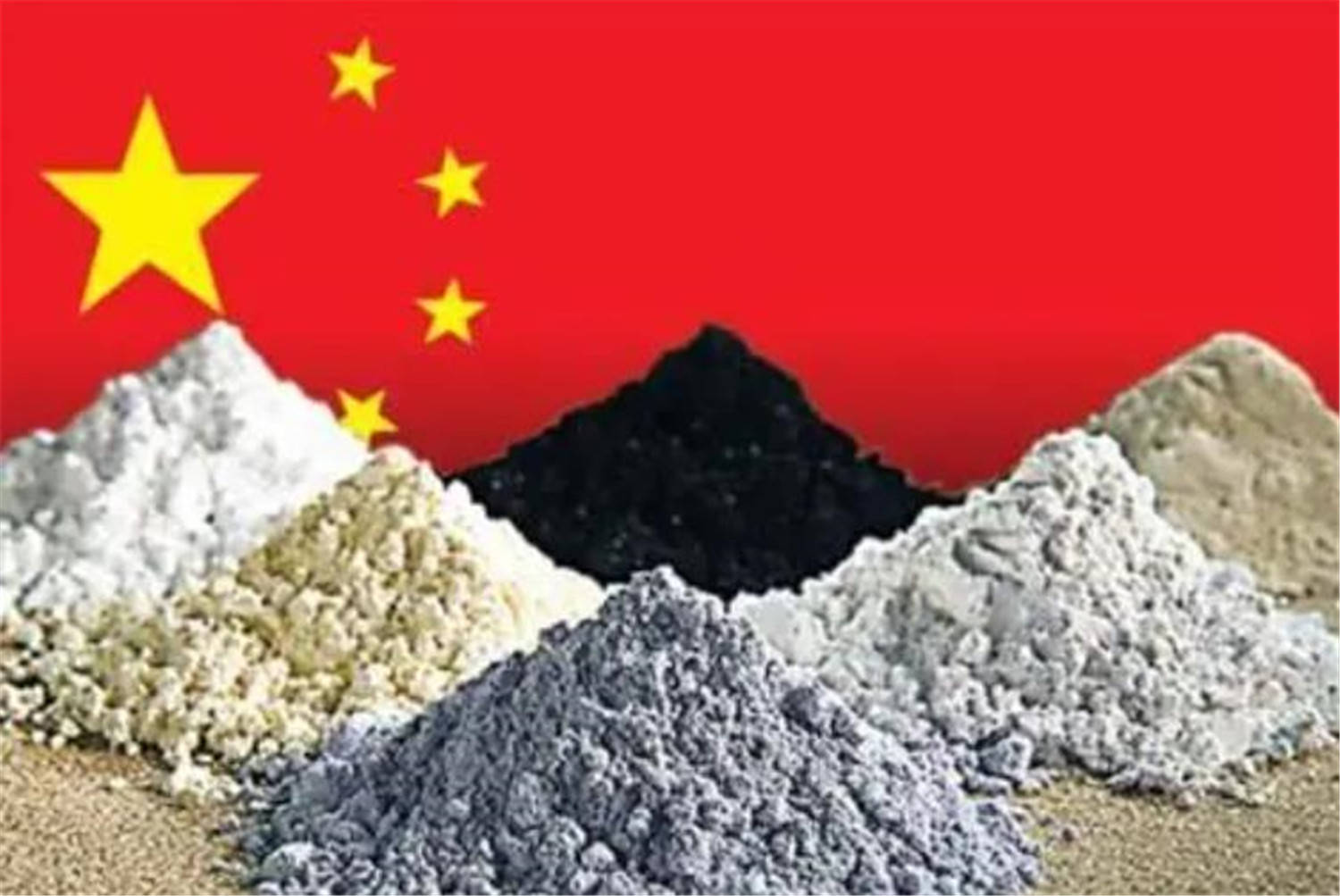
美国众议院的这些指责显然颠倒黑白。他们从未提到,中国为何要动用稀土这张王牌。其实,正是美国在特朗普执政时期发起了对中国的关税战争,尽管中 国一再劝解,希望通过和平方式实现互利共赢,但美国坚持对中国发动贸易攻击。面对美国的不听劝告,中国最终被迫采取反制措施,并在适当的时候拿出 了稀土这一"王牌",迫使美国回到谈判桌上,才有了中美之间的短期"休战"。实际上,稀土这一反制手段并非中国主动出击,而是美国的咄咄逼人促使了中 国的回应。那么,美国现在又有什么资格指责中国呢? 讽刺的是,这一策略其实是美国此前采取过的一种做法。美国在化学品和芯片的出口控制中,曾经使用了类似的简化供应体系。如今,中国将这一策略借鉴 并加以运用,用于应对美国。这种做法可谓是"以其人之道还治其人之身",美国似乎被自己的做法反噬。 当然,这个新供应体系是否能够顺利实施,还需要看美国的态度。如果在这一年暂时休战期结束后,美国发现自己仍然无法解决稀土问题,那么美国很可能 会回到谈判桌上,接受中国的条件。届时,这个新供应体系将成为中国在谈判中一个重要的筹码。如果美国仍然坚持不认输,这个体系将会严格执行,以此 来打击美国的嚣张气焰。 对于中国的这一做法,美 ...

希望圣诞节不要“被偷走”——美国商户期待中国商品进口回正轨
Sou Hu Cai Jing· 2025-11-11 17:50
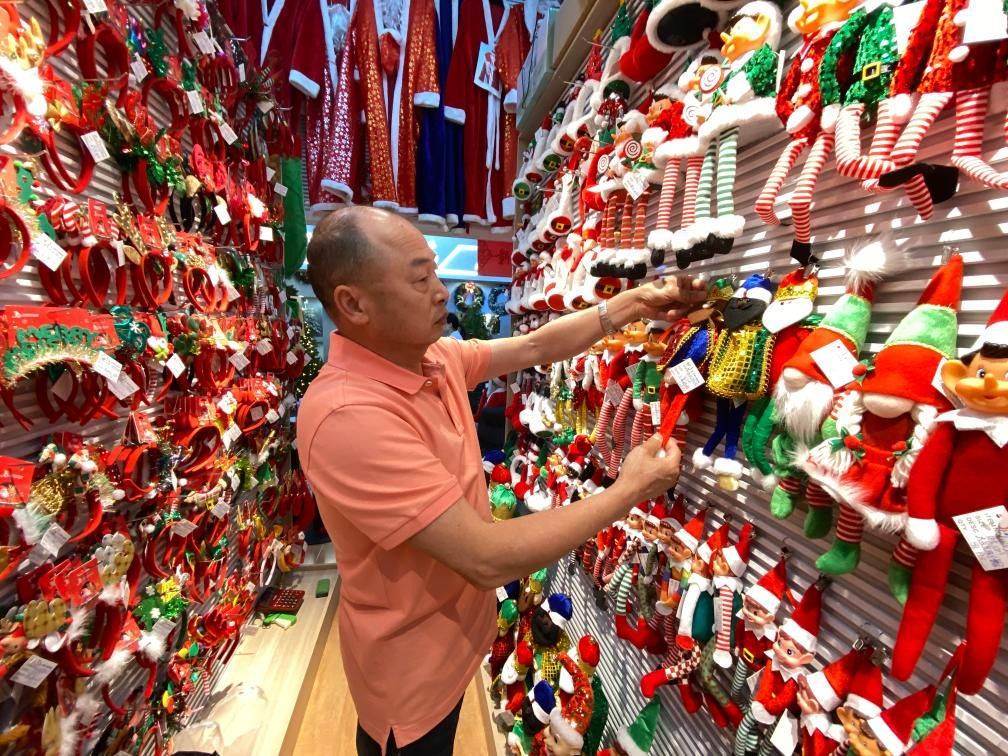
Core Insights - The article discusses the impact of U.S. tariffs on Christmas merchandise imports from China, warning of potential shortages and higher prices for American consumers this holiday season [1][5][9] Group 1: Trade Dynamics - Traditionally, U.S. importers place orders in spring, with Chinese factories producing goods in summer, leading to timely shipments for the holiday season. This cycle has been disrupted by recent tariff policies [1] - In 2023, U.S. Christmas merchandise imports are expected to be significantly affected, with a notable decrease in the volume of imports, particularly Christmas trees and decorations [5][7] Group 2: Export Performance - Yiwu, known as the "world supermarket," has seen a 22.9% year-on-year increase in Christmas product exports, totaling 5.17 billion RMB in the first three quarters of 2023 [3][4] - Exporters in Yiwu are adapting to the challenging trade environment by diversifying their markets and increasing inventory in anticipation of demand [4][5] Group 3: Price Implications - The CEO of a major U.S. artificial Christmas tree importer reported a 25% reduction in imports from China, with prices expected to rise by 10% or more due to increased costs associated with U.S. manufacturing [5][7] - The overall sentiment among U.S. retailers indicates that consumers will face higher prices and limited choices for Christmas products this year, particularly affecting low-income families [5][8] Group 4: Economic Context - The article highlights broader economic challenges in the U.S., including rising inflation and employment risks, which are contributing to a decrease in consumer spending for the holiday season [8] - A survey indicates that average holiday spending per person is expected to drop by 5% compared to 2024, marking the largest decline since 2020 [8]
事关中美,商务部最新回应!
证券时报· 2025-11-11 15:33
Group 1 - The U.S. Department of Commerce announced a one-year suspension of the export control penetration rules, which will not impose additional export control sanctions on companies with over 50% ownership by entities listed on the U.S. export control "entity list" during this period [2] - This suspension is seen as an important measure to implement the consensus reached during the China-U.S. Kuala Lumpur economic and trade consultations [2] - Both sides are committed to enhancing dialogue and cooperation to manage differences and promote mutual benefits in business collaboration [2] Group 2 - The outcomes of the China-U.S. Kuala Lumpur economic and trade consultations include the cancellation of the 10% "fentanyl tariff" on Chinese goods and the continuation of a one-year suspension of the 24% reciprocal tariffs on Chinese products [3] - The U.S. will also suspend the implementation of its 50% export control penetration rules for one year, while China will pause its related export control measures for the same duration [3] - Both parties agreed to extend certain tariff exclusion measures and confirmed cooperation on issues such as fentanyl control, agricultural trade expansion, and specific enterprise case handling [3]

商务部国际贸易谈判代表兼副部长李成钢会见美国KKR投资集团联席首席执行官裴容范
Di Yi Cai Jing· 2025-11-11 07:20
Core Insights - The meeting between China's Vice Minister of Commerce Li Chenggang and KKR's Co-CEO Henry Kravis focused on U.S.-China economic relations and China's foreign opening-up policy [1] Group 1: U.S.-China Economic Relations - Li Chenggang highlighted the importance of the recent meeting between the two countries' leaders in Busan, South Korea, emphasizing the need for partnership and friendship [1] - Since May, both sides have held five rounds of consultations guided by the leaders' consensus, achieving a series of agreements aimed at stabilizing U.S.-China economic relations [1] Group 2: China's Foreign Opening-Up Policy - China is committed to high-level foreign opening-up, actively aligning with international high-standard economic and trade rules, particularly focusing on expanding market access in the service sector [1] - This policy is expected to create new investment opportunities for foreign enterprises, including those from the U.S. [1] Group 3: KKR's Perspective - KKR expressed support from the U.S. business community for maintaining contact and dialogue at all levels between the two countries, which is beneficial for practical bilateral cooperation [1] - KKR values the Chinese and Asian markets and maintains a long-term investment strategy, showing confidence in the long-term performance of the Chinese economy [1]

金价连涨3日!美联储官员力挺降息!国成矿业二连板,有色龙头ETF仍在所有均线上方,上行动能强劲
Xin Lang Ji Jin· 2025-11-11 07:08
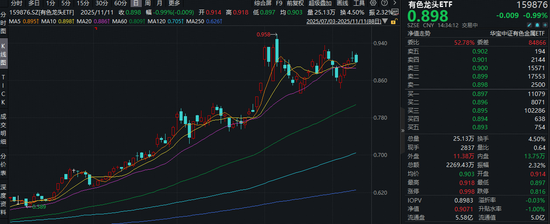
Group 1: Gold Market Insights - Gold prices continue to rise, with COMEX gold reaching $4155 per ounce, marking a three-day increase [1] - The U.S. government shutdown has lasted 40 days, with President Trump indicating a potential resolution is near [1] - The Federal Reserve is expected to lower interest rates by at least 25 basis points, with a 50 basis point cut deemed appropriate [1] - The People's Bank of China has increased its gold holdings for the 12th consecutive month, supporting the macroeconomic foundation for gold prices [1] - Citic Securities identifies five categories of downward risks for gold prices, which are currently not significant [1] Group 2: Non-Ferrous Metals Sector - Analysts suggest focusing on the entire non-ferrous metals sector rather than individual metals, with positive macroeconomic expectations from U.S.-China trade talks [2] - Continuous interest rate cuts by the Federal Reserve and potential liquidity improvements are expected to benefit copper and aluminum prices [2] - The lithium sector is experiencing strong demand due to energy storage needs and anticipated purchasing tax changes for electric vehicles, leading to increased lithium prices [2] Group 3: ETF Performance and Market Trends - The non-ferrous metals ETF (159876) saw an early gain of over 1% but later adjusted to a decline of 0.99%, maintaining a strong technical position above moving averages [3] - Key stocks in the ETF include Guocheng Mining and Huayu Mining, which have shown significant gains, while companies like Zhongfu Industrial and Tianqi Lithium have faced declines [3] - The non-ferrous metals sector is characterized by varying degrees of market performance, suggesting a diversified investment approach may be beneficial [5]



李成钢国际贸易谈判代表兼副部长会见美国KKR投资集团联席首席执行官裴容范
Ge Long Hui· 2025-11-11 06:58
Core Viewpoint - The meeting between China's trade representative Li Chenggang and KKR's co-CEO Henry Kravis highlights the ongoing dialogue between China and the U.S. regarding economic relations and investment opportunities in China [1] Group 1: China’s Economic Policy - China is committed to high-level opening up and aligning with international high-standard economic and trade rules [1] - The focus is on expanding market access and opening up sectors, particularly in services, which will create new investment opportunities for foreign enterprises, including U.S. companies [1] Group 2: U.S. Business Perspective - The U.S. business community supports maintaining contact and dialogue at all levels between the two countries, which is beneficial for practical bilateral cooperation [1] - KKR emphasizes its long-term investment strategy and confidence in the long-term performance of the Chinese economy, indicating a strong interest in the Chinese and Asian markets [1]
李成钢会见美国KKR投资集团联席首席执行官裴容范
Xin Lang Cai Jing· 2025-11-11 06:55
Group 1 - The meeting between China's Vice Minister of International Trade Negotiations, Li Chenggang, and KKR's Co-CEO, Henry Kravis, focused on Sino-U.S. economic relations and China's foreign opening-up policy [1] - Since May, the economic teams of both countries have held five consultations, achieving a series of agreements to stabilize Sino-U.S. economic relations [1] - China is committed to high-level foreign opening-up, aiming to align with international high-standard economic and trade rules, particularly expanding market access in the service sector, which presents new investment opportunities for foreign enterprises, including U.S. companies [1] Group 2 - KKR emphasizes the importance of maintaining contact and dialogue at all levels between the U.S. and China, which is beneficial for practical bilateral cooperation [1] - KKR values the Chinese and Asian markets and adheres to a long-term investment strategy, expressing confidence in the long-term performance of the Chinese economy [1]
大外交|元首会晤后中美连续释放经贸缓和信号,专家:美方勿轻易打破共识
Xin Lang Cai Jing· 2025-11-10 12:22
Core Points - The Chinese Ministry of Commerce announced a series of measures to suspend export controls and countermeasures against U.S. companies, reflecting a shift towards stabilizing U.S.-China trade relations following a summit between the two nations' leaders [2][5][6] - The suspension includes specific export controls on dual-use items and certain materials, which are crucial for various industries, indicating a potential easing of trade tensions [4][8] Group 1: Policy Adjustments - The Ministry of Commerce's decision to suspend countermeasures against five U.S. subsidiaries of Hanwha Ocean Co., Ltd. will take effect on November 10, 2025, for one year [2][5] - The suspension of the 2024 No. 46 announcement, which primarily targeted dual-use items for export to the U.S., is part of a broader strategy to enhance economic activity efficiency [3][4] - The U.S. Trade Representative's Office announced a one-year suspension of its Section 301 investigation measures against China's maritime, logistics, and shipbuilding industries, effective from November 10, 2025 [5][6] Group 2: Economic Implications - Experts suggest that these measures are intended to provide more certainty to the market and improve the efficiency of economic activities, contrasting with the targeted nature of Western export controls [2][6][11] - The adjustments are seen as a response to the recent U.S.-China summit, aiming to foster a more stable economic relationship and mitigate the impacts of previous trade tensions [5][9] Group 3: Industry Impact - The suspension of export controls on materials like gallium, germanium, and antimony, which are critical for sectors such as electronics and defense, highlights the strategic importance of these resources in the ongoing trade dynamics [8][9] - The measures are part of a broader context where both nations are navigating complex trade relationships, with export controls becoming a significant tool in bilateral negotiations [9][10]