
加息

Search documents
高市早苗“鸽派”阴影笼罩,日本央行加息路漫漫:7月或是关键节点
Jin Shi Shu Ju· 2026-01-15 10:14
Group 1 - The Bank of Japan is expected to raise its key interest rate to 1% or higher by September, with over 75% of economists predicting this increase from the current 0.75% level, which is the highest in 30 years [2] - The new Prime Minister, Sanna Takashi, has expressed a preference for low interest rates, causing market volatility and raising concerns about the risks of further rate hikes [2][3] - A majority of economists believe the Bank of Japan will maintain the current rate during the January and March meetings, with 76% predicting a rise to at least 1% by the end of September [3][4] Group 2 - 60% of economists surveyed predict that the Bank of Japan will raise rates once this year, while 31% expect two increases [4] - The median forecast for the terminal interest rate has increased to 1.5%, significantly higher than the 1% forecast from a year ago, with a range of predictions between 1% and 2% [4]
日本央行行长植田和男:若经济展望实现将上调利率
Xin Lang Cai Jing· 2026-01-15 04:02
Core Viewpoint - The Governor of the Bank of Japan, Kazuo Ueda, reiterated that the bank will consider raising interest rates based on improvements in economic and inflation conditions if its outlook is realized [1] Group 1 - Ueda made these remarks during a brief speech at a New Year meeting hosted by a regional bank association in Tokyo [1] - He indicated that wages and inflation are likely to continue to rise gradually [1]
美联储1月议息预测:维持不变的概率94.2%
Sou Hu Cai Jing· 2026-01-15 00:38
Core Viewpoint - The latest predictions from Polymarket indicate a high probability that the Federal Reserve will maintain interest rates in January, with a 94.2% chance of no change [1] Interest Rate Predictions - The probability of a 25 basis point rate cut is 5.5% [1] - The likelihood of a rate cut of 50+ basis points is less than 1% [1] - The chance of a rate hike of 25+ basis points is also less than 1% [1] Future Rate Cut Expectations - Polymarket forecasts a 28% probability of cumulative rate cuts totaling 75 basis points by 2026 [1] - There is a 26% probability for a 50 basis point cut [1] - The probability of a 100 basis point cut is 17% [1] - A 125 basis point cut has a 9% probability [1]
日本央行行长首度回应提前大选风波:立场不变,加息计划未受影响
Zhi Tong Cai Jing· 2026-01-14 07:30
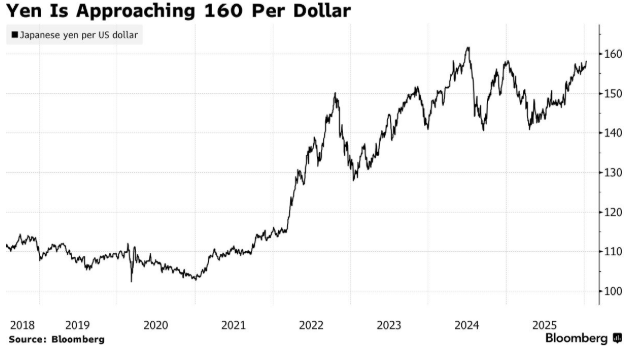
Group 1 - The core viewpoint of the articles indicates that the Bank of Japan, led by Governor Ueda Kazuo, plans to raise interest rates if conditions allow, despite speculation about an early election by Prime Minister Kishi Sanae [1][2] - Ueda's recent statements suggest that the central bank remains committed to its rate hike path, with most economists expecting the Bank of Japan to maintain current rates during the policy meeting on January 23, while the next potential rate hike could occur around June [1] - The Japanese stock market has reacted positively to expectations that Kishi may implement more expansionary fiscal measures following a potential early election, while the yen and bonds have weakened [1] Group 2 - The yen has fallen to its lowest level since July 2024, trading at approximately 159.20 yen per dollar, which has increased import costs and intensified inflationary pressures [2] - Ueda noted that wages and inflation may continue to rise gradually, and appropriate adjustments to monetary easing will help achieve price stability and promote long-term economic growth [2] - The Bank of Japan raised the benchmark interest rate to 0.75%, the highest level since 1995, with expectations of rate hikes approximately every six months, although the weakening yen may accelerate the pace of future increases [2]
日本央行行长:如果经济展望实现,将继续加息
Jin Rong Jie· 2026-01-14 05:06
Core Viewpoint - The Governor of the Bank of Japan, Kazuo Ueda, indicated that if economic and price developments align with forecasts, along with moderate increases in wages and prices, the central bank will continue to raise interest rates [1] Group 1 - The Bank of Japan is closely monitoring economic indicators and price trends to inform its monetary policy decisions [1] - Wage growth and price stability are critical factors in determining the future path of interest rates [1] - The central bank's approach suggests a commitment to adjusting monetary policy in response to economic conditions [1]
提前大选前景恐加剧日本财政风险,日债再遭猛烈抛售
Sou Hu Cai Jing· 2026-01-14 03:11
Group 1 - Japanese Prime Minister Fumio Kishida has decided to dissolve the House of Representatives on January 23, leading to early elections, amid concerns that expansionary fiscal policies will exacerbate fiscal risks, causing a surge in Japanese government bond yields [1] - The 10-year Japanese government bond yield reached 2.18%, a 27-year high, while the 30-year yield hit 3.52%, a record high, reflecting market anxiety over potential increases in economic stimulus and debt levels [1][2] - Following the announcement, the Nikkei 225 index surged over 3.6% at the open, closing with a 3.1% gain, while the yen and Japanese bonds faced significant declines [1] Group 2 - Since taking office, Kishida has faced challenges including a weak yen, inflation above targets, and economic sluggishness, prompting a record economic stimulus plan of 21.3 trillion yen and a budget of 122.3 trillion yen for fiscal year 2026 [2] - The Bank of Japan has shifted from a long-standing ultra-loose monetary policy to a forward-looking adjustment, with interest rates expected to rise to 0.75% by December 2025, the highest level in 30 years [2] - Concerns about Japan's fiscal health have intensified, with the country's debt exceeding twice its economic output, leading to increased government bond issuance and a rising debt servicing burden [2] Group 3 - Kishida emphasized that promoting economic growth is more important than concerns over rising long-term interest rates, stating that the new budget includes significant future-oriented investments aimed at creating a virtuous cycle of investment and growth [3] - The government projects a nominal GDP growth rate of 3.4% and a real wage growth rate of 1.3%, indicating a clearer economic outlook [3]
片山皋月与贝森特齐声担忧 日元汇率依旧持续走低
Xin Lang Cai Jing· 2026-01-13 10:30
Core Viewpoint - The Japanese yen has depreciated to its lowest level in 18 months, reaching 159.05 yen per dollar, despite concerns from both Japanese and U.S. officials about the currency's decline [1][2][3]. Currency Exchange Rate Dynamics - The yen's exchange rate dropped by 0.6% against the dollar, influenced by reports of Prime Minister Fumio Kishida's intention to call for early elections, which further exacerbated the yen's decline [1][2]. - The Japanese Finance Minister, Shunichi Suzuki, expressed concerns about the "one-sided depreciation" of the yen during a meeting with U.S. Treasury Secretary Janet Yellen, indicating a potential for increased communication on exchange rate trends [1][3]. Market Reactions and Predictions - Market analysts suggest that the possibility of currency intervention may become a focal point, particularly as the dollar approaches the 160 yen mark, which is seen as a critical threshold for intervention [1][2][3]. - The head of the Japan Business Federation, Tokui Nobutaka, emphasized the need for the yen to strengthen, warning that excessive depreciation could necessitate intervention in the foreign exchange market [2][8]. Economic Implications - The depreciation of the yen is expected to increase import costs, potentially leading to higher domestic inflation, prompting the Japanese government to introduce a substantial economic stimulus plan to alleviate rising living costs [3][10]. - The Bank of Japan raised its benchmark interest rate to a 30-year high in December, with expectations that further rate hikes may be accelerated due to the yen's ongoing depreciation [10]. International Relations and Policy - U.S. Treasury Secretary Yellen previously called for the Bank of Japan to raise interest rates as a means to support the yen's value [4][10]. - The recent meeting between Suzuki and Yellen occurred amid concerns regarding potential political interference in U.S. monetary policy, which may impact international economic relations [5][10].
高市早苗财政政策成日元“拖油瓶” 日本央行或被迫于4月提前加息
智通财经网· 2026-01-13 07:06
Core Viewpoint - The Japanese yen is weakening due to market concerns over Prime Minister Kishida's "dangerous" fiscal policy, leading to speculation that the Bank of Japan may raise interest rates as early as April [1][4]. Group 1: Interest Rate Expectations - Former Bank of Japan committee member Makoto Sakurai suggests that the central bank must raise rates at least once before June or July, with a possibility of an earlier increase in April [1]. - Market expectations indicate a 40% probability of a rate hike in April, which would be earlier than the consensus [4]. Group 2: Yen Depreciation and Fiscal Policy - The yen has depreciated significantly, reaching a one-year low of 158.50 against the dollar, influenced by reports of Kishida's plans for early elections [1]. - Concerns over Kishida's fiscal stance are expected to keep the yen weak, impacting the central bank's rate decisions due to rising import costs exacerbating inflation [4]. Group 3: Fiscal Measures and Market Reaction - Kishida has announced the largest supplementary budget since the pandemic and the largest initial budget for the next fiscal year, aiming for an active yet responsible fiscal policy [5]. - Despite rising tax revenues due to inflation, Sakurai criticizes Kishida's approach of committing to spending without securing funding sources, labeling it as a loose and dangerous practice [5]. - The yield on 30-year Japanese government bonds reached a historic high of 3.52%, reflecting market skepticism about the government's long-term fiscal position [5].

经济学家:澳洲联储仓促加息或扰乱脆弱复苏
Sou Hu Cai Jing· 2026-01-08 01:24
Core Viewpoint - The Australian currency market is discussing the possibility of an interest rate hike in February, but some economists warn that a reflexive response to inflation data could undermine the fragile economic recovery [1] Group 1: Economic Indicators - AMP's Deputy Chief Economist, Diana Mousina, stated that a rate hike would harm the private sector, which has just begun to show signs of improvement [1] - Recent signals from the Reserve Bank of Australia indicate that rate cuts are no longer an option, which has led to an increase in bond yields over the past month, tightening the monetary environment [1]
【财经分析】通胀低于预期 澳大利亚央行2月加息仍可能
Xin Hua Cai Jing· 2026-01-07 09:29
Core Viewpoint - Australia's inflation is projected to remain above the Reserve Bank of Australia's (RBA) target range of 2% to 3% until late 2027, despite a slight decrease in the Consumer Price Index (CPI) in November 2025 [1][2]. Group 1: Inflation Data and Predictions - The overall CPI in Australia increased by 3.4% year-on-year in November, down from 3.8% in October, and below market expectations [1]. - The trimmed mean inflation rate also fell slightly from 3.3% to 3.2%, aligning with market expectations [1]. - The RBA's forecast indicates that the overall inflation rate will remain above 3% for most of 2026, with the trimmed mean inflation rate expected to stay above the target range until the second half of 2026 [2]. Group 2: Interest Rate Outlook - The RBA has initiated a rate cut cycle in 2025, reducing the cash rate to 3.6%, the lowest level since early 2023 [2]. - Market expectations regarding interest rate changes are mixed, with some economists predicting rate hikes in February 2026, while others anticipate no changes [2][3]. - Following the release of inflation data, the probability of a rate hike in February decreased from 37% to 32%, indicating a cooling of rate hike expectations [3]. Group 3: Economic Commentary - Economists express concerns that inflation pressures may prompt the RBA to raise rates in February, with some suggesting a potential increase of 40 basis points [3][4]. - Analysts from various banks have differing views on the likelihood of a rate hike, with some predicting that the RBA will maintain the current rate due to weak inflation momentum [5][4]. - The Australian economy is described as operating near full capacity, with a tight labor market, which may necessitate a cautious adjustment in monetary policy [4].