品牌年轻化

Search documents
甘源食品(002991) - 2025年8月15日投资者关系活动记录表
2025-08-15 09:32
Market Overview - The snack food industry has a large market scale with increasing consumer demand, providing significant growth opportunities for the company [1] - The company focuses on core business areas, emphasizing automated production, brand operation, and multi-channel sales [1] Marketing and Brand Strategy - The company has engaged in various marketing activities, including celebrity endorsements and cultural tourism marketing, to enhance brand awareness among younger consumers [2] - Increased marketing investments have been made to support brand building and new product promotion, although short-term effects may not be immediately visible [3] Sales Performance - In the first half of 2025, the company experienced a decline in overall revenue due to the timing of the Spring Festival and a decrease in traditional supermarket business [3] - Despite a rise in sales expenses, the company aims to accelerate new product launches and improve market penetration in the second half of the year [3] Product Development and Innovation - The company has introduced a variety of innovative products, including beans, nuts, and puffed snacks, while also optimizing resource allocation by reducing less efficient products [4] - Continuous product innovation is essential for maintaining competitiveness and addressing market saturation in traditional products [5][6] International Expansion - The company is actively developing overseas markets, particularly in Vietnam and Indonesia, with plans to enhance its core bean product offerings [6] Channel Strategy - The company is expanding new sales channels and optimizing production costs to improve product quality and price competitiveness [7] - A focus on e-commerce platforms, including Tmall, JD.com, and Douyin, is part of the company's strategy to enhance online sales [9] Consumer Trends - The company is responding to consumer demand for high-quality, low-burden snacks by utilizing innovative technologies and optimizing packaging design [10]

三城同启!长虹地铁专列以创意涂装绘就“美好生活”图景
Zheng Quan Zhi Xing· 2025-08-15 06:33
Core Viewpoint - Changhong launches a themed subway train in Chengdu, Chongqing, and Hefei, emphasizing the emotional connection between the national brand and urban life through creative design and interactive experiences [1] Group 1: Brand Strategy and Target Audience - The subway serves as a vital transportation artery, with daily passenger traffic exceeding tens of millions, where individuals aged 20-35 constitute over 65% of the ridership, aligning with Changhong's target demographic for brand rejuvenation [2] - The first carriage of the special train highlights Changhong's brand heritage and industrial strength, showcasing key data such as being the global leader in refrigerator compressor production for 12 consecutive years and equipping 60% of China's high-speed rail and metro systems with its power systems [2] Group 2: Product and Cultural Integration - The product-themed carriage resonates with urban consumers, featuring insights into their lifestyles, such as the desire for technology and comfort, and the aspiration for freshness and cleanliness [4] - Changhong's brand communication integrates global perspectives with local culture, exemplified by its partnership with the International Ski Federation and the incorporation of the giant panda as a cultural symbol [5] Group 3: Technological Innovation and User Experience - The core product concepts displayed include AI-driven technologies aimed at enhancing user quality of life, such as the first healing AI TV and health-focused air conditioning systems, reflecting Changhong's transition from hardware provider to a lifestyle partner [7] - Interactive experiences during the six-month operation of the special train will include activities like AI character parades and giveaways, extending brand engagement from static displays to dynamic participation [9] Group 4: Community Engagement and Brand Image - The special train represents Changhong's proactive embrace of new consumer contexts and exploration of brand youthfulness, transforming technological strengths into tangible urban experiences [9] - Residents and visitors in Chengdu, Chongqing, and Hefei can experience this integration of technology, creativity, and human care by riding the Changhong special train on designated subway lines [11]


卫龙美味(09985.HK)上半年净利增近两成,蔬菜制品营收增长44.3%
Ge Long Hui· 2025-08-15 02:23
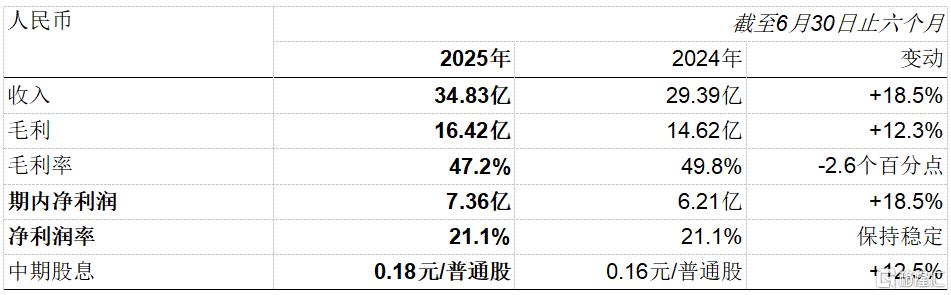
Core Insights - Wei Long Mei Wei (09985.HK) reported a simultaneous increase in revenue and net profit for the first half of 2025, with total revenue reaching 3.483 billion RMB, a year-on-year growth of 18.5% [1] - The net profit also grew by 18.5% to 736 million RMB, with basic earnings per share at 0.31 RMB [1] - The company declared an interim dividend of 0.18 RMB per share, maintaining a payout ratio of nearly 60% [1] Revenue and Profit Performance - Total revenue for the first half of 2025 was 3.483 billion RMB, reflecting an 18.5% year-on-year increase [1] - Net profit increased by 18.5% to 736 million RMB, with a basic earnings per share of 0.31 RMB [1] - Gross profit rose by 12.3% to 1.642 billion RMB, with a gross margin of 47.2% [1] Product and Market Strategy - Revenue from vegetable products surged by 44.3% to 2.109 billion RMB, accounting for 60.5% of total revenue [1] - The company launched new products such as "Magic Tofu" in sesame flavor and "Spicy Beef" in the first half of the year, enhancing product innovation and quality [1] Brand and Channel Development - Wei Long Mei Wei deepened brand penetration among young consumers through various online and offline activities, including collaborations with popular brands [2] - The company is expanding its offline and online channel coverage, enhancing terminal execution and service capabilities [2] - Efforts are being made towards automation upgrades and digital transformation to improve overall operational efficiency [2]
卫龙美味上半年净利润增近两成 蔬菜制品营收增长44%
Zheng Quan Shi Bao Wang· 2025-08-14 13:15
Core Viewpoint - Wei Long Mei Wei (09985) reported a synchronized growth in revenue and net profit for the first half of 2025, achieving total revenue of 3.483 billion RMB, a year-on-year increase of 18.5%, and a net profit of 736 million RMB, also up by 18.5% [1] Group 1: Financial Performance - The gross profit for the period increased by 12.3% to 1.642 billion RMB, with a gross margin of 47.2% [1] - The company declared an interim dividend of 0.18 RMB per share, maintaining a payout ratio of nearly 60% [1] - Revenue from vegetable products surged by 44.3% to 2.109 billion RMB, accounting for 60.5% of total revenue [1] Group 2: Product and Market Strategy - The company launched several new products, including "Magic Tofu" with sesame flavor and "Spicy Beef" under the brand "Kiss Burn," to enhance flavor innovation and diversify the product portfolio [1] - The company aims to meet diverse and personalized consumer demands through these product innovations [1] Group 3: Brand and Channel Development - Wei Long Mei Wei is deepening brand penetration among young consumers through various online and offline activities, such as the "Spicy Challenge" in collaboration with Linli Lemon Tea [2] - The company is expanding its offline and online channel coverage, enhancing terminal execution capabilities, and improving service capacity and product availability through partnerships with distributors [2] Group 4: Production and Technological Advancements - The company is advancing automation upgrades and technological innovations in production facilities while accelerating the digital transformation of its business systems [2] - As of June 30, 2025, the company operates five factories and has signed an investment agreement to establish a new factory in Nanning, Guangxi, to support ongoing business development and expansion [2]
卫龙美味公布2025年中期业绩 业绩持续稳健攀升 收入净利双增 派发中期股息每股0.18元
Ge Long Hui· 2025-08-14 12:08
Core Viewpoint - The company, Weilong Delicious Global Holdings Limited, reported strong financial performance for the first half of 2025, with significant revenue and profit growth despite challenges in the global consumer market [2][3]. Financial Performance - Total revenue for the first half of 2025 reached 3.483 billion RMB, representing an 18.5% year-on-year increase [2][3]. - Gross profit amounted to 1.642 billion RMB, up 12.3% from the previous year, although the gross margin decreased by 2.6 percentage points to 47.2% due to rising raw material costs [2][3]. - Net profit for the period was 736 million RMB, also reflecting an 18.5% increase, with a stable net profit margin of 21.1% [2][3]. Dividend Announcement - The company declared an interim dividend of 0.18 RMB per ordinary share, with a payout ratio of approximately 60%, expected to be paid on or around October 20, 2025 [3]. Product Strategy - The company maintains a multi-category product strategy, focusing on innovation and responding to consumer demand for new flavors and products [3][4]. - New product launches in the first half of 2025 included "Magic Tofu" with sesame flavor and "Spicy Beef" [3]. Brand Development - The company is enhancing brand penetration through various online and offline activities, targeting younger consumers [3][4]. - Collaborations with popular brands and influencers, such as the "Spicy Challenge" with Linli Lemon Tea, have been effective in reaching a broader audience [3]. Channel Strategy - The company is advancing its offline and online channel coverage, expanding terminal points and enhancing service capabilities [4]. - A comprehensive ecosystem is being built to ensure effective integration between online and offline channels, supporting the overall channel development strategy [4]. Operational Efficiency - The company is committed to upgrading production facilities and accelerating digital transformation across its business systems [4]. - Continuous improvement in organizational development and talent management is aimed at enhancing overall operational efficiency [4].
极光发布《移动互联网行业数据研究报告》,品牌年轻化加固汽车之家流量优势
Xin Hua Wang· 2025-08-12 06:16
Core Insights - The report by Aurora Research Institute highlights the performance of the mobile internet industry in Q4 2022, with a focus on the automotive information sector, where Autohome APP leads in both DAU and MAU [1][2] Group 1: Mobile Internet Industry Overview - In Q4 2022, the average number of apps installed per mobile internet user reached 73, with an increase in installations among younger and middle-aged users [1] - The average daily usage time for apps remained stable at 5.3 hours, indicating consistent online behavior among users [1] Group 2: Automotive Information Sector Performance - The automotive market showed a "first decline, then rise" pattern, with total retail sales reaching 5.66 million units in Q4 2022, and December sales hitting 2.169 million units, a year-on-year increase of 15% and a month-on-month surge of 47% [1] - The MAU for the automotive information sector stabilized at 130 million, with a recorded MAU of 134.1 million at the end of the quarter, showing a slowdown in growth but still maintaining a positive trend [1] Group 3: Autohome APP Performance - Autohome APP maintained its leading position in Q4 2022 with an average DAU of 12.887 million and MAU of 47.744 million, along with a monthly user growth of 9.215 million [2] - The strategic shift of Autohome from an automotive vertical media to a "content ecosystem + tool services + transaction platform" is driving its data advantage [2] Group 4: Strategic Initiatives and Collaborations - Autohome has undergone a brand upgrade to appeal to younger consumers, changing its slogan to cover a broader range of automotive consumption scenarios [2] - The company has engaged in various collaborations with platforms like Gaode Map and Huawei to enhance its ecosystem, creating a comprehensive automotive scene that integrates "people, cars, and roads" [3] - Autohome's partnerships with various companies, including CCTV-2 and JD Auto, have expanded its service offerings and user engagement, contributing to its ecosystem growth [3] Group 5: Future Outlook - Autohome aims to leverage its innovation and technology to reduce decision-making and transaction costs in the automotive industry, aspiring to become a leading one-stop service provider for automotive life [4]
陆续“落子”多个消费细分领域 茅台集团在下一盘怎样的棋?
Xin Hua Wang· 2025-08-12 05:48
Core Insights - The collaboration between Guizhou Moutai and Luckin Coffee has resulted in the launch of the "Sauce Fragrance Latte," which sold over 5.42 million cups and generated sales exceeding 100 million yuan on its first day [1] - Guizhou Moutai has decided to make the Sauce Fragrance Latte a permanent product, indicating a strategic shift towards appealing to younger consumers [1] - The product features a unique blend of coffee and Moutai liquor, with a low alcohol content of less than 0.5% vol, produced using a special thick milk that incorporates Moutai liquor [1] Product Development and Market Strategy - Under the leadership of Chairman Ding Xiongjun, Guizhou Moutai has launched several new products, including the Moutai ice cream, which has expanded to 16 provinces and 19 flagship stores by the end of 2022 [2] - The company aims to develop a diverse product matrix that includes chocolate, alcoholic beverages, and ice cream, targeting different consumer segments and price points [2] - Industry experts suggest that Moutai's strategy focuses on bridging the gap between traditional liquor and younger consumers by integrating into their preferred consumption scenarios [2][3] Brand Positioning and Future Prospects - Moutai's recent initiatives are seen as efforts to modernize the brand and maintain its relevance among younger demographics, enhancing brand value and appeal [3] - The company is also exploring new product categories and has registered multiple trademarks related to snacks and convenience foods, indicating a broader market expansion strategy [3] - Moutai's approach includes leveraging partnerships with quality brands across various sectors, including food, entertainment, and tourism, to enhance its market presence [3]


“国民闺女”关晓彤,卖啤酒超过蔡徐坤、王一博
Sou Hu Cai Jing· 2025-08-12 02:37
Core Viewpoint - The endorsement of Yanjing Beer by actress Guan Xiaotong has significantly boosted the brand's sales and profits, surpassing previous endorsers Cai Xukun and Wang Yibo [1][3][4]. Financial Performance - In the first half of 2025, Yanjing Beer reported a revenue of 8.558 billion yuan, a year-on-year increase of 6.37%, with beer sales reaching 2.3517 million kiloliters, up 2.03% [3]. - The net profit attributable to shareholders was 1.103 billion yuan, marking a 45.45% increase, already exceeding the total net profit of 1.056 billion yuan for the entire year of 2024 [3]. - For the year 2024, Yanjing Beer achieved total revenue of 14.667 billion yuan, a 3.20% increase, with net profit growing by 63.74% to 1.056 billion yuan [3]. Marketing Strategy - Yanjing Beer aims to reach a younger audience, particularly women with purchasing power, through Guan Xiaotong's endorsement, thereby expanding its market share [4]. - Previous endorsers Cai Xukun and Wang Yibo also contributed to the brand's success, with notable profit increases during their tenures [5][6]. Product Performance - The Yanjing U8 product line has been a significant driver of growth, with sales increasing by over 50% in 2022 and over 36% in 2023, reaching 696,000 kiloliters in 2024, a 31.4% increase [16][17]. - The overall revenue share of mid-to-high-end products has risen from 59.81% in 2020 to 67.01% in 2024, while the share of ordinary products has declined [15]. Brand Image and Challenges - Guan Xiaotong's image as a relatable and healthy figure contrasts with the more concentrated fan bases of previous endorsers, allowing for broader appeal [6][7]. - Despite the success, Yanjing Beer faces challenges, including a decline in growth rates for the U8 product and the need for new hit products to maintain momentum [17][18].

煌上煌(002695):门店数量承压 成本红利+费用优化推动利润高增
Xin Lang Cai Jing· 2025-08-11 10:30
Core Viewpoint - The company reported a decline in revenue for the first half of 2025, but achieved significant growth in net profit due to cost control and expense optimization strategies [1][2]. Group 1: Financial Performance - In H1 2025, the company achieved revenue of 984 million yuan, a year-over-year decrease of 7.19%, while net profit attributable to shareholders was 77 million yuan, an increase of 26.90% [1]. - The company’s gross profit margin was 31.96%, a decrease of 0.47 percentage points year-over-year, with the gross margin for the sauce and marinated meat products business at 38.61%, an increase of 2.23 percentage points [2]. - The company’s net profit margin was 7.82%, an increase of 2.10 percentage points year-over-year [2]. Group 2: Operational Challenges - The decline in revenue was primarily due to weak consumer scenarios leading to pressure on same-store sales, with a continuous reduction in the number of stores [1]. - As of June 30, 2025, the company had 2,898 specialty stores, a decrease of 762 direct stores and 715 franchise stores compared to the beginning of the year [1]. Group 3: Strategic Initiatives - The company launched a digital marketing platform in May 2025 to enhance terminal empowerment and optimize store operations through upgraded standards [1]. - Marketing efforts included sponsorship of high-speed rail and music festivals to reach younger consumers, resulting in over 200 million online and offline exposures [3]. - The company focused on product innovation by eliminating inefficient SKUs and concentrating on the hand-pulled sauce duck, which accounted for 22% of sales by the end of the reporting period [3]. Group 4: Future Outlook - The company aims to optimize store structure and deepen its "1+N" online and offline business model while actively seeking quality acquisition targets for long-term growth [3]. - Revenue projections for 2025-2027 are 1.959 billion, 2.206 billion, and 2.407 billion yuan, with respective year-over-year growth rates of 13%, 13%, and 9% [3].

娃哈哈砍300万以下经销商引纠纷
Di Yi Cai Jing Zi Xun· 2025-08-09 09:56
Core Viewpoint - The recent inheritance dispute surrounding Wahaha has raised concerns about its market performance and sales strategies under the leadership of Zong Fuli, who has implemented strict measures against underperforming distributors [2][10]. Distributor Management - Wahaha is eliminating distributors with annual sales below 3 million yuan, leading to sudden terminations and disputes over unpaid dues [3][4]. - Sales targets for distributors have increased significantly, with some facing a 50% rise in annual sales goals starting from 2025 [4][5]. - The management of distributors has become more stringent, with specific sales targets assigned to each product category, and digital management systems implemented for better oversight [5][6]. Market Performance - Despite the challenges, Wahaha's beverage sales net income grew by 53% year-on-year in 2024, returning to market levels seen over a decade ago [9]. - However, there are concerns about the sustainability of this growth, as it may be linked to a temporary surge in consumer sentiment following the passing of the founder, rather than long-term brand strength [10][11]. Industry Dynamics - The consolidation of smaller distributors into larger ones is a strategy to streamline operations and manage debts more effectively, but it raises concerns about the control over larger distributors [6][8]. - The fast-moving consumer goods (FMCG) industry often employs such consolidation strategies to enhance market reach and reduce operational costs [8]. Future Outlook - The ongoing inheritance dispute may impact consumer trust and brand perception, particularly for products that rely on emotional connections [11]. - Wahaha is investing in new production facilities to diversify its product offerings, indicating a potential shift towards innovation and modernization [11].