结构性改革

Search documents
欧洲央行执委施纳贝尔:国放宽债务刹车机制释放的资金需明智使用以促进增长,同时应辅以结构性改革。
news flash· 2025-05-20 06:46
Core Viewpoint - The European Central Bank Executive Board member Schnabel emphasizes that the funds released from the relaxation of debt brake mechanisms should be used wisely to promote growth, accompanied by structural reforms [1] Group 1 - The relaxation of debt brake mechanisms is intended to provide additional financial resources [1] - There is a call for the prudent use of these funds to ensure they effectively contribute to economic growth [1] - Structural reforms are necessary to complement the financial measures for sustainable growth [1]
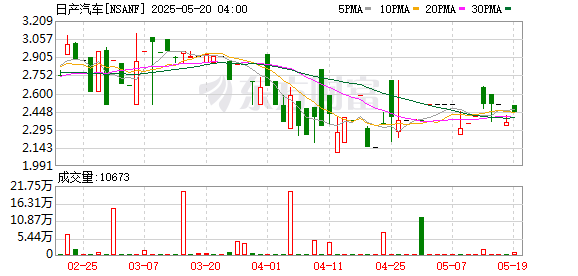
日产汽车启动大规模重组:2027财年前全球裁员2万人 将关闭7家工厂
Zhong Guo Jing Ying Bao· 2025-05-19 21:54
再次启动"自我革命" 财报数据显示,2024财年,日产汽车全球销量为334.6万辆,同比下降2.8%。其中,受日产汽车在华持续调整供需关系影响,以及中国本土品 牌激烈竞争的冲击,2024财年日产汽车在中国市场的零售销量同比下降12.2%。与此同时,日产汽车在欧洲市场以及日本本土市场的销量分别 下降2.9%和4.8%。由于新车型的上市,日产汽车在北美市场的销量同比增长了3.3%。 与此同时,2024财年,日产汽车汽车业务营收为11.37万亿日元(约合人民币5660.9亿元),营业亏损为2160亿日元(约合人民币107.56亿 元)。 日产汽车正处在艰难的业务调整阶段。 近日,日产汽车披露了2024财年(2024年4月至2025年3月)财报。数据显示,报告期内日产汽车营收为12.63万亿日元(约合人民币6287.47亿 元),同比下降0.4%。尽管营收基本持平,但其营业利润同比下滑87.7%至698亿日元(约合人民币34.77亿元),净亏损达到6709亿日元(约 合人民币334.23亿元),2023财年盈利4266亿日元(约合人民币212.47亿元),营业利润率为0.6%。 在惨淡的业绩以及转型压力下,日产汽车决 ...


以牙还牙:一个思考后续贸易政策的思路
Hu Xiu· 2025-05-15 06:48
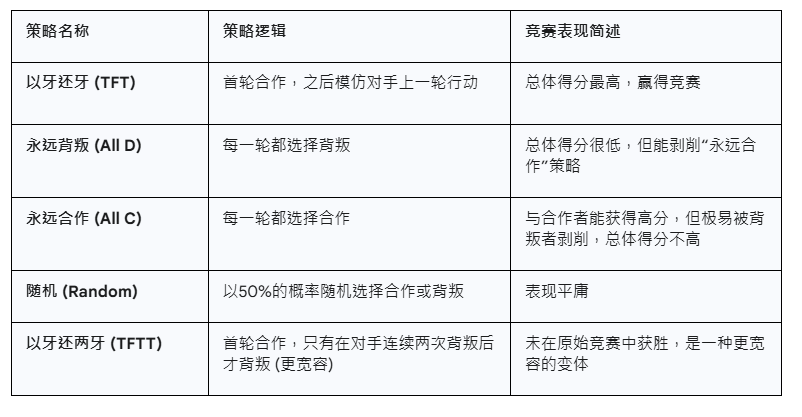
Group 1 - The article discusses the differences between the current tariff situation and the one in 2018, emphasizing that China's structural reforms are lagging behind [1][14] - It highlights that Europe and Japan are facing tariffs for the first time, while China has been involved in tariff negotiations multiple times, leading to different strategic responses [2][8] - The article introduces the "Tit-for-Tat" strategy as the most effective approach in repeated games, where cooperation is initially chosen, followed by mimicking the opponent's previous actions [3][4][5] Group 2 - The article outlines the four essential elements of a successful Tit-for-Tat strategy, which include being nice, retaliatory, forgiving, and clear [8][9] - It suggests that the U.S. has recognized China's Tit-for-Tat strategy, which is a prerequisite for establishing negotiation mechanisms [9] - The article posits that future tariff changes between the U.S. and China are likely to be reciprocal, with either both sides lowering or raising tariffs, rather than maintaining the status quo [10][12] Group 3 - The article reflects on historical examples of structural reforms following economic crises, noting that countries like Japan, Germany, and the UK implemented significant changes post-Great Depression [15][20][21] - It warns against the potential pitfalls of rapid devaluation and fiscal stimulus, which can lead to long-term negative consequences [22][24] - The conclusion emphasizes that measures such as devaluation, interest rate cuts, and fiscal stimulus are effective methods to overcome structural downturns, suggesting a deeper complexity in these economic strategies [24]
大众汽车首席财务官:欧洲必须进行结构性改革,才能使德国计划中的国防和基础设施等投资取得成效。
news flash· 2025-05-13 11:02
大众汽车首席财务官:欧洲必须进行结构性改革,才能使德国计划中的国防和基础设施等投资取得成 效。 ...
社论丨扩大有效需求,畅通供需循环
2 1 Shi Ji Jing Ji Bao Dao· 2025-05-12 17:57
Group 1 - The core viewpoint of the articles emphasizes the importance of stabilizing prices and promoting reasonable price recovery through a combination of monetary and fiscal policies [1][2][3] - The April CPI showed a month-on-month increase of 0.1%, reversing a previous decline, driven by rising food and travel service prices, indicating the effectiveness of policies aimed at expanding domestic demand and consumption [1] - The central bank's report highlights that the key to boosting prices lies in expanding effective demand and ensuring smooth supply-demand cycles, while also addressing structural issues in the economy [2][3] Group 2 - The report indicates that total demand remains weak due to various uncertainties, including global growth slowdown and the ongoing transformation of China's economic structure, which requires time for new growth drivers to fill the gap left by traditional drivers [2] - There is a recognition of excessive competition in certain industries, which has exacerbated supply-demand imbalances due to a historical focus on investment-driven capacity expansion [2][3] - A coordinated approach involving fiscal, monetary, industrial, employment, and social policies is necessary to achieve a balance between supply and demand, and to promote reasonable price recovery [3]
提升物价,仅仅扩大货币发行是远远不够的
Hua Xia Shi Bao· 2025-05-10 07:12
Core Viewpoint - The central bank emphasizes that merely relying on monetary policy is insufficient to drive price recovery, advocating for structural reforms and coordinated policies across various sectors to promote reasonable price increases [2][5]. Group 1: Price Trends and Indicators - In the first quarter, the Consumer Price Index (CPI) decreased by 0.1% year-on-year, with monthly fluctuations of 0.5%, -0.7%, and -0.1% [2]. - Food prices fell by 1.4% year-on-year, influenced by seasonal factors and international oil price volatility [2]. - Core CPI, excluding food and energy, rose by 0.3% year-on-year, indicating a mild upward trend in non-food prices [2]. Group 2: Demand and Supply Analysis - Demand remains weak due to global growth slowdown, economic structural transformation, and the need for enhanced consumer spending [3]. - Supply-side issues include excessive competition in certain industries and inefficiencies in traditional sectors, exacerbating supply-demand imbalances [3]. Group 3: Policy Recommendations - The central bank refutes the notion that increasing money supply will automatically lead to price increases, citing historical examples of low inflation despite monetary expansion [4]. - Effective demand expansion is crucial for price recovery, necessitating structural reforms and coordinated policy efforts across fiscal, monetary, and social sectors [5]. - The focus should shift from managing high prices to managing low prices, emphasizing quality development and preventing disorderly competition [5].

独家专访IMF亚太部副主任Thomas Helbling:IMF呼吁各国着力处理自身事务 抓住窗口期推进结构性改革
2 1 Shi Ji Jing Ji Bao Dao· 2025-04-29 10:49
Core Insights - The International Monetary Fund (IMF) has downgraded global economic growth forecasts, particularly for the Asia-Pacific region, amid rising trade tensions and increased policy uncertainty [1][2] - The IMF predicts a growth rate of 3.9% for the Asia-Pacific region in 2025, down from 4.6% in 2024, indicating a significant downward revision of 0.5 percentage points [2][3] - Structural reforms are essential for enhancing resilience against economic shocks, focusing on social security, labor markets, aging population, and digital transformation [2][4] Economic Outlook - The IMF has adjusted its GDP growth expectations for the Asia-Pacific region due to the impact of new U.S. tariffs and ongoing trade tensions, highlighting significant downside risks [2][3] - The uncertainty surrounding future trade policies is expected to disrupt supply chains and investment decisions, leading to further growth below current forecasts [2][3] Structural Reforms - The IMF emphasizes the need for decisive structural reforms in the Asia-Pacific region to improve resilience and internal demand, particularly in social security and productivity enhancement [4][6] - Countries are encouraged to seize the current window of opportunity to implement reforms that address long-term challenges, including demographic changes and digitalization [4][5] Financial Environment - The tightening of financial conditions due to the U.S. Federal Reserve's policies may have varying impacts on different countries, depending on their financial systems and monetary policy frameworks [5][6] - Many Asian countries currently have room for monetary easing due to inflation levels returning to target ranges, allowing them to respond to trade shocks effectively [5][6] Regional Integration - The IMF advocates for increased regional integration in the Asia-Pacific, particularly in service trade, to reduce barriers and promote free movement within the region [6] - Countries are advised to manage fiscal deficits and rebuild fiscal buffers to enhance their capacity to respond to future economic shocks [6]
如何涨薪增收促消费?学者建言:中央财政出资扩大民生支出
Sou Hu Cai Jing· 2025-03-25 11:19
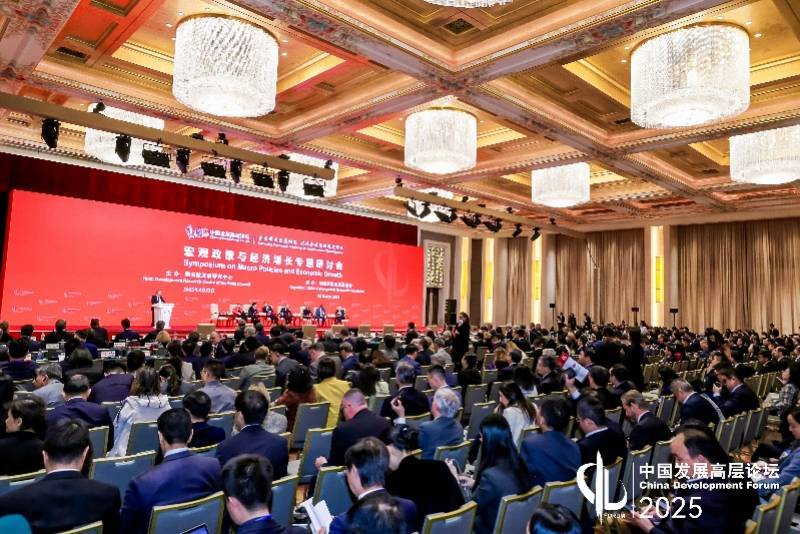
如何涨薪增收促消费?学者建言:中央财政出资扩大民 生支出 3月23日—24日,中国发展高层论坛2025年年会举行,北京钓鱼台国宾馆在浓浓春意中,迎来了近千位中外贵宾。 这些来自政府机构、跨国企业、央企民企、学界的"大佬"级人物,围绕"全面释放发展动能,共促全球经济稳定增 长"的话题展开研讨,十余场研讨会几乎场场爆满、座无虚席。 谈及全球经济,当前贸易保护主义、单边主义、地缘政治的风险给全世界带来了诸多不确定性。这样的大背景 下,中国经济又该如何稳增长、激活发展新动能?对此,多位学者表示,当前包括提振消费在内的经济增量政策 还不足以刺激中国的总需求,中国需要采取大胆的行动推动经济发展,而且要注重惠民生,以人为本的经济发展 模式才可持续。 研讨会现场。 提振消费不是应急之策 提振消费作为我国经济今年的"头号任务",被专家们频频提及。南都记者关注到,此次中国发展高层论坛2025年 年会还专门设置了一场"提振消费与扩大内需"的专题研讨会。 据了解,中国当前面临需求不足、尤其是消费不足的问题。与国际比较看,中国居民实际最终消费占GDP比重较 全球平均水平低约20个百分点。用购买力平价口径,中国与OECD国家(由38个国 ...
激发增长新动能,中国发展高层论坛热议增收、科创、资本市场
Jie Mian Xin Wen· 2025-03-24 08:03
Group 1: Economic Growth and Reform Suggestions - The core discussion at the China Development Forum focused on stimulating new growth momentum through reforms in various sectors, including income disparity, local fiscal autonomy, technological innovation, capital market reform, and investment in human capital [1] - Liu Shijun emphasized the need to reduce urban-rural income gaps and improve the income of low-income groups to unleash economic vitality [2] - Gao Peiyong highlighted the importance of increasing local fiscal autonomy to invigorate local governments and drive economic growth [3][4] Group 2: Technological Innovation - Zheng Yongnian proposed that the focus of reforms should shift towards the technology and innovation sector, advocating for "appropriate regulation" and "de-regulation" to foster innovation [5][6] - He suggested establishing innovation special zones in regions with competitive advantages to support key technological breakthroughs [5] Group 3: Capital Market Reform - Liu Zunyi argued that current consumption-boosting policies are insufficient to address excess capacity and that investment needs to be stimulated through capital market reforms [7] - He proposed three specific measures: adjusting IPO pricing mechanisms, encouraging cash dividends, and facilitating stock issuance for companies to enhance financing opportunities for small and medium enterprises [7] Group 4: Investment in Human Capital - Li Daokui stressed the importance of "investing in people," indicating a shift in public spending towards improving living standards and encouraging childbirth [8] - He noted that the central government has significant potential to increase public debt, which could be utilized to support local governments in providing subsidies and training for labor [8]
最新!“翻倍式”养老金、稳房价明确责任单位……刘世锦、王一鸣等建言
券商中国· 2025-03-15 12:49
Core Viewpoint - The article discusses the key tasks outlined in the government work report following the 2025 National Two Sessions, focusing on economic growth, consumption potential, asset price stability, and market confidence restoration [1]. Group 1: Economic Growth and Consumption - Liu Shijun emphasizes the need for China to maintain a medium-speed economic growth rate of at least 4% to surpass the high-income threshold, suggesting that the nominal growth rate should exceed the actual growth rate [2][3]. - The report highlights the importance of consumption as a key driver of economic growth, noting that China's final consumption accounts for nearly 20 percentage points less of GDP compared to international levels [2]. - Liu Shijun proposes increasing urban and rural residents' pensions from 220 yuan per person per month to around 400 yuan in one to two years, aiming for 600 yuan in three years and 1,000 yuan in five years, which could activate over 1 trillion yuan in consumption potential [3]. Group 2: Policy Adjustments and Market Confidence - Wang Yiming points out that the government work report prioritizes boosting consumption and expanding domestic demand, reflecting a shift in policy focus from investment to consumption [4][5]. - The report indicates that stabilizing asset prices, particularly housing prices, is crucial, with a need for clear responsibilities and effective policies to manage supply and demand [6]. - Liu Yuanchun notes that the policy framework for 2025 must be adaptable to uncertainties, with a focus on maintaining a strong decision-making capacity in response to external shocks and internal risks [8][9]. Group 3: Enhancing Business Vitality - Yang Ruilong identifies four key areas to stimulate the vitality of domestic business entities: clarifying property rights, allowing self-management and accountability, ensuring fair competition, and minimizing unnecessary administrative intervention [10][11]. - The article stresses the importance of protecting private enterprise rights and creating a competitive environment for private businesses, particularly in infrastructure and major research projects [11].