
货币政策正常化

Search documents
从G10垫底到明年首选?日元获全球投资者集体转向看好
Xin Hua Cai Jing· 2025-11-19 03:16
Group 1 - The core viewpoint of the articles indicates that the Japanese yen is widely regarded as the currency with the highest return potential for 2026, according to a recent global fund manager survey by Bank of America [1] - Approximately one-third of the surveyed investors expect the yen to achieve the best returns next year, with gold and the US dollar following closely behind, while only 3% chose the British pound [1] - The survey covered 172 investors with a total asset management scale of $475 billion, highlighting a significant interest in the yen despite its underperformance in 2025, where the dollar-yen exchange rate only increased by 1% [1] Group 2 - The yen's current low valuation is partly attributed to a sustained underweight in Japanese assets by international capital, with fund managers showing a net underweight of 4% in Japanese stocks, a trend that has persisted for over a year [1] - In the context of geopolitical tensions and rising trade policy uncertainties, safe-haven assets like gold have performed strongly, with gold prices reaching historical highs this year [2] - The Bloomberg Dollar Index has declined by approximately 7% this year, potentially marking its worst annual performance since 2017, primarily due to uncertainties surrounding former President Trump's policies [2] Group 3 - Market participants are closely monitoring potential currency intervention by Japanese authorities, especially after the yen briefly fell below the key psychological level of 160 yen per dollar in 2024 [2] - Speculators are inclined to buy the dollar against the yen, testing the tolerance of the Japanese Ministry of Finance, while verbal warnings from officials have had diminishing marginal effects on the market [2] - The future performance of the yen as the "best currency of 2026" will depend on multiple macroeconomic variables, including the divergence in monetary policies between the US and Japan, the sustainability of fiscal policies, and potential intervention risks [2]
植田和男告知高市早苗:日本央行仍将继续谨慎加息
Hua Er Jie Jian Wen· 2025-11-18 08:10
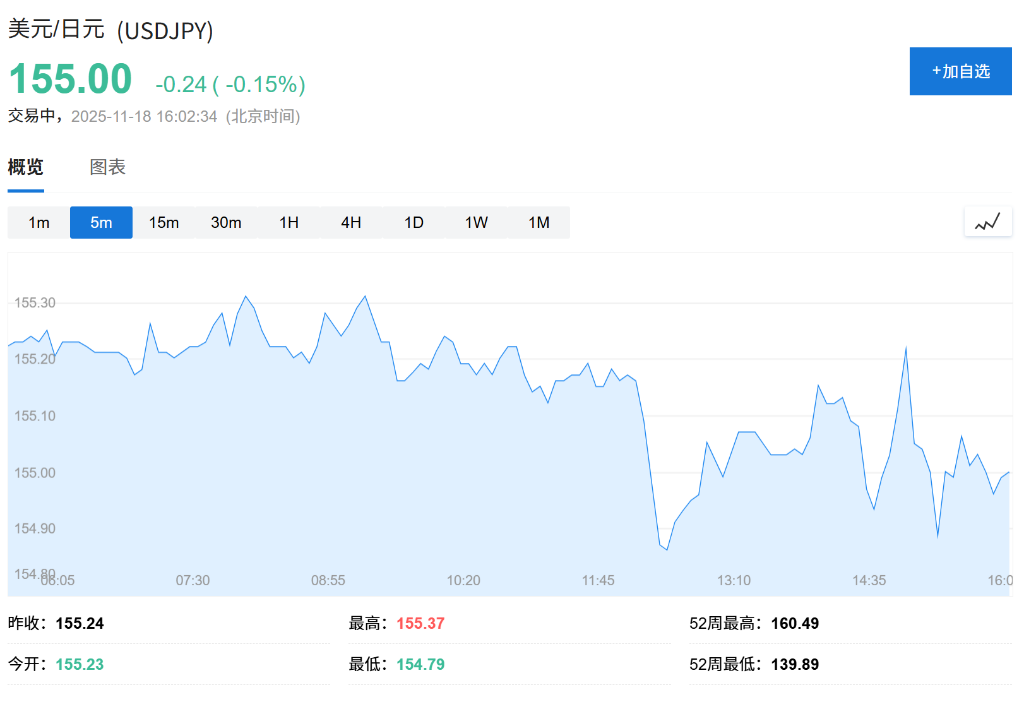
日本央行行长植田和男释放了明确信号,即日本央行将继续行走在谨慎加息的道路上。 周二,植田和男在与首相会晤后对媒体表示,他已告知高市早苗,日本央行"正在逐步调整货币宽松的程度"。他强调,做出这一调整的根本原因 在于,"物价与工资共同上涨的机制正在恢复"。 此次会晤正值日本金融市场动荡之际。本周日本股市与政府债券双双下挫,基准10年期国债收益率触及17年新高。与此同时,日元兑美元汇率跌 破155的关键心理关口,兑欧元汇率更触及180的历史新低。投资者正密切关注新任首相高市早苗的货币政策立场,并等待本周即将公布的经济刺 激计划细节。 他明确指出,薪资与通胀共同增长的良性循环正在形成,这是央行调整超宽松货币政策的先决条件。植田和男表示: "鉴于此,我们正在逐步调整货币宽松的程度。" 植田和男补充说,日本央行将依据经济数据做出"适当的"政策决策。 植田和男的表态为寻求政策确定性的投资者提供了关键线索。他同时指出,央行将根据数据做出适当的政策判断,并与政府密切合作,共同监测 汇率走势及其对经济的影响。日本央行的下一次议息会议定于12月19日举行。 逐步退出宽松,确认加息路径 植田和男在会后的发言中,重申了日本央行对当前经 ...

日本央行10月会议摘要暗示:最早或于12月加息
智通财经网· 2025-11-10 03:44
Group 1 - The Bank of Japan's latest policy meeting summary indicates that the earliest possible interest rate hike could occur in December, aligning with market expectations [1] - A member of the policy committee stated that conditions for further normalization of policy rates are likely to be in place, emphasizing the need to continue monitoring core inflation trends [1] - The summary reveals a consensus among committee members that the timing for a rate hike is approaching, consistent with recent comments from Governor Kazuo Ueda [1] Group 2 - Following the summary release, the yen appreciated slightly against the dollar, trading at approximately 153.80 yen per dollar, recovering from a recent eight-month low of 154.48 [2] - Prime Minister Fumio Kishida expressed that Japan has not yet achieved sustainable inflation supported by wage growth, suggesting a preference for the Bank of Japan to slow down rate increases [2] - Kishida indicated that while consumer price index remains around 3% due to rising food prices, Japan has only completed half of the task towards achieving stable inflation supported by wage growth [2]
日本央行“鹰”声嘹亮,最快下月加息?
Jin Shi Shu Ju· 2025-11-10 02:28
Core Viewpoint - The Bank of Japan's recent meeting minutes indicate a growing consensus among policymakers for a potential interest rate hike, contingent on sustained corporate wage growth and economic conditions [1][2][3] Group 1: Interest Rate Hike Considerations - Eight out of nine committee members expressed the need for a timely interest rate increase or set specific conditions for a future hike [1] - The timing of any rate increase will depend on corporate earnings reports and executive statements confirming ongoing wage increases [1] - A committee member emphasized the importance of not missing the opportunity to raise rates, despite the current situation not necessitating immediate action [1] Group 2: Economic Factors Influencing Decisions - The impact of U.S. tariffs and the wage growth momentum of Japanese companies are critical factors in determining the timing of the next rate hike [2] - Another committee member noted that raising the policy rate is part of the normalization process, which could help mitigate future economic distortions [3] Group 3: Political and Economic Context - The Bank of Japan maintained the interest rate at 0.5%, with two members opposing this decision and advocating for a rise to 0.75% [1] - Following the appointment of Prime Minister Kishida, who supports expansionary fiscal and monetary policies, the Bank of Japan faces political challenges regarding its monetary stance [3] - A recent survey indicated that a majority of economists expect the Bank of Japan to raise rates within the current quarter, with nearly 96% predicting a hike by the end of March [3]
独家专访亚开行前行长中尾武彦:超宽松货币政策行至“十字路口”
2 1 Shi Ji Jing Ji Bao Dao· 2025-11-04 10:24
Core Viewpoint - The Bank of Japan has implemented a historic interest rate hike, ending an eight-year negative interest rate policy, but the normalization of monetary policy remains a challenging task due to various uncertainties in the market [1][6]. Monetary Policy and Economic Challenges - The Bank of Japan raised the benchmark interest rate from -0.1% to a range of 0-0.1%, marking its first increase since 2007 [1]. - The former president of the Asian Development Bank, Takahiko Nakao, emphasizes the importance of a robust monetary policy normalization plan to avoid further depreciation of the yen and to facilitate the exit from ultra-loose monetary policies [1][6]. - Concerns about asset bubbles are resurfacing globally, with warnings about the risks associated with rapid increases in real estate and stock prices, particularly in Asian countries [1][10]. Financial Market Risks - The financial market is facing three major risks: 1. Increased government spending and expanding deficits leading to excessive national debt accumulation, particularly in the U.S. and Japan [2][10]. 2. Stock prices potentially being overvalued due to expectations of returns from the AI revolution [2][10]. 3. Risks associated with private debt, as non-bank institutions engage in extensive financial intermediation with insufficient regulation [2][10]. Historical Lessons - Reflecting on Japan's past, it is noted that during the 1985 Plaza Accord, the rapid appreciation of the yen led to overly expansionary fiscal and monetary policies, contributing to the subsequent asset bubble [3][4]. - After the bubble burst in 1990, Japan's policy response was inadequate, failing to recognize the severe negative impacts of the bubble's collapse, which resulted in significant economic downturns [4]. Future Economic Potential - Japan possesses significant economic potential and should focus on converting technological advancements into economic benefits while increasing investment in research and development [5]. - The country has successfully emerged from deflation and should wisely utilize fiscal and monetary policies to support growth [5]. Regional Cooperation and Global Trade - In the context of rising global trade tensions, strengthening regional cooperation through agreements like RCEP and the China-Japan-Korea Free Trade Agreement is essential for mitigating unilateralism risks [7]. - The collaboration between Japan and China in technology and other sectors is seen as a way to address global challenges, particularly in the face of demographic changes and labor shortages [8][9].
日元跌势难止 加息压力陡增
Bei Jing Shang Bao· 2025-11-02 14:28
Core Viewpoint - The new Japanese Prime Minister, Sanae Takaichi, faces a dilemma regarding the depreciating yen, which has reached an 8-month low, risking imported inflation while trying to support exports [1][3]. Group 1: Yen Depreciation and Economic Impact - The yen has entered a depreciation phase, with the Bank of Japan maintaining its benchmark interest rate, disappointing investors and causing the yen to drop to 154.17 against the dollar [3]. - The Japanese government is increasingly concerned about the yen's depreciation, with the new Finance Minister warning of a heightened urgency to monitor the exchange rate, indicating a potential for direct intervention [3][4]. - Historical context shows that the Japanese authorities intervened in the forex market when the yen depreciated significantly, suggesting that current conditions may warrant similar actions [4]. Group 2: Monetary Policy and Inflation - Economists predict that the Bank of Japan will raise interest rates by at least 25 basis points by March 2026, driven by ongoing inflation pressures from the yen's depreciation [5]. - Recent data indicates that Japan's core consumer prices rose by 2.9% year-on-year in September, exceeding the central bank's target and highlighting the inflationary challenges posed by the yen's decline [6]. - The continuous depreciation of the yen is exacerbating imported inflation, which is putting pressure on the cost of living for Japanese citizens [6][7]. Group 3: Fiscal Policy and Economic Growth - Takaichi's proposed economic policies, termed "Sanae Economics," are seen as a continuation of Abenomics, focusing on expansionary fiscal measures and loose monetary policy to stimulate demand [5][7]. - While these policies may provide short-term economic growth and boost market confidence, they also pose long-term risks, including increased government debt and potential financial instability [7]. - The current economic environment is characterized by a complex interplay between the need for monetary tightening due to inflation and the government's expansionary fiscal stance, complicating the Bank of Japan's policy decisions [6][7].

美联储降息但放鹰,华尔街预期遭“逆转”
Sou Hu Cai Jing· 2025-10-30 06:21
Summary of Key Points Core Viewpoint - The Federal Reserve is moving towards normalizing its monetary policy by potentially halting the reduction of its balance sheet and adjusting interest rates in response to economic conditions and inflation trends [1][2][3][4][5]. Interest Rate Adjustments - The Federal Reserve has outlined a series of interest rate cuts, with a reduction of 50 basis points on September 19, 2024, followed by two 25 basis point cuts in November and December, bringing the target rate down to 4.25%-4.50% by the end of 2024 [1]. - The anticipated path for interest rates includes further cuts in 2025, with projections indicating a potential target range of 3.75%-4.00% by October 2025 [1]. Balance Sheet Normalization - The Fed's balance sheet, which expanded significantly during the pandemic, is expected to stabilize as the central bank ceases the reduction of its securities holdings starting December 1, 2024 [3][4]. - Over the past three and a half years, the Fed has reduced its securities holdings by $2.2 trillion, decreasing the balance sheet's proportion of nominal GDP from 35% to approximately 21% [4]. Economic Indicators and Market Reactions - Recent data suggests that while the job market is cooling, inflation remains relatively high, prompting the Fed to adjust its policy stance [3][5]. - Market expectations shifted dramatically following the Fed's announcements, with the likelihood of maintaining rates at 3.75%-4.00% rising significantly, while the probability of further rate cuts dropped to zero [6]. Capital Market Responses - Following the Fed's rate cuts, the Hong Kong Monetary Authority and the Bank of Canada also announced similar reductions in their interest rates, indicating a synchronized approach to monetary policy adjustments [8]. - The U.S. stock market initially reacted positively to the Fed's announcements, with major indices experiencing fluctuations, while individual stocks like Nvidia and Apple saw significant market capitalization changes [13].


中金:美联储如期降息25个基点 本轮降息的刺激效应或将弱于以往周期
智通财经网· 2025-10-30 00:17
Core Viewpoint - The Federal Reserve's decision to cut interest rates by 25 basis points in October aligns with market expectations, but Chairman Powell's hawkish comments suggest that a December rate cut is not guaranteed, indicating a growing internal division within the Fed [1][2] Group 1: Federal Reserve's Actions and Statements - The Federal Reserve cut rates by 25 basis points in October, with two dissenting votes: one for a 50 basis point cut and another for no change, highlighting increasing internal disagreements [1] - Powell emphasized that a further reduction in December is not a foregone conclusion, indicating significant internal divisions among Fed officials regarding future actions [2] - The Fed's monetary policy statement showed little change from September, noting a slowdown in job growth and a rise in unemployment, while inflation remains elevated [1] Group 2: Economic Indicators and Implications - The labor market is slowing but not deteriorating rapidly, with indicators showing a gradual decline in job growth, suggesting that further rate cuts depend on worsening employment conditions [2] - Inflation remains significantly above the Fed's target, with the PCE inflation rate estimated at 2.8% in September, reflecting persistent upward pressure on prices [3] Group 3: Future Monetary Policy Outlook - The Fed has room for further policy easing, but the pace of rate cuts may slow, transitioning from "cutting at every meeting" to "quarterly cuts" as the policy rate approaches neutral levels [3] - The expected impact of rate cuts on the economy may be limited due to a weakened refinancing effect, as many homeowners locked in low rates previously, reducing the incentive for refinancing [4] Group 4: Quantitative Tightening and Asset Management - The Fed plans to end quantitative tightening (QT) on December 1, stopping the reduction of U.S. Treasury holdings while continuing to reinvest maturing securities [4][5] - This decision is seen as a technical adjustment to address liquidity concerns and manage the average duration of the Fed's asset portfolio, shifting from long-term MBS to short-term T-bills [5]
FOMC has 'strongly differing views' about how to proceed in December, says Fed Chair Powell
Youtube· 2025-10-29 19:03
Core Insights - The current economic environment presents a challenging situation with inflation risks tilted to the upside and employment risks to the downside [1][2] - The Federal Reserve is adopting a balanced approach to address both maximum employment and stable prices, indicating a shift in the balance of risks [2][8] - The decision to cease the reduction of aggregate securities holdings reflects the Fed's assessment that the balance sheet has reached a standard consistent with ample reserve conditions [4][6] Monetary Policy Adjustments - The Federal Reserve plans to hold the size of its balance sheet steady while allowing agency securities to run off and reinvesting proceeds in Treasury bills [7] - The effective federal funds rate has begun to rise relative to the interest on reserve balances, indicating tightening conditions in money markets [5][6] - The Fed's balance sheet has shrunk by $2.2 trillion over three and a half years, reducing its share of nominal GDP from 35% to about 21% [6] Future Outlook - The upcoming December meeting will not necessarily lead to a further reduction in the policy rate, as differing views exist within the committee [4] - The Fed remains committed to achieving its dual mandate of maximum employment and stable prices, emphasizing the importance of these goals for all Americans [8][9] - The normalization of the balance sheet composition is a key focus, with efforts to align the weighted average maturity of the portfolio with that of outstanding Treasury securities [7]

X @外汇交易员
外汇交易员· 2025-10-28 08:31
Currency Market Outlook - Goldman Sachs forecasts a potential appreciation of the Japanese Yen (JPY) against the US Dollar (USD) to 100 within the next 10 years, reversing the trend of JPY depreciation [1] - The forecast is based on the expectation of the Bank of Japan (BOJ) gradually normalizing its monetary policy and ending ultra-loose policy tools like Yield Curve Control (YCC) [1] Political and Economic Factors - While the new Prime Minister Sanae Takaichi's dovish stance and fiscal expansion plans are seen as short-term negatives for the JPY, Goldman Sachs anticipates a more moderate shift away from Abenomics-style policies due to increasing political resistance to inflation [1]