
价值投资

Search documents
银行股的城门立木——写在农业银行股价即将站上净资产之际
雪球· 2025-09-07 04:50
Core Viewpoint - The article discusses the contrasting performance of small-cap stocks and bank stocks in the A-share market, emphasizing the short-term gains in micro-cap and concept stocks while bank stocks have seen declines, highlighting a disconnect between market sentiment and fundamentals [2][3]. Summary by Sections Market Performance - Since July 2025, the ChiNext and STAR Market indices have risen approximately 30% in just two months, with some stocks increasing by 50-100%, while bank stocks have averaged a decline of about 10% [2]. - The article notes a peculiar trend where stocks with worsening fundamentals, such as liquor stocks, have rebounded significantly despite poor earnings, indicating a market behavior that often disregards fundamentals [2]. Investment Behavior - New investors are often swayed by short-term market movements, leading to a preference for high-volatility stocks that promise quick returns, which can result in losses when the market corrects [4][5]. - The article suggests that long-term investment in bank stocks requires a strong understanding and discipline, as many investors struggle to hold onto these stocks during downturns [3][4]. Valuation and Future Outlook - Bank stocks, particularly Agricultural Bank and China Merchants Bank, are highlighted as potential benchmarks for valuation, with Agricultural Bank's stock price nearing its net asset value, indicating a possible upward trend in valuation [6][10]. - The article identifies several city commercial banks, such as Chengdu Bank and Hangzhou Bank, as having strong fundamentals and potential for future growth, with current price-to-book ratios indicating they are undervalued [8][9]. Long-term Investment Strategy - The article advocates for a long-term investment strategy focused on banks with solid fundamentals, low valuations, and good growth potential, suggesting that investors should aim for annualized returns of 12-15% [9][10]. - It emphasizes the importance of selecting quality stocks based on fundamental analysis rather than short-term price movements, as this approach can lead to sustainable profits in the long run [10].




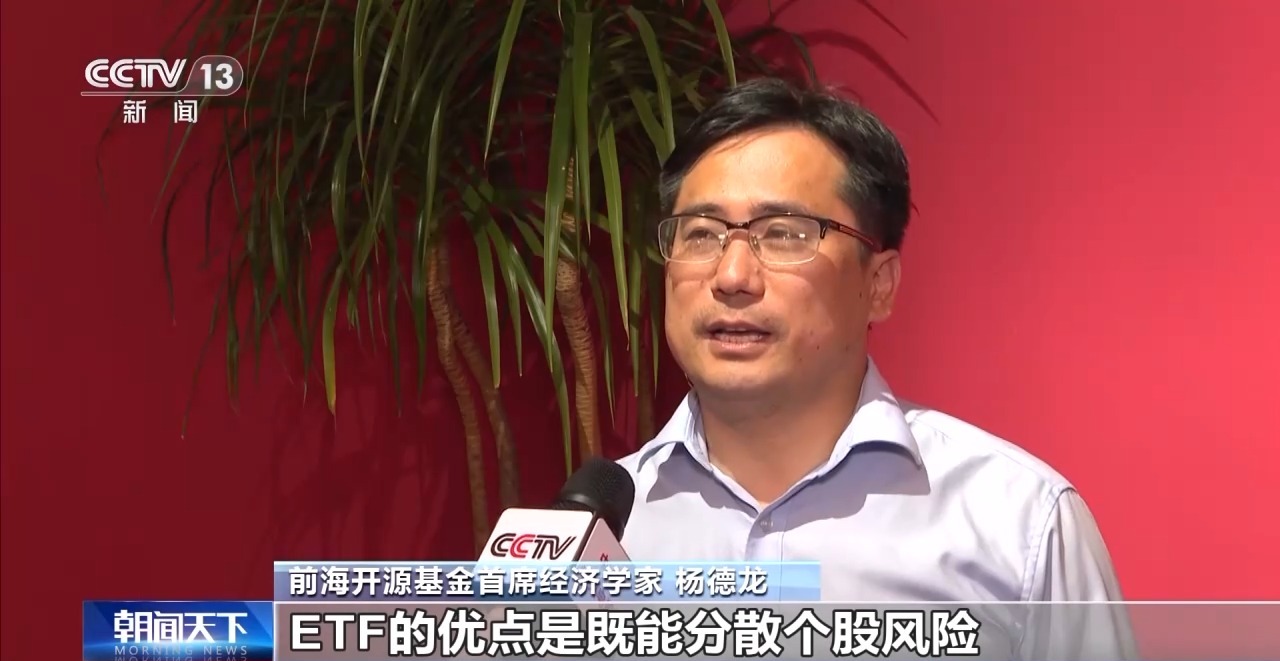
ETF市场突破5万亿元 实现跨越式增长
Yang Shi Xin Wen· 2025-09-07 03:48
Core Viewpoint - The ETF market in China has experienced rapid growth, surpassing 5 trillion yuan in total assets, reflecting a significant shift in investment strategies towards long-term value and diversified asset allocation [1][4][10]. Group 1: ETF Market Growth - As of September 4, the total market size of ETFs reached 5.02 trillion yuan, an increase of 1.29 trillion yuan from the end of 2024, representing a growth rate of over 34% [4][10]. - The total number of ETF shares has grown to 2.89 trillion, an increase of 239.72 billion shares compared to the end of the previous year [4]. - The rapid expansion of the ETF market is attributed to a stable stock market, regulatory support from the China Securities Regulatory Commission, and increased investor awareness [6][9]. Group 2: Innovation and Product Diversity - The introduction of new ETF products, such as the Sci-Tech Bond ETF, has attracted significant capital, with its size growing from 28.99 billion yuan to 116.12 billion yuan within a month, marking a 300% increase [8]. - The diversity of over 1,200 ETF products caters to various investment needs, covering broad-based, sector-specific, and thematic areas, thus enhancing the investment ecosystem [12]. Group 3: Long-term Investment Trends - The growth of the ETF market signifies a shift in investment philosophy from short-term speculation to stable asset allocation and long-term value investing [14]. - The influx of long-term capital into the ETF market is expected to stabilize the capital market and align it more closely with the long-term development needs of the real economy [16]. Group 4: Foreign Investment in ETFs - The booming ETF market has attracted foreign capital, with overseas investors increasingly using ETFs as a channel to invest in Chinese assets [17]. - The number of ETFs held by foreign institutions has risen significantly, indicating a growing interest in sectors such as AI and robotics, as well as new consumption and innovative pharmaceuticals [20][21]. - Foreign investments in China-themed ETFs have also increased, reflecting a long-term commitment to Chinese equities and the recognition of their value [23].
年内381股翻倍!如何面对A股“升温”?处理好这三件事
券商中国· 2025-09-06 23:27
Core Viewpoint - The article emphasizes the importance of focusing on one's own investment strategies and understanding, rather than being swayed by market emotions and external factors, to achieve long-term success in investing [1][4][6]. Group 1: Own Matters - Successful investors accumulate experience in understanding businesses, which is a controllable aspect of investing [1]. - Great investors build their strategies on a solid foundation by selecting understandable companies, exercising cautious valuation, and avoiding investments beyond their risk tolerance [1][2]. - Investors should adhere to the principle of a margin of safety when purchasing stocks, as advocated by Graham, to ensure investment success [1][2]. Group 2: Others' Matters - The stock market is influenced by millions of investors, and short-term market sentiment is considered "others' matters" [4]. - Investors who allow external emotions to dictate their decisions risk making poor investment choices, such as buying high and selling low [4][5]. - The article cites historical examples, such as the internet bubble and the 2013 A-share bull market, to illustrate the dangers of following market trends without a personal valuation standard [4][5]. Group 3: Heaven's Matters - Long-term adherence to high investment standards and rational decision-making will eventually be rewarded by the market, although the timing of such rewards is uncertain [6]. - The article suggests that the market will ultimately reflect a company's intrinsic value, supporting the foundation of value investing [6]. - The overall market trend is expected to rise at an annual rate of around 10%, indicating that investors should focus on long-term performance rather than short-term fluctuations [6][7].

A股:大家做好心理准备了,下周不出所料,很可能创新高
Sou Hu Cai Jing· 2025-09-06 18:52
Group 1 - The sentiment around the A-share market has shifted, with doubts about the bull market emerging after recent declines [1] - Investors are encouraged to adopt a long-term perspective, emphasizing the importance of patience and the potential for profits over a 3-5 year horizon [1][3] - The current market environment is characterized by volatility, with significant fluctuations in stock prices, particularly in sectors like technology and healthcare [3][5] Group 2 - The market is expected to continue its upward trend, with a likelihood of reaching new highs in the near future [5] - There is a notable divergence in market performance, with individual stocks exhibiting different rhythms and behaviors compared to index investments [7] - The discussion highlights the importance of understanding the distinction between index investing and stock trading, suggesting that investors should be aware of their strategies and market conditions [7]

股神的价值投资策略,在A股也有效吗?| 螺丝钉带你读书
银行螺丝钉· 2025-09-06 13:22
Core Viewpoint - The article emphasizes the enduring relevance of value investing, particularly in the context of the A-share market, and highlights the importance of patience in investment strategies [10][20][54]. Group 1: Value Investing Principles - Graham, known as the father of value investing, has significantly influenced investment philosophies, including the low valuation investment approach [4][5]. - His notable works include "The Intelligent Investor" and "Security Analysis," with the latter being more technical [6][7]. - The updated version of "Security Analysis" includes refreshed case studies, making it relevant for contemporary investors [8]. Group 2: Effectiveness in A-share Market - Value investing strategies, such as those derived from Graham's principles, have proven effective in the A-share market, despite concerns about their applicability [10][20]. - The 300 Value Index, which selects the lowest P/E and P/B stocks from the CSI 300, has shown significant returns, rising from 1,000 points to 9,147 points (approximately 814% increase) from the end of 2004 to the end of 2024 [18]. - In comparison, the CSI 300 Total Return Index increased by 464% during the same period, indicating that value strategies can outperform broader market indices [19]. Group 3: Challenges of Value Investing - The main challenge of value investing lies not in its effectiveness but in the lack of patience among investors, leading to low adoption rates of value-focused index funds [23][24]. - Despite the long-term success of value strategies, many investors abandon them during periods of underperformance, as seen during the growth market phase from 2019 to 2021 [30][32]. - The article notes that while both value and growth strategies can be effective, they do not perform well simultaneously, requiring investors to maintain a long-term perspective [40][42]. Group 4: Conclusion on Investment Patience - The article concludes that the lack of patience among most investors is a key reason why value investing remains effective, as it allows those with patience to benefit from the market's inefficiencies [54][50]. - It highlights that investment is fundamentally a transfer of assets from the impatient to the patient [54].

Bath & Body Works: Structural Weakness And Visible Margin Pressure (Rating Downgrade)
Seeking Alpha· 2025-09-06 09:09
Core Viewpoint - The article discusses the upgrade of Bath & Body Works Inc. (BBWI) to a hold rating, indicating a wait-and-see approach regarding the new CEO's ability to rejuvenate the company [1] Company Summary - Bath & Body Works Inc. has recently undergone a leadership change with a new CEO, prompting analysts to reassess the company's potential for growth and recovery [1] - The investment strategy focuses on identifying undervalued companies with long-term growth potential, emphasizing the importance of buying quality companies at a discount to their intrinsic value [1]

公募基金费率改革收官 每年向投资者让利超500亿元
Zheng Quan Ri Bao· 2025-09-06 01:13
Core Viewpoint - The public fund industry in China is undergoing a significant fee rate reform, marking a crucial step towards high-quality development and cost reduction for investors [1][2]. Summary by Relevant Sections Fee Rate Reform Overview - The China Securities Regulatory Commission (CSRC) has initiated a public fund fee rate reform, which is divided into three phases aimed at gradually lowering the comprehensive investment costs for public funds [1][2]. - The new regulations, titled "Regulations on the Management of Sales Expenses for Publicly Raised Securities Investment Funds," consist of six chapters and 28 articles, focusing on reducing investor costs and optimizing sales practices [2][3]. Specific Fee Adjustments - The maximum subscription and purchase fees for equity funds have been reduced from 1.2% and 1.5% to 0.8%, while for mixed funds, they have been lowered from 1.2% and 1.5% to 0.5%. Bond funds see a reduction from 0.6% and 0.8% to 0.3% [3]. - The annual sales service fee cap for equity and mixed funds has been decreased from 0.6% to 0.4%, and for index and bond funds from 0.4% to 0.2% [3]. Encouragement of Long-term Investment - The reform encourages long-term holding by eliminating sales service fees for investors who hold equity, mixed, or bond funds for over a year, thus promoting a shift from short-term speculation to long-term value investment [4][5]. - The redemption fee structure has been revised to ensure that all redemption fees are allocated to the fund's assets, thereby increasing the cost of short-term trading for investors [4]. Institutional Investor Focus - The CSRC has established a direct sales service platform for institutional investors, aimed at enhancing the efficiency and effectiveness of direct sales in the public fund industry [5]. - The platform will standardize operations and reduce the high costs and risks associated with traditional direct sales methods, thereby improving service levels in the industry [5][6]. Regulatory and Industry Impact - The reform addresses long-standing issues in the industry, such as the allocation of interest on idle funds and dual charging in fund advisory services, thereby enhancing the integrity of the fund management process [6]. - The adjustments in fee structures are designed to support the development of equity funds while maintaining a balance with other fund types, promoting a stable and healthy growth trajectory for the industry [6].
中期分红常态化影响深远
Zheng Quan Shi Bao· 2025-09-05 18:49
Group 1 - The core point of the article highlights that A-share listed companies have shown overall satisfactory operating conditions in their 2025 interim reports, with a notable increase in mid-year dividend proposals exceeding 640 billion yuan compared to the previous year [1] - A trend of normalizing mid-year dividends is emerging, with many companies, especially in the banking sector, leading the way in implementing these distributions [1] - Significant dividend amounts have been reported from companies in the energy and telecommunications sectors, with China Mobile proposing a dividend of 54.08 billion yuan and China Petroleum planning a distribution of 40.2 billion yuan, comparable to major banks [1] Group 2 - A considerable number of companies are offering dividend yields above 7%, with Rong'an Real Estate at 13.11%, Guanghui Energy at 9.47%, Yutong Bus at 11.32%, and China Shenhua at 7.21%, indicating a shift where many non-bank entities are providing substantial returns to investors [2] - The overall number of companies engaging in mid-year distributions remains low, and those with annual dividend yields exceeding 2% are still a minority, suggesting that the investment value in the A-share market needs further enhancement [3] - The increasing focus on cash returns to investors and the normalization of mid-year dividends reflect a significant improvement in the operational philosophy of listed companies, moving away from previous criticisms of "money-grabbing" practices [3]

证监会就《公开募集证券投资基金销售费用管理规定(征求意见稿)》公开征求意见 公募基金费率改革收官 每年向投资者让利超500亿元
Zheng Quan Ri Bao· 2025-09-05 16:07
Core Viewpoint - The public fund industry in China is undergoing a significant fee rate reform, marking a crucial step towards high-quality development and aiming to reduce investor costs while regulating the sales market [1][2]. Group 1: Fee Rate Reform Details - The China Securities Regulatory Commission (CSRC) has initiated a three-phase fee rate reform, which is expected to benefit investors by over 50 billion yuan annually [1]. - The revised regulations, now titled "Publicly Raised Securities Investment Fund Sales Expense Management Regulations," include a total of six chapters and 28 articles, focusing on reducing costs for investors and optimizing fund sales practices [2]. - Specific fee reductions include lowering the maximum subscription and purchase fees for equity funds from 1.2% and 1.5% to 0.8%, for mixed funds from 1.2% and 1.5% to 0.5%, and for bond funds from 0.6% and 0.8% to 0.3% [3]. Group 2: Encouragement of Long-term Investment - The reform encourages long-term holding by eliminating sales service fees for investors who hold equity, mixed, and bond funds for over one year [5]. - The redemption fee structure has been optimized to ensure that all redemption fees are allocated to the fund's assets, discouraging short-term trading behaviors [5]. - The reform aims to shift the focus of fund sales institutions from generating income through "traffic" to earning "retention" income by providing ongoing services [5][6]. Group 3: Development of Direct Sales Channels - The CSRC has launched the Fund Industry Institutional Investor Direct Sales Service Platform (FISP), which aims to streamline the direct sales process and improve service efficiency for institutional investors [6]. - The FISP platform is designed to address high operational costs and inefficiencies in traditional direct sales, providing a standardized and automated service for fund investments [6]. Group 4: Overall Impact on the Industry - The reform is expected to lead to an overall fee reduction of approximately 300 billion yuan annually, representing a 34% decrease in fees, thereby providing tangible benefits to investors [4]. - The adjustments in fee structures and the establishment of the FISP platform are anticipated to enhance the quality and stability of the public fund industry in the long term [7].
科技板块抢眼折射市场逻辑之变
Jing Ji Ri Bao· 2025-09-04 22:00
Group 1 - The recent surge in Cambricon's stock price, surpassing Kweichow Moutai, highlights a shift in economic growth dynamics and capital market narratives, emphasizing the impact of innovation-driven development [1] - The transition from traditional industries to emerging sectors like artificial intelligence, semiconductors, and new energy is accelerating, with significant investment opportunities arising from this shift [1][2] - The performance of the technology sector in the A-share market has been notable, with companies like Cambricon attracting substantial attention and investment due to their growth potential and innovation capabilities [2] Group 2 - The narrative in the capital market is increasingly focused on technology, with significant growth in sectors such as new energy vehicles and consumer electronics, indicating a shift in investor preferences towards high-growth technology firms [2] - Investors are redefining value, placing greater emphasis on future growth potential and R&D investment rather than just current profitability, as seen in the case of Cambricon [2][3] - The interplay between capital markets and technological innovation is fostering the emergence of strategic new industries, enhancing the overall competitiveness and attractiveness of the market [3]

