人工智能

Search documents
滴滴上线AI打车服务,用户将App更新至最新版本后,即可在首页体验“AI叫车”功能
Xin Lang Cai Jing· 2026-03-17 14:42
Group 1 - The core point of the article is the official launch of Didi's AI travel assistant, Xiao Di v1.0, which allows users to input complex ride requests through voice or text, and the system converts these into executable service tags to match suitable vehicles [1] Group 2 - Users can experience the "AI calling a car" feature by updating the app to the latest version [1]



AI周专题:Oracle业绩验证AI算力需求强劲
GF SECURITIES· 2026-03-17 14:23
Investment Rating - The industry investment rating is "Buy" [2] Core Insights - Oracle's Q3 FY2026 performance exceeded market expectations, validating strong demand for AI computing power and infrastructure investment logic [13][14] - The report highlights a significant increase in Oracle's cloud business revenue, which reached $8.9 billion, a 44% year-over-year growth, with cloud infrastructure service revenue growing by 84% [14][19] - The report indicates a substantial increase in remaining performance obligations (RPO) to $553 billion, reflecting a 325% year-over-year growth, driven by partnerships with major companies like OpenAI and Meta Platforms [19][21] - Oracle's AI business is currently experiencing lower profit margins, with an AI business gross margin of approximately 32%, significantly lower than the 70% margin of its cloud computing and software businesses [21][26] - The report suggests that the AI infrastructure investment is transitioning into long-term orders, although the industry is still in a high capital expenditure phase, requiring ongoing monitoring of actual delivery progress and revenue recognition [26] Summary by Sections Section 1: Oracle's Performance and AI Demand - Oracle's cloud business and AI infrastructure revenue showed strong growth, with a notable increase in cloud infrastructure service revenue [13][14] - The company is optimistic about the sustained growth in demand for cloud and AI infrastructure, raising its FY2027 revenue guidance from $85 billion to $90 billion [19] Section 2: Domestic and International AI Application Stock Performance - Recent trends show a divergence in stock performance among AI application companies, with some sectors like new cloud and cybersecurity performing well, while B2B SaaS stocks generally declined [27][31] - The report provides a detailed analysis of stock price changes relative to major indices, highlighting significant fluctuations in the AI application sector [29] Section 3: AI Data Tracking and Industry Dynamics - The report tracks AI data usage and application trends, noting a rise in demand for AI inference capabilities, which are expected to surpass training market demands [24][25] - New cloud service providers focused on AI workloads are emerging, optimizing infrastructure for data-intensive tasks [25][26]
黄仁勋GTC完整演讲:生成Token的成本与效率,决定科技企业的营收与生死
虎嗅APP· 2026-03-17 14:03
Core Insights - The article discusses NVIDIA's vision for the future of AI infrastructure, emphasizing the need for a complete redesign of the computing stack to support a multi-trillion-dollar smart economy [2] - NVIDIA aims to transition from a chip manufacturer to a comprehensive AI infrastructure provider, focusing on five layers: energy, chips, infrastructure, models, and applications [2] - The company predicts that global computing demand will exceed $1 trillion by 2027, with Token becoming the new foundational currency for technology companies [3] Group 1: Computing Demand and Infrastructure - NVIDIA's CEO Huang Renxun highlighted that by 2027, the global computing market will surpass $1 trillion, with the cost and efficiency of generating Tokens directly impacting tech companies' revenues [3] - The introduction of the Vera Rubin platform, which integrates CPU and GPU architectures, is expected to enhance computing capabilities significantly, allowing for the connection of up to 144 GPUs in a single system [5] - The new architecture is anticipated to optimize energy consumption and potentially deliver a revenue output ratio of up to 5 times for enterprises, reinforcing NVIDIA's dominance in the data center sector [5] Group 2: Ecosystem and Software Development - NVIDIA's CUDA ecosystem has reached a milestone with billions of GPUs installed globally, driving rapid advancements in AI technology and applications [6] - The launch of NemoClaw, a dedicated operating system for AI agents, allows developers to create personalized AI systems while ensuring privacy and security [7] - The company is also focusing on Physical AI, which requires AI to understand and interact with the physical world, as seen in partnerships with leading automotive companies for autonomous driving solutions [8] Group 3: AI and Industry Applications - NVIDIA is actively involved in various industries, including finance, healthcare, and manufacturing, by providing tailored AI solutions that enhance operational efficiency and decision-making [27] - The company is collaborating with major cloud service providers like IBM and Google Cloud to accelerate data processing capabilities, significantly improving speed and reducing costs [18][20] - NVIDIA's technology is being integrated into various platforms, enabling companies to leverage AI for real-time applications, such as supply chain management and customer service [28] Group 4: Future of AI and Token Economy - The article emphasizes the shift towards a Token-based economy, where the demand for computing power is expected to grow exponentially, driven by advancements in AI capabilities [31] - NVIDIA's infrastructure is designed to support this growth, with a focus on optimizing performance and cost-effectiveness across various deployment scenarios [34] - The company anticipates that the future of AI will involve a tiered pricing model for Token usage, reflecting the increasing value and demand for advanced AI services [46]


PSQ (PSQH) - 2025 Q4 - Earnings Call Transcript
2026-03-17 14:02
Financial Data and Key Metrics Changes - The company reported net revenue from continuing operations of $18.2 million for 2025, an 81% year-over-year increase compared to $10.1 million in 2024, exceeding previous guidance of $16.5 million [11] - Gross Merchandise Volume (GMV) grew 411% year-over-year, driven by the growth of the payments business [12] - General and administrative expenses were reduced by $9.9 million or 26% compared to the prior year, while R&D expenses increased by $1.9 million [14][15] - The operating loss for 2025 was narrowed to $32 million, with a notable improvement in the operating loss of $9.7 million for Q4 compared to the prior year [15][18] Business Line Data and Key Metrics Changes - Financial technology, including payment processing via PSQ Payments and credit offerings via Credova, earned $7.3 million in net revenue, a 109% increase from the prior year [12] - The credit business revenue in Q4 increased by $1.5 million or 47% year-over-year to $4.8 million [13] - Repeat customer rates for the Credova platform increased by 25% compared to 2024, indicating stronger customer engagement [13] Market Data and Key Metrics Changes - The firearms industry showed a decline of approximately 3.4% year-over-year in December 2025, but the company's business continued to grow, indicating a structural market shift rather than a contraction [5] - The company is focusing on underserved industries, particularly in the fintech space, which is expected to benefit from younger digital-first buyers [5][8] Company Strategy and Development Direction - The company is simplifying its operations and focusing on financial infrastructure, with four core themes: strategic focus, operational accountability, cash efficiency, and higher revenue per employee [4] - The strategy includes leveraging AI to improve productivity and underwriting performance, with plans to expand AI applications across various business areas [7][40] - The company aims to build a more integrated financial platform designed specifically for merchants and consumers, moving away from legacy payment systems [8][9] Management's Comments on Operating Environment and Future Outlook - Management emphasized the importance of executional discipline and strategic focus, with a commitment to reducing operating cash burn while efficiently growing the fintech platform [11] - The company expects significant disintermediation in the payments ecosystem, creating opportunities for new platforms that provide integrated financial services [8] - Management expressed confidence in the company's ability to deliver long-term shareholder value through market share growth and operational discipline [18] Other Important Information - The company incurred approximately $250,000 in cash severance expense in Q4, with expectations of lower cash burn in the coming quarters [6] - The company is evaluating divestitures, particularly in the Impact platform, and is in discussions regarding the EveryLife business [9] Q&A Session Summary Question: Why was now the appropriate time for the management change? - The management change was a deliberate decision made by the board to align with the strategic pivot into fintech, leveraging the new CEO's background in financial technology [23] Question: How will the go-to-market strategy change for the company's fintech efforts? - The strategy will focus on executing what is already working, tapping into market demand for financial infrastructure and credit products [26] Question: What are the capital priorities for the company? - The focus is on running a capital-efficient business, driving revenue per employee, and moving towards profitability before considering debt repayment or strategic M&A [29] Question: Where do you see the biggest opportunity in payments and credit? - The company sees opportunities in areas traditionally avoided by fintech, such as the 501(c)(3) and 501(c)(4) space, and the lending industry [35] Question: Is a digital asset strategy still part of the portfolio? - The focus is on stablecoins and new payment rails, aiming to improve transaction speed and reduce costs for merchants [38] Question: How will AI be integrated into the business? - AI will be used internally to enhance productivity and externally in consumer lending, with a comprehensive strategy being developed [40][42] Question: How will proceeds from the sale of the brand segment be used? - Proceeds will be used to execute on the product roadmap and improve unit economics, focusing on accretive revenue [46][47] Question: What KPIs should be followed to measure success? - Key metrics include top-line growth, adjusted EBITDA loss reduction, operating cash flow efficiency, and revenue per employee [48]

PSQ (PSQH) - 2025 Q4 - Earnings Call Transcript
2026-03-17 14:00
Financial Data and Key Metrics Changes - The company reported net revenue from continuing operations of $18.2 million for 2025, an 81% year-over-year increase compared to $10.1 million in 2024, exceeding previous guidance of $16.5 million [11] - Gross merchandise volume (GMV) grew 411% year-over-year, driven by the growth of the payments business [12] - Operating loss improved to $9.7 million in Q4 2025, compared to a $32 million operating loss for the year, with $16.7 million of the loss related to non-cash stock-based compensation and depreciation [15] Business Line Data and Key Metrics Changes - Financial technology revenue, including payment processing and credit offerings, reached $7.3 million in Q4 2025, a 109% increase from the prior year [12] - Credit business revenue in Q4 increased by $1.5 million or 47% year-over-year to $4.8 million [12] - Repeat customer rates for the Credova platform increased by 25% compared to 2024, indicating stronger customer engagement [12] Market Data and Key Metrics Changes - The firearms industry showed growth despite broader market softness, with a 3.4% year-over-year decline in NSSF adjusted NICS checks in December 2025 [5] - The company is focusing on underserved industries, particularly in e-commerce, which benefits its payments and credit businesses [5] Company Strategy and Development Direction - The company is simplifying its operations and focusing on financial infrastructure, with four core themes: strategic focus, operational accountability, cash efficiency, and higher revenue per employee [4] - The strategy includes leveraging AI to improve underwriting performance and operational efficiency, with a goal of increasing revenue per employee significantly throughout 2026 [6][7] - The company is evaluating divestitures of non-core assets and focusing on building an integrated financial platform for merchants and consumers [9][10] Management's Comments on Operating Environment and Future Outlook - Management emphasized the importance of executional discipline and strategic focus, with a commitment to reducing operating cash burn while growing the financial technology platform [11] - The company expects to see significant disintermediation in the payments ecosystem, creating opportunities for new platforms that provide integrated financial services [8] - Management expressed confidence in the company's ability to deliver long-term shareholder value through operational discipline and market share growth [18] Other Important Information - The company reduced SG&A expenses by $9.9 million year-over-year, reflecting strong expense discipline [14] - Cash and restricted cash as of December 31, 2025, totaled $16.1 million, with net cash for operating activities decreasing by $14.2 million during 2025 [17] Q&A Session Summary Question: Why was now the appropriate time for the management change? - The management change was a deliberate decision made by the board to align with the strategic pivot into Fintech, leveraging the new CEO's background in financial technology [22] Question: How will the go-to-market strategy change for the company's fintech efforts? - The strategy will focus on executing what is working, particularly in credit and payment products for underserved industries [25][26] Question: What are the capital priorities moving forward? - The focus will be on running a capital-efficient business, driving revenue per employee, and moving towards profitability before considering debt repayment or strategic M&A [27][28] Question: Where do you see the biggest opportunity in payments and credit? - The company sees opportunities in the 501(c)(3) and 501(c)(4) space, as well as in the lending industry, where traditional fintech has shied away [34][35] Question: What is the focus regarding digital assets? - The focus is on stablecoins and new payment rails that can improve transaction speed and reduce costs for merchants [37] Question: How will AI be integrated into the business? - AI will be used internally to increase cognitive capacity and improve efficiency, with a comprehensive strategy being developed [39][40] Question: How will proceeds from the sale of the brand segment be used? - Proceeds will be used to execute the product roadmap and focus on revenue that has good unit economics [45][46] Question: What KPIs should be followed to measure success? - Key metrics include top-line growth, adjusted EBITDA loss reduction, operating cash flow, and revenue per employee [47][48]
美股异动|NEBIUS跌9.3%,拟私募发行37.5亿美元可转换优先票据
Ge Long Hui· 2026-03-17 13:52
Core Viewpoint - NEBIUS (NBIS.US) experienced a decline of 9.3%, closing at $117.73, following the announcement of plans to raise $3.75 billion through convertible bonds [1] Group 1: Fundraising Plans - The company intends to utilize the net proceeds from the bond issuance to support ongoing business growth [1] - Specific allocations for the funds include expenditures related to data center construction and expansion, investment in the development of a full-stack AI cloud platform, and procurement of key components [1] - Additionally, the funds will be used for general corporate purposes [1]

Oil surge and geopolitics drive markets as leadership shifts
Youtube· 2026-03-17 13:42
Well, here we go. Let's tee up the trading day ahead and bring in our panel. Joining me on set, Strategus Research Partners, Chief Market Strategist Chris Feron, and Global XETTF senior investment strategist Shauna Smith. Also with me is Henrietta Traitz, who's the co-founder and director of economic policy at Veta Partners. Okay. Uh, first I guess let's look at energy prices, which seems to dominate the headlines and the market action on the rise again this morning. And like we've seen the last three weeks ...

英伟达GTC大会如期而至!政策强催化+算力大爆发,华宝基金科创人工智能ETF(589520)近5日吸金3660万元!
Xin Lang Cai Jing· 2026-03-17 13:27
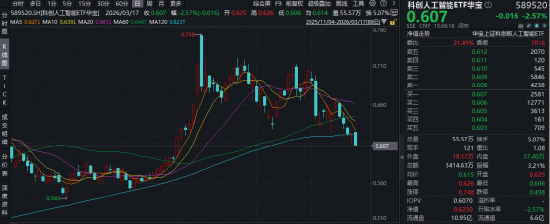
Group 1 - The A-share market saw all three major indices close in the red, with the focus on the domestic AI industry chain, the Sci-Tech Innovation Artificial Intelligence ETF (589520) experiencing a price drop of 2.57%, yet funds showed a "buy the dip" attitude, accumulating 36.6 million yuan over the past five trading days, indicating optimism for the domestic AI sector's future performance [1][8] - In terms of constituent stocks, Anlu Technology led with a gain of over 2%, while Stone Technology and Fudan Microelectronics closed in the green, but 27 other stocks fell, with Xinghuan Technology-U hitting a 20% limit down, and Lingyun Optics, Sikan Technology, and Yaxin Security dropping over 5%, negatively impacting index performance [1][8] Group 2 - At the policy level, AI has become a frequently mentioned term in this year's significant meetings, being included in the government work report for three consecutive years, with seven mentions this year. By 2025, China's core AI industry is expected to exceed 1.2 trillion yuan, with projections of growth to over 10 trillion yuan by the end of the 14th Five-Year Plan [3][10] - The annual GTC conference by NVIDIA highlighted that its new AI acceleration chip architecture, Blackwell, and the next-generation Rubin product are expected to generate at least 1 trillion dollars in revenue by the end of 2027, doubling last year's forecast, emphasizing the rapid expansion of AI infrastructure investment [3][10] - The demand for computing power is surging, leading to a concept of "Token inflation," with platforms like Alibaba Cloud and Volcano Engine seeing a rapid increase in API call volumes. This strong supply-demand dynamic is expected to push the computing power industry into a "full-chain inflation" cycle by 2026, with industry prosperity spilling over from core chips to data centers, cloud services, and supporting power equipment [3][10] - Dongxing Securities believes the AI industry is currently in a phase of resonance across policy, technology, and demand, with domestic chip and cloud computing leaders gradually validating their performance, and continued capital expenditure from major companies enhancing industry development certainty, indicating further upside potential for industry prosperity [3][10] Group 3 - The Sci-Tech Innovation Artificial Intelligence ETF (589520) and its linked funds focus on the domestic AI industry chain, including leading domestic GPU companies (e.g., Cambricon), ASIC leaders (e.g., Chipone), and AI application leaders (e.g., Kingsoft Office). The semiconductor sector accounts for nearly half of the ETF's weight, indicating strong offensive potential, while the software sector accounts for over 30%, likely benefiting from the AI application rebound [3][10] - This ETF serves as a financing and margin trading target, providing an efficient tool for investing in domestic computing power [3][10]
《洞见ESG》3月刊丨全国两会:“双碳”开新局
21世纪经济报道· 2026-03-17 13:23
Group 1 - The National People's Congress (NPC) emphasizes the importance of green and low-carbon transformation, with suggestions from representatives focusing on green energy, digitalization, and innovation in mechanisms and industry upgrades [2][3] - The government work report highlights the need to develop a new power system, expand green electricity applications, and implement collaborative electricity infrastructure projects [3] - The introduction of the Ecological Environment Code marks a significant legal framework aimed at enhancing environmental protection and imposing stricter penalties for violations [5] Group 2 - The "14th Five-Year Plan" is identified as a critical period for achieving carbon peak goals, with a focus on comprehensive green transformation and energy system adjustments [6] - The lithium battery industry is experiencing rapid growth, with China holding over 70% of global production capacity, but faces challenges related to irrational competition and the need for regulatory frameworks [4] - The green fuel industry is highlighted as a new sector facing high research and development costs and infrastructure challenges, indicating a significant funding gap that needs to be addressed [7]


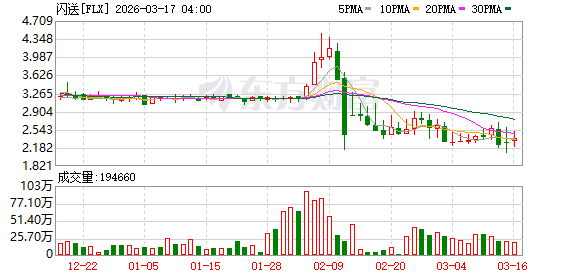
闪送2025年实现经调整净利润2亿元 毛利率持续改善
Zheng Quan Ri Bao· 2026-03-17 13:13
Core Insights - The company, Flash Delivery (NASDAQ: FLX), reported strong financial performance for Q4 2025, with revenues exceeding 1 billion yuan and a gross profit of 110 million yuan. The total revenue for the year reached 4 billion yuan, with an adjusted net profit of 200 million yuan and a gross margin of 11.8% [2] - Flash Delivery has achieved adjusted net profit for three consecutive years, demonstrating the resilience and sustainability of its "one-to-one urgent delivery" model, which is not reliant on short-term benefits but rather on its business model for healthy growth and profitability [2] - The company has a robust cash flow reserve of 950 million yuan as of December 31, 2025, providing solid financial support for long-term strategic initiatives. Additionally, a stock repurchase plan has been extended for another year, with a buyback amount not exceeding 30 million USD, reflecting management's confidence in the core business and future profitability [2] Service Quality and Technological Advancements - The company is continuously enhancing delivery experiences by optimizing service quality through professional rider teams and specialized delivery equipment, focusing on vertical categories such as flowers, cakes, electronics, and daily necessities. It is also expanding into new service scenarios like gift delivery and digital rental to meet diverse user needs [3] - Flash Delivery is embracing technological advancements by implementing artificial intelligence across its platform, covering intelligent scheduling, user interaction, and operational management. The company is also collaborating with external tech partners like Huawei to optimize product experiences and explore new opportunities in low-altitude delivery services, including drone logistics [3][4] Future Outlook - The founder of Flash Delivery stated that the company will continue to enhance service quality and expand application scenarios in 2026, focusing on the application of artificial intelligence to improve efficiency across user services, operations, and product development. The company aims to solidify its service advantages in one-to-one urgent delivery and explore emerging logistics service opportunities [4] - As of the end of 2025, Flash Delivery's services have covered 298 cities nationwide, with a registered rider base of 3.1 million. This large team is crucial for meeting the diverse and immediate delivery needs of urban residents and plays a significant role in enhancing urban circulation efficiency [4]