国产替代

Search documents
喜娜AI速递:今日财经热点要闻回顾|2026年1月17日
Xin Lang Cai Jing· 2026-01-17 11:15
Group 1: ASML and Semiconductor Equipment - ASML's stock price has reached a historic high, with a market capitalization exceeding $520 billion, driven by TSMC's AI spending guidance and storage chip capacity expansion [2][7] - Morgan Stanley forecasts that ASML's EUV lithography machine shipments could reach 80 units by 2027, with projected sales of approximately €46.8 billion for the fiscal year 2027, indicating peak profit growth [2][7] - CITIC Securities is optimistic about investment opportunities in semiconductor equipment, highlighting the potential for domestic companies to double their localization rate as TSMC increases capital expenditures significantly [2][7] Group 2: State Grid and Investment Opportunities - The State Grid is expected to invest ¥4 trillion during the 14th Five-Year Plan period, a 40% increase from the previous plan, focusing on new power systems and ultra-high voltage direct current transmission projects [2][7] - This investment is anticipated to drive the development of the industrial chain, with several companies already winning bids for State Grid projects, positively impacting their performance and valuations [2][7] Group 3: A-Share Company Performance - Over 300 A-share companies have released earnings forecasts for 2025, with six companies expected to report net profits exceeding ¥10 billion, particularly in the non-ferrous metals sector [3][8] - Companies like Zijin Mining are expected to see significant profit increases due to rising production and prices of mineral products, while the photovoltaic industry faces challenges but may recover with technological advancements [3][8] Group 4: Silver Prices and Photovoltaic Industry - The surge in silver prices has increased the cost of silver used in solar cells, prompting manufacturers to raise prices and accelerate plans to substitute copper for silver [3][8] - The photovoltaic industry may face net losses again, with a projected 17% reduction in silver usage by 2026, although short-term investment demand could still support silver prices [3][8] Group 5: Capital Market and Regulatory Developments - The China Securities Regulatory Commission has outlined five key areas for 2026, focusing on market stability, service efficiency, regulatory enforcement, enterprise development, and promoting two-way opening [3][8] - The emphasis is on preventing market volatility while deepening reforms to enhance market stability and competitiveness [3][8] Group 6: Housing Provident Fund Reform - The housing provident fund system in China is facing challenges related to fund activation and localized management, with reforms aimed at increasing flexibility and expanding usage [4][10] - The goal is to integrate the provident fund into a multi-tiered housing security and financial system [4][10] Group 7: U.S. Stock Market Trends - U.S. stock markets experienced slight declines, with traders focusing on comments from former President Trump regarding the Federal Reserve chair nomination and other political issues [4][10] - The market is reacting to potential changes in interest rate expectations and legal challenges regarding tariffs [4][10] Group 8: Iron Ore Supply for Steel Industry - The first shipment of nearly 200,000 tons of West Mambore iron ore has arrived in China, which is expected to supply 120 million tons of high-quality iron ore annually, stabilizing the raw material supply for the steel industry [5][10]


中信证券:看好半导体设备的投资机遇 建议关注高弹性细分龙头
Xin Lang Cai Jing· 2026-01-17 02:31
Core Viewpoint - TSMC is expected to achieve record performance in 2025, with a significant increase in capital expenditure for 2026, indicating ongoing benefits from AI computing power and advanced processes [1] Group 1: Industry Outlook - The domestic wafer fabs are experiencing a wave of expansion due to a million-wafer-level advanced capacity shortage, which is expected to create a $100 billion opportunity in the equipment market [1] - The domestic localization rate is anticipated to double, driven by the dual engines of advanced processes and domestic substitution [1] Group 2: Investment Opportunities - There is optimism regarding investment opportunities in semiconductor equipment, particularly for leading companies with platform capabilities and high-elasticity niche leaders [1]

研判2025!中国大丝束碳纤维行业产业链、市场规模、需求量、竞争格局、发展趋势:风电需求驱动下,中国大丝束碳纤维行业迎来爆发式增长[图]
Chan Ye Xin Xi Wang· 2026-01-17 01:09
Core Insights - The large tow carbon fiber industry is experiencing significant growth due to its high strength, modulus, low density, and excellent corrosion and fatigue resistance, particularly in the wind power sector, which enhances the efficiency and stability of wind energy equipment [1][6] - The demand for large tow carbon fiber in China is projected to reach 20,700 tons by 2024, driven by advancements in technology and the increasing need for clean energy [1][6] Industry Overview - Carbon fiber, known as the "king of new materials," consists of over 90% carbon content, with large tow carbon fiber defined as having more than 48,000 filaments per bundle [2] - Large tow carbon fiber offers significant advantages over small tow carbon fiber, including increased production capacity and lower costs, which helps overcome the high price barriers that limit its application [2][4] Market Demand - The Chinese wind power blade market is expected to reach 47.6 billion yuan in 2024, reflecting a year-on-year increase of 7.7%, which will drive the demand for carbon fiber reinforced composites [4] - The global market for large tow carbon fiber is projected to reach $810 million by 2024, indicating a continued growth trend fueled by downstream demand [5] Industry Development - The large tow carbon fiber industry in China has progressed from a focus on small tow carbon fiber to significant advancements in large tow production, with key milestones achieved in industrialization and scale production since 2016 [3][4] - The first domestic standard for large tow carbon fiber was established in 2023, marking a significant step in the industry’s development [3] Competitive Landscape - Major global players in the large tow carbon fiber market include Toray (Japan), Hexcel (USA), and SGL (Germany), while Chinese companies like Shanghai Petrochemical, Jilin Chemical Fiber, and Zhongfu Shenying are emerging as key competitors [6][4] Industry Trends - The domestic production of large tow carbon fiber is accelerating, reducing reliance on imports and enhancing self-sufficiency in the industry [10] - The application of large tow carbon fiber is expanding beyond wind power to sectors such as rail transportation, energy, and infrastructure, driven by its cost-effectiveness and performance advantages [10] - Government policies are increasingly supporting the development of the carbon fiber industry, promoting innovation and the adoption of advanced materials [10]


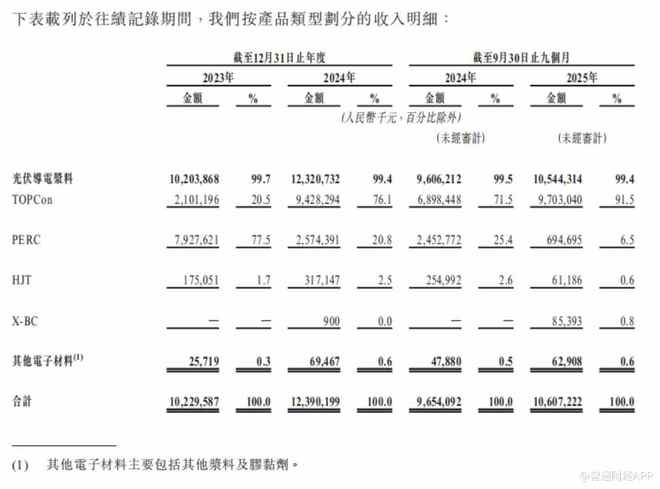
2025年中国聚合物基导热界面材料(TIM)行业政策、发展现状、细分市场及未来发展趋势研判:新兴需求持续放量,国产替代加速破局[图]
Chan Ye Xin Xi Wang· 2026-01-17 01:02
Core Viewpoint - The polymer-based thermal interface materials (TIM) industry is experiencing steady growth driven by advancements in AI, 5G, and electric vehicles, with the Chinese market expanding at a faster rate than the global market. The demand for high-end thermal management solutions in sectors like data centers and ADAS is expected to significantly increase, with the ADAS TIM market projected to reach $600 million by 2033 [1][6]. Industry Overview - Polymer-based TIMs are essential for electronic thermal management, designed to fill microscopic gaps between heat-generating devices and heat sinks, thereby reducing thermal resistance and ensuring efficient operation [1][3]. - TIMs are categorized into TIM1, which is used between chips and packaging, and TIM2, which is used between packaging and heat sinks, with TIM1 requiring higher performance standards [3][4]. Industry Policies - The polymer-based TIM industry is part of the new materials sector, which is a strategic focus for national development. Various policies have been implemented to support technological research, industrial application, and market promotion, facilitating breakthroughs in high-end technology and accelerating domestic substitution [5][6]. Industry Chain - The upstream of the TIM industry includes polymer matrices and high thermal conductivity fillers, while the midstream focuses on material formulation and composite process innovation. The downstream applications span consumer electronics, electric vehicles, 5G communication, and data centers, with electric vehicles and data centers being key growth drivers [5][6]. Market Size and Growth - The global TIM market is projected to grow from $2.012 billion in 2024 to $4.148 billion by 2031, with a compound annual growth rate (CAGR) of 10.74%. The Chinese TIM market is expected to grow from $1.027 billion in 2024 to $2.164 billion by 2031, with a CAGR of 11.09%, indicating strong growth potential [6][7]. Competitive Landscape - The competitive landscape shows a dynamic balance where international giants dominate the high-end market while local companies like Huitian New Materials and Feirongda are making significant advancements. These local firms are transitioning from cost advantages to competing directly in high-end supply chains through technological breakthroughs [7][8]. Development Trends - The industry is expected to evolve around three core directions: technological upgrades focusing on high thermal conductivity and multifunctional integration, deepening industry chain collaboration for domestic substitution, and expanding application scenarios that drive customized solutions [8][9][10]. - Future innovations will emphasize high-performance materials with integrated functionalities, while collaboration between upstream and downstream players will enhance the self-sufficiency of the supply chain [10][11].



A股市场交投活跃 周成交额超17万亿元
Zheng Quan Shi Bao· 2026-01-16 17:44
Market Overview - The A-share market experienced a high and then a pullback, with the Shanghai Composite Index barely holding above 4100 points, while major indices like the Shenzhen Component and Northbound 50 closed with small gains but long upper shadows [1] - The market saw active trading, with daily trading volumes frequently hitting historical highs, and weekly trading volume reaching a record 17 trillion yuan [1] Fund Flows - Significant inflows of leveraged funds continued despite market adjustments, with net financing purchases exceeding 91.3 billion yuan for the week, marking a five-month high, and the financing balance reaching 2.7 trillion yuan, setting a new record for nine consecutive days [2] - The computer industry attracted over 12.3 billion yuan in net financing purchases, while electronics and telecommunications received 10.3 billion yuan and over 9 billion yuan, respectively [2] - Major sectors like defense and non-bank financials saw net outflows of over 24.3 billion yuan and 10.8 billion yuan, respectively [2] Chip Sector - The chip sector saw multiple instances of end-of-day buying, with the sector index hitting historical highs in 7 out of the last 10 trading days [3] - Companies like *ST Chengchang and Liou Co. experienced significant price increases, with *ST Chengchang hitting 128.98 yuan per share, the highest price for any ST stock [3] - Reports indicate that major chip manufacturers AMD and Intel have sold out their server CPU production for the year, leading to planned price increases of 10%-15% [3] Power Industry Outlook - The power equipment sector has shown strong performance, with indices for ultra-high voltage, grid equipment, smart grids, and energy storage reaching historical highs [4] - The State Grid announced a fixed asset investment of 4 trillion yuan for the 14th Five-Year Plan, a 40% increase from the previous plan, focusing on technological innovation and new power system construction [4] - Goldman Sachs predicts that investments in global digital infrastructure and energy systems driven by AI could reach 5 trillion dollars over the next decade, with power grid equipment being a primary beneficiary [4]

万亿顺差的危险信号
财富FORTUNE· 2026-01-16 13:06
Core Viewpoint - The article discusses China's increasing trade surplus, which is projected to grow by 20% to $1.19 trillion by 2025, despite high tariffs and trade barriers, indicating a shift in China's trade dynamics and its self-sufficiency in manufacturing [2][5]. Group 1: Trade Surplus and Export Dynamics - China's trade surplus is expected to reach $1.19 trillion in 2025, a significant increase from previous years, with daily earnings from trade exceeding $3 billion [2]. - The growth in exports is primarily driven by the manufacturing sector, with machinery and electrical products accounting for over 60% of total exports, and a notable rise in exports of solar panels, lithium batteries, and electric vehicles by nearly 30% [4]. - Despite a 20% decline in direct exports to the U.S., exports to Africa, Southeast Asia, and Europe have surged, indicating China's ability to reroute trade effectively [12]. Group 2: Import Stagnation and External Pressures - China's imports have only increased by 0.5%, largely due to export restrictions imposed by other countries, particularly the U.S. and its allies, on high-tech products [5]. - The Chinese government has also implemented soft barriers to imports for security and self-sufficiency reasons, further contributing to the stagnation of imports [5]. - The rising trade surplus has raised concerns in the international community, with European leaders expressing anxiety over trade imbalances and potential retaliatory measures [5]. Group 3: Historical Context and Future Implications - The article draws parallels between China's current trade situation and historical instances of trade imbalances, suggesting that excessive trade surpluses can lead to external pressures and conflicts [9][11]. - China's current economic structure, characterized by a significant trade surplus, may indicate underlying issues in domestic distribution, innovation, and consumption [18]. - The article warns that if trade imbalances persist, external pressures may force adjustments that could have severe consequences for China's economy [11][19].

从技术突破到产业重构 毕马威“智能制造科技50”报告解码行业演进路径
Zheng Quan Ri Bao Wang· 2026-01-16 12:49
Core Insights - The report highlights that industrial large models have become the core engine for intelligent transformation, with the market size for China's industrial large model application expected to expand at a compound annual growth rate (CAGR) of 23% [1] - Six major trends for the development of intelligent manufacturing towards 2030 are identified, including the drive from industrial large models for technological breakthroughs to industrial restructuring, the clarity of the "human-machine symbiosis" intelligent manufacturing ecosystem, the globalization of virtual manufacturing driven by the industrial metaverse, the hard constraints and new growth engines of green initiatives, the dual drive of supply chain security and domestic substitution for industrial upgrades, and the gradient cultivation mechanism promoting the scaling and standardization of smart factories [1] - The report indicates that human-machine collaboration has entered a new stage of "cognitive intelligence," with China maintaining the top position in global industrial robot sales and collaborative robot shipments exceeding 40,000 units, extending from traditional handling to unstructured environments [1] Industry Trends - The competition in China's intelligent manufacturing landscape by 2030 will focus on "cognitive intelligence" in human-machine collaboration, with the ability to achieve autonomous learning and situational understanding in robots defining the next decade's industry standards [2] - The "Intelligent Manufacturing Technology 50" selection process began in May 2025, targeting innovative and transformative enterprises in the industrial sector across four key areas: industrial IoT, intelligent manufacturing, intelligent robotics, and specialized "little giant" companies [2] - Data shows that over 70% of the selected companies are in the intelligent manufacturing and robotics sectors, with nearly half being growth-stage companies established 6 to 10 years ago, and over 80% of these companies having a technical staff ratio exceeding 40% [2] Future Outlook - Continuous technological breakthroughs are expected to usher in a golden era of more intelligent, personalized, and greener industrial manufacturing, with the selected companies showcasing China's innovative strength in intelligent manufacturing [3] - A high-quality development path is envisioned, led by independent innovation and supported by industrial collaboration [3]
全球市占率27%,光伏导电浆料龙头聚和材料冲刺“A+H”
Zhi Tong Cai Jing· 2026-01-16 12:45
Core Viewpoint - The photovoltaic industry is undergoing a structural shift from a "silicon-centric" model to a "silver-reduction" approach, with domestic semiconductor material substitution entering a critical phase, presenting advanced material companies with opportunities for business upgrades and cross-industry breakthroughs [1] Group 1: Company Overview - Jiangsu Juhua New Materials Co., Ltd. (Juhua Materials) is a leading global manufacturer of photovoltaic conductive silver paste, established in 2015, focusing on R&D-driven advanced materials [2] - The company has developed a comprehensive product matrix covering mainstream routes such as TOPCon, PERC, HJT, and X-BC, with its TOPCon series accounting for 91.5% of revenue by September 2025 [2][3] - Juhua Materials holds the largest market share in the global photovoltaic conductive paste market at 27% as of September 30, 2025, with sales revenue ranking first among all manufacturers [2] Group 2: Financial Performance - Revenue for the fiscal years ending December 31, 2023, 2024, and the nine months ending September 30, 2025, were approximately RMB 10.23 billion, RMB 12.39 billion, and RMB 10.61 billion respectively, driven by increased demand for TOPCon paste and rising silver prices [11] - The company's gross profit margins have shown a declining trend, with margins of 9.2%, 7.8%, and 6.5% for the respective periods, while net profit margin decreased from 4.3% in 2023 to 2.2% in the nine months of 2025 [14] - Operating cash flow has been negative due to the industry's unique settlement model, with net cash flows of -RMB 2.67 billion, -RMB 0.9 billion, and -RMB 1.31 billion for the respective periods [17] Group 3: Market Potential - The global photovoltaic conductive paste market is projected to grow from RMB 14.7 billion in 2020 to RMB 50.4 billion in 2024, with a compound annual growth rate (CAGR) of 16.2% expected from 2025 to 2029 [6] - The market for blank mask plates in China is expected to reach RMB 2.9 billion in 2024 and RMB 7.6 billion by 2029, with a CAGR of 25.1% from 2025 to 2029 [8] Group 4: Strategic Initiatives - Juhua Materials is expanding into the semiconductor materials sector through strategic acquisitions, including a planned acquisition of SK Enpulse Co., Ltd.'s blank mask plate business for approximately RMB 3.45 billion [7] - The acquisition aims to enhance the company's position in the semiconductor materials market and support the national strategy for semiconductor self-sufficiency [7] - The company is also focusing on reducing silver content in its products and has achieved mass production of copper paste, which is expected to improve cost control and profitability [5][19]

新股前瞻|全球市占率27%,光伏导电浆料龙头聚和材料冲刺“A+H”
Zhi Tong Cai Jing· 2026-01-16 12:28
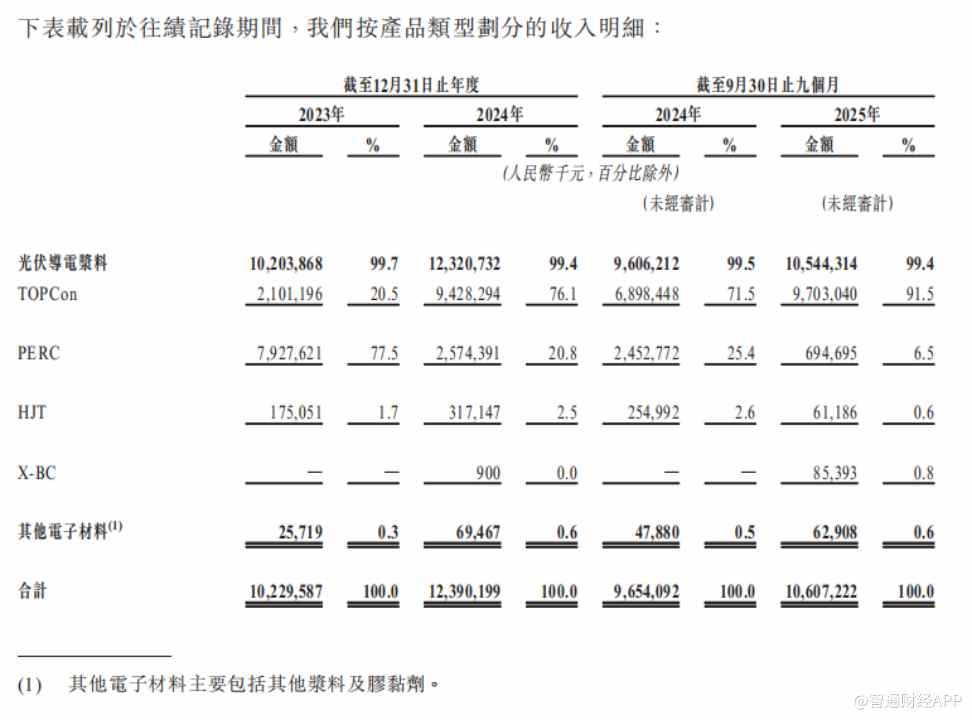
Core Viewpoint - The photovoltaic industry is undergoing a structural shift from "silicon dominance" to "silver reduction," with domestic semiconductor material substitution entering a critical phase, presenting advanced material companies with opportunities for business upgrades and cross-industry breakthroughs [1] Group 1: Company Overview - Jiangsu Juhua New Materials Co., Ltd. (Juhua Materials) submitted its listing application to the Hong Kong Stock Exchange, aiming to strengthen its photovoltaic business and accumulate resources for its semiconductor material expansion [1] - Established in 2015, Juhua Materials is a research-driven advanced materials company, primarily producing photovoltaic conductive materials and other electronic materials, with a product matrix covering all mainstream routes [2] Group 2: Market Position and Financial Performance - As of September 30, 2025, Juhua Materials ranked first globally in photovoltaic conductive paste sales, holding a market share of 27% [2] - The company's revenue for the fiscal years ending December 31, 2023, 2024, and the nine months ending September 30, 2025, were approximately RMB 10.23 billion, RMB 12.39 billion, and RMB 10.61 billion, respectively, driven by increased demand for TOPCon paste and rising silver prices [12][14] Group 3: Research and Development - Juhua Materials has a strong R&D capability, with 236 R&D personnel, accounting for 32% of its workforce, and has invested over RMB 2 billion in R&D from 2023 to September 2025 [5] - The company has developed low-silver and silver-free technologies, achieving mass production of silver-coated copper conductive paste and advancing research on ultra-low-temperature curing paste for perovskite batteries [5] Group 4: Industry Growth Potential - The global photovoltaic conductive paste market is projected to grow from RMB 14.7 billion in 2020 to RMB 50.4 billion in 2024, with a compound annual growth rate (CAGR) of 16.2% expected from 2025 to 2029 [6] - The market for blank mask plates in China is expected to reach RMB 2.9 billion in 2024 and RMB 7.6 billion by 2029, with a CAGR of 25.1% from 2025 to 2029 [9] Group 5: Strategic Expansion - Juhua Materials is expanding into the semiconductor materials sector through strategic acquisitions, including a planned acquisition of SK Enpulse's blank mask plate business for approximately RMB 3.45 billion [8] - The acquisition aims to enhance the company's position in the semiconductor materials market and support domestic production capabilities [8] Group 6: Financial Challenges - Despite steady revenue growth, the company faces profit pressure, with gross margins declining from 9.2% in 2023 to 6.5% in the nine months ending September 30, 2025, primarily due to rising silver prices and intensified industry competition [14] - The company has experienced negative cash flow from operating activities, necessitating financing through bank acceptance bills to cover working capital gaps [17]
新股前瞻|全球市占率27%,光伏导电浆料龙头聚和材料(688503.SH)冲刺“A+H”
Zhi Tong Cai Jing· 2026-01-16 12:25
Core Viewpoint - The photovoltaic industry is undergoing a structural shift from "silicon dominance" to "silver reduction," with domestic semiconductor material substitution entering a critical phase. Advanced material companies are facing dual challenges of upgrading their main business and cross-industry breakthroughs. Jiangsu Juhua New Materials Co., Ltd. (Juhua Materials) has submitted a listing application to the Hong Kong Stock Exchange to strengthen its photovoltaic business and accumulate momentum for its semiconductor material layout [1]. Group 1: Company Overview - Juhua Materials, established in 2015, is a research-driven advanced materials company focusing on photovoltaic conductive materials and other electronic materials. The company has developed a product matrix covering all mainstream routes, including TOPCon, PERC, HJT, and X-BC, aligning its product structure with industry trends [2]. - As of September 30, 2025, Juhua Materials ranked first globally in photovoltaic conductive paste sales, with a market share of 27% [2]. Group 2: Financial Performance - The company reported revenues of approximately 10.23 billion RMB, 12.39 billion RMB, and 10.61 billion RMB for the years ending December 31, 2023, 2024, and the first nine months of 2025, respectively. The growth was primarily driven by increased demand for TOPCon paste and rising silver prices [11]. - However, profit margins are under pressure, with gross margins of 9.2%, 7.8%, and 6.5% for the respective periods, and net profit margins declining from 4.3% in 2023 to 2.2% in the first nine months of 2025 [11][13]. Group 3: Market Dynamics - The global photovoltaic conductive paste market is projected to grow from 14.7 billion RMB in 2020 to 50.4 billion RMB in 2024, with an expected compound annual growth rate (CAGR) of 16.2% from 2025 to 2029. The overseas market is anticipated to expand significantly, particularly in Southeast Asia, the Middle East, and India [5]. - The market for blank mask plates in China is expected to reach 2.9 billion RMB in 2024 and grow to 7.6 billion RMB by 2029, with a CAGR of 25.1% from 2025 to 2029 [9]. Group 4: Strategic Initiatives - Juhua Materials is pursuing a dual growth strategy by expanding into the semiconductor materials sector through strategic acquisitions. The company plans to acquire the blank mask plate business from South Korea's SK Enpulse for 34.5 billion RMB, aiming to enhance its semiconductor material capabilities [7]. - The acquisition is expected to facilitate domestic production of high-end semiconductor materials and contribute to the localization of the supply chain, addressing key bottlenecks in the industry [7][8]. Group 5: Challenges and Opportunities - The company faces challenges related to cash flow and liquidity, with negative operating cash flows reported for the years 2023 to 2025. The reliance on bank acceptance bills for financing highlights the liquidity pressure [15]. - Despite these challenges, the company maintains a competitive edge through its research and development capabilities, with over 20 billion RMB invested in R&D and a strong patent portfolio [3].