多边主义

Search documents
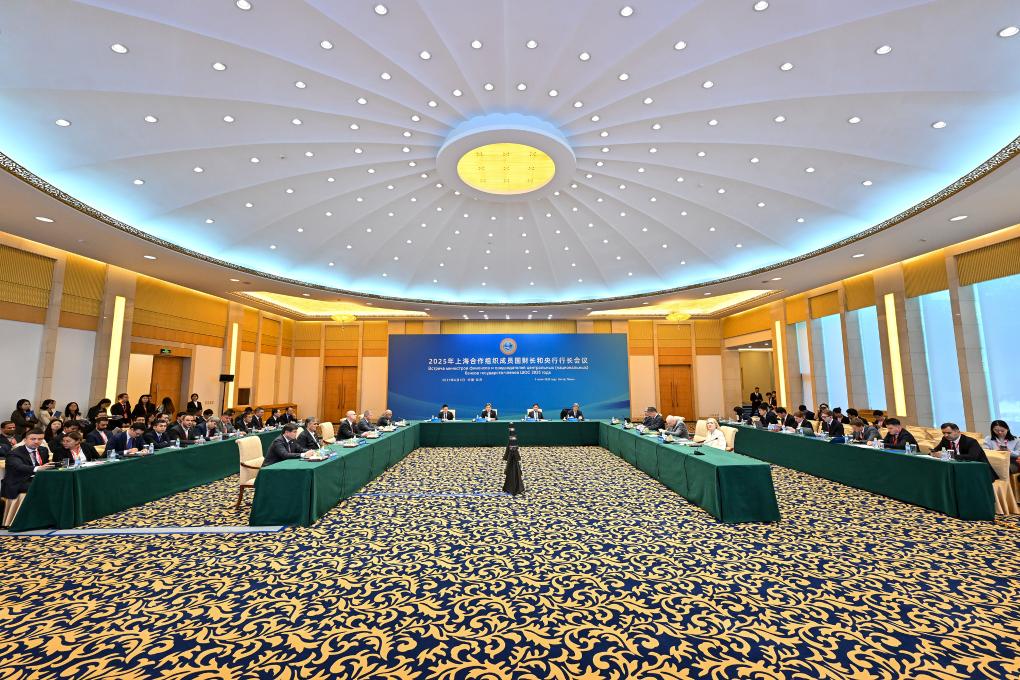
上合组织成员国财长和央行行长会议支持深化财金合作
Xin Hua Wang· 2025-08-12 05:52
Core Points - The 2025 Shanghai Cooperation Organization (SCO) Finance Ministers and Central Bank Governors meeting was held on June 3 in Beijing, focusing on deepening regional financial cooperation [1][3] - The meeting discussed global and regional economic and financial challenges, sharing policy practices related to fiscal and monetary issues, green transformation, and financial development [3] Group 1 - The meeting supported actions to enhance regional financial cooperation, including the establishment of the SCO Development Bank and the creation of an SCO financial think tank network [3] - Discussions included improving local currency settlement arrangements and deepening digital inclusive finance cooperation [3] - The meeting emphasized the need for member countries to uphold multilateralism and strengthen macroeconomic policy coordination [3] Group 2 - The current global landscape is characterized by rapid changes, including a new round of technological revolution and industrial transformation, presenting new cooperation opportunities for SCO member countries [3] - Challenges such as trade protectionism, globalization backlash, geopolitical conflicts, and climate change pose significant threats to global and regional economic stability [3] - The meeting aimed to foster a closer SCO community and contribute to a new phase of financial cooperation among member states [3]


忍无可忍!中方绝地反击震撼全球,特朗普被逼急转弯,世界为之变色
Sou Hu Cai Jing· 2025-08-12 00:33
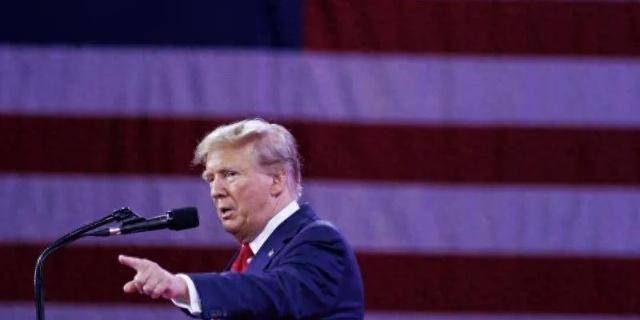
Group 1 - The Trump administration's imposition of a 25% tariff on Indian goods, totaling a 50% tax rate, is aimed at pressuring India over its purchase of Russian oil, significantly impacting India's economy, particularly in textiles and gemstones [1] - The U.S. market accounts for 30% of India's gemstone and jewelry exports, and the tariff increase threatens the livelihoods of millions of Indian workers, potentially leading to domestic political unrest and instability for Modi's government [1] - Trump's linkage of tariffs to India's agricultural market access exacerbates existing tensions, recalling the significant farmer protests in India in 2020, thus intensifying social discord [1] Group 2 - Trump's ambiguous stance on imposing new tariffs on China reflects a shift in dynamics, as China has made technological advancements despite U.S. sanctions, complicating U.S. pressure tactics [2] - The Shanghai Cooperation Organization summit in Tianjin serves as a pivotal moment in international relations, with China inviting Modi to visit, breaking a five-year diplomatic freeze since the 2020 border conflict [2] - Modi's potential visit to China is not a strategic pivot but a response to U.S. pressure, indicating India's need to balance its economic dependencies on the U.S. and Russia while maintaining trade relations with China [3] Group 3 - Trump's tariff policies are not only affecting India but also prompting responses from other nations like Brazil, where President Lula criticizes Trump's approach and seeks collaborative measures with Modi [5] - The aggressive tactics employed by Trump are alienating potential allies and pushing them closer to competitors, while China's more cooperative strategy appears to be yielding better results in managing international relations [7] - The tariff-induced international relations upheaval is reshaping the global landscape, indicating that unilateral actions are becoming increasingly untenable in a deeply interconnected world [9]
詹德斌:关税大棒下,新殖民主义幽灵在游荡
Sou Hu Cai Jing· 2025-08-11 22:40
Group 1 - The core argument highlights the detrimental impact of U.S. tariffs on countries like Lesotho, particularly with a 15% tariff on apparel products, which exacerbates economic challenges in these nations [1] - The U.S. has been using tariffs as a tool to compel global companies to relocate production and transfer technology to the U.S., effectively leveraging its market power [2][3] - Traditional allies of the U.S. are competing for lower tariff rates rather than resisting U.S. pressure, indicating a lack of strategic autonomy and a shift towards dependency on U.S. economic policies [2][3] Group 2 - The article critiques the U.S. for undermining international rules and order, portraying it as a significant disruptor rather than a fair market leader [3][4] - It emphasizes the need for global South countries to unite in defending a multilateral international system based on international law and the principles of the UN Charter [4][5] - The call for a more equitable international order is framed as a collective responsibility, urging nations to reject unilateralism and embrace genuine multilateralism [5]
“以保护生态环境促进绿色经济发展”
Ren Min Ri Bao· 2025-08-11 21:39
Group 1 - The core viewpoint emphasizes China's commitment to promoting green economic development through ecological protection, showcasing significant achievements in green low-carbon transformation since the 18th National Congress of the Communist Party of China [1] - The director of the International Relations Research Institute of Mongolia, Bazar Dorgi, highlights China's successful desertification control efforts and the potential for Mongolia to learn from these experiences, suggesting that environmental cooperation could strengthen the strategic partnership between the two countries [1] - Bazar Dorgi notes China's consistent contribution to global economic growth, maintaining around 30% for several years, and praises the government's scientific formulation of economic growth targets and proactive policy measures [1] Group 2 - Bazar Dorgi acknowledges the achievements of China's reform and opening-up over the past 40 years, emphasizing the importance of China's development experience and the political system's advantages in achieving new accomplishments [2] - He observes the vibrant high-quality development across various regions in China, attributing this to the country's long-term development planning and collective efforts of the populace to achieve development goals [2] - Bazar Dorgi expresses that China's commitment to multilateralism and its independent foreign policy contributes significantly to regional and global stability, highlighting the interdependence of China's development and global progress [2]
特朗普白送中国机遇,22国与美谈崩,专家提议不如帮中国登顶全球
Sou Hu Cai Jing· 2025-08-11 06:10
Group 1 - The core point of the article is that the U.S. has imposed high tariffs on African countries, which may inadvertently benefit China by pushing African nations to seek closer ties with China instead of the U.S. [1][5] - The U.S. has announced a new round of tariffs, with 18 African countries facing a 15% tariff, while Libya, South Africa, Algeria, and Tunisia face tariffs as high as 25% to 30% [1][3] - The U.S. aims to enforce its "America First" policy by claiming that American goods face high tariffs in Africa, despite the fact that countries like South Africa, Nigeria, and Ghana have tariffs below 10% [3][5] Group 2 - Experts suggest that the U.S. tariffs may provide a strategic opportunity for China, as China has announced zero tariffs on products from 53 African countries, contrasting sharply with U.S. policies [5][6] - African nations are actively seeking to reduce their dependence on the U.S. and are leveraging their tax rates to attract American companies while negotiating for tariff exemptions [8] - The overall sentiment in Africa is shifting from passive acceptance of U.S. policies to actively seeking alternatives, indicating a potential long-term trend towards closer relations with China [6][8]
78岁的总统振臂高呼,必须拉中国和印度入伙,给美国一点颜色瞧瞧
Sou Hu Cai Jing· 2025-08-11 02:22
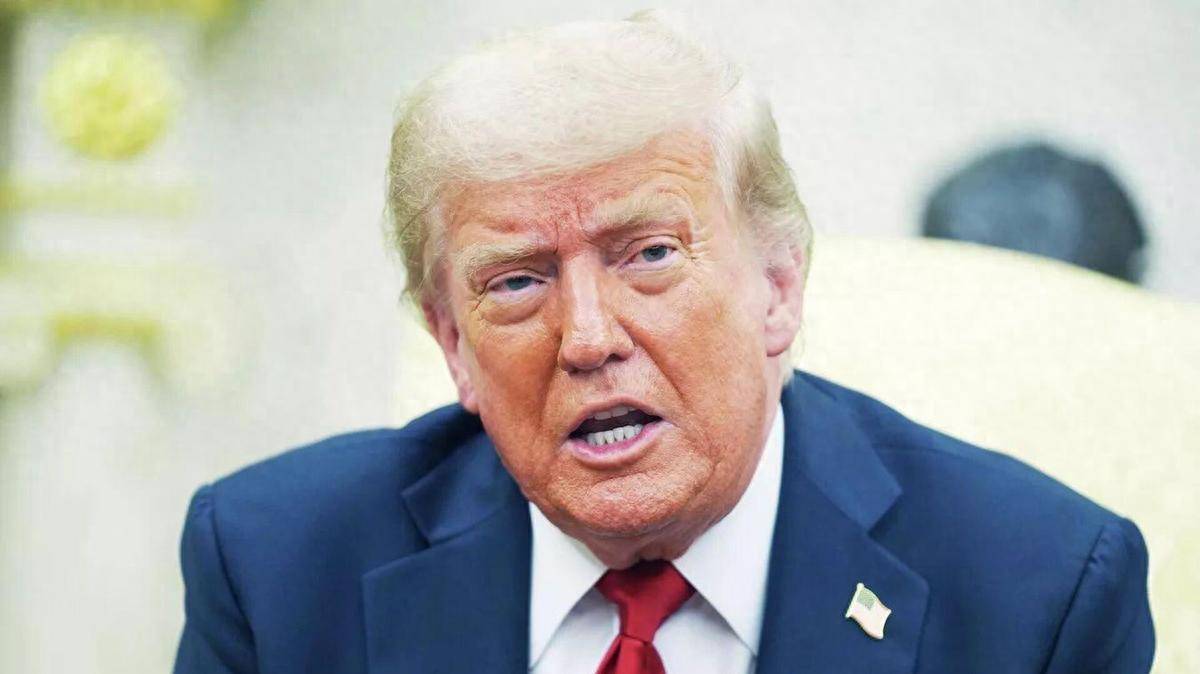
Group 1 - Brazilian President Lula plans to discuss with China and India how BRICS countries can collectively respond to tariffs imposed by the Trump administration [3][5] - Lula expresses concern over the impact of tariffs, which currently reach as high as 50% on Brazilian products, and aims to lead Brazil out of this predicament [6][8] - The strategy includes seeking new partnerships and expanding trade with China, which has increased imports from Brazil recently [9] Group 2 - Lula's approach also aims to stabilize the Brazilian political landscape amid domestic protests supporting former President Bolsonaro, which have been fueled by Trump's criticisms of Lula's government [11][13] - The call for BRICS unity against U.S. tariffs serves as a potential solution to alleviate pressure on Brazil, addressing both external trade challenges and internal political dissent [14] - Successfully uniting BRICS against the U.S. could elevate the international standing of the group and benefit Brazil in the long term, although the feasibility of such a coalition remains uncertain [16]
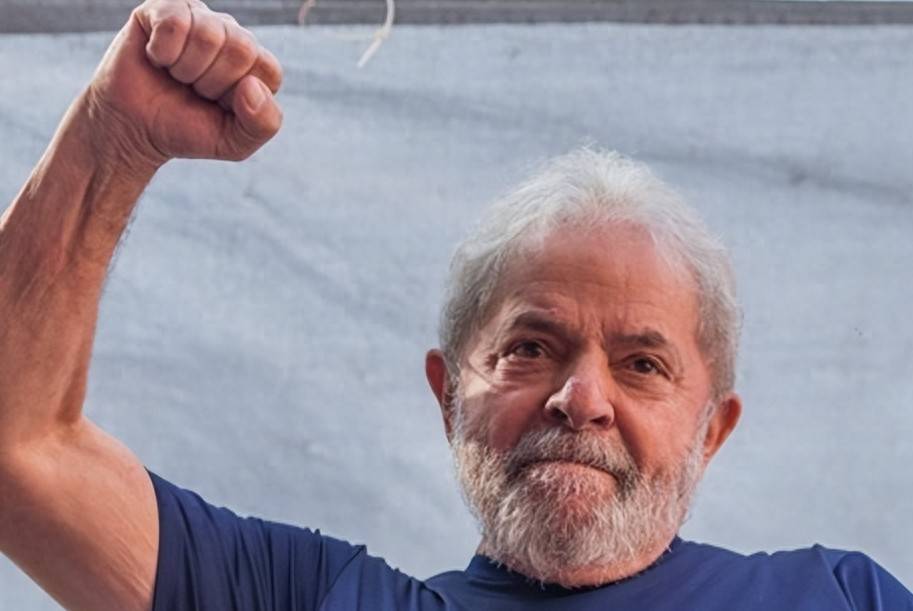
【环球财经】巴西“硬刚”美国关税霸凌:主权与尊严之战
Xin Hua She· 2025-08-10 10:25
Group 1 - The U.S. has imposed a 40% tariff on Brazilian products, with most facing a total rate of up to 50%, claiming it aims to balance long-term trade deficits while accusing Brazil of political persecution against former President Bolsonaro [1][2] - Brazilian President Lula has firmly rejected U.S. interference, stating that Brazil will strengthen cooperation with emerging economies and seek support through multilateral platforms like the WTO and BRICS [1][3] - Lula emphasized that the U.S. has no right to dictate terms to a sovereign nation, marking the lowest point in U.S.-Brazil relations in 200 years, and expressed skepticism about direct talks with President Trump [1][2] Group 2 - Despite strong rhetoric, Brazil has not completely abandoned pragmatic negotiations with the U.S. regarding tariffs, indicating a cautious approach to reaching an agreement [2] - Brazilian officials, including Vice President Alckmin, have engaged in multiple rounds of discussions with U.S. government and business representatives since July, aiming to return to rational negotiations [2][3] Group 3 - Brazil is actively enhancing trade relations with emerging economies, including discussions with India to boost bilateral trade to $20 billion by 2030 and expand trade agreements [3] - The Brazilian government has requested consultations under the WTO dispute resolution mechanism regarding U.S. tariffs and is considering a joint complaint with other countries [3] Group 4 - To mitigate the economic impact of U.S. tariffs, Brazil is contemplating allocating approximately 30 billion reais (about $5.4 billion) from a fund managed by the National Bank for Economic and Social Development to support affected businesses [4] - The Brazilian government is also exploring adjustments to taxation on U.S. companies and plans to develop a new policy for strategic mineral resource development [4]
综述丨巴西“硬刚”美国关税霸凌:主权与尊严之战
Xin Hua Wang· 2025-08-10 08:39
Group 1 - The U.S. has imposed a 40% tariff on Brazilian products, with many facing rates as high as 50%, claiming it aims to balance trade deficits while accusing Brazil of political persecution against former President Bolsonaro [1] - Brazilian President Lula has firmly rejected U.S. interference, emphasizing Brazil's commitment to sovereignty and dignity, and plans to strengthen ties with emerging economies through multilateral platforms like the WTO and BRICS [1][2] - Lula stated that U.S.-Brazil relations have reached their lowest point in 200 years, expressing skepticism about the possibility of direct talks with President Trump [1] Group 2 - Despite a strong stance against the U.S., Brazil is open to pragmatic negotiations regarding tariffs, with Lula indicating a cautious approach and no rush to reach an agreement [2] - Brazil has engaged in multiple rounds of negotiations with U.S. officials and industry representatives since July, aiming to restore rational discussions [2] - Lula has discussed enhancing cooperation with India, targeting a bilateral trade increase to $20 billion by 2030, and plans to expand trade agreements with Mexico [2] Group 3 - Brazil has requested consultations under the WTO dispute resolution mechanism to challenge U.S. tariffs, questioning the legitimacy of recent U.S. administrative orders [3] - The Brazilian government is considering a fund allocation of approximately 30 billion reais (about $5.54 billion) to support businesses affected by U.S. tariffs [3] - Brazil is also exploring adjustments to taxation on U.S. companies and developing new policies for strategic mineral resource exploitation [3]
单边主义损及贸易 葡萄牙谴责美国“对等关税”不对称性
Sou Hu Cai Jing· 2025-08-09 18:31
Core Viewpoint - The implementation of the "reciprocal tariffs" by the United States has led to significant dissatisfaction in Europe, particularly affecting exporters like those in Portugal [1][3] Group 1: Impact on European Exporters - The unilateral nature of the U.S. tariffs is seen as asymmetric and poses serious challenges for European exporters, including those from Portugal [1] - Portuguese automotive and machinery producers will face additional costs when entering the U.S. market, increasing their operational burdens [3] Group 2: Statistical Evidence - Portugal's exports to the U.S. saw a dramatic decline of 39.4% year-on-year in June, dropping from €55.7 million in June 2024 to €33.8 million [3] - In the second quarter, exports to the U.S. decreased by 13.9% year-on-year, falling from €141.9 million to €122.1 million [3] Group 3: Broader Trade Implications - The protectionist measures from the U.S. contradict the direction of global multilateral trade system development, which should be based on balanced interdependence and openness [3] - Portugal advocates for a more equitable and clearly defined international trade system as a proponent of multilateralism [3]

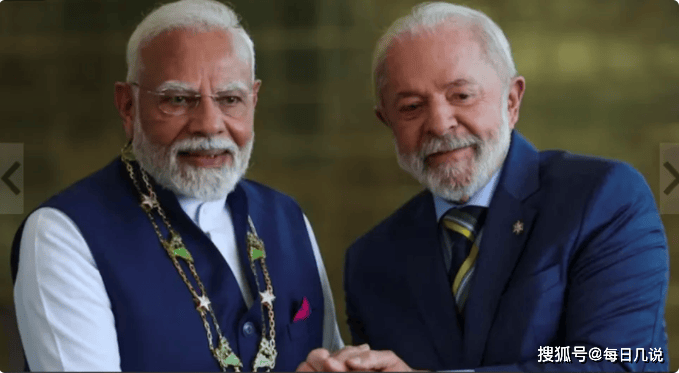
美国高关税下,巴西印度如何共克时艰?
Sou Hu Cai Jing· 2025-08-09 18:31
Group 1 - The core event involves Brazil and India leaders' urgent communication to unite against the U.S. unilateral tariff policies, marking a significant strategic action in response to the Trump administration's tariffs [1][4] - The U.S. government has raised tariffs on Brazilian and Indian goods to 50%, the highest level since World War II, severely impacting key exports such as meat, orange juice, and textiles [6][12] - Brazil and India aim to enhance bilateral cooperation by expanding trade agreements and reducing reliance on the U.S. dollar through local currency transactions [5][7] Group 2 - The leaders reaffirmed their commitment to defending multilateralism and expressed the necessity of joint action to mitigate risks posed by U.S. trade policies [4][9] - Brazil's economic stability has been partially supported by strong trade ties with China, while India maintains its strategic partnership with Russia despite U.S. pressures [9][10] - The collaboration between Brazil and India is seen as a response to the geopolitical isolation and the need for diversified alliances to counter U.S. unilateralism [10][11] Group 3 - The potential establishment of a "Southern Common Market - India Trade Zone" could challenge the effectiveness of U.S. tariff policies and contribute to the reconfiguration of global economic order [12][13] - The cooperation may lead to the emergence of a new geopolitical alliance that balances against traditional Western powers, especially with the inclusion of new BRICS members [13][14] - Brazil and India's actions could catalyze reforms in multilateral governance mechanisms, such as the WTO, and strengthen their commitments to a multipolar international order [14]