智能驾驶

Search documents
均胜电子系列十四-三季报点评:单三季度净利润同比增长35%,加速开拓汽车电子及机器人关键零部件业务【国信汽车】
车中旭霞· 2025-11-13 06:02
Core Viewpoint - In Q3 2025, Junsheng Electronics achieved a net profit of 410 million yuan, representing a year-on-year increase of 35% [2] Financial Performance - For the first three quarters of 2025, the company reported revenue of 45.844 billion yuan, up 11.45% year-on-year, and a net profit attributable to shareholders of 1.12 billion yuan, up 18.98% year-on-year [3][12] - In Q3 2025, the company achieved revenue of 15.497 billion yuan, a year-on-year increase of 10.25% but a quarter-on-quarter decrease of 1.74%, with a net profit of 413 million yuan, up 35.40% year-on-year and up 12.37% quarter-on-quarter [3][12] - The gross profit margin in Q3 2025 was 18.6%, an increase of 2.9 percentage points year-on-year and 0.2 percentage points quarter-on-quarter [3][16] Order Growth and Structure - The company has a robust order backlog, with new orders in Q3 2025 amounting to approximately 40.2 billion yuan, and a total of 71.4 billion yuan in new orders for the first three quarters [4][5][33] - The new orders include approximately 39.6 billion yuan for automotive safety and about 31.8 billion yuan for automotive electronics, with a growing proportion from leading domestic brands and new car manufacturers [5][33] Automotive Electronics Business - Junsheng Electronics is accelerating its automotive electronics business, having secured new projects for intelligent driving and smart cockpit solutions, with expected total order values of approximately 15 billion yuan and 5 billion yuan respectively [7][8][40] Robotics and Intelligent Systems - The company is positioning itself as a "Tier 1" provider in the automotive and robotics sectors, actively developing humanoid robotics and related components, including control systems and energy management modules [9][52][53] - In H1 2025, Junsheng Electronics launched a humanoid robot subsidiary and began offering integrated solutions for key components in robotics [53][56] Innovation and R&D - The company is committed to continuous innovation in automotive electronics and robotics, focusing on areas such as intelligent cockpit, intelligent driving, and high-voltage fast charging systems [35][36] - Junsheng Electronics has made significant advancements in its intelligent cockpit solutions, integrating various technologies to enhance user interaction and vehicle connectivity [37][41] Market Expansion and Global Strategy - The company is leveraging its global manufacturing and R&D capabilities to support Chinese automotive brands in their international expansion, particularly in Europe and Southeast Asia [49][50] - Junsheng Electronics is actively participating in the development of intelligent safety systems and has been involved in setting industry standards and regulations [46][44]



图达通通过港交所聆讯 连续四季度毛利润为正
Yang Shi Wang· 2025-11-13 03:36
Core Insights - TudaTong (Seyond) has passed the hearing of the Hong Kong Stock Exchange, joining Hesai and Suton in the laser radar market [1] Company Performance - In the first nine months of 2025, TudaTong delivered approximately 181,000 automotive-grade laser radars, marking a year-on-year growth of 7.7% [3] - The company achieved positive gross profit for four consecutive quarters from Q4 2024 to Q3 2025, indicating improved scale effects and refined management [3] Product and Market Strategy - TudaTong's main automotive-grade laser radar, "Falcon," has delivered over 600,000 units, showcasing its top-tier performance and stable mass delivery capabilities [4] - The company has diversified its customer base, securing contracts with three Chinese state-owned automotive manufacturers and a leading joint venture, expected to contribute to sales from the end of 2025 [4] - TudaTong's product applications have expanded beyond passenger vehicles to commercial vehicles and robotics, receiving mass production orders from industry players like DeepWay and Shaanxi Heavy Duty Truck [4] Industry Positioning - The competition among laser radar companies is evolving from a focus on performance parameters to a comprehensive assessment of product matrix integrity, stable mass delivery, and product maturity [5] - TudaTong is one of the few companies achieving large-scale production of both high-performance 1550nm and cost-effective 905nm laser radars, establishing a complete product matrix covering high-end to mainstream markets [5] - The company is at the forefront of developing pure solid-state laser radars, with its next-generation product, the Hummingbird D1, already receiving mass production orders from leading manufacturers [6] Market Outlook - As the global automotive industry shifts from electrification to intelligence, the demand for laser radars as core sensors is expected to experience explosive growth [6] - TudaTong's technological foresight, stable mass delivery capabilities, and mature market experience position it well to seize market opportunities [6]
图达通通过聆讯:毛利率连续转正引领盈利跨越,国产激光雷达三强竞逐千亿市场
Ge Long Hui· 2025-11-13 01:27
Core Viewpoint - The laser radar industry is experiencing unprecedented growth opportunities as it becomes a crucial component in the development of autonomous driving technology, with significant interest from capital markets in hard technology sectors [1]. Group 1: Industry Overview - The recent listing of TUTD on the Hong Kong Stock Exchange marks it as the third Chinese laser radar company to enter the market, following Hesai Technology and RoboSense, indicating a strong consensus on the growth potential in the smart driving sensor sector [2]. - The Chinese automotive industry is projected to see a penetration rate of over 50% for new energy vehicles by 2025, shifting the competitive landscape from electrification to intelligence, with advanced driver-assistance systems (ADAS) rapidly becoming mainstream [3]. - The application scenarios for laser radar are expanding beyond autonomous vehicles to include robotics, smart transportation, and industrial automation, with a forecast of 400,000 units shipped in the global robotics sector by 2025 [4]. Group 2: Company Performance - TUTD's gross margin reached 12.9% in the first five months of 2025, and it has achieved positive gross profit for four consecutive quarters from Q4 2024 to Q3 2025, showcasing a significant transition from technological breakthroughs to commercial realization [3]. - TUTD has delivered 181,100 ADAS-grade laser radars in the first nine months of 2025, reflecting strong technical output and commercialization capabilities [4]. - The company has established a diverse product matrix covering various scenarios, including long-range and near-field radar, and has received significant orders from major automotive manufacturers and robotics companies, enhancing its customer base and reducing dependency on single clients [6][7]. Group 3: Technological Advancements - TUTD is one of the few companies globally that has mastered both 1550nm and 905nm technology routes, enabling it to deliver high-performance long-range detection solutions and cost-effective products for mass application [6]. - The introduction of the solid-state laser radar, the Hummingbird D1, has been recognized by leading manufacturers, indicating TUTD's competitive edge in solid-state technology [6]. Group 4: Future Outlook - TUTD's entry into the Hong Kong market is timely, coinciding with the acceleration of smart driving and the breaking of policies for L3 autonomous driving, positioning the company to capitalize on the impending industry explosion [8]. - With the increasing penetration of intelligent driving and the expansion of application scenarios, TUTD is expected to leverage technological reuse and scale effects to seize this historic opportunity [9].
小鹏汽车-W(09868.HK)2025年10月销量点评:同环比持续增长 月销再破4万辆
Ge Long Hui· 2025-11-12 19:50
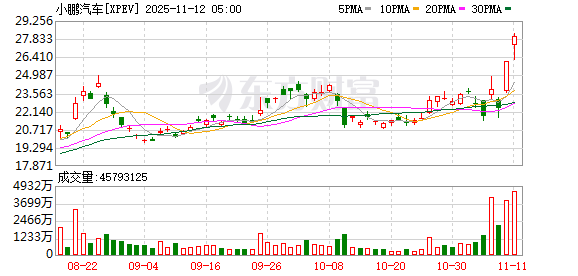
Core Viewpoint - Xiaopeng Motors reported a record monthly delivery of 42,013 vehicles in October 2025, marking a year-on-year increase of 75.7% and a month-on-month increase of 1.0% [1] Delivery Performance - In October 2025, the company delivered 42,013 new vehicles, achieving a year-on-year growth of 75.7% and a month-on-month growth of 1.0% [1] - Cumulative deliveries from January to October 2025 reached 355,000 vehicles, representing a year-on-year increase of 190.0% [1] Product Performance - The new P7 model's deliveries accelerated, and the main sales models continued to perform strongly, contributing to the high growth in sales [1] - The MONA M03 model delivered over 15,000 units in October, with cumulative production exceeding 200,000 units since its launch [1] - The SUV family (G6/G7/G9) sold over 10,000 units in October, with the G6 model achieving cumulative deliveries of over 65,000 units, a nearly 60% year-on-year increase [1] - Cumulative deliveries of the P7+ model surpassed 80,000 units by the end of October [1] Future Outlook - The next-generation extended-range product, the Xiaopeng X9 Super Extended Range version, is set to launch, featuring a unique combination of a 63.3-degree large battery and a 60L fuel tank, with a comprehensive range of 1,602 km [1] - The company expects to deliver between 113,000 and 118,000 vehicles in Q3 2025, representing a year-on-year growth of 142.8% to 153.6%, with projected revenue between 19.6 billion and 21 billion yuan, a year-on-year increase of 94.0% to 107.9% [1] International Expansion - In October, Xiaopeng made further breakthroughs in the European, Asian, and African markets, entering seven new markets including Lithuania, Latvia, Estonia, Cambodia, Morocco, Tunisia, and Qatar [1] - The company aims to shift from "rapid layout" to "solid operation" in new markets, focusing on building brand strength and local service networks [1] Financial Performance - The company anticipates achieving a quarterly profit in Q4 2025 and expects to generate positive free cash flow for the entire year [1] - Revenue for 2025 is projected to reach 83.1 billion yuan, corresponding to a price-to-sales ratio of 1.8X, with significant improvements in software revenue reflecting better financial performance [2]
守擂“AI王冠” 小鹏拆掉的拐杖不止语言
2 1 Shi Ji Jing Ji Bao Dao· 2025-11-12 14:24
Core Insights - The core argument of the article emphasizes that electric vehicles (EVs) must evolve beyond mere electrification to incorporate intelligent driving as a fundamental differentiator from traditional vehicles [2][4][6]. Group 1: Company Strategy and Developments - He Xiaopeng, the founder of XPeng Motors, has consistently viewed intelligent driving as the "core battlefield" for the automotive industry, leading the company to invest heavily in smart driving technology [2][4]. - XPeng Motors has transitioned from XPILOT 1.0 to the VLA (Vision-Language-Action) model, marking a significant evolution in its intelligent driving capabilities [2][4]. - Recent leadership changes, including the appointment of Liu Xianming as the head of intelligent driving, reflect the company's response to market challenges and user feedback regarding the performance of its latest smart driving software [2][3][4]. Group 2: Technological Innovations - XPeng has focused on two technological routes in its smart driving research, ultimately deciding to concentrate on the VLA model after observing its superior learning and decision-making capabilities [4][6]. - The second-generation VLA model aims to eliminate the language processing step, which has been identified as a bottleneck, thereby enhancing the system's efficiency and reducing information loss [21][22][35]. - The company has amassed a vast dataset for training its models, reportedly using nearly 100 million clips of video data, which is equivalent to the driving experiences accumulated over 35,000 years [20][28]. Group 3: Competitive Landscape - XPeng faces increasing competition from companies like Li Auto and Huawei, which are also advancing their intelligent driving technologies and challenging XPeng's VLA approach [3][16]. - The competitive pressure highlights the challenges of managing the extensive data and computational requirements associated with the VLA model, particularly in long-tail scenarios [16][17]. - Industry experts have critiqued the VLA model for its complexity and potential inefficiencies, suggesting that the reliance on language processing may hinder real-time decision-making capabilities [17][18]. Group 4: Future Directions - XPeng's vision extends beyond traditional vehicles to include applications in Robotaxi, humanoid robots, and flying cars, aiming to establish a "physical AI" empire [6][19]. - The company is committed to overcoming the challenges of integrating AI into real-world applications, emphasizing the need for AI to handle the uncertainties of the physical world [6][19][35]. - The ongoing development of the second-generation VLA model is seen as a critical step towards achieving breakthroughs in autonomous driving capabilities, with expectations for significant advancements in the near future [33][34].

守擂“AI王冠”,小鹏拆掉的拐杖不止语言
2 1 Shi Ji Jing Ji Bao Dao· 2025-11-12 14:09
Core Viewpoint - The article discusses the evolution and challenges faced by XPeng Motors in the field of intelligent driving, emphasizing the shift from traditional electric vehicles to a focus on intelligent driving systems as the core competitive advantage. The recent leadership change and user feedback on the latest intelligent driving version highlight the urgency for XPeng to innovate and adapt its strategies in a rapidly evolving market [1][3]. Group 1: Company Strategy and Development - XPeng Motors has shifted its focus to intelligent driving as the core battlefield of the automotive industry, moving from XPILOT 1.0 to the VLA model era, which emphasizes the importance of intelligent systems over mere electrification [1][3]. - The company has invested heavily in intelligent driving research, with a reported expenditure of 2 billion yuan to develop a new autonomous driving system, indicating a commitment to innovation despite previous challenges [3][24]. - XPeng's new VLA model aims to eliminate the language processing step in its intelligent driving system, which is expected to enhance efficiency and reduce information loss during decision-making processes [15][19]. Group 2: Competitive Landscape - XPeng faces increasing competition from companies like Li Auto and Huawei, which have introduced advanced intelligent driving solutions and systems, intensifying the pressure on XPeng to innovate [2][11]. - Li Auto's recent presentation at the ICCV conference showcased its "world model + training loop" approach, which has gained recognition in the academic community, further highlighting the competitive challenges XPeng must navigate [2][11]. - Huawei's ADS 4.0 has already been deployed in over 1 million vehicles across multiple brands, presenting a significant challenge to XPeng's market position [2][11]. Group 3: Technological Innovations - The second-generation VLA model developed by XPeng is designed to handle multi-modal data more effectively, with a focus on self-supervised learning to enhance the model's capabilities without relying on extensive human labeling [19][22]. - XPeng has established a large-scale cloud computing infrastructure, reportedly utilizing 30,000 cloud cards, with plans to expand to 50,000 or even 100,000, to support its ambitious AI and intelligent driving initiatives [21][22]. - The company has trained its models using nearly 100 million video clips, equating to the driving experience of 35,000 years, to improve its autonomous driving capabilities [13][21]. Group 4: Future Directions and Challenges - XPeng's future strategy includes applying the new VLA paradigm to various projects, including Robotaxi and flying cars, as part of its vision to create a "physical AI" empire [4][12]. - The company acknowledges the challenges ahead, including the need to validate the effectiveness of the new VLA model and address potential gaps in common sense reasoning and interpretability that may arise from removing the language processing step [24][26]. - XPeng's leadership emphasizes the importance of innovation and the willingness to abandon past successful practices to explore new frontiers in intelligent driving technology [25][26].
伟测科技(688372):Q3营收利润双升,Q4产能利用率有望维持高位
Tianfeng Securities· 2025-11-12 13:45
Investment Rating - The investment rating for the company is "Buy" with a target price not specified [4] Core Views - The company reported strong revenue and profit growth in Q3 2025, with revenue reaching 448 million yuan (up 44.40% year-on-year) and net profit attributable to shareholders at 101 million yuan (up 98.11% year-on-year) [1] - The growth in revenue and net profit is attributed to the surge in testing demand in the AI sector, increased penetration of smart driving, recovery in consumer electronics, and the acceleration of domestic substitution driving local testing demand [1][2] - The company has optimized its business structure, with high-end business accounting for 75% of Q3 revenue, leading to an increase in overall gross margin to 44.59% [2] Financial Performance - For the first three quarters of 2025, the company achieved a total revenue of 1.083 billion yuan (up 46.22% year-on-year) and a net profit of 202 million yuan (up 226.41% year-on-year) [1] - The company has increased its capital expenditure to approximately 1.8 billion yuan in the first three quarters, driven by strong customer demand, particularly in computing power and automotive electronics [2] - The company expects to maintain high capacity utilization in Q4 2025, supported by the operational efficiency of its four testing bases [2] Financial Projections - The revenue forecast for 2025-2027 has been adjusted upwards, with expected revenues of 1.56 billion yuan, 2.08 billion yuan, and 2.69 billion yuan for 2025, 2026, and 2027 respectively [3] - The net profit forecast for the same period has also been revised, with expected net profits of 289 million yuan, 409 million yuan, and 568 million yuan for 2025, 2026, and 2027 respectively [3] - The company’s earnings per share (EPS) is projected to increase from 1.94 yuan in 2025 to 3.81 yuan in 2027 [3]

千亿私募 持仓曝光!大幅增持阿里
Zhong Guo Zheng Quan Bao· 2025-11-12 12:43
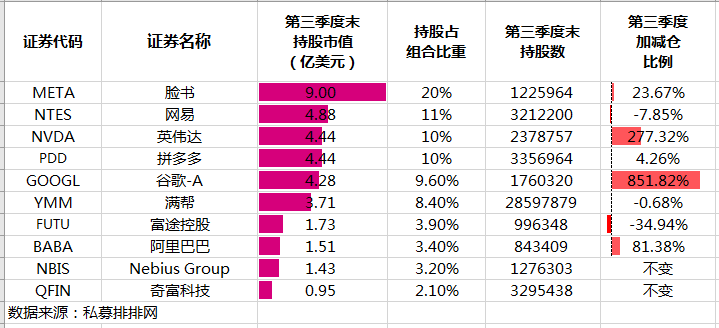
Core Insights - Jinglin Asset, a major private equity firm, significantly increased its holdings in Alibaba during the third quarter of 2025, while also initiating positions in domestic autonomous driving leader WenYuan ZhiXing [1][2] - The firm also made notable increases in holdings of other tech giants such as Facebook, Google-A, and Nvidia [1][2] Holdings Summary - As of the end of Q3 2025, Jinglin Asset held nearly 30 companies in the US stock market, with its top ten holdings including Facebook, NetEase, Nvidia, Pinduoduo, Google-A, Manbang, Futu Holdings, Alibaba, Nebius Group, and Qifu Technology [1] - The market value of Jinglin Asset's holdings in Alibaba rose to $151 million, while it slightly reduced its stake in NetEase, maintaining a value of over $400 million [2] - Other significant increases in holdings during Q3 included Facebook, Nvidia, and Google-A, with Pinduoduo also seeing a small increase, maintaining a value exceeding $400 million [2] New Investments - Jinglin Asset initiated new positions in several companies during Q3, including well-known US firms like Apple and Synopsys, as well as leading Chinese companies such as WenYuan ZhiXing and Atour [4] - Specifically, the firm acquired $54 million in Apple shares and $82 million in Synopsys, while its investment in WenYuan ZhiXing was valued at $27 million [4] - Additionally, Jinglin Asset increased its stake in Atour, with a holding value of $86 million, making it the eleventh largest holding [4] Detailed Holdings Breakdown - The top ten holdings of Jinglin Asset in Q3 included: - Atour: $86 million (1.90% of portfolio) - Synopsys: $82 million (1.80% of portfolio) - Sea Ltd ADR: $73 million (1.70% of portfolio) - New Oriental: $70 million (1.60% of portfolio) - Beike: $70 million (1.60% of portfolio) - Intel: $64 million (1.40% of portfolio) - UnitedHealth: $58 million (1.30% of portfolio) - S&P Biotech ETF: $56 million (1.30% of portfolio) - Apple: $54 million (1.20% of portfolio) - TSMC: $37 million (0.80% of portfolio) [6]




段永平:马斯克确实厉害,但我不喜欢他的品行
Sou Hu Cai Jing· 2025-11-12 09:11
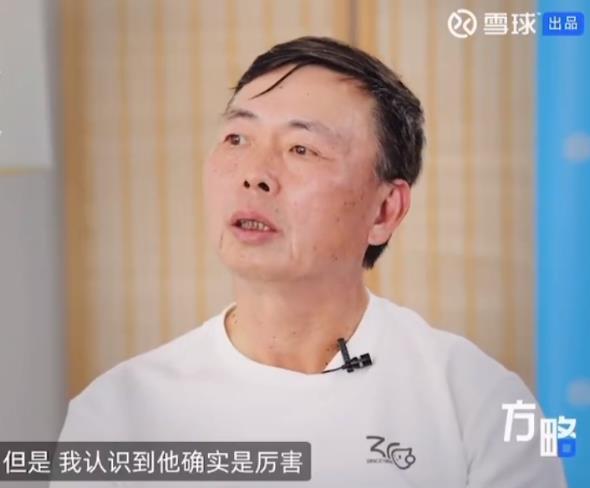
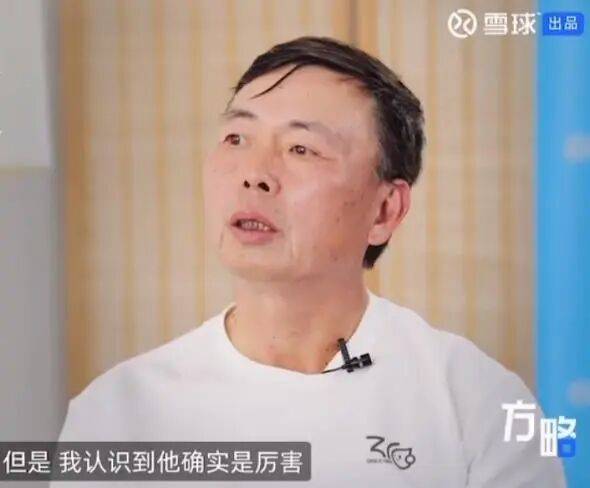
11月12日消息,步步高创始人、知名投资人段永平在雪球对话访谈节目《方略》中分享了其投资理念和 对特斯拉、电动车行业的见解。 谈及特斯拉和马斯克,段永平表示:"我确实觉得埃隆·马斯克这个人是厉害,他有很多想法也确实是很 先进。但从个人角度来讲,我不是很喜欢这个人的品行。投资实际上是在跟他做朋友,我不想跟他做朋 友,哪怕给我钱我也不干。" 尽管不认可马斯克的个人品行,段永平仍承认特斯拉在电动车领域的成就。他指出,电动车行业整体会 很艰苦,因为差异化很小,但特斯拉确实做出了差异化。"特斯拉款式少、东西单一、量大,相对成本 就会低,很可能有钱赚。" "投资不是押注市场,而是对企业的认知。"段永平强调"懂公司"的重要性,直言能真正理解"买股票就 是买公司"这句话的投资者不到1%。 对于电动车和智能驾驶的未来,段永平认为行业将经历大洗牌。"智能驾驶如果大家都自己做会很累, 最终可能只有少数几家方案提供商存活,其他厂商将陷入同质化竞争,只能赚取平均利润。电动车行业 必须经过充分竞争后,才会有少数企业能够真正赚钱。" ...

段永平:马斯克确实厉害,但不喜欢他的品行
Huan Qiu Wang Zi Xun· 2025-11-12 09:03
Core Insights - Investment is not about betting on the market, but about understanding the company [3] - The electric vehicle industry is expected to undergo significant restructuring, with only a few companies likely to survive [3] Group 1: Investment Philosophy - Understanding a company is crucial for successful investing, with less than 1% of investors truly grasping the concept of "buying a company" when purchasing stocks [3] - The founder of Bubugao, Duan Yongping, emphasizes the importance of knowing the company rather than just the market [3] Group 2: Views on Tesla and Elon Musk - Despite acknowledging Elon Musk's capabilities and innovative ideas, Duan Yongping expresses personal disapproval of Musk's character, stating he would not want to be friends with him even for financial gain [3] - Tesla is recognized for its achievements in the electric vehicle sector, with its limited product range allowing for lower costs and potential profitability [3] Group 3: Electric Vehicle Industry Outlook - The electric vehicle industry is anticipated to be challenging due to minimal differentiation among products, leading to intense competition [3] - The future of smart driving may result in a few solution providers emerging as winners, while others may struggle with homogenized competition and only earn average profits [3] - A phase of intense competition is necessary for the electric vehicle industry to identify a few companies that can genuinely achieve profitability [3]