
物理AI

Search documents
禾赛-W:以“智驾之眼”筑基,迈向“物理AI”通用感官新纪元-20260127
China Post Securities· 2026-01-27 03:24
证券研究报告:汽车 | 公司深度报告 发布时间:2026-01-27 股票投资评级 买入 |首次覆盖 个股表现 资料来源:Wind,中邮证券研究所 公司基本情况 | 最新收盘价(港元) | 224.80 | | --- | --- | | 总股本/流通股本(亿 | 1.57/ 1.30 | | 股) | | | 总市值/流通市值(亿港 | 353 / 293 | | 元) | | | 52 周内最高/最低价 | 244.0/ 116.3 | | 资产负债率(%) | 18.99% | | 市盈率 | 75.1 | | 第一大股东 | Fermat Star Limited | 研究所 分析师:付秉正 SAC 登记编号:S1340524100004 Email:fubingzheng@cnpsec.com 禾赛-W(2525.HK) 以"智驾之眼"筑基,迈向"物理 AI"通用感官新纪元 l 投资要点 禾赛科技为全球领先的激光雷达研发与制造企业,产品广泛布局 自动驾驶、具身智能等多领域。截止 2025 年,公司全球车载激光雷 达市占率第一、全球 ADAS 激光雷达市占率第一、全球 L4 自动驾驶激 光雷达市占率第 ...
禾赛-W(02525):以“智驾之眼”筑基,迈向“物理AI”通用感官新纪元
China Post Securities· 2026-01-27 02:44
证券研究报告:汽车 | 公司深度报告 发布时间:2026-01-27 股票投资评级 买入 |首次覆盖 个股表现 资料来源:Wind,中邮证券研究所 公司基本情况 | 最新收盘价(港元) | 224.80 | | --- | --- | | 总股本/流通股本(亿 | 1.57/ 1.30 | | 股) | | | 总市值/流通市值(亿港 | 353 / 293 | | 元) | | | 52 周内最高/最低价 | 244.0/ 116.3 | | 资产负债率(%) | 18.99% | | 市盈率 | 75.1 | | 第一大股东 | Fermat Star Limited | 研究所 分析师:付秉正 SAC 登记编号:S1340524100004 Email:fubingzheng@cnpsec.com 禾赛-W(2525.HK) 以"智驾之眼"筑基,迈向"物理 AI"通用感官新纪元 l 投资要点 禾赛科技为全球领先的激光雷达研发与制造企业,产品广泛布局 自动驾驶、具身智能等多领域。截止 2025 年,公司全球车载激光雷 达市占率第一、全球 ADAS 激光雷达市占率第一、全球 L4 自动驾驶激 光雷达市占率第 ...
中国最低调的AI公司,悄悄融资50亿,创最高融资记录
Sou Hu Cai Jing· 2026-01-27 00:04
过去一个月,AI圈热闹得像过年。智谱AI、MiniMax先后在港股敲钟,市值千亿;月之暗面拿下5亿美金融资。就在大家以为"大模型六小虎"的座次排定, 可以消停一阵的时候,阶跃星辰突然发布重磅消息,完成超50亿人民币B+轮融资,一举刷新过去12个月中国大模型赛道单笔最高融资纪录。 本轮参与的机构包括,上国投先导基金、国寿股权、浦东创投、徐汇资本、无锡梁溪基金、厦门国贸、华勤技术、腾讯、启明、五源等。要知道,在2025年 这个融资寒冬里,AI公司想拿钱难于上青天,更别提单笔数十亿的大额融资了。 数据显示,2025年AI模型公司总共完成22笔投资,金额94.16亿元,比2024年明显下滑。能拿到大额融资的,也就智谱AI、MiniMax、月之暗面这几家。阶 跃星辰能在这个时候拿下50亿,说明其价值以及资本市场的信任。 一、中国最低调的AI公司,默默深耕"物理AI" 阶跃星辰成立不到三年,但动作迅速。目前已发布30余款模型,构建起国内最全的基模矩阵,形成了围绕AI+终端的独特"1+2"基模体系。 这个"1+2"怎么理解?"1"是Step 3在内的基座模型,负责打地基;"2"是发力多模态(文字、语音、图像)和端云结合两大 ...

小鹏汽车─W(09868.HK):“一车双能+新车型”开启强势周期 战略转型“物理AI”公司
Ge Long Hui· 2026-01-26 20:44
Core Insights - Xiaopeng Motors has transformed from a "new force in smart electric vehicles" to a "global AI automotive technology enterprise," focusing on an integrated intelligent ecosystem of "automobiles + robots + flying cars" [1] - The company is shifting from a phase of "technological leadership but profitability pressure" to a profitability inflection point driven by "mass market hits + technology output" [1] Product Strategy - The introduction of a "dual power strategy" with both pure electric and range-extended vehicles aims to alleviate user range anxiety, starting with the launch of the X9 EREV model in November 2025 [1] - The X9 EREV features a 63.3 kWh battery and a third-generation range extender with an efficiency of over 3.6 kWh/L, achieving a pure electric range of 452 km [1] - In 2026, the company plans to launch multiple new models, including the G7 and P7+ range-extended versions, and four additional new models, including two SUVs on the MONA platform and a full-size 6-seat SUV [1] AI Strategic Layout - The company is transitioning from "smart cars" to "physical AI," showcasing its commitment and specific path at the 2025 Technology Day [2] - The core technology, VLA 2.0, is a second-generation visual-language-action model that enhances reasoning efficiency by 12 times and is set for full deployment in Ultra models by Q1 2026 [2] - The company plans to launch three models of its self-developed Robotaxi in 2026, aiming to capture a share of the trillion-yuan mobility market with an innovative "fully shared + private" business model [2] - The humanoid robot IRON is expected to achieve mass production by the end of 2026, initially targeting commercial scenarios such as guiding and shopping [2] Financial Forecast - Revenue projections for Xiaopeng Motors from 2025 to 2027 are estimated at 75.8 billion, 132.1 billion, and 166.3 billion yuan, with year-on-year growth rates of 85.5%, 74.3%, and 25.9% respectively [2] - The net profit attributable to the parent company is forecasted to be -1.64 billion, 2.4 billion, and 6.48 billion yuan for the same period [2] - The company maintains a "buy" rating based on these projections [2]
新势力的下半场,小鹏正在换一种跑法
Tai Mei Ti A P P· 2026-01-26 14:00
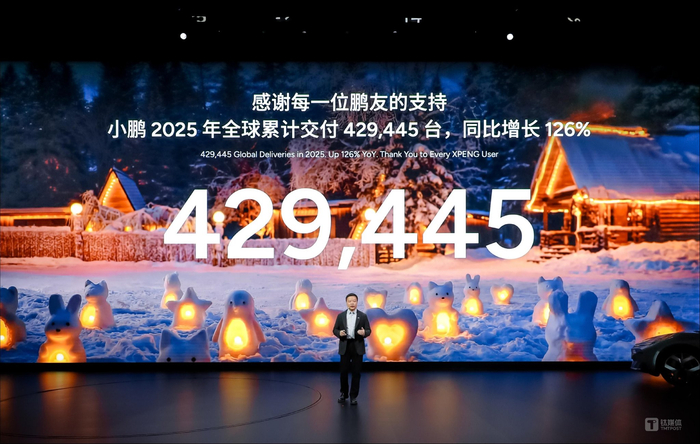
Core Viewpoint - Xiaopeng Motors is positioning itself for a new growth cycle starting in 2026, emphasizing a shift from a focus on pure electric vehicles and intelligent driving to a dual-energy product strategy, technological innovation, and global market expansion [2][3][20]. Group 1: Product Strategy - Xiaopeng launched four new models simultaneously, including the P7+, G7, G6, and G9, aiming to regain market momentum and address diverse consumer needs in a competitive landscape [3][20]. - The company is betting on a dual-energy approach, integrating both pure electric and range-extended vehicles to broaden its market reach and enhance sales stability in 2026 [7][10]. - The specifications of the new models, such as the P7+ and G7, highlight a focus on maintaining a pure electric driving experience while extending range through innovative battery and fuel tank designs [9][10]. Group 2: Market Dynamics - The range-extended vehicle market is expected to see significant growth in 2026, with over ten major automakers planning to launch new models, indicating a shift in supply-side dynamics [7][20]. - Xiaopeng's strategy aims to address the increasing competition in the electric vehicle market by expanding its product matrix and enhancing its delivery capabilities [3][10]. Group 3: Organizational Resilience - In 2025, Xiaopeng focused on restructuring its organizational capabilities, achieving a delivery of 429,000 vehicles, a 126% year-on-year increase, and reaching a milestone of one million vehicles produced [11][13]. - The company adopted a conservative approach to inventory management, prioritizing low stock levels and efficient cash flow to mitigate operational risks [13][14]. Group 4: Technological and Global Expansion - Xiaopeng is entering a critical phase of technological advancement, transitioning from conceptual to practical applications of physical AI, which is expected to be pivotal from 2026 to 2028 [15][19]. - The company is enhancing its global presence, having entered over 60 countries, and is focusing on localizing research, manufacturing, and delivery to build a sustainable international business model [17][18]. Group 5: Evaluation Criteria for 2026 - The success of Xiaopeng's dual-energy strategy will be measured by its ability to expand overall sales without internal cannibalization, maintain delivery quality and customer satisfaction across multiple models, and establish replicable success in international markets [20][21].

对话 Mobileye CEO Amnon Shashua:物理AI,Mobileye两手抓
雷峰网· 2026-01-26 11:17
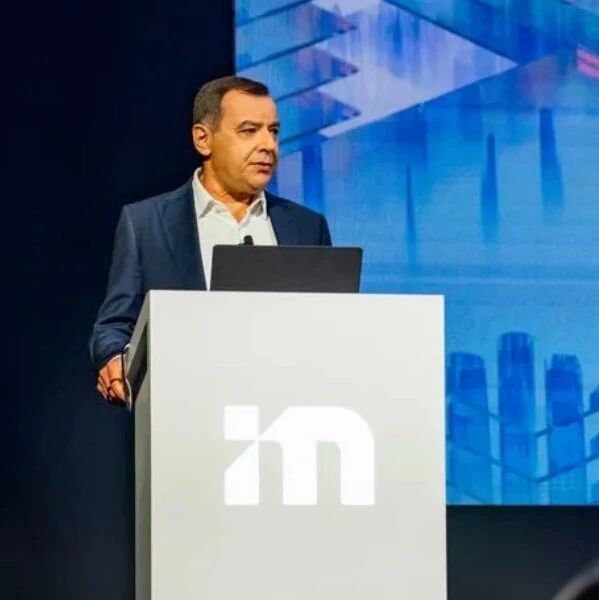
" 两三年前发展驾驶自动化的共识「先消费级、后 Robotaxi」路 径,如今发生反转。 " 作者丨 包永刚 编辑丨 林觉民 物理AI,也就是人工智能与现实世界交互的智能体,正成为科技圈最受关注的话题之一。CES 2026上各 种形态的机器人的亮相,试探着物理 AI 的边界与可能性。 CES 2026期间,Mobileye创始人、总裁兼首席执行官Amnon Shashua教授与雷峰网对话时表示:" 汽 车和机器人是物理AI目前两个最典型的应用场景。 " 在这两个方向上,Mobileye 都不是旁观者。 汽车是 Mobileye 长期深耕、为外界熟知的基本盘;而机器人,则是Mobileye刚刚对外展示的全新增长引 擎。在宣布以约 9 亿美元收购人形机器人公司Mentee Robotics之后,Mobileye 横跨物理AI的两大赛 道,也成为了拥有两条主线的"双引擎"公司。 CES期间与Amnon Shashua的深度交流, 可以看到 Mobileye 的三层思考: 一是如何守住并扩大辅助驾 驶这一规模庞大的市场;二是如何推动 Robotaxi 真正走向规模化;三是,Mobileye双引擎战略的布局与 长期潜力 ...
工业机器人迎来“二次复兴”
机器人大讲堂· 2026-01-26 10:17
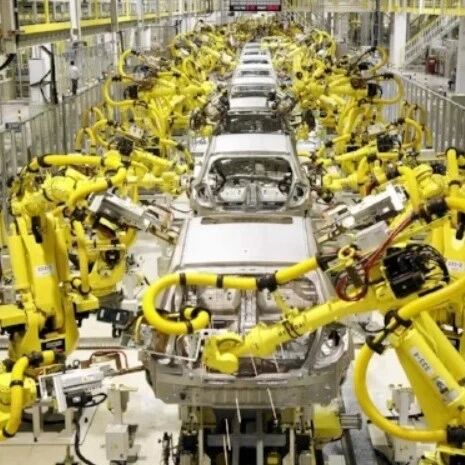
2026 年 1 月 23 日 ,世界顶级投行盛博 ( Bernstein ) 的一份报告在工业自动化领域投下一枚深水炸弹: 工业机器人行业正迎来 " 第二次复兴 " 。 报告预测,未来十年全球工业机器人出货量年复合增长率将高达 12% 。全球工业机器人正在经历从 " 灵活 " 到 " 智能 " 的进化 , 而背后的推手 已经 不 再仅仅 是更 强劲 的电机,而是一颗会思考的 " 大脑 " 。 0 1 物理 AI 的四层生态:不只是 " 更聪明 " 想象一下这个画面: 2020 年之前的汽车工厂里,一排排橙黄色的机械臂以完美的同步性进行点焊、喷涂, 每一个动作都像被编好程序的舞蹈 ,精准却冰冷。 但 它们无法应对一颗意外滚落的螺丝,更不会处理柔软的线束 , 直到物理 AI , 或者说具身智能技术 的出 现,改变了这一切。 盛博报告清晰勾勒出行业发展的三级跳 。 从 1980 年代开始的固定路径阶段 ,机器人只能完成预设的单一动作 ,应用场景局限于汽车点焊、车身喷 涂、固定点位拾取等标准化操作 ; 到 2020 年代开启的灵活路径规划阶段 ,机器人能实时调整路径,应对变化的环境 , 解锁 了 机床上下料、 码垛 ...
机器人行业发展核心竞争力探讨:从成本到数据,机器人进步新范式
Shenwan Hongyuan Securities· 2026-01-26 10:12
行 业 及 产 业 2026 年 01 月 26 日 行 业 研 究 / 行 业 点 相关研究 《整车出海、机器人预期强化;同时关注 业绩确定性白马——2026/1/12- 2026/1/18 汽车周报》 2026/01/19 证券分析师 戴文杰 A0230522100006 daiwj@swsresearch.com 黄忠煌 A0230519110001 huangzh@swsresearch.com 联系人 戴文杰 A0230522100006 daiwj@swsresearch.com 从成本到数据,机器人进步新范式 看好 ——机器人行业发展核心竞争力探讨 本期投资提示: 本研究报告仅通过邮件提供给 中庚基金 使用。1 评 ⚫ 新能源汽车与人形机器人两大硬科技产业具备高度同构性,2026 年人形机器人的发展 节点对标 2012-2014 年的新能源汽车,而新能源汽车的产业演进路径也为机器人行业 提供了清晰的阶段对标框架。二者均依托成熟大规模制造业与 AI 算法跃迁,国内新能 源车借国家战略驱动爆发,完成政策到市场、技术到生态的演进;2026 年机器人技术 刚迈过"可用"门槛,政策推动、资本热度空前,与彼 ...

小鹏汽车-W(09868):“一车双能+新车型”开启强势周期战略转型“物理AI”公司
NORTHEAST SECURITIES· 2026-01-26 07:50
Investment Rating - The report maintains a "Buy" rating for the company [7][4]. Core Insights - The company has transitioned from being a "smart electric vehicle new force" to a "global AI automotive intelligent technology enterprise," focusing on building an integrated intelligent ecosystem of "automobiles + robots + flying cars" [1][20]. - The introduction of the "dual-energy strategy" and multiple new models is expected to initiate a strong product cycle, with significant sales growth anticipated [2][21]. - The company is shifting from a phase of "technology leadership but profitability under pressure" to a profitability inflection point driven by "mass-market hits + technology output" [1][20]. Financial Forecast - Revenue projections for 2025-2027 are estimated at 758 billion, 1321 billion, and 1663 billion respectively, with year-on-year growth rates of 85.5%, 74.3%, and 25.9% [4][5]. - The company is expected to achieve a net profit of -16.4 billion, 24.0 billion, and 64.8 billion for the same period, indicating a significant recovery in profitability [4][5]. Product Strategy - The company has launched its first range-extended model, the X9 EREV, with a large battery and high energy conversion efficiency, addressing user range anxiety [2][3]. - A total of four new models are expected to be launched in 2026, including two SUVs based on the MONA platform and a full-size six-seat SUV [2][21]. AI Strategy - The company is transitioning to a "physical AI" company, showcasing its commitment to this transformation with the release of the VLA 2.0 model, which significantly enhances reasoning efficiency [3][20]. - The company plans to commercialize its self-developed Robotaxi and has set ambitious goals for its humanoid robot, IRON, to begin mass production by the end of 2026 [3][20]. Organizational Changes - The company has undergone significant organizational restructuring to enhance efficiency and product development capabilities, which is expected to support its transition to a more robust business model [20][46]. Market Position - The company is positioned to leverage its technological advancements and strategic partnerships, particularly with Volkswagen, to enhance its competitive edge in the automotive market [20][21].
印奇出任阶跃星辰董事长,中国版“xAI+特斯拉”来了?
Guan Cha Zhe Wang· 2026-01-26 03:24
(文/陈济深 编辑/张广凯) 观察者网获悉,阶跃星辰近期完成了超 50 亿人民币 B+ 轮融资。 阶跃星辰成立于2023年,创始人为前微软全球副总裁姜大昕,业内普遍将其与智谱、Minimax、月之暗 面、零一万物、百川智能并称为"大模型六小虎"。 值得注意的是,阶跃本次B+轮融资包含了上国投先导基金、国寿股权、浦东创投、徐汇资本、无锡梁 溪基金、厦门国贸、华勤技术等产业投资人,腾讯、启明、五源等投资方,对这些机构而言,阶跃星辰 不仅是其在大模型赛道的关键落子,更被视为目前的最重仓押注。 在融资的同时,阶跃星辰也有重磅人事变动:千里科技董事长印奇出任阶跃星辰董事长,与CEO姜大 昕、首席科学家张祥雨(ResNet作者)、CTO朱亦博(前字节AI Infra负责人)形成新的管理团队掌舵 阶跃星辰。 印奇将同时出任千里科技和阶跃星辰董事长,同时掌管主营AI智能汽车的千里科技和主营大模型的阶 跃星辰。 这也意味着,印奇这位AI 1.0时代的标志性创业者,正式在AI 2.0时代亮出底牌。 一位AI老兵的"蓄谋已久" 印奇加入后,将与CEO姜大昕、首席科学家张祥雨、CTO朱亦博组成1+3的核心管理团队。 观察者网获悉,印 ...
