
科技自立

Search documents
中国减持5484亿美债,囤粮囤油开启新布局,盖茨所言正成现实
Sou Hu Cai Jing· 2025-07-21 05:50
Group 1 - The article discusses a silent financial revolution led by China, aiming to create a "dual insurance" system to break free from the dollar's dominance, a result of a decade-long effort [1] - The rise of the Renminbi (RMB) is highlighted, with significant developments such as the introduction of RMB-denominated lithium futures and a new oil contract with Saudi Aramco that includes a floating RMB settlement mechanism [2] - The share of RMB in global central bank reserves has doubled to 3.8% over the past five years, with emerging markets like Argentina and Egypt increasingly using RMB for debt repayments [2] Group 2 - China has strategically reduced its holdings of U.S. Treasury bonds, selling $9 billion in May and bringing its total holdings to $756.3 billion, the lowest in 16 years [4] - The country has also significantly increased its strategic reserves, with grain purchases exceeding 400 million tons and a new oil reserve plan aiming to add 8 million tons by March 2025 [4] - The People's Bank of China has been accumulating gold, with total reserves nearing 2,000 tons, representing 6.7% of its foreign exchange reserves, as a strategy to mitigate financial risks [4] Group 3 - The article emphasizes China's technological self-reliance, showcasing its dominance in rare earth processing and the global market share of its electric vehicles and solar components [8] - The narrative suggests that U.S. technology sanctions have inadvertently strengthened China's technological ecosystem, leading to a more robust position in global markets [8] Group 4 - The article posits that the existing dollar-denominated financial products are at risk due to the rising expectations of RMB appreciation, while China has transitioned to a new financial defense system anchored in strategic reserves [9] - The conclusion reflects a shift in global perception of value, emphasizing that true worth lies in tangible assets like food, energy, and technology rather than just currency [9]

策略周专题(2025年7月第1期):哪些行业中报业绩可能更占优势?
EBSCN· 2025-07-13 06:43
Group 1 - The A-share market has shown signs of recovery, with major indices mostly rising, particularly the ChiNext Index which increased by 2.4% [13][14][16] - The real estate, steel, and non-bank financial sectors performed relatively well this week, with respective increases of 6.1%, 4.4%, and 4.0% [16][19][34] - The manufacturing sector is predicted to have the highest mid-year report performance growth, with an estimated year-on-year growth rate of approximately 10.0% [33][34] Group 2 - Industries expected to show high mid-year report performance growth include light industry, non-ferrous metals, and non-bank financial sectors, with predicted net profit growth rates of 34.2%, 33.0%, and 19.1% respectively [33][34] - The construction materials, electronics, and telecommunications sectors are anticipated to have significant performance improvement, with expected growth rate improvements of 11.4%, 7.9%, and 6.1% respectively [34][39] - The current mid-year earnings forecast disclosure rate is only 4.1%, indicating limited reference value for investors [39][42] Group 3 - The overall pre-announcement rate for A-share companies is 72%, with many industries showing high pre-announcement rates, particularly in real estate and non-bank financial sectors [39][40] - The environmental protection, transportation, and media sectors are expected to show significant improvement in mid-year earnings forecasts, with respective improvement rates of 139.5pct, 111.0pct, and 96.7pct [41][44] - The market is expected to experience a bullish trend in the second half of the year, with a focus on sectors that are likely to outperform in mid-year reports [57][58]
中国连续15年制造业全球领跑,规模优势创新升级共推高质量发展
Sou Hu Cai Jing· 2025-07-12 02:50
Core Insights - China has maintained its position as the world's largest manufacturing country for 15 consecutive years, driven by scale advantages and innovation upgrades [1][14] Key Data and Global Position - Manufacturing value added is expected to exceed 40.5 trillion yuan in 2024, accounting for approximately 30% of global manufacturing, surpassing the combined totals of the US, Japan, and Germany [1][3] - China leads the world in the production of over 220 major industrial products, including photovoltaic components, new energy vehicles, ships, and construction machinery [1][3] Export Contributions - In 2024, China's total goods exports are projected to reach 6.16 trillion USD, maintaining the top position globally for seven years, with 50% of global steel, 60% of home appliances, and 80% of air conditioners relying on Chinese supply [3] Comprehensive Industrial Chain Advantage - China possesses the most complete industrial system globally, covering 41 major industrial categories and 666 subcategories, with a supply chain self-sufficiency rate exceeding 90% [3][4] Industrial Upgrades and Technological Breakthroughs - High-end manufacturing has achieved significant autonomy, with breakthroughs in key technologies such as the domestically produced electromagnetic catapult aircraft carrier Fujian, C919 aircraft, CR450 high-speed trains, and deep-sea exploration equipment [4][7] - In 2024, the production of new energy vehicles is expected to exceed 13 million units, accounting for 60% of global output, while photovoltaic components will hold an 80% global market share [4] Digital Transformation - China has established the world's largest 5G network with over 4 million base stations and more than 900 million devices connected to the industrial internet; "lighthouse factories" have reached 79, representing 41% of the global total, with an average productivity increase of 34.8% [5] Key Support Factors - Research and development expenditure intensity has risen to 2.68%, nearing OECD levels, with over 460,000 high-tech enterprises, and China holds 26 seats in the global top 100 innovation clusters [7][8] Domestic Demand and Global Layout - Domestic demand contributes 86.4% to economic growth, supported by over 400 million middle-income groups driving consumption upgrades [9] - The export share to Belt and Road countries has increased to 50%, with a semiconductor self-sufficiency rate exceeding 70% [9] Challenges and Future Directions - There is a regional imbalance, with 80% of advanced manufacturing clusters concentrated in the eastern regions, while the central and western regions are gradually rising through new materials [10] - The innovation conversion rate remains low, with less than 10% of university patents being industrialized, indicating a need for improved collaboration between academia and industry [11] Strategic Pathways - Emphasis on technological self-reliance, focusing on quantum computing, biomanufacturing, and deep-sea technology, with a goal to increase the global manufacturing share to 45% by 2030 [12] - A green transition is underway, with a cumulative reduction of 11.6% in energy consumption per unit of GDP over four years, and renewable energy installations exceeding 2.09 billion kilowatts [13] Conclusion - The sustained leadership of China's manufacturing sector is a reflection of both scale effects and innovation-driven transformation, transitioning from "scale expansion" to "quality leap" through technological breakthroughs, green integration, and open cooperation [14]
6月11日-13日!韧性与重构 • 2025年中金公司中期投资策略会
中金点睛· 2025-06-05 23:37
Core Viewpoint - The article discusses various themes and sessions related to the macroeconomic outlook and investment opportunities in China and the U.S., highlighting the importance of strategic analysis in navigating the current economic landscape [10][11][12]. Group 1: Economic Outlook - The sessions include discussions on China's macroeconomic outlook and the U.S. macroeconomic outlook, emphasizing the need for strategic insights in investment decisions [10]. - Key speakers include top analysts from CICC, focusing on A-share market outlook, Hong Kong and overseas market outlook, and major asset trends [10][11]. Group 2: Sector-Specific Insights - The article outlines thematic sub-forums covering topics such as China's economic transformation, technological independence, and the financial real estate sector [13][15]. - Specific sessions will address the challenges and opportunities in the real estate market, including the restructuring of the industry and the impact of low interest rates on bond investment strategies [15][16]. Group 3: Consumer Trends and Innovations - The article highlights sessions on consumer trends, including the pet economy and the evolution of food and beverage sectors, indicating a focus on emerging consumer demands [18]. - Discussions will also cover innovations in robotics and AI applications in investment, showcasing the intersection of technology and finance [17].
国泰海通|“潮起东方,新质领航”2025中期策略会观点集锦(下)——消费、医药、科技、先进制造、金融
国泰海通证券研究· 2025-06-04 15:00
Group 1: Food and Beverage - The investment suggestion emphasizes structural differentiation and growth potential, with a focus on new consumption and high growth in consumer goods, while the liquor sector is in a bottoming phase, highlighting its value for allocation [2][3] - The liquor industry is experiencing increased differentiation and rationality, with the industry still seeking a bottom in Q2 2025, and the head companies showing resilience during the off-season [2] - Beer is expected to recover as the peak season approaches, while the beverage sector is in a phase of releasing single product potential [3] Group 2: Cosmetics - The investment recommendation suggests increasing holdings in personal care and beauty sectors, focusing on companies benefiting from product innovation and new channel opportunities [6] - The demand for cosmetics remains stable, with domestic brands gaining market share, particularly in skincare and makeup categories [6] - Trends indicate accelerated product innovation and emotional consumption, with a focus on cost-effective products benefiting from supply-demand dynamics [6] Group 3: Education and Consumer Services - The high school education sector is projected to have a stable demand for the next 7-8 years, supported by policy initiatives aimed at expanding education [12] - Emotional and experiential consumption is accelerating, with traditional demands being met by new supply, particularly in the IP toy sector [12] - The tea and coffee sectors are undergoing product, channel, and technological iterations, indicating structural growth opportunities [12] Group 4: Home Appliances - The home appliance sector is witnessing a recovery led by major brands, with a focus on price competition and market consolidation [17] - New consumption trends are emerging, with high aesthetic product designs and AI integration driving innovation in the sector [17] - Investment suggestions highlight opportunities in both domestic and international markets for leading brands [17] Group 5: Agriculture and Animal Husbandry - The agricultural sector maintains a "buy" rating, with slow growth expected in livestock output and a recovery in the animal health feed sector [29] - The pet food market is experiencing robust growth, driven by domestic brands gaining market competitiveness [29] - The planting sector is expected to see rising grain prices due to reduced import volumes, with core seed varieties becoming increasingly important [30] Group 6: Internet and AI - The investment outlook for the internet sector remains positive, particularly for technology stocks, with a focus on AI-driven growth [34] - The AI narrative is expected to enhance the value of social networks, with a strong emphasis on user engagement and ecosystem development [59] - The evolution of AI capabilities is anticipated to create new demand and enhance the social network's value proposition [59] Group 7: Non-Banking Financials - The non-banking financial sector is undergoing significant transformation, with a focus on wealth management and asset management business models [73] - The recommendation is to favor leading comprehensive brokerages that demonstrate balanced business structures and strong professional capabilities [73] - The insurance sector is expected to see stable growth in new business value, with an emphasis on improving asset allocation [76] Group 8: Banking - The banking sector is projected to face revenue pressure but maintain positive net profit growth, with a stable policy environment supporting sustainable operations [79] - The expectation of increased long-term capital inflow into the banking sector is driven by regulatory changes and market dynamics [80] - Investment strategies suggest focusing on high-growth regional banks and those showing signs of loan recovery [81]
AI开花、科技自立,行业景气度已开始修复
Haitong Securities International· 2025-06-04 07:14
Investment Rating - The report maintains a positive outlook on the computer sector, indicating a recovery in industry prosperity driven by AI applications and technological independence [3][4]. Core Insights - 2025 is projected to be a pivotal year for AI applications, with significant advancements expected following the release of ChatGPT in late 2022. The report emphasizes that AI will become a key driver of business growth, enhancing efficiency and creating new demand [3][4]. - The report highlights the urgency for technological self-reliance in China, particularly in light of international trade tensions and tariffs that could impact the global technology supply chain [3][4]. - The computer sector is currently in its fourth bullish phase over the past decade, with a notable recovery in sentiment and performance expected [8][18]. Summary by Sections 1. Historical Overview of the Computer Sector - The computer sector has experienced four major bullish phases since 2013, with the current phase starting in September 2024 [8][18]. 2. Current Position of the Computer Sector - Institutional holdings in the computer sector remain low, with levels fluctuating around 2-6% over recent years. As of Q1 2025, holdings have slightly increased to 2.9% but are still considered low historically [15][18]. - The valuation levels of the SW computer index are at historical highs, indicating potential for further growth [18][21]. 3. Promising Sub-sectors and Logic for 2025 - The report identifies AI, technological independence, and the impact of tariffs as key areas of focus for investment in 2025. It notes that AI is transitioning from a follower to a leader in the global landscape, with domestic models closing the gap with international counterparts [38][43]. - The report anticipates that 2025 will mark the commercial rollout of AI agents, with significant advancements in AI capabilities expected [43][46]. - The report discusses the potential for mergers and acquisitions in the computer sector, driven by regulatory changes that may stimulate market activity similar to the 2013-2015 period [21][22]. 4. Company Performance Predictions and Valuations - The computer sector is expected to see a revenue increase in 2025, with a projected total revenue of 12,693.99 billion yuan in 2024, reflecting a year-on-year growth of 4.78%. However, net profits are expected to decline significantly [25][29]. - The report highlights that large-cap companies are showing more stable performance compared to small-cap companies, with significant growth in revenue and profits anticipated for large-cap firms in Q1 2025 [29][34].
美国先下手为强,芯片战再掀波澜!中美高层通话成唯一出路?
Sou Hu Cai Jing· 2025-06-03 01:14
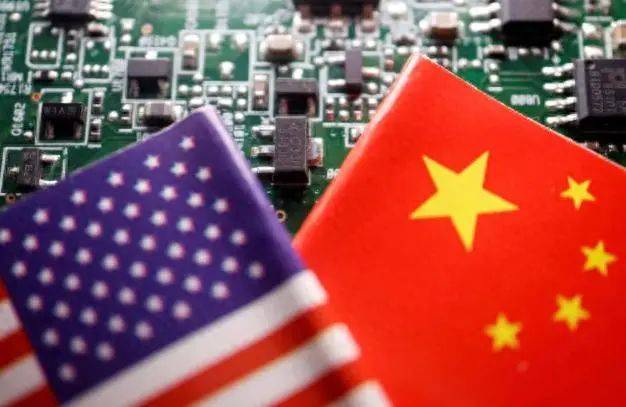
Group 1: Core Insights - The article discusses the escalating "chip war" between the US and China, highlighting the strategic nature of this conflict as opposed to the previous tariff battles [1] - The US has implemented strict measures to cut off American companies from engaging with Chinese firms in the semiconductor sector, aiming to isolate China's semiconductor industry [1] - The article emphasizes the legal uncertainties surrounding the US's tariff policies, which have been deemed "overreaching" by courts, creating pressure on the Trump administration [3] Group 2: US-China Negotiation Dynamics - The US-China trade negotiations are described as being in a deadlock, with calls for direct communication between leaders seen as a potential way to break the impasse [4] - The US faces significant challenges in resource imports, particularly with China's export controls on strategic minerals, which could impact the US defense industry [4] Group 3: China's Response Strategies - In response to US actions, China is pursuing a "three-line counterattack" strategy, focusing on self-sufficiency in semiconductor development and acquiring technology from countries like South Korea and Japan [6] - China is also leveraging international legal avenues, such as WTO litigation, to challenge US technology restrictions [6] - The article notes that despite US efforts to isolate China, the latter is building a "de-Americanized" technology network with support from countries in Asia, Africa, and Latin America [6] Group 4: US Domestic and International Challenges - The US's aggressive stance towards China has led to international isolation and domestic discontent, with rising public dissatisfaction reflected in protests and stagnant approval ratings for the Trump administration [8] - The article argues that the US's "America First" strategy is misaligned with the realities of global interdependence, suggesting that unilateral protectionism is unsustainable [8] Group 5: Future Implications - The ongoing trade conflict is framed as a broader struggle involving global supply chains, technological advancement, and geopolitical dynamics, rather than merely a trade issue [10] - The article posits that the pressure from the US may ultimately drive China towards greater technological independence and innovation [10] - The future of US-China relations is anticipated to have significant implications for global economic direction, emphasizing that monopolistic practices cannot halt the progress of science and economics [10]
中船汉光:以创新驱动稳健增长,民族品牌推动打印复印静电成像耗材国产化
Quan Jing Wang· 2025-05-22 02:59
Core Viewpoint - The performance of China Shipbuilding Industry Corporation's subsidiary, China Ship Han Guang, shows significant growth in revenue and net profit, driven by technological innovation and lean management strategies [1][2]. Group 1: Performance Highlights - In 2024, China Ship Han Guang reported a revenue increase of 10.5% and a net profit increase of 29.89% year-on-year [1]. - For the first quarter of 2025, the company continued its steady growth with revenue and net profit rising by 7.74% and 3.74%, respectively [1]. Group 2: Strategic Drivers - The company's growth is attributed to two core strategies: technological innovation and lean management [2]. - Technological advancements include the development of new product models and improvements in key technologies, enhancing product performance to match original consumables [2]. - Management optimization has been achieved by benchmarking against industry leaders and enhancing efficiency, leading to improved profitability [2]. Group 3: Competitive Advantages - China Ship Han Guang has established several core competitive advantages that support current performance and long-term development [3]. - The company has a strong research and development advantage, having developed advanced core technologies that allow its products to compete with original consumables [3]. - The product matching advantage enables large-scale production of both toner and OPC drums, creating synergies in the printing consumables business [3]. - Quality stability and cost advantages from economies of scale provide excellent value for money, fostering long-term partnerships with clients [3]. Group 4: Future Growth Potential - The company's main products, toner and OPC drums, have historically relied on imports, but the push for domestic substitution is accelerating [4]. - With technological breakthroughs and production capacity, China Ship Han Guang is becoming a key player in the domestic substitution process [4]. - The company is transitioning from "catching up" to "keeping pace" in the context of national policies promoting self-reliance and domestic manufacturing [4]. - The performance presentation reflects confidence in steady growth and highlights the potential of domestic brands in high-end manufacturing [4].

银河证券:电子行业坚定“科技自立”与“AI+”投资主线
news flash· 2025-05-06 00:00
Core Insights - As of the end of Q4 2024, the allocation of actively managed public funds in the electronic sector is expected to reach 9.63% of the total market value of fund equity investments, indicating an overweight position [1] - The electronic industry index has risen further this year due to multiple factors, including the exploration of new paths for large model development by Deepseek, a meeting held by the central government with private entrepreneurs, and increased capital expenditures by leading domestic cloud companies [1] - The U.S. tariff policy is accelerating the "blockchain" of the global supply chain, which is expected to have a significant impact on global manufacturing [1] Industry Impact - Certain semiconductor products, such as logic chips and memory chips, are temporarily exempt from tariffs; however, the imposition of tariffs on supporting materials (like substrates and packaging adhesives) is raising overall manufacturing costs in the semiconductor industry [1] - The evolving landscape of the global semiconductor industry and the complex international trade environment may lead overseas companies to adopt a "Local for local" production strategy to mitigate tariff impacts when establishing operations in China [1] - The short-term impact of U.S. tariff policies on China's semiconductor industry is relatively limited, but companies reliant on the U.S. market may face pressure [1] - In the long term, the effects of tariffs could delay downstream demand recovery and lead to order cancellations, while domestic replacement and self-controlled enterprises are likely to benefit [1]
电子行业4月月报:坚定“科技自立”与“AI+”投资主线-20250430
Yin He Zheng Quan· 2025-04-30 08:53
Investment Rating - The report assigns a rating of "Cautious Recommendation" for the semiconductor industry, indicating a potential growth of 5% to 20% relative to the benchmark index [3][32]. Core Insights - Global semiconductor sales are projected to reach $617.3 billion in 2024, marking a year-on-year growth of 19.1%. The Americas, China, and other Asia-Pacific regions are expected to see sales increases, while Japan and Europe may experience declines [6][9]. - The primary contributors to the sales growth in 2024 will be logic circuits and memory, with logic circuit sales estimated at $212.6 billion and memory sales at $165.1 billion, reflecting a significant year-on-year increase of 78.9% for memory products [9]. - Domestic wafer foundries are expanding capacity, with major players like SMIC and Hua Hong Semiconductor maintaining high capacity utilization rates [12][17]. - The semiconductor industry is expected to see a 11.2% year-on-year growth in sales by 2025, driven by consumer stimulus policies and a shift towards domestic supply chains [18]. Industry Dynamics - As of April 28, the semiconductor index underperformed the CSI 300 index by 11.15 percentage points, with a monthly decline of 14.11% compared to a 2.96% decline in the CSI 300 index [20]. - Year-to-date, the semiconductor index has increased by 51.77%, significantly outperforming the electronic index and the CSI 300 index [20]. Investment Recommendations - The report suggests focusing on domestic semiconductor companies that are self-sufficient, such as Haiguang Information and Cambrian, as well as companies in the RF and analog IC sectors like Shengbang and Naxinwei [22]. - It also highlights the potential for AI to drive demand for consumer electronics and related hardware, recommending companies like Hengxuan Technology and Ruixin Micro [22][23].