
K型经济

Search documents
华尔街接连公布美股预测:最低7500,最高8000点!
Sou Hu Cai Jing· 2025-11-27 12:36
Group 1 - Wall Street is increasingly optimistic about the stock market's potential for growth in 2026, with predictions suggesting the S&P 500 could reach 8000 points driven by the AI boom [2][3] - Deutsche Bank has set a target of 8000 points for the S&P 500 by the end of 2026, citing strong capital inflows, stock buybacks, and sustained earnings growth as key drivers [2] - The S&P 500 companies reported a 13.4% earnings growth in Q3, indicating robust performance that supports the bullish outlook for 2026 [2] Group 2 - Wells Fargo anticipates a double-digit increase in the stock market over the next 12 months, with a target of 7800 points for 2026, expecting a two-phase rebound driven by AI [3] - Morgan Stanley also predicts a strong year ahead, forecasting the S&P 500 to close at 7800 points in 2026, with the end of a rolling recession and continued policy support [2][3] - JPMorgan's baseline forecast for 2026 is 7500 points, but they believe that improved inflation prospects could push the index above 8000 points [3] Group 3 - The market is pricing in an 83% chance of a rate cut by the Federal Reserve in December, a significant increase from the previous week's 30% probability [4] - JPMorgan's chief equity strategist highlights that current high multiples reflect expectations for above-trend earnings growth and increased shareholder returns, despite concerns about an AI bubble [4] - HSBC shares a similar outlook, projecting a target of 7500 points for 2026, indicating a potential for double-digit growth akin to the late 1990s market boom [4]



华尔街接连公布美股预测:最低7500,最高8字头!
Jin Shi Shu Ju· 2025-11-27 12:29
Group 1 - The core prediction for the S&P 500 index is set at 8000 points by Deutsche Bank for the end of 2026, driven by strong capital inflows, stock buybacks, and sustained earnings growth momentum [1] - Earnings growth for S&P 500 companies increased by 13.4% in Q3, indicating robust performance and expectations for continued strong earnings in 2026 [1] - Other institutions like HSBC and Morgan Stanley have set their 2026 targets at 7500 and 7800 points respectively, reflecting a consensus on a strong market outlook [1][2] Group 2 - Wells Fargo anticipates a double-digit market increase over the next 12 months, with a target of 7800 points for 2026, highlighting a two-phase rebound driven by AI [2] - Morgan Stanley's strategy team believes that the rolling recession has ended, and policy support along with strong earnings will persist into the next year [1][2] - JPMorgan's forecast for 2026 is 7500 points, with potential for exceeding 8000 points if inflation outlook improves and the Fed becomes more aggressive in rate cuts [2][3] Group 3 - The market currently prices in an 83% chance of a rate cut by the Fed in December, a significant increase from about 30% the previous week [3] - JPMorgan's chief equity strategist notes that high multiples are correctly anticipating above-trend earnings growth and increased shareholder returns, despite concerns over AI bubbles [3] - HSBC's outlook suggests that 2026 will see double-digit growth in the stock market, similar to the late 1990s, driven by ongoing AI investment cycles [3]
三座大山压顶!美联储褐皮书揭示三重压力:就业放缓、消费转弱、物价上涨
Sou Hu Cai Jing· 2025-11-27 05:24
Group 1 - The latest Beige Book from the Federal Reserve indicates a slight weakening in the U.S. labor market as of mid-November, with many businesses reducing hiring plans and hours, and some even starting layoffs [1][2] - Approximately half of the 12 Federal Reserve districts reported a decline in labor demand, with companies preferring to freeze hiring or adjust employee hours rather than resorting to layoffs [2][3] - There is a noted reversal in labor mobility, with many employees returning to the restaurant industry for part-time work as hours in higher-paying warehouse jobs have been cut [3] Group 2 - Consumer spending continues to decline, particularly among middle-income households, while high-income consumers maintain resilient spending, indicating a divergence in spending patterns [3][4] - The consumer confidence index has dropped to its lowest level since April, reflecting a cautious spending trend among consumers [4] - Overall prices are rising moderately, with manufacturers and retailers facing higher input costs due to tariffs, although the ability to pass these costs onto consumers remains uncertain [5]
突发!英伟达遭“双重暴击”,大空头再次做空,谷歌TPU崛起!美股牛市命悬一线?
Sou Hu Cai Jing· 2025-11-26 10:33
Core Viewpoint - The article discusses the ongoing challenges faced by Nvidia in the AI chip market, particularly due to competition from Google's TPU and bearish sentiments from prominent investors like Mike Burry, suggesting a potential bubble in AI stocks [1][3][6]. Group 1: Nvidia's Challenges - Nvidia is experiencing significant pressure as it faces competition from Google's TPU, which is reportedly being considered for a multi-billion dollar purchase by Meta, threatening Nvidia's market share [3][6]. - Mike Burry has issued warnings about Nvidia, comparing it to Cisco during the internet bubble, suggesting that high profits do not guarantee safety and indicating a potential market bubble [3][5]. - The market is concerned about Nvidia's future market share erosion, which could impact its high profit margins if it is forced to lower prices in response to competition [8][9]. Group 2: Google's TPU Advantages - Google's TPU is seen as a strong competitor due to its lower cost, reportedly one-fifth the price of Nvidia's GPUs, and its energy efficiency, consuming only half to a third of the power for similar AI tasks [8][9]. - Over 60% of AI startups are already using Google Cloud TPU, indicating a significant market penetration that could further challenge Nvidia's dominance [8]. - The potential for other tech companies, like Apple, to follow Meta's lead in adopting Google's TPU raises concerns about Nvidia's future in the AI chip market [8][9]. Group 3: Nvidia's Competitive Edge - Despite the challenges, Nvidia's CUDA ecosystem remains a significant competitive advantage, having dominated AI programming for over a decade with a large developer community and established tools [9][11]. - Large clients may find it difficult to switch from Nvidia to cheaper alternatives due to the time, cost, and risks involved in migrating to new systems [11]. - Nvidia's flexibility in deployment across various platforms, including on-premises and multi-cloud environments, continues to provide it with a competitive edge over Google's TPU, which is primarily limited to Google Cloud services [11]. Group 4: Macro Economic Context - The article highlights a "K-shaped economy" in the U.S., where retail sales growth is driven by wealthier consumers, while lower-income individuals face economic pressures, contributing to declining consumer confidence [13][16]. - Recent data indicates a reduction in private sector jobs, reinforcing expectations for a potential interest rate cut by the Federal Reserve in December, with the probability rising to 82% [16][17].

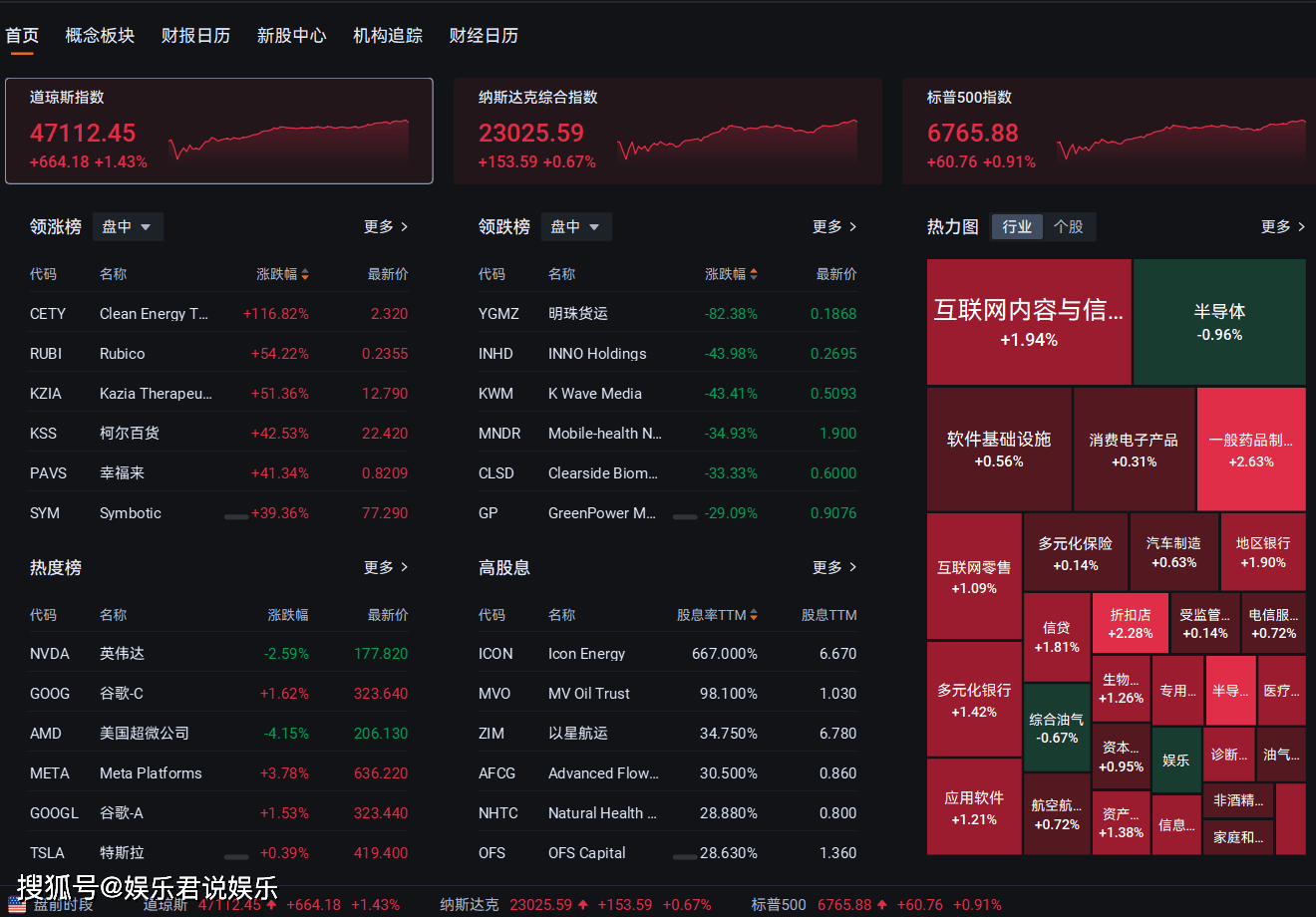
隔夜美股 | 美联储降息预期再起 三大指数上涨 英伟达(NVDA.US)跌2.59%
智通财经网· 2025-11-25 22:28
Market Overview - US stock market showed a mixed performance with the Dow Jones increasing by 664.18 points (1.43%) to close at 47112.45, while the Nasdaq rose by 153.59 points (0.67%) to 23025.59, and the S&P 500 gained 60.76 points (0.91%) to finish at 6765.88 [1] - European stock indices also saw gains, with Germany's DAX30 up by 213.90 points (0.92%) to 23467.00, the UK's FTSE 100 rising by 78.49 points (0.82%) to 9613.40, and France's CAC40 increasing by 66.13 points (0.83%) to 8025.80 [2] Commodity Prices - Crude oil prices fell, with NY light crude for January delivery down by $0.89 to $57.95 per barrel (1.51% drop), and Brent crude for January delivery also down by $0.89 to $62.48 per barrel (1.4% drop) [2] - Gold prices slightly decreased by 0.08% to $4130.78 [4] Economic Indicators - US retail sales for September grew by 0.2%, below the expected 0.4%, following a revised growth of 0.6% in August. Core retail sales, excluding autos, gas, building materials, and food services, fell by 0.1% [5] - The US consumer confidence index dropped by 6.8 points to 88.7, marking the largest decline in seven months, attributed to concerns over the labor market and economic conditions [6] Company News - Dell Technologies (DELL.US) provided an optimistic outlook for Q4, driven by strong AI server sales, projecting AI server revenue for FY2026 to reach $25 billion, up from a previous estimate of $20 billion. Overall revenue expectations for FY2026 were raised to between $111.2 billion and $112.2 billion [8] - Nvidia (NVDA.US) asserted its GPU technology remains a generation ahead of Google's AI chips, despite a 3% drop in its stock price amid concerns over competition from Google [9] - Walmart (WMT.US) is testing advertising features in its AI shopping assistant, Sparky, aiming to commercialize the chat experience and maintain its retail dominance [10] Regulatory Developments - The FDIC has moved to relax capital requirements for major US banks, which is expected to benefit institutions like Bank of America, JPMorgan Chase, and Goldman Sachs, as they navigate regulatory pressures stemming from the 2008 financial crisis [7]
美联储政策失灵?K型经济下,2026年降息能否救美国?
Sou Hu Cai Jing· 2025-11-25 10:56
Economic Overview - The U.S. economy is on a "K-shaped" trajectory, where the wealthy are thriving while ordinary families struggle financially [1][4] - The Federal Reserve's aggressive interest rate hikes, reaching 5.5%, have exacerbated this divide, acting as a "double-edged sword" [3][4] Consumer Behavior - Credit card delinquency rates have surged to a 15-year high, with bad debt ratios exceeding 9.5%, indicating financial strain among lower-income households [4] - Ordinary families are forced to make difficult financial choices, such as switching from premium brands to cheaper alternatives [1][4] Corporate Landscape - Large tech companies are investing heavily in AI, with Nvidia's graphics card orders extending three years into the future, showcasing a stark contrast to the struggles of small and medium enterprises [4] - High interest rates are crippling small businesses, hindering their ability to invest in equipment and hire talent [4] Federal Reserve's Dilemma - The Federal Reserve faces a challenging situation, balancing the need to lower interest rates to prevent a wave of defaults while fearing inflation resurgence [5] - Any potential interest rate cuts may provide temporary relief for consumers but could further inflate asset bubbles for the wealthy [5] Policy Implications - A more equitable tax system and improved social safety nets are suggested as necessary reforms to address the underlying issues of wealth inequality [7] - The current economic policies are leading to a scenario where recovery benefits a select few, while the majority continue to struggle [9]

广发策略 | 降息疑云之下,美股如何演绎?——港股&海外周聚焦(11月第4期)
Xin Lang Cai Jing· 2025-11-24 23:26
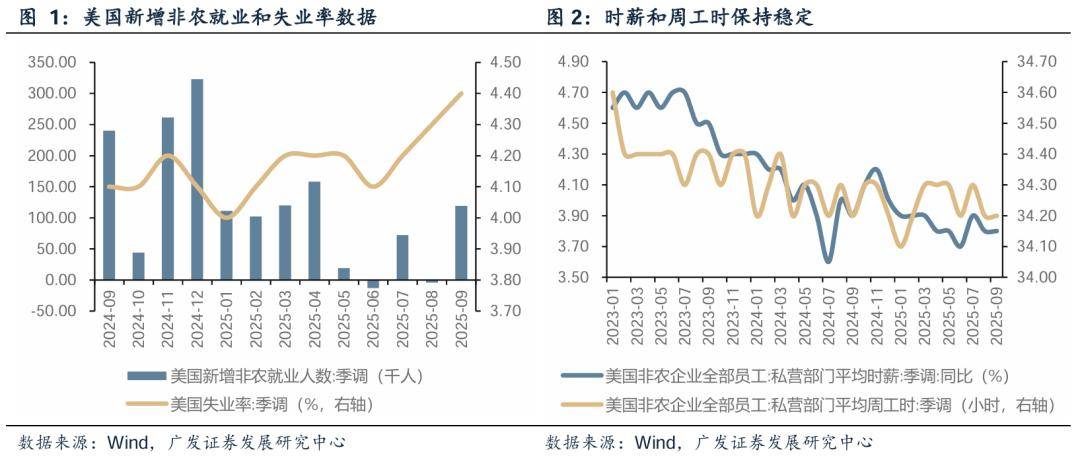
Group 1 - The core viewpoint is that the US stock market is expected to recover in the short term due to the alleviation of three major negative factors: concerns over the AI bubble, tightening liquidity, and macroeconomic uncertainty [2][3][4] - The US non-farm payrolls for September increased by 119,000, significantly exceeding the expected increase of 52,000, with the unemployment rate rising slightly to 4.4%, the highest level since October 2021 [6][10] - The market interpreted the non-farm report as neutral to weak, with the probability of a 25 basis point rate cut in December rising from 39% to 71% following the report [12][14] Group 2 - The current economic situation in the US is characterized by a "K-shaped" economy and a "Goldilocks" economy, both of which are expected to support strong stock market performance [4][31] - Despite concerns over the AI bubble, the overall health of corporate balance sheets remains acceptable, with only Oracle showing high leverage characteristics [26][34] - The liquidity situation has improved significantly after the government reopened, alleviating previous concerns about dollar liquidity [28][34] Group 3 - The employment market is currently in a delicate balance, with both job growth and layoffs occurring simultaneously, indicating a lower risk of significant downturns in the short term [18][20] - Historical analysis suggests that the Fed may pause rate cuts in the short term, as the current economic indicators do not show signs of a significant recession [22][24] - The potential for sector rotation is highlighted, particularly in the healthcare sector, which has seen recent inflows after underperforming since late 2022 [34]

降息疑云之下,美股如何演绎?
Sou Hu Cai Jing· 2025-11-24 00:30
Group 1 - The core point of the article is that the U.S. non-farm payrolls increased by 119,000 in September, significantly exceeding expectations of 52,000, while the unemployment rate rose slightly to 4.4%, the highest level since October 2021 [1][19][24] - The average hourly wage increased by 0.2% month-on-month and 3.8% year-on-year, with expectations of 0.3% and 3.7% respectively [19][24] - The non-farm report is interpreted by investors as neutral to weak, leading to a rise in the probability of a 25 basis point rate cut in December from 39% to 71% [1][24] Group 2 - The current economic conditions suggest that the urgency for a rate cut in December is not strong, as inflation remains moderately rising and the risk of a significant downturn in the job market is low [3][32][38] - Historical analysis indicates that "soft landing" rate cuts typically range from 75 to 100 basis points, and with no clear signs of recession, the Federal Reserve may pause rate cuts in the short term [3][38][40] - There are internal divisions among Federal Reserve officials regarding the direction of monetary policy, with some supporting a rate cut in December [3][40] Group 3 - The U.S. stock market is expected to experience a rebound in the short term as recent concerns over AI bubbles, liquidity tightening, and macroeconomic uncertainties have largely dissipated [9][43] - The current economic landscape features both "K-shaped" and "Goldilocks" economic conditions, which historically have not negatively impacted stock market performance [12][49][52] - The health of corporate balance sheets remains acceptable, with only Oracle showing high leverage, alleviating concerns over debt risks [45] Group 4 - The liquidity situation in the U.S. has improved significantly following the government reopening, which has alleviated previous concerns about dollar liquidity [47] - The recent non-farm payroll data has shifted expectations regarding interest rate cuts, with the market now anticipating a more favorable environment for risk assets [49][55] - The focus for investors should remain on sectors with strong alpha potential, particularly in AI sub-sectors, while also considering potential rotations into healthcare, which has seen recent inflows [18][55]
Citadel策略主管:AI投资情绪饱和、美联储偏鹰、K型经济消费分化......美股现在面临“十大利空”
美股IPO· 2025-11-22 01:19
Group 1 - The U.S. stock market is facing "ten major downside risks," including peak AI investment sentiment, persistent hawkish stance from the Federal Reserve, rising election volatility, and tightening liquidity concerns [1][3] - AI investment sentiment is nearing saturation, with funds shifting from broad concept speculation to industry leaders with technological barriers and commercialization capabilities [3][4] - The credit market is under potential pressure due to high interest rates, which are increasing corporate financing costs and tightening bank credit standards [4][5] Group 2 - The Federal Reserve remains hawkish, with a 29% probability of a 25 basis point rate cut in December, down from over 100% a month ago [4][5] - Economic data is lacking, leading to uncertainty in interest rate paths, with key data releases potentially missing before the December meeting [4][5] - The upcoming U.S. election is expected to increase market volatility, impacting investment decisions [4][5] Group 3 - Liquidity tightening is a critical risk, as the U.S. Treasury's general account funds are depleting, increasing pressure on financing markets [5][6] - Early cracks are appearing in the private credit market, which is vital for corporate financing [5][6] - U.S. stock valuations remain high, with weakening corporate profit growth against a backdrop of "perfect" pricing expectations [5][6] Group 4 - The U.S. stock market shows extreme concentration, with approximately 40% of funds in the S&P 500 directed towards the top ten constituents, indicating structural fragility [5][6] - A K-shaped economic recovery is evident, with widening consumption disparities between high-income and low-income groups, influencing trading strategies [6] - The cryptocurrency market's deleveraging poses risks to risk appetite, potentially leading to sell-offs in tech stocks and triggering cross-market reactions [6]

Citadel策略主管:AI投资情绪饱和、美联储偏鹰、K型经济消费分化......美股现在面临“十大利空”
Hua Er Jie Jian Wen· 2025-11-21 12:19
Core Viewpoint - The U.S. stock market is currently facing concerns over an "AI bubble," with strong earnings from Nvidia failing to sustain optimism, leading to a significant sell-off in major indices [1] Group 1: Market Sentiment and Risks - Investor sentiment towards AI investments is nearing saturation, with funds shifting from broad AI concepts to industry leaders with technological barriers and commercialization capabilities [1] - The credit market is under potential pressure due to persistently high interest rates, leading to increased corporate financing costs and tighter bank lending standards [2] - The Federal Reserve remains hawkish, with a reduced probability of interest rate cuts, indicating a divergence in expectations regarding monetary policy [2] Group 2: Economic Indicators and Market Structure - Key economic data is lacking, creating uncertainty for the Federal Reserve ahead of its December meeting, which may lead to a more hawkish policy stance despite potential rate cuts [2] - The tightening liquidity is a critical risk, as the U.S. Treasury's general account continues to deplete, impacting market liquidity and reflecting a tightening of financing channels for financial institutions [3] - The private credit market is showing early signs of strain, which could directly affect corporate funding sources and broader economic stability [3] Group 3: Valuation and Market Concentration - U.S. stock valuations remain high across various metrics, with a growing concern that corporate earnings growth is weakening while the market continues to price in overly optimistic expectations [3] - The market breadth is narrowing, with approximately 40% of funds in the S&P 500 concentrated in the top ten constituents, indicating a reliance on a few leading stocks for market stability [3] Group 4: Economic Disparities and External Influences - The U.S. economy is exhibiting a K-shaped recovery, with widening consumption disparities between high-income and low-income groups, influencing trading strategies in the capital markets [4] - The cryptocurrency market's deleveraging poses risks to risk appetite, potentially leading to sell-offs in high-risk assets like tech stocks and triggering cross-market repercussions [4]