自动驾驶

Search documents
马斯克“自动驾驶狂热”难掩销量寒冬!特斯拉2026年面临更严峻考验
Zhi Tong Cai Jing· 2026-01-02 00:05
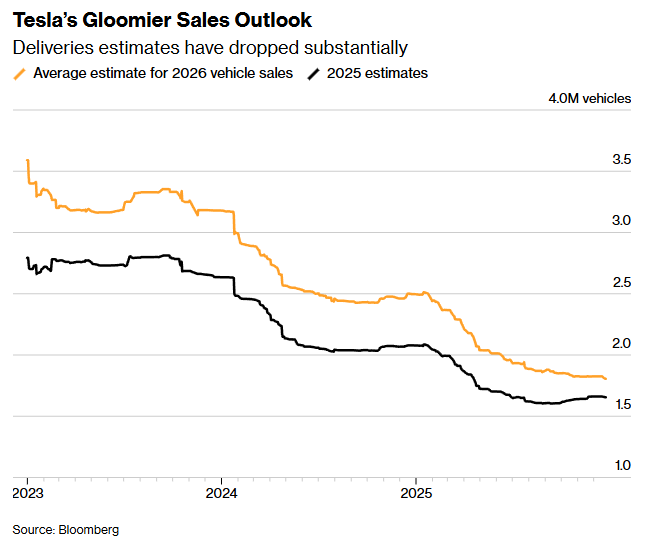
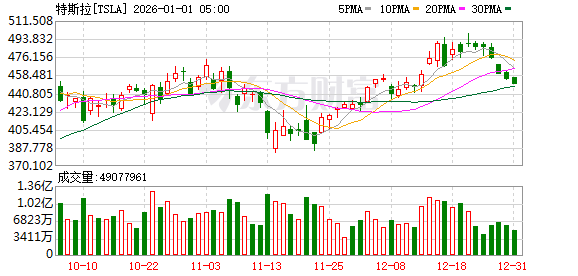
Core Insights - Tesla's stock surged over 11% by the end of 2025, driven by investor confidence in Elon Musk's vision for autonomous vehicles and advancements in AI and robotics [1] - Despite record delivery numbers in Q3, Tesla's overall vehicle sales in the past six months are likely lower than the same period last year, indicating a disconnect between investor sentiment and consumer demand [1][6] - Analysts have significantly downgraded their forecasts for Tesla's vehicle deliveries in 2026, with estimates dropping from over 3 million to around 1.8 million [1][2] Group 1: Sales Performance - Tesla is expected to announce approximately 440,900 vehicle deliveries for Q4, reflecting an 11% year-over-year decline, with some estimates predicting a 15% drop [1] - The company's sales outlook for 2025 has been bleak, with early-year performance hampered by factory upgrades and external political backlash against Musk [4][10] - Analysts predict that Tesla will face further challenges in 2026, particularly after the U.S. ceased federal tax credits for electric vehicle purchases [10] Group 2: Investor Sentiment - Investors are focused on Tesla's long-term vision rather than short-term performance, but concerns about financial headwinds are growing [2] - Musk's efforts to pivot towards a long-term goal of launching a fully autonomous ride-hailing service have helped stabilize stock prices after a significant drop earlier in the year [5] - The introduction of a new compensation plan for Musk, tied to ambitious delivery milestones, has contributed to a rebound in Tesla's stock price [5] Group 3: Competitive Landscape - Tesla's attempts to differentiate itself in the crowded EV market through advanced driver-assistance features have not resonated with consumers as expected, especially in China [6] - Competitors like BYD are outperforming Tesla in sales, with analysts forecasting that BYD will surpass Tesla's global electric vehicle sales for the fifth consecutive quarter [6][9] - The withdrawal of U.S. policy support for electric vehicles may create opportunities for Tesla as other manufacturers scale back their EV investments [10]


马斯克“自动驾驶狂热”难掩销量寒冬!特斯拉(TSLA.US)2026年面临更严峻考验
智通财经网· 2026-01-02 00:05
Core Insights - Tesla's stock surged over 11% by the end of 2025, driven by investor confidence in Elon Musk's vision for autonomous vehicles and advancements in AI and robotics [1] - Despite record delivery numbers in Q3, Tesla's overall vehicle sales in the past six months are likely lower than the same period last year, indicating a disconnect between investor enthusiasm and consumer demand [1] - Analysts have significantly downgraded their expectations for Tesla's vehicle deliveries in 2026, with projections dropping from over 3 million to approximately 1.8 million [1][2] Sales Outlook - Tesla's sales performance in early 2025 was poor, partly due to production line upgrades for the Model Y and backlash against Musk's political actions [4] - The company is expected to report around 440,900 vehicle deliveries for Q4, a year-over-year decline of 11%, with some estimates suggesting a 15% drop [1][4] - The outlook for Tesla's sales remains bleak, with analysts predicting a second consecutive year of declining sales in 2025 [10] Investor Sentiment - Investors are focused on Tesla's long-term potential rather than short-term performance, but concerns about financial headwinds are growing [2] - Musk's efforts to pivot towards a long-term goal of launching a fully autonomous ride-hailing service have helped stabilize stock prices after a significant drop earlier in the year [5] - Despite investor excitement about autonomous taxi services, consumer skepticism remains a challenge, particularly regarding the capabilities of Tesla's Full Self-Driving feature [5][6] Competitive Landscape - Tesla faces increasing competition in the electric vehicle market, particularly from companies like BYD and Xiaomi, which offer similar driving assistance features as standard [6] - Analysts expect BYD's electric vehicle sales to surpass Tesla's globally for the fifth consecutive quarter, highlighting the competitive pressures Tesla is under [6][9] - The cessation of federal tax credits for electric vehicle purchases in the U.S. may pose additional challenges for Tesla, although some see this as an opportunity due to reduced competition from other manufacturers [10]
马斯克宣布脑机接口将量产,特斯拉自动驾驶挑战引发安全质疑
Sou Hu Cai Jing· 2026-01-01 11:43
Group 1: Neuralink Developments - Neuralink has announced that it will begin mass production of its brain-computer interface devices in 2026, marking a transition from medical experimentation to standardized industrial products [3][4] - The company aims to streamline and automate surgical procedures related to the brain-computer interface technology, although this ambition raises ethical concerns regarding the risks of invasive procedures and potential irreversible damage to brain tissue [3][4] - There are warnings about the misuse of sensitive neural data and the potential infringement on human autonomy if regulatory frameworks are not established [3][4] Group 2: Tesla's Full Self-Driving (FSD) System - A Tesla owner successfully completed a 4,500-kilometer journey across the United States using the latest version of the FSD system with minimal human intervention, generating significant public interest [5] - Regulatory bodies, including the National Highway Traffic Safety Administration (NHTSA), have expressed caution, expanding their safety investigation into the FSD software due to previous incidents of violations [5] - A California court has ruled that Tesla misled consumers regarding the capabilities of its "Autopilot" and FSD systems, suggesting that the naming implies a level of autonomy that is not currently achievable [5]
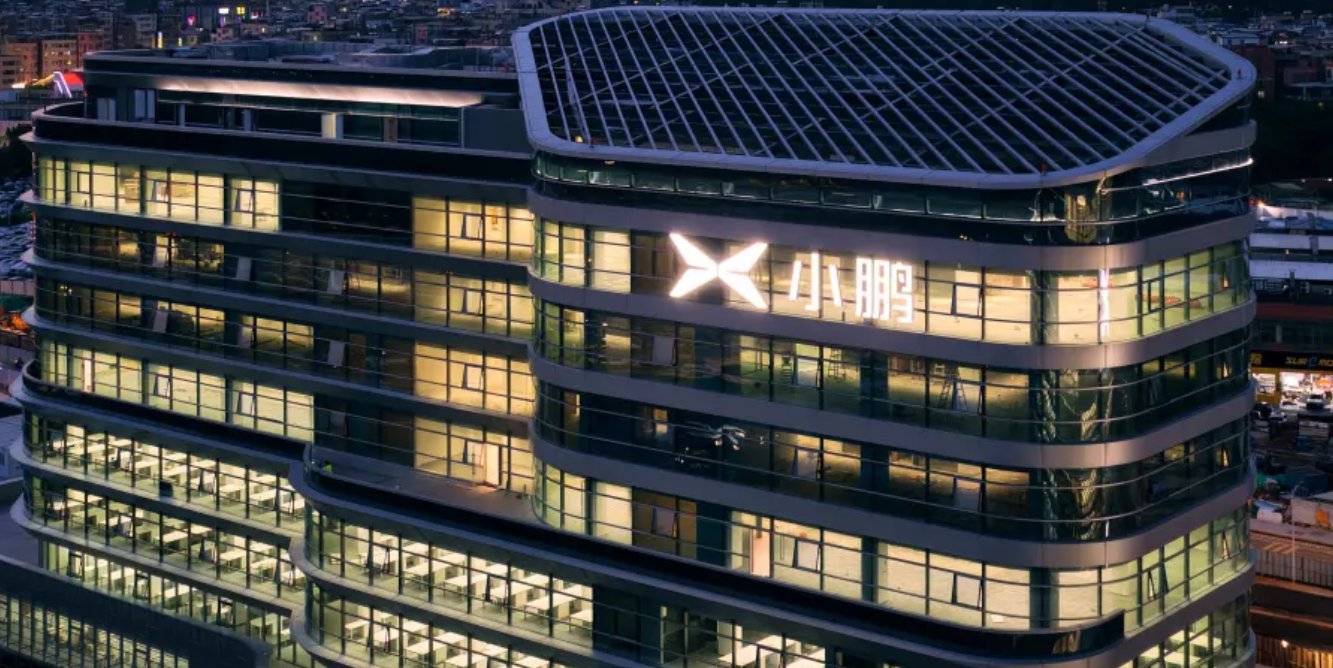
小鹏汽车2025年交付超42万台,同比增长126%
Ju Chao Zi Xun· 2026-01-01 10:05
Group 1 - In 2025, Xpeng Motors achieved a total delivery of 429,445 vehicles, marking a year-on-year increase of 126% [2] - In December 2025, Xpeng delivered 37,508 vehicles, achieving both month-on-month and year-on-year growth [2] - The Xpeng X9, the company's flagship model, delivered 5,424 units in December, setting a record for the highest monthly deliveries, with a month-on-month increase of 68% and a year-on-year increase of 289% [2] Group 2 - Xpeng's overseas market deliveries reached 45,008 units in 2025, reflecting a year-on-year growth of 96% [2] - By the end of December 2025, Xpeng had established a presence in 60 countries and regions globally [2] - Xpeng initiated a localization production project in Malaysia in December 2025, marking its third localization project worldwide [2] Group 3 - In 2025, Xpeng's self-operated charging network saw significant growth, adding over 1,100 new stations, surpassing 3,000 stations by January 1, 2026 [3] - A joint paper by Xpeng and Peking University's National Key Laboratory of Multimedia Information Processing was accepted at AAAI 2026, focusing on an efficient visual token pruning framework for end-to-end autonomous driving [3] - The second-generation VLA model from Xpeng is set to be launched in the first quarter of 2026, initially available in Ultra models, with the 2026 P7+ and G7 also featuring the new technology [3]
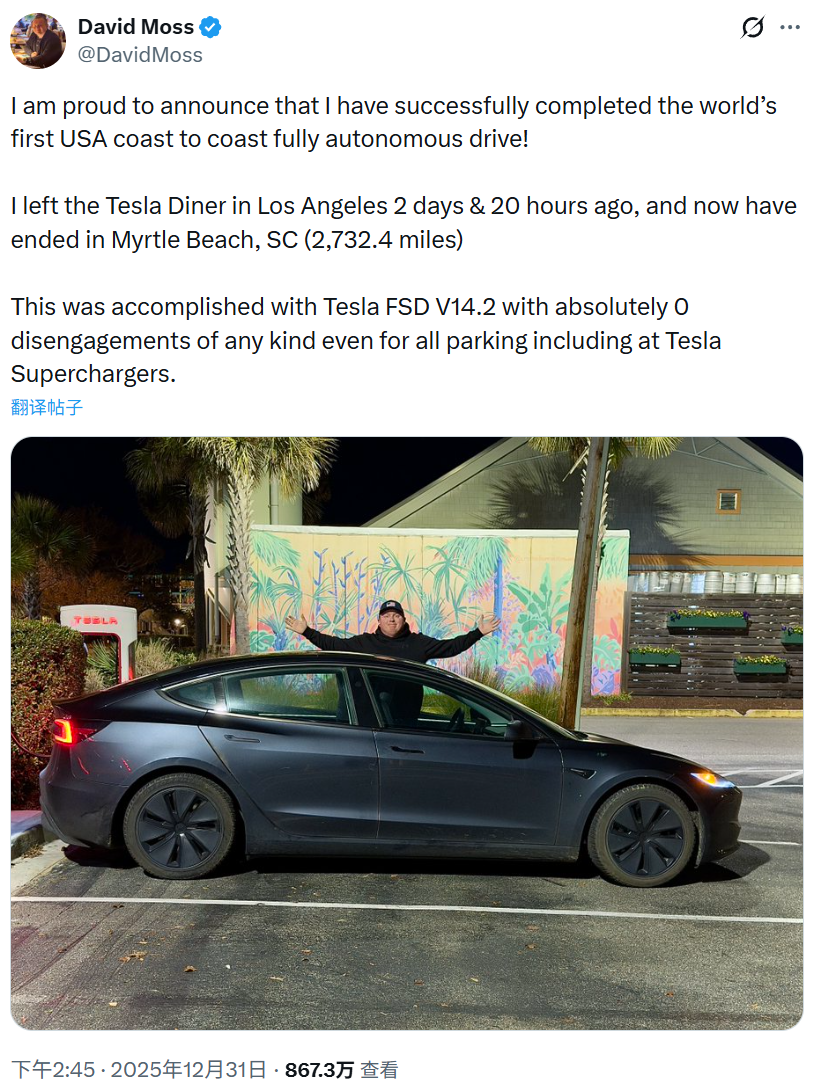
“零人工接管,全程FSD”,特斯拉车主自动驾驶横穿美国 ,马斯克:酷!
Hua Xia Shi Bao· 2026-01-01 09:01
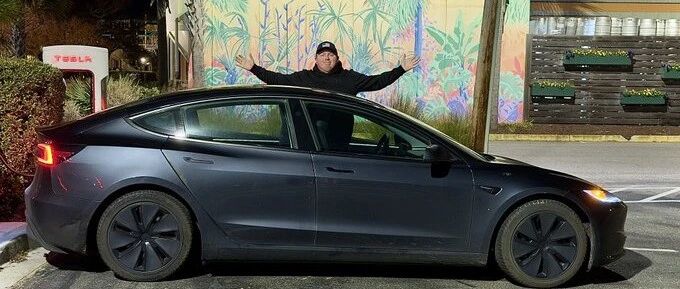
Group 1 - Tesla owner David Moss successfully completed a challenge by driving his Model 3 from the West Coast to the East Coast of the United States using fully autonomous driving technology, making him the first person to do so without any human intervention [2][5] - The journey took 2 days and 20 hours, covering a distance of 2732.4 miles (approximately 4397 kilometers), with no manual takeover even during charging stops [2] - This achievement fulfilled a long-standing goal of Elon Musk, who had aimed for fully autonomous cross-country driving since the launch of Autopilot 2.0 in 2016 [5] Group 2 - Tesla's North American official account celebrated the achievement, highlighting it as the first successful coast-to-coast drive with zero human intervention [5] - Musk expressed his excitement about the event, simply commenting "cool" on social media [6] - Musk also discussed the advancements in Tesla's Full Self-Driving (FSD) technology, comparing the AI's capabilities to human perception and suggesting it is a step towards Artificial General Intelligence (AGI) [8] Group 3 - Tesla provided a rare fourth-quarter delivery forecast, revealing that analysts expect 422,900 vehicle deliveries in Q4 2025, a decline of approximately 15% compared to the same period in 2024 [9] - The total expected deliveries for 2025 are projected to be 1.6408 million, down nearly 8% from 1.789 million in 2024, marking a significant decline for the second consecutive year [10] - The decline in deliveries is attributed to policy rollbacks and increased global competition, as noted by industry analysts [10]
小鹏汽车2025年全年交付量429,445台,同比增长126%
Zheng Quan Shi Bao Wang· 2026-01-01 08:56
2025年,小鹏充电自营网络实现跨越式增长,全年新增自营站点超1,100座;截至 2026年1月1日,小鹏 充电自营站总数正式突破3,000座,达成关键发展里程碑。 近期,由小鹏汽车与北京大学计算机科学学院多媒体信息处理国家重点实验室,联合完成的论文 《FastDriveVLA》被AAAI 2026录用,该会议是人工智能领域极具影响力的国际顶级学术会议之一。该 论文提出了一种专门为端到端自动驾驶VLA模型定制的、高效的视觉Token剪枝框架—— FastDriveVLA。 据悉,小鹏第二代VLA模型将在2026年第一季度正式推送,率先在Ultra车型落地,2026款小鹏P7+、G7 也将搭载第二代VLA。2025年12月29日,2026款小鹏P7+官宣将在全球36个国家同步发布。12月30日, 小鹏G7超级增程以1704公里全球最长续航+430公里同级领先纯电续航,重新定义下一代增程新高度。 记者同时从公司获悉,不久之后,小鹏汽车即将举办新年第一场发布会,发布2026款小鹏P7+和小鹏G7 车型,开启"一车双能"。 1月1日,小鹏汽车公布最新交付成绩:2025年1—12月,小鹏汽车累计交付新车共429,445 ...
阿联酋交出eVTOL新答卷:重型货运无人机Hili成功首飞
2 1 Shi Ji Jing Ji Bao Dao· 2026-01-01 07:57
Core Viewpoint - The successful first flight of Hili, a hybrid heavy cargo drone developed by LODD Autonomous in Abu Dhabi, marks a significant milestone in the UAE's push for autonomous aviation innovation and the establishment of a new intelligent cargo transport system [1][2]. Group 1: Product Features and Capabilities - Hili features a hybrid power system with a payload capacity of 250 kilograms and a range of 700 kilometers, utilizing a combination of electric vertical takeoff and landing (VTOL) and fuel-powered cruising [1][2]. - The drone is designed from scratch, not modified from existing aircraft, to fill the logistics gap between traditional trucks and long-haul cargo planes, enabling rapid point-to-point transport between storage centers [1][2]. Group 2: Operational Integration and Efficiency - Hili is positioned as a key component in the future logistics network, complementing existing transportation methods by facilitating middle-mile transport, thereby enhancing overall supply chain efficiency and reducing operational costs [2][4]. - The drone's VTOL capability allows it to operate without traditional runways, enabling direct flights between warehouses or distribution centers, which significantly accelerates transport times and increases scheduling flexibility [3][4]. Group 3: Development and Future Plans - The development of Hili was led by an internal team of approximately 70 local and international aviation experts, completing the process from concept to prototype in under two years, showcasing the rapid development pace in the UAE [2][10]. - LODD plans to initiate commercial operations by mid-2026 in collaboration with aviation and logistics partners, following successful flight tests and regulatory approvals [2][8]. Group 4: Market Expansion and Strategic Importance - Abu Dhabi is crucial for the development and testing of these technologies due to its diverse geographical environment, advanced infrastructure, and progressive regulatory framework [7]. - The company aims for global expansion, having already established agreements with partners in several Asian countries and the UK, indicating Hili's competitive potential in the mid-range logistics market [7]. Group 5: Challenges and Future Innovations - Key challenges for expansion include regulatory adjustments and ensuring the reliability and safety of command, control, and data management systems for autonomous drones in civilian airspace [6]. - The ultimate goal is to achieve full electrification to reduce CO2 emissions, although current battery energy density remains a technical barrier for long-range cargo transport [11].
特斯拉FSD首次横穿美国,Model3实现1万英里零干预,马斯克预言兑现了
机器之心· 2026-01-01 04:33
Core Viewpoint - The article highlights the achievement of David Moss, who completed the first fully autonomous coast-to-coast drive in the U.S. using Tesla's Full Self-Driving (FSD) technology, marking a significant milestone in the development of autonomous driving [1][18]. Group 1: Achievement Details - David Moss drove a 2025 Model 3 equipped with FSD V14.2, covering a distance of 2,732.4 miles (approximately 4,400 kilometers) from Los Angeles to Myrtle Beach in 2 days and 20 hours without any human intervention [7][8]. - The entire journey included all aspects such as parking and charging at Tesla Supercharger stations, which were also completed without human control [5][8]. - Moss emphasized that the drive was entirely reliant on FSD, and the data can be verified through the Whole Mars FSD database [8][10]. Group 2: Technological Advancements - FSD V14.2 represents a significant update in Tesla's autonomous driving software, showing improvements in driving performance, perception capabilities, and decision-making logic compared to the previous version [22]. - The update has been noted for its more human-like driving behavior, with better handling of complex intersections and overall driving rhythm [22][23]. - Despite being classified as an L2 system requiring driver supervision, the real-world performance of FSD V14.2 has shown substantial enhancements [23]. Group 3: Industry Implications - The achievement is seen as a pivotal moment for autonomous driving, moving from assisted driving to a fully autonomous system, as Tesla continues to push the boundaries of self-driving technology [34][35]. - The article contrasts Tesla's approach with that of Waymo, highlighting the differences in their technological frameworks and the potential long-term advantages of Tesla's end-to-end neural network model [29][30]. - Observers suggest that the modular architecture of Waymo may face challenges in scalability and reliability, positioning Tesla FSD as a likely long-term winner in the autonomous driving space [30].
交付40.6万辆|理想2025年记录
理想TOP2· 2026-01-01 04:06
Core Viewpoint - The article discusses the performance and strategic developments of Li Auto in 2025, highlighting its delivery numbers, product innovations, and market positioning in the electric vehicle sector. Delivery Performance - In January 2025, Li Auto delivered 29,927 vehicles, with 29,120 being range-extended and 807 being pure electric [1] - February 2025 saw deliveries of 26,264 vehicles, with 25,583 being range-extended and 681 pure electric [1] - March 2025 deliveries increased to 36,674, with 35,758 range-extended and 916 pure electric [2] - April 2025 deliveries were 33,939, with 33,836 range-extended and 103 pure electric [2] - May 2025 deliveries reached 40,856, with 39,862 range-extended and 994 pure electric [3] - June 2025 deliveries were 36,179, with 33,875 range-extended and 2,304 pure electric [4] - July 2025 saw deliveries of 30,731, with 27,915 range-extended and 2,816 pure electric [5] - August 2025 deliveries totaled 28,529, with 23,196 range-extended and 5,333 pure electric [6] - September 2025 deliveries were 33,951, with 24,554 range-extended and 9,397 pure electric [9] - October 2025 deliveries reached 31,767, with 18,340 range-extended and 13,427 pure electric [15] - November 2025 deliveries were 33,181, with 18,984 range-extended and 14,197 pure electric [17] - December 2025 deliveries totaled 44,246 [20] Product Innovations and Collaborations - Li Auto announced a deep collaboration with Tsinghua University for research in automotive intelligence technology [1] - The company introduced the MEGA model, which achieved its first monthly sales exceeding that of competitors [2] - Li Auto's MindGPT 3.0 was released, showcasing advancements in AI technology [3] - The launch of the Star Ring OS technical architecture white paper was announced, indicating a focus on software development [3] - Li Auto's VLA (Vehicle Language Architecture) was highlighted as a significant innovation in their autonomous driving strategy [9] Market Positioning and Strategy - Li Auto's CEO expressed confidence in achieving significant sales targets in the high-end electric vehicle market, aiming for stable monthly sales of 6,000 units for the i8 and 9,000-10,000 units for the i6 [9] - The company is focusing on enhancing its competitive edge through product differentiation and technological advancements [19] - Li Auto is exploring international markets, with plans to enter countries like Egypt, Kazakhstan, and Azerbaijan [20] Financial Performance - In Q1 2025, Li Auto reported revenue of 2.598 billion, with a gross profit margin of 20.5% and a net profit of 272 million [4] - The company faced challenges in maintaining cash flow, reporting a free cash flow of -2.53 billion in Q1 2025 [4] - The financial outlook for Q2 2025 was adjusted, indicating potential difficulties in meeting delivery guidance [4][5] Public Relations and Brand Image - Li Auto's management has been proactive in addressing negative public sentiment and misinformation regarding its products [2][3] - The company has engaged in various marketing strategies, including collaborations with influencers and public figures to enhance brand visibility [6][7]

特斯拉新消息:Model 3车主首度全程自动驾驶横穿美国,期间没有出现过一次险情;公司在上海急聘Robotaxi工程师,无人驾驶出租车要来了?
Mei Ri Jing Ji Xin Wen· 2026-01-01 03:49
Core Insights - Tesla owner David Moss completed a historic challenge by driving his Model 3 across the United States using fully autonomous driving technology without any human intervention, making him the first person to achieve this feat [1][4][6] - The journey spanned 2 days and 20 hours, covering a distance of 2,732.4 miles (approximately 4,397 kilometers) from California to South Carolina, with no manual takeover even during charging stops [1][5] - This achievement aligns with CEO Elon Musk's long-term vision for fully autonomous driving, which he initially aimed to realize by the end of 2017 [6][10] Tesla's FSD Technology - The challenge utilized the recently released FSD V14.2.1.25 update, which enhances acceleration and steering to mimic human driving behavior, although driver supervision is still required [6] - Moss is also recognized as the first individual to drive over 10,000 miles using FSD without any manual intervention [4] - Tesla's official data indicates that the use of its smart driving assistance has significantly reduced accident rates compared to average U.S. road statistics, with major collision rates down to 1/8 and minor collisions also reduced to 1/8 [10] Robotaxi Developments - Tesla has begun testing its Robotaxi service without safety drivers, although no timeline for commercial operation has been provided [12] - The company is actively recruiting for the Robotaxi project in Shanghai, indicating potential expansion into the autonomous taxi market in China [14][16] - The Cybercab model, showcased at the Shanghai Import Expo, features a design without a steering wheel or pedals, aimed at short-distance travel for 1 to 2 passengers [16][20] Industry Reactions and Future Predictions - Industry leaders, such as Xiaopeng Motors' CEO He Xiaopeng, have noted the impressive capabilities of Tesla's unified software architecture for both production vehicles and Robotaxis, predicting that true full autonomy will emerge by 2026 [18]