
自动驾驶

Search documents
智能汽车产业链全景图(2025年12月版)
自动驾驶之心· 2026-01-01 03:05
Group 1: Automotive Manufacturers - Key manufacturers mentioned include Kia, Geely, Volvo, Jaguar Land Rover, and BYD [3][4][5][11][12] - Notable electric vehicle manufacturers include Rivian, VinFast, and NIO [14][11] - The article highlights the growing presence of Chinese automotive brands in the global market [11][12] Group 2: ADAS and Autonomous Driving Technology - Tier 1 suppliers for Advanced Driver Assistance Systems (ADAS) include Desay SV, Huawei, and Baidu Apollo [16][17] - High-precision positioning suppliers mentioned are Qianxun S, Beidou Star, and Huace Navigation [18][19] - Key players in the LiDAR market include Luminar, Innoviz, and Hesai Technology [21] Group 3: Vehicle Connectivity and Cloud Services - Major cloud service providers for automotive applications include AWS, Microsoft, and Huawei [31][32] - Companies involved in data integration and vehicle-to-everything (V2X) communication include Freetech and MAXIEYE [32][33] Group 4: In-Vehicle Technology and User Experience - Tier 1 suppliers for cockpit technology include Bosch, Aptiv, and Visteon [50][54] - The article discusses the importance of user interface and interaction technologies, highlighting companies like iFlytek and Tencent [61] Group 5: Electric and Hybrid Vehicle Components - Key suppliers for electric vehicle components include Bosch, AUMOVIO, and Magna [26][40] - The article emphasizes the role of battery technology and management systems in the growth of electric vehicles [40][41] Group 6: Commercial Vehicle Technologies - Companies providing ADAS for commercial vehicles include Eastsoft and ZF [48] - The article notes the increasing demand for smart logistics and fleet management solutions [48][49]





L3只是过渡?小鹏Robotaxi与L4同源,中国车企弯道超车倒计时
Jing Ji Guan Cha Bao· 2026-01-01 02:11
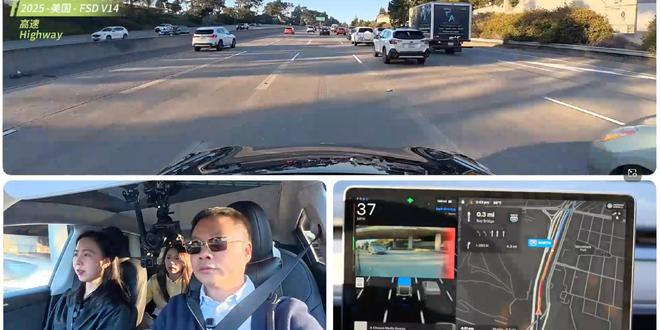
Core Insights - Physical AI is emerging as a new benchmark for assessing the core competitiveness of global tech companies, marking a shift from digital algorithm competition to real-world interactions [2][4] - The competition in autonomous driving, a key battleground for AI and the physical world, is characterized by a bipolar development trend led by the US and China [4][20] Industry Developments - Xiaopeng Motors' CEO He Xiaopeng plans to retest Tesla's FSD V14 in the US in December 2025, highlighting a collaborative dialogue between leading tech firms [2][3] - The second-generation VLA model from Xiaopeng is set to enter mass production, transforming industry consensus into practical momentum for change [3][20] Competitive Landscape - The competition in the physical AI sector is defined by a consensus on technology routes, with Tesla focusing on a pure vision approach and Xiaopeng developing a full-stack self-research system [4][10] - Both companies are moving away from the contentious L3 transitional phase, aiming for L4 capabilities directly, which reflects a collective understanding of the limitations of L3 [13][20] Technological Innovations - Xiaopeng's second-generation VLA model eliminates the language translation step, allowing for direct generation of driving commands from visual signals, significantly enhancing response speed and decision-making accuracy [8][10] - The model's training data volume reaches 100 million clips, equivalent to 65,000 years of human driving experience, enabling it to handle complex scenarios effectively [17][18] Market Positioning - Xiaopeng's full-stack self-research system creates a competitive barrier, allowing for rapid iterations and deployment of advanced models, with a cloud-based model supporting 72 billion parameters [8][18] - The unique challenges of Chinese road conditions have become a strategic asset for local companies, enhancing their AI capabilities and providing a rich training environment [17][20] Future Outlook - 2026 is projected to be a pivotal year for Xiaopeng, with plans to launch L4-level vehicles and Robotaxis, positioning the company as a key player in defining the next generation of AI paradigms [20] - The collaboration and competition between Tesla and Xiaopeng are expected to drive innovation and set industry standards, with both companies aiming for a fair competitive landscape in the global market [9][20]

中央经济工作会议定调 推动智能驾驶产业迈入新阶段
Zhong Guo Jing Ying Bao· 2026-01-01 01:44
Core Insights - The article highlights the significant advancement of autonomous driving in China, marking a transition from demonstration to commercial operation, with companies like Changan Automobile and XPeng obtaining L3 autonomous driving licenses [1][3][4]. Industry Developments - The autonomous driving sector is witnessing a clear differentiation and acceleration, with various companies, including Changan and XPeng, moving towards conditional autonomous driving responsibilities [2]. - The first batch of L3 autonomous vehicles has received product access approval, indicating a shift towards institutionalized operation within public transport systems [3]. - The operational landscape for autonomous driving is evolving from capability demonstration to responsibility integration, with clearer operational boundaries and accountability [4]. Technological Advancements - Companies are focusing on real-world testing, with Changan's SL03 completing over 5 million kilometers of open road testing under challenging conditions, maintaining a zero-accident record [3]. - The technology logic is shifting towards embedding responsibility within the operational framework, allowing for more cities to become practical applications of "Artificial Intelligence+" [4]. Business Models and Commercialization - Robotaxi services are entering a sustainable commercial expansion phase, with companies like Pony.ai achieving full unmanned commercial operations in cities like Guangzhou and Beijing [5]. - The operational verification of autonomous driving is proving its commercial viability, while data collection systems are being restructured to enhance technological iteration limits [5]. - Companies are exploring various paths to integrate autonomous driving with ride-hailing platforms and data services, aiming for lower-cost business models [2][6]. Policy and Regulatory Environment - The Chinese government is actively shaping the autonomous driving industry through policies that encourage innovation while emphasizing safety and regulation [7]. - The recent policy changes are expected to accelerate the commercialization of autonomous driving, expanding its application from closed environments to complex urban traffic systems [7]. - Regulatory frameworks are crucial for the sustainable large-scale commercialization of autonomous driving, necessitating a dynamic and tiered approach to ensure safety while allowing for innovation [9].
中国金龙指数,全年累涨11.33%
财联社· 2026-01-01 01:13
Market Performance - The US stock market continued its post-Christmas pullback, with all three major indices closing lower, marking a subdued end to 2025. The S&P 500 index fell by 0.74% to 6845.5 points, the Nasdaq Composite dropped by 0.76% to 23241.99 points, and the Dow Jones Industrial Average decreased by 0.63% to 48063.29 points [1]. - For the year, the S&P 500 recorded an annual increase of 16.39%, while the Nasdaq managed a 20.36% rise, achieving over 20% growth for three consecutive years. The Dow Jones also rose by 12.97%, marking a similar performance for the third year in a row [3]. Individual Stock Performance - Among the top performers in the S&P 500, four storage giants—SanDisk, Western Digital, Micron Technology, and Seagate Technology—led the annual gains. Semiconductor stocks like Lam Research, AI application leader Palantir, and Comfort Systems, which provides HVAC solutions for data centers, also featured prominently [3]. - In the tech sector, only Google and Nvidia among the "Big Seven" tech companies outperformed the benchmark index in 2025 [8]. Commodity and Sector Movements - US silver futures experienced a significant drop of 9% due to a second margin increase by the CME Group within a week, negatively impacting the mining sector. Companies like Endeavour Silver and Silvercorp Metals saw declines of over 4% and 2.8%, respectively [11]. Chinese Stocks - The Nasdaq Golden Dragon China Index closed down 1.13% but recorded an annual increase of 11.33%. Notable Chinese stocks included Alibaba, which rose over 75%, and Netease, which increased by 58.28% [12]. Corporate News - Warren Buffett officially retired as CEO of Berkshire Hathaway on December 31, 2025, after a long tenure, although he will remain as chairman of the board [13]. - Tesla achieved a milestone with a driver completing a coast-to-coast journey using full self-driving technology, marking a significant advancement in autonomous vehicle capabilities [15]. - Nvidia and AMD are expected to enter a "year-long price increase cycle" for GPUs, driven by rising memory costs, with flagship models potentially reaching prices as high as $5000 [16]. - Trump Media & Technology Group announced plans to issue a new cryptocurrency to shareholders, despite a significant annual decline in stock value [17]. - Brookfield Asset Management is launching a cloud computing business to challenge tech giants like Amazon, aiming to reduce AI development costs [18]. - Uber is in talks to acquire the parking app SpotHero, which could create synergies between ride-hailing and parking services [19].


月之暗面完成5亿美元新融资,持有现金超100亿元;巴菲特正式退休;公众号一键排版内测上线;ModelY连续三年成全球最畅销车丨邦早报
创业邦· 2026-01-01 01:12
Financing and Valuation - Moonlight Dark Side completed a $500 million Series C financing, achieving a post-investment valuation of $4.3 billion, with over 10 billion RMB in cash reserves [2] - Weijing Medical Robotics announced the completion of a financing round of over 100 million RMB [18] - Lizheng Technology completed a C+ round financing exceeding 300 million RMB [18] - Kunyou Optoelectronics announced a new round of C financing, led by state-owned capital investment [18] - Black Play, a trendy toy brand, completed over 100 million RMB in Series A financing [18] Corporate Developments - Warren Buffett officially retired as CEO of Berkshire Hathaway, concluding a 60-year leadership tenure [3] - Xiaopeng Motors outlined plans for significant product adjustments, focusing on enhancing product strength and reducing internal inefficiencies [10] - Evergrande Auto announced continued suspension of trading, exploring cash resource management methods [9] - Qunar Travel's CEO announced new employee benefits, including an additional three days of child companionship leave and a 50,000 RMB childbirth bonus [11] Market Trends and Innovations - Tesla's Model Y has been recognized as the best-selling car globally for three consecutive years [14] - The release of the first personal robot, Qiyuan Q1, marks a new entry into the personal robotics market by Shangwei New Materials [19] - The launch of the "One-Click Formatting" feature on WeChat public accounts aims to enhance content presentation efficiency [24] - Suzhou government announced incentives for promoting AI application scenarios, with rewards up to 10 million RMB for qualifying projects [25] Technology and AI Developments - Qwen-Image-2512 was released, showcasing significant improvements in image generation capabilities [21] - Tesla's recruitment for a low-voltage electrical engineer for its Robotaxi project has sparked speculation about its entry into the Chinese market [17]



股价连跌六日收官2025!特斯拉(TSLA.US)Q4交付数据公布在即 市场更关注无人出租车进展
智通财经网· 2025-12-31 23:50
Core Viewpoint - Tesla's upcoming fourth-quarter delivery data for 2025 is highly anticipated, with a focus not only on vehicle sales but also on the progress of its autonomous taxi business, which is expected to be updated alongside the delivery figures on January 2 [1]. Group 1: Delivery Expectations - Market expectations for Tesla's fourth-quarter delivery are set at approximately 422,900 vehicles, with consensus estimates from FactSet around 440,000, down from nearly 460,000 a few weeks prior [1]. - In comparison, Tesla delivered about 497,000 vehicles in the third quarter of 2025 and approximately 496,000 in the fourth quarter of 2024 [1]. - The decline in delivery volume is attributed to the U.S. federal government's cancellation of the $7,500 electric vehicle tax credit in late September, which increased purchase costs and led to a surge in deliveries in the previous quarter [1]. Group 2: Stock Performance - Tesla's stock has experienced a six-day decline, closing at $449.72, down 1%, with a total drop of about 8% over this period, although it remains up approximately 11% for the year [2]. - Some investors believe the current stock price reflects a certain level of pessimism, with expectations that if deliveries are around 415,000, the stock price may stabilize [2]. - The market is particularly focused on the potential removal of human safety monitors from Tesla's autonomous taxis in Austin, which could mark a significant milestone in the commercialization of autonomous driving [2]. Group 3: Valuation and Future Outlook - Despite declining vehicle sales, Tesla's stock has risen about 13% this year, with the company's market capitalization around $1.6 trillion and a projected price-to-earnings ratio of about 220 for 2026 [3]. - The anticipated decline in vehicle sales to below 1.7 million in 2025 for the second consecutive year is overshadowed by market expectations regarding Tesla's applications in artificial intelligence, particularly in autonomous taxi services [3].
特斯拉车主首度实现“全程自动驾驶横穿美国”
财联社· 2025-12-31 23:37
Core Viewpoint - The article highlights a significant achievement in autonomous driving, where David Moss became the first person to cross the United States from the West Coast to the East Coast using Tesla's Full Self-Driving (FSD) technology without any human intervention, marking a milestone for Tesla and the automotive industry [1][8]. Group 1: Achievement Details - David Moss completed the journey from California to Myrtle Beach, South Carolina, covering a distance of 2732.4 miles (approximately 4397 kilometers) in 2 days and 20 hours [1]. - The entire trip was executed without any manual takeover, including during charging stops at Tesla Superchargers, showcasing the reliability of Tesla's FSD technology [1][7]. - Moss is noted as the first individual to use FSD for over 10,000 miles without taking control of the vehicle, further emphasizing the capabilities of Tesla's autonomous driving system [7]. Group 2: Historical Context - The article draws a comparison to the early days of the automotive industry, referencing Horatio Jackson and Sewall Crocker, who took 63 days to drive across the U.S. in 1903, highlighting the evolution of automotive technology [3]. Group 3: Technological Advancements - The journey utilized the recently released FSD V14.2.1.25 update, which improved acceleration and steering to mimic human driving behavior, although it still requires driver supervision [8]. - Tesla's ongoing focus on autonomous driving is evident, with the introduction of Robotaxi services and a free trial of FSD for vehicles equipped with Hardware 4, aimed at increasing user awareness of the technology [11].
解码零跑十年:从生存到引领,一家“技术本位”公司的世界级蓝图
Xin Lang Cai Jing· 2025-12-31 16:01
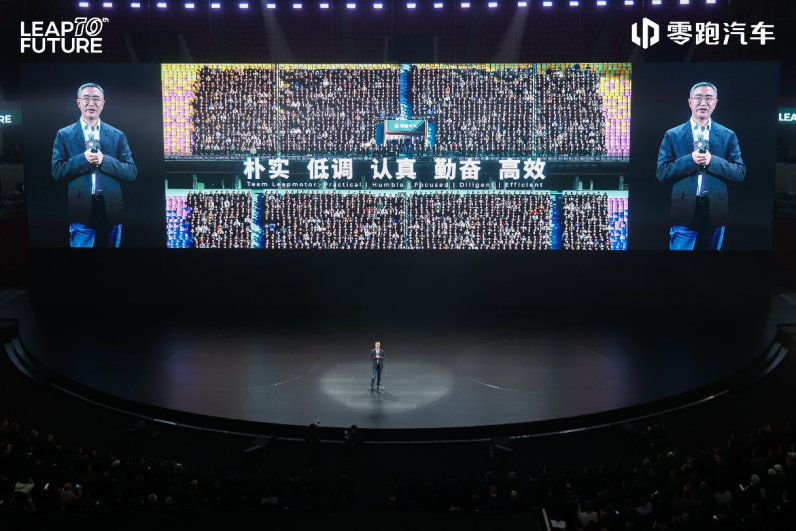
Core Viewpoint - Leapmotor aims to become a world-class electric vehicle manufacturer with an annual sales target of 4 million units, reflecting a blend of ambition and practicality in its strategic vision [1][27]. Group 1: Company Background and Development - Leapmotor's founder, Zhu Jiangming, acknowledged the company's humble beginnings, stating that the team had no prior knowledge of the automotive industry and relied on intensive interviews to build their understanding [3][32]. - The company has maintained a high proportion of R&D personnel, with around 80% of its workforce dedicated to research and development, emphasizing its commitment to technological innovation [5][34]. Group 2: R&D and Technological Integration - Leapmotor has established an "end-to-end" R&D management system, ensuring seamless integration from product planning to manufacturing and service, which enhances efficiency and reduces organizational friction [7][36]. - The company has achieved approximately 65% self-research and manufacturing of core vehicle components, which contributes to a cost advantage of about 10% compared to outsourcing [9][38]. Group 3: Business Strategy and Pricing - Leapmotor adopts a "cost pricing" strategy, passing savings from efficient manufacturing directly to consumers, which enhances the value proposition of its vehicles [11][42]. - The company maintains a stable gross margin of 14%-15%, allowing it to achieve quarterly profitability while offering competitively priced products [13][42]. Group 4: Product Innovation and Market Positioning - Leapmotor's D-series flagship models, D19 and D99, are designed to deliver premium experiences at competitive prices, aiming to redefine the concept of luxury in the automotive market [45][49]. - The company plans to launch five new models in 2026, ensuring a continuous evolution of its product offerings across different market segments [59]. Group 5: Global Expansion Strategy - Leapmotor has formed strategic partnerships with global automotive giants like Stellantis to leverage established sales networks and resources, facilitating rapid entry into international markets [21][51]. - The company aims to double its overseas sales to over 100,000 units by 2026, with plans for localized production of key models to optimize costs and comply with regional policies [25][55].
看2026|小马智行彭军:让自动驾驶技术从“示范”到“实用”
Bei Ke Cai Jing· 2025-12-31 15:41
Core Viewpoint - The article discusses the economic outlook for 2026 and the strategic initiatives that companies, particularly in the autonomous driving sector, are planning to implement in response to the central economic work conference's emphasis on expanding domestic demand and optimizing supply [1][2]. Company Initiatives - Pony.ai, led by CEO Peng Jun, is positioned as a key player in the autonomous driving industry, which integrates multiple sectors such as automotive, transportation, energy, and artificial intelligence [9]. - The company aims to convert national macroeconomic guidelines into specific industry development actions, leveraging its world model™ (PonyWorld) to create a virtual driver™ that has achieved 500,000 hours of fully autonomous operation, demonstrating a safety performance ten times better than human drivers [9][10]. - Pony.ai has successfully launched autonomous driving services in major Chinese cities, including Beijing, Shanghai, Guangzhou, and Shenzhen, achieving regular operations without human intervention [9]. Strategic Development Goals - For 2026 and beyond, Pony.ai plans to adopt a "T" shaped strategic layout, focusing on deepening its presence in existing markets while exploring new opportunities [11]. - The company has reached a milestone with its seventh-generation vehicle achieving profitability in Guangzhou, validating its business model and enhancing confidence in expanding operations in first-tier cities [11]. - Future growth will be driven by expanding into more domestic cities and international markets, with strategies involving collaboration with local partners and government agencies to establish market presence [11].

小马智行(PONY.US)盘前涨1.5% Robotaxi规模超1159辆 超额完成目标
Zhi Tong Cai Jing· 2025-12-31 14:38
Group 1 - The core viewpoint of the article is that Pony.ai has exceeded its target for autonomous taxi deployment by announcing a fleet of over 1,159 Robotaxis by December 31, 2025, surpassing the goal of 1,000 vehicles [1] Group 2 - On Wednesday, Pony.ai's stock rose by 1.5%, reaching a price of $14.86 [1] - The announcement indicates strong progress in the company's autonomous vehicle strategy and operational capabilities [1]