
科技创新

Search documents
未来5年,武汉靠什么驱动
Chang Jiang Ri Bao· 2025-12-29 01:05
Core Insights - Wuhan is entering a critical period for development, aiming to build "five centers" and achieve modern urbanization, with its economy surpassing 2 trillion yuan [1] - The city recognizes that its future growth will be driven by efficient integration of laboratories and production lines, urban renewal, and collaborative development within metropolitan areas [1] Group 1: Technological Innovation - Technological innovation is identified as the primary driver for Wuhan's future, with a significant increase in GDP from 1 trillion yuan in 2014 to 2 trillion yuan in 2023 [3] - The local transformation rate of scientific achievements has improved, with over two-thirds of technological results being realized locally [3][4] - Wuhan ranks eighth globally in the 2024 Nature Index for research cities and sixth in the number of high-impact AI researchers [4] Group 2: Urban Renewal - Urban renewal is a key development strategy, enhancing living conditions for residents while promoting economic growth [6][7] - The transformation of historical sites, such as the Shaoxing area, illustrates the dual benefits of urban renewal: meeting housing needs and preserving cultural heritage [6][7] - The revitalization of old industrial sites, like the Huazhong Small Gui Mountain Financial Cultural Park, has generated significant tax revenue and employment opportunities [7] Group 3: Collaborative Development - The interconnectedness of various districts in Wuhan, such as the synergy between Optics Valley and Vehicle Valley, exemplifies the shift towards collaborative innovation [9][10] - The urban agglomeration strategy emphasizes the importance of cities working together rather than in isolation, as highlighted by the recent policy directives from the central government [10][11] - The Wuhan metropolitan area is expected to account for 29% of the economic output of the Yangtze River Middle Urban Agglomeration by 2024, underscoring its growing significance [12]
一季度债市-和历史经验会有什么不同
2025-12-29 01:04
一季度债市,和历史经验会有什么不同?20251228 摘要 中央经济工作会议定调及政府债券发行节奏是关键。会议显示传统经济 领域稳健,两会后超预期政策概率小,短期利好债市。政府债券发行进 度或放缓,一季度地方债久期预计不会太长,各地政府将根据未来利率 变动进行调整。 权益市场春季躁动或对债市形成压力,但非直接影响。货币政策出现显 著变化,买断式回购和 MLF 改革增强央行操作灵活性,存款利率下行及 存款置换增加存单利率下行概率。 春节前后配置力量有望增强。大银行 EVE 指标变化和小银行 KPI 制定完 成后,买入策略将明确。利率反弹向上时,保险公司购买超长期国债的 量也在逐渐增加。 新兴经济与传统经济增长效能分化,股、商品行情并非直接影响债市。 可能出现股、商品双牛局面,对整体市场形成积极作用。 利率波动中枢预计在 1.7%至 1.95%之间,上行突破 1.95%的概率不高, 如果存单利率下行,则有望达到 1.75%左右甚至更低。一季度内,有望 出现类似于今年 3 月或 10 月那样的机会窗口。 Q&A 2026 年一季度债市的整体预期如何? 2026 年一季度的债市预期较为复杂,既有与历史相似的因素,也有 ...
证券市场周刊-第47期 2025
2025-12-29 01:04
Summary of Key Points from the Conference Call Industry and Company Focus - The conference call primarily discusses the **"Artificial Intelligence+"** initiative and its implications for various industries, particularly in the context of the **2026 economic outlook** in China. The focus is on how AI will drive innovation and economic growth across sectors, including technology, manufacturing, and services [12][38][40]. Core Insights and Arguments 1. **Policy Direction**: The **2025 Central Economic Work Conference** emphasized the need to deepen and expand the **"Artificial Intelligence+"** initiative, positioning it as a strategic focus for the next five years. This includes enhancing AI governance and integrating AI into various sectors [12][38][40]. 2. **Economic Growth Projections**: The **2026 capital market** is expected to maintain a bullish trend, transitioning from a structural bull market to a more comprehensive one. The focus will be on sectors like **semiconductors, AI, low-altitude economy, solid-state batteries, and biomedicine**, which are anticipated to drive economic growth [9][10]. 3. **Investment Opportunities**: The report highlights that **A-shares** are likely to see continued inflows, with public funds expected to exceed **1 trillion yuan** in issuance, reflecting a strong willingness among residents to invest [9][10]. 4. **Sector Performance**: The **AI industry** is projected to experience significant growth, with companies in the sector, such as **Nexi Technology**, reporting substantial revenue increases due to AI-related investments. For instance, Nexi's revenue for the first three quarters of 2025 reached **16.5 billion yuan**, a **221.7%** increase year-on-year [47]. 5. **Market Dynamics**: The **A-share market** is expected to benefit from favorable macroeconomic conditions, including a **loose monetary policy** and supportive fiscal measures, which will enhance liquidity and investor confidence [9][10][31]. Other Important but Potentially Overlooked Content 1. **Sector-Specific Insights**: The **liquor industry**, particularly companies like **Kweichow Moutai** and **Wuliangye**, is highlighted for its strong dividend payouts, with a combined distribution exceeding **40 billion yuan**. This sector is seen as a stable investment amid market fluctuations [4][9]. 2. **Technological Advancements**: The report notes that the **AI infrastructure** is transitioning from rapid expansion to efficient utilization, with a focus on improving the quality of AI applications and their integration into everyday business practices [38][40]. 3. **Long-term Strategic Goals**: The **"Artificial Intelligence+"** initiative is not just a technological upgrade but is viewed as a critical driver for achieving high-quality economic development and enhancing China's competitive edge in the global market [40][41][46]. This summary encapsulates the key points discussed in the conference call, focusing on the implications of the **"Artificial Intelligence+"** initiative for various industries and the overall economic outlook for 2026.


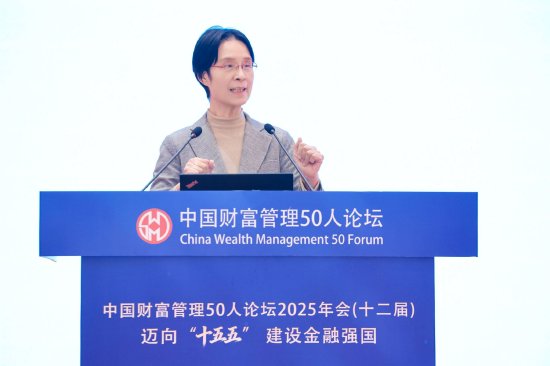
江小涓:科创浪潮下“十五五”金融业迎机遇 以“三化”转型应对挑战
Xin Lang Cai Jing· 2025-12-29 01:03
Core Viewpoint - The 2025 China Wealth Management Forum emphasizes the theme of "Building a Financial Power during the 14th Five-Year Plan," highlighting the importance of technological innovation and the evolving investment landscape in China [1][8]. Group 1: Technological Innovation and Investment Opportunities - China's technological innovation capabilities have established a solid foundation, with a significant surge in new technologies expected during the 14th Five-Year Plan period [3][10]. - The emergence of numerous high-quality tech enterprises is crucial for attracting investment, as the availability of viable projects is essential for capital deployment [3][10]. Group 2: Changing Investment Landscape - Traditional venture capital (VC) and private equity (PE) are experiencing decreased activity, while corporate venture capital (CVC) is becoming a significant force in tech investment [4][11]. - Major tech companies, both domestic (e.g., Alibaba, Ant Group, Tencent) and international (e.g., companies under Elon Musk, Databricks, Anthropic), are actively investing in emerging tech projects [4][11]. - Government venture capital (GVC) is also participating in new project investments, but challenges in project selection remain [4][12]. Group 3: Financing Channels and Global Market Dynamics - Chinese tech companies have diverse global financing options, with about 25% of Chinese tech board companies opting for U.S. listings last year, indicating strong overseas investor confidence in China's tech sector [4][12]. - The influx of new investment forces poses challenges to traditional financial institutions, which must adapt to retain high-quality market participants [4][12]. Group 4: Financial Industry Transformation - The financial sector needs to accelerate its market-oriented, digital, and international transformation to enhance competitiveness [5][14]. - Digital transformation has positioned China's financial industry at a global leading level, supported by government initiatives and a large user base [6][13]. - The rise of generative AI is significantly altering financial services, enabling banks to enhance project evaluation and success forecasting [6][13]. Group 5: Internationalization and Strategic Expansion - There are promising commercial prospects for the financial industry to collaborate with domestic industries in international markets, particularly in developing countries with lower labor costs [7][14]. - The solar photovoltaic industry exemplifies successful international expansion, with significant exports to Africa expected to yield quick returns on investment [7][14]. - The urgency for the financial sector to internationalize is emphasized, as it presents opportunities to stabilize domestic investor returns and mitigate declining profitability [7][14].

一座科创强市的雄心与担当
Zheng Zhou Ri Bao· 2025-12-29 00:50
Group 1: Core Insights - The emphasis on technological innovation as a driving force for development in Zhengzhou is highlighted, with a focus on integrating local conditions to foster new productive forces [1][2] - Zhengzhou's innovation-driven development strategy has led to significant increases in R&D funding and intensity, with total R&D expenditure rising from 31.04 billion yuan in 2021 to 41.437 billion yuan in 2024, representing a 10% annual growth rate [1] - The establishment of the Central Plains Science City is a key component of Zhengzhou's innovation strategy, attracting top research platforms and enterprises, and aiming to rank among the top 10 science cities in China by 2025 [2][3] Group 2: Innovation and Enterprise Development - The city has seen a substantial increase in high-tech enterprises, with over 15,000 technology-based companies established, and a focus on collaborative innovation among leading enterprises [5][6] - The introduction of the "密芯PQC01" quantum-resistant chip by Zhengzhou Xinda Yimi Technology Co., Ltd. marks a significant advancement in the field, supported by the city's initiatives to facilitate enterprise growth and innovation [5] - Zhengzhou's "Fifteen Five" planning suggests a comprehensive approach to enhance the innovation capabilities of enterprises, emphasizing the importance of integrating various innovation resources and fostering a collaborative ecosystem [6][8] Group 3: Talent and Education Integration - The establishment of the Peking University Zhengzhou New Materials Institute signifies a major milestone in creating high-level innovation platforms, focusing on research and development, talent cultivation, and technology transfer [7] - Zhengzhou aims to strengthen the integration of education, technology, and talent, promoting a collaborative ecosystem that enhances innovation and supports industrial development [8] - The city is implementing initiatives to attract and retain talent, including the "Million College Students Stay in Zhengzhou" plan, to ensure a continuous supply of skilled professionals for its innovation ecosystem [8]
强优势 增动能 激活力 奋力推动经济社会高质量发展
Zheng Zhou Ri Bao· 2025-12-29 00:36
Core Viewpoint - The meeting emphasizes the importance of aligning economic work for 2026 with the directives from Xi Jinping and various central and provincial meetings, focusing on high-quality economic development and the "1+7+7+7" work deployment strategy [1][2] Group 1: Economic Strategy - 2026 marks the beginning of the "14th Five-Year Plan," necessitating unified thought and action towards Xi Jinping's important directives [2] - The focus will be on implementing new development concepts and supporting the construction of a new development pattern, with an emphasis on high-quality development [2] - Major project construction will be leveraged to achieve qualitative improvements and reasonable quantitative growth in the economy [2] Group 2: Innovation and Industry Development - Mechanisms and platforms will be established to promote deep integration of technological and industrial innovation, with increased support for high-tech enterprise cultivation [3] - Plans include the construction of zero-carbon factories and parks, aiming to develop a modern industrial system and accelerate the establishment of a new industrialization center [3] - The development of science and technology finance will be prioritized, with efforts to facilitate more quality enterprises going public and enhancing the operation level of regional financial centers [3] Group 3: Market Integration and Consumption Growth - There will be a strong push for deep integration into the national unified market, alongside comprehensive reforms for market-oriented resource allocation [3] - The initiative aims to create a national-level cross-border e-commerce innovation demonstration hub and accelerate the establishment of a Silk Road hub [3] - Efforts will be made to promote integrated development of domestic and foreign trade, fostering new consumption growth points and establishing an international consumption center [3] Group 4: Cultural and Tourism Development - The integration of culture and tourism will be promoted, with a focus on developing new economies such as micro-short dramas and performance events [3] - Plans include the establishment of a demonstration center for the inheritance of Chinese civilization [3] Group 5: Governance and Efficiency - High-efficiency governance will be advanced, with improvements to the party-led grid governance system and the establishment of an innovative practice center for urban governance [3] - The goal is to enhance the interaction between high-quality development and high-level safety through effective governance [3]
为未来中国拓展“增量空间” ——我国脱贫地区新观察
Ren Min Ri Bao· 2025-12-29 00:28
(一) 历史,往往在经过时间沉淀后可以看得更加清晰。 中国打赢脱贫攻坚战的重大意义正日益彰显,这是中国式现代化进程中的重要里程碑,标志着实现全体 人民共同富裕迈出了坚实的一大步,对促进世界现代化产生着深远影响。 "十五五"规划建议牢牢把握共同富裕的目标要求,围绕保障和改善民生部署一批均衡性、可及性强的政 策举措。中央经济工作会议提出"必须坚持投资于物和投资于人紧密结合",要求"持续巩固拓展脱贫攻 坚成果"。 "十四五"时期,民生领域财政投入占全国一般公共预算支出70%以上。推动更多资金资源"投资于人", 体现的是民生为大的发展旨归。 当此之际,我们再次学习领会习近平总书记2024年11月在二十国集团领导人里约热内卢峰会上发表的关 于"抗击饥饿与贫困"议题重要讲话《建设一个共同发展的公正世界》,更加深刻领悟到中国共产党人的 初心使命。 "中国始终坚持以人民为中心,庄严承诺'决不能落下一个贫困地区、一个贫困群众'。" "我先后在中国的村、县、市、省、中央工作,扶贫是工作的一个重要内容,也是我立志要办成的一件 大事。" "中国可以成功,其他发展中国家同样可以成功。这是中国成功打赢脱贫攻坚战的世界意义。" "立志要办 ...
财政政策如何继续“更加积极”:扩大财政支出盘子,强化重点领域保障
Ren Min Ri Bao· 2025-12-29 00:28
Core Viewpoint - The Chinese government plans to implement a more proactive fiscal policy in 2026, focusing on expanding fiscal expenditure and optimizing spending structures to support economic growth and ensure a strong start to the "14th Five-Year Plan" [1] Group 1: Fiscal Policy and Economic Growth - The government aims to enhance domestic demand and support the construction of a robust domestic market, with a strong emphasis on boosting consumption through various initiatives [1] - Plans include funding for consumer incentives, optimizing personal consumption loan interest subsidies, and promoting new consumption models [1][2] - There will be a continued focus on effective investment in key areas such as new productivity and comprehensive human development [1] Group 2: Infrastructure and Social Welfare - Fiscal funds will be directed towards infrastructure investments and social welfare to reduce consumer concerns and stimulate spending [2] - The issuance of long-term special government bonds is expected to support major national projects and increase investment demand [2] - There will be a shift in fiscal spending towards improving living standards and enhancing consumer confidence [2] Group 3: Technological and Industrial Innovation - The government plans to increase fiscal investment in technology and strengthen the role of enterprises in innovation [2] - Policies will be implemented to support the integration of technological and industrial innovation, including financial incentives for technology adoption and application [2] - The focus will be on developing a modern industrial system and promoting high-quality development in key manufacturing sectors [2] Group 4: Social Security and Regional Development - Strengthening social security and ensuring basic living standards will be a priority, with measures to increase residents' income through various channels [3] - The government will promote urban-rural integration and regional coordination, supporting rural revitalization and enhancing agricultural productivity [3] - Fiscal policies will be adjusted to facilitate public services that are portable and accessible, promoting coordinated development in major regions [3]
科技金融服务如何创新?丨落实会议部署 问答中国经济
证券时报· 2025-12-29 00:22
Group 1 - The article emphasizes the transformation of innovative achievements from laboratories to the market, highlighting the increasing importance of technological innovation in the economy throughout the year [1] - The Central Economic Work Conference has called for a focus on innovation-driven growth and the enhancement of financial services for technological innovation, indicating a clear direction for financial support [2] - There has been a significant increase in financial support for technology-driven SMEs, with a loan balance growth rate of over 20% year-on-year and technology loans accounting for nearly 30% of new loans [2] Group 2 - The article discusses the need for continuous optimization of financial services to improve loan rates for tech enterprises, advocating for a shift from traditional evaluation metrics to those that assess innovation capabilities and potential for technology transformation [3] - It suggests the promotion of an "innovation points system" to better evaluate tech companies and reduce information asymmetry, allowing financial institutions to create accurate profiles of these enterprises [3] - The article highlights the importance of capital markets in supporting tech enterprises, advocating for comprehensive reforms to enhance the service capabilities for the entire lifecycle of these companies [4] Group 3 - The implementation of the "merger and acquisition six guidelines" has led to a surge in M&A activities in the A-share market, particularly in the hard technology sector, although some M&A deals have been terminated, raising investor concerns [5] - The article stresses the need for a coordinated development of both the financing and investment sides, as well as the importance of a diversified and specialized wealth management industry [5] - It calls for the establishment of a regulatory framework that keeps pace with rapid financial innovation, enhancing monitoring and risk management capabilities to stabilize and invigorate the capital market [5]

国际舆论看好中国经济发展前景:为全球发展注入稀缺的确定性
Ren Min Ri Bao· 2025-12-29 00:14
欧洲《现代外交》网站刊文说,随着中国促进形成更多由内需主导、消费拉动、内生增长的经济发展模 式,预计2026年中国经济将在高科技、智能制造、绿色能源和服务消费等领域实现显著增长。 意大利克拉斯CNBC电视频道推出特别节目,聚焦中国"十五五"规划建议。意大利国际事务研究所副主 任格雷科在节目中表示,中国以系统化的顶层设计推动科技创新,提升关键领域的技术水平,体现了中 国在新一轮全球产业变革中的主动作为。中国产业政策与科技发展规划不仅有助于维护自身产业链的安 全与韧性,也为全球产业链供应链稳定注入新动力。 2025年,中国经济顶压前行、向新向优发展,新质生产力稳步发展,改革开放扎实推进,高质量发展取 得新成效。多家外媒刊发报道认为,在全球经济复苏曲折乏力的背景下,中国经济将以稳健的基本面、 强劲的创新驱动力、坚定的开放姿态,携手各国共同发展繁荣,为全球发展注入稀缺的确定性。 保持稳定增长态势,为全球产供链稳定发挥关键作用 近期,世界银行、国际货币基金组织、亚洲开发银行等国际组织,高盛、德银等国际投资机构分别上调 2025年中国经济增速预期。国际社会普遍认为中国经济稳中向好、长期向好,认为中国经济基础稳、优 势多、 ...