
新兴产业

Search documents
开启星际巡航,速览2025年最具潜力的产业新“星”
21世纪经济报道· 2026-01-01 13:16
Group 1 - The article emphasizes the transformative potential of emerging and future industries in reshaping China's economic growth trajectory towards 2025, as highlighted in the "14th Five-Year Plan" [1] - The low-altitude economy is experiencing explosive growth, indicating a significant opportunity for investment and development in this sector [1] Group 2 - The commercial aerospace sector is accelerating, contributing to the formation of a trillion-yuan ecosystem, which presents substantial investment opportunities [4] Group 3 - The installed capacity for renewable energy is rapidly increasing, showcasing the sector's growth and its importance in China's energy transition [7] Group 4 - The brain-computer interface market is continuously expanding, indicating a growing interest and investment in this innovative technology [9] Group 5 - China is leading globally in artificial intelligence patents, with accelerated computing power expansion, positioning the country as a key player in the AI industry [12] Group 6 - The embodied intelligence market in China accounts for nearly 30% of the global market, highlighting its significance and growth potential [14]

“钨涨刀贵”成主旋律 2026年行业整体盈利水平或进一步提升|2025年终大盘点
Xin Lang Cai Jing· 2025-12-31 13:01
Core Viewpoint - The tungsten price increase has led to higher costs for hard alloy tools, prompting manufacturers to raise prices, with expectations for growth in the industry, particularly in high-end sectors due to domestic substitution opportunities [1][2]. Group 1: Industry Trends - The hard alloy tool industry is experiencing a recovery after a period of consolidation, with increased growth expectations for the coming year, especially in high-end manufacturing sectors such as AI, humanoid robots, and semiconductor equipment [1]. - The demand for tools in emerging industries is rising, driven by technological breakthroughs, which is expected to boost sales of high-value-added products [1][4]. - The precision tool industry has a high user stickiness, with tool costs representing only 1%-4% of manufacturing costs, but their quality significantly impacts processing precision and product quality [4]. Group 2: Price Adjustments and Financial Performance - Tool manufacturers, including Zhongtung High-tech, have implemented multiple price increases in 2025 to address rising raw material costs, with adjustments varying by product type based on cost structure and market conditions [2][3]. - In Q3, leading tool companies reported significant profit increases, with Huari Precision's net profit rising by 915.62% year-on-year, attributed to improved downstream demand and enhanced product performance [3]. - Other companies like Okoyi and Zhongtung High-tech also reported substantial profit growth in Q3, with net profits increasing by 69.31% and 36.53% respectively [3]. Group 3: Future Outlook - The domestic tool industry is expected to move away from previous low performance, showing signs of recovery, particularly in high-end manufacturing sectors [3]. - The demand for tungsten remains strong, with expectations for prices to stay high, allowing companies to effectively transfer costs to downstream customers through price adjustments [5]. - The trend of domestic substitution in the high-end hard alloy tool market is gaining momentum, with emerging industry demand seen as a key opportunity for domestic companies to penetrate the high-end market by 2026 [5].


深海经济:引领海洋经济未来发展的新引擎,未来产业规模化与集群化发展加速
Da Gong Guo Ji· 2025-12-31 03:20
Investment Rating - The report indicates that the deep-sea economy is positioned as a strategic emerging industry and is expected to accelerate in scale and cluster development, driven by technological breakthroughs and policy support [2][19]. Core Insights - The deep-sea economy is transitioning from technological validation to commercialization, becoming a core area of strategic competition in emerging industries, with China gaining a local leading advantage in deep-sea equipment and resource exploration [2][6]. - The global deep-sea economy is characterized by a complex industrial chain that includes upstream resource exploration, midstream equipment manufacturing, and downstream application expansion, with a focus on balancing ecological protection and sustainable development [7][18]. - The report highlights the strategic importance of deep-sea resources, which are seen as a new battleground for global competition, with various countries enhancing their strategic frameworks and investments in deep-sea technologies [6][11]. Summary by Sections 1. Overview and Current Status of the Deep-Sea Economy - The deep-sea economy encompasses diverse industrial clusters formed through the development and utilization of deep-sea resources, which are rich in minerals, oil, gas, and biological resources [3][4]. - The deep-sea is defined as waters deeper than 200 meters, with varying definitions across different fields, and is characterized by extreme conditions that require advanced technology for resource extraction [3][5]. 2. Industrial Chain Analysis - The deep-sea economy's industrial chain is structured as "upstream support - midstream core equipment - downstream application expansion," with a focus on technological complexity and military-civil fusion [7][8]. - The report notes significant growth in the titanium alloy market, projected to reach $15.8 billion by 2024, with a year-on-year increase of 13.7% [8]. 3. Global and Chinese Market Competition Landscape - The report compares the strategic frameworks of various countries, noting that the U.S. emphasizes unilateralism and has developed a comprehensive technology system for deep-sea exploration and mining [11][12]. - China has established a policy framework that includes legal guarantees, strategic guidance, and financial support, positioning deep-sea technology as a key emerging industry [14][19]. 4. Development Prospects and Challenges of China's Deep-Sea Economy - The report emphasizes the strategic value of deep-sea resources for national security and the need for a robust policy framework to support industry growth [19][20]. - Emerging fields such as offshore wind power and marine pharmaceuticals are highlighted as areas for potential growth, with a focus on integrating advanced technologies like AI and big data into the deep-sea economy [20].
创新为锚 智造为帆 新兴产业“未来已来” 中国科技创新如何“惊艳”世界
2 1 Shi Ji Jing Ji Bao Dao· 2025-12-30 23:14
Core Viewpoint - The article emphasizes the importance of innovation in driving China's economic transformation, highlighting the strategic focus on building a modern industrial system and fostering emerging and future industries as outlined in the "14th Five-Year Plan" [1] Group 1: Economic Transformation - China's economic transformation is marked by a shift from traditional growth drivers to the rapid rise of emerging and future industries, aligning with the strategic direction of the "14th Five-Year Plan" [1] - The emergence of strategic emerging industries and future industries is creating new growth poles, supported by increased R&D investment and technological breakthroughs [1] Group 2: Global Competitiveness - Continuous technological advancements and industrial upgrades are reshaping China's core competitiveness in the global market [1] - The focus on innovation as a core driver is positioning China to capture a higher status within global industrial and value chains, contributing to sustained economic growth [1]
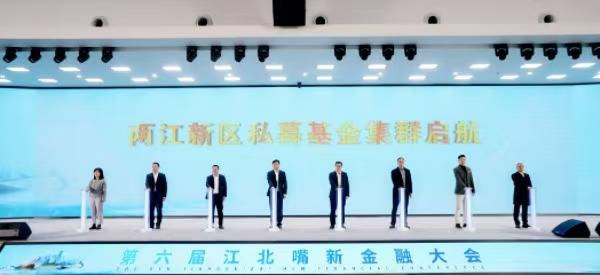
赋能新兴产业 两江新区私募基金集群启动
Sou Hu Cai Jing· 2025-12-30 07:53
Core Viewpoint - The launch of the private equity fund cluster in Liangjiang New Area marks a new phase of systematic and clustered integration of financial capital with technological innovation and industrial upgrading, providing solid capital support for nurturing emerging industries and new productive forces in Chongqing [1][3]. Group 1: Fund Introduction and Focus Areas - Liangjiang New Area has introduced 12 private equity funds this year, focusing on sectors such as aerospace information, semiconductors and integrated circuits, new materials, new energy and intelligent connected vehicles, high-end equipment manufacturing, and smart transportation, with a total committed capital exceeding 100 billion yuan [3][4]. - The funds exhibit characteristics of being capital-intensive, having clear industrial orientation, and defined empowerment paths, closely aligning with national strategies and Chongqing's industrial development plans [3]. Group 2: Specific Fund Initiatives - The Hangyu Fund has established a private equity investment fund for the low-altitude economy in aerospace information, targeting industries like satellite internet and high-end equipment manufacturing, aiming to position Chongqing as a strategic hub for low-altitude economy [3]. - The Shanghai Semiconductor Investment Fund has set up the Chongqing Liangjiang Chip Investment Fund, focusing on the entire semiconductor industry chain [3]. - The Yixing Fund has created the Chongqing Qianli Xing Private Equity Investment Fund, dedicated to the R&D and production of third-generation semiconductor silicon carbide wafers and modules [3]. Group 3: Emphasis on Smart and Green Upgrades - The Kaihui Fund has established the Kaihui New Yu (Chongqing) Private Equity Investment Fund, focusing on innovation in the new energy and automotive industry chain, having already invested in Avita to strengthen the industrial cluster advantage in intelligent connected new energy vehicles [4]. - The private equity fund cluster aims to build an ecosystem integrating "fund + industry + technology," promoting deep integration and mutual support among technology, industry, and finance to help Chongqing shape new economic development momentum and establish a competitive modern industrial system [4].
国泰海通|宏观:消费温和改善
国泰海通证券研究· 2025-12-29 14:58
Group 1 - The core viewpoint of the article indicates a moderate improvement in consumption, with service consumption recovering ahead of the holiday, as evidenced by increased subway passenger flow in 18 cities and a positive shift in the Hainan tourism price index year-on-year [1] - In terms of investment, the issuance of special bonds has concluded, leading to an increase in physical workload, with asphalt operating rates rebounding and continuous improvement in building materials data [1] - The real estate sector shows a seasonal recovery in sales, with an increase in the proportion of second-hand housing, although overall prices and premiums remain low [1] Group 2 - In foreign trade, there is a divergence between rising domestic export freight rates and a decline in the Baltic Dry Index (BDI) [1] - Production continues to show differentiation, with emerging industries such as polyester, lithium batteries, and photovoltaic chains demonstrating strong resilience, while traditional cyclical industries like steel and some chemicals are experiencing a downturn [1] - Inventory levels are decreasing for coal and building materials, while PTA continues to deplete inventory and polyester shows a slight accumulation [1] Group 3 - Industrial product prices are generally rebounding, with oil and non-ferrous metals experiencing a rebound, and the South China index rising [1] - The Consumer Price Index (CPI) shows structural differentiation, with food prices fluctuating [1] - In terms of liquidity, funding rates have shown slight fluctuations, and the renminbi continues to strengthen due to a weaker dollar and increased demand for foreign exchange settlements [1]

多部门发声,2026年要做这些事
财联社· 2025-12-29 11:43
Core Viewpoint - The article outlines the key tasks and changes planned for 2026 in various sectors, including finance, employment, consumption, investment, urban development, and technological innovation, as part of China's strategic planning for economic growth and stability. Group 1: Fiscal Policy - In 2026, a more proactive fiscal policy will be implemented, focusing on expanding fiscal expenditure, optimizing government bond tools, enhancing transfer payment efficiency, and improving expenditure structure [2][3] - The fiscal policy aims to promote resident employment and income growth by coordinating various funds to support job stability and entrepreneurship [3] Group 2: Consumption and Investment - The government will support consumption through initiatives like the "old for new" program, optimizing subsidy standards, and promoting service consumption [4] - Measures will be taken to stabilize investment, including increasing central budget investments and utilizing various government investment funds to enhance investment efficiency [5] Group 3: Urban Development - High-quality urban renewal will be prioritized, focusing on community improvements, public space enhancements, and safety projects [6] Group 4: Industry and Technology - There will be an emphasis on enhancing industrial technological innovation capabilities, addressing core technologies, and developing a national manufacturing trial service network [9] - The government plans to cultivate emerging and future industries, including AI, integrated circuits, and biotechnology, while supporting innovation in sectors like 6G technology [10] Group 5: Infrastructure and Energy - The construction of cross-regional and cross-basin transportation corridors will be advanced to support national strategic goals [11] - The energy sector will see an increase in renewable energy supply, with significant additions in wind and solar power capacity, and a focus on future energy industries like hydrogen and nuclear energy [12] Group 6: Social Welfare - The implementation of direct disbursement of maternity benefits to insured individuals will be pursued, along with expanding coverage for flexible employment and migrant workers [13] - The real estate market will be stabilized by utilizing existing housing stock for affordable housing and other social needs [14]

稳中求进与战略定力|《财经》社评
Sou Hu Cai Jing· 2025-12-29 11:27
Group 1 - The central economic work conference has successfully set the direction and boosted confidence for the implementation of the "14th Five-Year Plan" and the work in 2026, providing a clear roadmap for future efforts [2] - The meeting emphasized the importance of avoiding impatience and adhering to the guiding principles, recognizing the unique potential and challenges faced by the Chinese economy at this stage [2][3] - The complexity of China's economy as a super-large economy means that high-speed growth is no longer feasible, and the focus should shift to innovation-driven, quality improvement, and structural optimization [3] Group 2 - Maintaining strategic determination involves avoiding reckless competition in emerging industries, which require substantial capital, talent, and a robust industrial foundation [4] - Addressing existing risks, such as those in the real estate sector and local government debt, requires a long-term, systematic approach rather than quick fixes [4][5] - The resolution of China's issues relies on development, with existing risks needing to be addressed through new growth, and confidence in market and technological reforms is essential [5]
嘉实基金:未来产业加速跑 布局新一轮浪潮
Di Yi Cai Jing· 2025-12-29 10:54
随着"十五五"规划建议出炉,"新兴产业和未来产业"再度成为焦点热词。从"十四五"时期的崭露头角, 到"十五五"规划肩负重任,未来产业为何迎来战略升级?如何投资布局?本期《新质产业·超级机遇》 系列专栏聚焦未来产业。 在上海华山医院的手术室,一名患者在完成国内首例脑机接口手术后实现了"意念操控";在安徽合肥的 物理研究所,可控核聚变技术的推进正汇编成"人造太阳"工程手册;在湖北武汉的国际车展,新一代氢 燃料电池商用车续航高达700km;在广东深圳的工厂流水线,人形机器人以更精确的柔性抓取变身高 能"分拣员"…… 未来产业正在中国创新沃土上多点开花,新一轮浪潮仍在积累蓄势。对于投资者来说,将长钱投资转换 为未来产业资本,其意义远不止于追求财务回报,更是参与时代变革、助力产业创新并塑造个人财富未 来的重要行动。 面对未来产业的广阔版图,围绕投资者的多元配置需求,嘉实基金以前瞻深度的基本面研究投研体系为 支撑,不断构建和优化产品供给和投资服务,希望帮助广大投资者穿越技术迷雾和市场波动,力争共同 抵达未来价值高地。 战略地位升级未来产业加速跑 作为新一轮科技革命和产业变革浪潮催生而来的全新"增长极",未来产业是由前沿技 ...
工信部部署2026年工作:深入整治“内卷式”竞争 培育壮大新兴产业
Xin Lang Cai Jing· 2025-12-28 12:13
Core Insights - The national industrial and information technology work conference held on December 25-26 outlined key tasks for the "15th Five-Year Plan" period, emphasizing growth stabilization, innovation enhancement, integration promotion, governance optimization, and risk prevention [1] Group 1: Key Focus Areas for 2026 - The conference identified ten key areas for 2026, including consolidating the positive trend of the industrial economy, enhancing the resilience and security of industrial chains, and accelerating technological innovation capabilities [1] - The meeting emphasized the need to optimize traditional industries through standard leadership, equipment upgrades, process improvements, and management innovation [1] Group 2: Emerging and Future Industries - The Ministry of Industry and Information Technology (MIIT) aims to develop emerging pillar industries such as integrated circuits, new displays, new materials, aerospace, low-altitude economy, and biomedicine, while supporting AI advancements and satellite IoT commercial trials [2] - The MIIT plans to establish national emerging industry development demonstration bases and innovative industrial clusters, focusing on innovation tasks in future industry segments [2] Group 3: Industry Performance and Projections - Data from the conference indicated that from January to November 2025, the value added of high-tech manufacturing and equipment manufacturing industries grew by 9.2% and 9.3% year-on-year, respectively, with the core AI industry exceeding 1 trillion yuan and new energy vehicle exports surpassing 2 million units [2] - The MIIT projects that by 2025, the total telecommunications business volume and software business revenue will grow by approximately 9% and 12% year-on-year, respectively, with digital industry revenue also expected to increase by around 9% [2] Group 4: Governance and Competition - The 2025 Central Economic Work Conference highlighted the need to address "involution" competition, with the MIIT reporting steady progress in modernizing industry governance and implementing significant reform measures [3] - The MIIT aims to enhance the supply capacity of high-quality standard systems and promote coordinated policies between industry, finance, and taxation to foster industrial and financial cooperation [3]