
财政可持续性

Search documents
日本新财年预算达122万亿日元,创历史新高
Hua Er Jie Jian Wen· 2025-09-03 09:31
Core Viewpoint - Japan's fiscal budget application for FY2025 has reached a record 122.4 trillion yen (approximately 822 billion USD), reflecting a 4.1% increase from the previous year, driven by rising defense spending and debt financing costs [1] Group 1: Budget Application Details - The total budget application amount is 122.4 trillion yen, with a historical high debt financing demand of 32.4 trillion yen, accounting for 26.5% of the total budget application [1] - The initial budget applications are typically reduced during the budget compilation process, with the current fiscal year's application expected to be compressed to 115.2 trillion yen [1] Group 2: Economic Context - The increase in budget applications is influenced by Japan's aging population, which necessitates the maintenance of social services while facing rising borrowing costs due to the Bank of Japan's gradual interest rate hikes [1] - The rising bond yields are directly impacting government borrowing costs, posing new challenges to Japan's fiscal sustainability [1]
日本新财年预算达122.4万亿日元,创历史新高,债务占比超四分之一
Hua Er Jie Jian Wen· 2025-09-03 09:09
Core Points - Japan's fiscal budget application for FY2025 reached a record 122.4 trillion yen (approximately 822 billion USD), marking a 4.1% increase from the previous year [1] - The debt financing requirement hit a historical high of 32.4 trillion yen, accounting for 26.5% of the total budget application, indicating significant fiscal pressure [1] - The rising borrowing costs due to the Bank of Japan's gradual interest rate hikes are posing new challenges to Japan's fiscal sustainability [1] Summary by Category Budget Application - The total budget application for FY2025 is 122.4 trillion yen, reflecting the need to maintain social services amid an aging population and rising borrowing costs [1] - The initial budget applications are typically reduced in the subsequent budget preparation process, with this year's application expected to be compressed to 115.2 trillion yen [1] Debt Financing - The debt financing demand reached a record 32.4 trillion yen, highlighting the direct impact of rising bond yields on government borrowing costs [1] - This high level of debt financing reflects the ongoing fiscal challenges faced by the government in managing its budget [1] Economic Environment - The gradual interest rate hikes by the Bank of Japan are increasing government financing costs, complicating the maintenance of necessary social services [1] - The changing interest rate environment is creating new challenges for Japan's fiscal sustainability [1]
股、债、汇“三杀”,欧美金融市场突然掀起大风暴
Zheng Quan Shi Bao· 2025-09-02 22:58
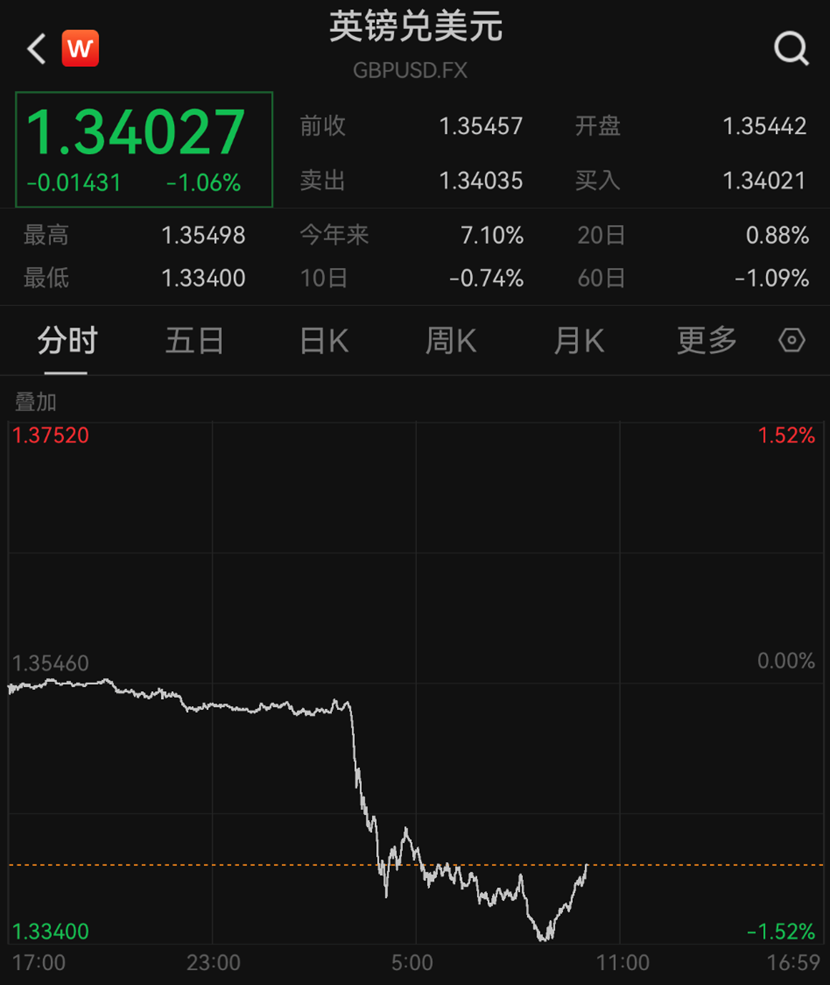
Group 1: Market Overview - European financial markets experienced a significant sell-off on September 2, with the British pound dropping 1.52% against the US dollar, reaching a low of 1.3340, marking the largest single-day decline since April 7 [2] - The German stock index fell over 2%, while the UK 30-year government bond yield surged to its highest level since 1998, reaching 5.69% [1][4] - In the US, major stock indices also faced sharp declines, with the Nasdaq dropping over 1% and the VIX index rising more than 19%, indicating increased market volatility [1] Group 2: Bond Market Dynamics - The rise in bond yields across Europe is attributed to increased fiscal spending by various countries to address geopolitical security and economic recovery, leading to concerns about the sustainability of public finances [4] - The UK 30-year bond yield reached 5.69%, while Germany's and France's yields also saw significant increases, with Germany at 3.40% and France surpassing 4.5% for the first time since 2011 [4] - Analysts noted a "vicious cycle" where rising debt concerns lead to higher yields, which in turn exacerbate debt dynamics [4] Group 3: Policy and Economic Implications - Concerns over the sustainability of UK public finances were heightened by proposals for a windfall tax on bank reserves, which could further pressure the British pound [5] - The UK government is expected to implement additional tax measures, raising fears of increased fiscal pressure [5] - Historical data indicates that September is typically a challenging month for long-term bonds, with a median loss of 2% over the past decade for bonds with maturities over 10 years [5] Group 4: Pension System Reforms - Structural reforms in the Dutch pension system are impacting the long-term bond market in Europe, as the new system encourages younger members to invest more in equities, reducing demand for long-duration hedging instruments [6] - The Dutch pension savings account for over half of the EU total, holding nearly €300 billion in European bonds [7] Group 5: Inflation and Monetary Policy - Uncertainty regarding interest rate cuts in Europe is influenced by inflation pressures, with the Eurozone's August CPI rising to 2.1%, above July's 2.0% [8][9] - The core inflation rate remained at 2.3%, exceeding market expectations, while service sector inflation showed signs of slowing down [8] - Market expectations suggest a 25% chance of the European Central Bank (ECB) cutting rates before December, amid ongoing economic growth and inflation risks [8][9]

发债高峰逼近!全球债市再度承压,欧美长债收益率恐持续走高
Di Yi Cai Jing· 2025-08-29 02:12
Group 1 - In August, the yields on 30-year government bonds in Germany and France rose by approximately 15 and 27 basis points, reaching the highest levels since 2011 [1][2] - The global bond market faced renewed pressure due to persistent inflation concerns and increased fiscal spending and refinancing needs, leading to a decline in investor risk appetite for long-term government bonds [1][2] - Japan's long-term bond yields hit a historical high, while the UK long-end bond yields are expected to record the largest monthly increase since December of the previous year [1][2] Group 2 - The French market is under scrutiny as Prime Minister François Bayrou announced a confidence vote regarding debt reduction plans on September 8 [2] - If the political crisis in France worsens, the spread between French and German bond yields could potentially widen to 100 basis points for the first time since 2012 [2] - The yield on French 10-year government bonds reached a five-month high of 3.54% before slightly retreating to 3.49%, while the German 10-year yield increased by 1 basis point to 2.70% [2] Group 3 - A supply peak in the European and US bond markets is anticipated in the coming months, with an expected issuance of over €100 billion (approximately $117 billion) in European government bonds in September and October [4] - Concerns about supply-demand imbalances have intensified due to weak demand observed in recent auctions of Japanese 10-year and US 30-year bonds [4] - Analysts suggest that as supply surges, investors will require higher yields as compensation, which will further increase market volatility [4] Group 4 - Concerns regarding the sustainability of US fiscal policy and the independence of the Federal Reserve are driving up the risk premium on US Treasury bonds [5] - If inflationary pressures do not fully subside and the Federal Reserve relaxes its policies too quickly due to political pressure, it could trigger a new surge in long-term yields and increased volatility in the bond market [5]
财政警报:日本申请史上最高偿债预算,国家预算四分之一来还债
Hua Er Jie Jian Wen· 2025-08-26 13:10
Group 1 - Japan's Ministry of Finance has requested a record 32.4 trillion yen (approximately 219 billion USD) for debt repayment in the next fiscal year, reflecting the impact of rising government bond yields on public finances [1][2] - The requested amount represents a 15% increase compared to the initial budget of the previous fiscal year, significantly exceeding the 3% inflation rate during the same period [1] - Debt repayment expenditures currently account for about one-quarter of Japan's national budget, indicating a growing financial burden on the government [1] Group 2 - The total budget request from the Ministry of Finance amounts to 34.1 trillion yen, with the majority allocated for debt servicing and a small portion for overseas development assistance [2] - Japan, as one of the developed economies with the heaviest debt burden, faces increasing costs due to an aging population and expanding social security needs [2] - The Bank of Japan's gradual interest rate hikes have directly increased government debt costs, with the 10-year government bond yield reaching its highest level since the 2008 financial crisis [2]
财政警报拉响:日本申请史上最高偿债预算,国家预算四分之一用来还债!
Hua Er Jie Jian Wen· 2025-08-26 12:44
Group 1 - Japan's Ministry of Finance has requested 32.4 trillion yen (approximately 219 billion USD) for debt repayment in the next fiscal year, marking the highest debt servicing budget in history [1][2] - This request represents a 15% increase compared to the initial budget of the previous fiscal year, significantly exceeding the 3% inflation rate during the same period [1][2] - Debt repayment expenditures currently account for about one-quarter of Japan's national budget, reflecting the growing financial burden on the government [2][3] Group 2 - The total budget application by the Ministry of Finance amounts to 34.1 trillion yen, with the majority allocated for debt servicing and a small portion for overseas development assistance [3] - Japan, as one of the developed economies with the heaviest debt burden, faces substantial costs associated with maintaining its debt, exacerbated by an aging population and increasing social security demands [3] - The Bank of Japan's gradual interest rate hikes have led to rising government debt costs, with the 10-year government bond yield reaching its highest level since the 2008 financial crisis, driven by expectations of further monetary policy normalization and concerns over long-term fiscal sustainability [3]
日本央行加息预期走强:10月或是最佳时机!
Jin Shi Shu Ju· 2025-08-21 09:58
Group 1 - A significant majority of economists, nearly two-thirds, believe that the Bank of Japan will raise interest rates by at least 25 basis points later this year, an increase from just over half in the previous month [1] - Despite recent weak employment data in the U.S. reviving bets on a Federal Reserve rate cut, 70% of analysts indicate that this will not delay the Bank of Japan's tightening of monetary policy [1] - Following over three years of consumer inflation exceeding the 2% target, the Bank of Japan faces pressure to raise rates, although it remains cautious due to concerns about U.S. tariffs impacting economic growth [1] Group 2 - In a survey conducted from August 12 to 19, 67 out of 73 economists (92%) predict that the Bank of Japan will not adjust interest rates in the upcoming policy meeting in mid-September [1] - Among 71 economists, 63% expect the Bank of Japan to raise the benchmark lending rate from 0.50% to at least 0.75% in the next quarter, an increase from 54% in the previous survey [1] - The preferred timing for the next rate hike among 40 economists is October (38%), followed by January next year (30%) and December this year (18%) [1] Group 3 - The financial markets still anticipate that the Bank of Japan will raise rates by 25 basis points before the end of the year [3] - Over three-quarters of economists support or somewhat support the Japan-U.S. trade agreement [3] - Concerns are raised regarding potential fiscal expansion pressures following the opposition party's calls to lower the consumption tax and their recent progress in the Senate elections [3] Group 4 - There is an increasing risk that considerations for fiscal sustainability may fall below acceptable levels [4] - Extreme fiscal expansion is deemed unlikely, as the ruling party remains cautious about increasing the primary deficit in the context of rising interest rates [4] - There is no clear consensus among respondents regarding which potential successor to the Prime Minister would implement economic policies most likely to stimulate medium to long-term growth [5]
经济学家:日本央行将在第四季度再次加息,可能是十月
Hua Er Jie Jian Wen· 2025-08-21 07:47
Group 1 - The Bank of Japan is widely expected to raise interest rates in the fourth quarter of this year, indicating a clearer path towards monetary policy normalization [1][2] - Among economists surveyed, nearly two-thirds predict the Bank of Japan will increase the benchmark rate from the current 0.50% by at least 25 basis points, with October being the most likely month for this action [1][2] - Despite recent weak employment data in the U.S. raising bets on a Federal Reserve rate cut, 70% of analysts believe this will not delay the Bank of Japan's tightening of monetary policy [1] Group 2 - October is emerging as a prime window for a rate hike, with 38% of economists favoring it, followed by January (30%) and December (18%) [2] - T&D Asset Management's chief strategist suggests that by October, the Bank of Japan will be able to respond to clearer U.S. monetary policy and domestic political dynamics [2] - A significant majority (92%) of economists expect the Bank of Japan to maintain current rates in the upcoming mid-September policy meeting [2] Group 3 - Persistent inflation is the core driver pushing the Bank of Japan towards a rate hike, with consumer inflation exceeding the 2% target for over three years [3] - There are concerns regarding fiscal policy, with over two-thirds of respondents worried about the pressure for increased fiscal spending [3] - Some economists warn of the risk of short-sighted policy choices due to recent political developments, while others believe extreme fiscal expansion is unlikely due to the ruling party's cautious stance on increasing the deficit amid rising interest rates [3]
美国债务风险下埋着“定时炸弹”
Sou Hu Cai Jing· 2025-08-21 03:38
Core Viewpoint - The total U.S. national debt has surpassed $37 trillion, indicating a rapid increase in fiscal burden and potential for a vicious cycle of debt due to the recently enacted "Big and Beautiful" tax and spending legislation [1] Group 1: Fiscal Policy and Debt Dynamics - The "Big and Beautiful" legislation marks a significant shift in U.S. fiscal policy, focusing on tax cuts, increased spending, and adjustments to the debt ceiling, which may stimulate short-term economic growth but poses long-term challenges such as uncontrolled debt and diminished dollar credibility [1][2] - The Congressional Budget Office (CBO) projects that the federal budget deficit will significantly increase over the next decade, potentially adding hundreds of billions to the deficit if certain tax cuts are extended beyond 2028 [1][2] Group 2: Tax Policy Implications - The permanence of existing tax cuts, such as maintaining the highest marginal personal income tax rate at 37% and accelerating depreciation for corporate investments, could lead to an increase in the deficit by hundreds of billions [2] - New temporary tax measures, including exemptions for tips and overtime pay from 2026 to 2028 and annual tax allowances for seniors, are expected to cumulatively add thousands of billions to the deficit over ten years [2] Group 3: Interest Payments and Sustainability Challenges - Current interest payments by the U.S. Treasury exceed $1 trillion, and if debt continues to grow, annual interest costs could increase by hundreds of billions to over a trillion by 2030, straining fiscal resources for essential services [2] Group 4: Historical Context and International Comparisons - Historical data shows that U.S. federal debt has increased from $10 trillion to $20 trillion post-2008 financial crisis, while economic growth has only risen by about 30%, indicating a concerning trend of debt growth outpacing economic potential [3] - International experience suggests that when debt-to-GDP ratios exceed 150%, repayment pressures intensify, and while the dollar's status as a reserve currency currently mitigates some risks, long-term fiscal sustainability is nearing a critical point [3] Group 5: De-dollarization Trends - The attractiveness of U.S. Treasury bonds is declining, leading to concerns about capital outflows as international investors shift towards higher-yield assets, with foreign ownership of U.S. debt dropping from 34% to 29% over the past decade [3][4] - Geopolitical tensions and energy policy shifts are accelerating global de-dollarization, with countries like Russia and China increasing local currency settlements in bilateral trade [4] Group 6: Economic and Social Implications - The expansionary fiscal policy may lead to higher inflation, forcing the Federal Reserve to maintain high interest rates, which could suppress investment and consumption, resulting in a "high debt—high interest—low growth" cycle [4] - Cuts to social welfare programs under the "Big and Beautiful" legislation may disproportionately affect low-income groups, exacerbating social inequalities and potentially leading to public discontent [5]
中国增持美国国债
2 1 Shi Ji Jing Ji Bao Dao· 2025-08-17 01:03
Group 1 - As of June, foreign investors held a total of $9.1277 trillion in U.S. Treasury securities, an increase of $80.2 billion from the previous month [1] - China increased its holdings of U.S. Treasury securities to $756.4 billion, marking the first increase since March, with a rise of $1 million [1] - Japan remains the largest foreign holder of U.S. Treasury securities at $1.1476 trillion, having increased its holdings by $12.6 billion [1] Group 2 - The total U.S. national debt has surpassed $37 trillion, a record high, with a growth rate exceeding expectations [2] - If the national debt were distributed among U.S. households, it would equate to $280,000 per household and $108,000 per person [3] - The fiscal gap continues to widen due to increased interest payments on the national debt, exacerbated by tax cuts and the lifting of the debt ceiling [3] Group 3 - There are concerns regarding the sustainability of U.S. fiscal policy, with potential impacts on the demand for U.S. Treasuries as economic conditions evolve [5] - Analysts suggest that if stock market momentum weakens, there may be a renewed influx of funds into U.S. Treasuries [5] - The volatility in interest rates and the correlation between assets may affect the "safety premium" associated with U.S. Treasuries [5]