绿色转型

Search documents
沙钢股份上半年净利同比增49.53% 拟派现5484.56万元
Zheng Quan Shi Bao Wang· 2025-08-21 01:12
Core Viewpoint - The company reported a decline in revenue for the first half of 2025, but a significant increase in net profit, indicating improved profitability despite lower sales [1] Financial Performance - In the first half of 2025, the company achieved operating revenue of 6.827 billion yuan, a year-on-year decrease of 10.86% [1] - The net profit attributable to shareholders was 156 million yuan, a year-on-year increase of 49.53% [1] - The company proposed a cash dividend of 0.25 yuan per 10 shares, totaling approximately 54.85 million yuan, which represents 35.26% of the net profit [1] - The weighted average return on net assets for the first half of 2025 was 2.41%, an increase of 0.85 percentage points year-on-year [1] - The return on invested capital for the same period was 1.26%, up 0.51 percentage points from the previous year [1] Business Segments - The steel business generated revenue of 6.367 billion yuan, accounting for 93.25% of total revenue, focusing on "special steel + gear" business model [1] - The company produces 3.2 million tons of special steel annually, including spring steel, gear steel, wheel steel, anchor chain steel, and high-quality carbon structural steel, used in various industries such as automotive and machinery [1] Gear Products - The company has an annual production capacity of 2.1 million gear units, with products used in automotive engines, transmissions, commercial vehicles, and new energy vehicles [2] - Gear business revenue for the first half of 2025 was 92.48 million yuan, representing 1.35% of total revenue [2] Research and Development - During the reporting period, the company applied for 32 patents and was granted 17 [2] - The company completed several product certifications and successfully developed over 30 new products [2] Green Transformation - The company has been promoting green transformation, with auxiliary electricity consumption and compressed air consumption decreasing by 5.41% and 7.27% year-on-year, respectively [3] - Key projects include low-temperature waste heat recovery and energy-saving modifications in steel production processes [3]

以“两山”理念为引领建设美丽宜居的人民城市
Zhong Guo Huan Jing Bao· 2025-08-20 23:20
Core Concept - The "Two Mountains" theory emphasizes the harmonious relationship between ecological protection and economic development, guiding urban construction towards high-quality development and improved living conditions for citizens [1][2][7]. Group 1: Urban Development and Ecological Integration - Urban construction must prioritize the "Two Mountains" theory, integrating ecological priorities and green development throughout planning, construction, and governance processes [1][2]. - The shift in urban development from large-scale expansion to enhancing existing resources necessitates a focus on ecological protection alongside urban growth [2][3]. Group 2: Green Transformation and Economic Growth - A green low-carbon transformation is essential for urban development, demonstrating that ecological protection and economic growth can mutually reinforce each other [3][4]. - The promotion of green industries and the application of renewable energy in urban infrastructure are key strategies for generating new economic growth points [3][4]. Group 3: Systematic Governance and Technological Support - Establishing a modern governance system for urban ecological environments is crucial, requiring a comprehensive approach and the integration of technology [4][5]. - The use of big data, AI, and IoT in urban governance enhances resilience and efficiency in managing urban infrastructure and public safety [4][5]. Group 4: Community Engagement and Public Awareness - Active participation from the community is vital for effective ecological governance, encouraging citizens to engage in environmental protection initiatives [5][6]. - Education and awareness campaigns are necessary to instill a sense of responsibility towards ecological conservation among the public [5][6]. Group 5: Benefits to Citizens and Cultural Integration - Urban development should focus on enhancing public services and ensuring that citizens benefit from improved ecological environments [6][7]. - The cultural aspect of urban ecology, including the preservation of historical and natural heritage, contributes to the overall quality of life and community identity [7][8].
美国单边主义做法给各方发展带来挑战(国际论坛)
Ren Min Ri Bao· 2025-08-20 22:26
Group 1 - Europe should deepen cooperation with China in areas such as green transition, technological innovation, digital economy, and industrial upgrading to build a more resilient autonomous development capability and promote a more balanced multipolar structure [1][3] - The U.S. unilateral tariff measures will directly impact European exports, leading to continuous outflow of industrial capital to the U.S. market, resulting in job losses and a decline in domestic demand, accelerating Europe's deindustrialization process [3] Group 2 - China has the confidence and capability to respond to U.S. unilateral tariff measures, with a rising proportion of exports to markets outside the U.S. and a booming domestic consumption market [2] - China's strategic ability to safeguard national interests is strengthened, focusing on self-innovation and expanding consumption demand while promoting agricultural modernization and urban-rural integration [2]
盘古智能:勇当风电“动力守护者”
Zheng Quan Ri Bao Zhi Sheng· 2025-08-20 16:38
Core Insights - The article highlights the breakthrough of Qingdao Pangu Intelligent Manufacturing Co., Ltd. in the wind power lubrication system, which has historically been dominated by international giants [1][2] - The company has achieved over 60% market share in the domestic centralized lubrication system market by 2024, positioning itself as a leader in the industry [1][3] Industry Growth - The national wind power installed capacity is projected to reach 79.82 million kilowatts in 2024, representing a year-on-year growth of 6% [1] - Wind power generation is expected to account for 10.1% of the total electricity consumption in the same year [1] Technological Advancements - Pangu Intelligent focuses on addressing the core pain points of wind turbine lubrication by investing in hydraulic pitch and yaw technologies [2] - The company's hydraulic yaw system has significantly reduced maintenance costs and is expected to have broad application prospects in large megawatt wind turbines [2] - In 2024, the sales revenue from hydraulic systems reached 129 million yuan, marking an increase of 83.82% year-on-year [2] Research and Development - The company has invested over 70 million yuan in R&D over the past three years, with R&D expenditure as a percentage of revenue increasing annually [3] - By the end of 2024, Pangu Intelligent had obtained 16 invention patents and 51 utility model patents, creating a comprehensive technology matrix [3] Global Expansion - Pangu Intelligent is actively pursuing an international strategy, establishing wholly-owned subsidiaries in countries like Germany and Thailand to enhance its global service network [4][5] - The company's overseas sales reached 75.05 million yuan in 2024, a year-on-year increase of 52.56%, accounting for 15.59% of total revenue [5] Quality Control and Sustainability - The company emphasizes a "zero-defect" culture that permeates all processes from R&D to production and service, ensuring high product quality [7][8] - Pangu Intelligent has established a "green factory" and is committed to reducing carbon emissions, aligning with the industry's low-carbon lifecycle trend [8] Future Outlook - The company aims to continue focusing on lubrication and hydraulic systems while enhancing its global service network and digital infrastructure to achieve its vision of becoming a world-class manufacturer in this field [9]
“五年规划”成就中国速度,“长期主义”让中国铁路领跑
Bei Jing Ri Bao Ke Hu Duan· 2025-08-20 05:35
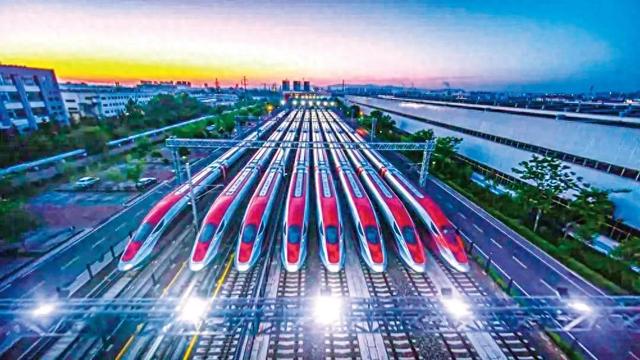
Core Viewpoint - The article highlights the significant achievements of China's high-speed rail (HSR) development, emphasizing the importance of "long-termism" in planning and execution, which has led to a robust and innovative railway system that serves as a model for global standards [1][12][33]. Group 1: Achievements in High-Speed Rail Development - China has established 20 high-speed rail lines totaling approximately 7,000 kilometers, with the Fuxing bullet trains operating across 31 provinces, averaging nearly 10 million passengers daily, accounting for about 80% of total rail passengers [1][3]. - The global high-speed rail network is approximately 60,000 kilometers, with China accounting for over 70% of this total, and more than half of the world's 6,500 high-speed trains are operated in China [3][4]. - The 12306 ticketing system is the largest in the world in terms of traffic and transaction volume, showcasing China's advanced ticketing technology [3][4]. Group 2: Technological Innovations and International Collaboration - The 12th World High-Speed Rail Conference showcased China's technological advancements, including the CR450 train capable of reaching speeds of 450 km/h and superconducting maglev trains that can "fly" at 600 km/h [3][4]. - The conference attracted over 521 companies from more than 14 countries, highlighting the global interest in China's railway technology and innovations [4][5]. - International representatives acknowledged China's railway development experience as a valuable reference for global high-speed rail advancements, particularly in integrated multimodal systems and digital operations [6][8]. Group 3: Historical Context and Long-Term Planning - The article traces the historical development of China's railways, from early struggles against foreign control to the establishment of a national railway system post-1949, emphasizing the importance of long-term planning and execution [8][9][10]. - The "Four Vertical and Four Horizontal" and "Eight Vertical and Eight Horizontal" plans illustrate China's commitment to expanding its high-speed rail network systematically over decades [20][22]. - The article notes that the construction of high-speed rail requires significant investment and long-term commitment, reflecting the nation's overall governance and planning capabilities [10][11]. Group 4: Future Directions and Innovations - The CR450 train represents the next generation of high-speed rail technology, focusing on speed, safety, energy efficiency, comfort, and intelligence, indicating a shift towards smarter and greener rail solutions [27][28]. - China's hydrogen-powered trains and nuclear-powered locomotives are part of a broader strategy to achieve zero-carbon emissions in rail transport, showcasing the country's commitment to sustainable development [28][29]. - The railway industry is undergoing a paradigm shift towards data-driven models and collaborative systems, with a focus on integrating advanced technologies like artificial intelligence to enhance operational efficiency [29][31][32].

绿色转型是西班牙化工业长期挑战
Zhong Guo Hua Gong Bao· 2025-08-20 02:21
Group 1 - The Spanish chemical industry has benefited from energy cost advantages due to electricity policies, but adapting to a green economy remains a long-term challenge [1][2] - The "Iberian exception clause" has significantly reduced electricity costs, with an average decrease of 70% in energy expenses for companies until 2024 [2] - Despite the benefits from the "Iberian exception clause," the chemical industry still faces high taxes and costs related to energy and emissions [2] Group 2 - Environmental compliance and waste management are becoming core challenges for the chemical industry, surpassing concerns about traditional energy costs in the long term [3] - Issues such as waste treatment capacity, regulatory compliance, and necessary infrastructure for industrial operations are critical for maintaining the health of the chemical sector [3] - The closure of Grupo Industrial Cristian Lay's steel plant highlights the conflict between environmental policies, urban planning, and industrial competitiveness [3] Group 3 - Renewable energy is unlikely to fully replace fossil fuels in all industrial sectors in the short term, but Spain has made significant progress in energy transition, particularly in regions lacking industrial facilities [3][4] - The Extremadura region, rich in lithium reserves, is attracting battery superfactory investments, which are expected to create 3,000 jobs [3] - Recent announcements of five energy storage projects in Extremadura indicate ongoing investment in renewable energy, although project delays in design and permitting processes remain a concern [4]
“双碳”目标提出5周年 中国发展“绿”意更浓
Zhong Guo Qing Nian Bao· 2025-08-20 00:49
Core Viewpoint - China has made significant progress in its green transformation, with a notable reduction in coal consumption and an increase in forest coverage and renewable energy production, demonstrating a commitment to achieving carbon neutrality by 2060 [1][2][3] Group 1: Carbon Reduction and Green Transition - The proportion of coal consumption in China decreased from 56.8% in 2020 to 53.2% in 2024, while non-fossil energy consumption increased from 15.9% to 19.8% during the same period [1][2] - China has established a comprehensive carbon reduction policy framework, with 31 provinces implementing their own carbon peak plans [2] - The installed capacity of renewable energy reached 2.159 billion kilowatts by mid-2023, achieving wind and solar installation targets six years ahead of schedule [2] Group 2: Green Building and Energy Efficiency - By 2024, over 97% of new urban buildings in China will be green buildings, and energy consumption in public institutions has decreased by 4% and 5.1% per capita since 2020 [3] - The energy consumption per unit of GDP is projected to decrease by 11.6% by 2024 compared to 2020, equating to a reduction of 1.1 billion tons of CO2 emissions [3] Group 3: Ecological Restoration and Protection - China has implemented 52 integrated protection and restoration projects, covering over 8.3 million hectares, and has restored approximately 1,780 kilometers of coastline [5][6] - The establishment of the largest national park system globally is underway, with 49 candidate areas and the first five parks progressing well [6] Group 4: International Cooperation and Climate Leadership - Over the past decade, China has significantly reduced the costs of wind and solar power by over 60% and 80%, respectively, and has engaged in climate cooperation with 42 countries [7] - China is actively fulfilling its international climate obligations and playing a crucial role in global climate governance [7]
战新产业带动增强 机械工业经济效益回稳向好
Zhong Guo Chan Ye Jing Ji Xin Xi Wang· 2025-08-20 00:37
Core Viewpoint - The mechanical industry in China has shown stable growth in the first half of 2025, with key economic indicators performing well, but it still faces significant challenges from external uncertainties and domestic demand pressures [1][2][12]. Economic Performance - The mechanical industry achieved a value-added growth of 9.0% in the first half of 2025, outperforming the national industrial and manufacturing growth rates by 2.6 and 2 percentage points respectively [3]. - The number of enterprises above designated size in the mechanical industry reached 136,000, an increase of 6,000 year-on-year, accounting for 26.2% of the national industrial total [2]. - Total assets in the mechanical industry amounted to 40.4 trillion yuan, a year-on-year increase of 6.6% [2]. Production and Sales - The production and sales of mechanical products showed steady improvement, with 68.9% of 122 monitored products experiencing year-on-year production growth [3]. - Key sectors such as automotive and electrical machinery saw double-digit growth rates of 11.3% and 12.2% respectively [3]. Investment Trends - Fixed asset investment in the mechanical industry grew by 3.8% year-on-year, which is higher than the national investment growth rate of 2.8% but lower than the industrial average of 10.3% [4]. - Investment in general equipment and automotive sectors grew significantly by 16.6% and 22.2%, serving as the main drivers of investment growth [4]. Economic Efficiency - The mechanical industry generated operating revenue of 15.3 trillion yuan, a year-on-year increase of 7.8%, and total profits reached 791.2 billion yuan, up 9.4% [4]. - The profit margin for the industry was 5.2%, slightly above the national average [4]. Market Sentiment - The mechanical industry’s prosperity index was recorded at 106.9 in June, indicating a stable and improving economic environment [5]. - Five out of six sub-indices were above the critical value, reflecting positive production and industry development trends [5][6]. Challenges and Risks - The industry faces external challenges such as geopolitical tensions and trade uncertainties, which have led to cautious ordering behavior from foreign buyers [13][14]. - Domestic demand remains weak, with 66% of enterprises reporting insufficient orders, and the manufacturing PMI has been below the critical value for four consecutive months [14][11]. - The industry is also grappling with persistent price declines, with the machinery product price index showing a continuous decrease for 29 months [15]. Emerging Trends - The new energy and high-end equipment manufacturing sectors are driving growth, with revenues and profits in these areas significantly outpacing the overall mechanical industry [7]. - The market for new energy vehicles has seen rapid growth, with production and sales reaching 6.968 million and 6.937 million units respectively, marking year-on-year increases of 41.4% and 40.3% [8]. - The mechanical industry’s foreign trade remained resilient, with total trade volume reaching 597.6 billion USD, a year-on-year increase of 7.1% [8][9].

再遇见丨匈中友好协会主席纳吉:“耐心可以开出玫瑰花”,文化交流打破“认知差异”
Xin Lang Cai Jing· 2025-08-19 23:36
Group 1 - The article highlights the 50th anniversary of diplomatic relations between China and Europe, emphasizing the deep cultural and economic ties that have developed over the years [1] - It features an interview with Nagy Judit Eva, the president of the Hungary-China Friendship Association, who shares her personal journey and experiences in fostering cultural exchange between Hungary and China [2][4] - The article discusses the importance of cultural diplomacy and media in breaking stereotypes and enhancing mutual understanding between the two regions [9][10] Group 2 - Hungary has become a significant player in facilitating Chinese investments in Europe, with companies like CATL and BYD contributing to Hungary's green transformation and creating job opportunities [11] - The strategic geographical position of Hungary allows it to serve as a bridge between East and West, balancing its relationships with both China and the European Union [11] - The article emphasizes the role of youth in cultural exchange and diplomacy, highlighting initiatives that engage young people in fostering friendships between China and Europe [12][10] Group 3 - The article concludes with hopes for deeper cooperation in various fields such as innovation, technology, and sustainable development between China and Europe, recognizing their importance on the global stage [16][17]

全国首家民营企业用电营商环境服务中心揭牌成立
Sou Hu Cai Jing· 2025-08-19 18:13
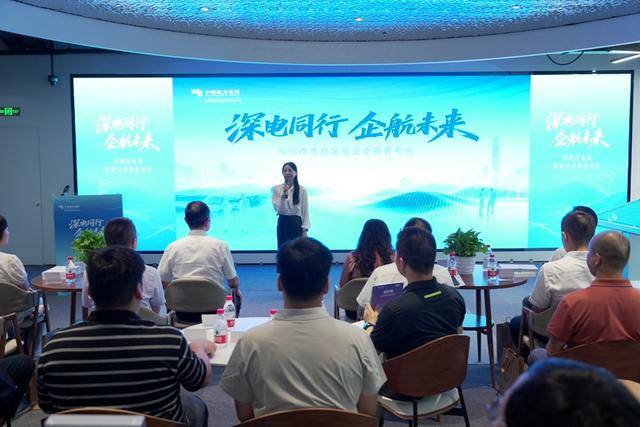
Core Viewpoint - The establishment of the first private enterprise electricity service center in Shenzhen aims to enhance communication and service for private enterprises, addressing their specific electricity needs and promoting high-quality development [1][3]. Group 1: Establishment and Purpose - The private enterprise electricity service center was officially opened in Nanshan, Shenzhen, providing a platform for communication and cooperation among government agencies, power grid companies, and private enterprises [1]. - The center serves as a "bridge" for government-enterprise communication, a "direct line" for policy implementation, and an "electricity steward" for enterprise development, offering one-stop, full-cycle, and personalized services [3]. Group 2: Services and Initiatives - Shenzhen Power Supply Bureau has established a communication mechanism with various departments to deepen the understanding of private enterprises' needs and enhance service efficiency [3]. - The bureau has introduced six major initiatives to support the high-quality development of private enterprises, including smart energy management tools and dedicated account managers for industrial parks [3]. Group 3: Publication of the "Electricity Handbook" - The "Electricity Handbook" consists of three sections: "Quick Electricity," "Good Electricity," and "Green Electricity," covering the entire process of electricity application, business handling, and green transformation [5]. - The handbook aims to ensure that policies and services reach enterprises promptly, empowering them for high-quality development [5]. Group 4: Future Plans - Shenzhen Power Supply Bureau plans to provide comprehensive services for private enterprises, including policy interpretation, industry communication, and energy efficiency diagnostics, while collaborating with various government departments [5].