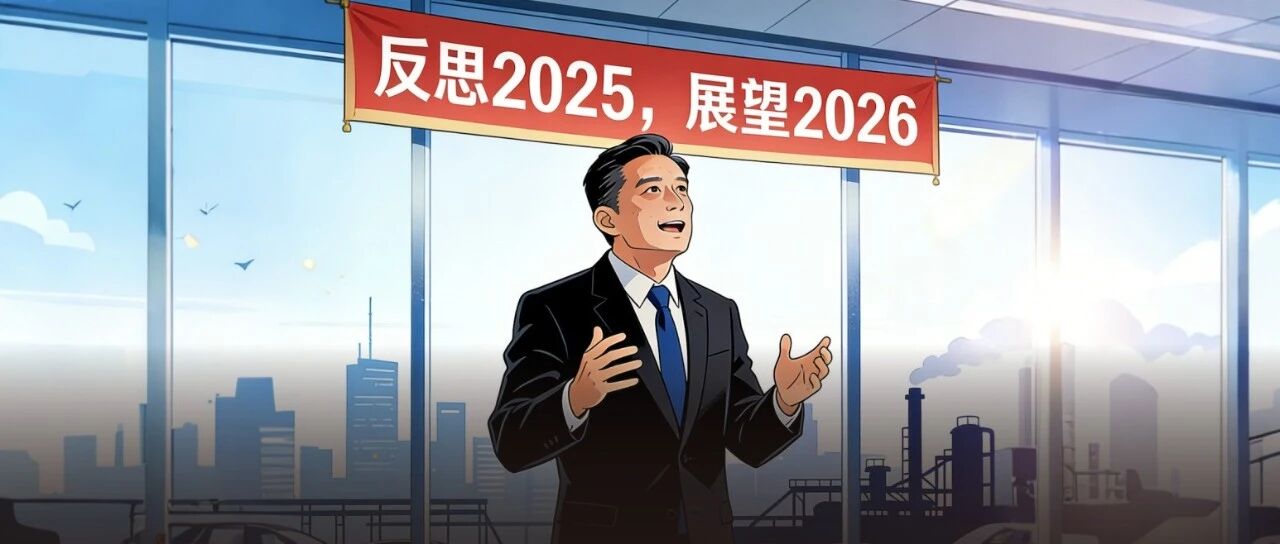
新能源汽车

Search documents
韩国总统李在明抵达北京
第一财经· 2026-01-04 05:43
Core Viewpoint - The article discusses the significance of South Korean President Lee Jae-myung's state visit to China from January 4 to 7, 2026, emphasizing its potential to enhance Sino-Korean relations and explore new economic cooperation models [3][4]. Group 1: Diplomatic Significance - This visit marks Lee Jae-myung's first state visit to China since taking office and is the first visit by a South Korean president in nearly nine years, indicating a renewed focus on bilateral relations [3][4]. - The visit is expected to facilitate the implementation of previously agreed-upon consensus and address outstanding issues between the two nations [4][5]. Group 2: Economic Cooperation - A key focus of the visit is to explore new economic cooperation models, particularly in high-tech industries such as artificial intelligence and advanced technology [5][9]. - The bilateral trade volume between China and South Korea has significantly increased from approximately $5 billion in 1992 to $328.08 billion in 2022, with a trade volume of $242.29 billion recorded in the first three quarters of 2025 [5][6]. - In 2023, South Korea experienced a trade deficit with China for the first time in 31 years, with exports to China at $124.83 billion and imports at $142.85 billion, highlighting the need for new cooperation strategies [6][10]. Group 3: Investment Trends - Chinese investment in South Korea has surged, with reported investment applications reaching $5.786 billion in 2024, a 266.1% increase year-on-year, and actual funds amounting to $514 million, up 68.4% [10]. - The article notes that the changing dynamics of U.S.-Korea trade relations may provide opportunities for increased Chinese investment in South Korea [10]. Group 4: Technological Collaboration - There is potential for collaboration in high-tech sectors, particularly in electric vehicles and battery technology, where South Korea has advantages and China presents a significant market opportunity [9][10]. - The article emphasizes the importance of South Korea recognizing China's technological advancements to foster smoother cooperation in the future [10].


比亚迪与美孚共同发布混动专加产品系列
Zhong Guo Qi Che Bao Wang· 2026-01-04 03:37
Core Insights - The collaboration between Mobil and BYD aims to launch a specialized engine oil series for plug-in hybrid electric vehicles (PHEVs), addressing the unique operational conditions of PHEV engines [2][3] Group 1: Product Development - The new product line, BYD Mobil™ Hybrid Special Additive Series, is specifically designed for BYD's dual-mode hybrid technology, providing customized lubrication solutions for diverse driving scenarios [2][3] - The flagship product, BYD Mobil™ Hybrid Special Additive Ultra High-Grade Oil 0W-20, boasts over 50% better wear resistance than industry standards, significantly reducing engine wear caused by frequent start-stop operations [4] Group 2: Market Position and Performance - PHEVs have gained a substantial user base in China, with BYD leading the market share in this segment [3] - The unique operating conditions of PHEV engines, such as frequent start-stop and low-temperature short runs, necessitate high-performance lubricants to ensure stable and reliable engine protection [3] Group 3: Future Collaboration and Innovation - The partnership between Mobil and BYD represents a strong alliance in technology and market development, aiming to innovate in high-end lubrication solutions for the future of transportation [4] - Both companies plan to leverage Mobil's global resources and BYD's industry foresight to enhance the efficiency and reliability of new energy vehicles [4]


比亚迪蝉联三冠!长安创9年新高!10大汽车集团2025年12月及全年成绩单来了
Zhong Guo Qi Che Bao Wang· 2026-01-04 03:07
Group 1 - In 2025, BYD achieved a total vehicle sales of 4,602,436 units, securing the titles of China's automotive market sales champion, brand sales champion, and global new energy vehicle sales champion [4][6] - BYD's overseas sales surpassed 1 million units for the first time, reaching 1,049,601 units, a year-on-year increase of 145% [4][6] - In December 2025, BYD sold 420,398 vehicles, with 414,784 being passenger cars [4][6] Group 2 - China FAW's total vehicle sales for 2025 exceeded 3.3 million units, marking a year-on-year growth of 3.2% [8] - The sales of FAW's self-owned brands reached 940,080 units, up 15% year-on-year, while new energy vehicle sales surged by 71% to 366,417 units [8] - The Hongqi brand achieved sales of over 460,000 units, with a year-on-year growth of 11.7% [8] Group 3 - Geely Auto's total sales for 2025 reached 3,024,567 units, a year-on-year increase of 39%, exceeding the annual target of 3 million units [11][12] - Geely's new energy vehicle sales for the year reached 1,687,767 units, marking a 90% increase year-on-year [12] - In December 2025, Geely sold 236,817 vehicles, with new energy vehicle sales of 154,264 units [12] Group 4 - Changan Automobile's total sales for 2025 reached 2.913 million units, a year-on-year increase of 8.5%, marking the highest sales in nearly nine years [14] - New energy vehicle sales reached 1.109 million units, up 51% year-on-year [14] - Changan's overseas sales reached 637,000 units, a year-on-year increase of 18.9% [14] Group 5 - Chery Group's total sales for 2025 reached 2,806,393 units, a year-on-year increase of 7.8% [18] - Chery's new energy vehicle sales reached 903,847 units, up 54.9% year-on-year [18] - Chery achieved record exports, with 1,344,020 units exported in 2025, a 17.4% increase [18] Group 6 - Great Wall Motors sold 1,323,672 vehicles in 2025, a year-on-year increase of 7.33%, achieving record sales [19][20] - New energy vehicle sales reached 403,653 units, a year-on-year increase of 25.44% [20] - Great Wall's overseas sales reached 506,066 units, marking an 11.68% increase [20] Group 7 - Dongfeng Motor's new energy vehicle sales reached 1.04 million units in 2025, a year-on-year increase of 21% [24] - Dongfeng's self-owned brand sales exceeded 1.5 million units, with an increase of over 9% [24] - Dongfeng's overseas exports reached 295,000 units [24] Group 8 - SAIC Group's total retail sales for 2025 surpassed 919,000 units, with a year-on-year increase of over 12% [27] - SAIC's new energy vehicle sales reached 1,000,066 units, marking the first time annual sales exceeded 1 million [27] - SAIC-GM-Wuling's total sales reached 1,635,066 units, a year-on-year increase of 6.2% [27] Group 9 - GAC Group's AION brand achieved record sales in December 2025, reaching 40,066 units [32] - GAC's new energy vehicle sales are expected to continue growing with the launch of new models [32] - GAC Toyota's Aion brand secured a strong position in the competitive market [32] Group 10 - BAIC Group's new energy vehicle sales surpassed 200,000 units in 2025, with a year-on-year increase of 84% [35] - BAIC's new energy sales in December reached 35,205 units, a 115% increase [35] - The Arcfox brand achieved significant growth, with sales exceeding 160,000 units in 2025 [35]

比亚迪跃居EV世界第一,增长在放缓
日经中文网· 2026-01-04 02:39
Core Viewpoint - BYD is set to become the world's largest seller of electric vehicles (EVs) in 2025, with projected sales of 2.25 million units, significantly surpassing Tesla's expected sales of 1.64 million units. However, BYD is experiencing a slowdown in growth, particularly in the domestic market, where competition is intensifying in terms of price and technology [2][4][6]. Group 1: Sales Performance - BYD's EV passenger car sales are expected to grow by 28% year-on-year in 2025, reaching 2.25 million units, while overall new car sales, including plug-in hybrid vehicles (PHVs), are projected to increase by 8% to 4.6 million units [4]. - Since 2021, BYD has seen rapid growth in new car sales, with 2021 sales at 740,000 units, and is expected to surpass Honda and Nissan in 2024. However, the growth rate is noticeably slowing compared to previous years [4][6]. Group 2: Market Challenges - BYD's domestic sales have begun to decline, with a notable drop in September sales, marking the first year-on-year decrease in 18 months. The company has revised its annual sales target down by 10% from 5.5 million to 4.6 million units [6][8]. - Chairman Wang Chuanfu indicated that the slowdown is partly due to a decrease in technological leadership and increasing market homogenization, which aligns with the cyclical nature of product and technology development [6]. Group 3: Competitive Landscape - In terms of pricing, BYD's main model, the low-cost EV "Seagull," faces competition from Geely's "Star Wish" and SAIC-GM-Wuling's "Hongguang MINI," which are priced competitively [7]. - Competitors are also catching up in technology, particularly in the rapidly advancing field of driver assistance systems, with major automakers like Beijing Automotive Group and Changan Automobile receiving government approval for mass production of their EVs equipped with Level 3 autonomous driving capabilities [7]. Group 4: Financial Impact - The company's net profit for the first nine months of 2025 has decreased by 8% year-on-year to 23.3 billion yuan, marking the first profit decline in four years for the same period. Revenue and profit both declined in the third quarter, exacerbated by rising R&D costs outpacing revenue growth [8]. Group 5: Future Outlook - The domestic market environment is expected to become more challenging in 2026, with the full exemption of vehicle purchase tax for EVs set to be halved. The proportion of new energy passenger vehicles in the Chinese market is projected to increase to 50%, but the pace of adoption is expected to slow [9]. - Despite these challenges, Wang Chuanfu remains optimistic about future technology releases and the performance of subsidiaries like "Equation Leopard," which focuses on off-road vehicles. The ability to maintain domestic market leadership while expanding into overseas markets will be crucial for stable growth in 2026 [9].
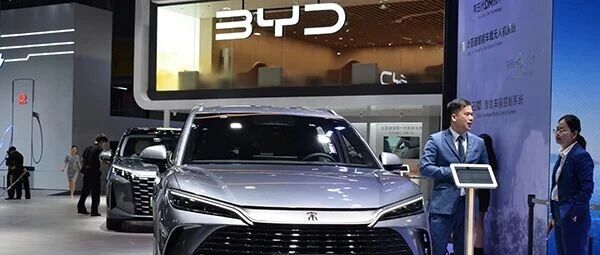
交通运输部:推动交通运输数据与旅游、金融保险等数据资源融合应用
Bei Jing Shang Bao· 2026-01-04 02:21
Core Viewpoint - The Ministry of Transport has released an implementation opinion aimed at accelerating the development and utilization of public data resources in the transportation sector, focusing on enhancing public travel services, ensuring smooth logistics, and promoting green and low-carbon initiatives [1] Group 1: Key Areas of Focus - The initiative emphasizes the creation of typical demonstration scenarios across various sectors, including public travel, logistics cost reduction, and multi-modal transport [1] - It aims to integrate transportation data with resources from public security, energy, tourism, satellite remote sensing, meteorology, and financial insurance to support the transformation and upgrading of traditional industries [1] Group 2: Data Utilization Strategies - The plan promotes the fusion of public transportation data with enterprise data through data openness and authorized operations [1] - It supports the development of emerging industries such as artificial intelligence, smart driving, low-altitude economy, new generation information technology, and new energy vehicles [1]
交通运输部:推动交通运输公共数据与企业数据融合应用 支撑“人工智能+交通运输”应用
智通财经网· 2026-01-04 01:54
Core Viewpoint - The Ministry of Transport has issued implementation opinions to accelerate the development and utilization of public data resources in the transportation sector, aiming to enhance industry governance and service levels while supporting the growth of emerging industries such as artificial intelligence and smart driving [1][3]. Group 1: Overall Requirements - The initiative is guided by Xi Jinping's thoughts and aims to promote the compliant and efficient circulation of public data in transportation, breaking down institutional and technical barriers to enhance data resource development [4]. - By 2030, the goal is to establish a mature management and technical system for public data resources, significantly improving data integration and innovation application levels [4]. Group 2: Establishing a High-Quality Data Resource System - A comprehensive public data resource directory will be developed, covering various transportation modes and ensuring dynamic updates [5]. - The collection and aggregation of public data will be enhanced through digital transformation and IoT technologies, ensuring efficient data gathering at the national level [5]. - Efforts will be made to improve public data quality through source governance and multi-source verification [5]. Group 3: Strengthening Public Data Resource Supply - The sharing of government data will be deepened, with revised management measures to enhance data sharing mechanisms [6]. - Public data will be opened in an orderly manner, prioritizing data that is closely related to public welfare and social needs [6][7]. Group 4: Promoting Data Application Innovation - The initiative will enhance data collaboration across sectors, focusing on areas such as infrastructure safety and logistics efficiency [8]. - Cross-industry data integration will be promoted to support traditional industry upgrades and new emerging sectors [8]. Group 5: Strengthening Data Security Assurance - A comprehensive data security management system will be established to identify and assess risks associated with public data utilization [10]. - The capability for data security will be enhanced through various technical measures to prevent privacy breaches and misuse [10]. Group 6: Strengthening Policy Support - Increased financial support will be coordinated for data infrastructure and security capabilities, encouraging social capital participation [11]. - Policies and standards for data management will be improved to ensure effective governance and resource utilization [11][12]. Group 7: Organizational Implementation - The Ministry of Transport will lead the efforts, ensuring collaboration among various departments to enhance the effectiveness of public data resource development [12].
胜宏科技,抢滩高端PCB!
Xin Lang Cai Jing· 2026-01-04 01:19
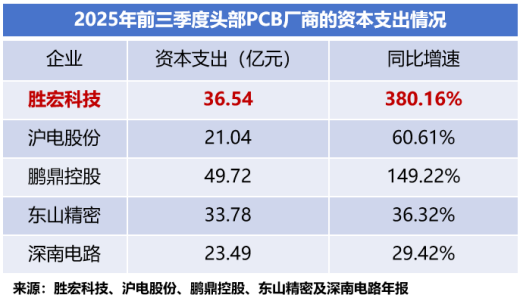
Core Viewpoint - Shenghong Technology is accelerating its expansion with a capital expenditure of 36.54 billion yuan in the first three quarters of 2025, marking a year-on-year increase of 380.16%, the highest among leading PCB manufacturers [1][34]. Group 1: Capital Expenditure and Financials - In the first three quarters of 2025, Shenghong Technology's capital expenditure reached 36.54 billion yuan, a significant increase of 380.16% year-on-year, leading the industry [2][34]. - The company's asset-liability ratio has exceeded 50%, with only 32 billion yuan in cash against 44 billion yuan in interest-bearing liabilities [3][36]. - Shenghong Technology achieved revenue of 141.17 billion yuan in the first three quarters of 2025, a year-on-year increase of 83.39%, and net profit of 32.45 billion yuan, up 324.38% [14][47]. Group 2: Industry Context and Demand Drivers - The PCB industry is experiencing a pivotal moment due to the rapid growth of emerging industries such as artificial intelligence and new energy vehicles, which are driving demand for PCBs [5][38]. - The performance requirements for PCBs are increasing, particularly for AI servers, which now typically have 28 to 46 layers and thicknesses ranging from 2mm to over 3mm [6][39]. - The global PCB market is projected to grow from 73.57 billion USD in 2024 to 94.66 billion USD by 2029, with a compound annual growth rate (CAGR) of 5.2% [7][40]. Group 3: Product and Technological Advancements - Multi-layer boards and HDI (High-Density Interconnect) are expected to be core growth components, with the multi-layer board market projected to reach 34.87 billion USD by 2029, growing at a CAGR of 4.5% [9][42]. - Shenghong Technology has established a strong position in high-end PCB production, having invested 26.5 billion yuan in R&D from 2017 to the first three quarters of 2025, maintaining a research expense ratio above 4% [9][42]. - The company has achieved significant technological advancements, including the ability to manufacture high multi-layer boards with over 100 layers and large-scale production of advanced HDI products [12][45]. Group 4: Strategic Expansion and Future Plans - Shenghong Technology is making substantial investments in machinery and equipment to expand production capacity, with 7 billion yuan allocated to machinery in the first half of 2025 [21][56]. - The company is also constructing "future" factories as part of its global strategy, with significant investments in Southeast Asia to enhance high-end PCB production capabilities [25][59]. - The company's overseas revenue has doubled from 3.24 billion yuan in 2020 to 6.53 billion yuan in 2024, maintaining a high overseas revenue ratio of around 60% [27][62].

研判2025!中国PCB钻针行业产业链、市场规模、企业格局及未来趋势分析:PCB行业景气度提升,带动PCB钻针规模扩张,市场规模突破30亿元[图]
Chan Ye Xin Xi Wang· 2026-01-04 01:10
Core Insights - The PCB drill needle industry is experiencing growth driven by increasing demand in various applications such as consumer electronics, artificial intelligence, and new energy vehicles, with a projected global market size of 4.5 billion yuan in 2024, growing by 15.4% year-on-year [8][11] - China is a key player in the global PCB industry, with a projected market value of 41.213 billion USD in 2024, accounting for 56% of the global total, and expected to grow to 43.73 billion USD in 2025 [8][12] - The industry is undergoing consolidation and technological upgrades, with the top three companies holding a market share of 60.5% by mid-2025, indicating increasing concentration in the market [11][12] PCB Drill Needle Industry Overview - PCB drill needles are essential tools for creating holes in printed circuit boards, facilitating connections between electronic components [2][5] - The industry chain includes upstream raw materials like tungsten carbide powder and cobalt powder, midstream manufacturing, and downstream applications in sectors such as automotive, medical, and industrial [5][6] Market Size and Growth - The global PCB drill needle market is expected to reach 6.2 billion yuan by 2025, with a significant year-on-year growth of 37.8% [8][11] - In China, the PCB drill needle market is projected to grow from 2.521 billion yuan in 2024 to 3.451 billion yuan in 2025, reflecting an 18.9% increase [10][11] Industry Structure - The global PCB drill needle market is dominated by Taiwanese and Japanese companies, with local Chinese firms like Ding Tai High-Tech and Jin Zhou Precision Technology leading with market shares of 28.9% and 20.8%, respectively [12] - The industry is characterized by strong customer loyalty, as PCB manufacturers prefer to establish long-term partnerships with reliable and technologically advanced suppliers [11][12] Development Trends - There is an increasing demand for high-precision and high-performance drill needles due to the evolving requirements of downstream industries [13] - The shift towards high-frequency and composite materials in PCB substrates is driving innovation in drill needle materials and processes [14] - The trend of domestic substitution and global expansion is evident, with Chinese companies enhancing their competitiveness and exploring overseas markets [14]




汽车早报|特斯拉电动车年销量首次被比亚迪超越 小米汽车2026年全年交付目标55万辆
Xin Lang Cai Jing· 2026-01-04 00:40
Group 1: Global Electric Vehicle Market - In the period from January to November 2025, global automobile sales are projected to reach 87.66 million units, with new energy vehicles (NEVs) accounting for 20.33 million units, representing 30% of total sales, an increase of 3.7 percentage points from 2024 [1] - By November 2025, China's share of the global NEV market is expected to reach 68.4%, with a notable 73.7% share in November alone [1] - The contribution of China to the global increase in NEV sales from January to November 2025 is estimated at 68%, with Germany and India contributing 5% and 4% respectively [1] Group 2: China's Electric Vehicle Market Performance - In the same period, China's share of the global pure electric vehicle market is projected to be 64.3%, a slight increase of 1 percentage point from 2024 [2] - China's share of the global plug-in hybrid market is expected to reach 76.4%, indicating strong performance in this segment [2] - The overseas market share of Chinese NEV manufacturers is reported to be 20% in November 2025, up 1.3 percentage points from October [2] Group 3: Company-Specific Developments - Tesla's global vehicle deliveries for 2025 are reported at 1.636 million units, marking an 8.6% decline year-on-year, and for the first time, Tesla's sales have been surpassed by BYD [3] - Xiaomi aims to deliver 550,000 vehicles in 2026, with a target of over 410,000 units in 2025, exceeding the initial plan of 300,000 [4] - BYD's December 2025 NEV sales reached approximately 420,398 units, a year-on-year decline of 18.2%, while total annual sales for 2025 were 4,602,436 units, reflecting a 7.73% increase [5] - Chery's total sales for 2025 reached 2,631,381 units, an 8% increase from the previous year [6] - Changan's sales for 2025 were reported at 2.913 million units, a growth of 8.5%, with NEV sales increasing by 51% to 1.109 million units [8] Group 4: Market Trends and Innovations - Stellantis has decided to resume production of the V8-powered Ram TRX pickup truck due to relaxed U.S. federal emissions regulations, with the 2027 model expected to launch in late 2026 at a price of approximately $100,000 [9]



从这里读懂中国车企老大们的心思
汽车商业评论· 2026-01-03 23:04
Core Viewpoint - The Chinese automotive industry in 2025 is characterized by a focus on "progress" rather than just sales figures, emphasizing product quality and brand value enhancement [5][10][13]. Group 1: Sales and Market Position - BAIC Group announced that its self-owned brand sales have returned to over one million units after six years, highlighting a significant increase in the proportion of new energy vehicles [5]. - Changan Automobile reported that its new energy vehicle sales have surpassed one million units for the first time, marking the establishment of its three-brand matrix: Avita, Deep Blue, and Qiyuan, which target different market segments [7]. - Dongfeng Motor also achieved over one million new energy vehicle sales, with its self-owned brand accounting for over 60% of total sales, driven by strategic adjustments [10]. Group 2: Technological Advancements - The industry is focusing on technological breakthroughs, with companies like GAC and Dongfeng establishing solid-state battery pilot lines and achieving significant advancements in key components such as high-efficiency engines and hybrid transmission systems [13][15]. - Companies are enhancing their AI technology capabilities, with Geely and GAC developing comprehensive AI systems to improve vehicle decision-making and environmental understanding [14]. - The progress in autonomous driving is notable, with BAIC and Changan receiving the first L3 autonomous driving licenses in China, indicating a new phase in regulatory acceptance [15]. Group 3: Global Expansion and Collaboration - Chinese automakers are shifting from merely selling cars abroad to establishing roots in foreign markets, exemplified by Geely's technical cooperation with Renault in Brazil [16]. - Companies like CATL are making strides in overseas manufacturing, while Chery is focusing on cultural integration in international markets [17]. - The industry is moving towards collaborative efforts, with BAIC easing financial pressures on suppliers and GAC partnering with major tech firms to build a smart electric vehicle ecosystem [17][18]. Group 4: Internal Reforms and Strategic Focus - Automakers are undergoing significant internal reforms, transitioning from broad growth strategies to lean operations and collaborative efforts [26][30]. - GAC has relocated its headquarters to its manufacturing base to enhance operational efficiency, while BAIC is implementing top-down management strategies to improve marketing and quality [29][30]. - The focus is on building resilient and efficient systems rather than just increasing sales, with companies emphasizing user-centric approaches in product development [30][35]. Group 5: Future Outlook - The competition in the automotive industry is evolving from individual companies to ecosystems, where collaboration and strategic partnerships will determine success [20][24]. - The industry is at a critical juncture, with companies emphasizing the importance of strategic determination amidst changing external environments and user expectations [22][23]. - The long-term winners will be those who focus on core values and sustainable growth rather than opportunistic trends [24][35].