避险资产

Search documents
价格涨幅超黄金!铂金、白银异军突起,谁是“黄金平替”?
Sou Hu Cai Jing· 2025-06-23 10:32
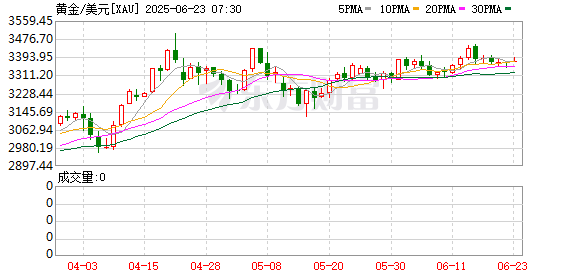
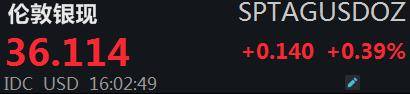
这两年,黄金总是重复以两种方式登上热搜:大涨与大跌。 进入6月,黄金登上热搜的趋向更加明显——大跌。在反复震荡的金价中,不少靠黄金避险属性获利的投资者,纷纷感叹"避险"变"风险"。他们一边期待 着金价的回温,一边也忍不住将视线投向其他投资品。 白银、黄金则在此时拉开了领涨的序幕。 6月23日,截至成稿,Wind数据显示,伦敦现货白银价格达到36.11美元/盎司,现货铂金涨超2%,报价1291.4美元/盎司。 这并非银价和铂金首次崭露头角。 5月下旬以来,白银、铂金等贵金属开始活跃。白银突破关键的36美元/盎司关口,刷新13年来的最高纪录,年内累计最大涨幅接近25%。铂金年内的累计 涨幅已超过36%,高于黄金的年内涨幅。 (网友评论/图) (社交平台网友分享/图) 另一方面,关于铂金、白银是否能成为"黄金平替",不少投资者仍然表示不看好。 120万元购入铂金增值超7万元 一方面,已有胆大的投资者看准时机,一头扎入贵金属投资中。 据经济观察报报道,在4月初,在铂金价格230元/克左右,就有投资者买入了价值约120万元的铂金板料和铂金条(1000克铂金板料2块,克价233.7元; 100克铂金条30块,克价238. ...

【财经分析】油运运价淡季狂飙,中东冲突点燃大宗商品市场
Xin Hua Cai Jing· 2025-06-23 09:29
新华财经上海6月23日电(葛佳明) 中东地缘紧张局势的骤然升温,伊朗议会赞成关闭霍尔木兹海峡的 消息引发全球能源市场巨震,油运运费大幅攀升,推动原油、天然气、甲醇等重点能源品种价格为地缘 政治风险定价。 多数分析师接受新华财经采访时表示,中东局势或难以迅速降温,霍尔木兹海峡是中东地区重要油品出 口通道,短期冲突导致阶段性海运贸易受阻,使得各类资产再度上演剧烈波动。 通过复盘1970年以来中东地区重大冲突对市场的影响可以发现,在避险资产表现中黄金较美元表现更 优,对原油的短期影响最为直接,航运成本面临重构,液化天然气及甲醇市场也将受到显著影响。 油运运费大幅攀升 伊朗作为能源输出国,地缘冲突或对全球能源供应造成明显扰动。 霍尔木兹海峡是世界最重要的石油和天然气运输通道。美国能源信息署(EIA)的数据显示称,每天约 2000万桶石油通过霍尔木兹海峡运出。2024年和2025年第一季度,通过霍尔木兹海峡运输的石油占全球 海运石油贸易总量的四分之一以上,约占全球石油和石油产品消费总量的五分之一。2024年全球约五分 之一的液化天然气贸易也通过霍尔木兹海峡。 上周,伊以冲突升级已经导致船只开始避开霍尔木兹海峡。全球最大 ...
全线拉升!原因,找到了!
中国基金报· 2025-06-23 07:57
【导读】市场回暖,低开高走 中国基金报记者 泰勒 兄弟姐妹们啊,今天的市场低开高走,情绪回暖,一起看看发生了什么事情。 A股低开高走 6月23日,亚洲市场早盘遭遇些许恐慌情绪, 中东战火蔓延以及石油供应中断将对东亚石油进口国造成冲击 ,但 随后情绪转 暖, 股市投资者似乎并不太担心。 A股市场全天低开高走,三大指数集体上涨。截至 收盘沪指涨0.65%,深成指涨0.43%,创业板指涨0.39%。 银行股继续走强,工商银行、建设银行等多股创新高。 为何今天市场低开高走?有分析指出,美国加入以色列和伊朗之间的战争,乍看之下似乎是一个会引发市场暴跌的地缘政治热 点。然而,投资者对此次局势升级基本不以为意,许多策略师认为冲突是可控的,甚至对某些风险资产而言可能是利好。 市场共4446只个股上涨,84只个股涨停,844只个股下跌。 | 880005 涨跌家数 | | | --- | --- | | 其中 涨停 | 84 | | 涨幅 > 7% | 150 | | 涨幅 5-7% | 163 | | 涨幅 3-5% | 629 | | 涨幅 0-3% | 3504 | | 跌幅 0-3% | 776 | | 跌幅 3-5% ...

美国空袭伊朗后市场反应克制 分析师解读:冲突升级程度有限 伊朗如何回应是关键
智通财经网· 2025-06-23 07:17
盛宝银行驻新加坡首席投资策略师Charu Chanana表示:"市场目前将美国对伊朗的袭击视为可控事件, 而非全面战争的开始。避险资金流入有限,说明投资者认为这只是一次性升级,不会干扰全球石油供应 或贸易。""市场的反应可能不是因为冲突升级本身,而是对长期不确定性的缓解预期。如果伊朗的核能 力被显著削弱,部分投资者可能将其解读为'伪装下的降温'——是地缘政治风险的减少,而非增加。但 话虽如此,若伊朗采取报复或威胁霍尔木兹海峡运输安全,市场情绪将迅速转向,并迫使投资者重新定 价地缘风险。" 道明证券驻新加坡高级亚太利率策略师Prashant Newnaha表示:"至少可以说,市场对对周末事件的反应 是温和的。价格走势暗示市场预期这是一次短暂的冲突,冲突升级最终将走向冲突缓和。" 智通财经APP获悉,随着全球投资者正屏息观望伊朗是否会对美国袭击其核设施进行报复,全球股市周 一下滑,油价一度触及五个月高位,美元走强。 尽管中东局势在过去这个周末升级,但市场反应迄今仍然克制,投资者仍处于观望状态。以下是一些市 场分析师对此事件的评论。 澳大利亚联邦银行外汇策略师Carol Kong表示:"到目前为止,油价对不断升级的 ...
以伊冲突搅动资本市场!分析师:黄金涨势重启,美元避险属性遭挑战
第一财经· 2025-06-23 06:45
2025.06. 23 本文字数:2235,阅读时长大约4分钟 上周,在以伊冲突升级持续下,黄金意外表现平平,美元指数反而录得一个月来最大周涨幅,似乎重 现"避险"属性。 世界黄金协会最近的一项调查发现,地缘政治不确定性和潜在的贸易冲突,是新兴经济体央行以远快 于发达经济体的速度转向黄金的主要原因。 美银更预测,即便抛开地缘政治风险,金价也将获得继续上涨的动力。该行分析师在最新报告中写 道, 诚然,在全球动荡时期,黄金通常被视为避险资产,但战争和地缘政治冲突通常不是金价的长 期增长动力 。 值得注意的是,黄金今年以来的强劲上涨主要得益于各国央行购入黄金以对冲美国财 政前景恶化这一趋势。美银预计,各国央行的黄金持有量目前相当于美国未偿还公共债务的18%左 右,高于10年前的13%。 但分析师普遍认为,这只是暂时现象,金价将重启涨势,美元传统"避险资产"地位仍将继续受到美国 关税政策和财政前景的拖累。 金价后续有望冲击4000美元 上周,现货黄金收报3368美元/盎司附近,周跌幅达1.8%,为三周以来首次下跌,并录得6月12日以 来最低水平。此前,以伊冲突爆发之初,现货黄金曾一度逼近3450美元的前期历史高点。C ...

以伊冲突搅动资本市场!分析师:黄金涨势重启,美元避险属性遭挑战
Di Yi Cai Jing· 2025-06-23 05:17
Group 1 - Analysts believe the recent performance of gold is a temporary phenomenon, and gold prices are expected to resume their upward trend, while the dollar's status as a traditional "safe-haven asset" will continue to be undermined by U.S. tariff policies and fiscal outlook [1][3] - Last week, spot gold closed at approximately $3,368 per ounce, marking a weekly decline of 1.8%, the first drop in three weeks, and the lowest level since June 12 [3] - Deutsche Bank's report indicates that geopolitical risk premiums for gold have rapidly dissipated since mid-June, but this may be a false signal; historically, gold prices have averaged a 3% increase during geopolitical events [3][4] Group 2 - The World Gold Council's recent survey found that geopolitical uncertainty and potential trade conflicts are primary reasons for emerging market central banks shifting to gold at a faster pace than developed economies [4] - Bank of America predicts that even without geopolitical risks, gold prices will continue to rise, driven by central bank purchases to hedge against deteriorating U.S. fiscal prospects [5] - Bank of America estimates that current central bank gold holdings are about 18% of U.S. public debt, up from 13% a decade ago, and anticipates gold prices could reach $4,000 per ounce next year, a 19% increase from current levels [5] Group 3 - The dollar index experienced a rare increase, rebounding last week with its largest weekly gain in a month, driven by rising demand for safe-haven assets amid escalating Middle East conflicts [6] - Despite the recent rise, market participants believe the dollar's status as a safe-haven asset is under significant pressure due to ongoing concerns over U.S. trade policies and fiscal deficits [6] - The complex sentiment towards the dollar is reflected in U.S. Treasury yields, which have shown little change since the onset of the conflict, with the 10-year Treasury yield hovering around 4.39% [6]
中东火药桶再爆!美国突袭推升美元 全球屏息待伊朗反制
贝塔投资智库· 2025-06-23 04:10
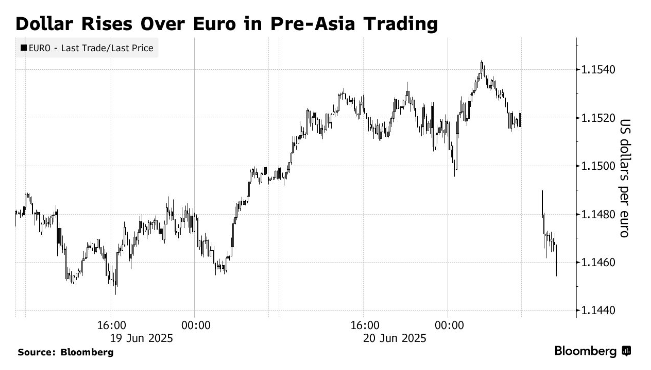
Core Viewpoint - The geopolitical tensions following the U.S. airstrikes on Iran have led investors to seek safe-haven assets, resulting in a stronger U.S. dollar and increased oil prices, while U.S. stock index futures have declined due to heightened risk aversion and concerns over energy supply [1][6][9]. Market Reactions - The dollar has strengthened against the euro and most major currencies in early Asian trading, while oil futures surged, reflecting the market's response to geopolitical risks [1]. - Bitcoin and Ethereum have seen significant declines, indicating a broader sell-off in the cryptocurrency market as investors move towards safer assets [2]. - The S&P 500 index remains only about 3% below its historical high from February, suggesting that the market's overall reaction has been relatively muted despite the ongoing conflict [4]. Oil Market Impact - Brent crude oil futures have jumped 11% to $77 per barrel, with traders preparing for further price increases amid escalating tensions in a region that accounts for one-third of global oil production [6]. - Analysts suggest that if the conflict escalates, oil prices could rise significantly, while a quick resolution might see prices revert to the $60 range [6]. U.S. Dollar Dynamics - The U.S. dollar has risen approximately 0.9% since the conflict began, but this increase is considered limited given the dollar's traditional role as a safe-haven currency [6]. - Market strategists indicate that if the dollar maintains its upward trend, it could enhance the attractiveness of other U.S. assets [7]. Investor Sentiment and Strategies - Investors are weighing multiple factors, including inflation, growth, oil prices, and trade tariffs, as they navigate the evolving geopolitical landscape [8]. - The potential for Iran to respond aggressively, such as by blocking the Strait of Hormuz, remains a critical concern for market participants [5][9]. Future Outlook - Analysts predict that the market's response to the conflict may be tempered due to the current accommodative monetary policies and the absence of liquidity bubbles [12]. - The geopolitical situation is expected to create volatility in oil and gold prices, while the core issue remains whether U.S. assets will continue to enjoy a safe-haven premium [15].
风偏下降,布局结构性机会 | 周度量化观察
申万宏源证券上海北京西路营业部· 2025-06-23 02:20
Market Overview - The Middle East situation continues to impact global markets, with A-shares declining and the bond market strengthening. The conflict in Iran has created tension, leading to a drop in A-share performance, with only 716 companies rising, marking a recent low [2][4] - On Friday, Trump's statement regarding a decision on attacking Iran within two weeks eased market nerves, resulting in improved performance for both A-shares and Hong Kong stocks [2] Bond Market - The bond market remains strong due to a loose funding environment, despite a slight liquidity withdrawal by the central bank. Weak economic data supports the bond market, making it favorable as a safe-haven asset amid geopolitical risks [2][8] Commodity Market - Gold prices experienced a weekly decline of over 2% due to a strengthening dollar, while oil prices fluctuated significantly amid geopolitical tensions [3][37] Stock Market - As the second quarter approaches its end, attention on corporate earnings is increasing. The average daily trading volume in the Shanghai and Shenzhen markets has decreased significantly, indicating a recalibration of market expectations [6][15] - The market is expected to focus on structural opportunities, particularly in technology sectors with improving fundamentals and those benefiting from domestic demand policies [7] Industry Performance - In the past week, the banking, communication, and electronics sectors performed well, with respective gains of +2.63%, +1.58%, and +0.95%. Conversely, the pharmaceutical sector saw a decline of -4.35% [21][25] Economic Indicators - Recent economic data shows a year-on-year increase in retail sales of 6.4% for May, while fixed asset investment growth slowed to 3.7%. Real estate investment remains under pressure with a cumulative decline of -10.7% [33]

中东火药桶再爆!美国突袭推升美元 全球屏息待伊朗反制
智通财经网· 2025-06-22 23:39
Group 1 - The geopolitical tensions following the US airstrikes on Iran have led investors to seek safe-haven assets, resulting in a stronger US dollar in Asian trading [1] - Oil prices surged significantly, with Brent crude futures rising by 11% to $77 per barrel, as traders brace for potential further increases amid ongoing conflict [6] - The S&P 500 index has shown resilience, only down about 3% from its historical high in February, indicating that investors expect the conflict to remain localized [3] Group 2 - Analysts suggest that the market's reaction to the conflict is mixed, with some believing it could limit Iran's nuclear ambitions while others see it as a potential escalation [7] - The dollar has appreciated approximately 0.9% since the conflict began, but this increase is relatively modest given its traditional role as a safe-haven currency [6] - The potential for Iran to block the Strait of Hormuz is a critical concern, as such an action would significantly impact oil supply and market stability [3][12] Group 3 - Market participants have reduced stock holdings in anticipation of conflict escalation, with the MSCI global index down 1.5% since mid-June [3] - The bond market has shown a complex reaction, with US Treasury yields initially falling but then reversing due to inflation concerns, resulting in minimal overall change since June 13 [6] - Analysts predict that if oil prices remain high, it could lead to increased political risks for the Trump administration, particularly as midterm elections approach [9][11]
黄金、原油开盘大涨,此刻市场如何消化中东危机?
Jin Shi Shu Ju· 2025-06-22 23:29
Market Reactions to Middle East Tensions - Gold prices surged by $24 to a peak of $3398 per ounce due to escalating tensions in the Middle East [2] - WTI crude oil opened 3.7% higher, reflecting market concerns over potential supply disruptions [2] - The S&P 500 index remains only about 3% below its historical high from February, indicating a relatively muted market response despite recent declines [2] Investor Sentiment and Market Predictions - Investors are currently anticipating that the conflict will remain localized, minimizing broader economic impacts [2] - Market analysts suggest that significant volatility could arise if Iran responds aggressively, such as by blocking the Strait of Hormuz [2] - Fund managers have reduced stock holdings, indicating a cautious approach to potential market downturns [3] Oil Price Outlook - Morgan Stanley analysts predict that a quick resolution could bring oil prices back to $60 per barrel, while ongoing tensions may keep prices elevated [3] - A fundamental disruption in global oil supply could lead to significant price increases [3] Currency and Asset Strategies - There is a prevailing sentiment to short the US dollar, with some strategists suggesting that a sustained dollar rally could enhance the attractiveness of US assets [4] - High oil prices could pose a political challenge for the Trump administration, especially ahead of midterm elections [5] Stock Market Resilience - Barclays' Emmanuel Cau notes that historical data suggests oil shocks typically have a short-lived impact on stock markets, often presenting mid-term buying opportunities [5] - Analysts from Societe Generale believe that the current monetary policy environment will limit stock market declines compared to previous oil shocks [6] Safe-Haven Assets - Capital is expected to flow into traditional safe-haven assets such as Japanese government bonds, yen, Swiss franc, and gold [6] - Historical trends indicate that when investors sell the dollar, they often turn to US Treasury bonds, anticipating a dovish stance from the Federal Reserve [6] Geopolitical Risks and Market Dynamics - The geopolitical landscape, particularly the US's actions in the Middle East, is seen as a critical factor influencing market volatility and investor behavior [7] - Analysts suggest that the recent US strikes may have prompted hedge funds to exit bearish positions on the dollar, potentially leading to a stronger dollar in the near term [7]