量子计算

Search documents
华尔街到陆家嘴精选丨美国5月CPI低于预期 通胀压力缓解;黄仁勋:量子计算临近拐点!Robotaxi暂定22日试运行 高盛力挺特斯拉
Di Yi Cai Jing· 2025-06-12 01:35
①美国5月CPI低于预期通胀压力缓解 美国5月消费者价格指数(CPI)环比上涨0.1%,低于预期的0.2%,同比上涨2.4%,低于预期的2.5%。 核心CPI环比上涨0.1%,低于预期的0.3%,同比上涨2.8%,与前值持平。核心CPI升幅连续第四个月低 于预期,显示企业努力限制将关税成本转嫁给消费者。这一数据表明美国通胀压力有所缓解,可能为美 联储货币政策调整提供空间。交易员加码押注美联储9月启动降息,特朗普再次敦促美联储降息。 评论员徐广语:美国5月CPI低于预期的关键驱动因素包括能源价格环比下跌1%,以及汽车、服装等商 品价格下滑,抵消了住房成本上涨的贡献;特朗普政府关税政策尚未对通胀产生显著影响,显示当前通 胀回落主要受需求疲软和供应链改善推动。数据公布后,市场加大了对美联储9月降息的押注,可能降 息两次;这强化了通胀趋缓下货币政策转向宽松的预期,但核心通胀仍高于2%目标,美联储或维持谨 慎立场。展望未来,若能源和关税冲击持续弱化,通胀可能延续下行趋势,为降息创造空间。 国都证券投资顾问陈兆凌:美国近期经济数据波动较大,投资者对美联储降息预期不断摇摆。由于美元 信用减弱,近几个月来看,相关消息对A股市 ...


研判2025!中国多物理场软件行业产业链、市场规模及重点企业分析:技术融合驱动产业革新,量子计算开辟仿真新赛道[图]
Chan Ye Xin Xi Wang· 2025-06-12 01:31
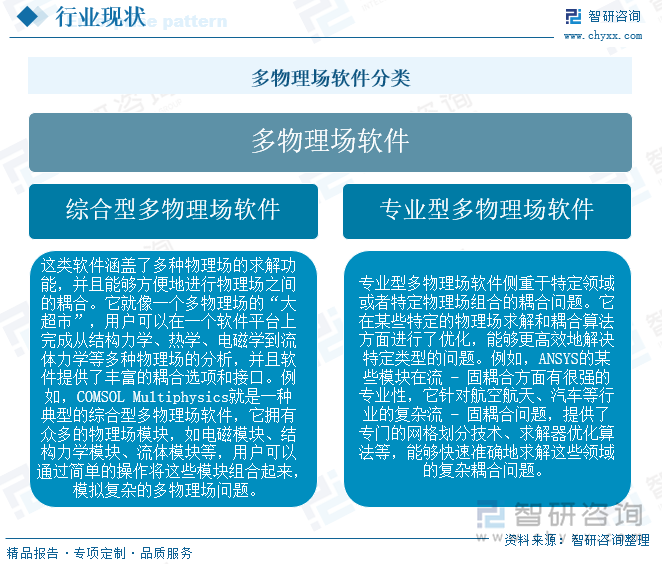
Industry Overview - The global multiphysics software industry is at the intersection of technological innovation and industrial transformation, with a market size projected to reach approximately $4.1 billion in 2024, representing a year-on-year growth of 7.89% [1][13] - The integration of cloud computing, artificial intelligence, and quantum computing is emerging as a major trend in the technology sector [1][13] - ANSYS Cloud has reduced fluid-structure coupling simulation time by 40% through GPU acceleration technology, while Siemens Simcenter has achieved a 50% reduction in design iteration cycles for wind turbine blades by leveraging digital twin technology [1][13] Industry Development History - The Chinese multiphysics software industry has undergone four main stages: 1. The initial stage before 2010, where core technologies relied on international vendors, and domestic applications were limited to high-end manufacturing [4] 2. The technology accumulation period from 2010 to 2015, marked by national emphasis on industrial software and the establishment of special funds to support simulation software development [4] 3. The self-innovation breakthrough period from 2016 to 2020, where domestic platforms achieved commercial viability and expanded applications beyond the power equipment sector [5] 4. The ecosystem construction period from 2021 to present, characterized by explosive market growth and a focus on technological innovation and ecosystem collaboration [6] Industry Chain - The upstream of the multiphysics software industry includes hardware devices, basic software, and technical resources, while the midstream involves software development and solution integration [8] - The downstream applications span various sectors, including industrial manufacturing, energy, electronics, academia, and research institutions [9] Market Size - The global multiphysics software market is projected to reach approximately $4.1 billion in 2024, with a year-on-year growth of 7.89% [1][13] - The industry is witnessing significant advancements in technology, with ANSYS Cloud experiencing a 47% annual growth rate [15] Key Companies' Performance - Domestic companies like Cloud Road Intelligent Manufacturing and Chipray Microelectronics are breaking through technological barriers through independent research and development [15] - ANSYS and COMSOL dominate the high-end market, with ANSYS holding over 60% market share in automotive collision safety after acquiring LS-DYNA [15][17] - The market is seeing a shift towards cloud-based solutions, with ANSYS Cloud's subscription model lowering the entry barrier for small and medium enterprises [15] Industry Development Trends 1. Accelerated technological integration is driving breakthroughs in simulation accuracy and efficiency, with cloud computing and edge computing reshaping simulation paradigms [21] 2. The renewable energy revolution is becoming the largest incremental market, with significant applications in battery thermal management and wind turbine design [22] 3. The restructuring of ecosystems is accelerating, with policies supporting the development of domestic software and increasing the procurement ratio of domestic software in leading enterprises [23]


马云回应离职员工万字长文;豆包新模型定价降六成;哪吒汽车方运舟被围堵办公室讨薪
Guan Cha Zhe Wang· 2025-06-12 01:13
Group 1 - Elon Musk expressed regret over his recent posts about former President Trump, stating that the content was excessive [1] - Trump responded positively to Musk's admission, indicating approval of his reconsideration [1] Group 2 - DingTalk's product research head, Yuan An, announced his departure from Alibaba, sharing a lengthy internal letter discussing the company's evolution and challenges [1] - Alibaba's founder, Jack Ma, acknowledged Yuan An's insights and emphasized the company's ongoing changes [1] Group 3 - Ximalaya confirmed its acquisition by Tencent Music Entertainment Group, stating that its operational strategy and brand identity will remain unchanged post-acquisition [2] - The company will continue to fulfill existing contracts and protect customer rights [2] Group 4 - Volcano Engine launched the Doubao 1.6 model, which supports 256k long context and reduced pricing by 63% compared to its previous version [2] Group 5 - OpenAI's CEO, Sam Altman, announced plans to release an open-weights model by late summer 2023, with predictions for advanced cognitive systems by 2025 [3] - Altman also forecasted the emergence of systems capable of generating new insights by 2026 and robots executing real-world tasks by 2027 [3] Group 6 - WeChat's "Yuanbao AI" upgraded its capabilities to summarize video content and provide detailed responses based on user input [4] - Tencent aims to integrate Yuanbao AI with more of its products to enhance user experience [4] Group 7 - Meta introduced the V-JEPA 2 model, designed to improve AI's understanding of 3D environments and physical world reasoning [4] - The development of this model involved Meta's chief AI scientist, Yang Li-Kun [4] Group 8 - NVIDIA's CEO, Jensen Huang, stated that quantum computing is at a turning point, with plans to collaborate with quantum computing companies [4] - Huang mentioned that future supercomputers will integrate quantum processors (QPU) alongside GPUs for enhanced computational capabilities [4] Group 9 - Employees of Neta Auto protested for unpaid wages, surrounding the CEO in his office [5] - The company had previously announced plans to relocate its headquarters amid these financial issues [5] Group 10 - Huawei launched the Pura 80 series smartphones, featuring advanced camera technology and competitive pricing [6] - The Pura 80 Ultra model incorporates innovative optical zoom capabilities, significantly improving light intake compared to competitors [6] Group 11 - AliExpress, Alibaba's cross-border e-commerce platform, has begun selling cars, focusing on Chinese electric vehicles during the overseas "618" sales event [7] - The platform features popular models from brands like BYD, Geely, and Xiaomi, supported by Alibaba's subsidy program [7]

PCIe 7.0正式发布,光纤规范同步亮相,启动PCIe 8.0预研
半导体行业观察· 2025-06-12 00:42
Core Viewpoint - PCI-SIG has officially released the PCI Express (PCIe) 7.0 specification, achieving a speed of 128.0 GT/s, aimed at data-driven applications such as AI/ML, 800G Ethernet, cloud computing, and quantum computing [1][4]. PCIe 7.0 Specification Features - PCIe 7.0 offers a raw bit rate of 128.0 GT/s and a bidirectional rate of up to 512 GB/s through an x16 configuration [4][6]. - It utilizes PAM4 signaling and Flit-based encoding for improved power efficiency [4][6]. - The specification maintains backward compatibility with previous PCIe generations [4][6]. Industry Impact and Adoption - The release of PCIe 7.0 is seen as a significant advancement for AI and HPC hardware infrastructure, providing essential bandwidth and low latency for modern AI workloads [14][15]. - The specification is expected to meet the growing bandwidth demands of data-intensive markets, including AI/ML and high-performance computing [14][15]. - PCIe 7.0 is anticipated to be widely adopted in data centers, with many ASIC companies already engaging with IP providers to leverage the new technology [6][14]. Optical Interconnect Solutions - PCI-SIG has introduced a new optical interconnect specification revision to enhance PCIe technology performance [11][13]. - The Optical Aware Retimer ECN aims to provide a standardized method for implementing PCIe technology over fiber optics, addressing the industry's need for optical interconnects [11][13]. - This transition to optical solutions is expected to improve performance, reduce latency, and enhance thermal management capabilities [19][20]. Technical Specifications and Enhancements - PCIe 7.0 doubles the bandwidth of PCIe 6.0, achieving a bidirectional transfer speed of up to 512 GB/s [14][15]. - The specification introduces advanced features such as improved channel margining, enhanced error detection, and support for emerging technologies like CXL [15][16]. - The design of PCIe 7.0 connectors focuses on minimizing reflections and crosstalk, ensuring low cable loss and high signal integrity [19][20].
英伟达进击欧洲:开设AI工厂,加速量子计算
2 1 Shi Ji Jing Ji Bao Dao· 2025-06-12 00:42
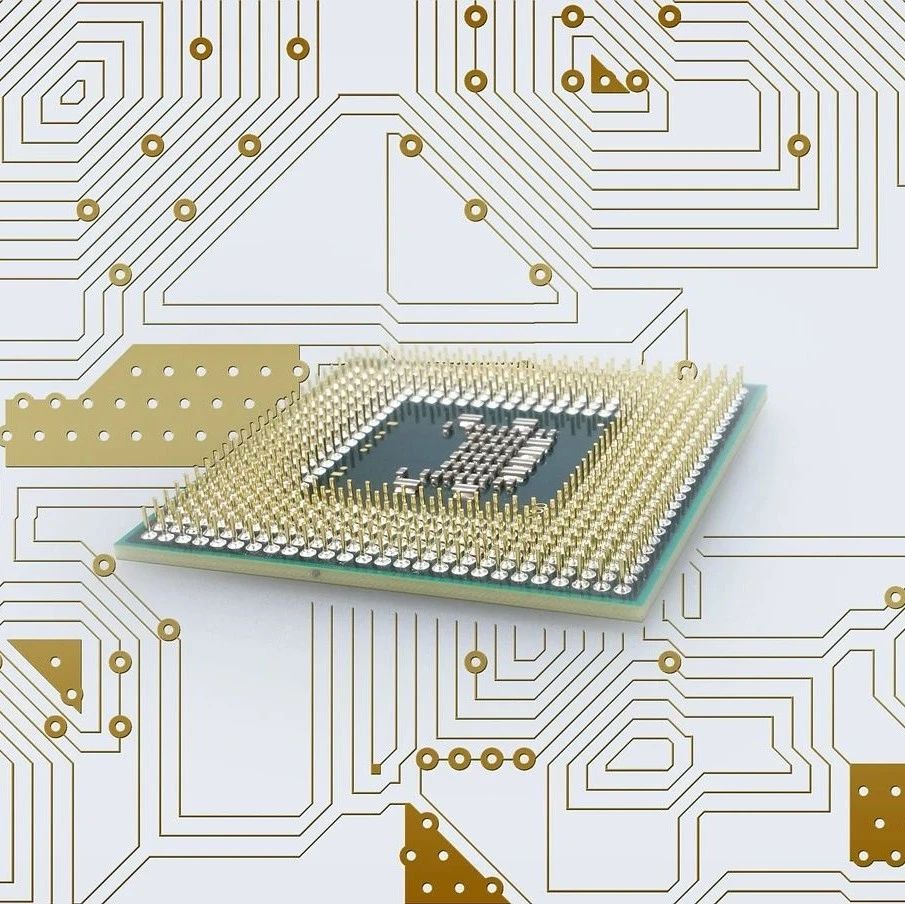
Group 1 - Nvidia is launching a series of AI infrastructure collaboration plans in Europe, partnering with companies in France, the UK, Germany, and Italy [1] - Nvidia is establishing and expanding AI technology centers in Germany, Sweden, Italy, Spain, the UK, and Finland, including a cloud platform powered by 18,000 Nvidia Grace Blackwell systems in France [1][2] - The company aims to build the world's first industrial AI cloud in Germany, equipped with 10,000 Blackwell GPUs, targeting the European manufacturing sector [1][2] Group 2 - Europe is accelerating its AI development, with significant investments such as France's plan to invest €109 billion and the EU's "InvestAI plan" allocating approximately €200 billion for AI initiatives [2] - Nvidia's CEO Jensen Huang emphasizes the importance of AI as a part of infrastructure and a driver for growth in manufacturing, indicating a new industrial revolution [2][3] - The company is expanding its strategic layout in Europe to capture market opportunities amid changing trade environments and export controls in China [3] Group 3 - Nvidia's latest Blackwell architecture products are expected to achieve a performance improvement of 30-40 times in a single generation, significantly enhancing inference performance [3] - The GB200 NVL72 system is predicted to accelerate the quantum computing industry, with Nvidia leveraging this platform to enhance AI and quantum computing collaboration [5] - The global production of GB200 NVL72 racks is projected to reach 2,000 to 2,500 units by May 2025, indicating a rapid response to market demand [6]

PCIe 7.0正式发布,光纤规范同步亮相,启动PCIe 8.0预研
半导体行业观察· 2025-06-12 00:41
Core Viewpoint - PCI-SIG has officially released the PCI Express (PCIe) 7.0 specification, achieving a speed of 128.0 GT/s, aimed at data-driven applications such as AI/ML, 800G Ethernet, cloud computing, and quantum computing [1][4]. PCIe 7.0 Specification Features - PCIe 7.0 offers a raw bit rate of 128.0 GT/s and a bidirectional rate of up to 512 GB/s through an x16 configuration [4][8]. - It utilizes PAM4 signaling and Flit-based encoding, enhancing power efficiency while maintaining backward compatibility with previous PCIe generations [4][8]. Industry Context and Future Developments - The release of PCIe 7.0 continues the tradition of doubling I/O bandwidth every three years, addressing the bandwidth demands of data-intensive markets, including AI and HPC [4][15]. - PCIe 8.0 exploration is already underway to support ongoing industry investments and product roadmaps [1]. Market Demand and Applications - The demand for PCIe technology is driven by the rapid expansion of AI applications, with modern AI workloads requiring architectures that integrate multiple accelerators [13][15]. - PCIe 7.0 is expected to be deployed in data centers, enhancing connectivity between accelerators, processors, NICs, and other components with low latency and low power consumption [15]. Energy Efficiency and Advanced Features - Despite performance improvements, PCIe 7.0 aims to maintain or enhance energy efficiency, crucial for reducing operational costs and environmental impact in data centers [16]. - New features include improved channel margin capabilities, enhanced error detection, and support for emerging technologies like CXL [16]. Optical Interconnect Solutions - PCI-SIG has introduced a new optical interconnect specification revision to enhance PCIe technology performance, marking the industry's first standardized approach for optical solutions [10][19]. - The transition to optical solutions is expected to expand the physical coverage of computing networks, offering lower latency and improved thermal management capabilities [19][20].
A股盘前播报 | 中东局势升级!油价暴涨5% 黄仁勋称量子计算接近拐点
智通财经网· 2025-06-12 00:39
盘前要闻 1、中东局势一夜升级!美国下令撤离部分中东人员,原油狂飙5% 类型:宏观 情绪影响:负面 伊朗威胁说如果核计划谈判失败将袭击美国基地,北京时间今日凌晨,美国命令一些工作人员离开驻巴 格达大使馆,并允许军人家属离开中东。隔夜WTI原油期货大涨5.2%,最终收于68美元/桶上方,创下 去年10月份以来的最大涨幅。 2、黄仁勋称量子计算正在接近拐点,英伟达将与量子计算公司合作 类型:行业 情绪影响:正面 英伟达CEO黄仁勋最新演讲提到,量子计算正在接近一个拐点。与摩尔定律类似,量子计算机可处理的 逻辑量子比特数量将沿着每5年增加10倍、每10年增加100倍的路径演进。英伟达会以多种方式与世界各 地的量子计算公司合作。 3、美国5月CPI数据全线低于预期,特朗普:美联储应该降息100基点 类型:宏观 情绪影响:中性 美国劳工统计局公布的数据显示,剔除食品和能源成本的核心CPI同比上涨2.8%,保持在2021年3月以 来的最低水平,低于预期的2.9%。交易员加大对美联储降息的押注,基本预计今年将降息两次。特朗 普呼吁美联储将利率下调100基点。 4、何立峰:中美在经贸领域合则两利、斗则俱伤,贸易战没有赢家 投 ...
“硅锂”有意,“钢矿”无情:申万期货早间评论-20250612
申银万国期货研究· 2025-06-12 00:39
首席点 评 : " 硅锂 " 有意, " 钢矿 " 无情 中国商务部国际贸易谈判代表:中美原则上达成协议框架。美国 5 月 CPI 同比增 2.4% ,核心 CPI 环比 增 0.1% 、连续第四个月低于预期。美国 5 月 CPI 数据全线低于预期,能源主导整体 CPI 的放缓,汽 车、服装价格均出现下滑,玩具、家电受关税影响更直接的品类价格上涨。特朗普对伊朗核谈判 " 信心 减弱 " ,美将减少驻伊拉克使团规模,布油涨超 5% 。特朗普表示,伊朗方面似乎在拖延。他强调,无 论协议是否达成,伊朗都不会拥有核武器。黄仁勋 GTC 大会表示,量子计算正迎来拐点,计划在欧洲 新建 20 家 " 人工智能工厂 "。 重点品种: 原油、股指、 玻璃 原油 :夜盘油价上涨 3.37% 。特朗普表示对达成伊核协议信心减弱,以及伊朗方面警告可能打击美军 基地之际,美国方面在北京时间今日凌晨通知美国在中东的人员部分撤离。以色列官员称,以色列国防 军最近几天一直处于高度戒备状态,以防与伊朗的冲突可能升级。 EIA 报告: 06 月 06 日除却战略储 备的商业原油库存减少 364.4 万桶至 4.32 亿桶,降幅 0.84% 。 ...

“硅锂”有意,“钢矿”无情:申万期货早间评论-20250612
申银万国期货研究· 2025-06-12 00:39
首席点 评 : " 硅锂 " 有意, " 钢矿 " 无情 中国商务部国际贸易谈判代表:中美原则上达成协议框架。美国 5 月 CPI 同比增 2.4% ,核心 CPI 环比 增 0.1% 、连续第四个月低于预期。美国 5 月 CPI 数据全线低于预期,能源主导整体 CPI 的放缓,汽 车、服装价格均出现下滑,玩具、家电受关税影响更直接的品类价格上涨。特朗普对伊朗核谈判 " 信心 减弱 " ,美将减少驻伊拉克使团规模,布油涨超 5% 。特朗普表示,伊朗方面似乎在拖延。他强调,无 论协议是否达成,伊朗都不会拥有核武器。黄仁勋 GTC 大会表示,量子计算正迎来拐点,计划在欧洲 新建 20 家 " 人工智能工厂 "。 重点品种: 原油、股指、 玻璃 原油 :夜盘油价上涨 3.37% 。特朗普表示对达成伊核协议信心减弱,以及伊朗方面警告可能打击美军 基地之际,美国方面在北京时间今日凌晨通知美国在中东的人员部分撤离。以色列官员称,以色列国防 军最近几天一直处于高度戒备状态,以防与伊朗的冲突可能升级。 EIA 报告: 06 月 06 日除却战略储 备的商业原油库存减少 364.4 万桶至 4.32 亿桶,降幅 0.84% 。 ...

【私募调研记录】康曼德资本调研国盾量子
Zheng Quan Zhi Xing· 2025-06-12 00:10
Group 1 - The core viewpoint of the article highlights the recent research conducted by Kangmand Capital on a listed company, Guodun Quantum, focusing on the fields of quantum communication, quantum computing, and quantum precision measurement [1] - The research discussed the challenges in quantum communication technology, such as high-efficiency low-noise single-photon detection, and the potential for operators to explore quantum functionalities in the 6G era [1] - Quantum communication devices are primarily project-based, offering customized solutions, and are expected to integrate with traditional encryption companies rather than disrupt them [1] Group 2 - The current state of quantum computers is that they can only solve specific problems, with applications in AI still in the early stages [1] - Quantum security strategies include quantum key distribution and post-quantum algorithms, with quantum computing chips being similar to classical semiconductor chips in processing but differing in technical principles [1] - The collaboration with the University of Science and Technology of China is noted for the company's chip development, and it is emphasized that quantum computers are not expected to become mainstream but rather serve as a complement to classical computers [1]