即时零售

Search documents
“以旧换新”带动消费2.9万亿元!申城3C消费迎爆发式增长,手机电脑门店销量增长超3倍
Sou Hu Cai Jing· 2025-07-19 08:54
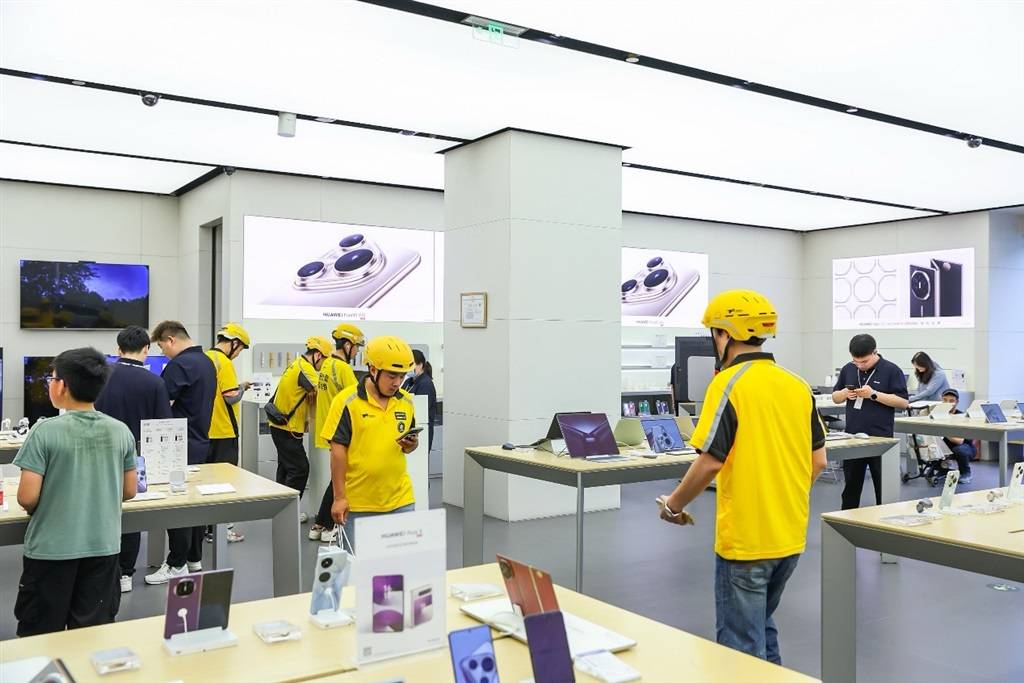
Group 1 - The "old-for-new" policy has generated over 2.9 trillion yuan in sales, significantly enhancing the quality of life for millions of families, particularly in first-tier cities like Shanghai [1] - The combination of national subsidies and instant retail has effectively delivered policy benefits to consumers, bridging the gap between online discounts and offline store sales [1] Group 2 - The "national subsidy + flash purchase" model has led to a more than threefold increase in sales of mobile phones and computers in physical stores, with specific brands like Huawei and Samsung seeing sales growth exceeding three times [2] - The sales of air conditioners have also surged, with a nearly ninefold increase in transaction volume since June, driven by the "half-day delivery and installation" service [4] Group 3 - The integration of "flash purchase" and national subsidies is a key factor in sustaining consumer vitality under the national subsidy policy, with instant retail platforms serving as ideal channels for boosting offline consumption [5] - Experts suggest that leveraging the unique advantages of instant retail can enhance the effectiveness of government subsidy funds in supporting physical stores and driving consumption growth [5]

外卖平台“三国杀”硝烟四起
Bei Jing Wan Bao· 2025-07-19 05:46
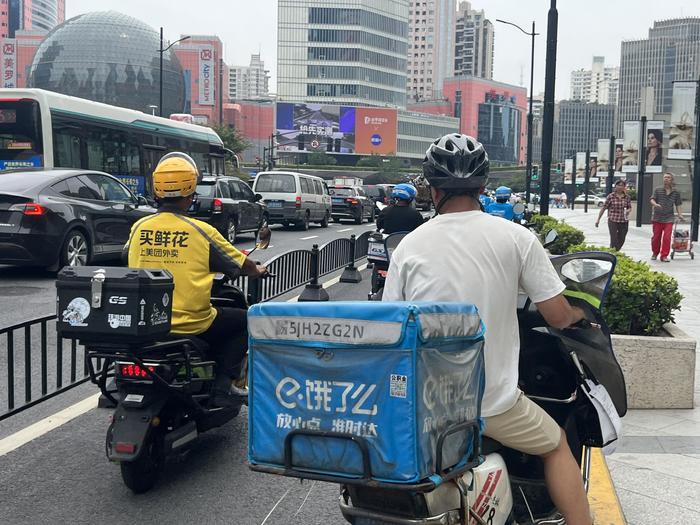
昨天,市场监管总局约谈饿了么、美团、京东三家平台企业,要求进一步规范促销行为,理性参与竞 争。 市场监管总局约谈三家平台企业,要求相关平台企业严格遵守《中华人民共和国电子商务法》《中华人 民共和国反不正当竞争法》《中华人民共和国食品安全法》等法律法规规定,严格落实主体责任,进一 步规范促销行为,理性参与竞争,共同构建消费者、商家、外卖骑手和平台企业等多方共赢的良好生 态,促进餐饮服务行业规范健康持续发展。 最近几个周末,点外卖仿佛成了周末"全民运动"。 据三家平台披露的周末数据,美团单日订单量突破1.5亿单,淘宝闪购达到8000万单,而京东外卖在近 期未公布相关数据,但在"618"活动时透露外卖日订单量突破2500万。这意味着,中国外卖行业的单日 总单量已经从年初的1亿单增长至约2.5亿单。一场围绕中国人餐桌的外卖"三国杀"正硝烟四起。 ■解析 外卖进入 "百亿对决"时代 "战况"升级的节点,可追溯至今年6月30日。当天,阿里确立发起淘宝闪购的百日增长计划,核心策略 是在每周六冲单。 在更早的2月,京东官宣进军外卖市场,0佣金招募商家,就连刘强东都下场送外卖。如今,美团推出0 元券、0.1秒杀等大量补贴活动, ...


克制的淘宝和不能输的美团 外卖大战无赢家
Zhong Guo Jing Ying Bao· 2025-07-18 20:17
中经记者 李立 上海报道 过去两个周末,在大额红包、"0元外卖券"轮番轰炸下,百万骑手、爆单商家,"免费奶茶"快要喝不动 的消费者,有意无意间都参与了史上最激烈的外卖大战。 同时,淘宝闪购尝试开辟"第二战场"。记者独家获悉,淘宝闪购开始在重庆、杭州等区域市场测试"特 价酒店"频道,背后是此前刚整合进淘宝的飞猪团队,但究竟何时全力参战,还要看测试结果、等安 排。 美团、淘宝闪购分别再次刷新单量。截至7月12日,美团即时零售订单量达1.5亿单;淘宝闪购则称"又 火又稳定",日订单再破8000万单,日活用户周环比增长15%。 单量不断冲高背后,形势却在发生变化:爆单商家、借着外卖大战乘风破浪的奶咖品牌都开始显示出不 同程度的焦虑;"烧钱"的平台都在屏息凝视对方的动作。"友商不停,美团也没法停。"一位美团内部人 士对《中国经营报》记者表示。另外一边,"我们这周(7月7日—7月13日)打算休息。"一位淘宝人士 向记者透露。只是谁也不敢真正停下来,就怕对方突然奇袭。 多位业内人士认为,大战还没有看到结束的迹象。"从7月开始,至少打完第三季度(9月)"。据一位接 近阿里巴巴的人士透露。这场战争最有意思的变化在于,美团从当年 ...

解码外卖混战:美团、京东与阿里战略布局全解析报告来了
3 6 Ke· 2025-07-18 12:28
在最新一次冲单后,美团即时零售达到1.5亿订单,淘宝闪购达到8000万订单,再加上京东最后一次公布的2500万订单,总计日单量峰值或将近2.5亿,是 2024年的2倍以上。 为详细拆解近半年来外卖混战的底层逻辑,7月18日,壹览商业正式发布2025《外卖与即时零售双擎竞速,美团、京东与阿里战略布局全解析报告》(下 简称《报告》)。《报告》指出,这场以外卖为名义而发起的商业竞争,无论各方是主动发起还是被动加入,其背后是针对因外卖基础设施完善而衍生的 庞大的即时零售市场的争夺。 如今,三方都认为即时零售是各自的核心增量业务,让这场竞争变得更加直接、激烈。显然,这将是一场长期的竞争,除了"弹药"的充足与否,更多是考 验各方的耐心、细心和解决问题的决心。 《报告》认为,当前,美团、京东与阿里正面临新势力对各自传统业务的蚕食、优势领域用户增长乏力和利润增长空间压缩的三重冲击。三方均积极寻找 新的增长点并不约而同地将即时零售视作各自的核心增长方向,依托外卖和即时零售高频的特点实现自身各业态之间的协同,盘活全局已成为三家的共 识。 而美团近年来则面临着典型的"增长焦虑":行业渗透率趋稳,用户天花板已现。在存量市场博弈中,美 ...

啤酒品牌花式整活卷“爆款”,靠情绪价值拼未来?|大象财富
Sou Hu Cai Jing· 2025-07-18 09:46
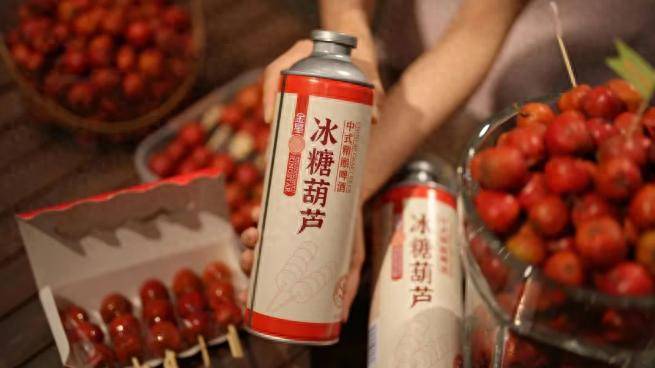
Core Insights - The beer industry is experiencing a decline in sales, with a projected 0.6% decrease in production for 2024 and a 5.7% drop in revenue year-on-year, making it the only negative growth category in the food and beverage sector [1][2] - Craft beer is witnessing significant growth, with a forecasted 17% increase in consumption for 2025, contrasting with the decline in industrial beer [1][2] - Companies are exploring new product categories and sales channels to drive growth, including the introduction of innovative flavors and the expansion into beverage markets [15][17] Industry Performance - The overall beer production in China for January to May 2025 was 15.008 million kiloliters, a slight decrease of 0.3% year-on-year, with industrial beer production expected to be around 35.213 million kiloliters for 2024 [1][2] - The craft beer segment is projected to reach a market size of 130 billion yuan by the end of 2025, with a penetration rate of 6.3% [9] Consumer Trends - Young consumers, particularly those aged 18-35, are increasingly favoring craft beers over traditional industrial options, with female consumers making up over 60% of the market for new flavors [3][4] - The shift in consumer behavior reflects a preference for unique, high-quality products that provide emotional value rather than just price considerations [11][20] Company Strategies - Jin Xing Beer has successfully leveraged Chinese craft brewing techniques, achieving a production volume of 10 million bottles (1 million liters) and generating a revenue of 1 billion yuan [3][9] - The company plans to continue innovating with new flavors, such as the "Jin Xing Xinyang Maojian Chinese Craft Beer," which combines tea and beer, appealing to a broader audience [9][12] Market Dynamics - The beer market is becoming increasingly competitive, with over 30,000 companies involved in craft beer production, leading to a risk of oversaturation [11][12] - Major beer brands are diversifying into non-beer beverages, such as soft drinks and functional drinks, to capture a larger market share [17][18] Future Outlook - Despite current challenges, the beer industry is expected to recover, supported by government initiatives aimed at increasing domestic barley production and technological advancements in brewing [20] - The industry's focus on digital transformation and quality improvement will be crucial for maintaining competitiveness in a saturated market [20]
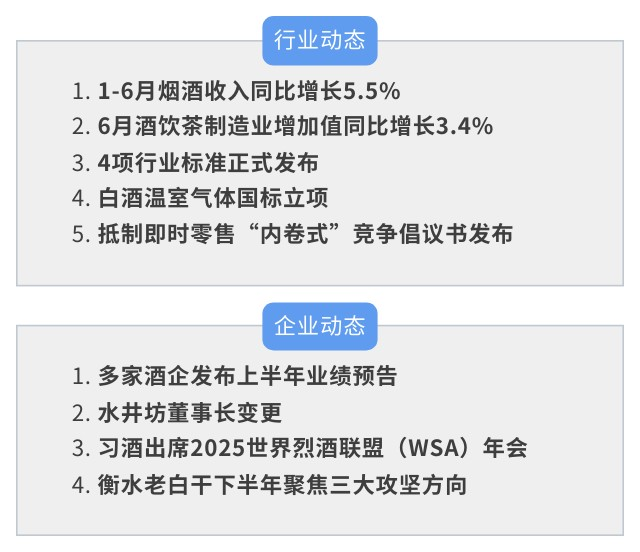
中经酒业周报∣1-6月烟酒收入同比增长5.5%,4项行业标准正式发布,多家酒企发布上半年业绩预告
Xin Hua Cai Jing· 2025-07-18 07:14
Industry Dynamics - In the first half of 2023, the revenue from tobacco and alcohol increased by 5.5% year-on-year, totaling 331.6 billion yuan, while June's revenue was 51.6 billion yuan, showing a decline of 0.7% year-on-year [4] - The added value of the beverage and tea manufacturing industry grew by 3.4% year-on-year in June, with a 4.7% increase in the first half of the year [4] - Four industry standards related to fermented rice wine and fruit wines were officially released, set to be implemented on February 1, 2026 [4] - A national standard for the carbon footprint quantification of liquor was included in the 2025 national standard plan [5] - The China Chain Store & Franchise Association issued a proposal to resist "involution" competition in instant retail, emphasizing the need for fair market practices and sustainable development [5] Company Dynamics - Multiple liquor companies released their performance forecasts for the first half of 2023, showing a significant divergence in results. The white liquor sector generally performed poorly, with Shui Jing Fang's net profit dropping by 56.52% and other companies like Jiu Gui Jiu and Shun Xin Agriculture also reporting substantial declines [7] - Some companies, such as Chuan Jiu Group and Qinghai Spring, reported growth in revenue and profits, while the beer sector, led by Yan Jing Beer, saw a net profit increase of 40%-50% [7] - The wine and yellow wine sectors faced losses, attributed to rising costs and inadequate market expansion [7] - The chairman of Shui Jing Fang Group was replaced, marking a significant change in leadership [10] - Hengshui Laobaigan plans to focus on three key areas in the second half of the year: deepening core market channels, enhancing differentiated operations for banquet scenarios, and accelerating the implementation of a digital marketing system [10]


2.5亿外卖订单,代表不了任何胜利
Sou Hu Cai Jing· 2025-07-18 07:13
Core Viewpoint - The ongoing "takeout war" in China's food delivery market is characterized by unsustainable low-price subsidies, leading to a significant increase in order volume but minimal actual market growth and profitability for restaurants [2][8][10]. Group 1: Market Dynamics - Meituan's CEO Wang Puzhong stated that the recent surge in daily orders to 150 million is largely illusory, as the majority of new orders are driven by low prices rather than genuine market expansion [2][3]. - The competition has intensified since major players like JD and Alibaba entered the food delivery space, forcing Meituan to respond to aggressive pricing strategies [4][5]. - The total number of daily orders in the market reached 250 million, but this has not translated into increased revenue for many restaurants, which struggle to cover costs due to heavy discounts [5][6]. Group 2: Financial Implications - The average profit margin in the food delivery sector is extremely low, with the entire industry generating only 30 billion in profit annually, translating to about 60 per user per year [10]. - Meituan's profit margin stands at approximately 4%, achieved through operational efficiencies rather than aggressive subsidies [10][11]. - The current price war is expected to lead to a return to unsustainable practices, undermining previous efforts to promote healthier competition within the industry [12][14]. Group 3: Industry Outlook - The food delivery market is no longer a blue ocean, and the influx of capital into this sector is seen as an attempt by e-commerce giants to create a market that may not exist [11][12]. - Wang Puzhong emphasized the need for rational competition and a return to sustainable practices, but acknowledged that market forces may not easily allow for this shift [14]. - The expectation is that the current low-price strategies will not yield long-term benefits, as consumer habits may revert once subsidies are removed [8][10].
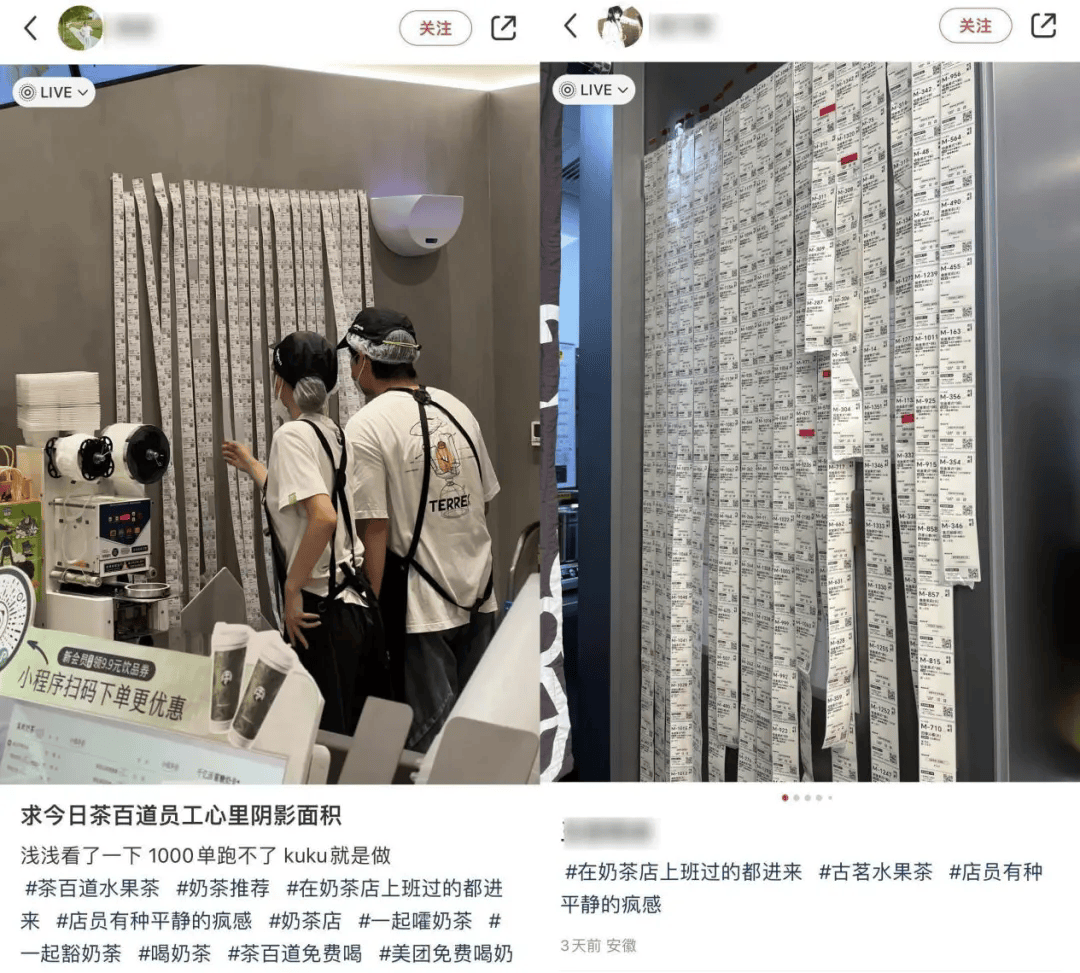
从“奶茶0元购”看外卖大战折射出平台竞争新逻辑
Di Yi Cai Jing· 2025-07-18 07:13
Core Insights - The article discusses the ongoing competition among food delivery platforms, highlighting the expansion of instant retail into traditional sectors like hotel services, reflecting a strategic transformation in platform economies [1][3][5] Group 1: Market Competition - The recent weekend saw intense competition in the food delivery market, with Meituan reporting a record high of 150 million instant retail orders, while Taobao Flash and Ele.me announced a daily order volume exceeding 80 million [1][2] - Meituan's restaurant orders increased by 65% compared to regular days, with KFC's "whole chicken" reaching over 1 million orders in half a day [2] - Ele.me, leveraging Taobao Flash's traffic, saw significant growth in non-food categories, with over 1,205 categories experiencing a more than 100% increase in order volume [2] Group 2: Strategic Expansion - The inclusion of hotel services in the instant retail competition indicates a strategic layout, with discounts on hotel bookings ranging from 18% to 67% [3][4] - Instant retail is evolving from a single focus on food delivery to a comprehensive service system that meets both immediate and advance booking needs [3][4] - Platforms like Alibaba are integrating resources from Taobao, Ele.me, and Fliggy to enhance user experience and reduce internal traffic loss [4] Group 3: Ecosystem Development - Meituan aims to create a full-chain consumption experience by extending its core food delivery services to hotels, movies, and travel, thus managing user lifecycle value [5] - JD.com is entering the food delivery space to boost daily active users and drive e-commerce and instant retail growth, leveraging its supply chain advantages [5] - The competition is shifting from simple price subsidies to building an ecosystem that enhances user stickiness and creates a closed-loop system [3][5]
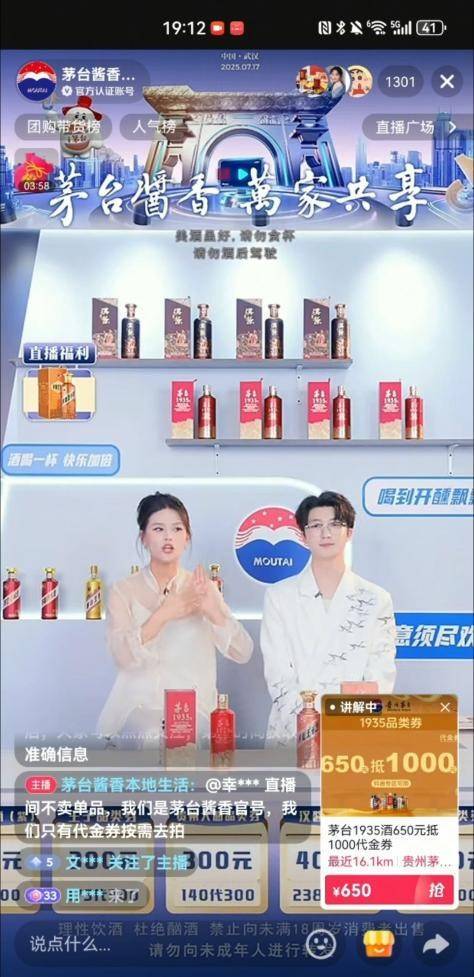
醉翁之意不在酒!直播“首秀”不直接卖产品只推券,茅台酱香酒650抵1000的背后是何用意?
Sou Hu Cai Jing· 2025-07-18 05:03
Core Viewpoint - Moutai is actively promoting the development of its "second growth pole" series of liquors, particularly focusing on the Moutai 1935 product line through innovative marketing strategies such as live streaming and discount vouchers [1][3][12]. Group 1: Marketing Strategy - Moutai launched its first live streaming event on July 17, selling offline store vouchers for five series liquor products, including Moutai 1935, rather than directly selling the products [1][3]. - The vouchers offered significant discounts, such as a "650 yuan for 1000 yuan" deal for Moutai 1935, which is positioned as a strategic product with a market guidance price of 1188 yuan per bottle [5][12]. - The live streaming event aims to attract consumers by promoting the concept of "saving more," although the actual market price of Moutai 1935 has been declining, raising questions about the effectiveness of the promotion [5][6]. Group 2: Market Performance and Pricing - Moutai 1935 has achieved cumulative revenue exceeding 20 billion yuan within three years of its launch, making it a critical product for Moutai's overall performance [5][13]. - Despite its strong sales history, the market price of Moutai 1935 has been under pressure, with reports indicating that some e-commerce channels are selling it for nearly half of the official price [5][7]. - The current market price at participating stores is around 750 yuan per bottle, which could lead to potential discrepancies between the voucher value and actual market prices [6][12]. Group 3: Strategic Goals - The primary goal of Moutai's recent promotional activities is not merely price adjustment but to drive traffic to offline channels and enhance its presence in the emerging "instant retail" sector [9][10]. - Moutai is leveraging online traffic to empower offline stores, aiming to establish a robust instant retail network through partnerships with platforms like Meituan, Ele.me, and Douyin [10][12]. - The company plans to expand its network of "Moutai Fragrance - Shared by Thousands" theme stores, targeting 5000 to 7000 locations to create a seamless online-to-offline shopping experience [10][12].

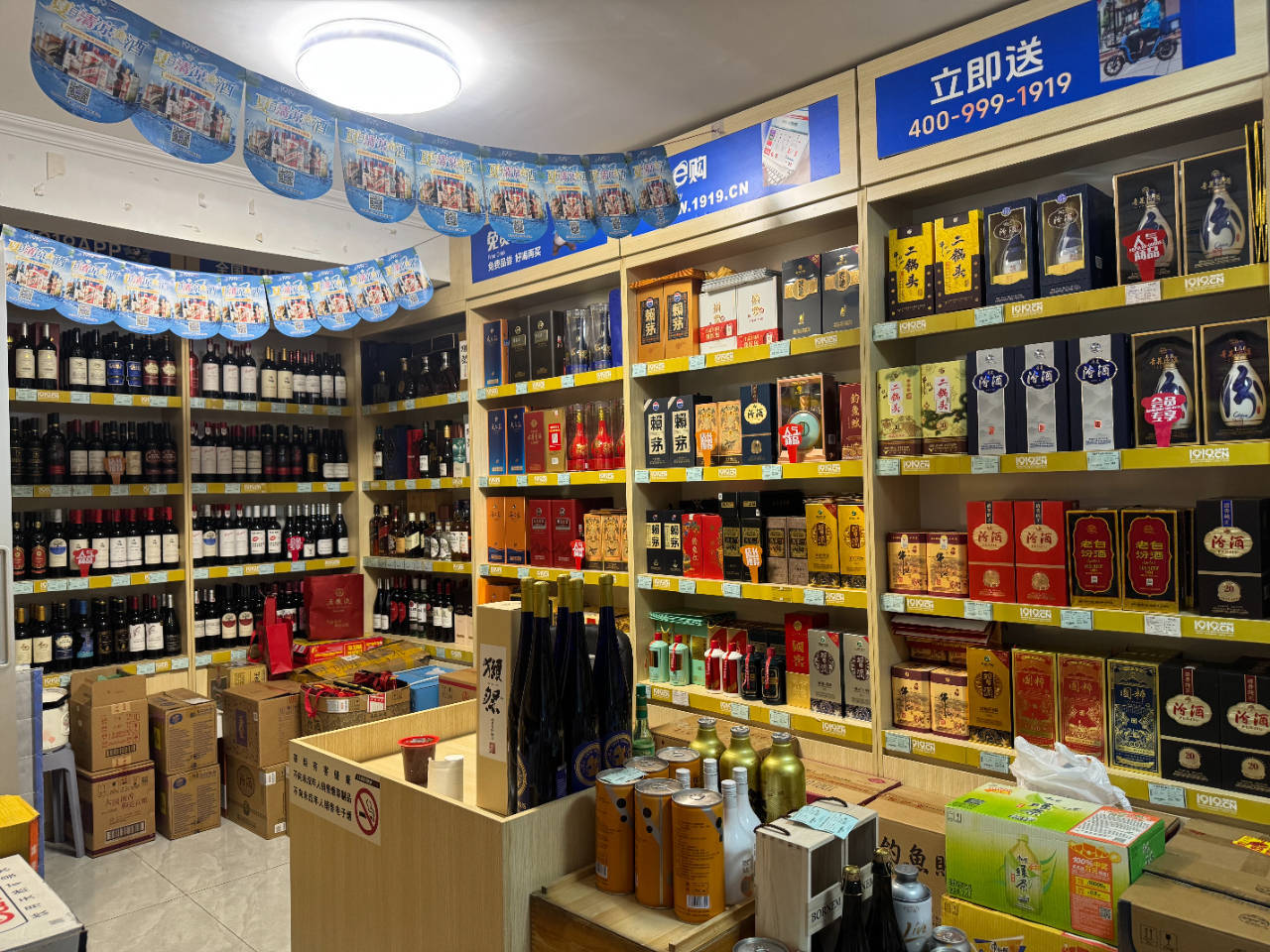
流量红利来了!企业加快布局酒类即时零售
Sou Hu Cai Jing· 2025-07-18 03:21
Core Viewpoint - The rise of instant retail in the liquor industry is reshaping traditional sales channels, providing significant flow benefits to companies like 1919 and Huazhi Wine [1][4]. Group 1: Industry Trends - Instant retail has become a standard fulfillment configuration in the liquor industry, leading to substantial flow benefits for traditional liquor distribution companies [1][4]. - The instant retail model is characterized by high certainty and rapid growth, with all e-commerce platforms evolving towards near-field commerce [4][5]. - Major e-commerce platforms are actively investing in the liquor instant retail sector, utilizing two models: platform-based (e.g., Meituan Flash Purchase) and self-operated (e.g., Meituan Waimai) [4][5]. Group 2: Company Strategies - 1919 is leveraging its self-operated app and mini-programs to offer a 19-minute delivery service while also entering major e-commerce platforms to capitalize on flow benefits [6][7]. - Huazhi Wine views the booming instant retail as a new opportunity, indicating a high match between market demand and service needs, and emphasizing the importance of data-driven applications [5][10]. - Both companies are focusing on enhancing their operational capabilities and marketing strategies to adapt to the evolving market landscape, with 1919 implementing a transformation project aimed at creating a commercial closed loop from "flow" to "retention" [7][10].