绿色金融

Search documents
汇丰千亿私有化恒生!53年上市史终结,香港银行业迎转型阵痛?
Sou Hu Cai Jing· 2025-10-20 08:54
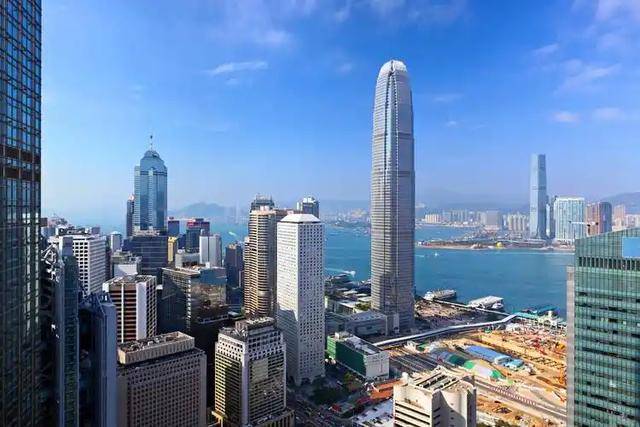
Core Viewpoint - HSBC Holdings is acquiring Hang Seng Bank for HKD 106.1 billion, marking a significant privatization in Hong Kong's banking sector and ending Hang Seng's 53-year history as a publicly listed company [1][3][42] Group 1: Transaction Details - HSBC will pay HKD 155 per share in cash for Hang Seng Bank, which will result in Hang Seng becoming a wholly-owned subsidiary of HSBC [1][3] - The transaction represents a 30% premium over Hang Seng's last closing price, making it attractive for shareholders [19] - If completed, Hang Seng will be delisted from the Hong Kong Stock Exchange [3] Group 2: Historical Context - Hang Seng Bank was established in 1933 as a small currency exchange and evolved into a major banking institution, becoming one of Hong Kong's four largest banks by 2017 [5][11] - HSBC initially acquired a controlling stake in Hang Seng during a banking crisis in 1965, which allowed Hang Seng to stabilize and grow [7][9] Group 3: Financial Performance and Challenges - Despite a reported profit of HKD 18.4 billion for 2024, Hang Seng faces significant risks, including HKD 55 billion in total impaired loans and a rise in non-performing loans [13][16] - The bank's reliance on real estate loans has led to increased bad debts, particularly as Hong Kong's property market has declined [16][18] Group 4: Strategic Implications for HSBC - The privatization allows HSBC to manage Hang Seng's risks more effectively and focus on long-term growth without the pressures of short-term market performance [21][24] - HSBC aims to leverage Hang Seng's strong retail and SME client base alongside its global network to create synergies and enhance service offerings [26][28] Group 5: Industry Context and Future Outlook - The privatization reflects broader challenges in the Hong Kong banking sector, including a shift away from reliance on real estate and the need for digital transformation [34][39] - The deal signals a potential restructuring phase for the industry, as banks must adapt to changing economic conditions and competitive pressures from digital banks [41][42]

发挥绿色金融作用 助力经济社会发展全面绿色转型——《金融时报》访中国人民银行研究局负责人
Jin Rong Shi Bao· 2025-10-20 08:37
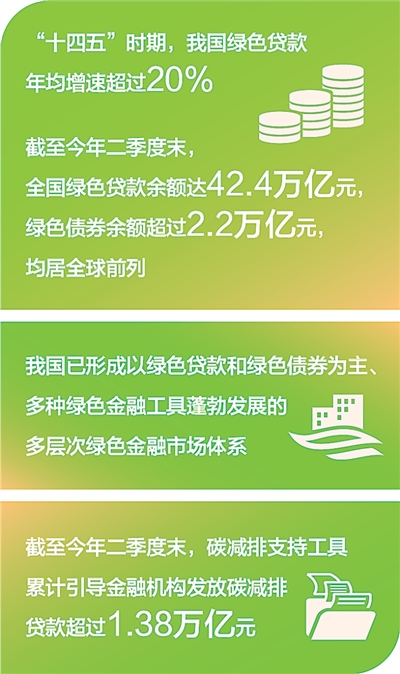
Core Insights - The People's Bank of China (PBOC) has implemented a series of practical measures to promote high-quality development of green finance during the 14th Five-Year Plan period, establishing a comprehensive framework for standards, tools, cooperation, and effectiveness [1] Group 1: Green Finance Standards - A multi-field standard system is gradually being established, with 1 national standard, 9 industry standards, and over 30 green finance standards under research. The first national green finance standard, "Green Finance Terminology," is set to be published by 2025 [2] - The green finance support project directory has expanded the scope of green finance to include trade and consumption, achieving full-chain coverage from production to consumption [2] Group 2: Transition Finance Standards - Transition finance standards have made significant breakthroughs, with the PBOC prioritizing support for advanced technologies and significant carbon reduction benefits. Transition finance standards for steel, coal power, building materials, and agriculture have been piloted in over 20 provinces, with approximately 67 billion yuan in transition loans issued by August 2025 [3] - The second batch of transition finance standards for metallurgy, petrochemicals, and other industries is being developed, with local standards and enterprise transition planning manuals being created to support regional green finance [3] Group 3: Biodiversity and Blue Finance Standards - A biodiversity finance and blue finance standard system is being gradually established, with over 20 provinces piloting biodiversity finance directories to promote a "nature-benefiting" transition [4] - Blue finance standards are under development and will be piloted in coastal areas [4] Group 4: Green Finance Tools - The demand for green finance has increased, leading to the development of a diverse range of green financial products. The PBOC has utilized structural monetary policy tools to provide low-cost funding for carbon reduction projects, with over 1.38 trillion yuan in carbon reduction loans issued by mid-2025 [5] - The green loan balance is approximately 42.39 trillion yuan, and the green bond balance exceeds 2.2 trillion yuan, positioning China among the top globally in these areas [6] Group 5: Risk Management - The PBOC has conducted climate risk stress tests and assessments to enhance financial institutions' risk management capabilities, ensuring the stability of the green finance market [7] Group 6: International Cooperation - China has taken a leading role in the G20 sustainable finance working group, producing key documents such as the G20 Sustainable Finance Roadmap and the G20 Transition Finance Framework [8] - The PBOC has actively promoted the alignment of green finance standards with international standards and participated in multilateral cooperation platforms to facilitate cross-border capital flow into green sectors [9] - Ongoing bilateral cooperation in green finance with countries like the UK, Singapore, and Australia is being implemented, along with sustainable investment capacity-building initiatives in emerging economies [9]
绿色金融联合研究(五):集运碳成本更新:基于2024年排放数据的影响重估
Guo Tai Jun An Qi Huo· 2025-10-20 08:05
◼ 海运业首个履约年度碳账单约 24 亿欧元 2024 年,海运业在 EU ETS 覆盖范围内的经核查排放量为 0.9 亿吨,海运业首个履约年度的碳账单约 为 24 亿欧元。预计 2025 年海运业碳账单或达到 42 亿欧元;2026 年,EU ETS 对海运业温室气体覆盖范围 进一步扩展至甲烷和一氧化二氮,估算其对应的碳成本可能升至 62 亿欧元。 ◼ 集运碳成本对运费的影响权重日渐增加 二 〇 二 五 年 度 2025 年 10 月 20 日 集运碳成本更新:基于 2024 年排放数据的影 响重估——绿色金融联合研究(五) 唐惠珽 投资咨询从业资格号:Z0021216 tanghuiting@gtht.com 郑玉洁 投资咨询从业资格号:Z0021502 zhengyujie@gtht.com 报告导读: ◼ EU ETS 影响全球 13%的船舶、49%的集装箱运力 2024 年,实际受 EU ETS 管制的船舶数量约占全球船舶总量的 13%,其碳排放约占全球船舶碳排放总 量的 17%。近五成的全球集装箱运力在 EU ETS 的管辖范围内。 基于 THETIS-MRV 公布的 2024 年最新排放数据,本 ...
中欧资管合作提速,中国银行助力全球资管枢纽建设
第一财经· 2025-10-20 07:54
Core Viewpoint - The forum emphasizes the importance of enhancing Sino-European asset management cooperation amidst a complex international economic landscape, aiming to establish a resilient and forward-looking cross-border investment cooperation system [1][2]. Group 1: Current Economic Environment - The international political and economic environment is complex, with weakening global economic growth, yet China's economy demonstrates strong resilience and potential for long-term stability [2]. - Frequent high-level interactions between China and Europe have deepened financial cooperation, with the People's Bank of China signing currency swap agreements with several European central banks, laying a solid foundation for asset management openness [2]. Group 2: Shanghai's Financial Market Development - Shanghai's financial market is increasingly open, with the RMB gaining global attention as an investment and reserve currency, attracting European sovereign institutions and asset managers to the Chinese stock and bond markets [3]. - In the first half of 2025, Shanghai's GDP reached 2.6 trillion yuan, growing by 5.1%, with the financial sector contributing 250 billion yuan, an 8.8% increase, highlighting the city's economic strength and its role as an international financial center [3]. Group 3: Policy and Institutional Support - Shanghai is promoting the aggregation of financial institutions and enhancing financial service functions, currently hosting over one-third of foreign banks and nearly half of foreign insurance institutions in China [4]. - The Shanghai Stock Exchange has signed a cooperation memorandum with the Swiss Exchange to advance cross-border openness, while the city continues to optimize cross-border financial services and improve the internationalization of financial institutions [4]. Group 4: Global Investment Trends - International institutions are increasingly allocating assets to China, with market liquidity, low interest rates, and trends towards technological competition and de-dollarization driving this interest [6]. - As of June, foreign investments in stocks, bonds, deposits, and loans have seen synchronized growth, with net inflows exceeding 60% of the total for 2024 [6]. Group 5: Sector Performance and Opportunities - From 2022 to 2024, energy and financial sectors have shown resilience, while 2025 is expected to highlight sectors related to artificial intelligence, pharmaceuticals, and materials, attracting European investors [8]. - China is leading in innovative drug development, with clinical-stage innovations accounting for 50% of global totals, and companies like BYD dominating the electric vehicle and autonomous driving sectors [8]. Group 6: Sino-European Financial Cooperation - The cooperation between China and Europe is characterized by accelerated infrastructure connectivity and deepening policy communication, with the use of RMB in bilateral cooperation becoming increasingly diverse [10]. - The London Stock Exchange is implementing financial market reforms to enhance its competitiveness, while also developing more RMB-denominated financial instruments to meet the growing demand in Sino-European markets [11]. Group 7: Future Outlook - China Bank aims to leverage its global operations to strengthen connections between Chinese and European financial markets, focusing on green finance, technological empowerment, product innovation, and risk management [15]. - The signing of a strategic cooperation memorandum between the Shanghai Asset Management Association and the German Investment Fund Association marks a significant step in Sino-European asset management collaboration [15].
中国人寿:76年以“变”应变 以“不变”应初心
Ren Min Wang· 2025-10-20 06:21
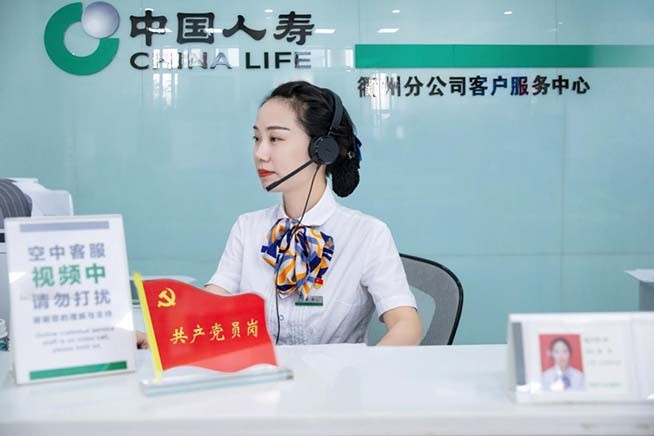
Core Insights - China Life Insurance Company has achieved significant milestones in its 76-year history, with total assets and investment assets exceeding 7 trillion yuan, and total premiums reaching 525.088 billion yuan, marking the best performance for the same period historically [1] - The company emphasizes the integration of party building into its governance structure, ensuring that party policies are reflected in strategic decisions [2][3] - China Life is committed to serving national development and enhancing its strategic investments, focusing on supporting emerging industries and green sectors [4][5] - The company has expanded its insurance services to underserved areas, providing tailored products to rural populations and enhancing accessibility [6][9] - China Life is actively involved in the elderly care sector, offering diverse insurance products and services to meet the growing demand for elder care [11][15] - The company is undergoing a digital transformation to enhance service delivery and operational efficiency, leveraging technology to improve customer experience [16][18] - China Life maintains a strong commitment to social responsibility and green finance, investing in sustainable projects and promoting environmental protection [23][24] - The company has a robust risk management framework, integrating advanced technologies to enhance its risk monitoring and prevention capabilities [25] Summary by Categories Financial Performance - Total assets and investment assets have surpassed 7 trillion yuan, with total premiums reaching 525.088 billion yuan, indicating strong growth [1] - The net profit attributable to shareholders for the first half of the year was 40.931 billion yuan, a year-on-year increase of 6.9% [5] Governance and Party Building - The company has established 5,888 party organizations, including 399 party committees, ensuring strong governance and alignment with party policies [3] - The integration of party building into business operations has been emphasized through various initiatives [2] Strategic Investments - China Life has increased its investment in strategic emerging industries and green sectors, with over 150 billion yuan added to its public market equity scale [4] - The company has set up a 10 billion yuan science and technology innovation fund to support key industries [4] Customer Service and Accessibility - The company has expanded its insurance services to remote areas, providing coverage to over 930 million people in Qinghai and enhancing service delivery in Tibet [6][9] - The launch of various insurance products tailored for rural populations has been a focus area [6] Elderly Care Services - China Life has introduced multiple insurance products for the elderly, with 140 million new insured individuals in 2024 [11][15] - The company is developing a comprehensive elder care service ecosystem [15] Digital Transformation - The company has implemented a digital strategy, achieving over 11 million monthly active users on its insurance app [17] - The average claim processing time has been reduced to 0.34 days, showcasing improved efficiency [22] Social Responsibility and Green Finance - China Life has invested 1.037 trillion yuan in rural revitalization and 1.486 trillion yuan in inclusive finance [24] - The company supports various green projects, including investments in clean energy and sustainable infrastructure [23][24] Risk Management - The company has a comprehensive risk management system, maintaining an A rating in risk assessment for 29 consecutive quarters [25] - Advanced technologies are being utilized to enhance risk monitoring and prevention [25]

中金公司潘伟:约11%的境外绿色债券以人民币计价
2 1 Shi Ji Jing Ji Bao Dao· 2025-10-20 05:37
Group 1 - Green finance has become a crucial tool for supporting the green low-carbon transition, with green credit, green bonds, ESG investments, and related equity tools being key drivers of this transition [2] - The "Belt and Road" green innovation conference highlighted structural challenges in global green finance, including fragmented standards and insufficient cross-border cooperation, alongside a significant funding gap in developing countries [2] - The domestic green credit market is the largest in China, while green bonds are the most important green financial instrument in the capital market, with a total outstanding scale exceeding 2 trillion yuan [2] Group 2 - A significant market phenomenon is the emergence of issuance premiums for green bonds, with the current premium level around 11 basis points, aligning closely with the EU market's approximately 10 basis points [3] - Green bonds exhibit relatively low turnover rates and volatility in the secondary market, making them a stable asset class with good allocation efficiency in bond investment portfolios [3] - In the first half of the year, global green bond issuance reached $330 billion, with China ranking second globally, just behind the EU [3] Group 3 - The advanced technology sector can achieve higher valuations in mature capital markets, exemplified by the success of the new energy vehicle sector in China [4] - The largest IPO in Hong Kong's capital market in the first half of the year was the H-share issuance of CATL, a leading power battery company, creating a new hotspot in the capital market [4] - Both the Hong Kong and US capital markets are characterized by a dominance of technology stocks, particularly in sustainable and circular economy sectors, showing a growing trend in both markets [4]


一片叶子富了一方百姓
Ren Min Ri Bao· 2025-10-20 04:25
Core Viewpoint - The article highlights the significant role of green finance in promoting sustainable development in Anji County, Zhejiang Province, showcasing various innovative financial products that support ecological protection and green industries [9][22]. Group 1: Green Finance Initiatives - Anji County is recognized as a national-level pilot area for green finance reform, where financial institutions are innovating products and services to support ecological protection and green industries [9]. - The "Two Mountains White Tea Loan" is a tailored financial product designed to support tea farmers in adopting organic farming practices, leading to improved tea quality and increased income [10][12]. - The "Ecological Restoration Loan" was introduced to finance projects aimed at restoring abandoned mines, demonstrating a shift in traditional financing models to support ecological value [16][17]. Group 2: Economic Impact - In 2024, the area under Anji white tea cultivation reached 200,600 acres, with over 17,000 farmers involved, generating a total industry output value of 6.845 billion yuan [13]. - The county received 34.02 million tourists in 2024, with total tourism revenue reaching 47.56 billion yuan, highlighting the economic benefits of ecological tourism [15]. Group 3: Community Engagement and Incentives - The "Two Mountains Green Currency" system incentivizes residents for eco-friendly behaviors, allowing them to convert their green actions into financial benefits, such as loan enhancements and discounts [20][21]. - Over 250,000 residents in Anji have accumulated "Two Mountains Green Currency," with total redeemed value exceeding 3 million yuan, fostering a culture of environmental responsibility [21]. Group 4: Future Prospects - The Zhejiang Rural Commercial Bank has launched a five-year action plan for green finance development, aiming to expand green financial products and enhance carbon reduction efforts [22]. - The average annual growth rate of green loans in Zhejiang over the past decade was 28.81%, significantly outpacing the growth of other loan types [22].

深度观察·做好金融“五篇大文章”丨一片叶子富了一方百姓
Ren Min Ri Bao· 2025-10-20 03:56
Core Viewpoint - The development of green finance is essential for implementing ecological civilization and promoting high-quality development in China, particularly in regions like Anji County, Zhejiang Province, which is a pioneer in green finance innovation [1][4]. Group 1: Green Finance Initiatives - Anji County has established itself as a national-level green finance reform and innovation pilot area, with financial institutions accelerating product and service innovation to support ecological protection and green industries [1][4]. - The "Two Mountains White Tea Loan" is a tailored credit product designed to support local tea farmers in adopting organic farming practices, enhancing tea quality and environmental sustainability [5][6]. - The introduction of the "Climate Ecological Product Value Impact (VEP) Loan" by China Construction Bank aims to link loan conditions with the green development of enterprises, promoting sustainable practices [7]. Group 2: Economic Impact of Green Finance - In 2024, the area planted with Anji white tea is expected to reach 200,600 acres, with over 17,000 growers, generating an industry-wide output value of 6.845 billion yuan [7]. - The "Deep Blue Plan" transformed a former mining site into a popular eco-tourism destination, attracting 34.02 million visitors and generating 47.56 billion yuan in tourism revenue in 2024 [8][9]. - The "Ecological Restoration Loan" provided funding for the restoration of abandoned mines, facilitating the integration of ecological projects with profitable industries [10]. Group 3: Community Engagement and Incentives - The "Two Mountains Green Currency" system incentivizes residents for eco-friendly behaviors, allowing them to convert green actions into financial benefits, such as loan enhancements and discounts [12][13]. - Over 250,000 residents in Anji have accumulated "Two Mountains Green Currency," with a total value of over 3 million yuan in redeemed benefits, promoting a culture of sustainability [14]. Group 4: Future Prospects and Growth - Zhejiang Province has seen an average annual growth rate of 28.81% in green loans over the past decade, significantly outpacing the growth of other loan categories [16]. - The Zhejiang Rural Commercial Bank has launched a five-year action plan for green finance, aiming to develop specialized green credit products and achieve breakthroughs in carbon finance [15].
能源资产证券化空间持续拓展
中国能源报· 2025-10-20 03:26
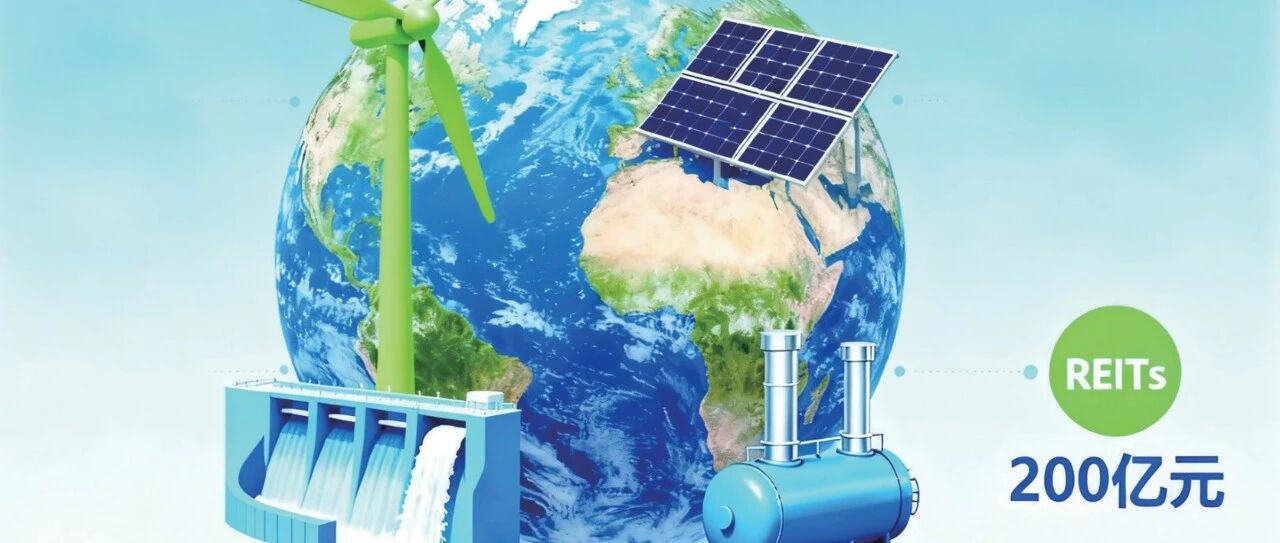
Core Viewpoint - The development of REITs in the clean energy sector is accelerating, providing a stable income channel for investors and facilitating the financing of clean energy companies as China pursues its carbon peak and carbon neutrality goals [1][2]. Market Expansion - The clean energy REITs sector in China is entering a period of intensive issuance, with a total of 8 energy infrastructure REITs by July 2025, raising approximately 20 billion yuan [5]. - The premium rates for energy REITs range from 19.36% to 98.08%, indicating high investor sentiment and overall valuation in the domestic REITs market [5]. - Some clean energy REITs demonstrate strong profitability, with notable performances such as CITIC Construction Investment's REIT achieving 903 million yuan in revenue and 289 million yuan in net profit in 2024 [5]. Cash Distribution Performance - Clean energy REITs exhibit good cash return capabilities, with CITIC Construction Investment's REIT distributing approximately 677 million yuan in total by the end of 2024, exceeding its disclosed target by 111.1% [6]. - Most clean energy REITs have seen significant price increases in the secondary market by the end of 2024, with liquidity indicators ranking among the top in the market [6]. Investment Rationality - Despite advancements in asset securitization, the secondary market for clean energy REITs faces pressure, with some experiencing declines in value [8]. - The issuance of high-quality green assets is attracting institutional investors, as seen in the successful full subscription of a 1.226 billion yuan issuance at a low interest rate of 2.45% [8]. - The evaluation of investment value in energy REITs should consider the sustainability of operating cash flows, which can be influenced by short-term factors like electricity price subsidies [8]. Industry Development - The clean energy REITs sector is transitioning from pilot exploration to standardized expansion, with the total number of products increasing to 8 as of August 2025 [11]. - The first income distribution from the Yanjing Energy ABS has provided practical experience for similar products, indicating a growing market supply [11]. - The sector is expected to strengthen its role in connecting industrial development with capital support, providing stable returns and facilitating the construction and operation of clean energy projects [12].
国信证券:践行文化理念、聚焦主责主业,推动文化建设与业务发展深度融合
Zhong Guo Jing Ji Wang· 2025-10-20 03:21
Core Viewpoint - The article emphasizes the importance of building a high-quality investment banking and asset management institution that enhances the ability to serve the real economy and national strategies through cultural strength, thereby injecting new momentum into the high-quality development of the securities industry [1] Group 1: Commitment to Serving the Real Economy - The company adheres to the fundamental purpose of financial services for the real economy, actively fulfilling its social responsibilities as a state-owned enterprise, and providing high-quality and efficient financial services [2] - As of June 2025, the company has completed 673 sponsorship and underwriting projects, raising a total of 624.81 billion yuan, including 320 IPO projects that raised 216.195 billion yuan [2] - The company’s bond financing services cover 982 enterprises across 31 provinces, with a financing scale of 5.71 trillion yuan, supporting the construction of a modern industrial system [2] Group 2: Enhancing Quality of Life - The company focuses on a customer-centric development philosophy, creating various wealth management brands to provide differentiated professional services throughout the investment cycle [3] - The implementation of a "responsibility culture" in specific services aims to better meet the financial needs of the public and promote a virtuous cycle of economic development and improvement of people's livelihoods [3] Group 3: Supporting National Development Strategies - The company actively engages in the construction of the Guangdong-Hong Kong-Macao Greater Bay Area, completing 156 sponsorship and underwriting projects that raised 125.599 billion yuan as of June 2025 [4] - It supports technological innovation by enhancing various financing tools and models, helping multiple enterprises grow into industry leaders [4] - The company has established a comprehensive service system for key regions, with 218 securities business outlets across 113 cities to meet local wealth management and corporate financing needs [4] Group 4: Commitment to Sustainable Development - The company integrates sustainable development concepts into its strategic and operational management, disclosing ESG reports annually since 2023 to showcase its ESG practices [5] - It has developed diverse green financial products and services, supporting regional industrial upgrades and guiding social capital towards sustainable development fields [5][6] - The company has invested 5.5719 million yuan in various charitable activities in the first half of 2025 to help consolidate poverty alleviation achievements [6] Group 5: Future Outlook - The company will continue to uphold its cultural values of compliance, professionalism, integrity, and harmony, promoting the integration of cultural construction with business development [6] - It aims to contribute more to building a strong financial nation by practicing a "responsibility culture" to support the real economy, a "professional culture" to serve national strategies, and an "innovative culture" to drive sustainable development [6]