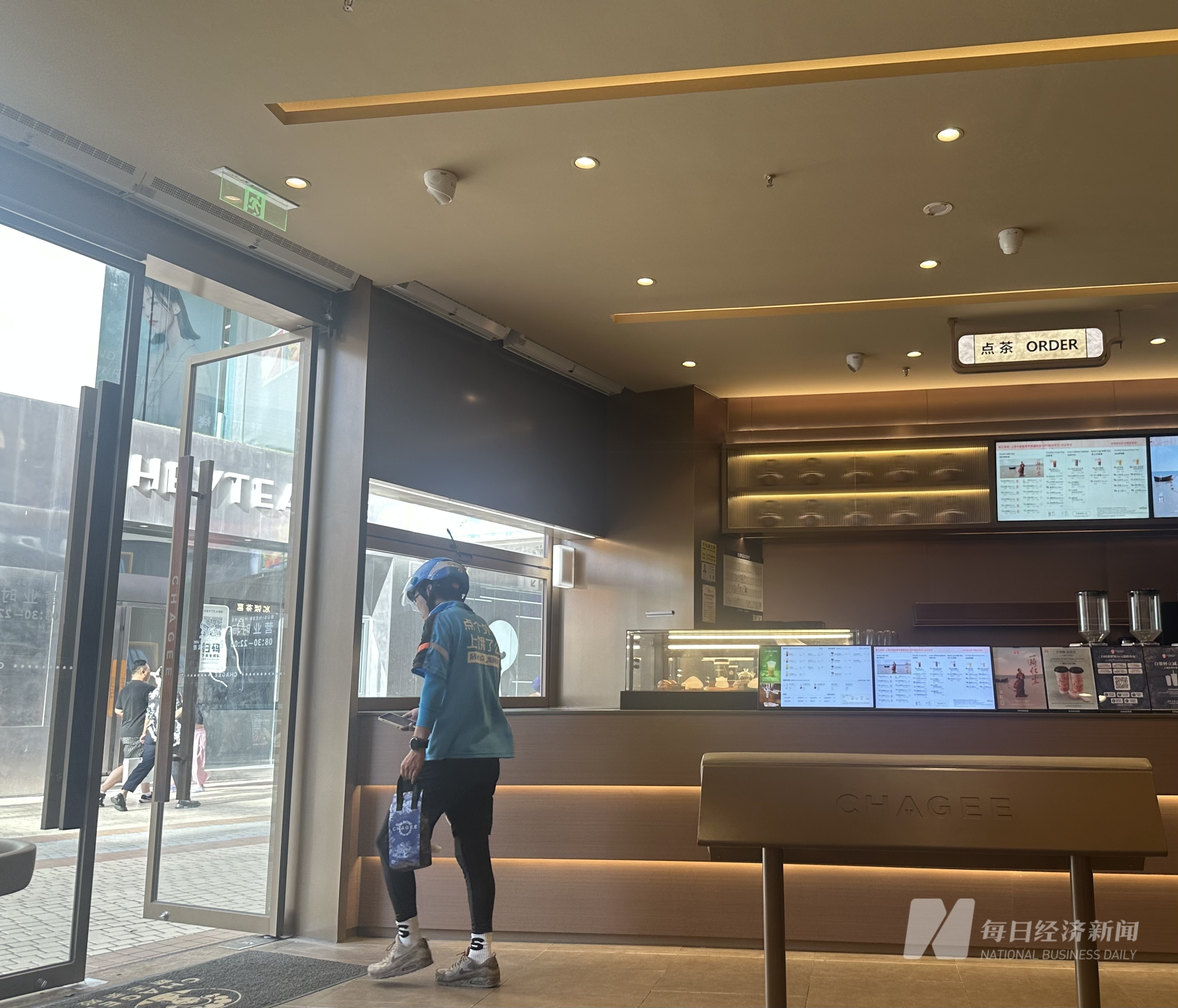
即时零售

Search documents
阿里巴巴20250708
2025-07-09 02:40
Summary of Alibaba's Conference Call Company Overview - **Company**: Alibaba - **Date**: July 8, 2025 Key Points Industry and Business Strategy - Alibaba announced a significant investment of **500 billion RMB** in subsidies for instant retail to enhance order density and user transaction frequency, particularly leveraging high-frequency food delivery to stimulate low-frequency instant retail and activate Taobao APP users [2][3][5] - The company is shifting from a passive to an active role in the instant retail sector through flash purchase scenarios to attract new users and re-engage old customers, indicating a strong focus on instant retail as a driver for traffic growth on its e-commerce platform [2][5] Financial Performance and Market Position - Alibaba's stock price has been under pressure primarily due to performance issues within Taotian Group, leading to the announcement of a **500 billion RMB** subsidy plan to improve order density and reduce average losses [3][5] - Despite short-term profit impacts from the subsidy war, the long-term strategic adjustments are expected to yield higher growth potential, particularly in the context of increasing transaction volumes on the Taobao APP [6][7] Cloud Computing and AI Development - Alibaba Cloud faces supply-side pressures and performance volatility, with revenue growth in Q2 2025 falling below market expectations. However, AI demand and cross-selling of AI agents are anticipated to be core growth drivers moving forward [3][4] - The company holds a leading position in the Asia-Pacific public cloud market, providing comprehensive solutions from computing power to applications, despite losing some market share over the past five years [4][8] - The AI industry is expected to bolster Alibaba Cloud's infrastructure supplier status, with its Qianwen model capabilities ranking globally [9][10] Competitive Landscape - In the instant retail battle, Meituan currently leads in order volume and market share, but Alibaba maintains density economics through its food delivery services, which enhances transaction frequency for low-frequency instant retail users [6][7] - The ongoing investment in instant retail is projected to increase transaction volumes and active user counts on the Taobao APP, reinforcing Alibaba's positioning as a super e-commerce APP [7][11] Future Outlook - The outlook for Alibaba's performance in the coming quarters includes catalysts from AI-related growth and stable performance in traditional e-commerce, despite potential pressures from the summer subsidy war [7] - The company anticipates that reaching a critical point in commercial monetization will significantly enhance its EBITA margin, providing substantial profit growth opportunities for investors [11]

百亿元外卖大战,让餐饮业缓了口气
2 1 Shi Ji Jing Ji Bao Dao· 2025-07-09 00:26
Group 1: Market Competition - The competition in the food delivery market is intensifying, with JD.com reporting nearly 200 restaurant brands achieving over 1 million sales on its platform within four months [1] - JD.com has launched a "Double Hundred Plan," investing over 10 billion yuan to support more brands in reaching 1 million sales [2] - Taobao and Ele.me announced a daily order count exceeding 80 million, with Taobao's flash purchase program starting a 50 billion yuan subsidy plan [3] Group 2: Industry Challenges - The restaurant industry is facing significant challenges, with approximately 46.4% of new restaurants expected to close by 2024 [4] - The average store efficiency has declined across most categories, leading to an increase in the number of closures to 4.09 million in 2024, with a closure rate of 61.2% [4] - Major brands like KFC and Pizza Hut are experiencing a continuous decline in average transaction value [6] Group 3: Pricing Strategies - The current price war is primarily focused on low average transaction value markets, where discounts are more pronounced [8] - A national restaurant brand founder stated that to survive, businesses must prioritize cost-effectiveness, leading to lower average transaction values [7] - The aggressive pricing strategies, while intensifying competition, provide temporary relief to restaurants through subsidies [9]
“外卖大战”:能持续共赢的才是胜者
2 1 Shi Ji Jing Ji Bao Dao· 2025-07-08 22:50
Group 1 - The e-commerce and food delivery sectors in China have experienced a significant surge in growth, breaking previous limitations and expectations [1][2] - On July 7, Taobao Shanguo and Ele.me reported over 80 million daily orders, with non-food orders exceeding 13 million, while Meituan reached a record of 120 million daily retail orders on July 5 [1] - The entry of major platforms has led to a 105% increase in instant retail orders, reaching 170 million, indicating a shift from mere competition to genuine industry growth [1][2] Group 2 - Instant retail has evolved from a debated concept to a necessity, driven by urban density, advanced logistics, and changing consumer demands [2][3] - The competition in the "food delivery war" extends beyond subsidies, focusing on comprehensive business capabilities and location-based services [2][3] - The efficiency revolution in instant retail is expected to reshape supply chains and consumer behavior, enhancing the overall retail ecosystem [3] Group 3 - E-commerce remains a core revenue source for Chinese tech platforms, providing essential funding for long-term investments in advanced technologies like AI and cloud computing [4] - The evolution of e-commerce reflects continuous innovation, transitioning from traditional models to social commerce and live streaming, culminating in the rise of instant retail [4][5] - The active e-commerce market signals ongoing innovation in the consumer internet space, suggesting that the industry is far from reaching its peak [5]
补贴退潮后平台靠什么留住市场
Jing Ji Ri Bao· 2025-07-08 21:57
Core Viewpoint - The competition for the instant retail market is intensifying, with platforms like Meituan and Taobao engaging in aggressive subsidy strategies to drive consumer spending and reshape profit distribution, ultimately aiming to stimulate social vitality [1][2]. Group 1: Market Competition - The recent promotional activities, particularly Meituan's massive distribution of free drink and food coupons, resulted in over 120 million orders on July 5, 2025, indicating a significant spike in consumer engagement [1]. - Taobao's announcement of a 50 billion yuan subsidy plan aims to boost the instant retail market while ensuring merchants' profit margins are protected [1][2]. - The competition is fostering a vibrant market atmosphere, with consumers benefiting from substantial discounts, leading to increased order volumes for both merchants and delivery personnel [1][2]. Group 2: Industry Dynamics - The intense competition among platform companies is reshaping consumer habits and contributing to the growth of the digital economy in China, laying a solid foundation for future advancements in artificial intelligence [2]. - The rapid adoption of the "flash purchase" concept has led to Taobao's daily order volume surpassing 80 million, showcasing the remarkable growth of the instant retail market [2]. - While the competition is beneficial, there are concerns regarding the sustainability of small businesses, as excessive promotions may lead to waste and pressure on merchants [3]. Group 3: Future Considerations - The future of competition will hinge on achieving a balance where consumers receive benefits, merchants maintain profitability, and delivery personnel see increased earnings, all while avoiding false advertising and unfair competition [3]. - Platforms are encouraged to optimize promotional mechanisms to guide rational consumption and prevent food waste, ensuring a healthier ecosystem in the long run [3].
外卖行业上演“世纪大战”,但这还只是前菜
Sou Hu Cai Jing· 2025-07-08 14:01
紧随之后,淘宝闪购方面也公布了相关业务的进展。截至7月5日,淘宝闪购、饿了么双平台日订单量峰值突破 8000万,其中非餐饮订单超1300万。同时淘宝闪购方面透露,截止7月5日其日活跃用户数已超过2亿。 事实上,自今年年初京东正式上线京东外卖、挑起这一轮"外卖大战"以来,各平台便捷报频传。同时美团方面也 证实,从单日GMV和餐食外卖市场单量等角度看,其市占率依旧稳居70%左右。种种数据似乎在一定程度表明, 三方混战的同时、也做大了外卖市场这块蛋糕。 但不可忽视的是,繁荣之下的隐患已然开始浮现。 就在今年暑期消费旺季开启后的第一个周末,头部外卖平台就高调秀起了肌肉。 7月5日美团方面宣布,截至当天22时54分,该平台即时零售日订单已突破1.2亿单,其中餐饮订单超1亿单。作为 对比,去年美团的日订单峰值超过9000万单出现在8月7日。照此计算,今年其日订单峰值不仅提前了33天,还实 现了超过30%的增长。而这一历史性成绩也"挤爆"了美团的服务器,导致部分地区服务异常。 毕竟餐饮外卖并非新兴市场,商业模式已然非常成熟,所以补贴打法很难帮助平台构建根本性的优势。而当下外 卖平台之所以愿意这样投入,不过是为了为即时零售等 ...


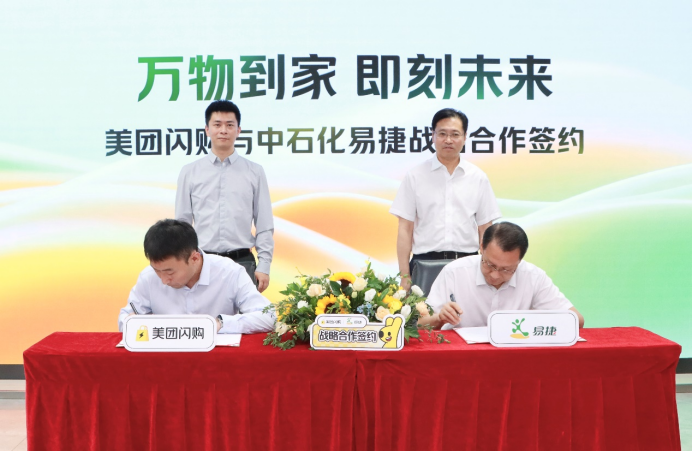
中石化易捷与美团闪购达成战略合作 加速布局“一刻钟便民生活圈”
Zhong Guo Jin Rong Xin Xi Wang· 2025-07-08 12:17
Core Viewpoint - Sinopec Easy Joy and Meituan Flash Purchase have established a strategic partnership focusing on instant retail, aiming to create the "Easy Joy Fast Purchase" brand to meet consumer demand for "30-minute delivery" [1][3][4] Group 1: Strategic Cooperation - The partnership will accelerate the layout of flash warehouse new formats, with over 100 24-hour "Easy Joy Fast Purchase" flagship stores already opened on Meituan Flash Purchase [1][3] - Easy Joy has been actively implementing the "15-minute convenient living circle" policy and has over 2,500 "Easy Joy Fast Purchase" standard stores on Meituan Flash Purchase, forming the largest instant retail network at gas stations in China [4][8] Group 2: Digital Transformation - Easy Joy aims to enhance its digital transformation and has elevated instant retail to a key strategic project starting in 2024, establishing dedicated teams for this purpose [4][8] - Meituan Flash Purchase will provide comprehensive support for Easy Joy's digital transformation, including brand training, operational subsidies, and flow support [6][8] Group 3: Market Trends - Instant retail and flash warehouse formats are becoming significant growth areas in the physical retail sector, with online retail sales of physical goods increasing by 6.3% from January to May [8] - Convenience stores are leading the charge in instant retail, with nearly 40% of convenience store companies expected to launch instant retail services by 2024 [8][9] Group 4: Consumer Demand - The "Easy Joy Fast Purchase" model has become a popular choice among consumers, with average monthly sales reaching approximately 12,000 orders at some stores [6][8] - Easy Joy's flexible layout of flash warehouse formats aims to meet diverse consumer needs, offering a wide range of high-quality products [4][6]


电商巨头们的即时零售野心,从来都不是外卖
3 6 Ke· 2025-07-08 11:30
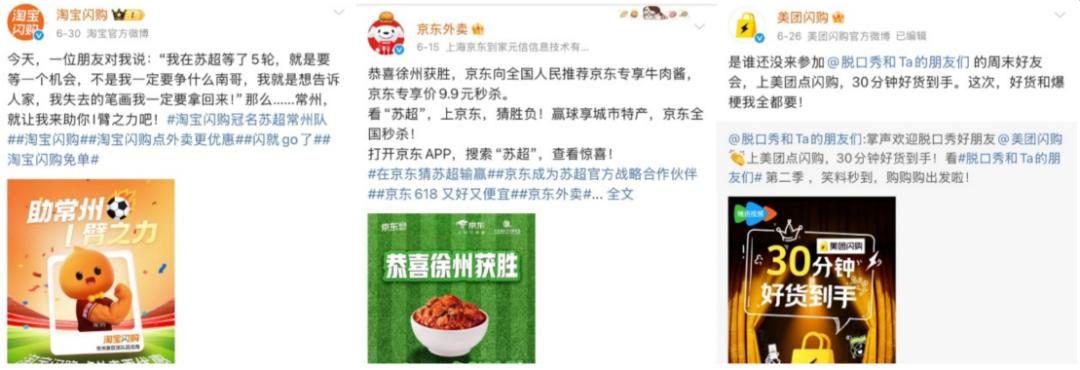
Core Insights - The Chinese instant retail industry experienced unprecedented growth on July 5, with Meituan's daily order volume surpassing 120 million, while Alibaba's Taobao Flash Sale and Ele.me combined exceeded 80 million orders, indicating a significant increase in market capacity from an average of 100 million daily orders in May to 200 million currently [1][2] Group 1: Market Dynamics - The competition in the instant retail sector reflects broader changes in the Chinese e-commerce landscape, with major players like Alibaba, JD.com, and Pinduoduo actively participating [2][3] - Instant retail has been positioned as a "core battlefield" for Alibaba, highlighting its strategic importance [4] - JD.com has also prioritized its instant retail service, "JD Seconds," and has actively engaged in the food delivery market, further influencing the industry landscape [5][6] Group 2: Marketing and Subsidies - Companies are heavily investing in marketing to capture consumer attention, with Taobao Flash Sale sponsoring sports teams and JD.com utilizing high-profile promotions [7] - Both JD.com and Taobao Flash Sale are engaged in substantial subsidy programs, with JD.com launching a 10 billion yuan subsidy initiative and Taobao Flash Sale spending approximately 8 billion yuan monthly [8][10] - Taobao Flash Sale's 50 billion yuan subsidy is directed at both consumers and merchants, enhancing its competitive edge [9] Group 3: Competitive Landscape - Pinduoduo has entered the instant retail space with its "Duoduo Grocery," testing self-built warehouses and planning to launch instant delivery services [11] - The market is shifting from a dominant player to a multi-strong coexistence model, with all three major e-commerce giants now involved [13] - Instant retail is becoming a strategic area for giants to counteract growth slowdowns and explore future value [24] Group 4: Future Projections - The instant retail market is projected to reach 1.5 trillion yuan by 2025, with a potential growth rate of 25% annually [18] - The integration of instant retail and traditional e-commerce is expected to enhance overall platform vitality and consumer engagement [20][34] - Companies are focusing on high-frequency instant consumption to drive low-frequency traditional e-commerce sales, indicating a shift in consumer behavior [22][24] Group 5: Operational Strategies - Companies are adopting different operational strategies, with Meituan favoring a light-asset model and JD.com maintaining a heavy-asset approach [30][32] - The emphasis on rapid delivery and service experience is becoming crucial for consumer satisfaction in the instant retail sector [29] - The blurring lines between instant retail and traditional e-commerce highlight the need for effective collaboration and resource allocation among platforms [25][33]


一场「史诗级」外卖撒券大战
3 6 Ke· 2025-07-08 10:34
Core Viewpoint - The recent surge in orders for food delivery services, particularly in the tea and coffee sectors, has created unprecedented pressure across the entire supply chain, driven by aggressive coupon subsidies from major platforms like Alibaba and Meituan [1][2][3] Group 1: Consumer Behavior - Consumers are actively participating in the subsidy war, sharing their experiences of obtaining significant discounts and free items on social media, leading to a collective frenzy [4][6][7] - Many consumers are stockpiling drinks and food items due to the overwhelming availability of discounts, with some humorously noting the excessive consumption of sugary drinks [6][7] - The competition has led to some consumers missing out on deals due to late notifications about the offers, highlighting the chaotic nature of the promotion [7] Group 2: Merchant Experience - Merchants are experiencing extreme pressure with a sudden influx of orders, leading to overwhelmed staff and operational challenges, despite not necessarily seeing significant profit from the increased sales volume [8][9][10] - The profitability of individual orders has decreased due to the high level of discounts being offered, making it difficult for smaller businesses to sustain operations [9][10] - Some merchants have reported that the promotional strategies employed by platforms are leading to unsustainable business practices, with many considering halting their participation in delivery services [10] Group 3: Platform Dynamics - The competition between platforms has intensified, with Meituan and Alibaba's Taobao Flash Sale engaging in a fierce battle for market share, resulting in record-breaking order volumes [11][12] - On July 5, Meituan achieved a new record of 1.2 billion orders, showcasing its operational capabilities and strategic response to the competitive landscape [11] - The ongoing rivalry is prompting platforms to innovate and adapt their strategies, with indications that more aggressive marketing and promotional tactics will continue in the future [12][13]
“零元购”!外卖大战升级,网友:真吃不动了
Jing Ji Wang· 2025-07-08 08:31
Group 1 - The core point of the article is the intensifying competition among major food delivery platforms, particularly between Meituan and Taobao Flash Purchase, which has led to significant consumer discounts and a surge in order volume [1][9][11] - Starting from July 5, consumers have been receiving large, no-threshold discount coupons, resulting in extremely low prices for food items, with some consumers humorously noting they might "overeat" due to the discounts [1][5] - On July 5, Meituan reported a record-breaking order volume, surpassing 1.2 billion orders for the day, with over 1 billion being food orders, marking a significant increase from the previous year's peak of over 90 million orders [5][11] Group 2 - The surge in orders has led to operational challenges for delivery riders and restaurant staff, with reports of overwhelming order volumes causing some restaurants to temporarily pause operations to manage the influx [6][8] - Taobao Flash Purchase initiated a subsidy plan worth 50 billion yuan to stimulate consumer spending, which is seen as a catalyst for the current competitive landscape in the food delivery market [9][10] - The competition has escalated to a point where major platforms are vying for market share, with Meituan still leading but facing increasing pressure from Taobao Flash Purchase and JD.com, which has also seen significant growth in order volume [11][12]

外卖“洪峰过境”:1.2亿 VS 8000万 即时零售的“闪电战”与拉锯战
Mei Ri Jing Ji Xin Wen· 2025-07-08 07:22
Core Insights - The summer surge in food delivery orders has been unexpected, with Meituan reaching a peak of over 120 million daily orders on July 5, while Taobao Flash reported over 80 million orders on the same day [1][5][12] - The competition among major players like Meituan, Alibaba, and JD.com is intensifying, focusing on the "instant retail" market, with significant consumer engagement driven by subsidies [1][5][15] - Despite the surge in order volumes, there is a lack of corresponding increase in physical store activity, indicating a potential disconnect between online and offline demand [1][6][12] Company Strategies - Taobao Flash announced a direct subsidy plan of 50 billion yuan over the next 12 months to boost consumer and merchant engagement [5][12] - JD.com has reported that nearly 200 restaurant brands have surpassed one million orders on its platform within four months of launching its food delivery service [5][12] - The competition is characterized by high subsidy levels, raising questions about the sustainability of such strategies and the true demand for instant retail [5][12][15] Market Dynamics - The increase in order volumes is attributed to consumer behavior changes due to hot weather and ongoing platform subsidies [6][12] - The number of cities with daily orders exceeding one million has doubled in the past week, with some cities experiencing order growth of up to 300% [7][12] - The delivery workforce is expanding, with JD.com planning to recruit an additional 150,000 full-time riders [11][12] Future Outlook - The "flash battle" in food delivery is becoming a regular occurrence, with both Meituan and Taobao Flash achieving their order volume goals [12][15] - Analysts suggest that while the current competition is fierce, the long-term impact of subsidies on market structure may be minimal [12][15] - The ongoing battle for market share in instant retail is expected to continue, with companies leveraging their existing logistics and consumer bases to enhance service offerings [15][17]