智能化

Search documents
装饰装修行业:亏损收窄、毛利润均21%、债务高企,市场加快洗牌
Sou Hu Cai Jing· 2025-09-26 10:00
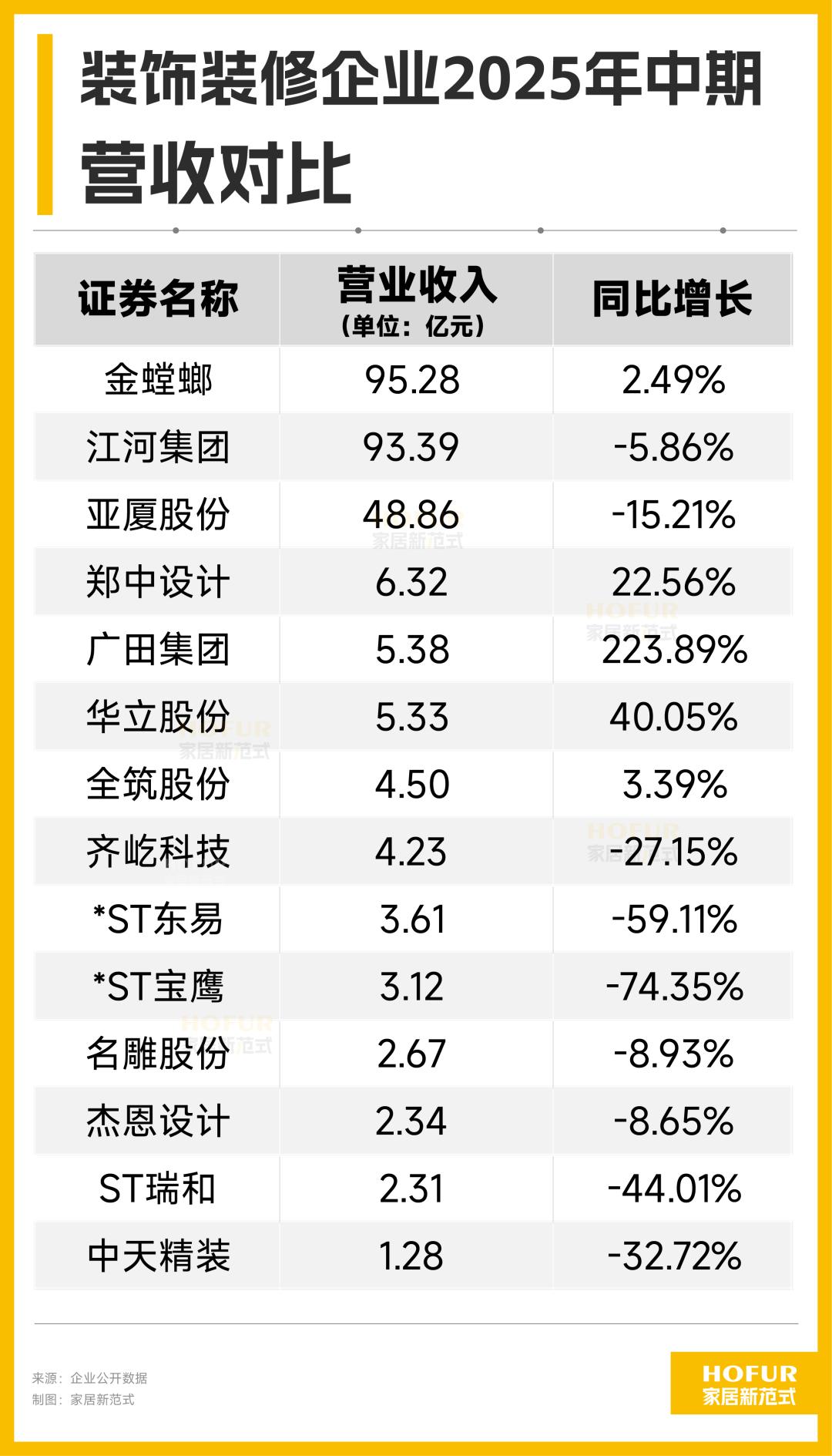
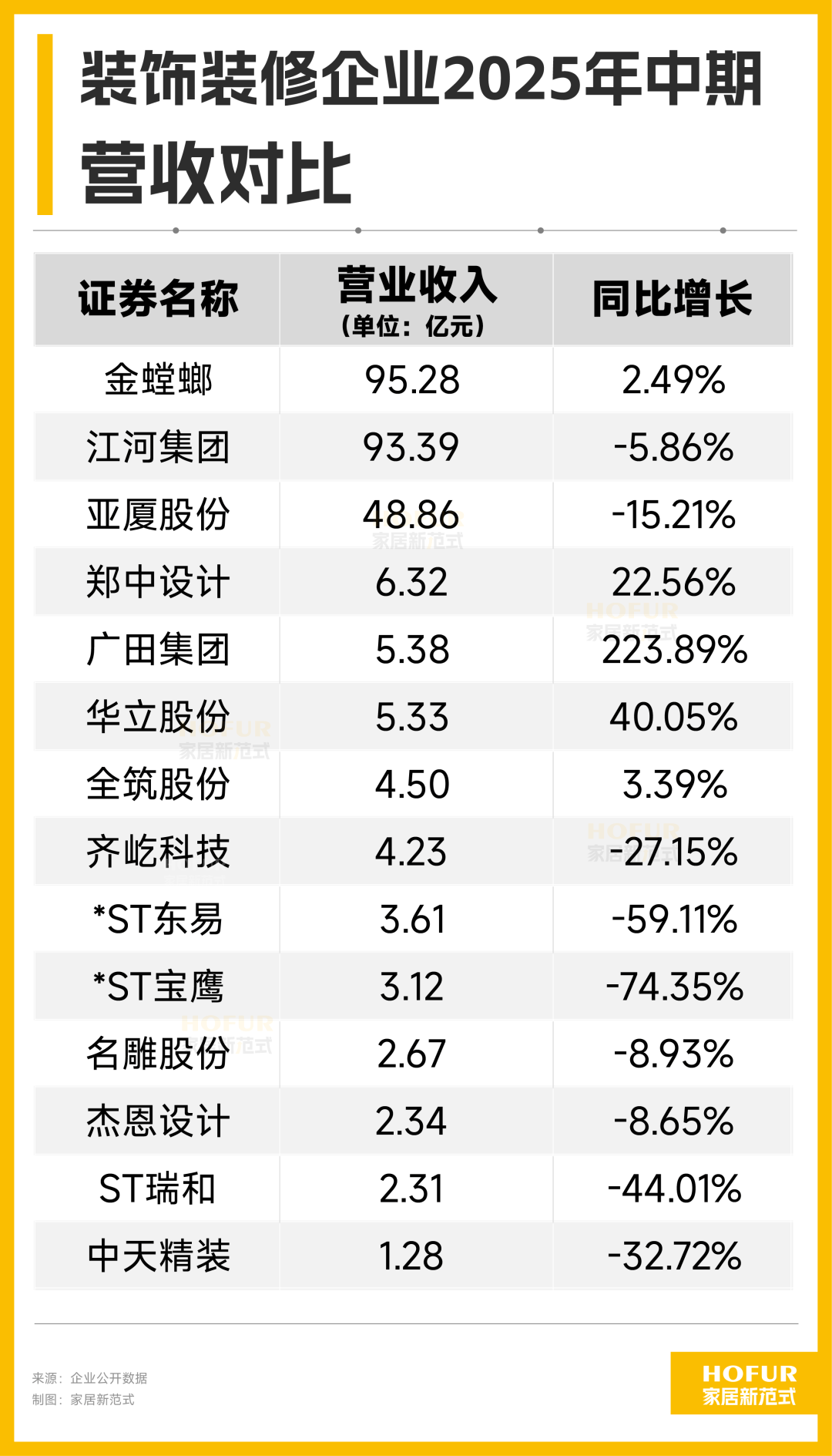
Core Insights - The home decoration and renovation industry is experiencing significant revenue decline, with a more than 64% drop in revenue for many companies, indicating a pronounced "Matthew Effect" where top companies are consolidating their market position [1][2][3] Revenue Performance - Among 14 listed decoration companies, revenue is highly differentiated, with leading firms like Jin Tanglong, Jianghe Group, and Yasha Co. achieving revenues of 95.28 billion, 93.39 billion, and 48.86 billion respectively, while the remaining 11 companies collectively generated only 41.10 billion [2][3] - Five companies reported revenue growth, with Guotian Group showing a remarkable increase of 223.89%, primarily due to a low base from the previous year [3] - Nine companies experienced revenue declines, with Baoying Co. and Dongyi Risheng facing the steepest drops of 74.35% and 59.11% respectively [3] Profitability Analysis - Out of the 14 companies, six reported profits, with Jin Tanglong, Jianghe Group, and Yasha Co. leading in net profit at 3.58 billion, 3.28 billion, and 1.53 billion respectively, all showing profit growth [4][5] - The average gross profit margin across companies is 20.6%, with some companies like Zhongzhong Design achieving a net profit margin of 14.88%, significantly outperforming others [11] Debt Risk - The average asset-liability ratio for the 14 companies stands at 66.92%, with Dongyi Risheng and Baoying Co. exceeding 100%, indicating severe financial distress [14][19] - Dongyi Risheng's asset-liability ratio is particularly alarming at 170.34%, leading to insolvency concerns [14][22] Cash Flow Situation - Cash flow from operating activities for major companies like Jin Tanglong and Jianghe Group is negative, indicating significant cash outflows that exceed inflows [26] - Only five companies reported positive cash flow from operations, highlighting a stark contrast in financial health among the firms [26] Strategic Responses - Companies are adopting various strategies to navigate the downturn, including expanding into overseas markets, developing new business lines, and leveraging technology to reduce costs [27] - Jin Tanglong is pursuing international expansion through partnerships with state-owned enterprises, while Jianghe Group is diversifying into the healthcare sector [27] Market Outlook - The industry is characterized by a dual structure where leading firms face cash flow pressures despite their revenue advantages, while mid-tier companies demonstrate stronger profitability and risk management [28]

广汽集团冯兴亚:全球十大车企中未来将有3-5家中国企业
Bei Ke Cai Jing· 2025-09-26 09:18
Core Insights - The automotive industry is undergoing a significant transformation, with expectations that at least 3 to 5 Chinese companies will be among the top 10 global automakers in the next decade [1] - The future development model of the industry will focus on new energy and low-carbon growth, with China leading the way in green and low-carbon trends [1] - China is also at the forefront of automotive intelligence, positioning itself as a leader in this area [1] Industry Transformation - The automotive sector is currently in a critical phase characterized by four overlapping periods: deep transformation, rapid technological iteration, restructuring of management processes, and adjustment of competitive landscapes [2] - Future competition will revolve around three core dimensions, leading to an "ecological showdown": 1. Reconstruction of product value, shifting focus from hardware specifications to "scenario-based intelligent experiences" [2] 2. Elevation of competitive entities, moving from individual car manufacturers to competition across the entire industry chain ecosystem, necessitating deep partnerships with top technology and energy companies [2] 3. Transformation of value sources, with the core business model evolving from one-time hardware sales to a comprehensive lifecycle value extraction model that includes "hardware + software + services" [2] International Expansion - The company aims to enter 100 global markets by 2027 and export 500,000 vehicles annually, transitioning from "trade export" to "brand + ecosystem export" [3] - Currently, the company has established 5 KD (knock-down) assembly plants globally, with plans to expand to 10 by next year [3]

洗护行业不卷价格 差异化创新谋未来
Sou Hu Cai Jing· 2025-09-26 08:32
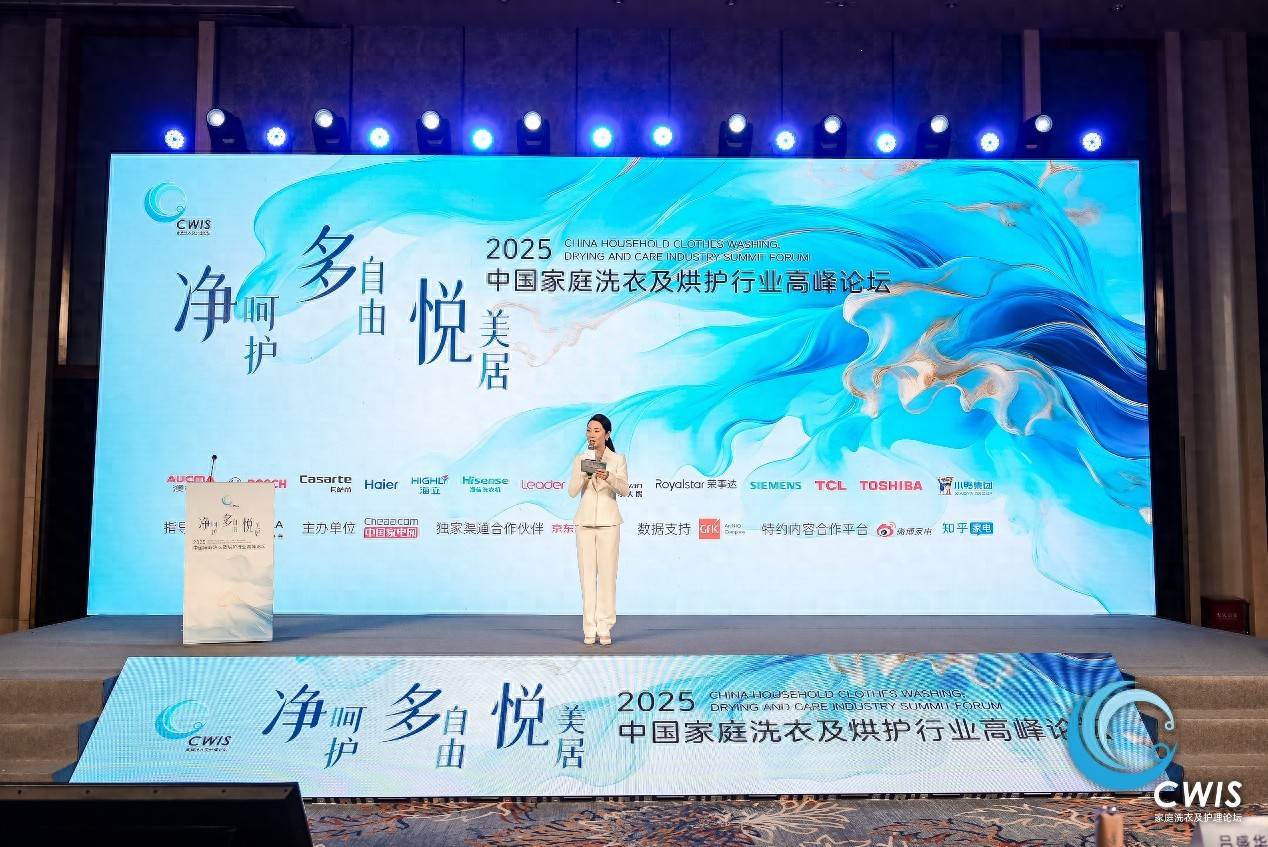
Core Insights - The forum held on September 25 focused on the opportunities and challenges faced by the Chinese laundry and drying industry in the current environment [1] - The laundry market showed resilience in 2023, with retail volume and value increasing by 4.6% and 11.2% year-on-year in the first half of 2025, respectively [3] - Industry leaders emphasized the importance of long-termism and user-centric innovation to overcome challenges and drive sustainable growth [3] Industry Trends - The laundry industry is seeking breakthroughs through national subsidies, real estate changes, and shifts in family structure, focusing on differentiation, segmentation, high-end products, and IP development [5] - Consumer preferences are evolving towards health-oriented, aesthetically integrated, and smart solutions, indicating a shift from mere cleaning to comprehensive garment care [12][24] - The introduction of multi-tub washing products reflects a growing consumer demand for specialized washing solutions, enhancing market potential [12] Product Innovation - Companies are innovating to meet consumer needs for specialized care, with Haier introducing a four-tub washing machine that optimizes space while providing comprehensive washing and drying capabilities [12] - Hisense's "family tub" concept allows for flexible placement and usage, addressing consumer demands for detailed washing and drying solutions [15] - TCL is leveraging AI and smart technologies to enhance user experience, offering features like intelligent self-cleaning and AI washing algorithms [19] Market Opportunities - Key growth opportunities identified include converting unmet consumer needs into innovations, capitalizing on market premiumization trends, and accelerating the growth of the dryer market [21] - The industry is moving towards a model that integrates laundry appliances into broader home aesthetics, requiring personalized planning based on living spaces [11][24] - The release of the "2025 China Household Laundry and Drying Industry Market Trends" report provides valuable insights into market dynamics and innovation pathways for sustainable growth [24]



调研速递|鸿路钢构接受8家机构调研,聚焦智能化与业务拓展要点
Xin Lang Cai Jing· 2025-09-26 08:06
Core Insights - The company hosted a specific research event with eight institutions to discuss its recent production and operational status [1] Group 1: Smart Manufacturing and R&D Investment - The company is advancing its information technology and smart manufacturing initiatives, utilizing a "project management platform" that integrates with various systems to enhance efficiency and cost control [2] - Significant investments have been made in R&D, with nearly 2,500 lightweight welding robots and rail-type robotic welding stations deployed across ten production bases, along with 57 software copyrights and 38 patents obtained [2] - The company has begun to export its self-developed welding industrial robots in small quantities, with future sales strategies aligned with business development plans [2] Group 2: Overseas Business and Convertible Bonds - The company has seen a gradual increase in indirect export business in international markets and is considering expansion based on market conditions [3] - There is a concern regarding the low conversion rate of convertible bonds, which may lead to redemption pressure when they mature in the second half of next year; the company aims to enhance performance and manage its financial planning accordingly [3] Group 3: Order Status - The company reports normal production operations with a saturated order book, and investors are encouraged to monitor company announcements for further updates [4]

研报掘金丨华鑫证券:首予雷赛智能“买入”评级 智能化浪潮中实现持续增长
Ge Long Hui A P P· 2025-09-26 06:56
Core Viewpoint - The automation industry is experiencing structural opportunities driven by intelligence and domestic substitution, despite a projected 5% year-on-year decline in the OEM sector in 2024 [1] Industry Summary - The "new quality productivity" policy and the transformation towards intelligent manufacturing are expected to create significant space for growth within the industry [1] - Companies that leverage technological breakthroughs and optimize channels are likely to achieve sustained growth amid these structural opportunities [1] Company Summary - The company is a leading player in the motion control field, supported by dual qualifications as a national high-tech enterprise and a specialized "little giant" enterprise [1] - The company has developed a strong technological moat through its unique "three-wheel drive" strategy and "six modernization" product system, which not only optimizes the existing product structure but also provides a clear path for future development [1] - The company is steadily advancing its overseas expansion, driven by technological innovation towards high-end products, with mature product lines certified by CE, UL, and others, enabling sales to Europe, America, and Southeast Asia [1] - The company's key technologies are at an internationally leading level, contributing to continuous business growth [1] - Given the company's significant core technology advantages in the motion control field and diversified layout driving overseas revenue growth, it has been assigned a "buy" investment rating [1]
左手合作Momenta,右手投资千里科技,奔驰智驾加速本土化落地
Xin Lang Cai Jing· 2025-09-26 03:33
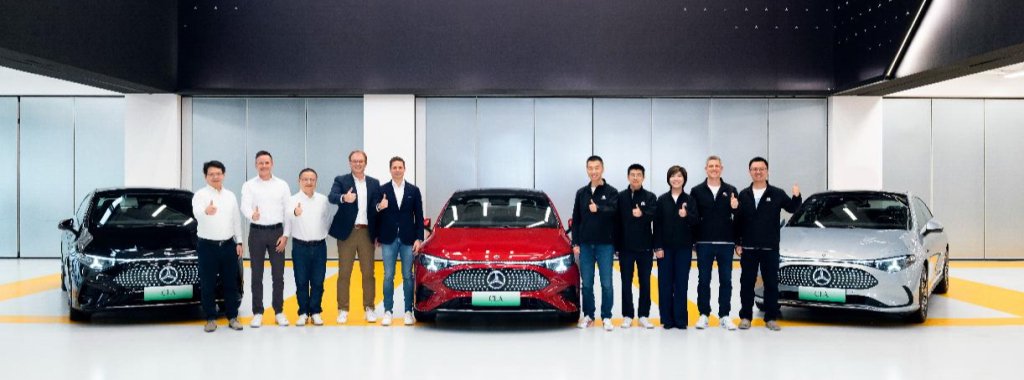
Core Insights - Mercedes-Benz is advancing its strategy in China by launching a new intelligent driving assistance system in collaboration with local company Momenta, which will debut in the new all-electric CLA model [1][3] - The company is also enhancing its capital structure by acquiring a 3% stake in Qianli Technology for approximately 1.339 billion yuan, aiming to strengthen its smart technology ecosystem [1][6] Group 1: Intelligent Driving System - The new intelligent driving assistance system is based on a flywheel large model and features an end-to-end technology architecture, integrating perception, decision-making, and control, with a response time of just 100 milliseconds [3] - The system has been trained using 100% local data to adapt to China's complex traffic conditions, including scenarios like mixed traffic with non-motor vehicles and construction zones [3] - Extensive testing has been conducted across high-traffic routes and through simulation platforms, covering extreme weather conditions and unexpected road situations [3] Group 2: New Electric Vehicle Launch - The all-new all-electric CLA, built on the Mercedes-Benz MMA platform, is priced between 259,000 and 299,000 yuan, targeting the high-end electric sedan market [3][4] - The vehicle features an 800V high-voltage architecture, supporting 320kW fast charging, which can add 370 km of range in just 10 minutes, and has a CLTC range of 866 km with a consumption of only 10.9 kWh per 100 km [4] - The CLA includes advanced smart features, such as the jointly developed intelligent driving system and the proprietary MB.OS operating system, which enhances the vehicle's interactive capabilities [4] Group 3: Capital Investment and Strategic Partnerships - Mercedes-Benz's digital technology subsidiary acquired 1.36 million shares of Qianli Technology at a price of 9.87 yuan per share, with the total transaction amounting to approximately 1.339 billion yuan [6] - Qianli Technology, a subsidiary of Geely, focuses on intelligent driving solutions and plans to launch L3-level solutions within six months and L4-level Robotaxi technology by 2026 [7] - The investment is part of Mercedes-Benz's broader strategy to establish a significant digital research and development center in China, covering AI applications, autonomous driving, and automotive component development [6] Group 4: Market Positioning - The new electric CLA has commenced production at the Beijing Yizhuang factory and is set to launch later this year, enhancing Mercedes-Benz's competitive edge in the smart electric vehicle market in China [8]

春风动力20250924
2025-09-26 02:29
Summary of Chufeng Power's Conference Call Company Overview - Chufeng Power has achieved a compound annual growth rate (CAGR) of nearly 35% in revenue since 2016, transitioning from a billion to a hundred billion scale [2][3] - The company has consistently improved its operating profit margin over the past eight years, with net profit margin growth expected to recover from 2022 to 2024 due to product upgrades and a decrease in shipping costs [2][3] Business Segments - In 2024, the all-terrain vehicle (ATV) business accounted for over 45% of revenue, while the motorcycle business represented 43% [4] - The gross margin for the ATV segment was approximately 40% in 2023, with motorcycle profitability gradually improving [6] Market Performance - By 2024, overseas market revenue is projected to account for 56% of total revenue, with North America contributing about 30% and Europe about 26% [7] - The Chinese market's revenue share is declining, indicating that overseas markets will be a significant growth driver moving forward [7] Industry Trends - The ATV industry is experiencing a clear trend of consumption upgrades, with UTV (Utility Task Vehicle) and SSV (Side-by-Side Vehicle) market shares increasing to 65% [8] - Chufeng Power is a leader in both domestic and international ATV exports, narrowing the gap with competitors like Polaris [8] Technological Advancements - Chufeng Power emphasizes R&D, achieving an engine first-off-the-line rate exceeding 90% and durability testing exceeding 200 hours [9] - The company’s engine power output reaches 84 kW, significantly surpassing the domestic average of 60 kW [9] Competitive Advantages - Chufeng Power's electric ATVs are priced significantly lower than competitors, enhancing global market competitiveness [5][10] - The company has expanded its global sales network from 1,900 to over 5,000 outlets since 2017, strengthening its market presence [10] Motorcycle Market Insights - The global two-wheeler motorcycle market has an annual sales volume of nearly 60 million units, with a significant portion in overseas markets [11] - Chinese brands like Chufeng are gaining traction, with a stable market share of 20% in the domestic high-displacement motorcycle segment [12] Future Outlook - Chufeng Power's net profit forecasts for 2025, 2026, and 2027 are projected at 1.85 billion, 2.4 billion, and 2.73 billion yuan, respectively, indicating a steady growth trend [22]

博格华纳20250924
2025-09-26 02:29
Summary of BorgWarner Conference Call Company Overview - **Company**: BorgWarner - **Industry**: Global automotive parts industry, focusing on traditional and electric vehicle components Key Points and Arguments 1. **Business Expansion Strategy**: BorgWarner has expanded its business through acquisitions, starting from mechanical transmission and gradually moving into the electric vehicle sector, particularly in powertrain and battery charging systems [2][3][4] 2. **Market Transformation**: The global automotive parts industry is undergoing a transformation towards intelligence and electrification, with Chinese parts manufacturers like Topu, Xinquan, and Bertley accelerating their international expansion [2][4] 3. **Revenue Contribution**: BorgWarner's four main business segments include Turbocharging and Thermal Management (41.7%), Transmission and Drivetrain Systems (39.5%), Powertrain Systems (13.7%), and Battery and Charging Systems (5.2%). Traditional businesses contribute the majority of revenue, while R&D is heavily focused on electric vehicles [2][6] 4. **R&D Investment**: The company’s R&D expenses are projected to exceed $740 million in 2024, maintaining a rate of about 5% of revenue, with 53.1% of R&D focused on powertrain systems [3][19] 5. **Future Development Focus**: BorgWarner aims to enhance investment and innovation in the electric vehicle sector, optimize global operations, strengthen local market collaborations, and pursue strategic acquisitions for diversification, particularly in the Chinese market [2][7][19] 6. **Sustainability Goals**: The company has set ambitious sustainability targets, aiming to reduce carbon emissions by 85% by 2030 compared to 2021 levels and achieve carbon neutrality by 2035 [4][21] 7. **Global Presence**: BorgWarner operates in 24 countries with 96 manufacturing and technology centers, allowing for rapid response to regional feedback and customer needs, with Asia accounting for 33.5% of its global business [4][24][25] Additional Important Content 1. **Acquisition Strategy**: The company’s successful acquisition strategy has allowed it to enhance its capabilities and enter new markets, particularly in electric vehicle technology [3][20] 2. **Financial Performance**: BorgWarner's revenue has shown an upward trend, with a revenue of 51.5 billion yuan in the first half of 2025, remaining stable compared to the previous year [12] 3. **Market Position**: BorgWarner is a leader in the turbocharging market, holding a 30% share in China, and is well-positioned to benefit from the projected growth in the global turbocharger market, expected to reach over 280 billion yuan by 2033 [15] 4. **Collaborative Efforts**: The company emphasizes collaboration with major automotive manufacturers to enhance its product offerings and market reach [9][10] 5. **Investment Recommendations**: Investors are advised to focus on high-value segments with strong competitive dynamics and companies that are well-positioned in their respective markets, such as BorgWarner [26]

德昌电机20250925
2025-09-26 02:28
Summary of Dechang Motor's Conference Call Industry and Company Overview - Dechang Motor operates in the automotive small motor sector, providing a comprehensive range of small motors for vehicles, excluding power motors, which lays a solid foundation for entering the humanoid robot market, particularly in motion systems [2][4] - The company has extensive overseas factory resources, especially in the United States, enabling better service to global humanoid robot enterprises and meeting localization demands [2][4] Core Insights and Arguments - Dechang Motor possesses strong in-house capabilities for secondary components production, including powder metallurgy technology, allowing for cost control and improved production efficiency, enhancing long-term profitability [2][4] - Collaboration with Shanghai Mechanical and Electrical further strengthens Dechang Motor's capabilities in secondary components for humanoid robots, with a joint venture established to complement design, manufacturing, and sales channels [2][4][5] - As a leading player in the automotive small electronic water pump business, Dechang Motor has established clear partnerships in the liquid cooling server market, with existing mass production products, indicating rapid growth potential in cooling business [2][7][10] - The cooling business is expected to continue its rapid growth due to trends in smart technology and electrification, with the electronic water pump products showing strong competitiveness, likely to significantly enhance revenue and profit contributions [2][9][10] Future Revenue and Profit Expectations - Revenue is projected to achieve high single-digit growth over the next three years, with profit growth expected to outpace revenue growth due to scale effects, forecasting performance growth rates of 15% and 10% for the fiscal years 2027 and 2028, respectively [3][11] Additional Important Points - Dechang Motor's experience in automotive small motor construction will be leveraged to expand into the humanoid robot market, applying existing technologies to robot motion systems [6] - The company’s vertical integration in production, including self-manufacturing of secondary components, will help control costs and improve long-term profitability [6] - The partnership with Shanghai Mechanical and Electrical is expected to open up the mainland market and enhance development in core components such as joint assemblies and dexterous hand actuators [6][5]
装饰装修行业:亏损收窄、毛利润均21%、债务高企,市场加快洗牌!
3 6 Ke· 2025-09-26 02:09
Group 1 - The revenue of 14 listed decoration and renovation companies has shown significant divergence, reflecting a clear "Matthew Effect" in the industry, with a revenue decline exceeding 64% for many companies [2][5] - Among the companies, Jin Tanglong, Jianghe Group, and Yasha Co. lead in revenue, achieving 9.528 billion, 9.339 billion, and 4.886 billion respectively, while the remaining 11 companies collectively generated only 4.110 billion [4][5] - Only 5 companies reported revenue growth, with Guotian Group achieving a remarkable 223.89% increase, albeit from a low base [4][6] Group 2 - Out of the 14 companies, 6 reported profits, with Jin Tanglong, Jianghe Group, and Yasha Co. showing strong profitability, with net profits of 358 million, 328 million, and 153 million respectively [6][8] - The average gross profit margin across the companies is 20.6%, with some companies like Zhongzhong Design achieving a net profit margin of 14.88%, indicating strong cost control [12][16] Group 3 - The overall debt risk is high, with an average asset-liability ratio of 66.92% among the companies, and two companies, Dongyi Risheng and Baoying Co., exceeding 100% [19][21] - Dongyi Risheng is undergoing a pre-restructuring process due to severe financial distress, with an asset-liability ratio of 170.34% [19][24] Group 4 - Despite being the largest companies, Jin Tanglong, Jianghe Group, and Yasha Co. have the lowest cash flow from operating activities, with negative cash flows of -1.023 billion, -1.028 billion, and -582 million respectively [25][29] - Only 5 companies reported positive cash flow from operating activities, indicating a significant cash flow challenge for larger firms [29] Group 5 - In response to the challenges posed by the real estate market downturn, companies are adopting strategies such as expanding into overseas markets, developing new business segments, and leveraging technology to reduce costs [30][31] - The industry is experiencing a bifurcation, where leading companies face cash flow pressures while some mid-sized firms achieve better profitability through refined cost control [31]