
MB.OS操作系统

Search documents
大中华区“掌门人”佟欧福首秀全球财报会 奔驰将在3年内推出超40款新车型
Zhong Guo Jing Ying Bao· 2026-02-14 11:14
Core Viewpoint - Mercedes-Benz is focusing on long-term investment and local integration in China, aiming to enhance competitiveness rather than short-term sales battles [2][7]. Financial Performance - For the fiscal year 2025, Mercedes-Benz's revenue is projected to reach €132.2 billion (approximately ¥1.084 trillion), with an adjusted EBIT of €8.2 billion (approximately ¥67.236 billion), reflecting a 40% year-on-year decline [3]. - The free cash flow from industrial operations is expected to be €5.4 billion (approximately ¥44.28 billion) in 2025, increasing to €9.2 billion (approximately ¥75.44 billion) in 2024 [3]. Investment and R&D - Capital expenditures and R&D investments are set to peak in fiscal year 2025, with R&D costs at approximately €6.055 billion (approximately ¥49.65 billion), a year-on-year increase of 8.5% [4]. - Capitalized development costs are projected at €2.394 billion (approximately ¥19.63 billion), up 19.4%, while fixed asset investments will reach approximately €5.482 billion (approximately ¥44.95 billion), a 35.7% increase [4]. Market Strategy in China - China remains a core market for Mercedes-Benz, with a focus on optimizing the value chain and improving local profitability [7][8]. - The company plans to launch over 15 new and updated models in China in 2026, marking the most intensive product rollout in its history [9]. Sales and Profitability - In 2025, Mercedes-Benz's global sales are expected to be 2.16 million units, a 10% year-on-year decline, with approximately 575,000 units sold in China, down about 19% [5][6]. - The adjusted EBIT for the passenger car segment is projected to be €4.8 billion (approximately ¥39.36 billion) in 2025, with a sales profit margin of 5.0% [6][7]. Technological Advancements - Mercedes-Benz is enhancing its local technology collaborations, including the development of an advanced driver assistance system in partnership with Momenta [8][10]. - The company aims to integrate AI and advanced digital systems across its product lineup, with nearly all models expected to feature AI smart cabins and leading driver assistance systems within the next 12 to 18 months [10].

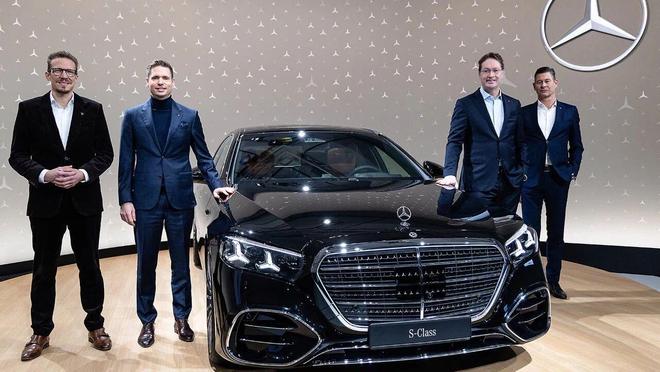
奔驰2025年财报出炉:营收超1300亿欧元,研发投入去年达到峰值
Mei Ri Jing Ji Xin Wen· 2026-02-12 11:13
Group 1 - The core performance of Mercedes-Benz in the fiscal year 2025 includes a revenue of €132.2 billion, an adjusted EBIT of €8.2 billion, and an industrial free cash flow of €5.4 billion, demonstrating financial resilience despite macroeconomic fluctuations [1] - The passenger car segment achieved an adjusted EBIT of €4.8 billion with an adjusted sales margin of 5.0%, which would be 6.1% excluding tariff impacts, remaining within the guidance range [1] - The light commercial vehicle segment reported an adjusted EBIT of €1.75 billion and maintained a double-digit adjusted sales margin of 10.2% for the fourth consecutive year, indicating strong profitability amid competition [1] Group 2 - Capital expenditures and R&D investments peaked in 2025, with high-end luxury and core luxury models accounting for 70%-80% of total model architecture investments, while the MB.OS operating system and driver assistance systems will span the entire product lineup [2] - Mercedes-Benz aims to maintain global passenger car sales at approximately 2 million units, with over 15% growth in high-end luxury model sales and a doubling of the share of new energy vehicles, targeting an adjusted sales margin of 8%-10% for its passenger car business [2] - The company is entering a phase of intensive technology and product rollout, with several industry-leading achievements being transformed into core competitive advantages [2]
Robotaxi迎来重磅催化! 奔驰携手英伟达、优步 共同部署全球Robotaxi车队
Zhi Tong Cai Jing· 2026-01-30 02:24
Group 1 - Mercedes-Benz, NVIDIA, and Uber announced a significant collaboration to create a global Robotaxi platform utilizing Mercedes-Benz's new S-Class vehicles, NVIDIA's AI computing systems, and Uber's extensive ride-hailing network [1][2] - The Robotaxi service will operate on the MB.OS operating system developed by Mercedes-Benz, allowing NVIDIA and other partners to build advanced autonomous driving applications while Mercedes retains control over core vehicle software and integration systems [1] - NVIDIA will provide high-performance autonomous driving chips, the Alpamayo AI model, and exclusive simulation and safety tools to achieve Level 4 autonomous driving capabilities [1][3] Group 2 - Uber's role in the collaboration involves integrating the Robotaxi system into its existing ride-hailing platform, enabling human-driven vehicles and autonomous S-Class Robotaxis to operate concurrently [2] - Although no specific launch timeline has been provided, this partnership is seen as a crucial step towards large-scale commercial deployment of Robotaxis in multiple global cities [2] - NVIDIA's CEO Jensen Huang emphasized the ambition of "physical AI," which aims to enable robots and autonomous systems to perceive, reason, and act in the real world, marking a significant evolution in technology [3][4] Group 3 - The Alpamayo AI model, introduced by NVIDIA, is described as a "physical AI's ChatGPT moment," featuring 10 billion parameters and focusing on video input processing and trajectory generation, along with the logic behind decision-making [3][4] - NVIDIA also launched the AlpaSim simulation tool and Physical AI Open Datasets, creating a complete development loop to enhance the safety and verifiability of fully autonomous driving technology [4] - The open-source strategy by NVIDIA aims to lower development barriers and drive demand for its computing platforms across various sectors, including data centers and automotive [4]


奔驰史上最先进轿车登场!新款S级官宣29号发布:超2700个零件升级
Xin Lang Cai Jing· 2026-01-21 07:26
Core Insights - Mercedes-Benz announced that the new generation S-Class sedan will be officially launched on January 29, marking the largest scale innovation in the model's history [1] - CEO Ola Källenius stated that this upgrade involves approximately 2,700 new or redesigned components, accounting for over half of the vehicle [1] Exterior Design - The new S-Class features a 20% larger front grille compared to the current model, with the three-pointed star logo returning to the hood and integrated with LED lighting elements [1] - The side profile remains largely unchanged, but a new camera has been added to the front fender to support the vehicle's intelligent driving assistance features [1] Interior and Technology - The core upgrade includes the first mass production deployment of Mercedes' self-developed MB.OS operating system, which integrates 27 sensors and supports continuous voice dialogue, gesture control, and AI-based personalized services [3] - The software update speed has improved by 10 times compared to the previous generation [3] - A road condition memory feature is included, which records bumpy road GPS information and uploads it to the server to assist with suspension adjustments for other models on the same platform [3] Powertrain - Mercedes-Benz will not abandon internal combustion engines despite the push towards electrification, continuing to offer V8 and V12 engines [3] - The new V8 engine features a flat-plane crankshaft design and is paired with a 48V mild hybrid system, meeting Euro 7 emission standards and improving fuel efficiency by 18% [3] - The redline RPM can reach 7,500, exceeding the power limits of the current M178 engine [3]
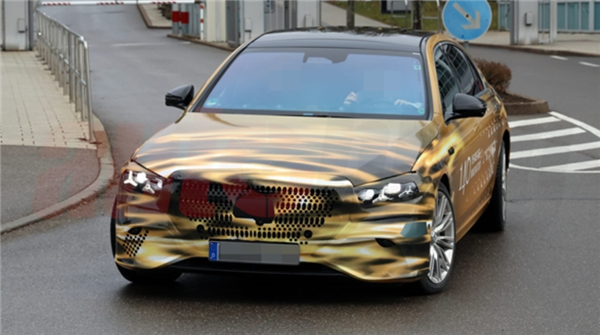
奔驰:2026年在中国市场推超15款新车 继续推进数字化落地
Xin Jing Bao· 2026-01-13 13:49
Core Insights - In 2026, Mercedes-Benz plans to enhance its product offerings, luxury services, and customer experience in the Chinese market, with over 15 new and updated models expected to launch [1][2] - The luxury car market in China is facing challenges, particularly in the segment priced above 400,000 yuan, which is experiencing a contraction [1] - Despite market fluctuations, Mercedes-Benz has maintained a leading position in the luxury segment, with a reported global sales figure of 2.16 million units in 2025, including over 575,000 units sold in China [1] Group 1 - Mercedes-Benz will introduce over 15 new and updated models in 2026, including the new long-wheelbase electric GLC SUV and the next-generation S-Class [2] - The company aims to implement a product strategy focusing on both traditional and electric vehicles, ensuring a diverse lineup that caters to various luxury market segments [2] - The brand's flagship model, the Maybach GLS SUV, saw a nearly 14% increase in annual deliveries in 2025, indicating strong demand in the high-end luxury market [2] Group 2 - Mercedes-Benz has adjusted its business expectations in response to market changes and product lifecycle challenges, while still achieving its basic business goals [1] - The company plans to enhance its digital capabilities by rolling out multiple over-the-air software updates for vehicles equipped with the MB.OS operating system in 2026 [2] - AI-powered smart cockpit features and advanced driver assistance systems are set to be integrated across the entire product lineup within the next 12 to 18 months [2]
奔驰:2026年在中国市场推超15款新车,继续推进数字化落地
Bei Ke Cai Jing· 2026-01-13 13:39
Core Insights - In 2026, Mercedes-Benz plans to enhance its product offerings, luxury services, and customer experience in the Chinese market, with over 15 new and updated models expected to launch [1][5] - The luxury car market is facing challenges, with a contraction in the segment above 400,000 yuan, and 2025 is seen as a critical year for product updates [4][5] - Mercedes-Benz maintained its leading market share in the core luxury segment (400,000 yuan and above) and high-end luxury segment (1 million yuan and above) in China for 2025, with a total global sales of 2.16 million vehicles, including over 575,000 units sold in China [5] Product Strategy - Mercedes-Benz will implement a product strategy focusing on both traditional and electric vehicles, with a lineup refresh planned for 2026, including new models like the long-wheelbase pure electric GLC SUV and the next-generation S-Class [5][6] - The company aims to leverage its MB.OS operating system for multiple over-the-air software updates in 2026, enhancing the smart cockpit and advanced driver assistance systems across its product range [6]
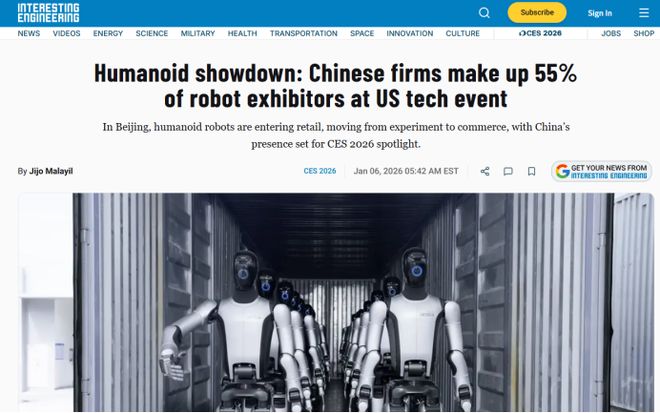
环球直击美国CES展:更少和更强大的中国企业正在重新定义AI竞争的规则
Huan Qiu Wang Zi Xun· 2026-01-10 05:33
Core Insights - The CES 2026 showcased AI as the central theme, emphasizing human-centric applications and the integration of AI into various sectors [1][3][6] - The competition in the chip industry was highlighted, with major players like NVIDIA, AMD, Intel, and Qualcomm presenting their advancements in AI infrastructure [3][9] - The exhibition marked a shift from hardware-centric displays to a focus on ecosystem definition and strategic collaboration among companies [4][16] AI and Robotics - CES 2026 introduced a dedicated area for AI and quantum innovation, showcasing practical applications of embodied intelligence and advancements in autonomous driving [3][4] - The event demonstrated a transition from conceptual robot designs to practical solutions addressing real-world challenges in home services and industrial logistics [3][11] - Chinese companies showcased significant advancements in robotics, with a focus on self-developed core components and solutions for logistics and manufacturing [11][13] Chinese Companies' Participation - The number of Chinese exhibitors in the core professional pavilion decreased to 207 from 1,475 in 2025, indicating a structural adjustment in participation [4][5] - The remaining Chinese companies at CES were required to demonstrate AI-related functionalities, reflecting a shift towards more innovative and integrated product offerings [5][6] - Major Chinese firms like Lenovo showcased their global influence by hosting large-scale events, indicating a strategic focus on ecosystem development [6][16] Competitive Landscape - The competition is evolving from hardware specifications to a comprehensive narrative that includes both foundational technology and application capabilities [7][16] - The contrasting approaches of Chinese and American tech companies in building AI ecosystems highlight differences in strategic thinking and resource allocation [8][15] - Chinese automotive companies emphasize full-stack self-research and vertical integration, while Western firms focus on open software ecosystems and long-term evolution [15][16] Future Implications - The CES 2026 signals a shift in global tech competition towards defining future technology ecosystems and industry standards [16][17] - Companies that can navigate the complexities of AI and contribute to ecosystem building are likely to remain at the forefront of technological advancement [17]



奔驰向下,国产车企向上
3 6 Ke· 2025-11-06 23:58
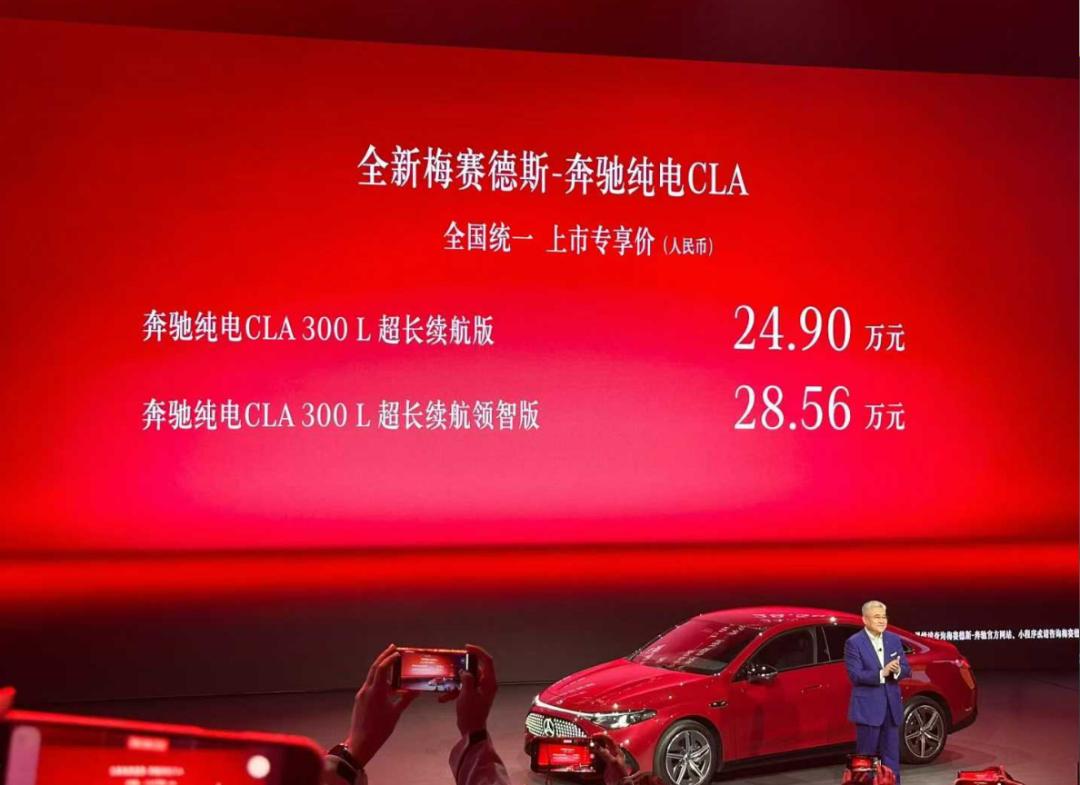
Core Insights - The 2025 electric vehicle market is witnessing a shift, with traditional luxury brands like Mercedes-Benz redefining their pricing strategies to remain competitive [1][3] - Domestic brands are moving upmarket, with models like the Zhiji LS9 and Zeekr 9X priced above 400,000 yuan, indicating growing confidence in the domestic electric vehicle sector [3][5] - The introduction of advanced technologies, particularly the ultra 500-line lidar, is becoming a key differentiator in defining flagship models in the electric vehicle market [4][12] Group 1: Market Dynamics - Mercedes-Benz is launching its most intelligent product yet, the pure electric CLA, at a starting price of 259,000 yuan, marking a significant price reduction for the brand [1][3] - Domestic brands are increasingly confident, with models like the Zhiji LS9 and Zeekr 9X appealing to consumers who previously favored luxury brands [3][7] - The shift in consumer preferences is evident, as over 80% of Zeekr 9X buyers previously owned high-end luxury vehicles [7] Group 2: Technological Advancements - The ultra 500-line lidar is becoming a standard feature for flagship models, with brands like Zeekr, Zhiji, and Lantu leading the charge [5][12] - The performance of lidar technology is critical, with higher line counts translating to better detection capabilities and safety features [20][25] - The evolution of lidar technology is reshaping the competitive landscape, with a clear distinction between different performance tiers based on line counts [22][27] Group 3: Future Outlook - The demand for L3 autonomous driving capabilities is increasing, with brands like Lantu and Mercedes-Benz claiming to have L3 architecture in their flagship models [28][34] - The necessity for ultra 500-line lidar in achieving L3 safety standards is becoming apparent, as it provides the required detection range and reliability in complex driving conditions [35][36] - The market is expected to evolve significantly by 2026, with ultra 500-line lidar setting new benchmarks for safety and luxury in the electric vehicle sector [38][39]
左手合作Momenta,右手投资千里科技,奔驰智驾加速本土化落地
Xin Lang Cai Jing· 2025-09-26 03:33
Core Insights - Mercedes-Benz is advancing its strategy in China by launching a new intelligent driving assistance system in collaboration with local company Momenta, which will debut in the new all-electric CLA model [1][3] - The company is also enhancing its capital structure by acquiring a 3% stake in Qianli Technology for approximately 1.339 billion yuan, aiming to strengthen its smart technology ecosystem [1][6] Group 1: Intelligent Driving System - The new intelligent driving assistance system is based on a flywheel large model and features an end-to-end technology architecture, integrating perception, decision-making, and control, with a response time of just 100 milliseconds [3] - The system has been trained using 100% local data to adapt to China's complex traffic conditions, including scenarios like mixed traffic with non-motor vehicles and construction zones [3] - Extensive testing has been conducted across high-traffic routes and through simulation platforms, covering extreme weather conditions and unexpected road situations [3] Group 2: New Electric Vehicle Launch - The all-new all-electric CLA, built on the Mercedes-Benz MMA platform, is priced between 259,000 and 299,000 yuan, targeting the high-end electric sedan market [3][4] - The vehicle features an 800V high-voltage architecture, supporting 320kW fast charging, which can add 370 km of range in just 10 minutes, and has a CLTC range of 866 km with a consumption of only 10.9 kWh per 100 km [4] - The CLA includes advanced smart features, such as the jointly developed intelligent driving system and the proprietary MB.OS operating system, which enhances the vehicle's interactive capabilities [4] Group 3: Capital Investment and Strategic Partnerships - Mercedes-Benz's digital technology subsidiary acquired 1.36 million shares of Qianli Technology at a price of 9.87 yuan per share, with the total transaction amounting to approximately 1.339 billion yuan [6] - Qianli Technology, a subsidiary of Geely, focuses on intelligent driving solutions and plans to launch L3-level solutions within six months and L4-level Robotaxi technology by 2026 [7] - The investment is part of Mercedes-Benz's broader strategy to establish a significant digital research and development center in China, covering AI applications, autonomous driving, and automotive component development [6] Group 4: Market Positioning - The new electric CLA has commenced production at the Beijing Yizhuang factory and is set to launch later this year, enhancing Mercedes-Benz's competitive edge in the smart electric vehicle market in China [8]

车企加速智能化转型 奔驰与字节跳动合作升级
Mei Ri Jing Ji Xin Wen· 2025-09-25 13:30
Core Insights - The collaboration between Mercedes-Benz and ByteDance aims to redefine the division of labor in the automotive industry during the intelligent era, focusing on the integration of AI technology across various business sectors [2][3] - This partnership will cover the entire business chain, including smart driving, cockpit, research and development, and marketing, which is unprecedented in the automotive industry [2] - The collaboration is not merely a short-term market strategy but a long-term strategic layout, as both companies seek to leverage their strengths to enhance user experience and operational efficiency [2][4] Collaboration Details - The partnership is built on Mercedes-Benz's self-developed MB.OS operating system, which allows for a modular approach to vehicle functionality, enabling partners like ByteDance to develop applications without deep hardware integration [5][7] - The introduction of the Doubao large model in the new electric CLA is set to enhance user interaction, allowing the vehicle to understand vague commands and respond intelligently to contextual expressions [6] - ByteDance's cloud computing capabilities will accelerate the integration of Mercedes-Benz's nearly 40 years of technological expertise in autonomous driving, eliminating the need for the automaker to build its own data centers [6] Market Implications - The collaboration signifies a shift from competition based on individual technologies to a focus on ecosystem competition within the intelligent automotive sector [3][7] - Mercedes-Benz's localization strategy will evolve to include "adaptive innovation," allowing for a better match with domestic user needs and exploring new profit models through software subscription services and ecosystem sharing [7] - The partnership is expected to enhance Mercedes-Benz's ability to respond quickly to the Chinese market, with a capability to convert ideas into software applications within 24 hours [7] Challenges and Considerations - Data compliance remains a critical issue for international automakers utilizing local cloud services, and the complexity of technology integration requires a highly reliable system architecture [8] - The compatibility of ByteDance's ecosystem with Mercedes-Benz's luxury brand image poses a long-term challenge for maintaining brand integrity [8] - The outcome of this collaboration may set a precedent for a new industrial division model, emphasizing "symbiosis" over "replacement" in the intelligent automotive era [8]