市场竞争

Search documents
百胜中国任命新董事卫哲,财报发布后股价跌6%,CEO强调不花钱买销售额
Sou Hu Cai Jing· 2025-08-06 21:37
Core Viewpoint - Yum China has reported its financial results for the period ending June 30, 2025, highlighting its operational strategies and outcomes in a competitive market environment. The CEO emphasized that the company will not pursue market share through excessive spending on sales [1]. Financial Performance - For the first half of 2025, Yum China's revenue reached $5.768 billion, reflecting a 2% year-over-year increase. The second quarter revenue was $2.787 billion, up 4% from the previous year [5]. - The operating profit for the first half of 2025 was $703 million, a 10% increase compared to $640 million in the same period of 2024 [5]. - Net profit for the first half of 2025 was $546 million, a 2% increase from $535 million in the same period of 2024 [5]. Business Expansion - Yum China plans to add approximately 1,600 to 1,800 new stores by 2025, with KFC and Pizza Hut franchise stores expected to account for 40%-50% and 20%-30% of the new openings, respectively [3]. - The company has adjusted its capital expenditure forecast for fiscal year 2025 to between $600 million and $700 million, benefiting from reduced single-store investment costs [3]. Shareholder Returns - Yum China is expected to return $30 billion to shareholders between 2025 and 2026, following an initial $15 billion return in 2024 [3]. - Citibank's analysis suggests that Yum China's management may significantly reduce cash returns to shareholders, with free cash flow expected to drop from twice the shareholder return ratio in 2024-2026 to equal by 2027 [1]. Brand Performance - KFC, as a core brand, reported a revenue of $4.342 billion for the first half of 2025, a 2% increase year-over-year, with 12,238 stores as of June 30, 2025 [5]. - Pizza Hut generated $1.149 billion in revenue for the first half of 2025, marking a 1% increase, with operating profit rising by 22% to $106 million [6]. Management Changes - Yum China appointed Weizhe Wei, founder and chairman of Jia Yu Capital, to its board, bringing extensive management experience from Alibaba and other sectors [3].


今世缘谈与洋河竞争:双方高层决策通常理性,但中下层难免会出现一些非理性行为
Cai Jing Wang· 2025-08-06 03:21
Group 1 - The core viewpoint of the article highlights the competitive dynamics between Jinshiyuan and Yanghe, noting that both companies increased promotional efforts last year, leading to a slight decline in product prices [1] - The announcement indicates that while high-level decision-making tends to be rational, there can be irrational behaviors at lower levels during market competition, which may result in outcomes that fall short of expectations [1] - Overall, the competitive results from the past year are expected to lead to more rational behaviors in the current year [1] Group 2 - An investor inquired about the impact of Su Chao on local consumer spending, to which the company responded that the effect on consumption volume is difficult to quantify [1] - The primary value of the sponsorship is seen in brand exposure, and the initial cost of the sponsorship collaboration was relatively low, providing good cost-effectiveness [1]


豪悦护理20250730
2025-08-05 03:20
Summary of Conference Call for Haoyue Care Industry Overview - The childcare subsidy policy, although limited to 3,600 yuan annually, is expected to positively impact birth rates across the country, particularly in populous provinces like Henan, Jiangsu, Zhejiang, Shanghai, and Guangdong, where there is a higher willingness among migrant populations to have newborns [2][3] - The competition in the baby diaper and sanitary napkin markets is intensifying, with new entrants such as internet celebrities and companies like Three Squirrels and Dongfang Zhenxuan increasing their presence, leading to a general rise in terminal sales expenses [2][5] Company Insights - The company has not observed a significant increase in newborn numbers in 2025, contrasting with the order pressure experienced in early 2024 [3] - The introduction of the new product "Jieting" has seen increased promotion on platforms like Douyin, achieving some sales but with a lower ROI conversion rate compared to the previous year due to heightened market competition [6][8] - The company has leveraged its supply chain advantages to ensure wood pulp supply and reduce costs, enabling the rapid launch of new products by the Sibao team [7] Product Development and Market Strategy - New products are focusing on material and process innovations, with higher gross margins and average prices compared to traditional products, leading to a significant increase in order volumes [4][14] - The company has invested heavily in marketing and promotional activities to attract consumers and institutions for product trials, while also updating and integrating production equipment to enhance efficiency [8][9] - The management structure post-acquisition of "Jieting" remains stable, with the original team continuing to oversee operations, ensuring continuity and stability in business operations [10] Financial Performance and Market Trends - The overseas business is expected to maintain good growth, particularly in markets like Thailand, Japan, India, Singapore, Vietnam, Canada, and the United States, with a notable increase in self-owned brand sales [11][12] - The company is focusing on offline sales, which still dominate despite the rise in online sales, and is implementing new strategies for product promotion in physical stores [15] Management and Operational Enhancements - Post-acquisition, the company has shifted its performance evaluation criteria to emphasize sales and market expansion rather than just net profit, aiming to enhance team motivation and overall performance [16]

雷柏科技上半年财报出炉,净利润骤降28.56%
Xi Niu Cai Jing· 2025-08-02 12:34
Core Viewpoint - Rapoo Technology reported a decline in revenue and net profit for the first half of 2025, primarily due to underperformance in the European market and increased costs associated with online channel development and marketing efforts [2][4]. Financial Performance - The operating revenue for the first half of 2025 was 208.34 million yuan, a decrease of 5.13% compared to the same period last year [3]. - The net profit attributable to shareholders was 15.30 million yuan, down 28.56% year-on-year [3]. - The net profit after deducting non-recurring gains and losses was 5.97 million yuan, reflecting a significant decrease of 58.92% [3]. - The net cash flow from operating activities was -4.96 million yuan, a decline of 116.14% compared to the previous year [3]. - Basic and diluted earnings per share were both 0.0543 yuan, down 28.27% from the previous year [3]. - The weighted average return on net assets was 1.30%, down from 1.83% [3]. - Total assets at the end of the reporting period were 1.34 billion yuan, a slight decrease of 0.07% from the end of the previous year [3]. - The net assets attributable to shareholders were 1.19 billion yuan, an increase of 1.04% year-on-year [3]. Market and Operational Challenges - The decline in revenue was attributed to disappointing sales in the European market, which is a significant overseas market for Rapoo Technology [4]. - Increased foreign exchange losses and higher sales expenses due to ongoing investments in online channel development contributed to the decline in net profit [4]. - The gross profit margin for the first half of 2025 was 28.29%, down 3.1 percentage points, indicating pressure on cost control and product pricing [4]. - Total operating expenses for the first half of 2025 were 44.09 million yuan, an increase of 712.05 thousand yuan from the previous year, with a rise in the expense ratio by 4.33 percentage points [4]. - The company faces intensified competition in the market, with a growing number of participants and industry scale, leading to slower performance growth and reduced profit margins [4]. Strategic Response - In response to the competitive market environment, Rapoo Technology plans to enhance its product design and research capabilities, improve channel development and sales capabilities, and closely monitor market trends to adjust business strategies accordingly [5]. - The company aims to innovate across technology, management, and marketing to strengthen its core competitiveness [5].


马凯思向雀巢中国“开刀”:咖啡换帅只是开始丨消费一线
2 1 Shi Ji Jing Ji Bao Dao· 2025-08-01 11:53
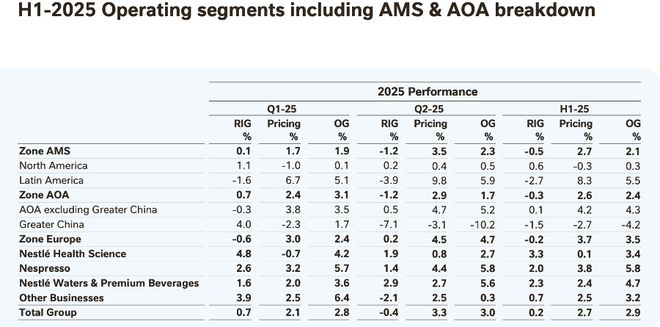
Core Viewpoint - Nestlé China is undergoing significant adjustments, marked by leadership changes and a strategic shift in its operational structure to address declining sales and market challenges [1][2][4]. Group 1: Leadership Changes - Kais Marzouki has taken over as CEO of Nestlé Greater China from Zhang Xiqiang, indicating a new direction for the company [1][2]. - Laurent Freixe, the new CEO of Nestlé, has initiated reforms that include restructuring the geographical market divisions, merging Greater China back into the Asia, Oceania, and Africa zone [2][15]. Group 2: Financial Performance - In the first half of 2023, Nestlé Greater China reported sales of CHF 2.47 billion (approximately RMB 22.3 billion), a decline of 6.4% compared to CHF 2.639 billion (approximately RMB 23.8 billion) in the same period last year [4][6]. - The organic growth rate for Nestlé Greater China was -4.2%, with a real internal growth rate of -1.5% and a pricing contribution of -2.7% [5][6]. Group 3: Market Challenges - The overall revenue decline is attributed to a slowing domestic market and increased competition, with China's retail sales growth at 5.0% in the first half of 2023 [8][10]. - Nestlé's coffee business, a key segment, has not capitalized on market growth, with its revenue remaining stagnant at approximately CHF 0.96 billion (around RMB 7.9 billion) [10][11]. Group 4: Strategic Adjustments - The company is focusing on enhancing collaboration and governance to revitalize its Greater China business, emphasizing the need for speed and agility in the market [15][18]. - Future adjustments may include channel restructuring and a shift from a "push" to a "pull" model to better engage consumers and stimulate demand [18][19]. Group 5: Outlook - The new management team is expected to drive growth by leveraging strong brand presence and market share, with a belief that the market will show robust performance post-adjustments [18][19].

汉维科技(836957) - 投资者关系活动记录表
2025-07-31 10:45
Group 1: Investor Relations Activity - The investor relations activity was held on July 29, 2025, at the company's location, with 22 participants including East Guangdong Securities and individual investors [3] - Company representatives included Chairman Zhou Shuhui, Secretary Feng Miao, and Securities Affairs Representative Zheng Wenwen [3] Group 2: Product Applications - The company's lubricants are primarily used as stabilizers, lubricants, grinding aids, dispersants, release agents, and acid absorbers in various industries such as plastics, coatings, rubber, petrochemicals, paper, food, pharmaceuticals, and cosmetics [4] - Fatty acid salt additives are specifically utilized in plastics, coatings, rubber, petrochemicals, and paper industries [4] Group 3: Raw Material Prices - The price of the main raw material, stearic acid, has shown a decline in the first five months of the year but is currently stabilizing and showing signs of recovery [5] Group 4: Market Competition - The company faces price sensitivity from certain industries due to market competition, influenced by upstream raw material prices, downstream industry conditions, sales strategies, and market competition [6] - The company aims to maintain its market position by releasing production capacity, reducing costs, and enhancing customer relationships [8] Group 5: Export Markets - The company's products are primarily exported to Southeast Asia and Africa, with ongoing efforts to develop markets in the Middle East and Europe [7] Group 6: Future Growth and Development - The company plans to leverage its Indonesian project and other fundraising projects to reduce operational costs and improve performance [9] - Future strategies include exploring new business opportunities, enhancing product structure, and expanding application areas [9] Group 7: Mergers and Acquisitions - The company is monitoring trends in the industrial additives sector and may consider mergers or acquisitions to enhance its product offerings and competitive strength [10]
2025-2031年中国速冻蔬菜行业市场现状调研及投资前瞻分析报告
Sou Hu Cai Jing· 2025-07-31 06:34
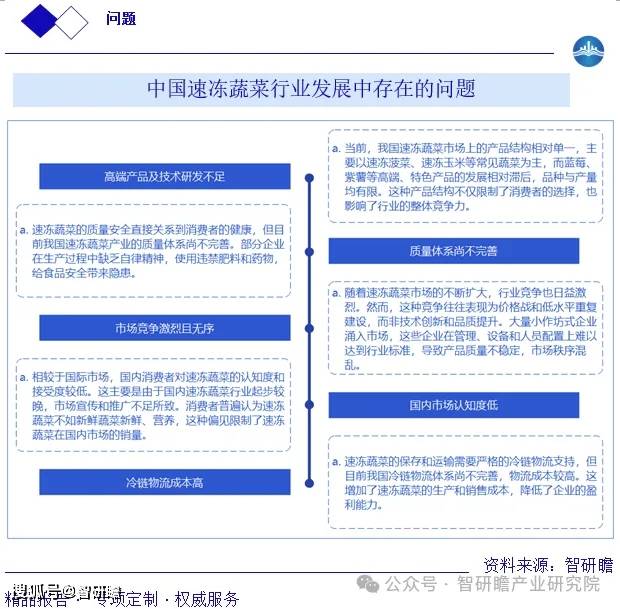
Industry Challenges - Insufficient R&D in high-end products and technology, leading to a limited variety of frozen vegetable products and a negative impact on overall industry competitiveness [1] - The quality assurance system for frozen vegetables is not yet mature, with some companies lacking integrity and using harmful chemicals, posing potential food safety risks [2] - Intense and chaotic market competition characterized by price wars and low-level homogenization, resulting in poor product quality and market disorder [3] - Low consumer awareness and acceptance of frozen vegetables in China, primarily due to inadequate market promotion and a reliance on traditional sales channels [4] - High cold chain logistics costs due to an incomplete logistics system, increasing production and sales costs and affecting product quality during transportation [5] Market Size and Growth - The market size of China's frozen vegetable industry was 3.695 billion in 2019 and is projected to reach 8.518 billion in 2023 [7] - The market is expected to continue growing, with a forecasted size of 27.514 billion by 2030 [17] Industry Chain Overview - The frozen vegetable industry chain includes various stages from raw vegetable planting to processing, cold chain logistics, and final delivery to consumers, supported by modern agricultural practices and technology [9] Market Outlook - Despite some nutritional changes compared to fresh vegetables, frozen vegetables retain significant nutritional value and are increasingly in demand due to modern lifestyle changes [13] - The industry is experiencing a shift towards quality-driven consumption, with an emphasis on brand awareness and product quality [15] - The post-pandemic period presents both challenges and opportunities for the frozen vegetable industry, necessitating the establishment of smart quality control systems and enhanced brand marketing [16]
对接好人才供需迫在眉睫——在线下座谈会听劳模工匠心声
Zhong Guo Jin Rong Xin Xi Wang· 2025-07-30 14:20
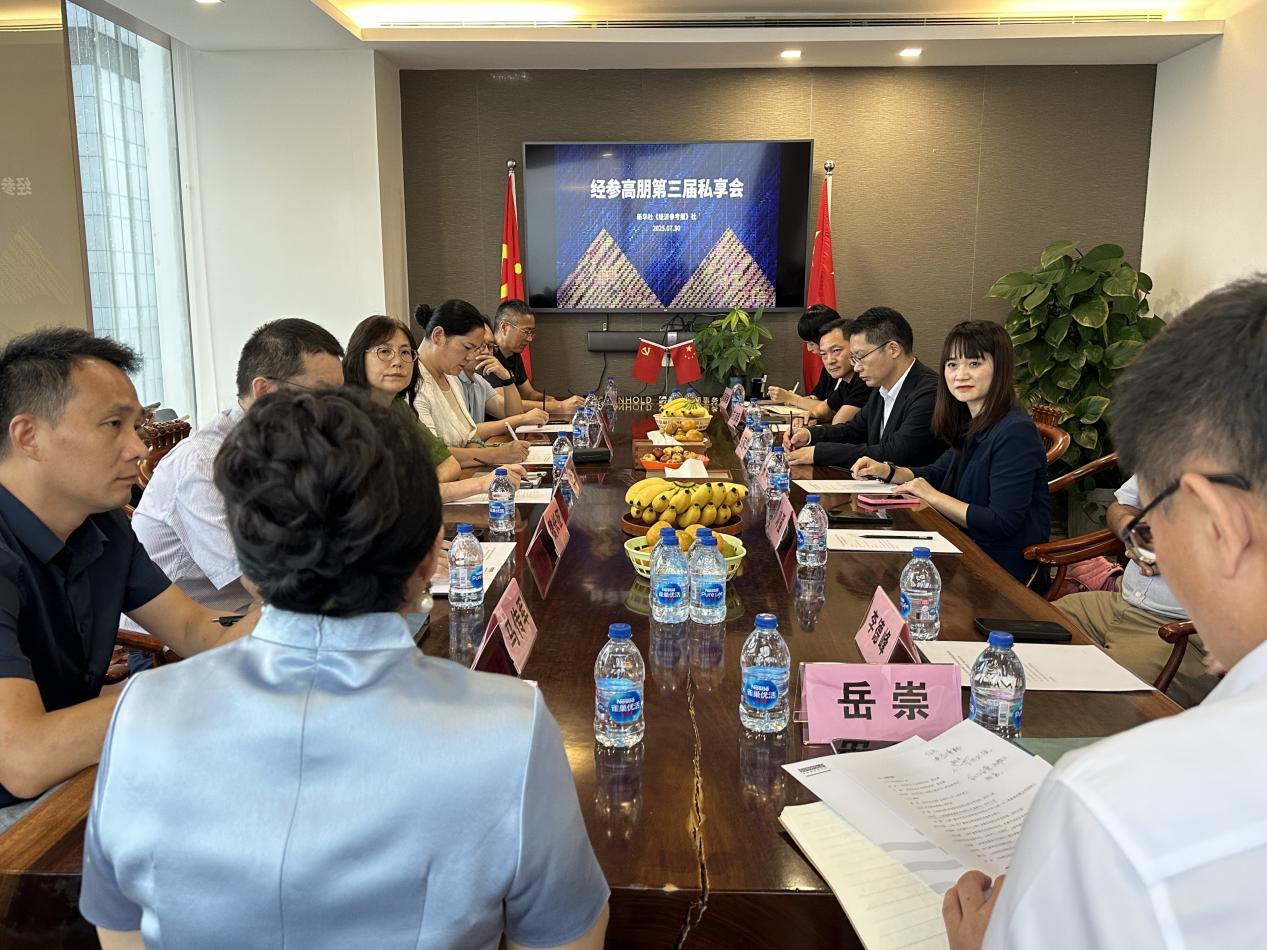
Core Viewpoint - The discussion emphasizes the importance of talent cultivation and team building as key drivers for enterprise development and core competitiveness [2][3]. Group 1: Talent Development - The meeting highlighted "talent" as a frequent keyword, with a focus on aligning talent supply with enterprise needs, particularly in emerging industries like hydrogen energy [2]. - Companies are encouraged to establish internal learning mechanisms and partnerships with educational institutions to adapt to the evolving market demands, especially for the younger generation [3]. - There is a concern about the aging of traditional craftsmen and the lack of successors, indicating a need for strategies to attract and retain talent [3]. Group 2: Media and Promotion - Business leaders expressed a desire for more media support in promoting quality domestic products, as many private enterprises lack effective promotional channels [3][4]. - The importance of effective communication and establishing a strong voice within the industry was emphasized to attract top talent [3]. Group 3: Competition and Market Dynamics - There is a call for maintaining quality standards amidst intense market competition, with a focus on preventing harmful low-price competition [4]. - Companies are facing challenges due to homogenized competition, which necessitates strategies to reduce labor costs and enhance talent acquisition [5].
12306的经验很难复制到民航市场
Nan Fang Du Shi Bao· 2025-07-29 16:35
Core Viewpoint - Several major airlines in China, including Eastern Airlines, Air China, Southern Airlines, and Hainan Airlines, have announced a direct sales partnership with the travel platform "航旅纵横" (Travel Union), which will serve as an additional direct sales channel beyond their official websites and apps. This platform integrates direct ticket sales resources from 37 domestic airlines and emphasizes six commitments: price transparency, no bundled sales, alignment with airline refund and change policies, no data discrimination, protection of user purchase information, and authenticity of reimbursement documents [1]. Group 1 - The new platform is referred to as the "civil aviation version of 12306," indicating an intention to regulate the "involutionary" competition in the civil aviation industry and standardize pricing [1]. - Consumers expect the app to provide cheap and transparent options without much effort, but this ideal state presents a paradox where cheapness and transparency are difficult to achieve simultaneously in a market economy [1][2]. - In a market economy, pricing power lies with market participants, who offer discounts based on their operational status and customer demand, leading to price variations that are not easily communicated to all consumers due to the costs associated with information dissemination [1][2]. Group 2 - The article compares the pricing transparency in a planned economy, where prices are fixed and information spreads slowly, to the competitive nature of the civil aviation industry, where airlines compete on price across various channels [2]. - The dominance of online travel agencies (OTAs) in the market is highlighted, as they provide a one-stop comparison advantage and have the ability to attract consumers through content and bundled services, which allows them to offer more competitive pricing than airlines [3]. - For the "civil aviation official direct sales platform" to capture a significant market share, it must enhance its channel characteristics rather than merely emulating the model of 12306, which does not align with market dynamics [3].
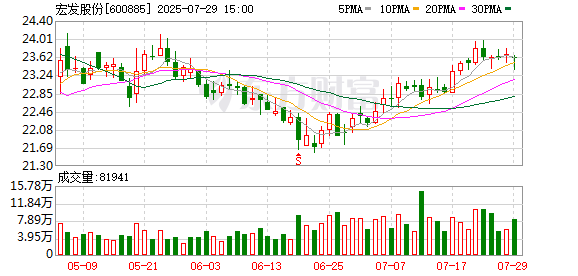
民生证券给予宏发股份推荐评级,2025Q2符合预期,新门类捷报频传
Mei Ri Jing Ji Xin Wen· 2025-07-29 15:24
Group 1 - The core viewpoint of the report is a recommendation for Hongfa Technology (600885.SH) based on its strong financial performance and growth prospects [2] - For the first half of 2025, the company achieved revenue of 8.347 billion yuan, a year-on-year increase of 15.43%, and a net profit attributable to shareholders of 964 million yuan, up 14.19% year-on-year [2] - In Q2 2025, the company reported revenue of 4.346 billion yuan, a year-on-year increase of 15.51%, and a net profit of 553 million yuan, reflecting a 13.25% year-on-year growth [2] Group 2 - The gross profit margin for Q2 2025 was 34.67%, showing a slight increase of 0.03 percentage points year-on-year, while the net profit margin was 16.82%, up 0.01 percentage points year-on-year [2] - The company is continuously improving operational efficiency and advancing research and development [2] - There is a positive demand trend in the downstream markets for relays, and the company is making progress in new categories with frequent positive news [2]