猪周期

Search documents
全国“5元猪价区”过半,猪业产能过剩何解?
2 1 Shi Ji Jing Ji Bao Dao· 2025-09-26 08:06
Core Viewpoint - The pig market in China is experiencing a downturn despite traditionally being a peak season, with prices dropping and signs of overcapacity in the industry [2][4]. Price Trends - As of September 26, the average price of external three yuan pigs was 12.71 yuan/kg, a decrease of 0.04 yuan/kg from the previous day, with half of the country experiencing prices around 5 yuan/kg [2]. - The average price of pigs was reported at 13.85 yuan/kg and pork at 24.51 yuan/kg, reflecting a 0.8% decline from the previous week [2]. Market Dynamics - The current pig industry is in its sixth cycle, with the internal expansion phase nearing its end, leading to accelerated capacity reduction due to policy and losses [2][5]. - The overall high inventory levels and the pressure to release stock from leading enterprises contribute to the overcapacity issue, compounded by weak consumer demand [4][6]. Production and Supply - The number of breeding sows is projected to remain high, with 40.8 million expected by November 2024, indicating a potential increase in supply by Q3 2025 [5]. - Major pig farming companies reported a cumulative output of 126 million pigs from January to August 2025, a year-on-year increase of 21.12% [6]. Policy and Regulation - The government has initiated measures to reduce the breeding sow population by approximately 1 million heads to stabilize the market [9][10]. - The central government has also been actively using reserve frozen pork to influence market prices, with 15,000 tons released in late September [10]. Industry Adjustments - Companies are adopting strategies to optimize their operations, such as reducing the number of breeding sows and controlling the weight of pigs at slaughter [13][14]. - Some smaller enterprises are shifting towards differentiated products, such as high-end pork, to maintain profitability despite market fluctuations [14][15]. Future Outlook - Analysts suggest that the market may stabilize by November as excess capacity is gradually absorbed, with a potential for price recovery [7][10]. - The industry is expected to evolve into a "three-three" structure, balancing large enterprises, specialized farms, and medium-sized family farms to better withstand market cycles [15].

生猪养殖行业新周期系列报告之一:从2025年中报看猪周期新趋势
Shenwan Hongyuan Securities· 2025-09-25 10:42
Investment Rating - The report suggests a positive outlook for the pig farming industry, indicating a shift towards stable and high-quality development, with a recommendation to focus on leading pig farming companies that demonstrate good performance and dividend payouts [6][5]. Core Insights - The pig farming industry is entering a new phase characterized by improved profitability and stability, driven by effective cost management and policy support for capacity reduction. The report emphasizes the importance of recognizing the strength of current policies aimed at reducing production capacity [6][5]. - In the first half of 2025, the pig farming sector saw a significant increase in supply, with a slight decline in pig prices year-on-year. However, listed companies in the sector reported substantial revenue growth and profit increases, primarily due to volume-driven strategies [6][21]. - The report highlights that the current profitability cycle in the pig farming industry is expected to be prolonged, with conservative market expectations and limited capacity expansion. The anticipated supply pressure may lead to continued losses for some farming operations [6][5]. Summary by Sections 1. Overview of the Pig Farming Industry in H1 2025 - The average price of pigs in H1 2025 was 14.80 yuan/kg, reflecting a year-on-year decrease of 4.21%. The supply of pigs increased due to higher production efficiency and a growing number of breeding sows [10][11]. - The slaughter volume from designated slaughterhouses increased significantly, with a year-on-year rise of 21.4% in Q2 2025, indicating stable demand despite price fluctuations [11][12]. 2. Performance Review of Listed Pig Farming Companies - In H1 2025, the total revenue of listed pig farming companies reached 201.9 billion yuan, a year-on-year increase of 17.9%, while net profit surged by 865.5% to 15.9 billion yuan [21][22]. - The leading companies, such as Muyuan Foods and Wen's Foodstuffs, reported substantial increases in both revenue and profit, with Muyuan achieving a 45% increase in the number of pigs slaughtered [27][26]. 3. Industry Outlook under the "Anti-Internal Competition" Policy - The report anticipates that the policy measures aimed at reducing production capacity will accelerate the pace of capacity reduction in the industry, with plans to cut 1 million breeding sows within six months [6][5]. - The industry is expected to transition towards a more stable and high-quality development phase, with improved profitability and cash flow for leading companies [6][5]. 4. Investment Analysis - The report suggests that investors should focus on companies with strong performance and reliable dividend payouts, as these firms are likely to experience a reassessment of their value in the market [6][5]. - The report indicates that the current cycle of profitability in the pig farming industry is expected to last longer than anticipated, with limited capacity expansion and ongoing supply pressures [6][5].


猪价创年内新低、养殖利润跌破成本线 政策推动产能去化 畜牧养殖或迎布局窗口?
2 1 Shi Ji Jing Ji Bao Dao· 2025-09-23 06:12
Core Insights - The pig prices have reached a new low for the year, with average prices at 12.83 yuan/kg and piglet prices at 24.08 yuan/kg as of September 23 [1] - The livestock farming ETF (516670) has seen a decline of 1.66% in early trading, with significant capital inflow of over 81 million yuan in the past five trading days, indicating a counter-trend investment strategy [1] - The profitability of pig farming has dropped below cost levels, with external piglet farming losses at -199.31 yuan per head and self-breeding losses at -24.44 yuan per head, marking a return to losses after over 16 months of profitability [2] - A meeting on pig production capacity control was held on September 16, with plans to reduce the breeding sow population by approximately 1 million heads, bringing the total to about 39.5 million heads [2] - The industry is expected to undergo accelerated capacity reduction due to the dual pressures of "anti-involution" policies and losses leading to production cuts, suggesting a potential upward trend in pig prices and sector performance [3] Industry Summary - The pig farming sector is experiencing a significant downturn, with prices and profits declining sharply, leading to a comprehensive loss situation for farmers [2] - The current market conditions indicate an oversupply of pigs, with increased supply from group farms and stricter environmental regulations affecting piglet replenishment sentiment [1][2] - The livestock farming ETF closely tracks the swine farming industry, with a significant portion of its holdings in major pig farming companies, indicating a concentrated investment in this sector [3]
在中国,养猪是怎样的一门生意?
3 6 Ke· 2025-09-22 12:02
Core Insights - The pig farming industry in China is undergoing a significant transformation, moving away from traditional small-scale operations to large, technologically advanced farms driven by capital investment and efficiency [3][5][42] - The industry is characterized by a "de-scaling" trend, where small farmers are being pushed out due to market pressures, high costs, and technological advancements [5][43] Group 1: Industry Overview - China is the world's largest consumer of pork, slaughtering approximately 700 million pigs annually, which accounts for over half of global pig farming [1] - Despite being a major producer, China remains a net importer of pork, requiring millions of tons from abroad each year [1] - The pig price index is a crucial economic indicator, reflecting the supply chain's impact on the broader economy and public welfare [3] Group 2: Market Dynamics - The "pig cycle" is a fundamental aspect of the industry, where price fluctuations lead to cycles of overproduction and underproduction, typically lasting 3-4 years [6][11] - The cycle is influenced by the time lag in pig production, which takes 10-18 months from breeding to market [6][8] - Market participants often react to price signals too late, leading to a boom-and-bust cycle that disproportionately affects small farmers [9][14] Group 3: Challenges and Risks - The African Swine Fever (ASF) outbreak has severely impacted China's pig population, reducing it by nearly 30% within a year of its introduction in August 2018 [20] - The disease's high mortality rate and complex transmission methods pose significant challenges for small farmers, who lack the resources to implement stringent biosecurity measures [22][28] - Rising operational costs, particularly feed, which constitutes about 60% of total costs, further strain small-scale operations [28][30] Group 4: Technological Advancements - Large-scale farms leverage advanced technologies in breeding, feeding, and environmental control, giving them a competitive edge over traditional methods [32][36] - Innovations such as genetic selection and smart feeding systems enhance productivity and reduce waste, making large farms more efficient [32][39] - The integration of technology from companies like Huawei into pig farming operations exemplifies the shift towards industrialized meat production [36][39] Group 5: Future Outlook - The future of China's pig farming industry is expected to be dominated by a few large players, leading to a high concentration of market share among companies like Muyuan, Wens, and New Hope [43] - Smaller farmers may need to adapt by partnering with larger firms to mitigate risks associated with market volatility and disease outbreaks [44]

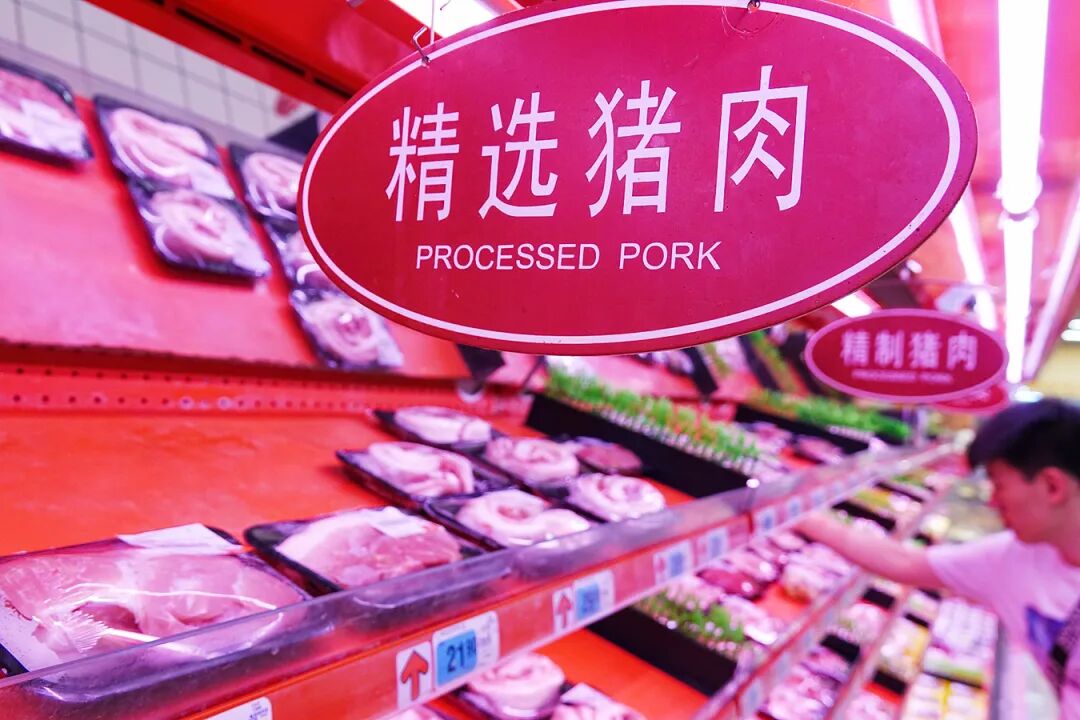
资金抢筹养殖板块,养殖ETF(159865)连续5日净流入超6亿元,“含猪量”约60% 机构:生猪政策加码
Mei Ri Jing Ji Xin Wen· 2025-09-22 06:04
Core Viewpoint - The livestock sector is experiencing significant capital inflow, with the Livestock ETF (159865) seeing over 600 million yuan in net inflows for five consecutive days, indicating strong investor interest in this area [1]. Group 1: Industry Dynamics - The Ministry of Agriculture and Rural Affairs is implementing capacity regulation measures, with a focus on reducing the number of breeding sows by 1 million over the next six months, which is expected to accelerate capacity reduction in the industry [1]. - The current "anti-involution" policy and the dual impact of losses and production cuts are likely to push the industry into a phase of accelerated capacity reduction, suggesting a favorable environment for investment in leading pig farming companies [1]. Group 2: Investment Opportunities - The livestock sector may have entered a configuration phase, with attention on the marginal changes in the Livestock ETF (159865) [2]. - For investors without stock accounts, alternative investment options include the Guotai CSI Livestock Breeding ETF Link A (012724) and Link C (012725) [2].
ETF日报-A股三大指数全线下跌,畜牧ETF(159867)收盘净申购1050万份,连续9天获资金净流入
Xin Lang Cai Jing· 2025-09-22 01:59
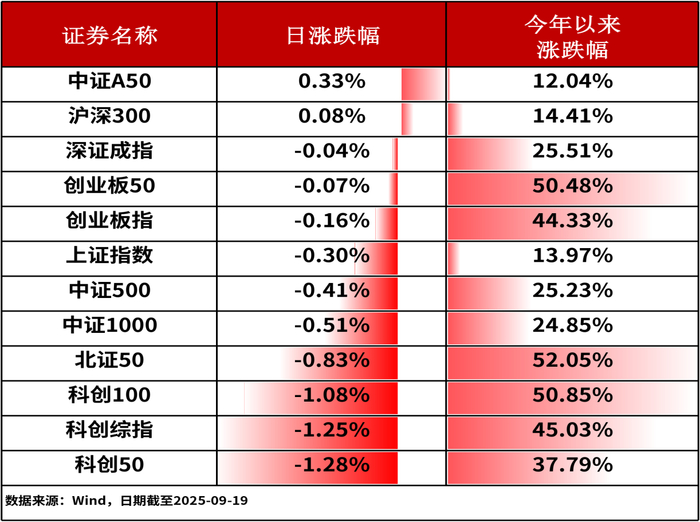
Market Overview - On September 19, A-shares saw a decline across all major indices, with the Shanghai Composite Index down by 0.30%, the Shenzhen Component Index down by 0.04%, and the ChiNext Index down by 0.16% [1] - The CSI A50 index increased by 0.33%, outperforming other indices [1] - The total trading volume in the Shanghai and Shenzhen markets was 23,238 billion RMB, a significant decrease of over 811.3 billion compared to the previous trading day [1] Index Performance - The CSI A50 index has risen by 12.04% year-to-date, while the Shanghai Composite Index has increased by 13.97% [2] - The ChiNext Index has shown a year-to-date increase of 44.33%, while the Shenzhen Component Index has increased by 25.51% [2] - The Hang Seng Technology Index rose by 0.37% and has a year-to-date increase of 40.87% [2] Sector Performance - The coal sector (1.97%), non-ferrous metals (1.19%), and building materials (1.05%) were the top-performing sectors [4] - Conversely, the automotive sector (-1.94%), pharmaceutical and biotechnology (-1.41%), and computer sector (-1.26%) experienced the largest declines [4] Fund Flow - The ETF market continued to see a net inflow, totaling 17.694 billion RMB this week [5] - Cross-border ETFs and stock ETFs were the main contributors to inflows, with net inflows of 17.655 billion RMB and 7.588 billion RMB, respectively [5] - Stock (broad-based) ETFs saw a significant net outflow of 16.252 billion RMB, indicating a declining preference for broad-based ETF investments [6] Investment Trends - The livestock ETF (159867) saw a net subscription of 10.5 million units, marking nine consecutive days of net inflow [11] - The chemical ETF (159870) recorded a net subscription of 1.75 billion units, driven by the strengthening of solid-state battery concepts [12] - The non-ferrous metals sector is experiencing increased interest, particularly in gold stocks, as gold prices have recently surpassed 3,660 [13]

行业聚焦产能调控与市场挑战 期货工具成生猪企业“稳舵手”
Qi Huo Ri Bao· 2025-09-22 01:40
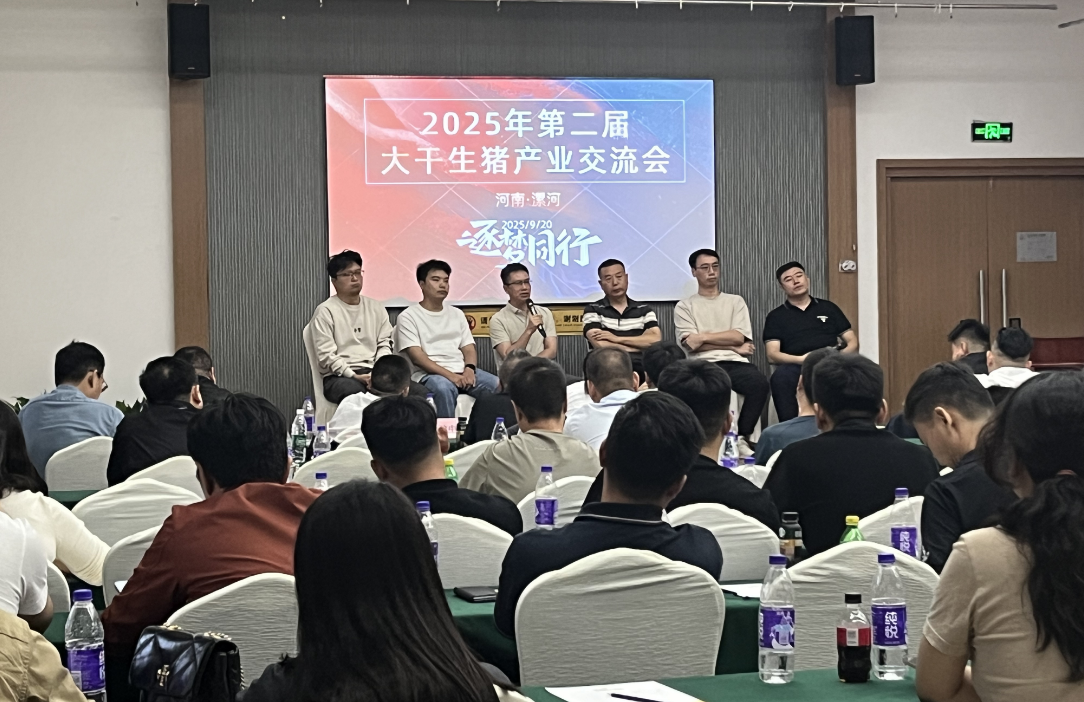
Core Viewpoint - The current pig industry is facing a dilemma of high production capacity and low prices, prompting discussions on capacity regulation and market outlook at a recent industry seminar [1][3]. Group 1: Industry Challenges - The pig industry is caught in a "production-loss" cycle, with high sow productivity and improved farming efficiency leading to oversupply and sustained pressure on prices [3]. - Despite efforts to reduce market supply through measures like lowering slaughter weights, the overall goal of capacity reduction has not been achieved due to high breeding sow inventory and quick recovery of production by large enterprises after cutbacks [3]. Group 2: Risk Management Strategies - Many leading companies plan to maintain current production levels and utilize hedging strategies to manage market risks and lock in profits, indicating a shift towards using financial derivatives for risk management [3][4]. - Companies like Guangxi Shennong emphasize a balanced approach to hedging, focusing on risk prevention while maintaining competitive advantage, viewing hedging as a long-term strategic tool rather than mere speculation [4]. Group 3: Market Outlook - Industry representatives predict that the domestic pig market will exhibit new characteristics, including improved disease prevention capabilities post-African swine fever, a likely long-term saturation of production capacity, and a potential reduction in the amplitude of price fluctuations [5]. - The cyclical nature of the pig market is expected to persist, but future cycles may be shorter compared to the historical average of four years, with factors like hoarding and secondary fattening potentially causing price volatility [5].
2025 年中报总结:养殖盈利回升,宠物食品景气延续
Shenwan Hongyuan Securities· 2025-09-19 11:02
Investment Rating - The report indicates a positive investment outlook for the agriculture, forestry, animal husbandry, and fishery sector, highlighting significant profit growth across various sub-sectors [2][11]. Core Insights - The agriculture, forestry, animal husbandry, and fishery sector achieved a substantial year-on-year profit increase of 208% in the first half of 2025, with total net profit reaching 207.8 billion yuan [2][11]. - The sub-sectors with the highest profit growth included seed industry (+1212%), pig farming (+663%), and agricultural product processing (+60%) [2][11]. - The report emphasizes the recovery of profitability in pig farming, driven by improved cost efficiency and increased production volume, despite a slight decline in pig prices [2][17]. - The poultry sector, particularly white feathered chicken, is experiencing pressure due to oversupply and weak demand, while yellow feathered chicken prices have significantly dropped [2][17]. - The pet food industry is noted for its continued growth, with domestic brands gaining market share and profitability, despite challenges in export due to increased tariffs [2][3]. Summary by Sections 1. Overview of the Agriculture, Forestry, Animal Husbandry, and Fishery Sector - The sector's net profit for H1 2025 was 207.8 billion yuan, marking a 208% increase year-on-year [11]. - The second quarter of 2025 also showed a profit increase of 26% compared to the previous year, with notable growth in agricultural product processing and pig farming [15]. 2. Sub-sector Performance 2.1 Pig Farming - The pig farming sector reported a total revenue of 201.9 billion yuan in H1 2025, a 17.9% increase year-on-year, with net profit soaring to 159.24 billion yuan, up 866% [2][17]. - Despite a slight decline in pig prices, the sector benefited from increased production and reduced costs, leading to significant profit improvements [2][17]. 2.2 Poultry Farming - The white feathered chicken sector is stabilizing, with a slight recovery in profitability due to cost improvements, while the yellow feathered chicken sector faces significant price declines [2][17]. 2.3 Pet Food - The pet food sector saw a revenue increase of 21.4% in H1 2025, driven by domestic brand growth and improved profitability [2][3]. 2.4 Animal Health - The animal health sector experienced a revenue increase of 26.44% in H1 2025, with net profit rising by 68.35% [4]. 2.5 Feed - The feed sector reported a revenue increase of 13.3% in H1 2025, with net profit up 29.5% [4]. 2.6 Seed Industry - The seed industry faced challenges with a revenue decline of 9.7% in H1 2025, attributed to falling grain prices [4]. 3. Investment Analysis - The report suggests that the pig farming industry is entering a phase of stable, high-quality development, with potential for significant profit stability and valuation reassessment for leading companies [3][5]. - The pet food sector is expected to continue its long-term growth trajectory, supported by increasing pet ownership and spending [3][5].
从巨亏阴霾到盈利暴增,牧原股份靠什么实现“周期逆袭”?
Sou Hu Cai Jing· 2025-09-19 05:58
Core Viewpoint - Muyuan Foods has made a remarkable turnaround from a net loss of 4.263 billion yuan in 2023 to a significant profit increase in 2025, with a 34.46% revenue growth and a 1170% increase in net profit in the first half of 2025 [1][9]. Group 1: Company Performance - In the first half of 2025, Muyuan Foods achieved a revenue of 76.46 billion yuan, marking a year-on-year increase of 34.46% [9]. - The company's net profit reached 10.53 billion yuan, showing a dramatic year-on-year growth of approximately 1170% [9]. - The total cost of pig farming for Muyuan Foods was reported to be below 12.1 yuan/kg by June 2025, indicating a continuous decline in production costs [9]. Group 2: Industry Context - The "pig cycle" has been a significant factor affecting the industry, with fluctuations in pig prices and supply leading to periods of profitability and loss for companies like Muyuan Foods [3][6]. - The recent pig cycle began in 2019, influenced by African swine fever, which caused a drastic drop in pig inventory and a subsequent surge in prices, reaching as high as 40 yuan/kg [5]. - By 2023, the market faced an oversupply situation, leading to a 20% decrease in average pig sales prices compared to 2022, resulting in losses for many companies, including Muyuan Foods [6]. Group 3: Strategic Initiatives - Muyuan Foods has adopted various strategies to mitigate risks associated with the pig cycle, including optimizing feed formulas and enhancing disease prevention systems [7]. - The company has focused on a full industry chain layout to counter price fluctuations, moving towards an integrated development strategy [7]. - Plans for international expansion include partnerships in Southeast Asia and a potential IPO in Hong Kong to support global growth initiatives [11]. Group 4: Market Trends - Despite a continued decline in domestic pig prices, which hit a low of 13.32 yuan/kg in September 2023, Muyuan Foods has managed to maintain a recovery in performance [10]. - The company's stock price has seen a significant increase of 44.69% since late May 2023, reflecting positive market sentiment [12].

天风证券晨会集萃-20250918
Tianfeng Securities· 2025-09-17 23:44
Group 1: Macro Strategy and Market Overview - The report highlights a gradual convergence of overseas central bank policies, impacting asset allocation strategies [3][28] - In the A-share market, major indices saw significant gains in early September, with the CSI 100 and CSI 500 indices rising by 4.45% and 6.33% respectively [3][28] - The central bank's net cash injection was 196.1 billion yuan, maintaining a loose liquidity environment with DR007 staying below 1.48% [3][28] Group 2: Agricultural Bank of China - The Agricultural Bank of China is expected to benefit from the release of potential in county economies, with greater credit growth opportunities compared to peers [4] - The bank has the lowest non-performing loan ratio among its peers, with a strong ability to manage risks related to real estate exposure [4] - Future profit growth is projected at 1.98%, 3.94%, and 4.63% for 2025-2027, with corresponding BPS values of 7.69, 8.12, and 8.53 yuan [4] Group 3: Unmanned Forklifts Industry - The unmanned forklift market is experiencing rapid growth, with shipments increasing from 2,700 units in 2019 to an estimated 19,500 units in 2023, representing a penetration rate of 1.66% [6] - The market size for unmanned forklifts in China is projected to reach 2.385 billion USD in 2023, accounting for 45% of the global market [6] - Major players in the industry include Linde, Hangcha, and Geek+, with significant advancements in technology and market share [6][10] Group 4: Communication Sector - Runxin Technology - Runxin Technology reported a revenue of 1.358 billion yuan in H1 2025, marking a 16.42% year-on-year increase, with net profit rising by 18.23% [13][34] - The company is focusing on AIoT and automotive electronics, diversifying its revenue sources and enhancing long-term growth potential [34] - The firm has established strong partnerships with leading semiconductor suppliers, which bolsters its competitive edge in the market [34] Group 5: Semiconductor Testing Industry - Weicet Technology - Weicet Technology achieved a revenue of 634 million yuan in H1 2025, reflecting a 47.53% increase, with net profit soaring by 831.03% [36][39] - The company is expanding its testing capacity for high-end and reliable chips, with significant investments in new facilities [37] - The semiconductor market is expected to maintain optimistic growth, driven by advancements in AI and automotive electronics [39] Group 6: Pharmaceutical Sector - China Resources Pharmaceutical - China Resources Pharmaceutical reported a revenue of 131.867 billion yuan in H1 2025, a 2.5% increase, while net profit decreased by 20.3% due to impairment losses [21] - The company is focusing on external growth through acquisitions and innovation in its pharmaceutical business [21] - The firm has successfully launched 21 new products in H1 2025, with a robust pipeline of 476 projects under development [21]